How can I make my 8-foot ceilings feel like 10-foot ceilings?
As an interior designer with over ten years of experience, I’ve worked with countless rooms featuring standard-height ceilings. I understand how ceiling height impacts a room’s atmosphere. A taller space feels more open and airy, while lower ones can seem cramped.
In my own house, I’ve faced this challenge head-on. Even my basement with 7.5-foot ceilings has been transformed using clever design techniques. You don’t need construction to create a taller appearance.
The secret lies in drawing the eye upward. Through strategic styling choices, you can achieve remarkable results. Vertical lines, paint techniques, and thoughtful decor all play crucial roles.
These are practical solutions I’ve personally implemented when architecture wasn’t ideal. They’re designer-approved and require minimal effort. By the end of this section, you’ll feel confident transforming your space.
Key Takeaways
- Ceiling height significantly affects how open and spacious a room feels
- Visual tricks can create the illusion of height without construction
- Drawing the eye upward is the fundamental principle
- Vertical elements and strategic paint choices make a big impact
- These techniques work even in spaces with very low ceilings
- Professional designers use these methods in their own homes
- Transforming your space is achievable with simple styling changes
Understanding the Visual Tricks for Higher-Looking Ceilings
Visual perception plays a powerful role in interior spaces. The right design choices can dramatically alter how we experience a room’s dimensions. This section explores why certain elements create the illusion of extra height.
Our brains process visual information in predictable ways. Designers leverage these patterns to create specific effects. Understanding these principles gives you powerful tools for transformation.
Why Vertical Elements Create Height Illusions
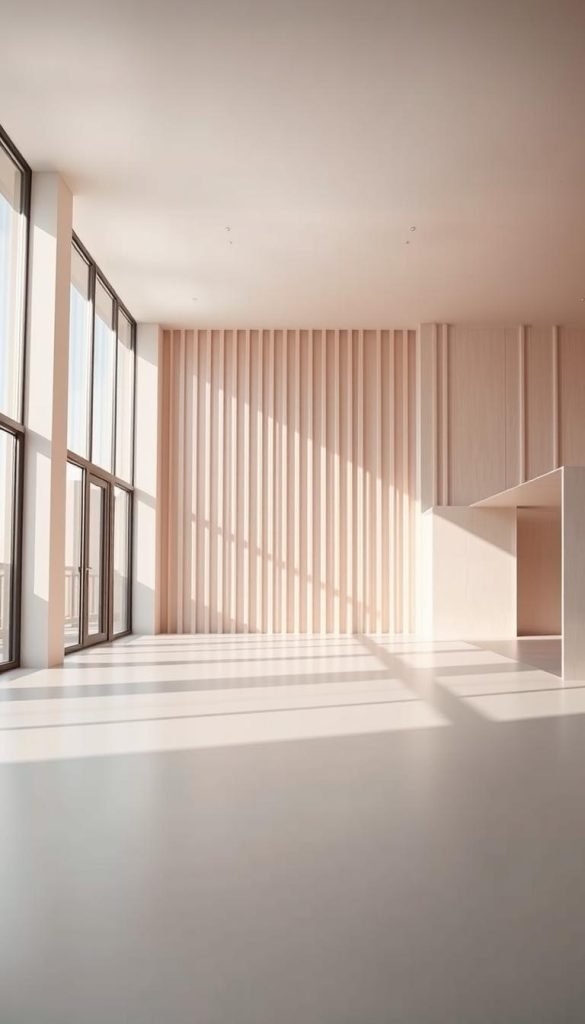
Vertical lines naturally guide the eye upward. This directional movement creates an elongating effect throughout the space. Striped wallpaper, tall mirrors, and vertical shiplap all achieve this.
I recently worked with a client who had particularly low ceilings. We installed floor-to-ceiling bookshelves along one wall. The result was astonishing – the room instantly gained visual height.
Tall artwork serves the same purpose. A vertical painting or photograph draws attention upward. This simple trick makes ceilings appear farther away than they actually are.
The key is maintaining an unbroken vertical flow. Horizontal dividers like chair rails interrupt this movement. They create visual breaks that make walls appear shorter.
The Psychology of Visual Perception in Interior Spaces
Our brains seek patterns and continuity in visual information. When walls feature uninterrupted vertical elements, we perceive greater height. The space feels more cohesive and expansive.
Monochromatic color schemes enhance this effect dramatically. When walls and ceilings share similar colors, boundaries blur. The eye travels smoothly from floor to ceiling without stopping.
“The most successful rooms use continuous visual elements to create seamless transitions between surfaces.”
This approach works across various design styles. Modern minimalist spaces benefit from clean vertical lines. Cottage-style homes can use vertical beadboard or shiplap. Traditional spaces employ tall architectural elements.
Install full-height decorative moulding to maintain vertical movement. Avoid horizontal breakpoints that segment the wall surface. This principle applies to window treatments, cabinetry, and tile work.
By understanding these psychological principles, you gain creative control over your space. The techniques are versatile enough for any room in your home. They provide effective solutions without construction work.
Leverage Vertical Lines and Patterns
Strategic use of vertical elements transforms any room’s proportions. These design choices create powerful optical illusions that elevate your space. The techniques work wonders in standard-height rooms.
Vertical treatments guide vision upward naturally. This movement makes walls seem taller than their actual measurements. The effect works immediately after implementation.
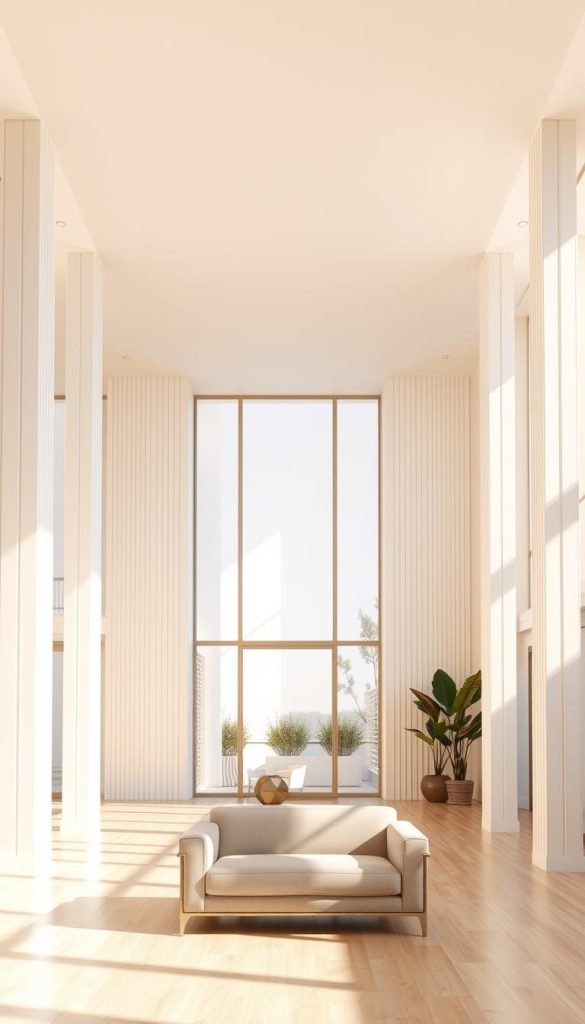
Using Vertical Striped Wallpaper or Paint
Striped patterns create instant height illusions. I recommend vertical stripes over horizontal ones. They draw the eye upward without interruption.
Choose stripes with appropriate scale for your room. Narrow stripes work best in smaller spaces. Wider stripes suit larger areas with more wall surface.
Color selection matters greatly for this technique. Contrasting colors create stronger visual effects. Subtle tonal differences offer more sophisticated results.
Paint offers flexibility for testing different approaches. Try sample sections before committing to full walls. This prevents costly design mistakes.
Installing Vertical Shiplap or Board and Batten
Vertical shiplap adds texture while creating height illusions. The continuous lines make walls appear elongated. This treatment brings character to any space.
Board and batten provides classic architectural interest. The vertical elements break up wall space beautifully. They create rhythm that guides vision upward.
These installations work particularly well in entryways. They make strong first impressions upon entering a home. The effect continues throughout the entire space.
Consider paint colors carefully for wood treatments. Lighter colors enhance the heightening effect. Darker tones add drama but may reduce the illusion.
“Vertical elements in design aren’t just decorative—they’re strategic tools that manipulate perception and create spaciousness where none exists.”
Hanging Tall Artwork and Mirrors Strategically
Oversized artwork creates dramatic vertical emphasis. I used large canvas pieces in my basement media room. The transformation was immediate and impressive.
Mirrors reflect light and space effectively. They double the visual impact of vertical elements. Position them at eye level or slightly higher.
Vertical tapestries offer soft texture and pattern. They absorb sound while adding visual interest. This approach works well in bedrooms and living areas.
Group smaller pieces in vertical arrangements. This creates the effect of one large artwork. The composition draws eyes upward effectively.
| Element Type | Best Placement | Visual Impact | Installation Difficulty |
|---|---|---|---|
| Vertical Stripes | Full wall coverage | High impact | Medium |
| Shiplap/Batten | Accent walls or full room | High texture | High |
| Tall Mirrors | Opposite windows | Light reflection | Low |
| Oversized Art | Eye level or above | Focal point | Low |
These techniques avoid horizontal breaks that shorten walls. They maintain continuous visual flow from floor to ceiling. The result is a space that feels generously proportioned.
Vertical treatments outperform horizontal options consistently. They prevent the compartmentalized look that reduces apparent height. This principle applies across all design styles.
Real projects demonstrate these methods’ effectiveness. Clients consistently report amazed reactions to the transformations. The changes require no structural modifications.
Incorporate vertical lines through various decorative elements. Upholstered panels offer another excellent option. They add softness while maintaining vertical emphasis.
You now have practical ideas for height illusions. Implement these strategies in your own home. The results will surprise and delight you.
Master Paint and Color Techniques
Paint choices create powerful visual effects in any room. The right color approach transforms perceived dimensions instantly. These techniques work magic on standard ceiling heights.
Color manipulation changes how we experience space. It’s one of the most effective tools available. Professional designers rely on these methods daily.
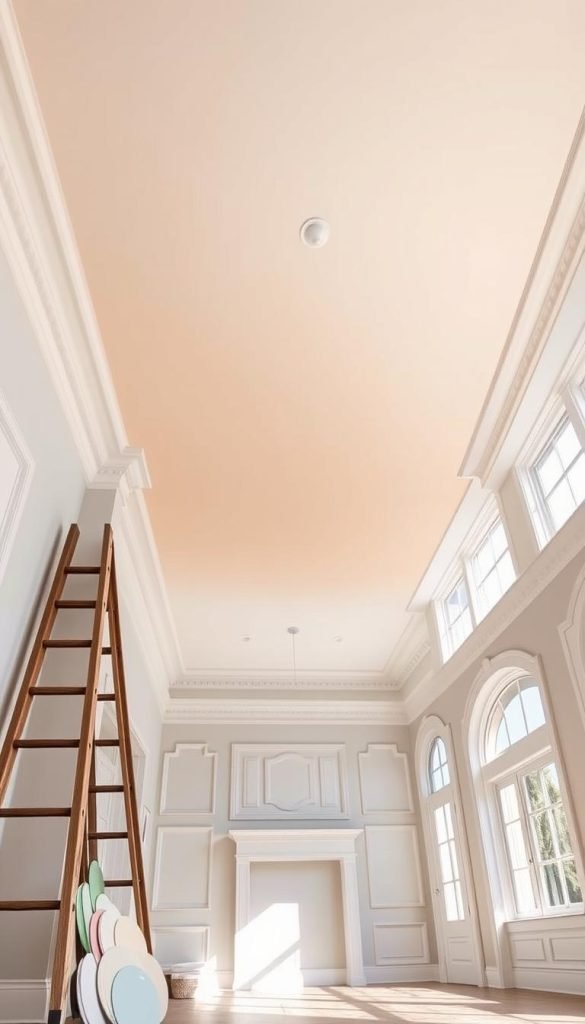
Color Drenching With Monochromatic Schemes
Monochromatic schemes create seamless visual flow. Walls, ceiling, and trim share the same color family. This approach eliminates visual stopping points.
I recently transformed a client’s small study using this method. We used a soft blue throughout the entire space. The room gained remarkable visual height immediately.
Color drenching works with both light and dark palettes. Deep navy creates cozy sophistication while maintaining openness. Pale tones enhance airiness and light reflection.
Extending Wall Color to the Ceiling
Continuing wall color upward makes ceilings recede visually. This technique blurs the horizontal boundary line. The eye travels upward without interruption.
My own home features a dramatic black ceiling in the library. The dark hue makes the ceiling seem to disappear upward. Visitors often comment on the impressive height.
This approach works particularly well in rooms with architectural details. It emphasizes vertical elements while minimizing ceiling focus. The effect feels both intentional and expansive.
“When you paint the ceiling the same color as the walls, you’re not decorating a surface—you’re designing an experience of space.”
Choosing Matte Finishes Over Glossy
Finish selection dramatically affects light interaction. Matte surfaces absorb light and minimize reflection. This reduces attention on ceiling surfaces.
Glossy finishes can create unwanted spotlight effects. They highlight imperfections and emphasize low height. Matte options provide sophisticated uniformity.
I recommend flat paint for overhead surfaces. It creates soft, shadow-free appearance. Walls benefit from slight sheen for light reflection.
| Paint Element | Recommended Finish | Visual Effect | Room Type |
|---|---|---|---|
| Ceiling | Flat/Matte | Minimizes attention | All rooms |
| Walls | Eggshell/Satin | Soft light reflection | Living areas |
| Trim | Semi-Gloss | Defines edges subtly | Throughout home |
| Doors | Same as walls | Continuous flow | All spaces |
Light colors generally enhance spaciousness. They reflect available light throughout the room. Strategic dark colors work when applied consistently.
My guest room features color blocking with vertical elements. The design creates the illusion of higher trim without construction. The transformation amazed everyone who saw it.
These paint techniques offer customizable solutions. They work in any room regardless of existing features. The results feel both dramatic and effortless.
Mastering color relationships elevates your design capabilities. You gain control over spatial perception through simple changes. The impact on your living environment proves remarkable.
Optimize Window Treatments for Height
Curtain placement and style decisions create powerful optical illusions for vertical expansion. These techniques work wonders in standard rooms throughout your home. The right approach guides vision upward naturally.
Window treatments serve as visual tools that manipulate spatial perception. They create the impression of added height without construction. This method proves effective in various room types.
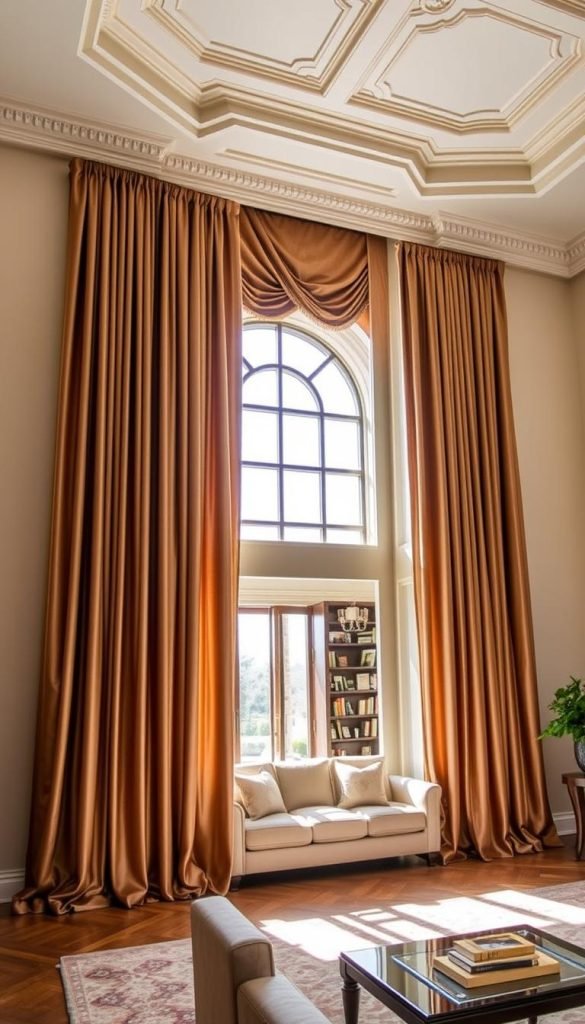
Hanging Curtains Close to the Ceiling
Position curtain rods just below ceiling lines or crown moulding. This placement creates continuous vertical lines from top to bottom. The effect makes walls appear significantly taller.
In my basement project, high-hung drapery transformed the space dramatically. Ceilings gained visual height immediately after installation. This technique works with various curtain styles.
Avoid mounting rods directly above window frames. This common mistake emphasizes low ceiling height. Instead, aim for 2-3 inches below the ceiling line.
Selecting Floor-Length Drapery Panels
Choose panels that extend from ceiling to floor without interruption. Full-length treatments create unbroken vertical lines. This approach elongates walls effectively.
Panels should gently “kiss the floor” for optimal results. Too short or too long curtains break the visual flow. Proper length maintains the height illusion perfectly.
Pinch pleated curtains add structured vertical folds. These details draw the eye upward in an elegant way. The effect enhances room proportions beautifully.
“The most transformative window treatments extend from ceiling to floor, creating uninterrupted vertical lines that redefine spatial perception.”
Avoiding Horizontal Window Treatment Breaks
Eliminate horizontal elements that segment wall space. Café-length panels create visual breaks that shorten walls. These interruptions emphasize low ceiling height.
Layered treatments offer both function and height enhancement. Sheer shades paired with full curtains provide versatility. This combination maintains vertical emphasis throughout.
Valances and cornices create horizontal lines that work against height goals. Instead, focus on clean, vertical drapery installations. The result feels both elegant and expansive.
| Treatment Type | Height Impact | Installation Level | Visual Effect |
|---|---|---|---|
| Ceiling-Mount Drapery | Maximum height gain | Advanced | Dramatic vertical lines |
| Floor-Length Panels | Significant enhancement | Intermediate | Elegant elongation |
| Pinch Pleat Style | Enhanced vertical emphasis | Intermediate | Structured sophistication |
| Sheer Layer Combo | Moderate improvement | Beginner | Light, airy appearance |
These window treatment strategies transform room feel instantly. They create the illusion of taller ceilings throughout your home. The techniques work with various decor styles.
Proper drapery installation makes windows appear larger. Rooms gain openness and architectural interest. The changes require minimal investment but deliver maximum impact.
Implement these ideas in your own space. Experience the remarkable difference strategic window treatments provide. Your rooms will look taller and feel more expansive immediately.
Choose Strategic Lighting Solutions
Lighting transforms how we experience interior spaces dramatically. The right approach creates depth and dimension where none existed before. Strategic illumination draws attention upward while maintaining perfect functionality.
Through years of design projects, I’ve mastered lighting techniques that elevate rooms instantly. These methods work wonders in standard-height spaces throughout any house. They create the illusion of generous proportions without construction.
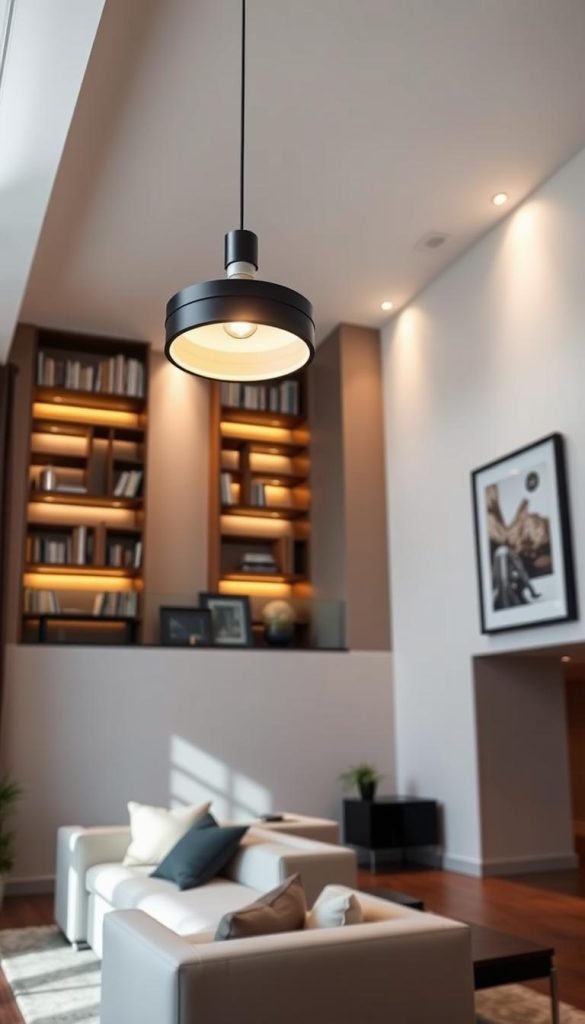
Opting for Hanging Lights Instead of Flush Mounts
Flush mount fixtures highlight ceiling surfaces unfortunately. They create focused pools of light that emphasize low height. This approach works against creating spacious room feel.
Hanging lights provide better solutions for visual expansion. Pendants and semi-flush mounts leave valuable negative space above. This gap makes ceilings appear farther away than actual measurements.
Choose appropriately scaled fixtures to maintain proportion. Oversized pendants can overwhelm smaller rooms. Proper sizing ensures functionality while enhancing spatial perception.
In my own dining area, I selected a slender pendant light. It casts beautiful patterns without dominating the space. Visitors often remark how tall the room appears.
Using Wall Sconces for Vertical Illumination
Wall sconces offer brilliant vertical lighting solutions. They cast light upward along wall surfaces beautifully. This technique adds architectural interest while drawing the eye upward.
Position sconces at or above eye level for maximum impact. This placement creates continuous vertical lines that enhance height. The effect works particularly well in hallways and bedrooms.
Sconces eliminate ceiling clutter that emphasizes low height. They provide ambient illumination without overhead fixtures. This approach keeps visual attention moving upward naturally.
I recently installed swing-arm sconces in a client’s reading nook. The transformation amazed everyone who saw the finished space.
“Lighting should be layered like an orchestra—each element playing its part to create harmony and height throughout the space.”
Creating Layered Lighting Throughout the Room
Layered lighting combines multiple sources for balanced effect. Overhead fixtures, wall lights, and floor lamps work together beautifully. This approach creates depth while maintaining vertical emphasis.
Start with ambient lighting from hanging fixtures or recessed lights. Add task lighting through strategically placed lamps. Incorporate accent lighting to highlight architectural features.
This method prevents any single light source from dominating. It creates soft, even illumination that enhances spaciousness. The result feels both functional and visually expansive.
According to lighting design experts, layered approaches work best for low ceilings. They recommend combining different light types for optimal results.
| Lighting Type | Height Benefit | Best Placement | Visual Impact |
|---|---|---|---|
| Pendant Lights | Creates negative space | Above tables/islands | Strong vertical emphasis |
| Wall Sconces | Vertical illumination | Eye level or higher | Architectural enhancement |
| Floor Lamps | Upward light direction | Room corners | Soft ambient glow |
| Track Lighting | Adjustable direction | Along room perimeter | Customizable emphasis |
Proper lighting selection improves both function and perception. It creates welcoming atmospheres while enhancing spatial experience. These techniques work in any room regardless of existing features.
Experiment with different lighting combinations in your space. Notice how strategic illumination changes the entire room feel. The transformation will surprise and delight you.
Select Low-Profile Furniture and Decor
Furniture selection dramatically impacts how we perceive room dimensions. The right pieces create openness while maintaining perfect functionality. These design choices work wonders in standard-height spaces throughout your home.
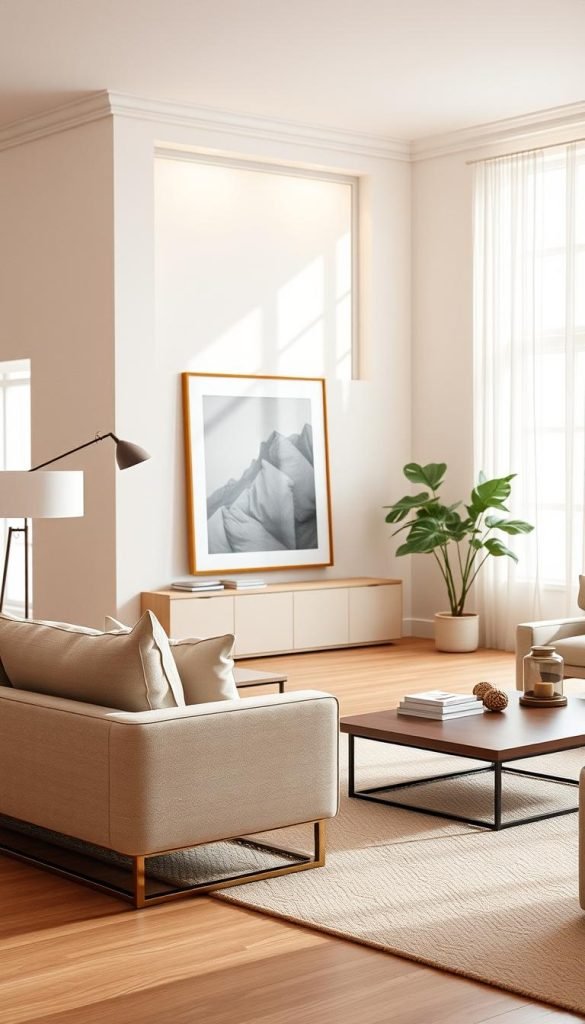
Choosing Furniture With Lower Bases
Low-profile seating creates valuable visual space above furniture lines. Sofas and chairs near the floor expose more wall surface. This approach makes ceilings appear higher than actual measurements.
I recently transformed a client’s living area using this technique. We selected a modern sectional with a low silhouette. The change created an immediate impression of added height.
Slim-legged designs enhance this effect beautifully. They allow light to flow underneath furniture pieces. The space feels more open and airy as a result.
“Furniture should complement a room’s architecture, not compete with it. Low-profile pieces create harmony while enhancing spatial perception.”
Keeping Focal Points at Appropriate Heights
Television placement requires careful consideration in these spaces. Avoid mounting screens above eye level or on tall consoles. This maintains balanced proportions throughout the room.
I recommend positioning televisions on low media consoles. This creates a comfortable viewing experience. The arrangement keeps visual weight lower in the space.
Artwork and mirrors should follow similar placement principles. Group items at eye level rather than spreading them vertically. This prevents segmentation of wall surfaces.
Using Vertical Storage Solutions
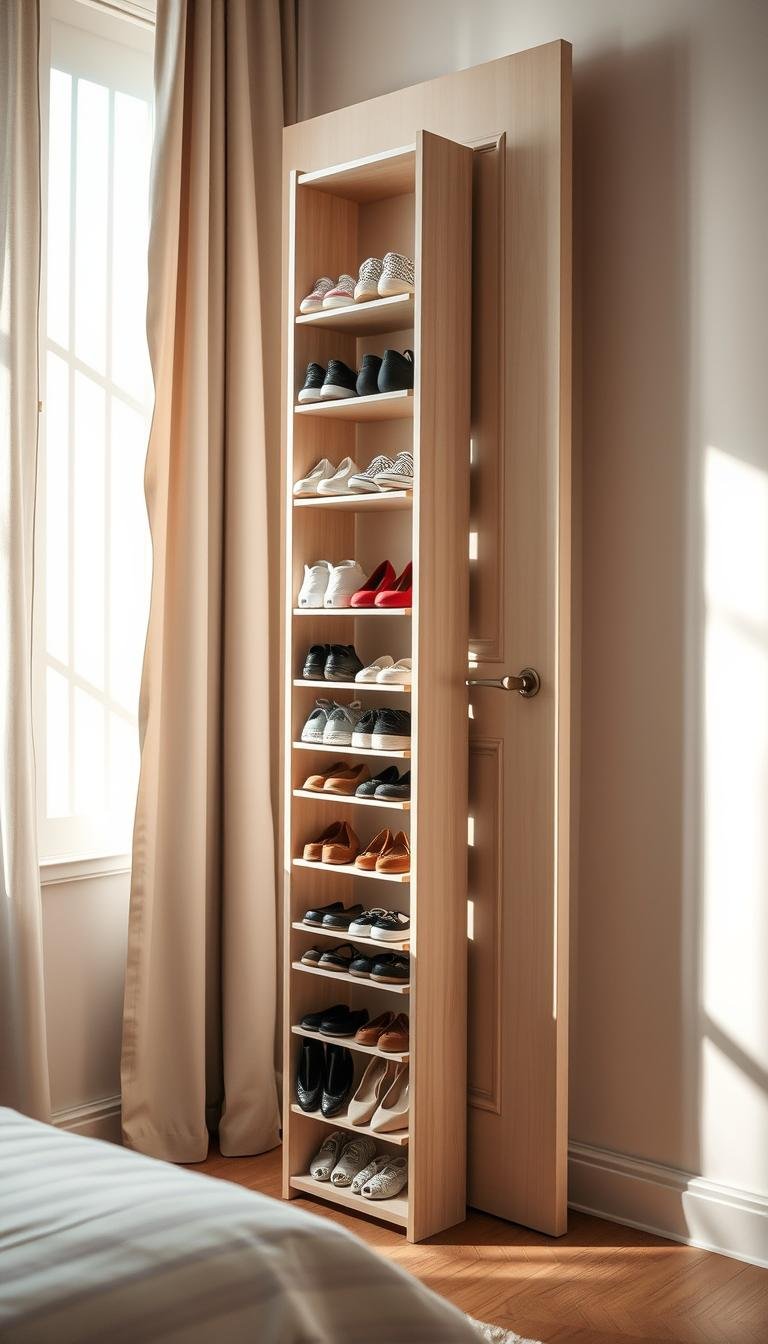
Floor-to-ceiling shelving adds storage while creating height illusions. These units draw the eye upward in a continuous flow. They maximize functionality without sacrificing spaciousness.
Tall bookcases work particularly well in home offices and living areas. They provide ample storage for books and decorative items. The vertical lines enhance room proportions beautifully.
Built-in cabinetry offers another excellent solution. Custom units can extend from floor to ceiling seamlessly. This approach creates a polished, architectural look.
| Furniture Type | Height Benefit | Room Application | Visual Impact |
|---|---|---|---|
| Low-Profile Sofas | Exposes wall space | Living areas | Enhanced openness |
| Slim-Legged Chairs | Light flow underneath | Throughout home | Airy appearance |
| Vertical Bookcases | Draws eye upward | Offices/libraries | Architectural interest |
| Low Media Consoles | Balances proportions | Entertainment areas | Comfortable scale |
Light-colored furniture enhances these effects significantly. Pale tones reflect available light throughout the space. This maintains the airy feel we want to achieve.
Avoid bulky, oversized pieces that dominate the room. Instead, choose scaled-down versions that fit your space perfectly. This approach creates better flow and functionality.
These furniture strategies transform rooms instantly. They create the illusion of taller ceilings without construction work. The techniques work with various decor styles and room types.
Implement these ideas in your own home. Experience how strategic furniture selection changes spatial perception. Your rooms will feel more open and generously proportioned.
Incorporate Architectural Elements and Millwork
Architectural details transform ordinary rooms into extraordinary spaces. These elements create visual interest while enhancing perceived dimensions. Proper millwork installation makes ceilings appear dramatically higher.
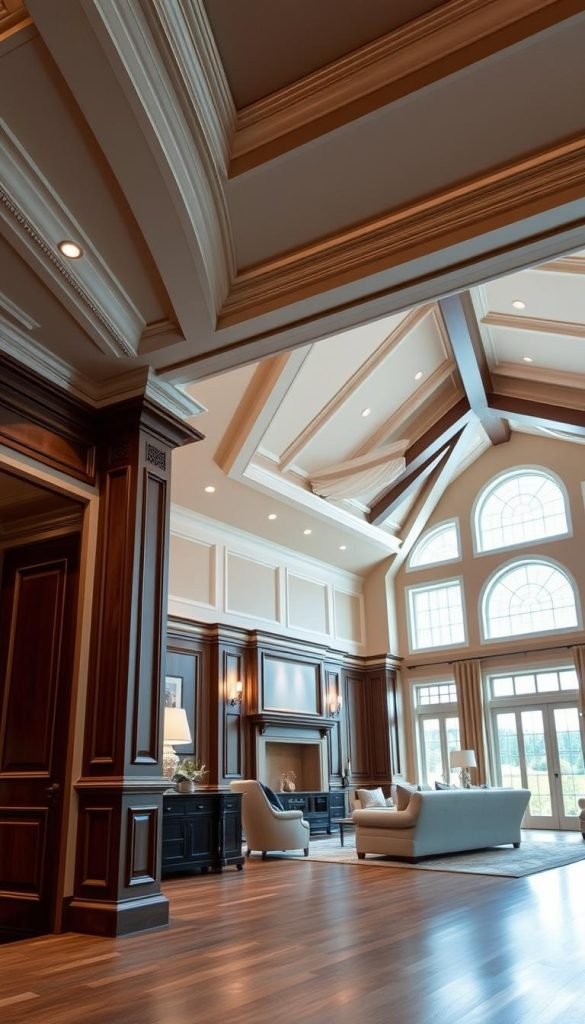
Through my design projects, I’ve seen millwork work magic on standard rooms. These techniques add character while creating vertical emphasis. They provide permanent solutions without construction work.
Installing Properly Proportioned Crown Moulding
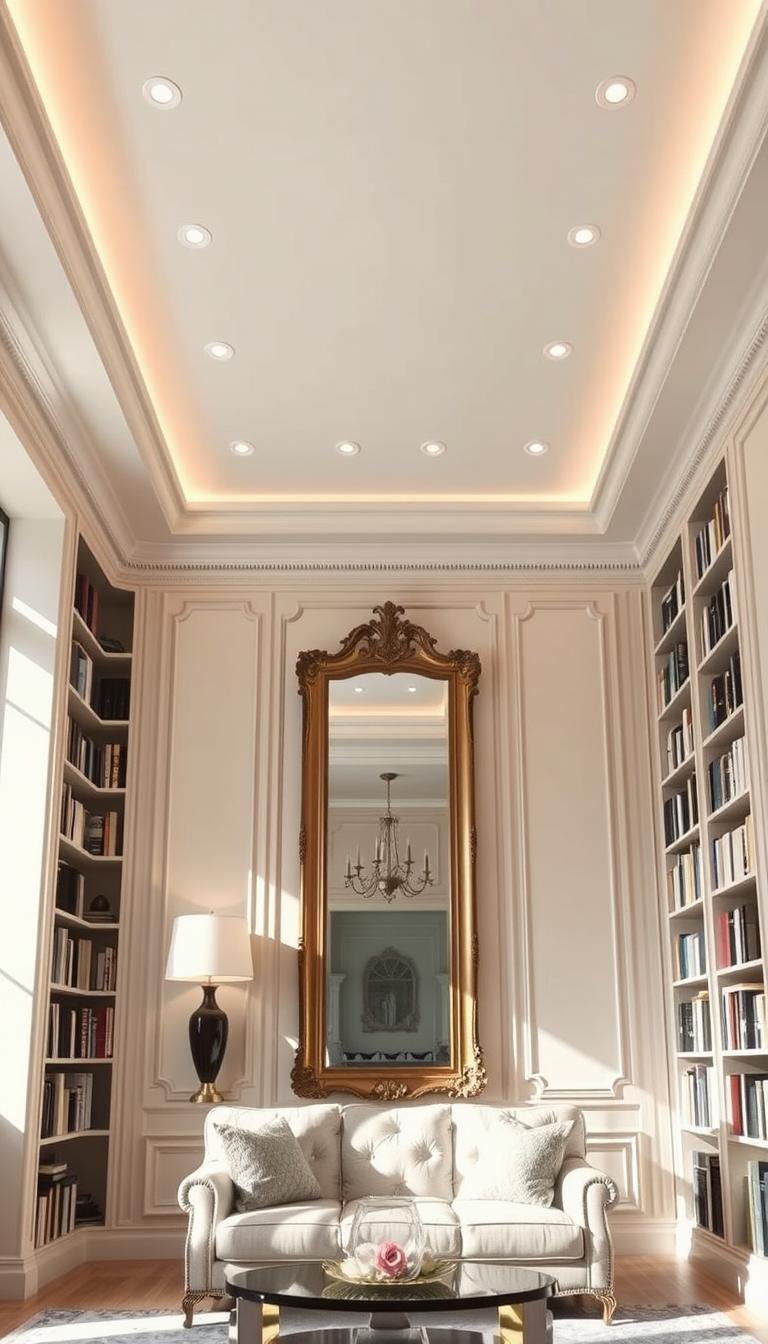
Crown moulding proportions matter greatly for visual impact. I recommend 4.5 to 6-inch profiles for standard rooms. This size creates definition without overwhelming the space.
Paint selection completes the height-enhancing effect. Match the crown colour to your wall colour perfectly. This approach creates seamless vertical flow upward.
My basement bedroom features monochromatic moulding installation. The continuous colour makes the ceiling appear farther away. Visitors often comment on the elegant proportions.
Extending Paneling and Cabinetry to the Ceiling
Full-height installations avoid visual breaks that shorten walls. Extend paneling, cabinetry, or tile completely to the ceiling. This eliminates horizontal lines that emphasize low height.
Custom built-ins offer excellent opportunities for this technique. I designed floor-to-ceiling bookshelves for a client’s library. The result created impressive vertical emphasis throughout the room.
“Architectural elements should whisper sophistication while shouting spatial expansion—the right millwork achieves both effortlessly.”
Wrapping cabinetry with matching trim enhances the tailored look. This approach creates cohesive architectural interest. The effect feels both intentional and expansive.
Considering Plaster Coves for Seamless Transitions
Plaster coves create beautifully softened ceiling transitions. These curved details eliminate harsh angular boundaries. The result makes ceiling height less noticeable.
Traditional plaster work offers timeless elegance. The smooth curves guide the eye upward gracefully. This technique works particularly well in period homes.
Wood trim alternatives provide similar effects when plaster isn’t feasible. Cove-shaped moulding creates comparable visual flow. Paint it the same colour as walls for maximum impact.
| Element Type | Ideal Proportion | Installation Complexity | Visual Impact |
|---|---|---|---|
| Crown Moulding | 4.5-6 inches | Moderate | Strong vertical emphasis |
| Full-Height Paneling | Floor to ceiling | Advanced | Dramatic elongation |
| Plaster Coves | 6-8 inch radius | Professional | Softened transition |
| Cove Trim Alternative | Match existing profiles | Moderate | Similar curved effect |
These architectural solutions add permanent value to your home. They create the illusion of generous proportions throughout any space. The techniques work with various design styles and room types.
Implement these millwork ideas in your own house. Experience how proper proportions transform spatial perception. Your rooms will gain architectural interest while appearing taller.
Conclusion: Transforming Your Space Without Construction
Creating an elevated atmosphere in your home is absolutely achievable through smart design choices. These proven techniques transform any room’s proportions without structural changes.
Vertical elements, strategic paint applications, and proper lighting work together beautifully. I’ve implemented every one of these solutions in my own living spaces with outstanding results.
Start with simple adjustments like raising curtain rods or painting trim. These small changes create immediate visual height that feels expansive and airy.
Your space can achieve that elevated, bright feeling you desire. Share your transformation results or questions below – I’m always happy to help with more personalized tips!