What’s the best way to hang string lights without drilling?
I like simple fixes that protect surfaces and hold up in wind and rain. I pair no-drill hardware with a quick plan before I buy strands or hooks. This saves time and keeps my porch, fence, or pergola safe from holes.
I choose weatherproof LED strands with shatterproof bulbs and outdoor-rated cords. I plug into a GFCI outlet and use timers so power stays tidy and safe.
I measure length and map a route from the outlet, then space hooks or clips every 1–3 feet. I rely on Command Outdoor hooks, vinyl siding clips, brick clips, suction cups for glass, zip ties, S-hooks, and adhesive cable runners for neat cable control.
For long runs or windy spots, I add a thin guide wire so strands ride the support, not bear tension. I leave a couple inches between strands for airflow and keep connections off the ground.
For more surface-specific tips, see this short guide on alternative methods that work well for many areas: clever no-nail options.
Key Takeaways
- Pair no-drill hardware with a route plan for secure, damage-free installs.
- Use weatherproof LED strands, outdoor cords, and GFCI outlets for safety.
- Space supports every 1–3 feet and add a guide wire for long or windy runs.
- Choose Command Outdoor hooks, vinyl clips, brick clips, or suction cups by surface.
- Keep connections elevated and allow airflow between strands to reduce heat.
Understanding my goal and space before I hang string lights
I begin by picturing the layout and where each connection will land. That simple sketch tells me whether installs are indoor or outdoor, which changes gear needs, cord routing, and safety precautions.

Indoor vs. outdoor: weight, weather, and power considerations
I check weight first: lightweight fairy strands need fewer anchors, while heavy café bulbs call for more support or a guide wire for long spans.
For outdoor string work, I always use outdoor-rated extension cords and GFCI protection. Weather exposure and wind matter—if a run crosses more than about eight feet, I plan a cable kit so tension sits on the wire, not the light
Measuring routes in feet and planning plug, cord, and timer placement
I measure the full route in feet, including vertical runs up posts or walls, so I buy the right length and avoid splicing. Standard bulb spacing is 6–12 inches, which helps me estimate brightness and total feet needed.
I place the first plug near a safe outlet, then map any extension cord runs and reserve a point for a dusk-to-dawn sensor or timer. Finally, I mark anchor points every 1–3 feet so hooks or clips share the load and turns or rails get the right hardware.
What’s the best way to hang string lights without drilling?
A quick surface check tells me whether clips, hooks, or a guide wire will work best.
Quick selector: match surface and no-drill method
I pair surfaces with specific fixes: vinyl siding clips for siding, brick clips for masonry, and Command Outdoor hooks for covered porches and soffits.
For glass I use suction cups, and I rely on S-hooks or zip ties on rails and pergolas. This helps me hang lights without nails and keeps finishes safe.
Lightweight versus heavy-duty strands
For lightweight fairy string I choose small adhesive clips or clear tape on the cord only. For heavy café strands I use higher-capacity removable hooks and closer spacing.
If a span runs longer than about eight feet or the yard is breezy, I add a guide wire or cable kit so tension sits on the wire, not the strand.
LED bulbs, spacing, and safe placement
I pick weatherproof LED, shatterproof bulbs and set bulb spacing at 6–12 inches for even glow. I leave a small air gap between parallel runs for airflow.
Tip: space supports every 1–3 feet, clean surfaces with alcohol for better adhesive, and favor removable hooks if you want quick seasonal removal.
- Use adhesive cable runners to keep cords tidy along beams.
- Avoid over-tightening at plugs to protect wiring.
No-drill methods for outdoor string lights that actually hold
I rely on a mix of removable hardware and neat routing so outdoor strands stay secure in wind and weather. This approach keeps my house finish intact and makes seasonal changeouts easy.

Command outdoor hooks and clips
I stick Command Outdoor hooks and clips to cleaned soffits and covered porch ceilings. After a one‑hour cure, I hang strands and know I can remove them later without damage. Space each hook every 1–3 feet for steady support.
Vinyl siding and brick options
Vinyl siding clips slide under laps and secure patios or decks without piercing panels. For masonry, I pick brick clips sized to the brick face so they grip and hold the strand hook without mortar holes.
Pergolas, rails, and neat cable runs
On pergolas and railings I use S‑hooks plus zip ties at stress points, trimming tails for a tidy look. I route cords with adhesive cable runners or clear tape and add a support wire on long spans so string weight rests on the cable, not the bulbs.
- Safety note: avoid hanging directly over pools or spas; keep power away from splash zones.
How I hang outdoor string lights on a pergola or patio cover
I start by sketching the pergola layout so each strand accents beams and rafters. That quick map tells me whether to drape lights for softness, zigzag for even coverage, or crisscross to trace the rafters.
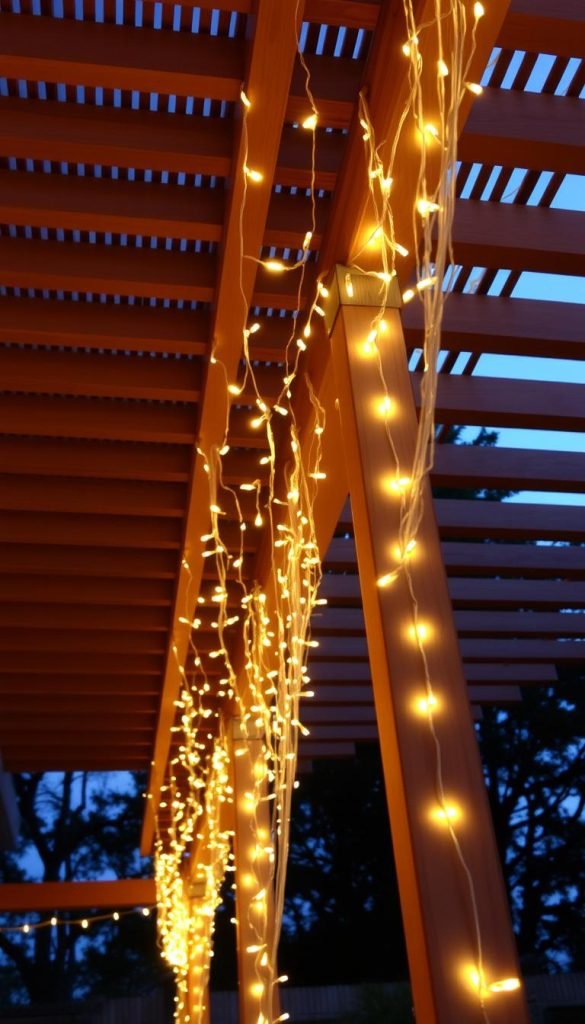
Layout and support
I measure bays in feet, then mark support points every 1–3 feet. I install removable hooks or cup hooks on beams and use S‑hooks where hardware allows.
Step-by-step install
I run a thin support wire for any open span over 8 feet, then attach the strand to that wire so tension sits on the cable not the bulbs. I weave the string along posts and rafters, switching between hooks, zip ties, and adhesive cable runners at turns.
Power and finishing touches
I use weatherproof LED strands with shatterproof bulbs and plug into a GFCI outlet. I connect with a rated extension cord, add a timer and dimmer, and wrap plug joins with electrical tape so cords stay seated under modest tension.
“Make sure supports sit every 1–3 feet and leave a small gap between parallel runs for airflow.”
Hanging lights around a yard without trees, nails, or holes
I frame open yards with removable posts so I can string lights around seating areas and remove them when the season ends.
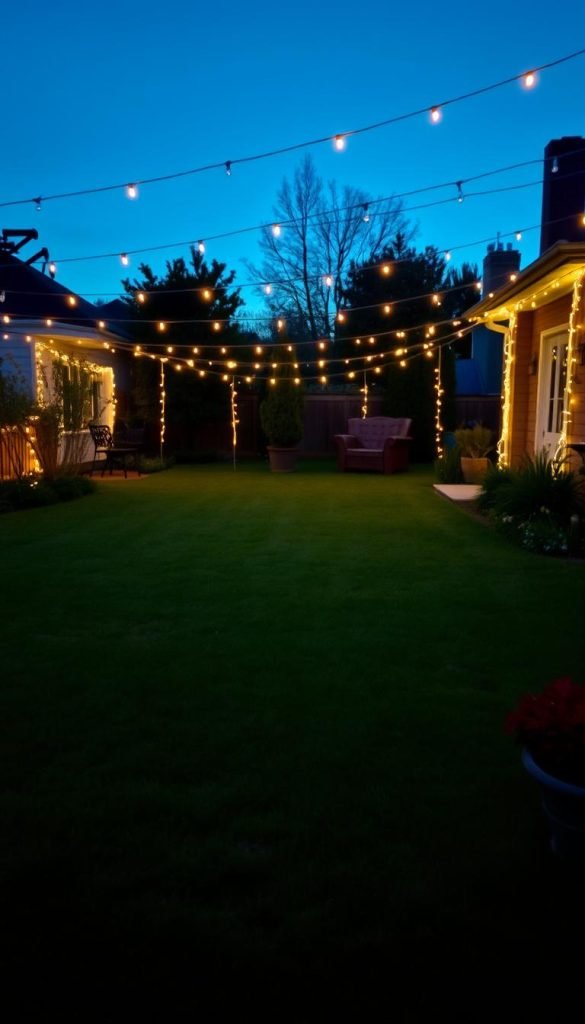
I make removable planter posts or conduit poles for a tidy, nonpermanent install. For conduit, I sink 2‑foot PVC sleeves into soil, paint 3/4″ x 10′ metal conduit, then drop the pole into the sleeve.
I add a squeeze connector on top and tension a thin wire so long spans stay level. Then I clip the string light to the guide wire so bulbs carry no load.
Fence-mounted tubing and cable kits
I zip‑tie 1″ aluminum square tubing to fence posts and mount hooks at the top. A cable kit keeps sag away on long runs and makes the fence act like a stable backbone.
- I start near a safe outdoor outlet and run an outdoor extension cord down a pole, using a timer for dusk activation.
- I trim tie tails and snug cable tension so the whole setup looks intentional and stays quiet in wind.
- I avoid hanging over pools and keep cords and power well clear of splash zones.
No-drill and low-impact options for interiors
I prefer damage‑free fixes indoors so I can change decor without leaving marks.
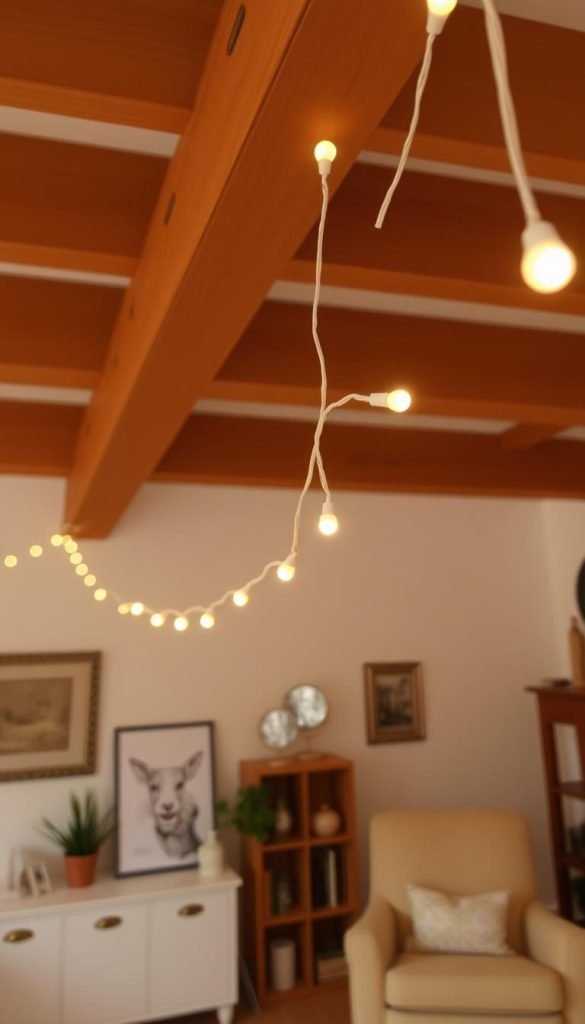
I often use adhesive clips sized to strand weight. They hold string lights on walls and ceilings and remove cleanly later.
For ultra‑light fairy string, adhesive putty works well. I press pea‑sized bits every foot so the run stays taught and mark‑free.
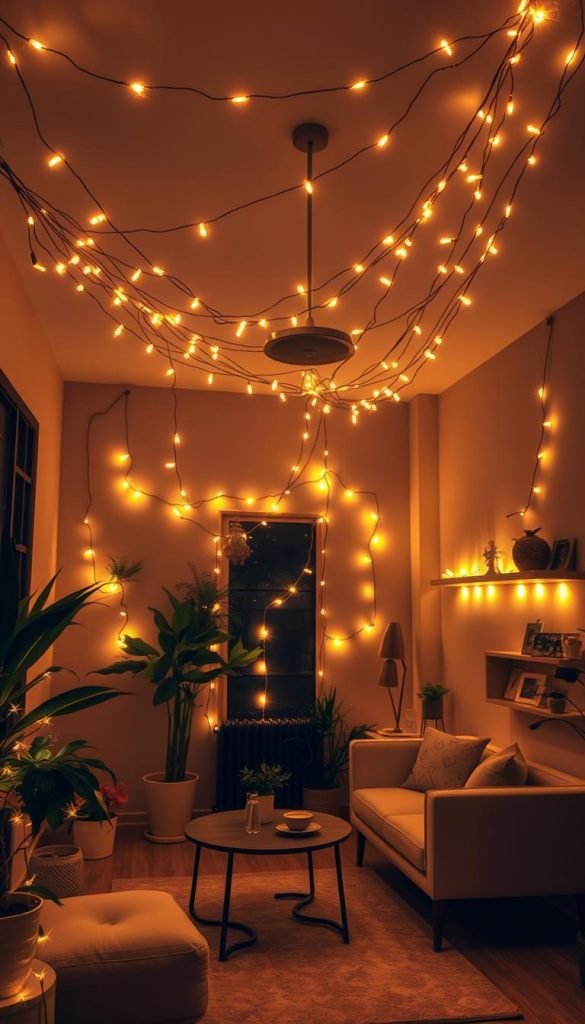
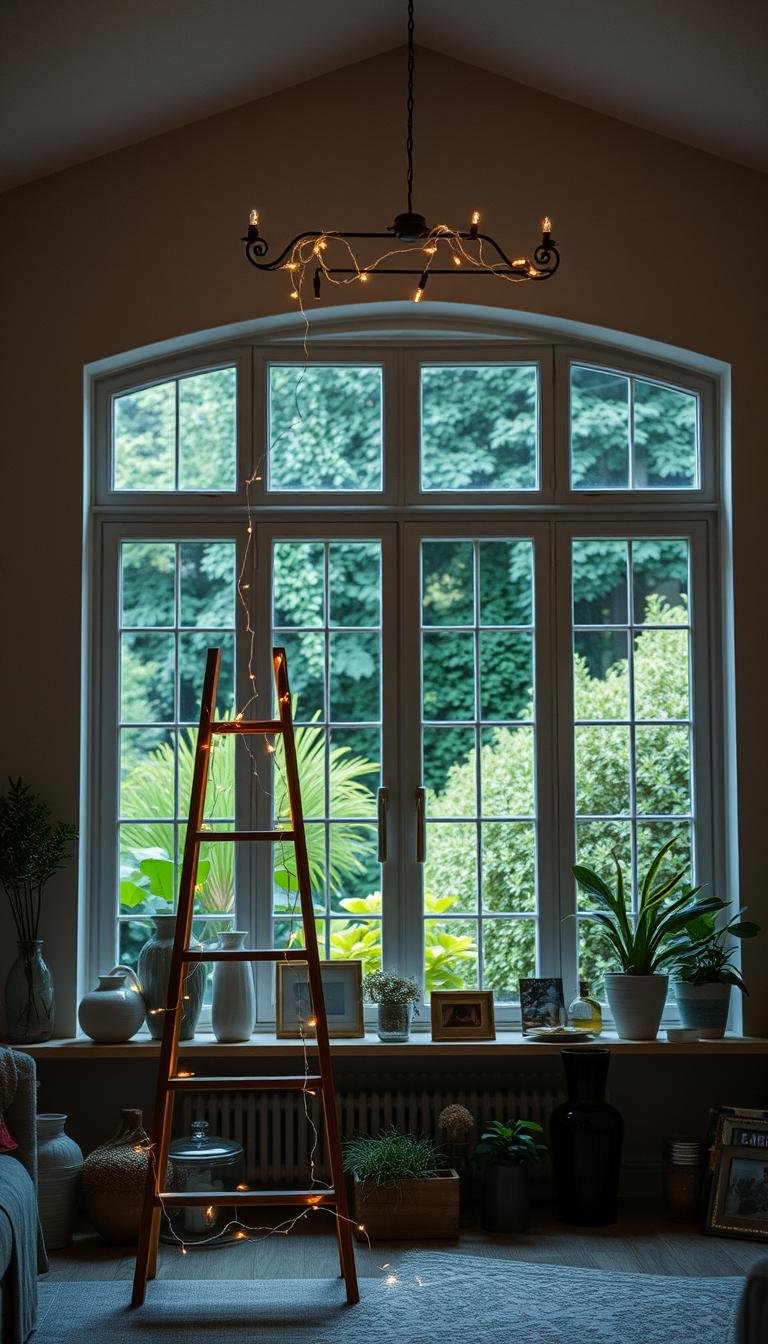
I also use clear heavy‑duty tape on the wire only, never over bulbs. Suction cups with small hooks let me swag across windows. I wrap strands around curtain rods near outlets for soft backlighting.
- Quick tips: match clip size to strand weight; keep cords along baseboards with tiny cable clips.
- If I accept tiny marks, pushpins or staples on hidden edges work and are easy to patch later.
- I use removable hooks for hanging string near heavier fixtures and drape lights over mantels or banisters for instant ambiance.
| Method | Hold strength | Best surfaces | Removability |
|---|---|---|---|
| Adhesive clips | Medium–High | Painted walls, trim | Peels clean |
| Transparent tape / putty | Low–Medium | Shelves, frames, small decor | Leaves no holes |
| Suction cups | Medium | Glass, mirrors | Reusable |
| Drape over furniture | Low | Bookcases, banisters | Instant, no hardware |
| Pushpins / staples | Medium | Hidden edges | Small holes |
Keeping everything safe: cords, weight, weather, and wires
My first move is a quick safety checklist: cords, plugs, bulb condition, and clearance from water.
Outdoor-rated cords and GFCI protection are nonnegotiable for my outdoor string lights. I plug only into GFCI outlets and use an outdoor-rated extension cord when I need extra reach.
I inspect every strand for cracked insulation, loose bulbs, or frayed wires before I start. If anything looks worn I replace it — old parts invite shorts and hazards.
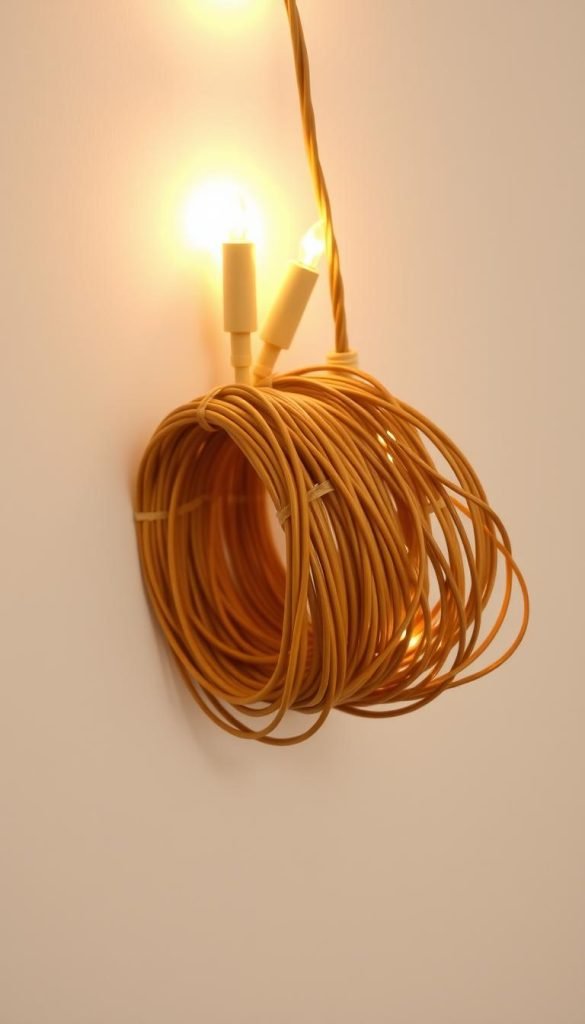
Airflow, spacing, and cool-running bulbs
I space runs a couple inches apart so air moves between bulbs. I pick LED bulbs because they run cool and reduce fire risk. Make sure supports share the load so bulbs do not carry weight.
Guide wires, cable kits, and high-wind runs
For spans over about 8 feet or in windy areas I add a guide wire or a full cable kit. That places tension on a strong wire, not the string. I also add more attachment points and use shatterproof bulbs where gusts are common.
- I keep connections off the ground and protected from direct rain.
- I wrap plug unions with electrical tape where tension might pull them apart.
- I route cords along edges and secure them with clips so no one trips.
- I never hang string light runs over pools or spas; I keep power well away from water.
| Risk | Preventive step | When to apply |
|---|---|---|
| Frayed wires | Replace entire strand | Before installation |
| Long open spans | Install guide wire or cable kit | Over ~8 feet or windy spots |
| Plug separation under tension | Wrap unions with tape; use strain relief | Any exposed plug join |
| Water exposure | Use GFCI outlet & keep connections raised | Near sprinklers, patios, or rainy climates |
Make it look intentional: design ideas I love
I start with a simple plan that names zones and routes so every run feels purposeful.

Drape patterns for dining zones, fire pits, and outdoor living areas
I design overhead patterns that follow beams and rails so installations feel planned, not accidental.
For dining tables I use gentle swag drapes or a tight zigzag grid. That gives even light over the table and keeps glare out of guests’ eyes.
Over a fire pit I run taut diagonals that draw the eye to the center. A cable kit keeps those lines crisp and safe around flames.
Warm white LED versus cool white and using dimmers for mood
Warm white LEDs (around 2700K) create a cozy café vibe that suits evenings and meals. I reserve cool white for task areas or modern outdoor living setups.
I add dimmers and timers so I can raise brightness for prep and lower it for late-night chats. Layering one high run for ambient light with a lower accent run adds depth and avoids circuit overload.
“I frame dining zones with swags, use taut diagonals at fire pits, and border yards along fences for a finished look.”
- Frame dining zones with swag drapes or a zigzag grid for even light.
- Use cable kits for long or taut spans near heat sources.
- Create a soft perimeter along fences so lights around the yard feel finished.
- Swap bulb styles or add lanterns seasonally for fresh looks.
| Use | Pattern | Recommended finish |
|---|---|---|
| Dining zone | Swag drape / tight zigzag | Warm 2700K LED, dimmer |
| Fire pit | Taut diagonals | Cable kit, shatterproof LED |
| Fence / perimeter | Consistent spacing border | Low-profile bulbs, even spacing |
Conclusion
, I wrap up by stressing that matching surface type with removable hardware keeps finishes safe and installs sturdy.
Plan first, then pick gear that really holds. For outdoors I use Command Outdoor hooks and clips, vinyl siding and brick clips, S‑hooks, zip ties, and adhesive cable runners spaced every 1–3 feet. For long spans or breeze, I add a guide wire so the string rides the cable, not the bulbs.
I choose shatterproof LED bulbs, plug into a GFCI with an outdoor extension cord, and set a timer or dimmer. Indoors I use adhesive clips, tape, putty, or suction cups and curtain‑rod wraps so I avoid holes entirely.
Measure your route, tidy cords, check connections, and tighten lines gently. Do this and your hanging lights will look intentional, safe, and ready for evenings spent outside or in.