How can I make my patio heater double as décor?
I want a heating piece that feels like furniture, not an afterthought. I picture my outdoor space the way I view my living room: purposeful, cozy, and styled. That means choosing a patio heater that adds visual interest while giving dependable heat for nights spent outside.
Today’s models range from lamp-like and pendant silhouettes to sculptural fire bowls and built-ins. Experts such as Declan Kingsley-Walsh note that fireplaces and built-ins can zone an area and invite gathering, while Joe Reeve highlights the rise of portable, freestanding heaters for flexibility.
I think about where people sit, how air moves, and how the piece ties into furniture, plants, and lighting. Placement, concealment of cords and tanks, and realistic options for power and ventilation make a big difference in the final look and performance.
With a clear style direction—modern, rustic, or architectural—I pick a heater that anchors conversation and adds warmth without compromising the overall design of my home patio.
Key Takeaways
- View the patio as a room and choose a heater that acts like furniture.
- Pick a style that matches the overall design for a cohesive look.
- Consider placement, airflow, and seating to anchor conversation areas.
- Hide cords and tanks for a polished, intentional appearance.
- Opt for portable models if you need flexibility for different gatherings.
What “doubling as décor” means for my outdoor space
I focus on pieces that feel intentional—fixtures that look like art and work like heaters. That means choosing models that read like lighting or sculpture and add to the room-like quality of the patio.
Pendant units hang neatly from pergolas, arbors, or canopies and layer warmth over dining tables much like an indoor chandelier.
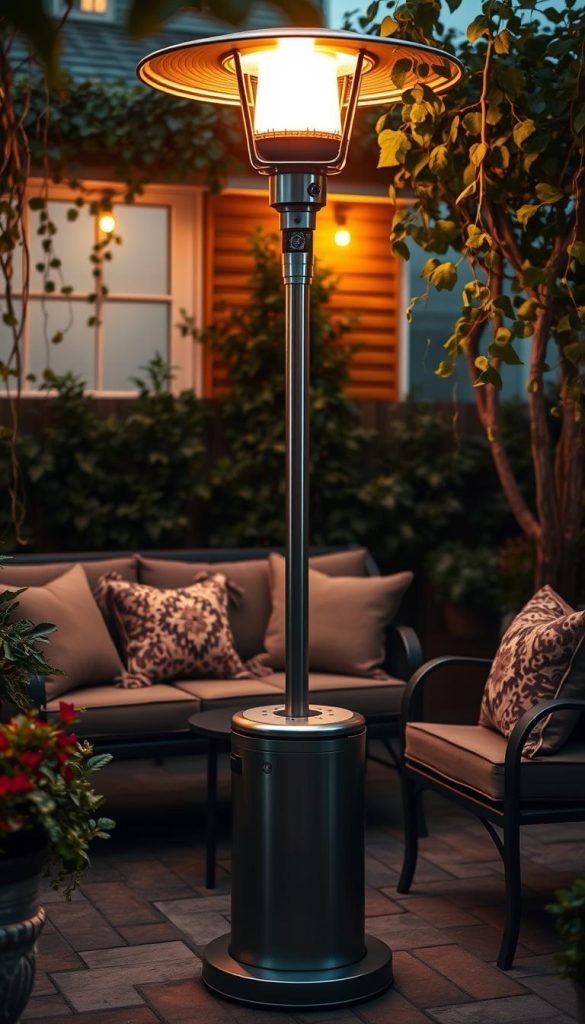
Lamp-like standing models resemble floor lamps and slip between lounge and dining areas for an instant ambiance upgrade.
Style-forward models
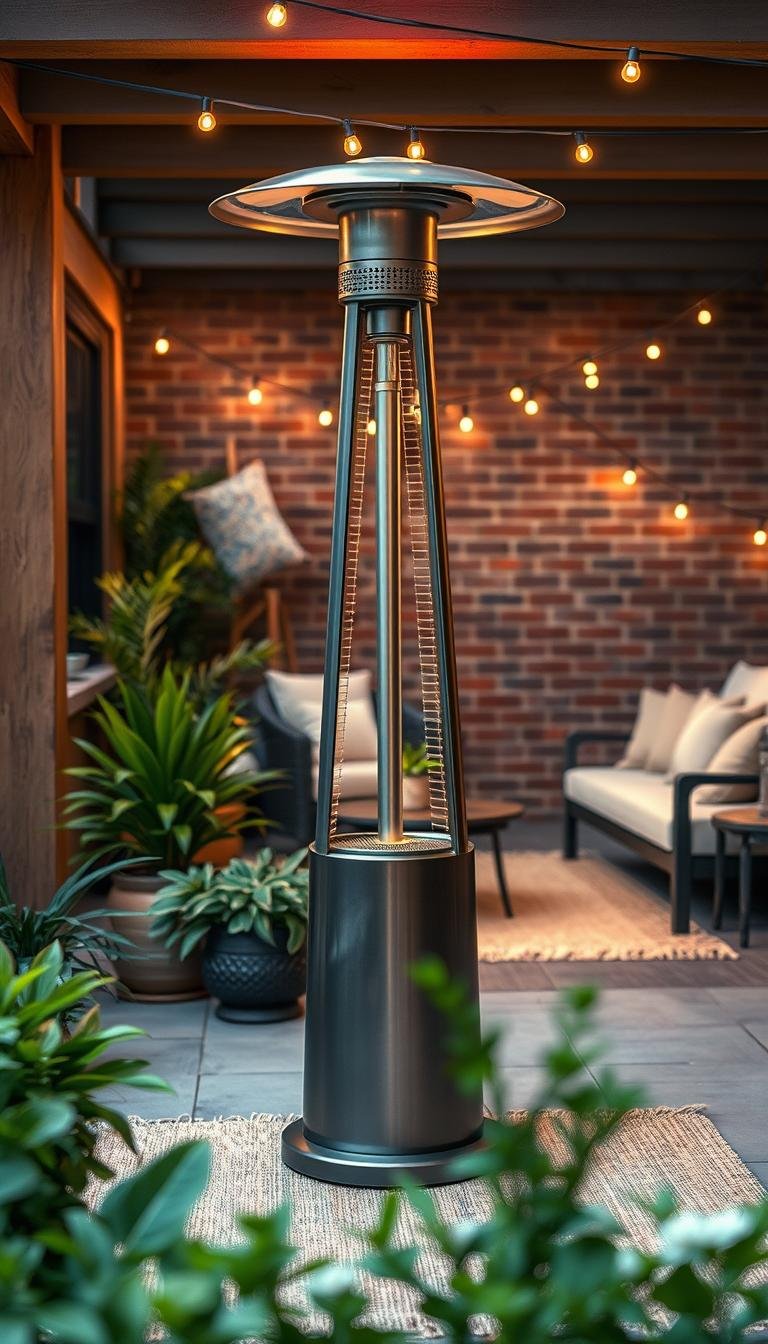
I favor sculptural silhouettes—slender poles, dome shades, and geometric forms—that act like outdoor art while still giving steady heat.
Finishes and materials that elevate the look
Stainless steel offers a modern, weather-resistant sheen. Concrete and stone bring weight and a contemporary edge that anchors seating groups.
“A well-chosen piece should invite people in and look intentional from every angle.”
- Repeat black accents or brushed metals across fixtures to create rhythm.
- Match color and finish with planters and pergolas so everything feels curated.
- Check proportions so the size suits smaller areas and larger gathering areas alike.
How can I make my patio heater double as décor?
I decide whether a heating piece should slip into the background or take center stage in the seating plan. With that decision I choose finishes, scale, and placement so the unit reads like furniture rather than an afterthought.
Blend-in versus standout choices
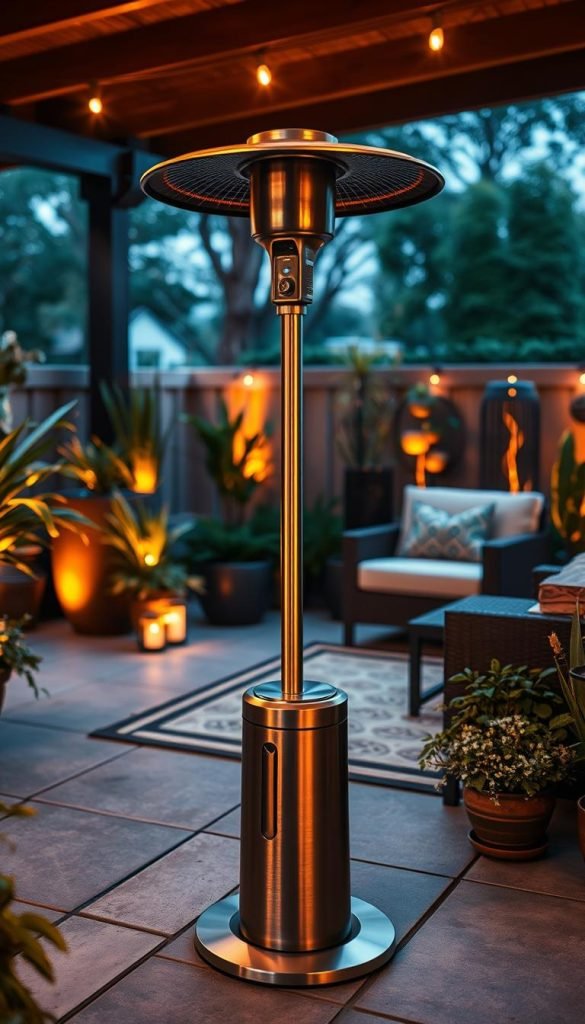
Blend-in: match metal tones and finishes to railing, lanterns, and furniture so the piece fades into the overall scheme.
Standout: pick a contrasting silhouette or color to create an intentional focal point that sparks conversation.
Building a cohesive palette
- Repeat two or three textures—concrete, woven rattan, and soft fabrics—to tie seating and the unit together.
- Use black fences or pergolas to lift neutral furniture and plant textures for a unified look.
- Center the appliance on a focal axis to make it read as intentional, not incidental.
Smart concealment for a curated look
Route cords along posts, hide tanks in integrated compartments, and keep walkways clear for comfort and safety.
“Portable, freestanding models let me shift heat where guests gather.”
Outdoor heating ideas offer more tips on balancing form and function.
Choosing the right outdoor heater type for form and function
I weigh installation, fuel access, and how each style shapes sightlines and seating. That helps me pick a unit that fits the scale and use of the space.
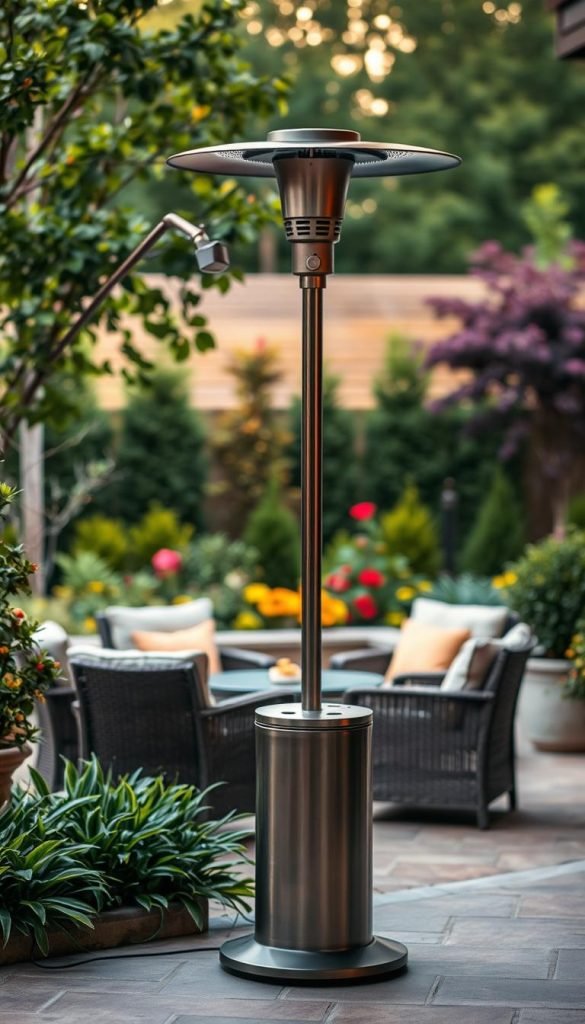
Electric and infrared heaters: instant warmth and sleek profiles
Electric patio and infrared units give immediate warmth without fumes. They suit pendant mounting over dining or wall attachment for targeted heat.
Setup is simple, but the radius of heat is smaller than gas, so I place them near where people sit.
Propane and natural gas: freestanding flexibility vs. permanence
Propane units move between zones and offer strong output. Natural gas models require a line and pro installation, yet they give steady, long-term warmth.
Bioethanol fireplaces: clean flame, portable style
Bioethanol burns smokeless and odorless. It’s efficient and adds a stylish, movable fireplace without complex venting or wood fuel.
Fire pits, chimineas, and fire pit tables
Fire pits and chimineas provide rustic charm and real flame; plan placement and clearances carefully. Fire pit tables pair heat with surface—round shapes invite conversation, rectangular ones suit lounge layouts.
- Materials: stainless steel for durability; concrete for weight and contemporary looks.
- Practical notes: factor fuel, installation, and maintenance costs when choosing models.
Planning my patio layout for warmth, sightlines, and ambiance
I map seating, wind paths, and sightlines before I place any heating element. That simple step saves energy and keeps guests comfortable without overworking a single unit.
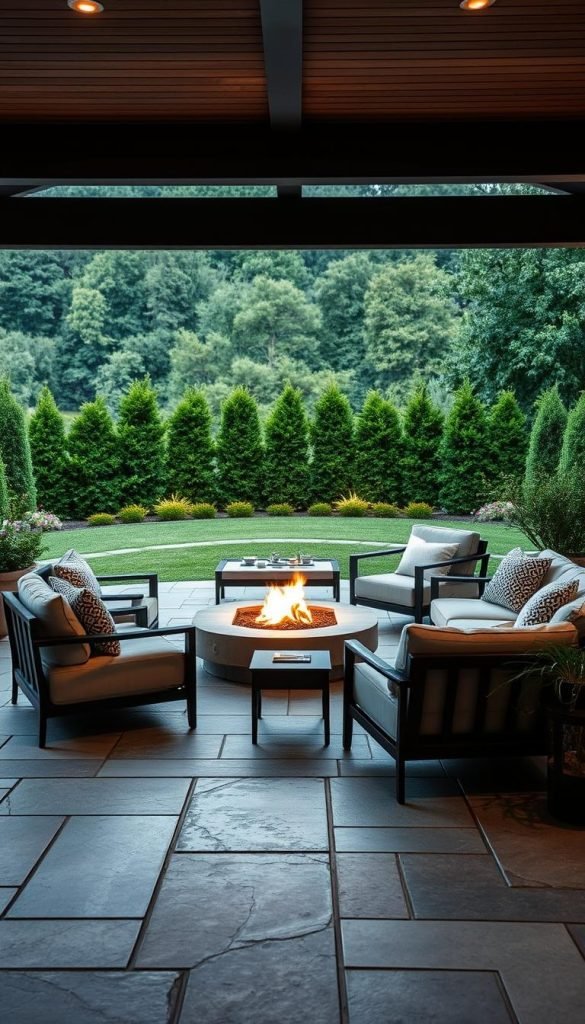
Blocking wind with trellises, pergolas, gazebos, and tall planters
Trellises and pergolas reduce drafts and trap heat near seating. A gazebo creates a sheltered, intimate area that feels cozy in cooler months.
Tall planters or hedging stop cross-breezes while keeping views open. These barriers help heaters do less work for more warmth.
Seating shapes around the flame: circular chats vs. linear lounge zones
Circle seating around a fire pit gives even heat and easy conversation. Linear arrangements suit longer decks and modern sectional layouts.
Add throws and cushions to trap heat at the body. Cluster side tables so guests reach drinks without crowding the flame.
Zoning and focal points: defining dining, lounging, and bar areas around heat
- Anchor dining under a pergola with a pendant or patio heater overhead.
- Create a lounge around a low fire pit table for layered zones and relaxed ambiance.
- Place heaters at zone edges for balanced coverage and keep clear paths to avoid hot surfaces.
“Pull seating in for winter and tighten wind protection to keep warmth where people sit.”
Styling moves that elevate the look without sacrificing heat
I arrange layers of light and texture so the seating area feels like an outdoor living room at dusk. Small touches make a big difference when I want both style and warmth in my outdoor patio.
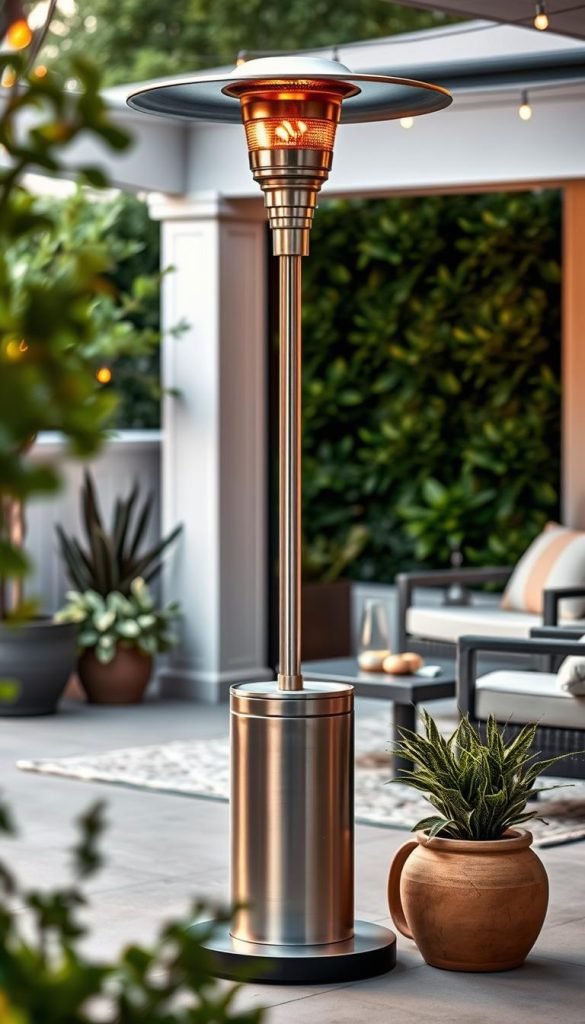
Lighting layers
I layer lighting — string lights, lanterns, and warm-toned bulbs — to extend the glow of the flame and create a welcoming ambiance. I match bulb temperature to the fire so faces look natural after dark.
Textiles for comfort
Cushions and throws boost comfort and hold warmth close to the body without upping output. I pick durable, water-resistant fabrics in colors that echo the heater’s finish for a cohesive vignette.
Surfaces that serve
Fire pit tables double as coffee tables, and nearby side tables give guests a place for plates and glasses without crowding the heat source.
- I use lamp-like standing patio heaters where a floor lamp would sit indoors to bridge form and function.
- I add an outdoor rug to unify seating and hide cord routes for electric patio units.
- I keep décor low-slung near heaters to preserve airflow and safety clearances.
“Layer lighting and textiles to keep the scene inviting through winter nights.”
Safety, size, and seasonal maintenance—without losing style
My priority is to confirm safe distances and predictable smoke patterns before choosing any heating source.
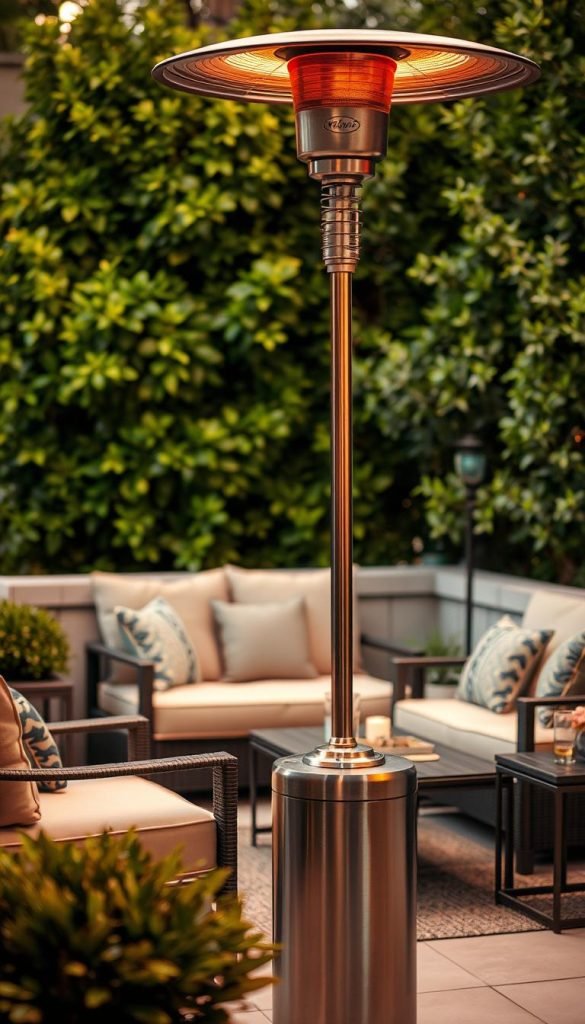
Clearances, ventilation, and smoke direction for covered areas
Verify clearances on all sides and above the unit, especially under pergolas or gazebos. Keep the appliance away from low branches and nearby walls.
Plan smoke direction for wood-burning fire pit or chiminea setups so prevailing winds do not blow smoke toward the home or neighbors.
Secure placement on stable decking or pavers and anchor freestanding pieces to prevent tipping in windy conditions.
Fuel choices, efficiency, and costs
Match fuel to ventilation: propane units offer convenience and portability, but need outdoor air and distance. Natural gas requires professional installation and steady ventilation.
Consider clean-burning options: bioethanol is smokeless with no ash, and electric units give zero emissions where they run.
- Check output versus area so the unit provides even heat without overheating nearby materials.
- Factor ongoing fuel costs and installation time when choosing a source for long-term use.
Off-season care: covers, storage, and finish-friendly cleaning
Protect stainless steel and coated materials with weatherproof covers during winter. Store portable tanks and cords neatly to keep the space curated.
Schedule seasonal checks: gas-line inspections, burner cleaning, and safe fuel storage. Empty ash from wood fire pits responsibly and clean per manufacturer guidance.
“A little seasonal upkeep keeps style and safety working together.”
For a deeper selection guide, see the patio heater guide to match safety, size, and fuel choices to your outdoor patio.
Conclusion
Strong, purposeful choices turn a heating unit into a design anchor. Choose a fire pit table or sculptural fire pit to centralize seating and set the tone for the outdoor space.
Match fuel and finish to use and maintenance: stainless steel propane models offer durability and a modern look; bioethanol units give a clean, smokeless flame and portability; gas or wood have different venting and service needs.
Conceal cords and tanks, use pergolas or hedging to block wind, and add layered lighting and textiles to extend comfort without boosting energy. With those moves, a patio heater becomes part of the room and delivers steady heat for evenings that feel intentional and welcoming.