What’s the ideal height for a bathroom towel bar so kids can reach it?
As a parent, I often get asked about finding the perfect placement for towel bars in family bathrooms. Getting this right makes a huge difference in daily routines.
Proper positioning helps children gain independence and ensures bathroom safety. I’ve installed many of these in my own home, learning through trial and error.
This guide will help you create spaces your little ones can use comfortably. We’ll consider both current needs and future growth when planning.
The right placement encourages good hygiene habits by making towels easily accessible. While standard guidelines exist, your family’s needs matter most.
We’ll explore measurements, installation tips, and alternative solutions together. Let’s make your bathroom work for everyone!
Key Takeaways
- Proper towel bar placement promotes children’s independence and safety
- Consider both current needs and future growth when installing
- Accessible towels encourage good hygiene habits in kids
- Standard guidelines exist but individual family needs vary
- Alternative solutions are available for different bathroom layouts
- Measurements should accommodate your child’s specific reach
- This guide covers practical installation tips and considerations
Understanding Standard Towel Bar Heights for Adults
When planning bathroom layouts, knowing standard measurements helps create functional spaces. These guidelines come from years of design experience and ergonomic research.
Most manufacturers follow established conventions that work well for typical users. I’ve found these standards create comfortable, accessible bathrooms for grown-ups.
The 48-Inch Standard for Most Adults
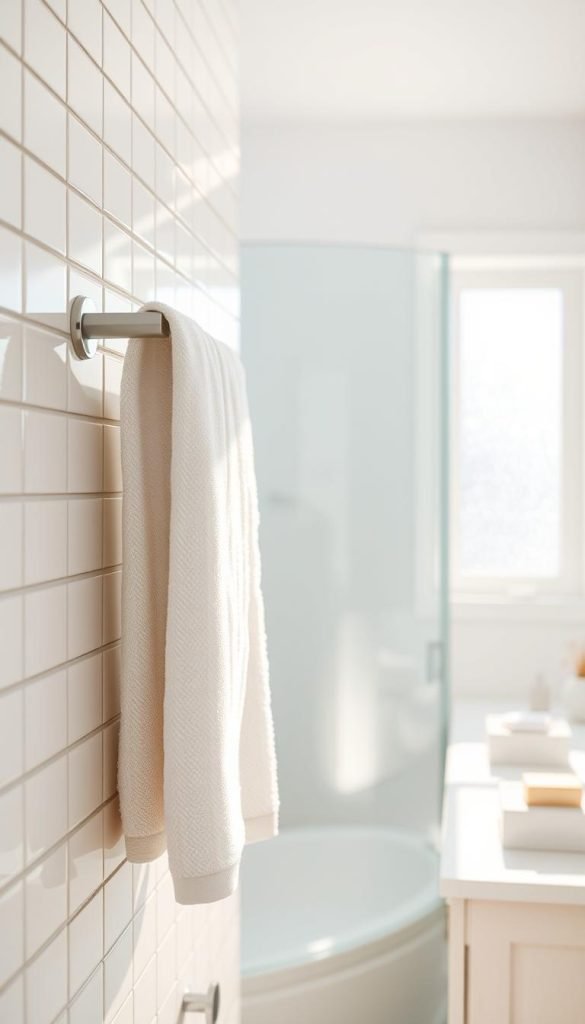
The industry typically recommends mounting towel bars at 48 inches from the floor. This measurement works perfectly for average-height users.
At this level, most adults can reach their towels without bending or stretching. The bar sits comfortably at shoulder level for natural access.
Through my installations, I’ve noticed this height feels intuitive for daily use. People appreciate not having to think about reaching for their towels.
Why This Height Works for Average Users
Ergonomic studies support the 48-inch placement for comfortable access. This position minimizes strain during daily bathroom routines.
While 48 inches is the standard, some flexibility exists within the 42-48 inch range. Personal preference and user height can influence the final placement.
Standard heights create consistency across bathroom designs. They help maintain visual balance with other fixtures and accessories.
Towel bars come in various lengths to accommodate different needs:
- 18-inch models work well in compact spaces
- 24-inch versions handle oversized towels comfortably
- 30-inch options can hold two standard towels side by side
This standardization makes planning and installation straightforward. It ensures towels hang properly without touching the floor or other surfaces.
Understanding these adult standards helps when considering children’s needs. The differences become clear when comparing accessibility requirements.
Special Considerations for Children’s Bathrooms
Creating functional spaces for young family members requires thoughtful planning. Kids’ bathrooms need special attention to detail that differs from adult spaces.
I’ve learned through personal experience that proper placement makes daily routines smoother. Children feel more confident when they can access their towels independently.
The right setup encourages good habits and prevents frustration. It’s amazing how small adjustments can transform bathroom experiences for little ones.
Recommended Height Range for Kids
For children’s spaces, I recommend mounting towel bars between 36 and 48 inches from the floor. This range accommodates various ages and growth stages beautifully.
The lower end works perfectly for preschoolers and younger children. As kids grow taller, you can utilize the higher end of this spectrum.
“Proper towel placement empowers children to take ownership of their hygiene routine while building confidence in their daily abilities.”
This flexibility ensures the bathroom remains functional for years. I always consider both current needs and future growth when installing these fixtures.
Age-Appropriate Adjustments
Different age groups require specific considerations for optimal accessibility. Through trial and error, I’ve developed these practical guidelines.
For toddlers and preschoolers, 36 inches works wonderfully. Elementary-aged children typically need bars around 42 inches for comfortable reach.
Teenagers can usually use the standard 48-inch placement. These measurements ensure every family member can access their towels easily.
When multiple children share a bathroom, consider these solutions:
- Install multiple bars at different heights
- Use adjustable systems that grow with your children
- Combine bars with hooks at various levels
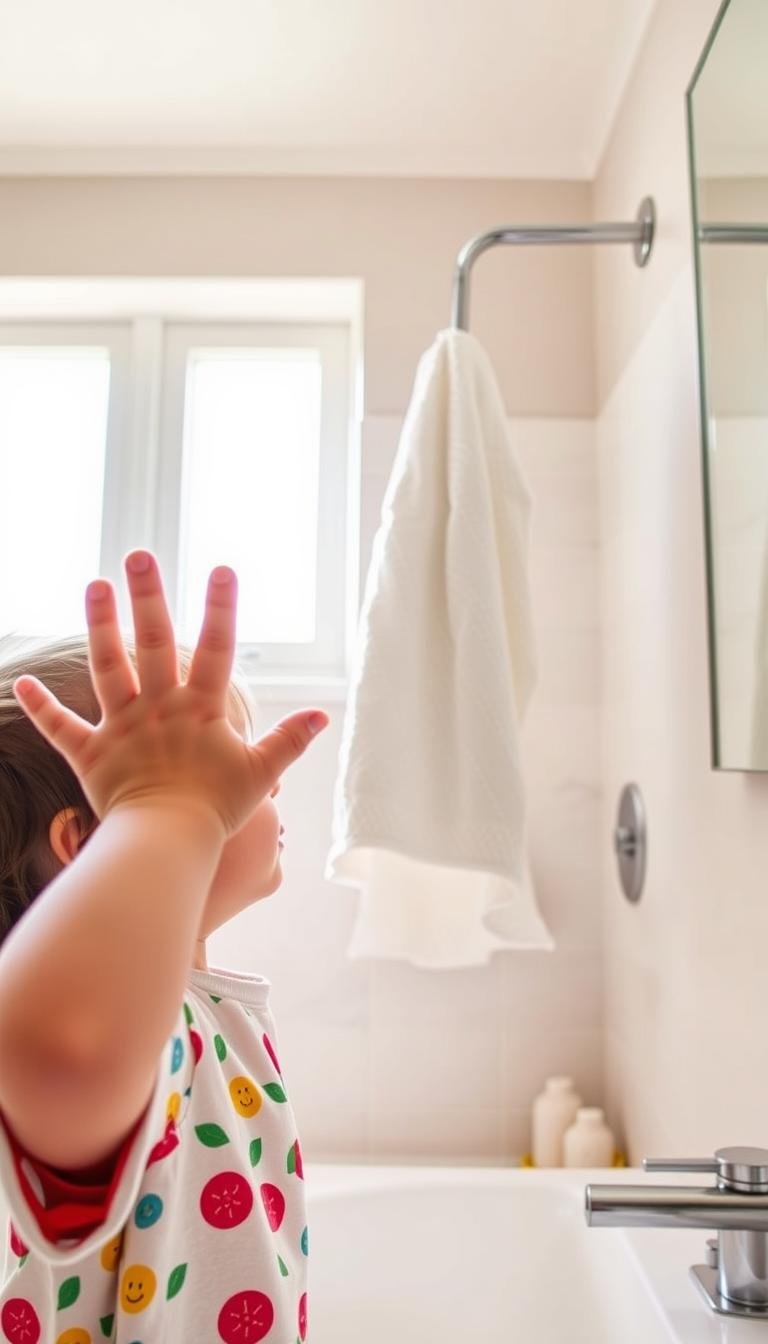
I always involve children in the measurement process. Having them reach upward helps determine the perfect placement for their specific needs.
Safety remains crucial during installation. Ensure bars are securely mounted to support active use and prevent accidents.
| Age Group | Recommended Height | Key Considerations |
|---|---|---|
| Preschoolers (3-5) | 36 inches | Promotes independence, easy access |
| Elementary (6-11) | 42 inches | Accommodates growth, encourages responsibility |
| Teenagers (12+) | 48 inches | Standard adult height, prepares for adulthood |
Planning for future adjustments saves time and money. Consider adjustable mounting systems that accommodate growing children without requiring complete reinstallation.
Lower towel bars do more than provide access—they build confidence. Children take pride in managing their own bathroom routines when everything sits within comfortable reach.
Remember that every child develops at their own pace. These are guidelines rather than strict rules—observe your children’s abilities and adjust accordingly.
What’s the Ideal Height for a Bathroom Towel Bar So Kids Can Reach It?
Finding that sweet spot for mounting takes some thoughtful consideration. Through my installations, I’ve discovered several key factors that determine perfect placement.
Every child’s needs differ based on their unique physical development. The right position encourages independence while ensuring safety.
The 36-48 Inch Range for Child Accessibility
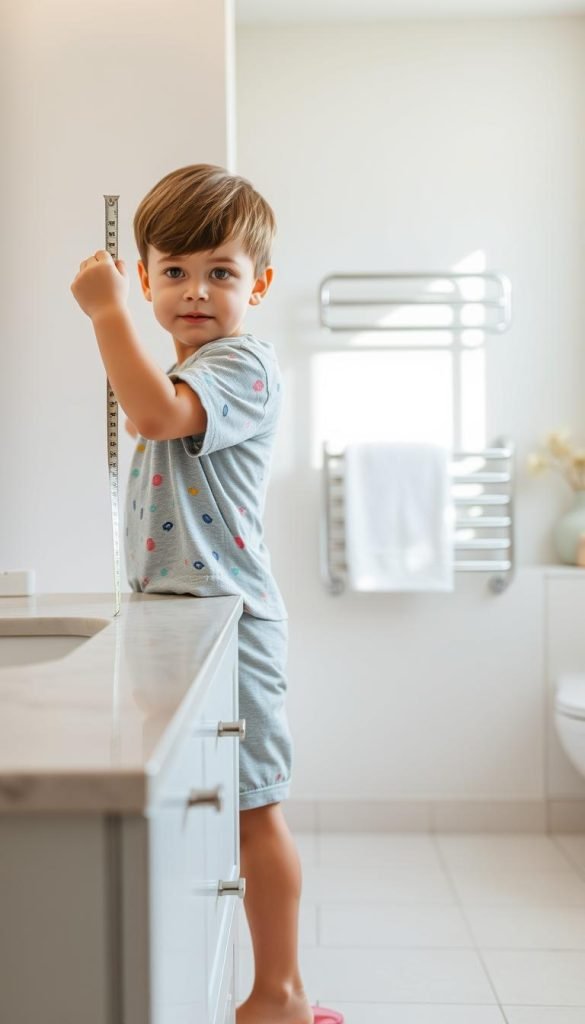
This measurement span accommodates most young users beautifully. I typically start at shoulder level for the most comfortable access.
For preschoolers, I aim for the lower end around 36 towel bar inches. Elementary-aged children usually need about 42 inches from the floor.
Here’s my approach to finding the perfect spot:
- Have your child stand naturally against the wall
- Measure from floor to their shoulder height
- Add 2-3 inches for towel clearance
- Mark this spot for potential installation
This method ensures they can reach without straining or tiptoeing. The towel should hang comfortably within their natural grasp.
Factors That Influence the Perfect Height
Several elements affect where you should mount the fixture. I always consider these aspects during installation.
The child’s age and height matter most initially. Their mobility and reach capacity also play important roles.
Bathroom layout significantly impacts placement decisions. Proximity to the shower or toilet determines practical accessibility.
Larger towels need more clearance from the floor. Heavier fabrics require sturdier mounting on the wall.
I recommend considering these additional factors:
- Multiple children sharing the space
- Future growth and development
- Available wall space near wet areas
- Type of towel bar or hook system
Adjustable systems work wonderfully for growing families. They allow easy modification as children develop.
Through my experience, I’ve found that involving children in the process yields the best results. Their comfort and confidence increase when they participate in planning their space.
Practical Measurement Techniques for Your Space
Getting accurate measurements makes all the difference in creating functional spaces. I’ve developed reliable methods that ensure perfect placement every time.
These techniques help avoid common installation mistakes. They save time and ensure your bathroom works beautifully for young family members.
The Shoulder-Level Test Method
This simple technique gives you the perfect starting point for installation. I use it in every child’s bathroom project.
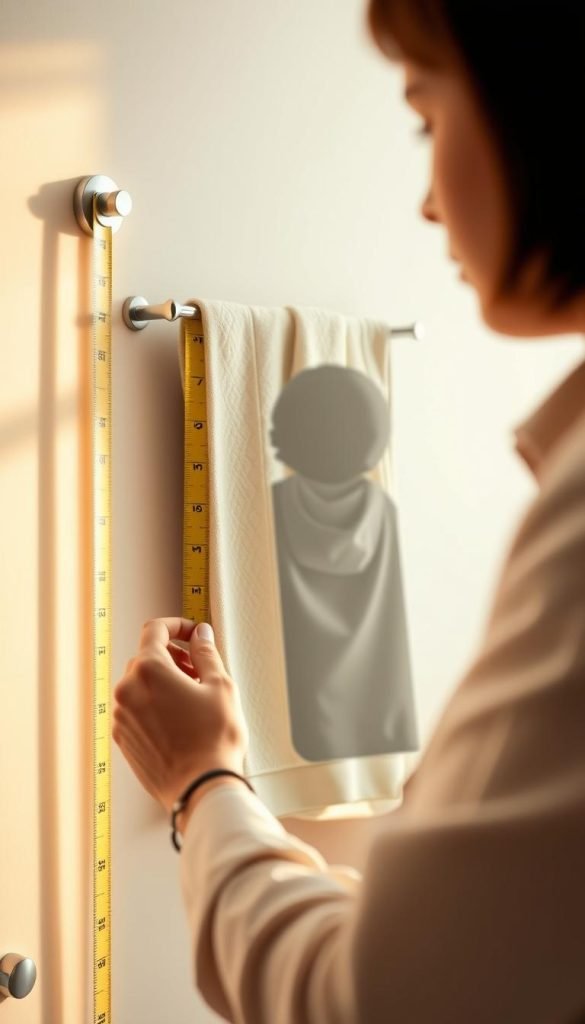
Have your child stand naturally against the wall where you plan to install. Mark where their shoulder hits the surface – this becomes your reference point.
Here’s my step-by-step process:
- Place a small piece of painter’s tape at shoulder height
- Add 2-3 inches for comfortable towel access
- Measure from the floor to this adjusted mark
- This measurement gives you the ideal bar position
The method ensures children can reach without straining. It accounts for their natural reach and movement patterns.
Accounting for Towel Length and Clearance
Proper clearance prevents towels from touching the floor or other surfaces. I always consider fabric length during planning.
Standard bath towels measure about 55 inches long. When folded over a bar, they need approximately 27.5 inches of clearance.
Ensure the bottom hangs at least 8 inches above the floor. This keeps towels clean and prevents moisture transfer.
Consider these factors for different towel types:
- Heavier towels may require more substantial mounting
- Longer bath sheets need additional clearance space
- Lighter hand towels work well with less distance
Test different towel weights before final installation. The right clearance keeps everything functional and tidy.
Involving Your Children in the Process
Including young family members creates excitement and ensures perfect fit. I always encourage participation during measurement stages.
Children feel proud when they contribute to home projects. Their input helps create spaces that truly work for them.
“When children help measure their own space, they develop ownership of their environment and feel empowered in daily routines.”
Make it fun by using colorful tape for markings. Let them place temporary hooks to test different heights.
Try these engagement techniques:
- Use a fun level tool for younger helpers
- Let them stick the painter’s tape markers
- Have them reach for imaginary towels
- Celebrate finding the “just right” spot
This involvement builds anticipation for the finished project. Children appreciate having input into their personal space.
Test different locations before drilling holes. Temporary solutions help visualize the final result.
Consider placement near the shower, vanity, or open wall areas. Each location might require slight adjustments.
Remember that the perfect spot combines accessibility with practicality. Your measurements should work for both current needs and future growth.
Installation Tips and Best Practices
Getting your mounting right makes all the difference in creating a bathroom that works for years. I’ve learned through experience that proper setup prevents frustration and ensures safety.
Children need sturdy fixtures that can handle daily use without wobbling. The right approach combines secure mounting with thoughtful planning for future needs.

Finding Wall Studs for Secure Mounting
Locating studs is the most crucial step in any towel bar installation. I always use an electronic stud finder for accurate detection.
Studs provide the strongest support for mounted fixtures. They prevent bars from pulling out under the weight of wet towels.
Here’s my reliable process for stud finding:
- Calibrate your stud finder according to manufacturer instructions
- Move the tool slowly across the wall surface
- Mark both edges of each stud with painter’s tape
- Confirm findings with a small pilot hole if needed
For tile or plaster walls, special considerations apply. I recommend consulting a professional for these challenging surfaces.
Proper Hardware Selection
Choosing the right hardware ensures your installation lasts through years of use. I consider both wall type and expected weight when selecting components.
Heavy wet towels require substantial support. Standard drywall anchors often prove insufficient for daily family use.
These hardware options work best for different situations:
- Toggle bolts for heavy loads on drywall
- Molly bolts for medium-weight applications
- Direct stud mounting for ultimate security
- Specialty anchors for tile or plaster surfaces
Always match screw length to your wall thickness. The right hardware prevents loose fittings and potential accidents.
Considering Future Adjustments
Children grow quickly, and their bathroom needs change accordingly. I love installing systems that adapt as kids develop.
Adjustable mounting tracks allow easy height changes without new holes. These systems save time and maintain wall integrity.
During construction or renovation, consider adding blocking between studs. This provides solid mounting points anywhere along the wall.
For existing homes, these solutions work well:
- Multiple bars at different heights
- Adjustable track systems
- Removable adhesive hooks for temporary solutions
- Combination hook and bar arrangements
| Wall Type | Recommended Hardware | Weight Capacity |
|---|---|---|
| Drywall | Toggle bolts | Up to 100 lbs |
| Tile | Tile anchors | Up to 50 lbs |
| Plaster | Wall dogs | Up to 75 lbs |
| Stud mounting | Wood screws | 150+ lbs |
Proper tool selection makes installation smoother. I always use a level to ensure perfect alignment with other bathroom elements like toilet paper holders and accessories.
When troubleshooting installation problems, don’t force components. Sometimes calling a professional saves time and prevents wall damage.
Remember that secure installation creates a safer environment for children. They can use their towels confidently without worrying about loose fixtures.
Alternative Towel Solutions for Kids’ Bathrooms
Sometimes traditional bars don’t work for every family’s needs. I’ve discovered wonderful alternatives that offer flexibility and fun.
Different solutions accommodate various ages and bathroom layouts. These options create accessible spaces that grow with children.
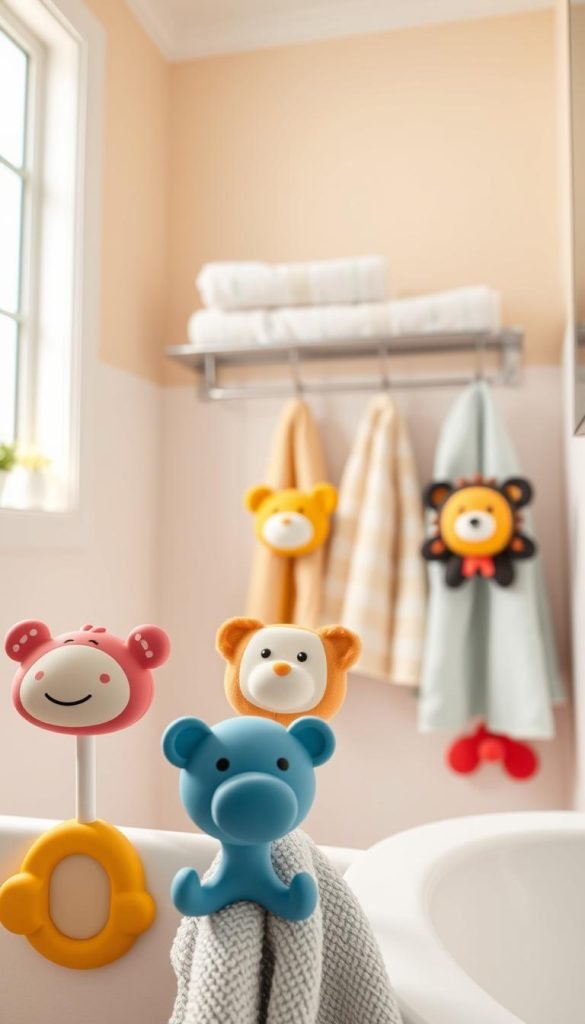
Towel Hooks at Child-Friendly Heights
I love using hooks because they’re so versatile for young users. They work beautifully at various heights for different age groups.
For bath towels, I install hook fixtures between 60-70 inches from the floor. This placement allows towels to hang freely without touching surfaces.
Multiple hooks create personalized spaces for siblings:
- Place lower hooks for younger children around 48 inches
- Install higher hooks for older kids at 60 inches
- Use colorful designs to designate each child’s spot
- Space hooks 8-10 inches apart for adequate room
Always mount into studs for maximum security. This prevents accidents when children pull on their towels.
Towel Rings and Their Placement
Rings offer a charming alternative to standard bars. I find them perfect for hand towels near the sink area.
For wall-mounted rings, 48 inches works well for school-aged children. Vanity-mounted installations should sit 18-22 inches above countertops.
Consider these ring placement tips:
- Choose rings with easy-open mechanisms for small hands
- Ensure adequate clearance for towel thickness
- Position within natural reach zones from key areas
- Select durable materials that withstand daily use
The right size ring accommodates folded towels comfortably. Test different styles to find what works best.
Step Stools as Complementary Solutions
Stools bridge the gap between child and adult heights beautifully. They allow use of standard installations while kids grow.
I recommend sturdy, non-slip models with rubber feet. These provide stable access to higher fixtures safely.
Safety features to look for include:
- Wide bases for stability
- Textured stepping surfaces
- Low profile designs
- Lightweight but sturdy construction
Place stools near the sink or shower area for convenience. Teach children proper step stool usage for independence.
“Combining fixed installations with movable solutions creates bathrooms that work for everyone in the family.”
For robe storage, consider lower hooks near changing areas. This encourages children to hang up garments independently.
Mix and match solutions based on your space and needs. The best approach often combines multiple approaches.
Coordinating Other Bathroom Accessories
Creating a harmonious bathroom space involves more than just towel placement. I focus on making all elements work together beautifully.
Proper coordination ensures children can access everything they need. It also creates a visually pleasing environment for the whole family.
Toilet Paper Holder Placement
Finding the right spot for toilet paper matters greatly. I install holders 26 inches from the floor for easy child access.
This paper holder height works perfectly for little hands. Position it 8-12 inches in front of the toilet for comfortable reach.
Consider these placement tips:
- Mount on the side wall for natural access
- Ensure smooth rolling mechanism for small fingers
- Choose sturdy models that withstand frequent use
- Test different distances before final installation
Matching Robe Hook Heights
Robe hooks need careful consideration for family use. I install them at 70 inches from the floor.
This height accommodates both children and adults beautifully. Younger kids might need a step stool initially.
For optimal functionality:
- Place hooks near changing areas
- Use multiple hooks at varying heights
- Select durable materials that hold weight
- Ensure proper clearance from other fixtures
Creating a Cohesive Look
Visual harmony makes bathrooms feel organized and calm. I align accessories to create flowing sight lines.
Mirrors should sit 38-42 inches to the bottom edge. This placement works well for children and adults.
My coordination strategy includes:
- Matching finishes across all accessories
- Maintaining consistent spacing between elements
- Creating functional zones within the space
- Considering sight lines from the doorway
“A well-coordinated bathroom teaches children about organization while creating a peaceful environment for daily routines.”
I always measure the distance between fixtures carefully. Proper spacing prevents crowded feelings and ensures accessibility.
Choose complementary styles for your hand towel bar and other accessories. This creates visual unity throughout the space.
Test different arrangements before mounting permanently. Temporary solutions help find the perfect spots for everything.
This guide helps create bathrooms that work for growing families. Thoughtful coordination makes daily routines smoother for everyone.
Safety Considerations and Practical Tips
Keeping your family’s bathroom both functional and safe requires attention to important details. I’ve learned through experience that small choices make big differences in daily routines.
Proper planning prevents accidents and maintains cleanliness. These tips help create spaces that work beautifully for everyone.

Understanding the Difference Between Fixtures
Towel bars serve a completely different purpose than grab bars. This distinction matters greatly for bathroom safety.
Decorative towel holders cannot support body weight. They’re designed only for hanging linens, not for stability or support.
Grab bars provide secure anchoring points for safety. They undergo rigorous testing and require professional installation into studs.
I always explain this difference clearly to children. They need to understand that towel bars are for towels only.
Promoting Proper Air Circulation
Good ventilation prevents mildew and keeps towels fresh. Placement plays a key role in effective drying.
Avoid enclosing towels in tight spaces. They need airflow to dry completely between uses.
Position your towel bar away from shower spray. Damp towels breed bacteria and develop unpleasant odors.
Consider these placement strategies:
- Install near ventilation fans or windows
- Allow several inches of clearance from walls
- Choose open areas rather than cramped corners
- Ensure towels hang freely without touching other surfaces
Maintaining Cleanliness Standards
Hygiene matters most in family bathrooms. Proper towel placement helps prevent germ spread.
Keep towels from contacting the floor or toilet. These surfaces harbor bacteria that transfer easily to fabrics.
I recommend this clearance guideline: Ensure the bottom hem hangs at least eight inches above the floor.
Teach children proper towel handling habits:
- Use clean hands when taking towels down
- Hang towels neatly after each use
- Keep personal towels separate from others
- Report any towels that fall on the floor
“Good bathroom habits start with proper setup and clear instructions. Children learn best when their environment supports healthy routines.”
Choose materials that resist moisture and clean easily. Chrome, stainless steel, and plastic work well in damp environments.
Regular cleaning prevents soap scum buildup. Wipe down bars weekly with appropriate cleaners.
Proper bathroom organization makes maintenance easier. Everything has its place when you plan thoughtfully.
Consider these additional safety tips:
- Ensure bars don’t protrude into walkways
- Check mounting hardware regularly for tightness
- Replace any fixtures showing signs of wear
- Keep step stools stable and slip-resistant
Good habits develop over time with consistent reinforcement. Celebrate when children remember to hang their towels properly.
The right setup makes cleanliness easier to maintain. Your bathroom becomes a healthier space for the whole family.
Common Mistakes to Avoid
Through my years of installing family bathrooms, I’ve seen some recurring errors that create frustration. These simple oversights can turn a well-intentioned project into a daily inconvenience.
Learning from others’ experiences helps you create a space that truly works. Let me share the most common pitfalls I encounter and how to steer clear of them.
Placing Bars Too High or Too Low
Finding the sweet spot matters more than you might think. I’ve seen installations where children struggle to reach their towels.
This defeats the purpose of encouraging independence. The opposite problem occurs when bars sit too low.
Towels end up dragging on potentially dirty floors. They stay damp longer and collect germs.
Here’s my rule of thumb: The bottom hem should hang at least eight inches above the floor. This keeps towels clean and accessible.
Ignoring Towel Size and Weight
Many people forget that wet towels become surprisingly heavy. Standard drywall anchors often can’t handle the weight.
I always recommend mounting into studs for maximum security. The right hardware prevents accidents and damaged walls.
Consider these factors when choosing your mounting system:
- Thick bath towels need stronger support than thin ones
- Children’s towels are smaller but still get quite heavy when wet
- Multiple towels on one bar increase the total weight significantly
- Choose hardware rated for at least double the expected load
Overlooking Future Growth Needs
Children grow faster than we anticipate. A perfect installation today might become inconvenient in just six months.
I’ve seen families reinstall bars multiple times as kids grow taller. This creates unnecessary work and wall damage.
Planning ahead saves time and maintains your walls’ integrity. Consider these smart solutions:
- Install adjustable track systems that accommodate height changes
- Use multiple bars at different levels for various age groups
- Combine fixed bars with removable hook options
- Leave space above current installations for future adjustments
| Common Mistake | Consequence | Smart Solution |
|---|---|---|
| Wrong height placement | Inaccessible towels or dirty hems | Measure at shoulder level plus 3 inches |
| Inadequate mounting | Falling bars and damaged walls | Mount into studs with proper hardware |
| No growth planning | Frequent reinstalls and extra holes | Use adjustable systems or multiple bars |
| Poor location choice | Wet towels and mildew issues | Place in well-ventilated areas away from shower spray |
Another error I often see is choosing style over functionality. Beautiful fixtures that don’t work for children defeat their purpose.
Ensure your selections actually serve your family’s needs. Test accessibility before finalizing any installation.
Consider all bathroom users when planning your space. The right setup works for both children and adults comfortably.
Good air circulation prevents mildew and keeps towels fresh. Avoid placing bars in cramped corners or directly in the shower spray zone.
Thoughtful planning creates a bathroom that grows with your family. You’ll appreciate avoiding these common mistakes every day.
Conclusion
Children’s independence grows with properly placed accessories. Finding that perfect spot between 36-48 inches makes all the difference for young family members.
I always emphasize measuring each child individually. Their unique reach and growth patterns matter most for comfortable access.
Involving children in the process creates excitement and ensures perfect fit. They feel proud contributing to their space.
Remember to consider both current needs and future growth. Secure installation into studs provides lasting safety and functionality.
These thoughtful choices create bathrooms that work beautifully for everyone. Your family will enjoy the independence and convenience daily.