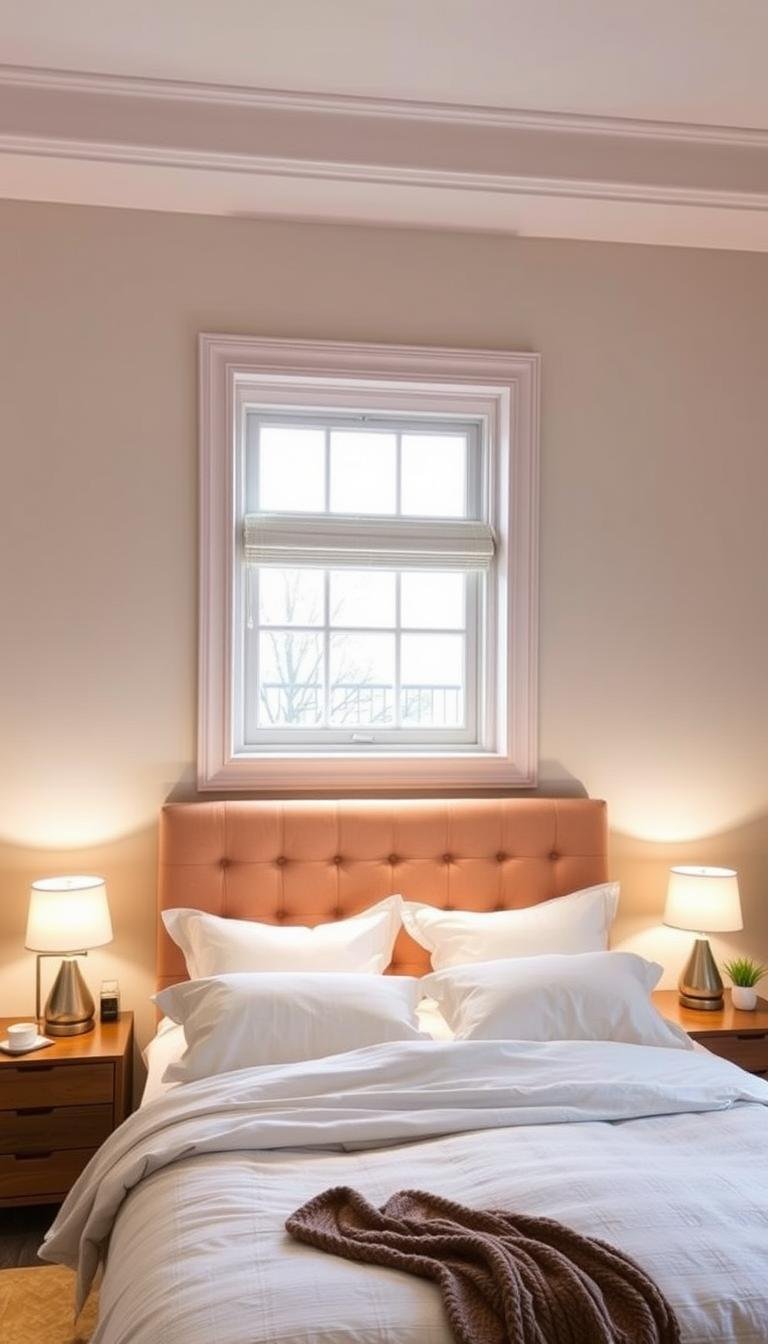
How do I choose a headboard that works with a low window?
My goal was simple: pick a piece that respects the window while making my bedroom feel intentional, not improvised. I wanted exact measurements and clear tips so my decision was not guesswork.
I kept one visual rule: cover no more than the bottom third of the window, and better yet, only the bottom quarter. For most beds, that meant a top height of about 14–24 inches above the mattress. This keeps the glass the focal point and preserves the view I love waking to.
If I wanted cozier light, I picked a taller profile but stayed mindful of balance. For drapes behind the bed, I floated the bed slightly off the wall so curtains could open and close without snagging. These small placement moves made the whole front of the room feel unified and planned.
Key Takeaways
- Keep head coverage to the bottom third of the window for balance.
- Standard top height: about 14–24 inches above the mattress.
- Go taller only if you want less light and a cozier mood.
- Float the bed slightly for curtain function and neat bed front look.
- Decide first if you prioritize light, privacy, or a design statement.
My goal and what to expect from this how-to guide
I started by setting a single, practical goal for the project. My aim was simple: help myself pick a headboard that works with low windows using clear measurements, styling ideas, and a simple decision tree so I could place bed confidently.
This guide flows in a logical way. First I test room realities, then headboard height rules, window treatments, special layouts, and finishing touches.
I flagged personal priorities early: protect natural light, keep privacy, and stay true to my style. That made each choice easier.
I share practical ideas that fit a tiny room or a larger layout with multiple windows. You’ll see side‑by‑side comparisons so trade‑offs are obvious before you put bed or move it again.
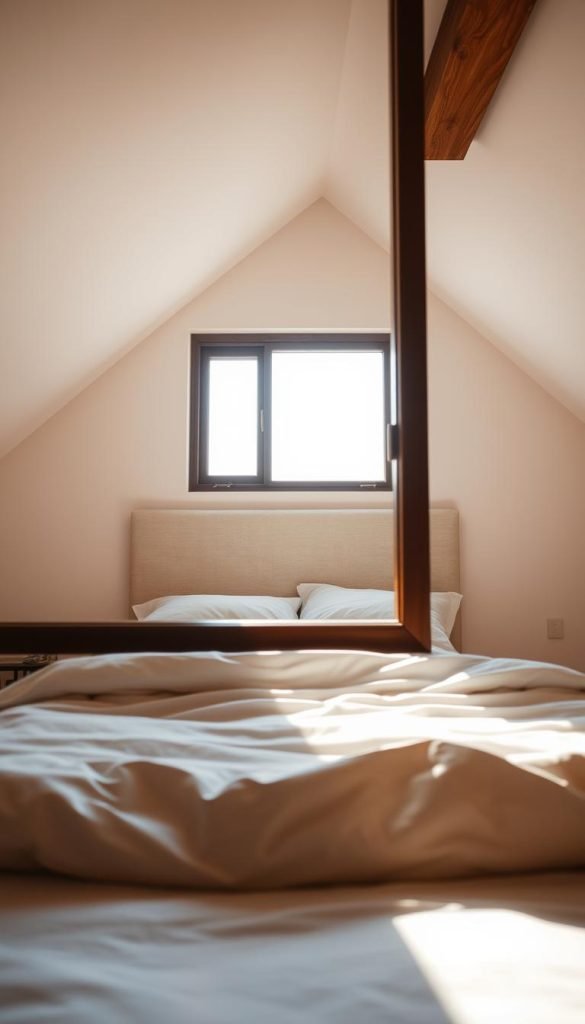
By the end you’ll have a short checklist to reuse in any bedroom with a front window.
- Measurements and wall clearance considerations.
- Window coverings and space for shades.
- Lighting and side table placement for a finished layout.
Start with the room realities: light, view, privacy, and space
Before I bought anything, I spent a few days watching how sun and shadow changed across the wall. That simple habit told me when the room felt bright and when I wanted more shelter from glare or noise.
I assess natural light direction and decide how much light I’m willing to lose to the head piece. A low profile preserves most of the window; going taller makes the space cozier if the window brings little natural light.

I assess natural light direction and how much I’m willing to block
I mapped sun paths and noted peak hours. If brightness matters, I keep coverage to the bottom third or quarter of the glass. If not, I accept more coverage for warmth and sound buffering.
I weigh the view, street noise, and privacy before picking a height
I asked whether the front window gives a nice view or a busy street scene. For privacy, treatments like Roman shades or blackout rollers can solve problems without sacrificing style.
- I measured sill and frame heights from mattress level to predict placement.
- I checked room size and planned to float the bed slightly so side treatments move freely.
- I left space for lamps and side tables to frame the bed front and redirect the eye.
The best choice supported how I live day-to-day, not a one-size-fits-all rule.
For more layout ideas about putting a bed in front of a window, see this short guide: bed in front of window tips.
Headboard height rules for low windows: how I measure and decide
My process begins with a simple sketch: I mark the mattress top, the window sill, and the proposed headboard line on the wall. This quick visual stops guesswork and shows how much glass the headboard will hide.
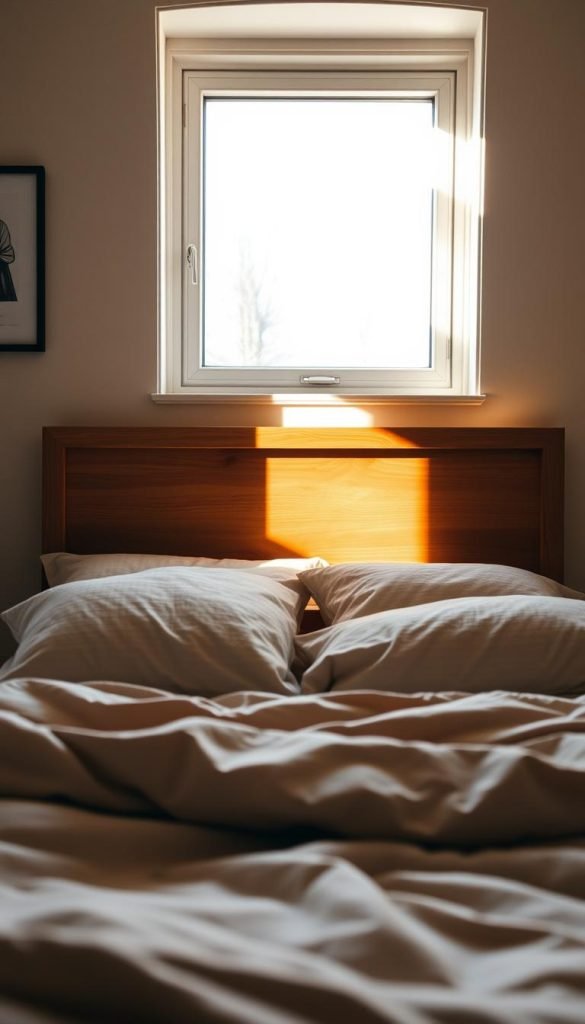
Rule of thumb: don’t cover more than the bottom third (ideally a quarter)
In most rooms I keep the headboard within the bottom third of the window and aim for the bottom quarter when morning light matters. That preserves the window as the main point and keeps the wall feeling open.
Typical low headboard height: 14–24 inches above the mattress
I use 14–24 inches as my sweet spot. I measure from the mattress top up to the proposed headboard and compare that against the window thirds. This simple check ensures placement feels intentional.
When I intentionally go higher for a cozier, cave-like feel
If the room lacks light or I want a snug mood, I allow coverage up to one-third. I still watch ceiling height and wall proportions so vertical lines stay balanced.
- I check wall and sill depth so the headboard sits flush and doesn’t press into the frame.
- I factor in pillows and euro shams; they add perceived height behind my head.
- When placing bed front with drapes, I mark how far to float the bed so panels glide freely.
“Measure from mattress to window and document your numbers before you buy.”
How do I choose a headboard that works with a low window? (my quick decision path)
I created a short decision path so the final pick felt quick and deliberate. First I decide whether preserving light wins, or if making a visual statement matters more in my bedroom.
If light is the priority, I keep the profile low or skip the headboard entirely. A spindle or thin metal frame keeps the bed front airy and preserves the window as the room’s focal point.
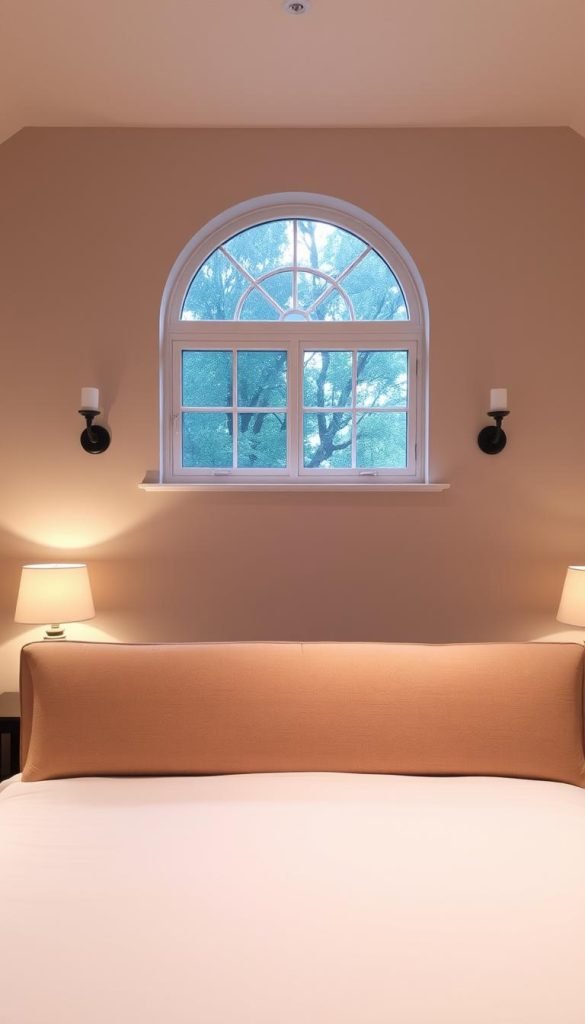
If light is the priority: low-profile or no headboard at all
For maximum brightness, I favor open frames or no headboard so the front window reads clearly. This is the simplest way to put bed front without blocking view or morning sun.
If statement is the priority: shaped or arched designs
When presence matters, I pick an arched or shaped profile that rises in the middle and dips at the sides. That avoids clipping trim when placing bed front between windows and keeps the side edges clean.
- I choose airy frames when I want presence but not darkness.
- I use slim upholstery within the bottom quarter for comfort without losing light.
- I mock up tape on the wall to confirm coverage before I buy.
“Prioritize light or statement, then pick the form that delivers without fighting the front window.”
| Priority | Best options | Why it works |
|---|---|---|
| Light | Spindle, metal frame, no headboard | Lets window remain the focal point and keeps bed front bright |
| Presence | Arched or shaped profile, slim upholstered panel | Creates drama while avoiding side overlap with windows |
| Mixed | Low upholstered panel or airy frame with tall center | Balances softness and light; works when placing bed for layout reasons |
Pick the right style: solid, upholstered, spindle, or metal
My experiments showed which silhouettes preserved the view and which created a cozy retreat. I tested airy frames and solid panels side by side to see how each affected the room’s balance.
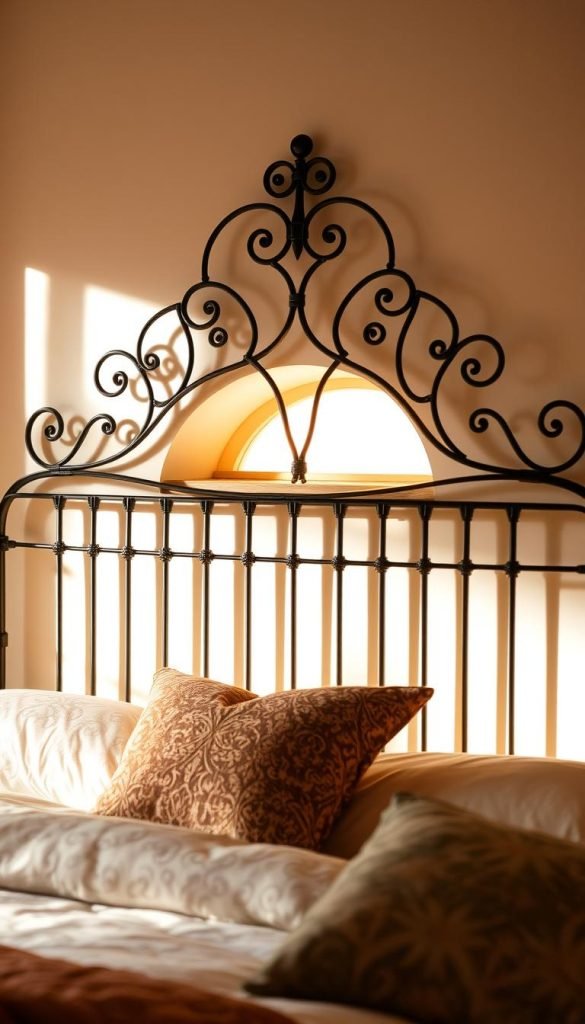
Airy options to let windows and natural light shine
Spindle and iron frames let light filter through and keep the bed front feeling open.
They work well when the view out the window is worth keeping. Be mindful: some iron frames occupy more width and can crowd trim.
Solid and upholstered when I wanted support and privacy
Solid panels and upholstered pieces give better back support and a stronger focal point for the bed.
Pair them with blackout rollers or layered curtains if early sun or privacy is a concern. This combo anchors the design while managing light.
- I often use an iron or spindle option when I want windows to glow and the bed to stay airy.
- For privacy or reading in bed, I pick a solid upholstered panel to anchor the front of the room.
- Textures—linen, velvet, wood slats, or black iron—help the look feel intentional, not improvised.
- Check frame width against trim and confirm bed height so coverage stays in the recommended zone.
“Airy for glow and openness; solid for comfort and privacy—both are valid options depending on priority.”
Window treatments that make this layout work harder
Window treatments can transform a tricky wall into a cohesive, high‑end backdrop. I used coverings to control light and give the bed front window a planned look instead of an afterthought.
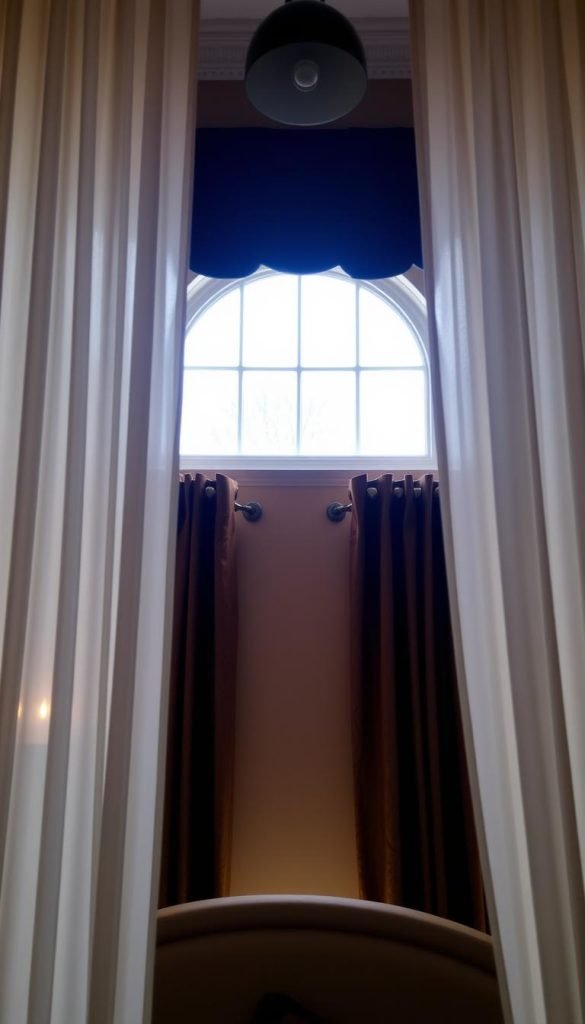
Roman shades or low‑profile rollers when space is tight
When the mattress sits close to the glass, I pick Roman shades or slim rollers. They sit flat and operate without bulky hardware. This keeps clearance around the bed and preserves night access.
Wide drapery or a full curtain wall to frame the bed
Wide curtains make a small window read larger and frame the sleeping area. A wall of drapery creates a uniform look that feels custom and hotel‑like.
If I want drapes behind the bed, I pull the bed slightly forward so panels glide freely and never snag the corners.
Blackout and layered solutions for privacy, temperature, and sleep
Layering sheers with blackout liners balances natural light by day and deep sleep at night. Heavier fabrics add sound buffering and warmth, while lighter cloth keeps glow and openness.
“Good hardware and thoughtful hems make treatments feel intentional, not improvised.”
- I pick Roman shades when space is tight to avoid bulk behind the bed.
- I hang wide curtains to visually grow the window and frame the wall.
- I float the bed slightly so drapes operate freely and remain clean at the hem.
- I layer sheers with blackout liners to manage light, privacy, and sleep.
- I match rod finishes to other hardware and choose sturdy brackets for a refined look.
| Need | Best option | Why it works |
|---|---|---|
| Tight space behind bed | Roman shades / low rollers | Low profile, clean operation, no bulk |
| Make window feel bigger | Wide curtains | Extends visual width; frames the bed and wall |
| Sleep & privacy | Layered sheers + blackout | Daytime glow and night darkness; temp and sound control |
Special window scenarios I solve differently
Rooms with odd window placement asked for bespoke fixes rather than standard rules. Each scenario needed a small tweak so the bed front felt intentional and calm.
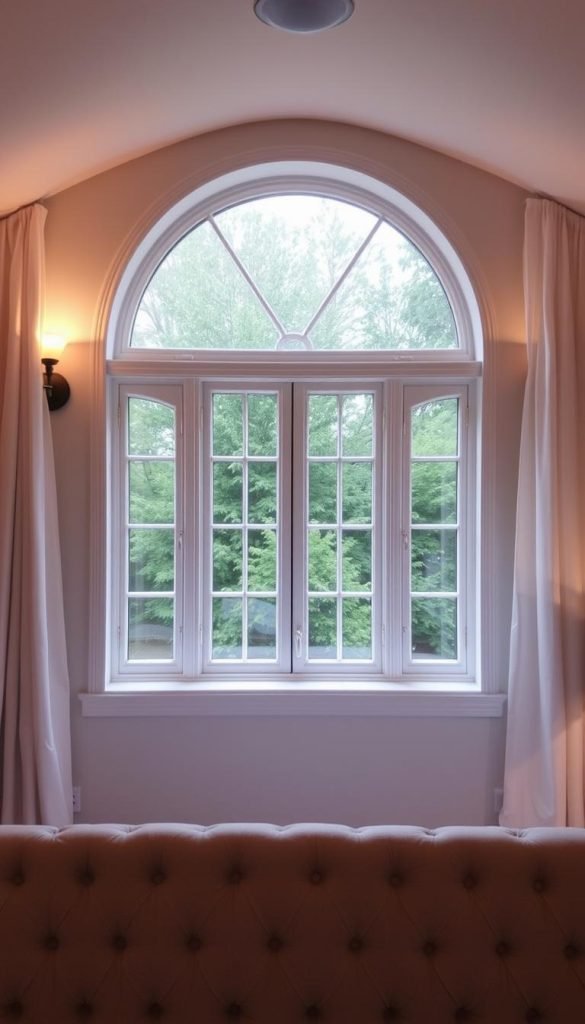
Off-center window: I lowered the headboard or picked a shaped top so the wall reads balanced. When needed, I added art or a narrow shelf on the wider side to even the composition.
Two flanking windows: I often used a long, low headboard that spans both openings or an arched profile that clears the trim. For maximum glow, an airy spindle or metal frame kept both windows legible and bright.
Floor-to-ceiling window: I kept the headboard within the bottom third of the glass and pulled the bed forward so drapes can operate without pinching behind the bed. That preserves the floor view and gives space for fabric to hang freely.
High or elevated window: I slid the headboard beneath and treated the opening like a skylight. When drapes won’t fit, Roman shades gave control over morning light while keeping the ceiling feel open.
“Measure trim and float the bed slightly when treatments need room — small shifts make everything function better.”
- I measure trim widths to avoid clipping corners near the front window edges.
- I float the bed when extra space is needed for drapes or airflow.
- I match frame finishes to window hardware so the window wall reads as one composition.
Bed placement tricks when the window wall is the only option
I learned to treat the window wall like a stage: set the bed slightly forward and let the textiles perform. Small adjustments made the layout feel deliberate. These moves free treatments, frame the sleeping area, and protect sightlines.
Float the bed slightly off the window wall to free treatments
I floated the bed a few inches to give drapes and rollers room to operate. That extra space keeps fabric from catching when I make the bed. It also prevents pillows from blocking the glass.
Use side tables and lamps to frame the bed and redirect attention
I placed sturdy side tables and layered lamps at each side to create a warm vignette. Matching metal finishes on lamps and rods tied the front together and drew focus away from the glass.
Keep one window clear and let it be the primary focal point
If two openings flank the bed, I left one clear as the main light source. Wide curtains on the other side framed the composition and kept the room balanced.
Quick checklist:
- Float bed a few inches for curtain operation.
- Use low-profile headboard so placing bed front stays airy.
- Align rug and art to center the wall composition.
- Confirm vents and outlets remain accessible behind the bed.
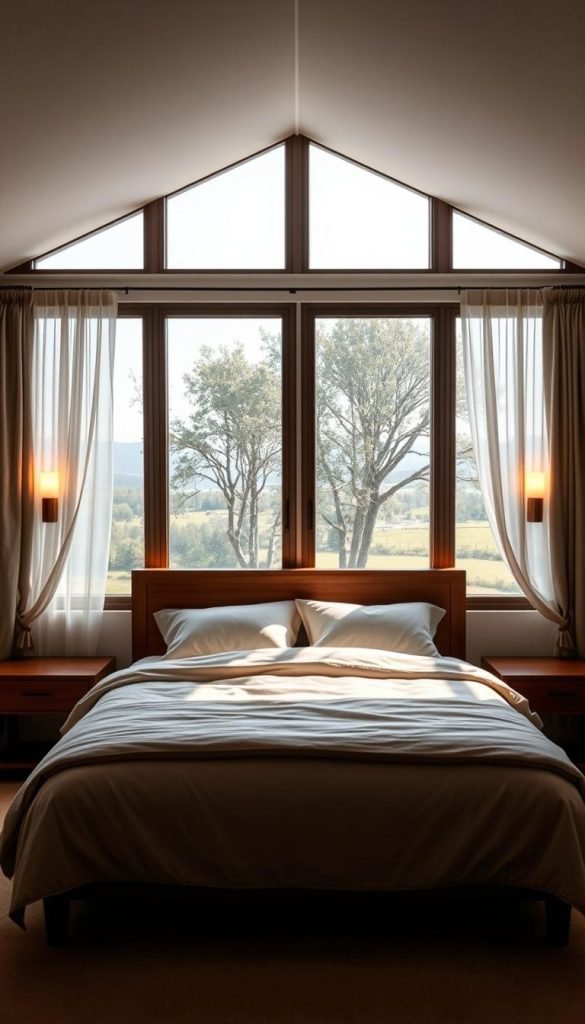
“Small shifts turn a constraint into a design choice.”
| Problem | Fix | Why it helps |
|---|---|---|
| Drapes snag when opened | Float bed 3–6 inches | Allows smooth movement and neat hems |
| Bed blocks light | Use low-profile headboard | Preserves window as focal point |
| Room feels unbalanced | Frame with side tables and lamps | Redirects eye and warms the layout |
Feng shui considerations and simple workarounds
I began by treating the bed area like a supported platform, even when a window sat behind it. That shift made practical choices feel like energetic ones too.
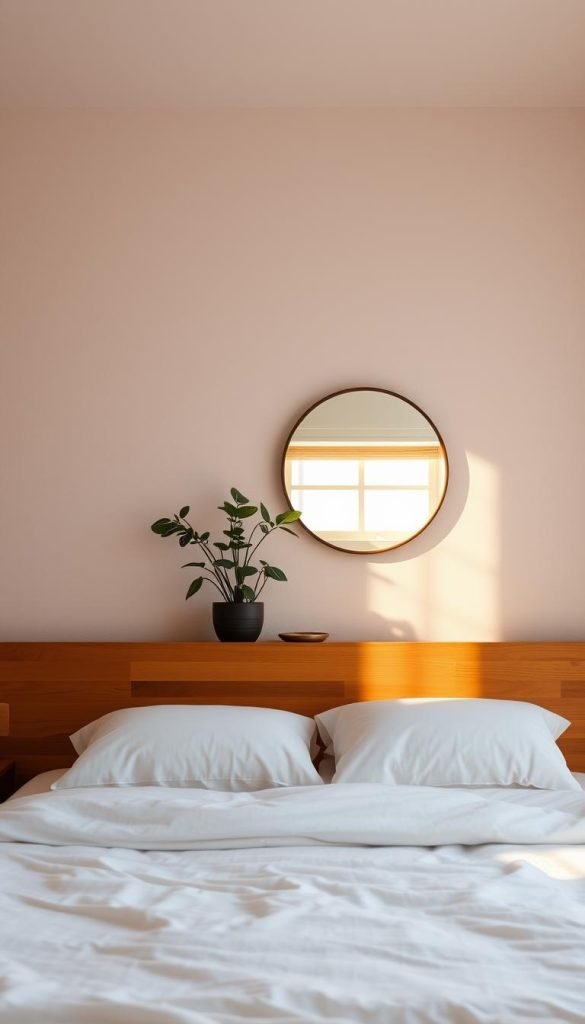
Why a solid, well-attached headboard supports better energy
Feng shui favors a solid wall behind the bed for steady support. When a solid wall isn’t available, I picked a sturdy, well-secured headboard to mimic that backing.
I made sure the frame had no wobble. An anchored headboard helps me relax and improves my sleep by creating a sense of safety.
How drapery and shades add a layer of safety and support behind me
Soft treatments like curtains or roller shades create a protective layer that reads as support in feng shui. I hang drapery a little above the trim to suggest height while keeping light with sheers.
Other small moves matter: keep glass clean, avoid sharp edges pointing at the head, and place nightstands on both sides to balance the front of the room.
“Small adjustments make the wall feel solid and the whole home calmer.”
- Use an anchored headboard when a window sits behind the bed.
- Hang curtains high and choose fabrics that are easy to clean.
- Keep the sill clear and frames maintained for clear energy.
Style cues that make it look intentional (not like a last resort)
Simple details lift the bed and window into a cohesive composition. With a few deliberate moves, the whole wall reads as design instead of a quick fix.
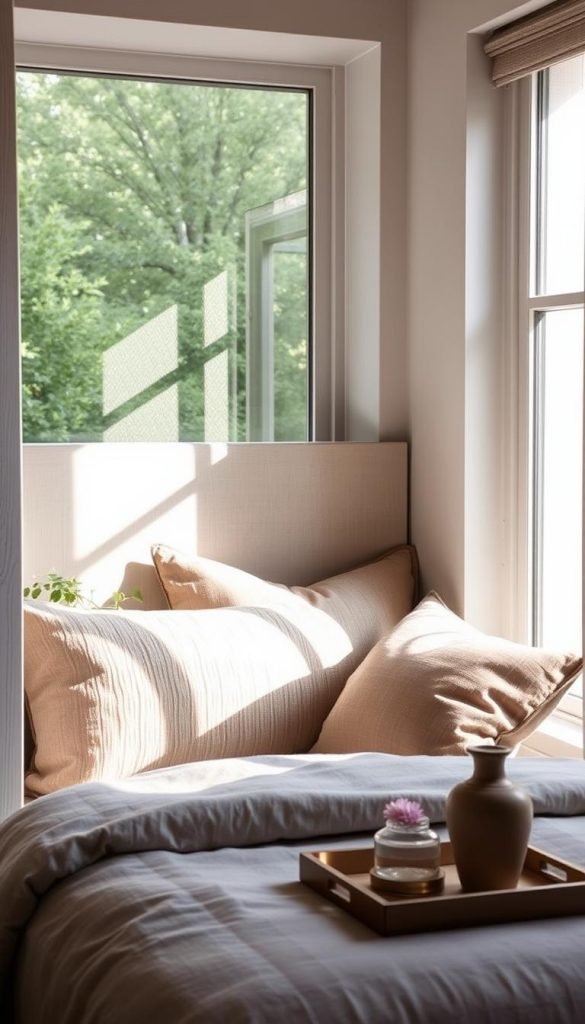
Contrast trim and headboard color to make the pairing pop. Paint the window trim in a complementary tone and pick a headboard color that plays off it. This small contrast gives the wall a planned feel.
Decorate the sill thoughtfully
Use the sill like a curated shelf. Add a plant, a slim lamp, or a stack of favorite books so it reads intentional. Keep objects low so the glass and view remain the point.
Match hardware and rods to fixtures
Hang curtains nearly to the ceiling to lift the eye and make the ceiling feel taller. I often choose black rods to echo overhead lighting and to subtly frame the bed and front window.
- I keep symmetry when possible—matching lamps and side tables to steady the composition.
- I repeat metal finishes across rods, frames, and lamp bases so nothing looks random.
- I let the headboard shape echo trim lines—arches with arches, squares with squares—for unity.
- I always keep the glass clean; spotless windows make the entire vignette sparkle.
“Small styling choices turn a constraint into a confident design moment.”
| Cue | Action | Why it helps |
|---|---|---|
| Trim & headboard | Contrast or coordinate color | Creates a deliberate pairing and focal point |
| Sill styling | Low plants, lamp, books | Feels curated without blocking light |
| Hardware | Match rods to fixtures | Frames the bed and unifies the room |
Conclusion
In closing, a few clear rules kept the bedroom calm and intentional.
Keep coverage low: stay within the bottom third (ideally the quarter) and aim for about 14–24 inches above the mattress. Measure from the mattress before you buy to lock in placement.
Float the bed a few inches so drapes and shades glide freely. Use Roman shades when floor clearance is tight. For two flanking openings, shaped tops or airy spindle frames keep both usable and bright.
Anchor sleep with a solid, well-attached piece when comfort matters and layer treatments for sound and temperature. Small styling things—matched hardware, tidy sills, and aligned art—make the whole look intentional.
Measure, mock up, then commit. These tips and ideas make future choices easier and protect natural light, the focal point of your home bedroom.