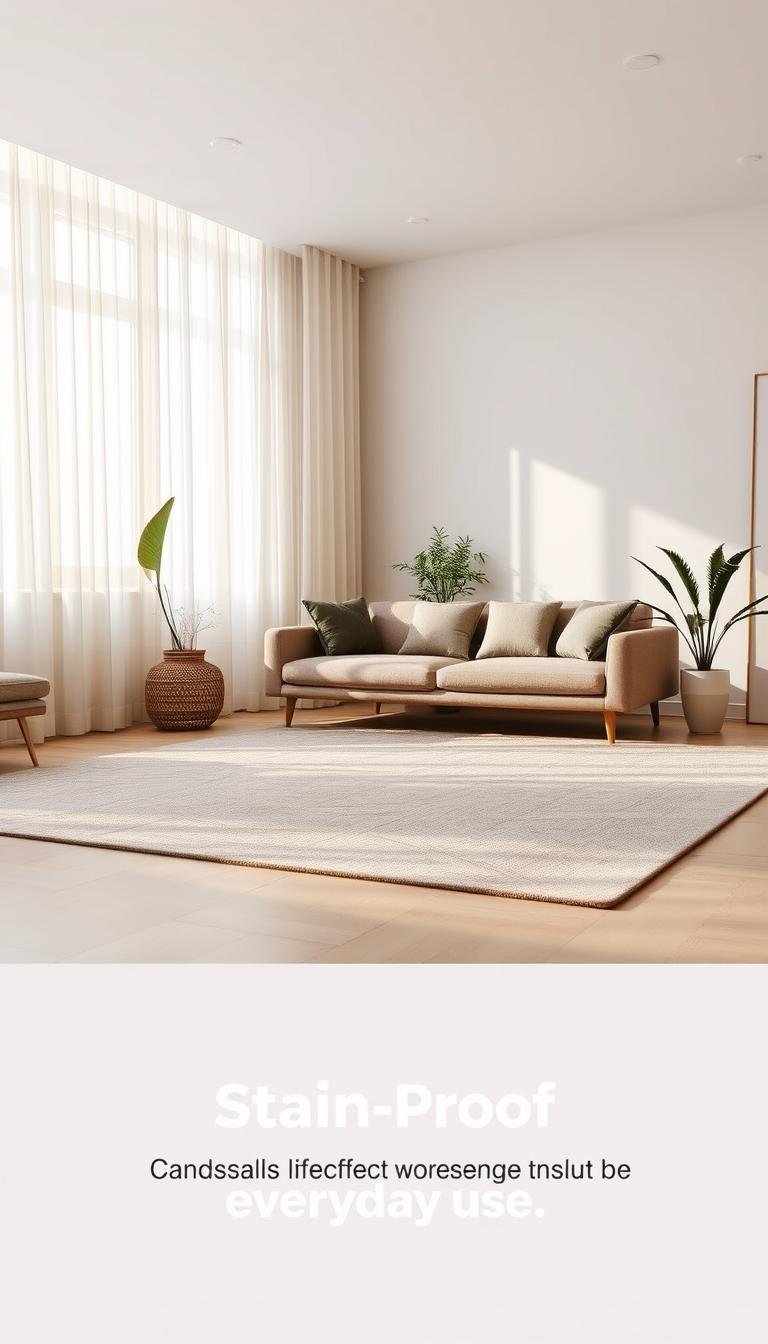
How do I pick area rugs that are secretly stain-proof?
I show a practical, low-fuss way to choose rugs that look great and stand up to daily messes. A well-chosen rug defines a floor plan, adds warmth, protects flooring, and improves room acoustics.
My approach blends smart materials, tight weaves, and clever patterns. I favor tight, low-pile weaves for easy cleaning. Polypropylene and nylon give budget-friendly stain resistance. Wool wicks moisture and filters allergens. Washable cotton systems and outdoor polypropylene act like insurance for busy homes.
Pattern and contrast help hide wear in high-traffic spots. Avoid silk, viscose, jute, and sisal when stains are a concern. I also recommend testing size with painter’s tape to anchor furniture and keep walkways clear.
Next, I’ll walk through room use, material choices, weave tips, and quick-check criteria to speed your decision.
Key Takeaways
- Choose tight, low-pile weaves for easiest cleanup.
- Polypropylene, nylon, and washable cotton resist stains well.
- Wool offers natural moisture wicking and allergen benefits.
- Use pattern and contrast to disguise dirt in busy areas.
- Avoid delicate fibers if stain resistance is a priority.
- Test rug size with painter’s tape before you shop.
What I look for first: room, lifestyle, and traffic patterns
Start by mapping how people and pets move through the room—where spills and scuffs actually happen.
I sketch a quick plan of the space before shopping. That tells me which rug needs heavy duty fibers and which can be softer.
High-traffic areas like entries, hallways, and dining zones demand tight weaves and wear-focused materials. I separate those from quiet corners and bedrooms so performance matches use.
For moisture-prone spots—kitchen, bath, or near an exterior door—I favor materials that resist mold and won’t warp when rinsed. Wool wicks moisture and traps allergens, which makes it a healthier pick in many homes.
I keep kids and pets in mind: claws, toys, and spills mean a low pile and dense weave. If I can’t treat stains right away, I choose patterned, mid-tone designs that forgive dirt between cleanings.
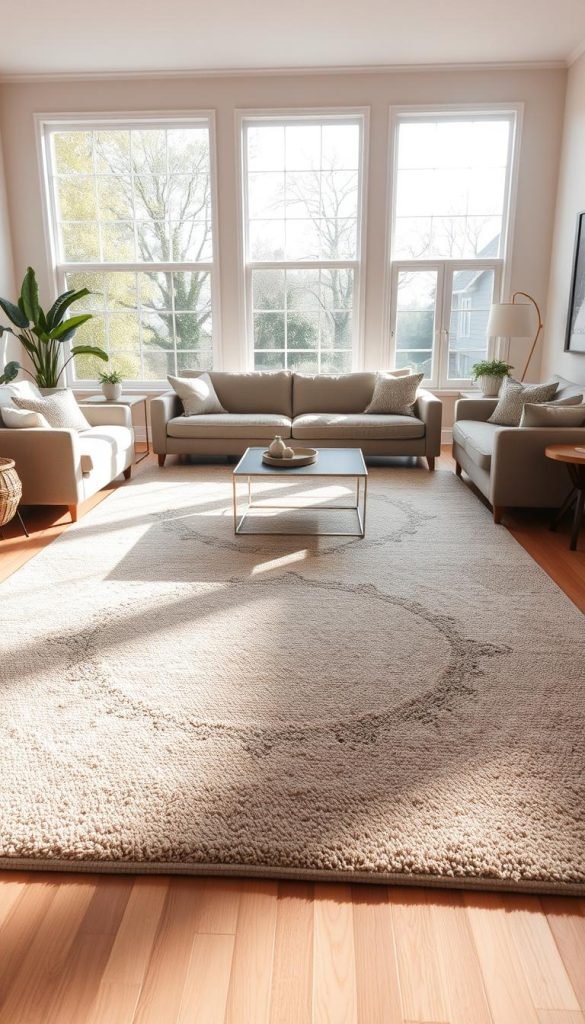
| Space | Top concern | Quick spec |
|---|---|---|
| Entry | Dirt and wet shoes | Outdoor polypropylene or washable, low pile |
| Kitchen | Moisture and spills | Moisture-tolerant weave, easy-rinse materials |
| Living/Dining | Traffic and food drops | Tight weave, patterned mid-tones |
- I leave 18–30 inches for traffic lanes so people don’t step half on and half off the edge.
- I note sun and HVAC exposure to prevent fading or damp problems later.
- Then I write a short checklist so my shortlist fits real life, not just the showroom.
The most stain-resistant rug materials (and what to avoid)
Not every fiber handles spills the same—some will shrug them off while others soak them up fast. Below I list durable, low-fuss options and the ones I skip when stains matter.
Top picks
- Polypropylene: Budget-friendly, highly durable, and resistant to stains, moisture, and mildew. You can hose it and scrub with mild dish detergent; dry both sides away from direct sun.
- Wool: A long-term investment that resists stains, wicks moisture, and traps allergens. Vacuum gently and avoid sun drying to prevent fading.
- Nylon: Looks lively and soft but adds real stain resistance. Blot spills with warm water and mild detergent.
- Cotton: Great for washable runners and small rugs—machine wash and air-dry, but expect some shrinkage in the dryer.
- Seagrass: Naturally waxy and repels dirt; best for entries and living spaces, not damp rooms.
Materials I skip
- Viscose, silk, jute, and sisal stain quickly and need careful, often professional care.
Budget and health notes
Synthetics give excellent durability and lower upfront cost. Natural options like wool and cotton add health perks and perform well with simple care. I read labels, then shop for the fiber that fits my home’s habits and my cleaning tolerance.

Weave and pile: why tight, low-pile rugs outlast spills and pets
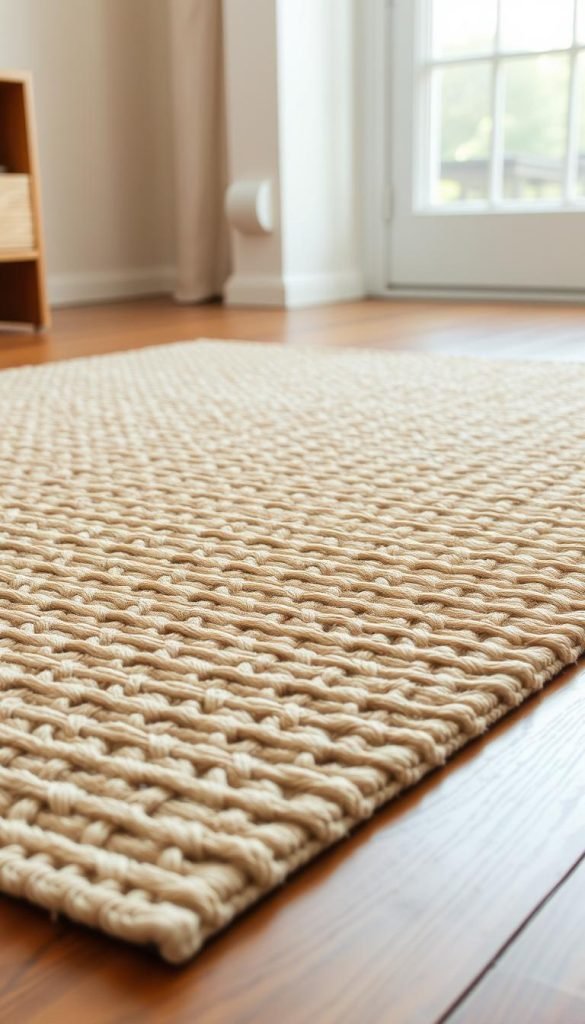
Dense construction matters more than soft fluff. A tight weave keeps most mess on the surface so spills sit where you can blot them quickly. Short pile makes vacuuming efficient and cuts snag risks from pet claws.
Tight weaves and low pile for durability and easy cleaning
I favor flat, low-profile rug surfaces because crumbs and coffee grounds don’t bury themselves. Low-pile, knotted constructions hold pattern and shape longer, helping the piece keep life in high-traffic areas.
Why shag and high pile need extra care
Plush, shag textures trap dirt and require more passes with a vacuum. They also demand careful blotting when a stain hits.
- Choose tight weaves to resist snags and give you time to blot spills.
- Use washable low-pile systems for pet accidents or stubborn stains.
- Add a quality pad to reduce movement, edge curl, and extend the life of the piece.
Style need not suffer: flatwoven and short-pile options layer well with throws and cushions, so you can keep design and cleaning in mind.
How do I pick area rugs that are secretly stain-proof? My quick-buy checklist
Before I shop, I run through a short list that focuses on fibers, weave, and cleaning features.
Stain resistance, moisture tolerance, and easy clean features
I check fiber first: polypropylene, wool, nylon, cotton, and seagrass score highest for spills and wear. I skip viscose, silk, jute, and sisal when stains are a worry.
I verify a tight weave and low pile so vacuuming is fast and blotting works. Washable covers, water-resistant barriers, and outdoor-safe constructions get extra points.
Pattern and colorways that disguise dirt and daily life
I choose patterned or distressed colorways to hide scuffs and crumbs between cleanings. Mid-tone, multi-color looks forgive small stains and keep style intact.
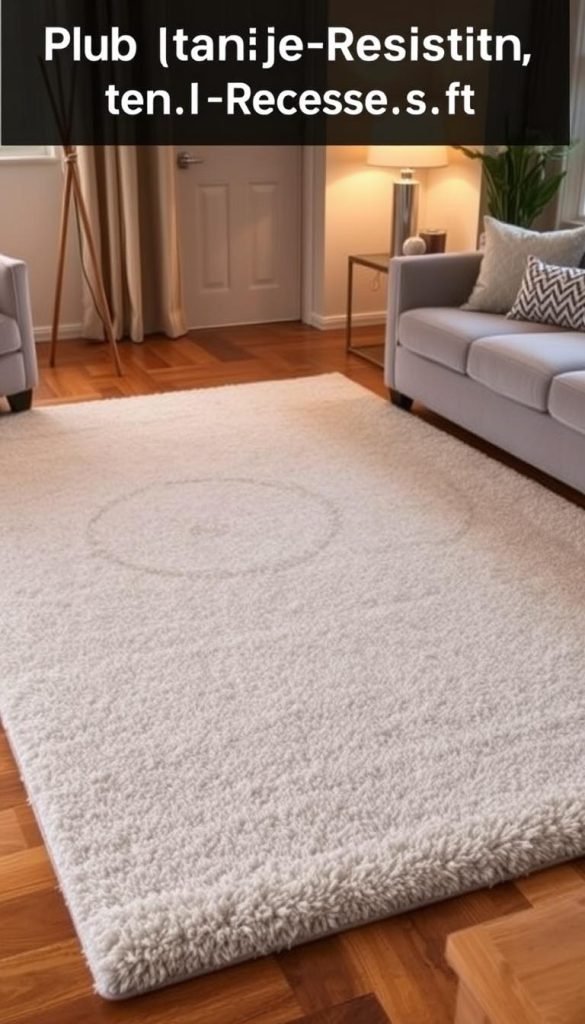
- Confirm moisture tolerance for sinks and entries; dry both sides after any rinse.
- Pick the right size to anchor furniture and keep 18–30 inches for traffic lanes.
- If life is busy, a washable system beats a plush shag every time.
- Read care instructions—if maintenance looks fussy, shop a simpler option.
Quick right-rug gut check: if it looks great, fits size and style, and I can clean it fast, it’s a yes.
Patterns, colors, and contrast that hide stains in plain sight
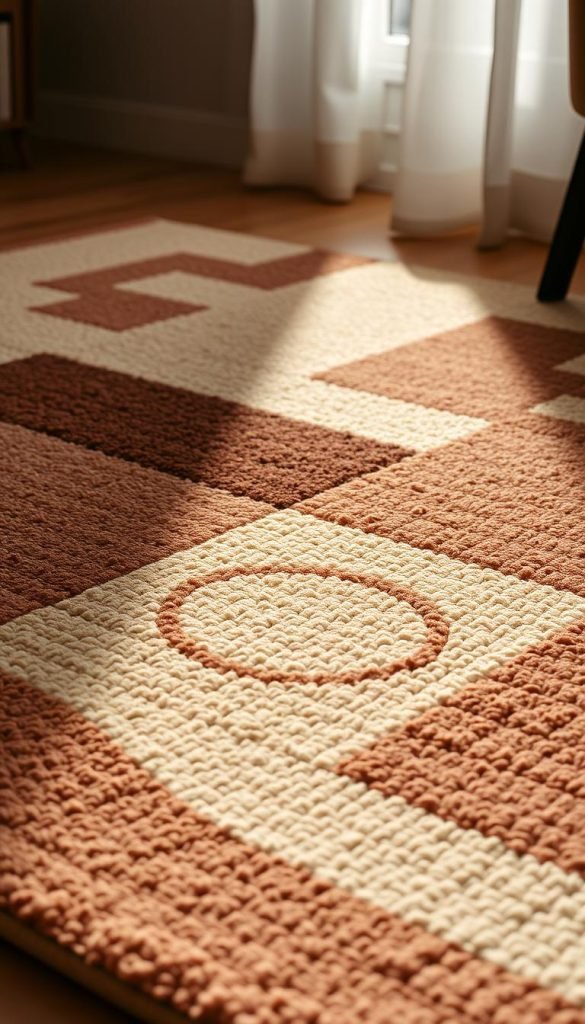
A rug’s pattern and palette can make everyday spills vanish into the background. I lean on vintage-inspired, distressed, and multi-tone designs because they fragment marks so nothing reads as one obvious spot.
Vintage and distressed looks wear in gracefully. Small variations and heathered fibers camouflage dirt between cleanings. That means less panic after kids or pets track through the room.
Light vs. dark matters for size and mood. Lighter colors open a space and feel airy. Rich, darker tones add warmth and hide scuffs in busy areas.
Floor contrast keeps the rug from fighting the surface beneath. On mid-tone wood or patterned floors I choose much lighter or much darker rugs and vary motif scale so patterns don’t clash.
- I echo one color from curtains or art so the design reads cohesive.
- I prefer subtle variation and mottled edges to hide shoe scuffs.
- I avoid flat, solid light rugs in high-traffic areas—too unforgiving.
Quick test: place a swatch on the floor to confirm contrast, pattern scale, and overall size feel right for the room.
The right size and layout for living rooms, dining areas, and bedrooms
Size matters more than you might expect. A correctly sized rug ties furniture together and keeps the space from feeling chopped up. Use common sizes like 8’x10′ or 9’x12′ in larger living spaces to create a calm foundation.
Living room: anchor at least the front legs
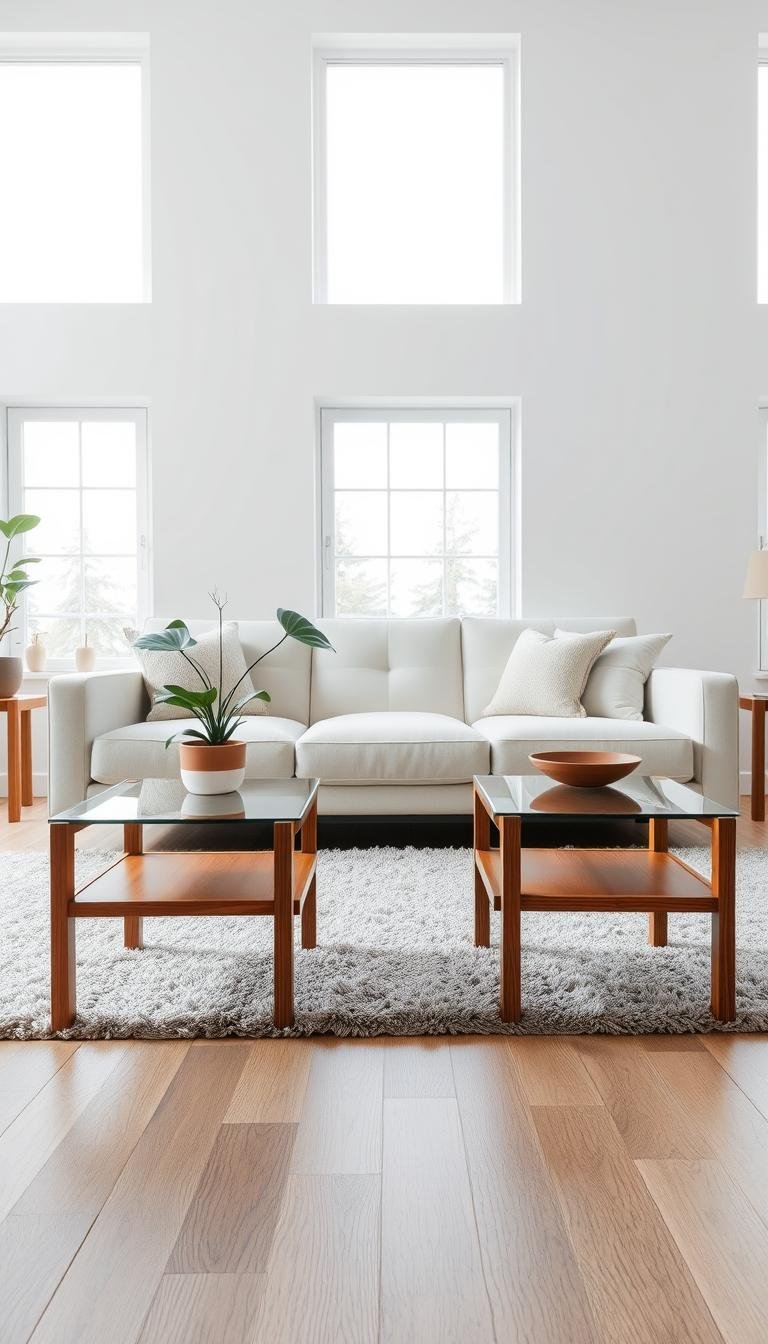
Anchor furniture so sofas and chairs read as one vignette. Place the rug so at least the front legs sit on the surface. That small choice makes the seating feel stable and intentional.
Dining room: add about two feet around the table
Allow roughly two feet of rug beyond each table edge. This keeps chairs fully on the rug when pulled out and avoids awkward catches at the edge.
Traffic paths: leave 18–30 inches for flow
Keep clear lanes of 18–30 inches so people don’t step half on and half off the rug. This prevents edge wear and makes movement feel natural.
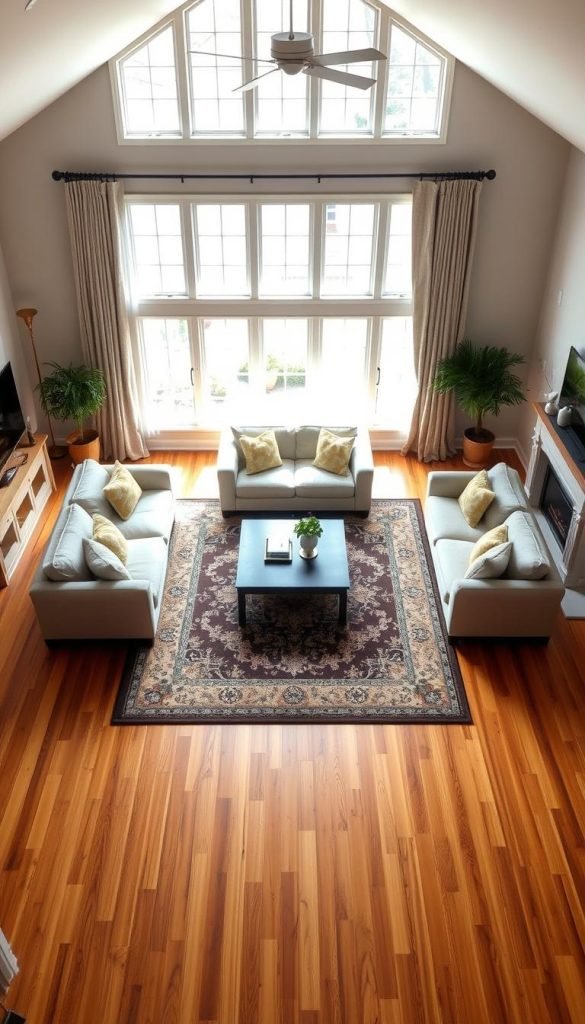
- Run the rug parallel to the longest furniture piece for a tidy design.
- Test sizes with painter’s tape to visualize footprints before buying.
- Choose the largest rug your layout and budget allow; too-small pieces break a room’s balance.
- Check door swings and vents so the rug won’t block function.
- Add a quality pad to protect the floor, keep corners flat, and add comfort.
| Space | Common size | Key rule |
|---|---|---|
| Living room | 8’x10′, 9’x12′ | Anchor front legs of seating |
| Dining room | Table size + ~2′ each side | Chairs stay on rug when pulled out |
| Hall/traffic | Leave 18–30″ | Uninterrupted flow, less edge wear |
Practical note: For vintage or custom pieces, mock up the outline before purchase. It saves time and ensures the final design feels grounded in the home.
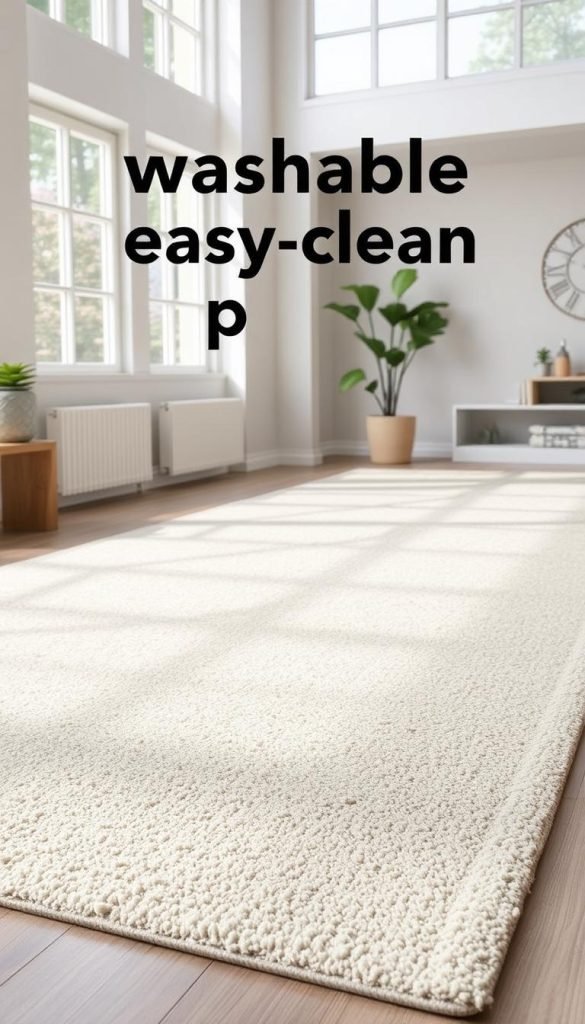
Easy-clean options I love: washable systems and outdoor-safe picks
For busy homes, I choose practical systems that make spills vanish fast and keep floors protected.
Washable covers for kid- and pet-heavy homes
I favor washable tops with removable covers because they let me run a quick machine cycle after a big spill. Tested systems with water-resistant barriers removed 95% of wine and 100% of coffee in lab checks, and they stood up to pet accidents while staying flat on a good rug pad.
My practical checklist:
- I choose washable systems with removable covers and a grippy pad for stability.
- I look for a water-resistant barrier so liquid doesn’t soak through to the floor.
- I store a spare cover to rotate for high-use areas and keep the surface looking fresh.
Outdoor polypropylene for patios, entries, and kitchen zones
Outdoor polypropylene works well in the kitchen, entry, and patio because it’s mildew- and mold-resistant and easy to broom or vacuum. These rugs hose clean; I elevate both sides to dry thoroughly. Barbecue sauce or dye-heavy stains may need extra attention, but most dirt lifts with a broom or vacuum.
| Option | Best for | Care tip |
|---|---|---|
| Washable cover system | Homes with kids and pets | Machine-wash top; use grippy pad |
| Outdoor polypropylene | Kitchen, entry, patio | Hose off; avoid drying in direct sun |
| Low-profile constructions | High-traffic areas | Vacuum easily; fewer edge snags |
Quick tips
- Pick lighter-weight outdoor rugs so you can move them for deep cleaning.
- Use a proper pad to keep the system flat and protect the floor.
- Save care steps on your phone so cleaning becomes routine.
For more washable solutions and tested picks, see this guide on the best washable rugs: best washable rugs.
Real-life scenarios: pets, kids, spills, and high-traffic areas
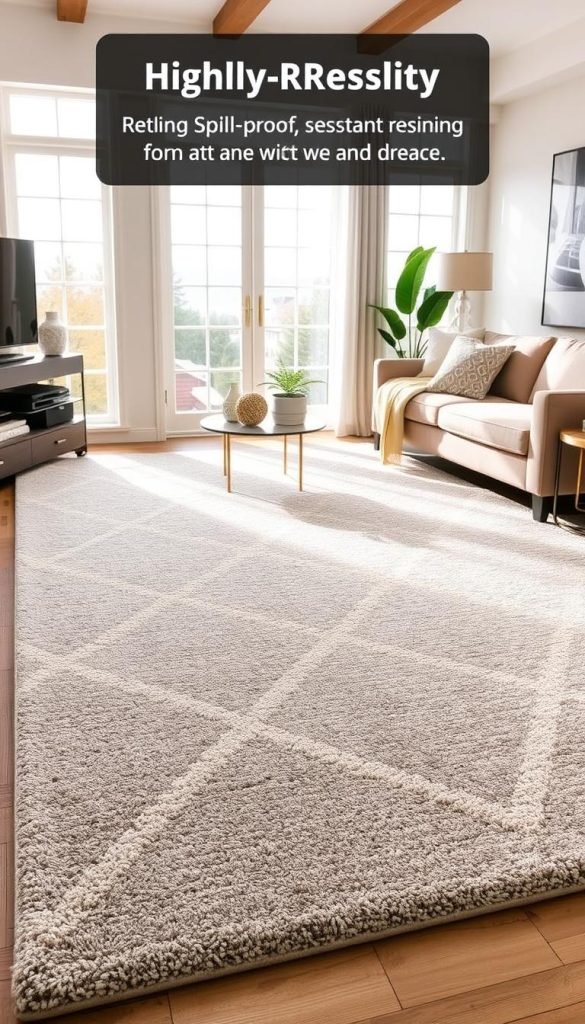
Everyday life tests a rug more than any showroom ever will. I choose materials and weaves that survive real messes, not just look pretty in a display. Tight construction keeps fur and grit on the surface. Low pile stops crumbs, play-dough, and litter from disappearing into the fibers.
Pet-friendly choices that resist scratches and odors
I favor polypropylene, nylon, or washable polyester systems by doors and in family rooms. These fibers resist stains and clean fast after spills. Wool earns a spot in living rooms because it resists moisture and helps reduce odors when I vacuum gently without a beater bar.
Kid-proof rugs for playrooms and living rooms
Cotton runners and washable tops let me toss a cover in the machine after arts or snack time. Distressed, multi-tone designs hide dirt and small stains so the space looks fresh between washes. I avoid viscose, silk, jute, and sisal in busy zones; they mark easily and demand fussy care.
| Scenario | Best fiber/weave | Care tip |
|---|---|---|
| Entry / mudroom | Outdoor polypropylene, tight weave | Shake, broom, or hose; dry in shade |
| Family room with pets | Polypropylene or nylon, low pile | Vacuum often; blot spills immediately |
| Playroom / kids | Washable cotton or removable polyester cover | Machine-wash top; air-dry |
- I keep a simple routine: vacuum, spot blot, rotate. It saves time and extends durability.
- Use a grippy pad so corners stay flat and the rug performs longer in high-traffic space.
Conclusion
Think of the rug as a working piece of furniture: it must handle traffic, pets, and quick cleanups without drama.
,Choose the right material first—polypropylene, nylon, wool, cotton, or seagrass—then favor a tight weave and low pile for easy cleaning and long wear.
Size it to fit the room: front legs on in the living room, add ~2 feet for dining, and leave 18–30″ for traffic lanes. Use painter’s tape to test before you shop.
A patterned colorway hides small stains and wear. For busy homes, pick washable tops or outdoor-safe polypropylene so cleaning is fast and stress-free.
Final rule: make one confident choice at a time—material, weave, pattern, size—and you’ll end up with a piece that looks good now and still works after real life happens.