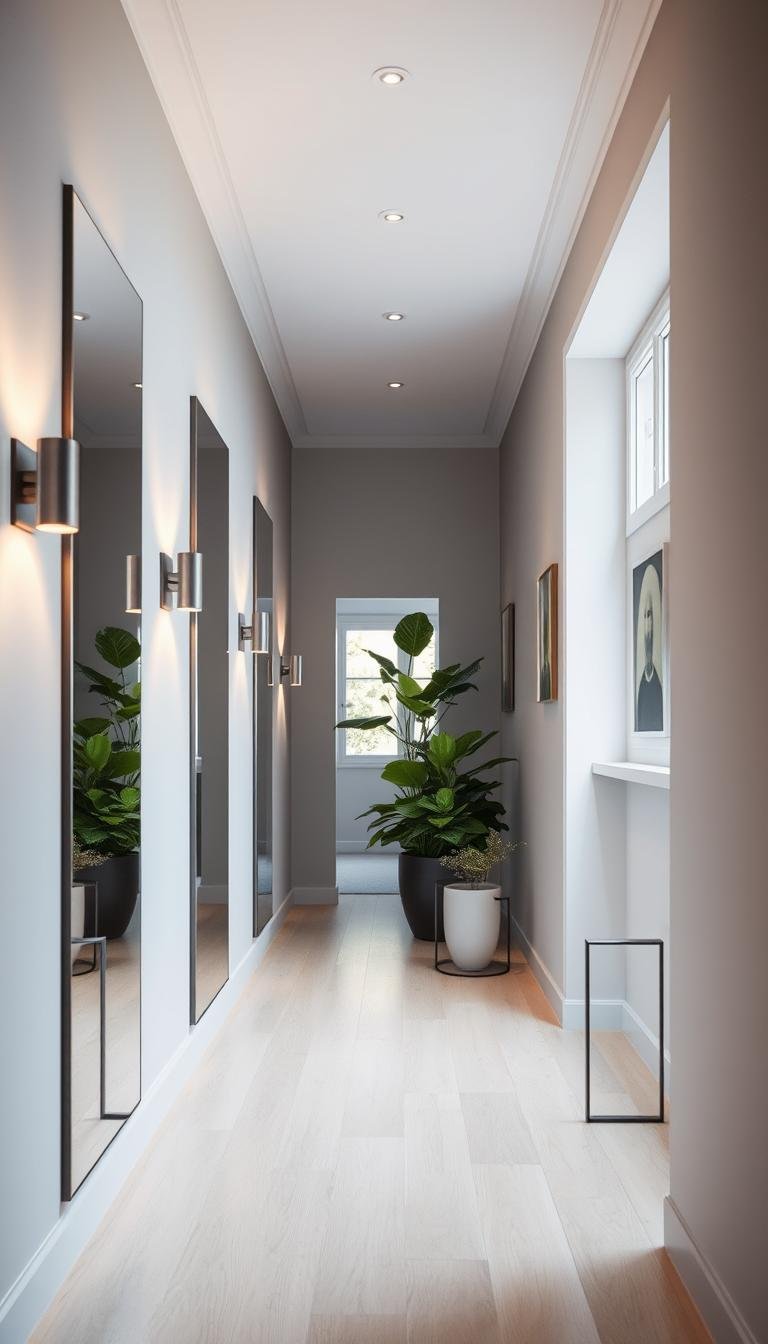
How can I make a narrow 5-foot hallway feel twice as wide?
Your entry hallway sets the tone for your entire home. It’s the first space you step into every day. I transformed my own tight passage into an inviting area that feels open and organized.
A well-designed entry brings calm instead of chaos. Good design choices can dramatically alter your perception of space. Even a compact area can become functional and stylish.
This guide shares practical steps for various hall types. You will learn about lighting, mirrors, colors, and smart storage. These strategies create a welcoming atmosphere that enhances daily life.
Key Takeaways
- Entryways create crucial first impressions for your home.
- Smart design can make small spaces feel much larger.
- Lighting and mirrors are powerful tools for expanding areas.
- Organized storage reduces clutter and stress.
- Color choices influence how wide a hallway appears.
- Functional furniture maximizes limited square footage.
- Every hallway type can benefit from these practical solutions.
Understanding My Narrow Hallway Challenge
Every home transformation begins with truly knowing your space. My journey started by facing the reality of my constricted passageway head-on. This initial assessment became the foundation for all my design decisions.
Why 5-Foot Hallways Feel Particularly Cramped
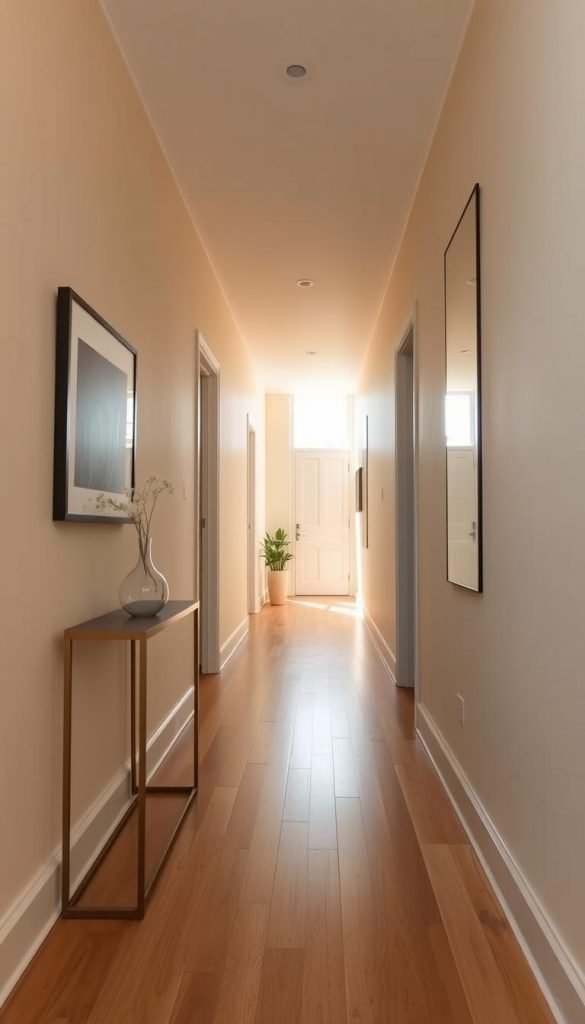
Standard five-foot passages create unique spatial challenges. The limited width restricts both movement and sight lines. Our brains perceive these tight areas as confining due to reduced peripheral vision.
Human traffic patterns require careful consideration in compact halls. Multiple people cannot pass comfortably side-by-side. This affects how we navigate through these transitional spaces daily.
The psychology of narrow areas plays tricks on our perception. Enclosed spaces trigger subtle stress responses. Understanding this helps us design solutions that counteract these natural reactions.
Measuring My Space Accurately Before Starting
Precise measurements transformed my approach to the project. I documented every dimension of the constricted area. This included width, length, and ceiling height measurements.
I recorded all fixed elements that couldn’t be changed. Door swings, electrical outlets, and light switches all impact design choices. These permanent features determine what solutions will work effectively.
Different hallway shapes present unique opportunities. Straight passages, L-shaped layouts, and alcoves each require tailored approaches. My measurement process revealed how to work with existing architecture rather than against it.
This careful assessment ensured every design choice maximized the available square footage. The data guided my furniture selection and layout planning perfectly.
The Power of Strategic Lighting Solutions
Lighting completely transformed my tight passage. The right illumination changes everything about spatial perception. Strategic placement creates depth and dimension where none existed.
My approach uses three key elements working together. Wall fixtures, ceiling lights, and dimming controls create magic. This combination makes any confined area appear more open.
Installing Wall Sconces for Ambient Glow
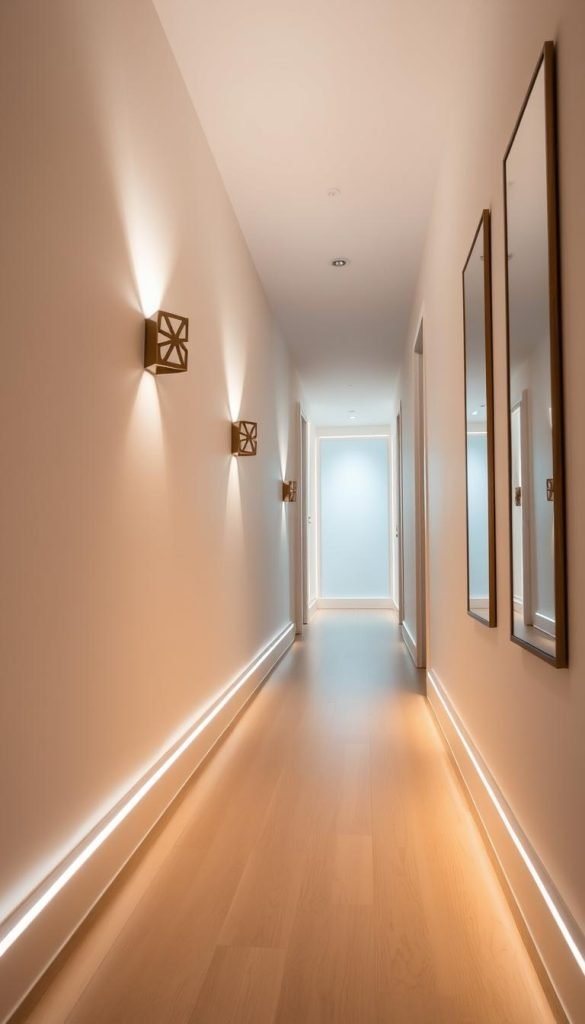
Wall-mounted fixtures became my secret weapon. They provide gentle illumination without consuming floor space. Sconces cast light upward and downward, creating beautiful shadows.
I discovered various styles that complement different decors. Wood and concrete options add organic texture. Brass bowtie designs bring vintage charm, while rattan shades offer bohemian flair.
These fixtures work wonders for mood lighting at night. Dimmable sconces transform cramped passages into luxurious corridors. The soft glow makes the entire area feel inviting and spacious.
Using Overhead Lighting to Create Height
Ceiling fixtures play a crucial role in spatial deception. Proper overhead lighting draws eyes upward, creating height illusions. This technique makes ceilings appear higher than they actually are.
I chose flush-mount designs that don’t hang too low. Recessed lighting works beautifully for modern homes. The right placement ensures even distribution throughout the passage.
Combining different light temperatures enhances the effect. Cool white tones make spaces feel more open. Warm whites create coziness while maintaining spaciousness.
Incorporating Dimmer Switches for Mood Control
Dimmer controls revolutionized my lighting experience. They provide complete command over atmosphere and brightness. Adjusting intensity changes how we perceive the area throughout the day.
Morning requires brighter illumination for visibility. Evening calls for softer, more intimate lighting. Dimmers accommodate all activities and times effortlessly.
According to lighting experts, layered approaches work best. Combining sconces, overhead lights, and natural sources creates perfect balance. This strategy delivers the most effective spatial illusions.
My dimmable system makes the passage feel welcoming day and night. The flexibility enhances both functionality and aesthetics. It’s an investment that pays off in daily comfort and style.
Mirror Magic: Doubling Space Visually
Reflective surfaces completely changed my perception of my constricted passage. The right mirror placement creates instant depth and dimension. This simple addition makes any confined area appear dramatically more open.
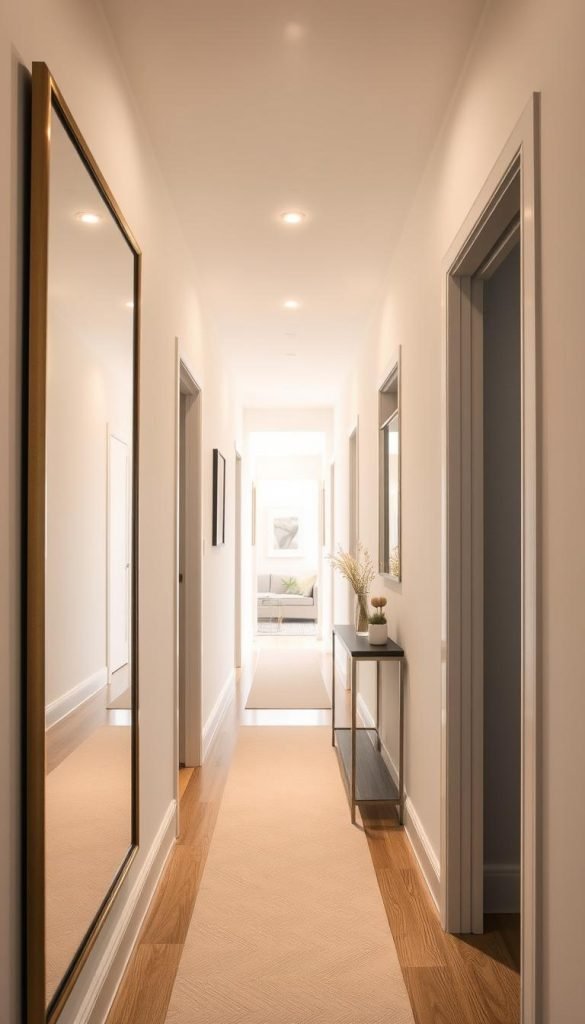
I discovered that supersized wall mirrors can double perceived according to design experts. The psychological effect is immediate and powerful. Mirrors not only expand visually but serve practical purposes too.
Choosing the Right Mirror Size and Shape
Proportion matters when selecting reflective surfaces. I learned that oversized options often work better than multiple small pieces. Large framed mirrored panels create maximum impact in tight spaces.
Different shapes produce unique effects. Round mirrors soften angular passages. Rattan arched designs add organic texture. Beveled edges catch light beautifully throughout the day.
Consider your sight lines when choosing dimensions. The mirror should complement your hallway proportions perfectly. Proper sizing ensures the reflection enhances rather than overwhelms.
Strategic Placement for Maximum Impact
Positioning transforms ordinary mirrors into spatial miracles. I placed mine opposite light sources and doorways. This technique captures and multiplies existing illumination.
The reflection creates depth where none existed. It makes the entire space feel more expansive. Strategic placement also improves functionality for daily use.
My favorite position allows quick outfit checks before leaving home. This practical benefit adds value beyond visual expansion. The mirror serves both aesthetic and functional purposes beautifully.
Creating Gallery Walls with Mixed Mirrors
Multiple reflective surfaces create stunning visual impact. I combined different shapes and sizes on one wall. This approach maximizes vertical space while adding personality.
Mixed mirrors create dynamic visual interest throughout the day. The changing reflections keep the area feeling fresh and alive. This technique works particularly well in longer passages.
My gallery wall includes round, square, and arched designs. Each piece contributes to the overall spacious effect. The collection makes my entryway feel intentionally designed rather than cramped.
| Mirror Type | Best For | Visual Effect | Installation Tips |
|---|---|---|---|
| Oversized Wall Mirror | Small entryways | Doubles perceived space | Mount opposite light source |
| Round Mirror | Angular hallways | Softens hard lines | Eye-level placement |
| Rattan Arched | Bohemian styles | Adds organic texture | Group with other natural elements |
| Beveled Edge | Traditional homes | Catches and reflects light | Position near windows |
| Gallery Collection | Long passages | Creates rhythm and flow | Vary heights and sizes |
The right mirror combination transforms how we experience narrow passages. These reflective surfaces make confined areas feel open and inviting. They represent one of the most effective tools for spatial illusion.
Color Psychology for Expanding Spaces
Color choices transform how we experience confined areas. The right palette creates optical illusions that expand perception. My journey with color taught me how hues influence spatial awareness dramatically.
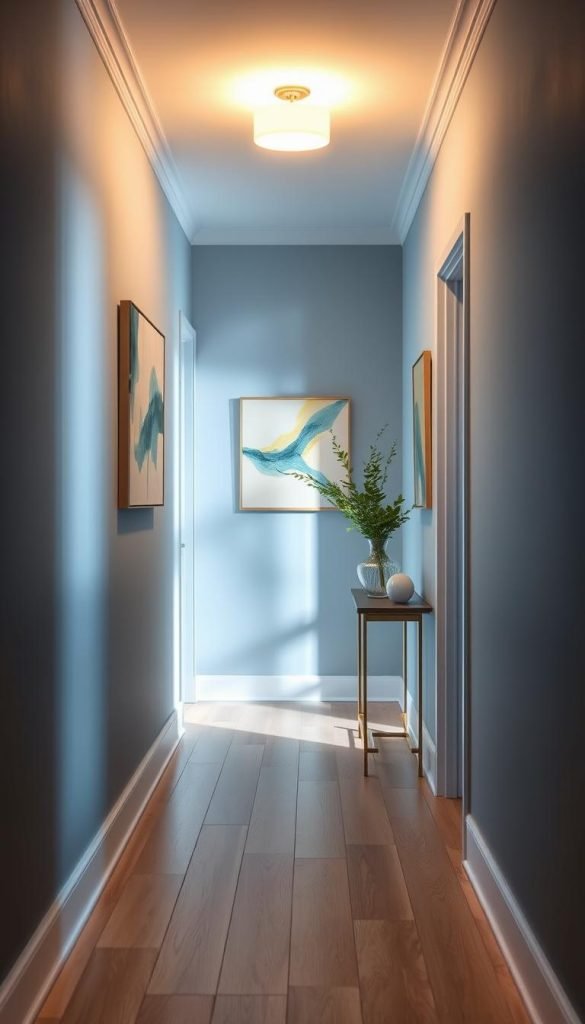
Different shades affect our emotional response to tight spaces. Light tones open up areas while dark colors can create intimacy. Understanding this balance helps create the perfect atmosphere.
Selecting Light, Reflective Paint Colors
Light-reflective paint makes a remarkable difference in small areas. These colors bounce light around the space, creating airiness. White walls create light and bright environments that feel expansive.
According to design experts, sunny yellow paint brightens narrow passages beautifully. The cheerful hue adds warmth without closing in the walls. This approach works particularly well in north-facing spaces.
Finish selection impacts light reflection significantly. Semi-gloss surfaces reflect more light than matte options. This subtle difference can make walls appear farther apart.
Using Monochromatic Color Schemes
Single-color schemes create seamless visual flow throughout the hallway. This technique eliminates visual breaks that make spaces feel choppy. The result is a continuous, expansive feeling.
Color drenching works wonders in compact entryway areas. Swathing walls, trim, and ceilings in similar hues creates cohesion. This approach makes the entire space feel intentionally designed.
My favorite monochromatic scheme uses sage green walls with subtle variations. Lighter tones on the ceiling enhance height perception. The overall effect is calming and spacious.
Incorporating Accent Walls Strategically
Strategic accent walls add depth without compromising spaciousness. The key is placement and color selection. Rich royal blue adds beautiful contrast when used correctly.
Position accent walls at the far end of longer passages. This draws the eye forward, creating the illusion of length. The technique works particularly well in straight hallways.
I discovered golden hour-inspired palettes with terra-cotta accents. These warm tones create welcoming atmospheres while maintaining openness. The look combines functionality with beautiful design.
Successful color stories include sage green walls with pink ceilings. This unexpected combination creates visual connection between surfaces. The effect is both expansive and emotionally uplifting.
Paler/soft colours tend to help rooms look bigger. Painting the ceiling the same color as the walls, or a shade lighter, helps the ceiling visually melt upward, disguising the room’s true height.
Cohesive palettes pull hues from adjacent rooms. This makes the hallway feel like a natural extension rather than a separate space. The continuity enhances the overall flow of your home.
Different paint finishes affect light reflection and spatial perception. Matte finishes absorb light while semi-gloss reflects it. Choose based on your lighting conditions and desired effect.
Strategic color placement creates visual interest without overwhelming. The right balance makes narrow passages feel welcoming and expansive. Color truly is the most transformative tool in spatial design.
Vertical Space Utilization Techniques
Going vertical became my breakthrough strategy for transforming my constricted passage. This approach completely changed how I interacted with limited square footage. Vertical thinking opened up new possibilities I hadn’t considered before.
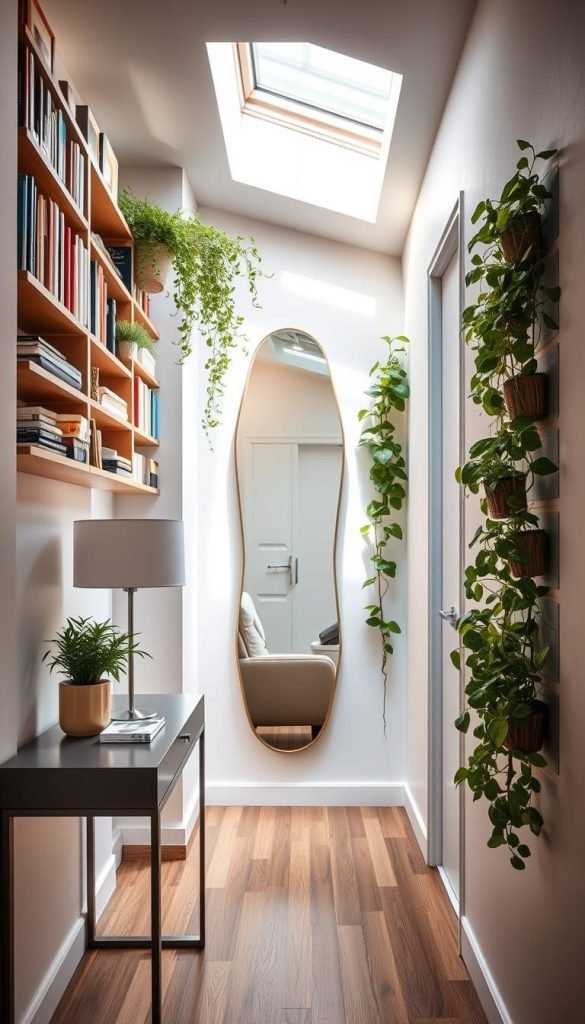
Wall-mounted solutions became my best friends in this journey. They provide function without sacrificing precious floor real estate. This vertical approach creates visual height while maintaining clear pathways.
Installing Floating Shelves for Storage
Floating shelves revolutionized my storage capabilities. These wall-mounted wonders hold essentials without encroaching on walking space. I discovered they’re perfect for displaying decor while keeping items organized.
The installation process proved simpler than I expected. Modern bracket systems make them secure and adjustable. I positioned mine at varying heights to create visual interest.
My floating shelves now hold keys, mail, and small decorative items. They keep clutter off surfaces while adding personality to the wall. This solution maximizes vertical storage beautifully.
Using Tall, Slim Furniture Pieces
Vertical furniture pieces changed everything about my layout options. I chose a slender console table that fits perfectly against the wall. Its tall, narrow profile provides surface area without obstruction.
Tall dressers offer surprising storage capacity in compact footprints. I found one with vertical drawers that hold linens and accessories. The piece adds function while drawing eyes upward.
These vertical furniture pieces maintain clear walking paths. They create visual height without making the area feel cramped. The right proportions are key to successful integration.
Drawing Eyes Upward with Vertical Elements
Strategic vertical elements create powerful height illusions. I incorporated tall vases with greenery that reach toward the ceiling. These natural elements add life while enhancing spatial perception.
Vertical stripes in artwork and decor guide vision upward. I chose pieces with strong vertical lines that emphasize height. This technique makes ceilings appear higher than they actually are.
Floor-to-ceiling decor elements maximize the vertical space available. Tall candlesticks and hanging plants create continuous visual lines. These elements work together to expand the perceived volume.
| Vertical Element | Best Placement | Visual Impact | Functional Benefit |
|---|---|---|---|
| Floating Shelves | Eye-level to ceiling | Creates layered interest | Provides accessible storage |
| Tall Console Table | Against longest wall | Draws eyes upward | Offers surface area |
| Vertical Artwork | At end of passage | Enhances depth perception | Adds personal style |
| Tall Plants | Corners or alcoves | Softens hard lines | Improves air quality |
| Wall Hooks | Near entry point | Creates organized appearance | Holds coats and bags |
Balancing vertical and horizontal elements creates harmony throughout the space. This approach makes narrow passages feel intentional and well-designed. Vertical utilization truly transforms how we experience constrained areas.
Flooring Choices That Expand Visually
Flooring decisions transformed how my passageway felt underfoot. The right surface treatment creates powerful optical effects. These choices work with lighting and color to enhance spatial perception.
I discovered that flooring acts as a foundation for all other design elements. The surface either opens up or closes in the area. Strategic selections make a remarkable difference in daily experience.
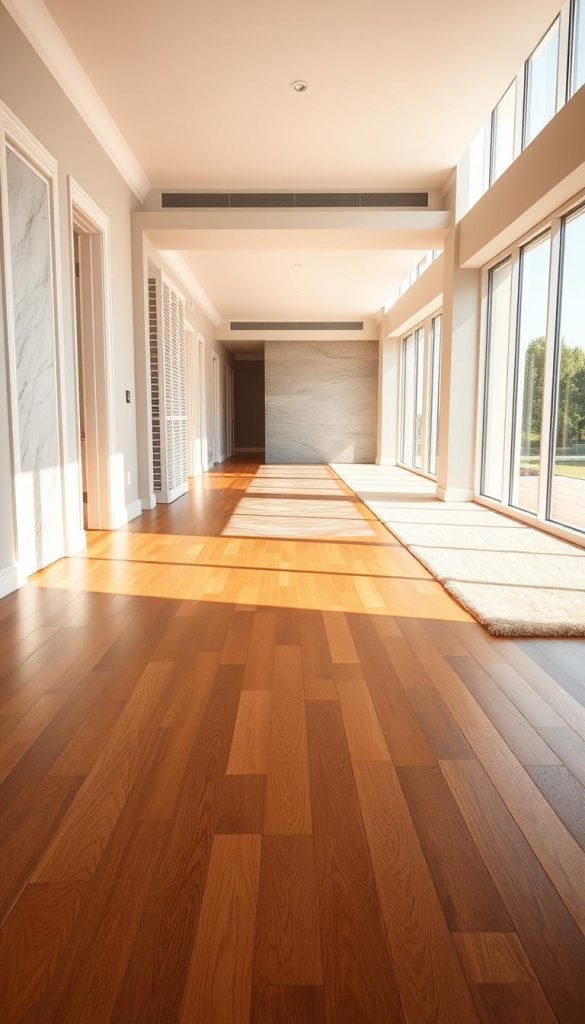
Selecting Light-Colored Flooring Materials
Light-reflective surfaces became my first priority. Pale tones bounce light around the space beautifully. This technique makes the entire area feel more open and airy.
I chose materials that complement my wall colors. Light oak flooring created warmth without darkness. The pale wood grain added texture while maintaining brightness.
Patterned floor tile defines space effectively according to my research. Earth-toned options work particularly well in compact areas. These surfaces add personality without overwhelming.
Using Diagonal or Horizontal Patterns
Directional patterns create clever visual deception. Diagonal layouts make passages appear wider than they are. Horizontal lines stretch the space lengthwise.
Herringbone patterns create wonderful visual interest. The angled arrangement tricks the eye into seeing more width. This classic pattern adds elegance while expanding perception.
I found that consistent pattern flow enhances the effect. Breaking patterns creates visual choppiness. Continuous designs make the area feel unified and spacious.
Incorporating Runners for Length Illusion
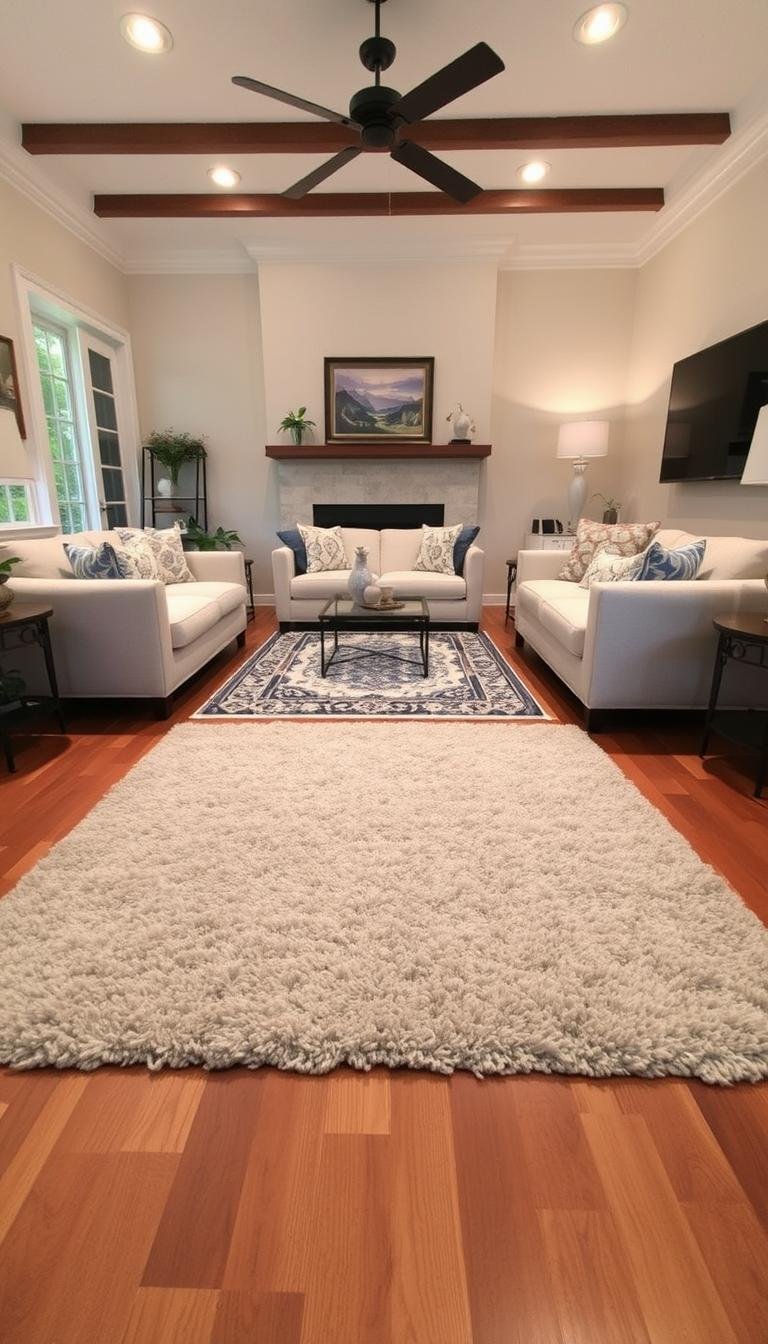
Area rugs can define small entries beautifully. The right runner protects surfaces while enhancing style. I learned that size and placement matter tremendously.
Earth-toned patterned area rugs work well in my experience. They add warmth without closing in the walls. The pattern draws the eye forward, creating length.
Proper runner placement maintains clear walking paths. Centered positioning works best for most layouts. This approach makes the passage feel intentionally designed.
| Flooring Type | Visual Effect | Best For | Maintenance Level |
|---|---|---|---|
| Light Oak Hardwood | Expands space visually | Traditional homes | Moderate |
| Large Pattern Tile | Creates movement | High traffic areas | Easy |
| Diagonal Layout | Adds width illusion | Narrow passages | Varies by material |
| Neutral Runner | Lengthens appearance | Rental properties | Machine washable |
| Mixed Materials | Adds depth interest | Transition spaces | Varies |
My flooring choices work harmoniously with other elements. The light-reflective surface complements wall colors perfectly. This cohesive approach makes the entire space feel intentional.
Proper rug size ensures the area feels balanced. Too small looks lost while too large feels cramped. The right proportions create perfect visual flow.
These flooring strategies transformed my daily experience. The passage now feels welcoming and spacious. The right surface treatment makes all the difference.
Multifunctional Furniture Solutions
Smart furniture choices revolutionized how my tight passage functions daily. The right pieces serve multiple purposes while maintaining clear pathways. This approach maximizes every inch without sacrificing style or comfort.
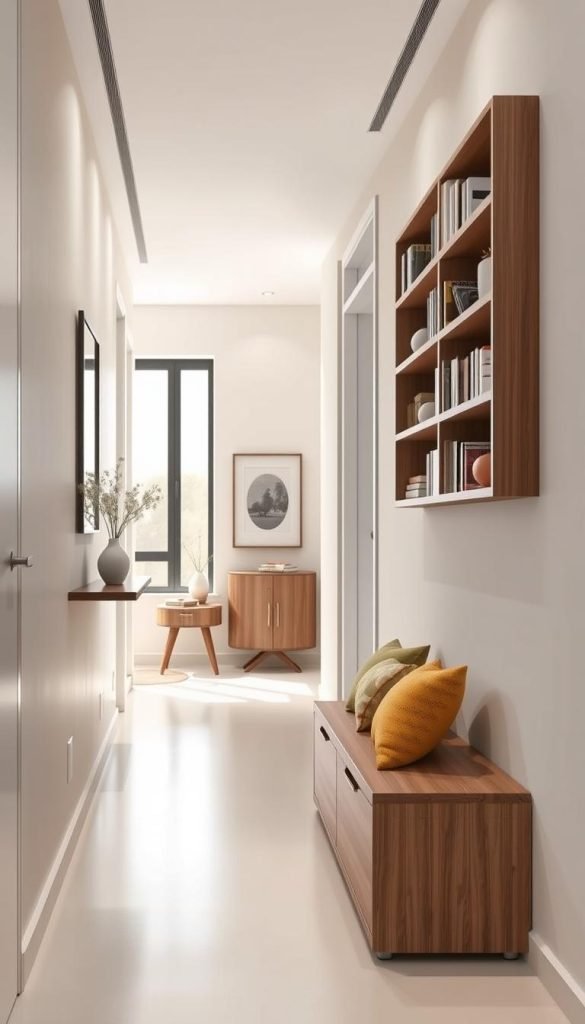
I discovered that versatile furnishings transform cramped areas into organized spaces. Each piece must earn its place through functionality and form. This philosophy guides all my furniture selections.
Choosing Slim Console Tables
Slim console tables became my favorite solution for surface space. These narrow pieces provide landing areas without obstructing movement. I chose one with a depth under 12 inches for optimal flow.
The right console offers both style and practicality. Many include drawers or shelves for additional organization. This hidden storage keeps essentials accessible but out of sight.
Floating consoles maintain an airy feel in compact areas. Wall-mounted designs create visual lightness while providing function. These pieces seem to disappear against the wall when not in use.
Incorporating Storage Benches
Storage benches solve two problems with one elegant solution. They provide seating while concealing clutter within. This dual-purpose approach maximizes limited square footage beautifully.
I selected a bench with integrated shoe storage compartments. The lift-top design keeps footwear organized yet accessible. This feature maintains tidy appearance in high-traffic zones.
Freestanding benches with coat racks add vertical functionality. These units combine multiple storage needs into one compact footprint. The design keeps outerwear organized while providing seating.
Selecting Furniture with Exposed Legs
Furniture with exposed legs creates visual lightness throughout the space. The visible floor area makes the entire area feel more open. This design trick works wonders in confined passages.
I prefer pieces with slender, tapered legs for maximum effect. The raised profile allows light to flow underneath freely. This creates an illusion of more floor space than actually exists.
Open-base designs prevent the heavy, blocky appearance of solid furniture. The airy construction maintains sight lines along the floor. This approach enhances the spacious feeling dramatically.
| Furniture Type | Ideal Dimensions | Key Features | Best Placement |
|---|---|---|---|
| Slim Console Table | Depth under 12″ | Drawers, floating mount | Against longest wall |
| Storage Bench | Height 18-20″ | Lift-top, shoe compartments | Entryway alcove |
| Open-Leg Chair | Width under 24″ | Tapered legs, minimal frame | Corner placement |
| Wall-Mounted Shelf | Depth 8-10″ | Mixed storage options | Eye-level placement |
| Coat Rack Bench | Width 36-42″ | Integrated hooks, storage | Primary entry point |
Proper scaling ensures furniture enhances rather than overwhelms the area. Pieces that are too large make the space feel cramped and restrictive. The right proportions maintain comfortable circulation paths.
Multifunctional furniture represents intelligent design for compact living. Each piece serves multiple purposes while maintaining aesthetic appeal. This approach transforms challenging areas into highly functional spaces.
Wall Treatments That Create Depth
Wall surfaces became my secret weapon for transforming tight passages. The right treatments add dimension where flat surfaces fall short. These techniques create optical illusions that expand perceived space dramatically.
I discovered that textured elements change how light interacts with surfaces. Shadows and highlights create depth that flat paint cannot achieve. This approach makes confined areas feel more dynamic and spacious.
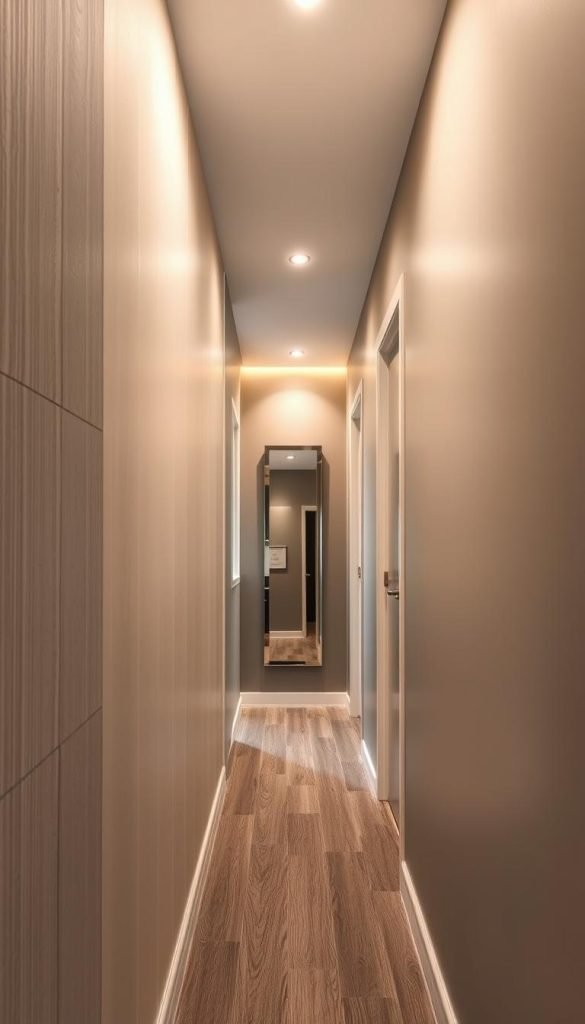
Using Textured Wallcoverings
Textured options bring walls to life with character and depth. Grasscloth wallcovering adds natural charm with its woven appearance. The subtle variations in material create visual interest without overwhelming.
Wooden elements introduce organic texture to plain surfaces. Reclaimed wood panels add warmth and history to modern spaces. These natural materials work beautifully with various lighting conditions.
Block-print wallpaper creates intentional design moments throughout the passage. The repetitive patterns guide the eye along the wall’s length. This technique makes the area feel thoughtfully designed rather than accidental.
According to design experts, scale-appropriate patterns prevent visual overload. Smaller repeats work better in compact areas than large dramatic prints. The right balance maintains spaciousness while adding personality.
Incorporating Wainscoting or Paneling
Architectural details transform flat walls into dimensional masterpieces. Wainscoting creates visual breaks that make surfaces feel further apart. The horizontal line draws the eye around the space beautifully.
Beadboard paneling adds vertical rhythm to long passages. The consistent lines create movement and flow along the wall surface. This traditional treatment feels both classic and fresh in modern homes.
I discovered that painted paneling in contrasting colors enhances the effect. Lighter tones above with darker shades below create depth illusions. This approach makes ceilings appear higher while grounding the space.
Creating Visual Interest with Wall Art
Artwork transforms blank walls into personal galleries of expression. Single statement pieces create powerful focal points in compact areas. Large-scale art makes bold impressions without clutter.
Curated gallery walls tell visual stories along the passage length. Mixed frames and sizes create dynamic arrangements that engage the eye. This approach adds personality while maintaining spacious feelings.
Proper placement ensures art enhances rather than overwhelms the area. Eye-level positioning works best for most viewing experiences. The right height creates comfortable sight lines throughout the space.
Textured wall treatments work harmoniously with lighting to create depth. Shadows play across surfaces, making spaces feel less flat and more dimensional. This combination represents smart design for challenging areas.
How Can I Make a Narrow 5-Foot Hallway Feel Twice as Wide with Storage Solutions?
Clever storage systems transformed my cramped passage into an organized oasis. The right solutions keep essentials accessible while maintaining clear walking paths. This approach eliminates visual clutter that makes confined areas feel smaller.
I discovered that integrated storage creates both function and beauty. Each solution serves multiple purposes while enhancing the overall design. This smart approach maximizes every inch of available space.
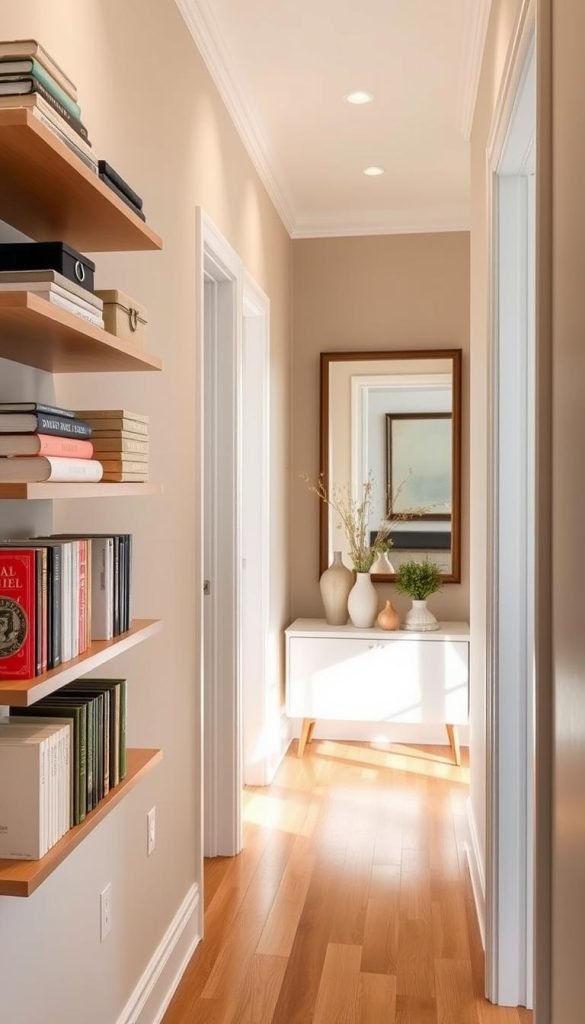
Built-In Storage Options
Custom built-ins became my favorite solution for awkward hallway spaces. I installed a settee in an unused alcove that provides seating and hidden compartments. The integrated shelving above creates vertical storage without encroaching on walkways.
Built-in cabinetry ensures items remain completely out of sight. This maintains clean lines throughout the passage. The seamless look makes the entire area feel more spacious and intentional.
I repurposed dead space beside door frames for shallow cabinets. These narrow units hold mail, keys, and small essentials. The customization works perfectly with my specific dimensions and needs.
Wall-Mounted Organizers
Vertical organizers revolutionized how I use wall surfaces. Floating shelves keep items accessible without consuming floor space. This approach maintains clear pathways while providing necessary storage.
I chose slim profile hooks for coats and bags near the entryway. The wall-mounted system keeps outerwear organized yet within reach. This prevents pile-ups that make narrow passages feel cramped.
Magnetic strips hold keys and small metal items securely. This clever solution uses vertical surfaces most people overlook. The organized appearance immediately makes the home entrance feel more welcoming.
Hidden Storage Solutions
Concealed compartments maintain clean aesthetics while providing function. My storage bench combines coat racks with seating and shoe storage. The multi-purpose design solves several problems in one compact unit.
I discovered furniture with hidden compartments that serve dual purposes. An elegant console table conceals drawers for everyday items. This approach keeps clutter out of sight but within easy reach.
Mirrored cabinets provide reflection while hiding necessities. The dual function makes narrow passages appear larger. This smart design trick works beautifully in compact entryway spaces.
Good organization is not about storage; it’s about creating systems that work with your lifestyle and space constraints.
Prioritizing storage based on daily needs transformed my experience. Shoes, coats, and mail each have designated homes now. This system prevents clutter from accumulating in high-traffic zones.
The right storage solutions make narrow passages feel intentionally designed. Every item has its place, creating calm instead of chaos. This organized approach truly expands how we experience constrained spaces.
Ceiling Treatments for Added Height
Looking upward revealed my greatest opportunity for transformation. The often-overlooked fifth surface holds incredible potential for creating spacious illusions. My ceiling became the final frontier in expanding my constricted passage visually.
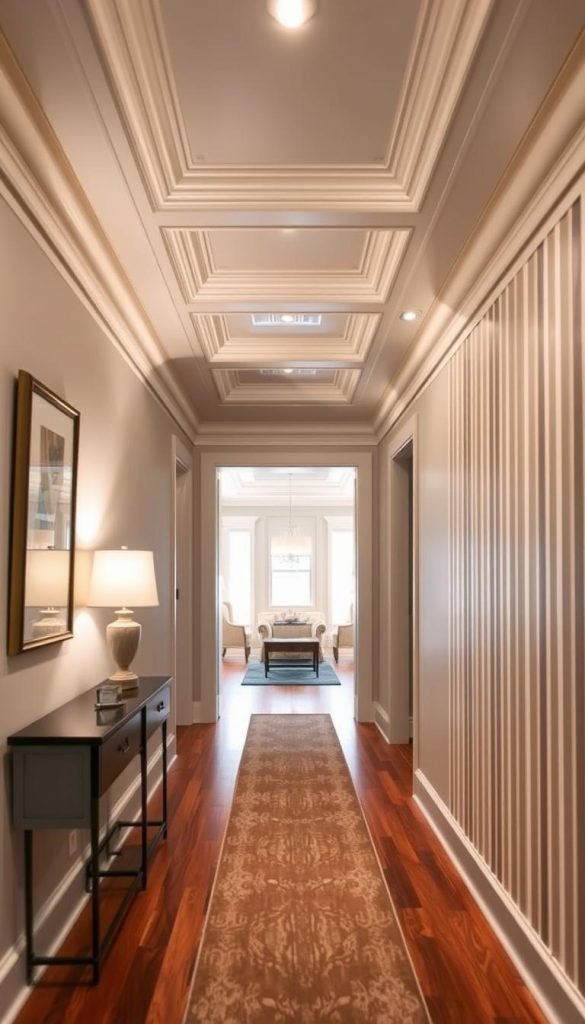
Painting Ceilings Lighter Than Walls
Color gradation creates powerful upward visual pull. I chose a ceiling shade several tones lighter than my wall color. This technique makes the overhead surface appear to recede dramatically.
The optical illusion works through contrast and light reflection. Lighter overhead surfaces draw the eye upward naturally. This simple approach makes any confined area feel taller instantly.
Adding Crown Molding Details
Architectural elements add sophistication while enhancing height perception. Crown molding creates beautiful transitions between walls and overhead surfaces. The detail draws attention upward along the entire passage length.
I discovered that proportional sizing matters significantly. Smaller spaces benefit from simpler, more delicate profiles. The right scale maintains elegance without overwhelming the area.
Using Vertical Stripes on Ceilings
Directional patterns create dramatic height illusions overhead. Vertical stripes guide the eye upward along the ceiling surface. This technique works particularly well in longer passages.
I applied subtle tonal variations rather than stark contrasts. The gentle gradation creates movement without visual chaos. This approach maintains spaciousness while adding personality.
Wood detailing creates room-within-a-room feelings according to design principles. The natural material adds warmth and texture overhead. This treatment makes the entire space feel intentionally designed.
Door and Entryway Considerations
Doorways became my unexpected solution for transforming cramped passages. The right door strategy can completely change how you experience a confined area. I discovered that thoughtful entry treatments create both visual and functional improvements.
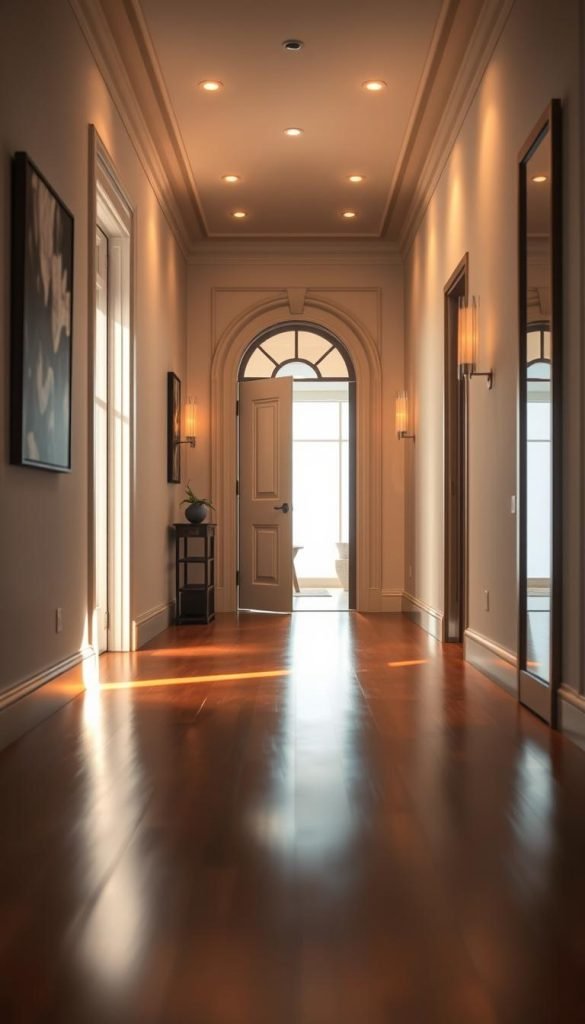
Choosing Sliding or Pocket Doors
Traditional swinging doors consume precious square footage in tight spaces. I replaced mine with space-saving alternatives that glide along tracks. This simple change reclaimed valuable walking room instantly.
Pocket doors disappear completely into wall cavities when open. They maintain clean sight lines throughout the passage. Sliding barn-style options add rustic charm while maximizing floor space.
These alternatives work particularly well for closets and secondary rooms. The smooth operation feels luxurious in daily use. This approach solves circulation problems in narrow layouts beautifully.
Using Consistent Door Styles
Matching door treatments create visual harmony along the entire passage. Consistent styles make the hallway feel cohesive and intentional. This continuity enhances the overall flow of your home.
I chose simple panel designs that complement my architectural style. The uniform appearance makes the space feel more expansive. This attention to detail creates professional-looking results.
Consistent door styles throughout a home create rhythm and flow that makes spaces feel larger and more connected.
Hardware finishes contribute significantly to the overall look. Matching knobs and hinges throughout the passage maintain visual consistency. These subtle elements work together to create polished results.
Creating Seamless Transitions
Blending materials between rooms eliminates visual breaks that constrict spaces. I extended flooring from adjacent areas into the passage. This technique makes the entire area feel more open and connected.
Architectural interest can be added without sacrificing precious square footage. Arched doorway designs create elegant transitions between spaces. These curved openings feel more inviting than standard rectangular frames.
Color continuity helps rooms flow naturally into one another. I pulled wall colors from connecting spaces into the passage. This approach makes the hallway feel like an intentional part of the whole design.
Addressing entryway considerations often provides the most dramatic improvements. The right solutions enhance both aesthetics and functionality. These changes transform daily movement through your home completely.
Texture and Pattern Play
Texture exploration opened new dimensions in my passage transformation. Tactile elements add depth that flat surfaces simply cannot achieve. This approach creates sensory richness while maintaining spacious feelings.
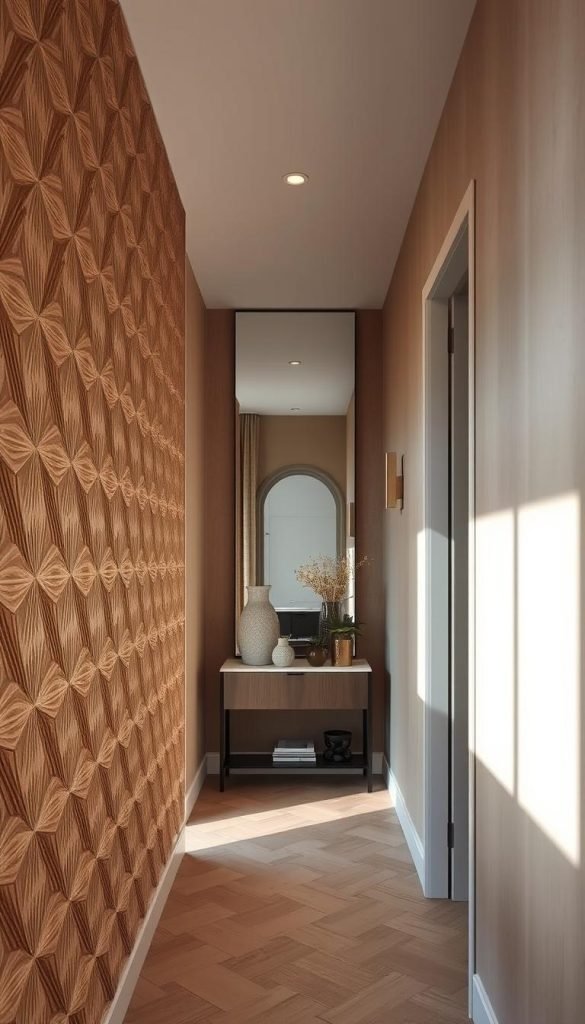
Mixing Textures for Visual Interest
Layered materials create captivating depth throughout the passage. I combined smooth metallic accents with rustic woven elements. This balance adds character without overwhelming the limited space.
Woven benches bring organic texture to functional furniture. Their natural patterns catch light beautifully throughout the day. These pieces serve both practical and aesthetic purposes perfectly.
Rustic vases introduce earthy elements to sleek surfaces. Their rough textures contrast beautifully with smooth walls. This combination creates dynamic visual interest that engages the senses.
Mixed materials work harmoniously with lighting conditions. Shadows highlight textural variations, adding dimension to flat surfaces. This interplay makes the entire area feel more expansive.
Using Scale-Appropriate Patterns
Pattern selection makes or breaks spatial perception in compact areas. I chose smaller repeats that complement rather than overwhelm. These designs add personality while maintaining openness.
Geometric patterns create rhythm along the passage length. Their consistent repetition guides the eye smoothly. This technique makes the hallway feel intentionally designed.
Subtle tonal variations work better than stark contrasts. Gentle gradations maintain visual calmness. This approach prevents patterns from closing in the walls.
Incorporating Natural Materials
Organic elements bring warmth to potentially cold transitional spaces. Wood accents add natural beauty and texture. Their grain patterns create visual movement along surfaces.
Rattan introduces bohemian charm with its woven texture. This material works beautifully in both furniture and decor. Its organic feel softens hard architectural lines.
Seagrass elements add coastal tranquility to the passage. Their natural variations create unique visual interest. These materials connect indoor spaces with outdoor serenity.
| Material Type | Visual Effect | Best Application | Style Compatibility |
|---|---|---|---|
| Reclaimed Wood | Adds warmth and history | Wall panels, shelves | Farmhouse, industrial |
| Woven Rattan | Creates organic texture | Benches, light fixtures | Bohemian, coastal |
| Smooth Metal | Adds modern contrast | Accent pieces, hardware | Contemporary, minimalist |
| Natural Stone | Provides earthy elegance | Decorative objects | Traditional, rustic |
| Textured Fabric | Softens hard surfaces | Runners, cushions | Eclectic, traditional |
The right texture balance makes confined areas feel curated rather than merely functional. These elements work together to create sensory richness. This approach transforms daily passage through your home.
Art and Decor Placement Strategies
Artistic elements transformed my passage into a personal gallery experience. The right placement creates visual destinations that guide movement beautifully. This approach adds personality while maintaining spacious feelings throughout the area.
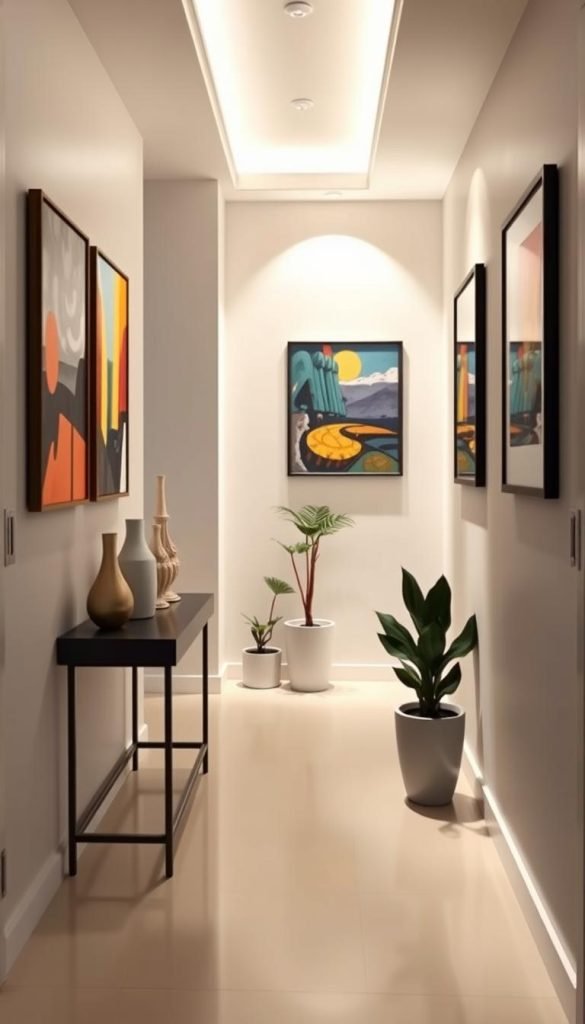
Creating Focal Points
Strategic focal points draw attention to specific areas along the wall. I placed a large-scale piece at the end of my passage. This creates a visual destination that makes the space feel intentional.
Bold artwork introduces personality without overwhelming the narrow area. The right piece becomes a conversation starter. It transforms ordinary walls into curated exhibition spaces.
My focal point uses complementary colors from adjacent rooms. This creates cohesion throughout the home. The artwork feels connected rather than isolated.
Using Proportionate Artwork
Proper scaling ensures pieces enhance rather than dominate the wall. I chose artwork that fits my hallway proportions perfectly. Oversized pieces can make confined areas feel cramped.
Vertical orientation works beautifully in compact passages. Tall, narrow pieces draw eyes upward. This technique enhances height perception dramatically.
I discovered that grouping smaller pieces creates impact. A curated collection tells visual stories. This approach adds personality while maintaining openness.
Incorporating Reflective Surfaces
Metallic accents bounce light throughout the space beautifully. I added brass frames and decorative objects. These elements create sparkle without overwhelming.
Glass surfaces introduce reflection in unexpected ways. Display cases show collections while expanding visual space. This dual function works perfectly in entryways.
My favorite technique uses mirrored art pieces. They provide reflection while serving as decorative elements. This smart approach maximizes both style and function.
Art should comfort the disturbed and disturb the comfortable.
Gallery walls maximize vertical space effectively. I arranged pieces in organic patterns rather than rigid grids. This creates movement along the entire passage length.
The right art choices express personal style while serving functional goals. Every piece contributes to spatial expansion. This balanced approach transforms daily passage through your home.
Lighting Control and Automation
Mastering illumination transformed how my passage functions throughout the day. The right control systems create perfect ambiance for every situation. This approach blends technology with thoughtful design for optimal results.
I discovered that automated systems provide both convenience and energy efficiency. Smart solutions adapt to natural light changes seamlessly. This creates consistent comfort regardless of time or weather conditions.
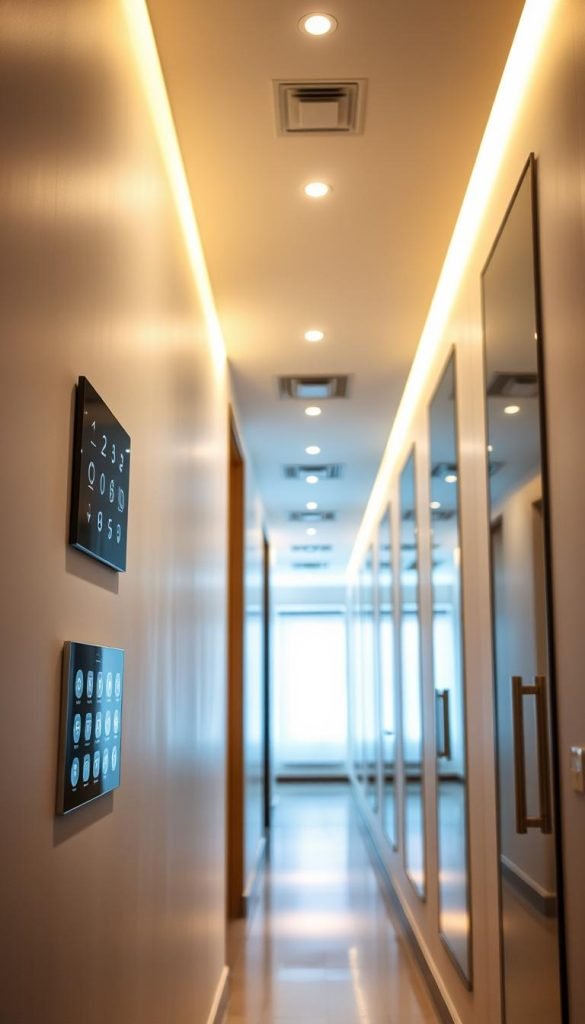
Layered Lighting Approaches
Combining different light sources creates depth and dimension throughout the area. I use ambient, task, and accent illumination working together. This layered approach eliminates harsh shadows that make spaces feel cramped.
Ambient lighting provides overall illumination for general visibility. Task options focus on specific activities like reading or dressing. Accent lights highlight architectural features or artwork beautifully.
Morning requires brighter illumination for getting ready. Evening calls for softer, more intimate settings. Layered systems accommodate all these needs effortlessly.
Smart Lighting Solutions
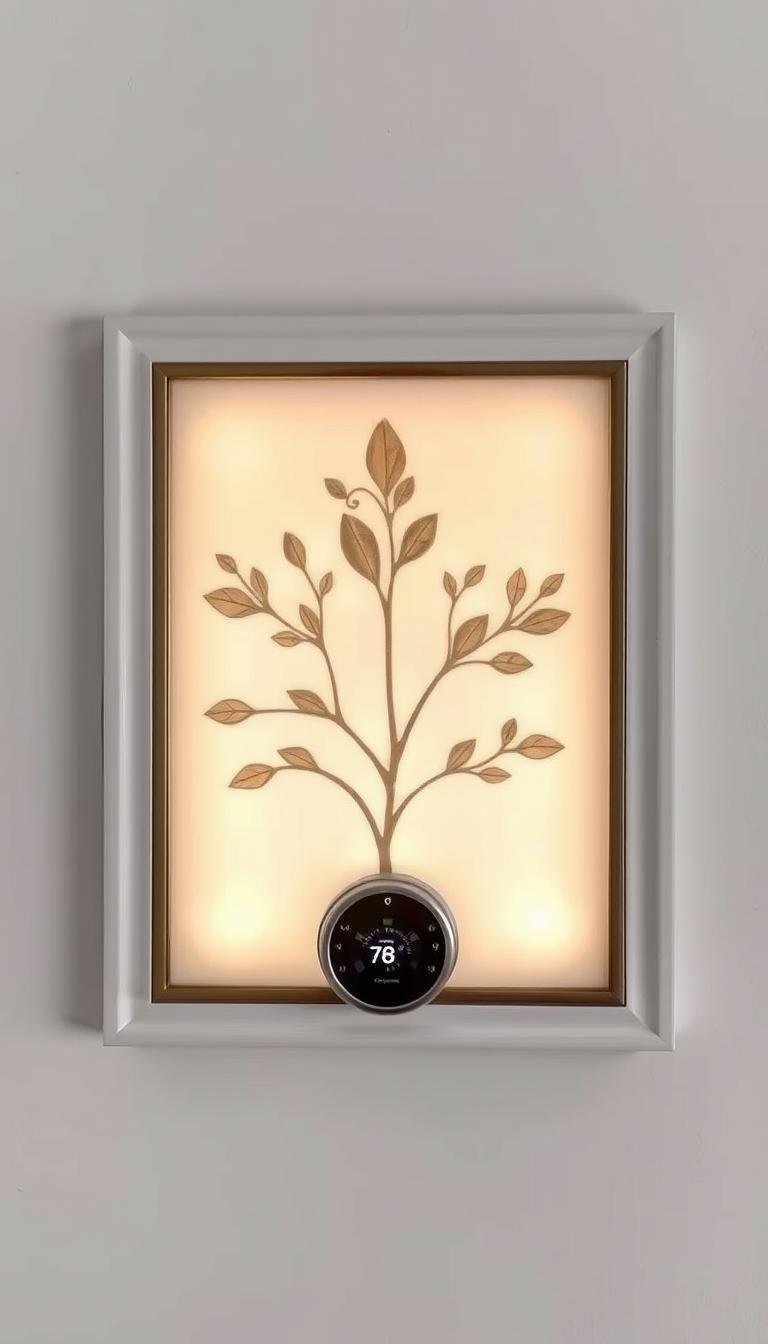
Automated controls revolutionized my daily routine in the hallway. Voice commands and smartphone apps provide complete command. I adjust brightness and color temperature with simple voice requests.
Motion sensors activate illumination when entering the entryway. This hands-free approach ensures perfect visibility upon arrival. The system automatically dims when no movement is detected.
Programmed scenes create ideal settings for different times. “Morning” mode provides bright, energizing illumination. “Evening” setting offers warm, relaxing ambiance throughout the home.
Natural Light Maximization
Harnessing sunlight creates the most beautiful and energy-efficient illumination. I use reflective surfaces to bounce natural light deeper into the passage. Mirrors and glossy finishes amplify available daylight beautifully.
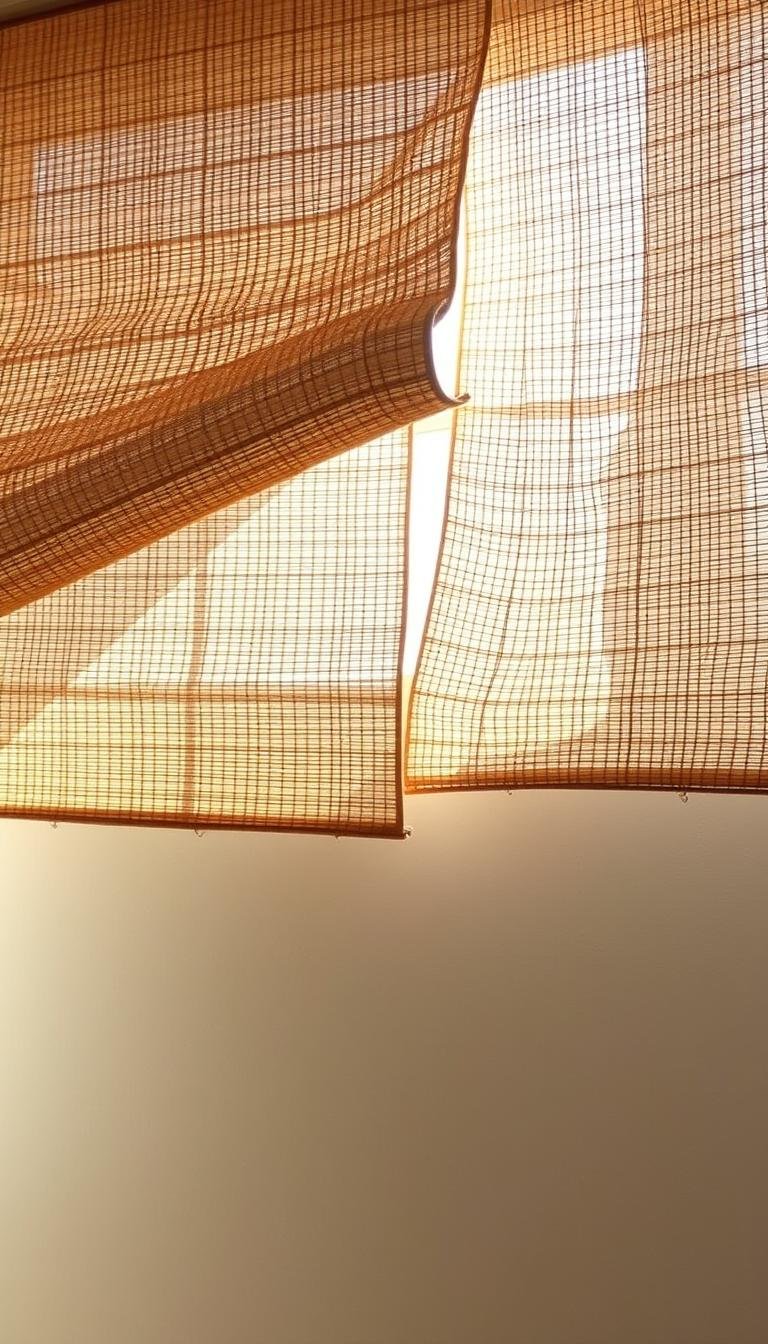
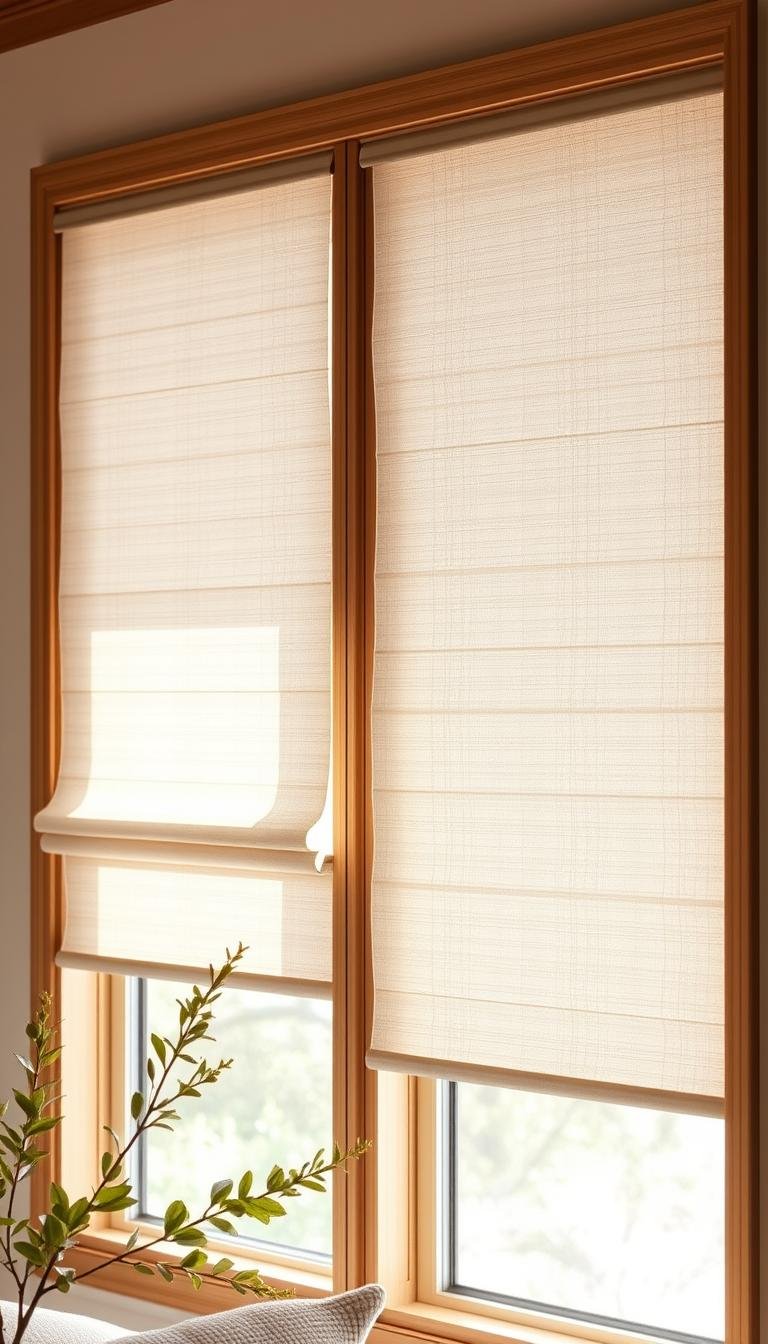
Sheer window treatments filter sunlight while maintaining privacy. These fabrics soften harsh glare without blocking precious illumination. The result is gentle, diffused light that feels natural and inviting.
Complementary wall colors enhance natural brightness throughout the space. Light-reflective paints work with sunlight rather than against it. This approach creates harmonious illumination from dawn to dusk.
Proper lighting control transforms how we experience spaces – it’s not just about seeing, but about feeling and functioning optimally in our environments.
Balancing artificial and natural sources creates the most effective spatial illusions. The combination makes my passage feel open and welcoming at all hours. This intelligent approach represents the future of home illumination.
Implementing My Hallway Transformation
Planning my transformation journey became the foundation for successful results. A thoughtful approach ensures every change enhances both function and beauty. This systematic method prevents overwhelm while delivering noticeable improvements quickly.
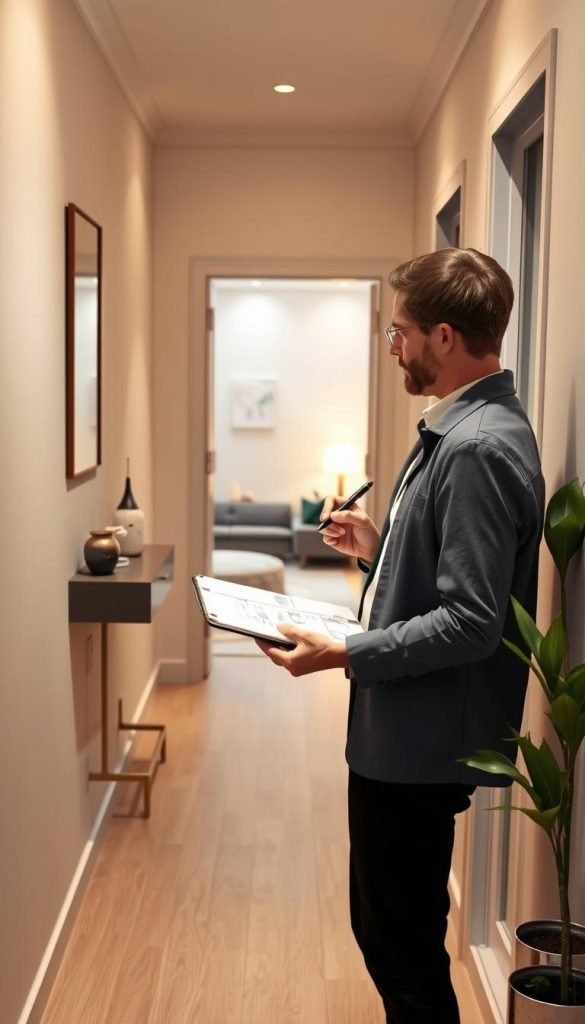
Creating a Step-by-Step Plan
Breaking the project into phases made the process manageable. I started with visual changes that required minimal investment. Lighting upgrades and paint transformations delivered immediate impact.
Next came functional improvements like storage solutions. I measured my available space carefully before selecting any pieces. This ensured everything fit perfectly within the constrained area.
Finally, I addressed decorative elements and finishing touches. This phased approach maintained usability throughout the transformation. The hallway remained functional even during updates.
Budget-Friendly Solutions
Smart choices delivered maximum impact without excessive spending. I prioritized changes that offered the best visual return. Paint and lighting provided the most dramatic improvements per dollar.
DIY projects saved significant money on labor costs. Simple upgrades like new hardware and decor refreshed the space affordably. These small changes accumulated into a major transformation.
Strategic splurges on key elements elevated the entire design. I invested in quality lighting fixtures that became focal points. These pieces anchored the room while cheaper accessories complemented them.
DIY vs Professional Help Decisions
Honest self-assessment determined which tasks I could handle. Simple painting and decorating fell within my skill level. These projects offered satisfying results with minimal risk.
Electrical work required professional expertise for safety compliance. I hired licensed electricians for lighting installation and upgrades. This ensured proper function and meeting building codes.
Complex carpentry projects also benefited from professional touch. Custom built-ins required precision measuring and construction. The investment guaranteed quality results that lasted years.
Working with existing architecture saved both money and frustration. I embraced the hallway‘s character rather than fighting its limitations. This approach created solutions that felt natural to the home.
Proper planning made the entire process enjoyable rather than stressful. Each completed phase provided motivation to continue. The transformation unfolded logically from start to end.
My entryway now welcomes everyone with improved function and style. The systematic approach ensured no wasted effort or resources. Every change contributed to the final beautiful result.
Conclusion
Transforming your passage creates both physical and emotional spaciousness. These strategies work together to open up your home’s flow.
Smart design choices make compact areas feel welcoming. The right lighting, colors, and storage solutions create harmony.
Every change contributes to a better daily experience. Your entryway becomes a joyful space rather than a cramped passage.
Start with simple updates that deliver big impact. Even small improvements transform how you experience your room.
Well-designed spaces welcome both residents and guests beautifully. Your home deserves this thoughtful attention to flow and function.