What’s the ideal mirror size above a 48-inch vanity?
I often tell clients that getting proportions right changes how a bathroom looks and feels. A well-chosen mirror brings balance, improves function, and makes a room feel larger.
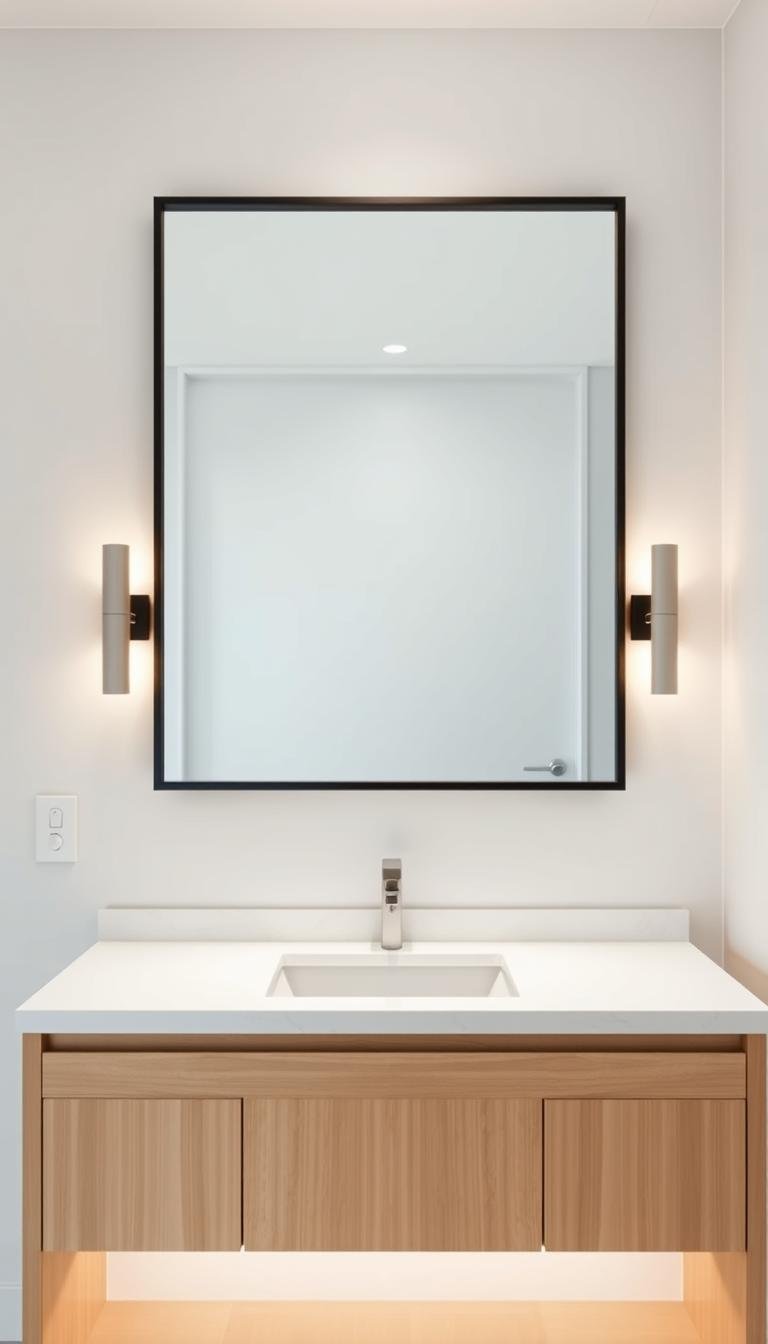
For a 48-inch vanity, most pros aim for a width between 36 and 44 inches. Leaving a couple inches clear on each side creates a clean visual frame and avoids clutter around outlets and sconces.
Typical mirror heights land near 30–40 inches in rooms with eight-foot ceilings. I recommend mounting the bottom edge about 4–10 inches above the countertop to keep reflections useful and avoid backsplash splashes.
Frameless pieces can sometimes span full width if fixtures and clearances allow. If you use two mirrors, center each over its sink and keep about a 4–6 inch gap for symmetry.
In short, I advise measuring first, thinking about lighting, and choosing a style that complements your design. That measured plan beats guessing and saves costly rewiring later.
Key Takeaways
- Width guideline: aim 36–44 inches for a 48-inch vanity for balanced edges.
- Mount bottom edge 4–10 inches above countertop for practical use.
- Height around 30–40 inches suits standard eight-foot ceilings.
- Frameless full-width works only if wall fixtures and outlets are clear.
- Two mirrors need a 4–6 inch gap and centered placement over sinks.
- Measure first and consider lighting before buying to avoid surprises.
Quick answer: the best mirror width for a 48-inch vanity at present
Choosing the right reflection panel keeps fixtures functional and makes the room feel balanced. I focus on practical numbers so you can decide quickly and with confidence.
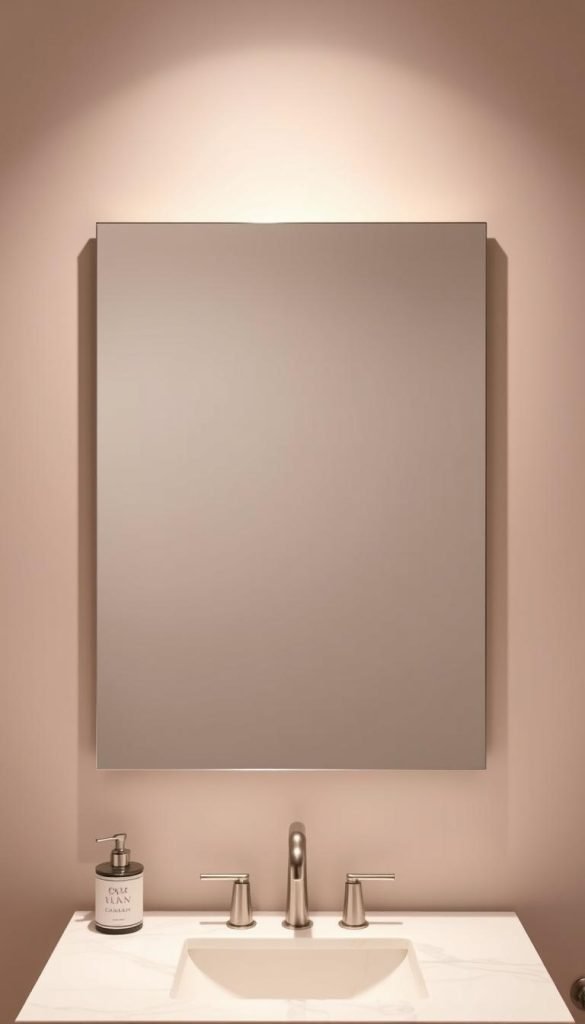
Ideal width range: 36–44 inches for most bathrooms
Quick math: aim for a panel roughly 36–44 inches wide. That leaves about two to four inches free on either side for switches, sconces, and visual breathing room.
When a full 48-inch frameless mirror makes sense
Frameless pieces that run full 48 inches work when wall fixtures and outlets clear the span. If lighting or switches sit close, step down to 36–40 inches to avoid rewiring.
“I often mock up tape lines at 36, 42 and 44 inches to see what fits the room.”
- Use 42–44 inches for a modern, generous feel.
- Choose 36–40 inches when wall constraints limit space.
- Remember frame thickness — it adds to the total width.
What’s the ideal mirror size above a 48-inch vanity?
I like to start by showing clients how small gaps can change a bathroom’s visual rhythm.
The two-to-four-inch rule on either side keeps the glass from feeling tacked on. Leave 2–4 inches of wall on each side to create a neat frame and steady balance between counter and wall.
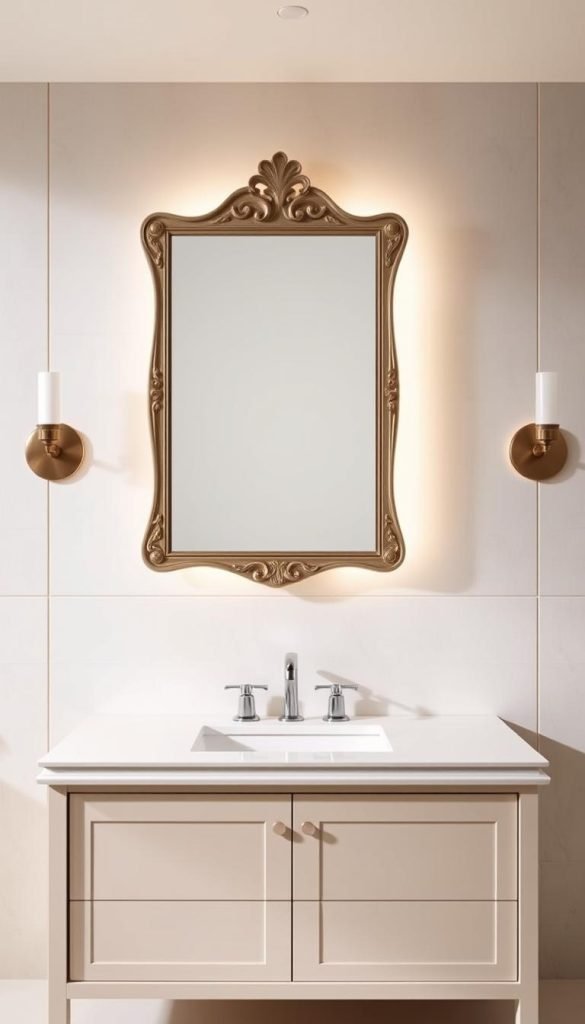
The rule applied
For a 48-inch width vanity, that rule translates to roughly 36–44 inches of actual mirror. This range gives room for side-mounted sconces, outlets, trim, and tile transitions without crowding.
Practical benefits: a sliver of wall protects mirror edges, eases cleaning, and prevents fixture backplates from feeling pinched.
“I usually mock up the gaps with tape so clients can see how proportions read in the room.”
- Stops collisions with outlets or trim.
- Preserves light beam from sconces.
- Accounts for frame thickness when choosing glass width.
| Mirror Width | Use Case | Notes |
|---|---|---|
| 36 inches | Constrained walls or thick frames | Keeps generous side clearance |
| 40–42 inches | Most common choice | Best balance of coverage and clearance |
| 44 inches | Modern, wider look | Use if sconces and outlets are clear |
| 48 inches (frameless) | When wall elements allow | Only if proportions still read balanced |
Measure, calculate, and choose the right mirror width
Before you buy, I measure and tape out options on the wall to see how each reads in real light. This quick mockup saves time and prevents awkward rework.
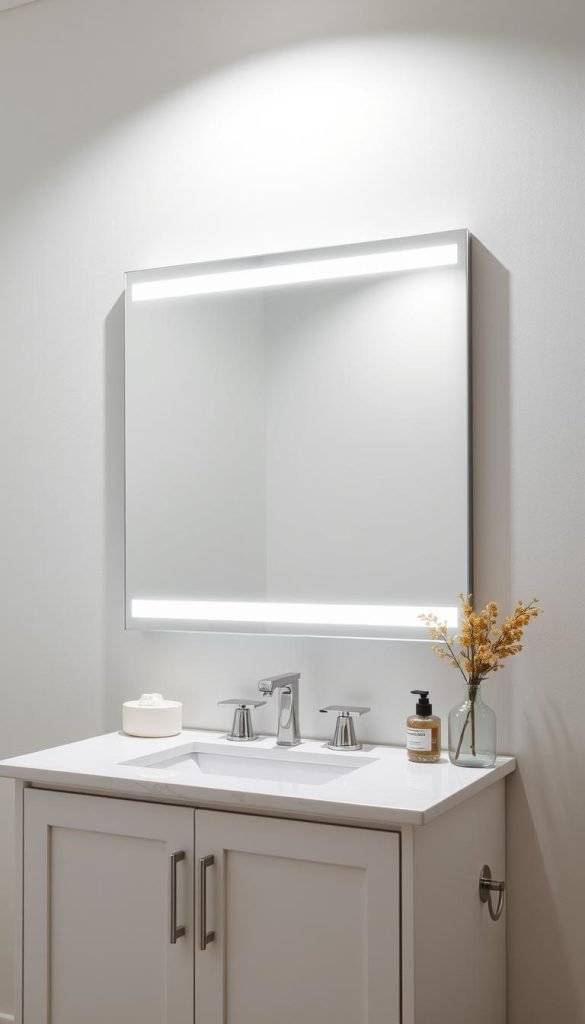
Framed vs. frameless: a frame adds 1–2 inches per side. If you plan a chunky frame, subtract that from the glass width so the overall piece stays within the balanced 36–44 inch range.
Allow breathing room
Keep about 2–4 inches free on either side for outlets, sconces, and trim. I check switch and GFCI positions before finalizing placement.
Examples that work
- 42 inches: my go-to for balanced coverage when sconces or frames are in play.
- 44 inches: a wider, modern look when wall fixtures are clear.
- 48 inches (frameless): best for uninterrupted tile or drywall with no nearby switches.
“Tape at 36, 42, 44, and 48 inches so you can compare scale in situ.”
| Option | When to use | Notes |
|---|---|---|
| 42 inches | Most balanced setups | Works with side sconces and modest frames |
| 44 inches | Wider modern feel | Use if wall fixtures are clear |
| 48 inches (frameless) | Minimalist walls | Max reflection if no outlets or sconces interfere |
Placement tip: confirm the bottom edge sits about 4–10 inches above countertop and align final height with faucet spout and backsplash.
Dialing in the height: comfortable sightlines and ceiling height
My starting point is eye level—then I tweak for splash protection and clearances.
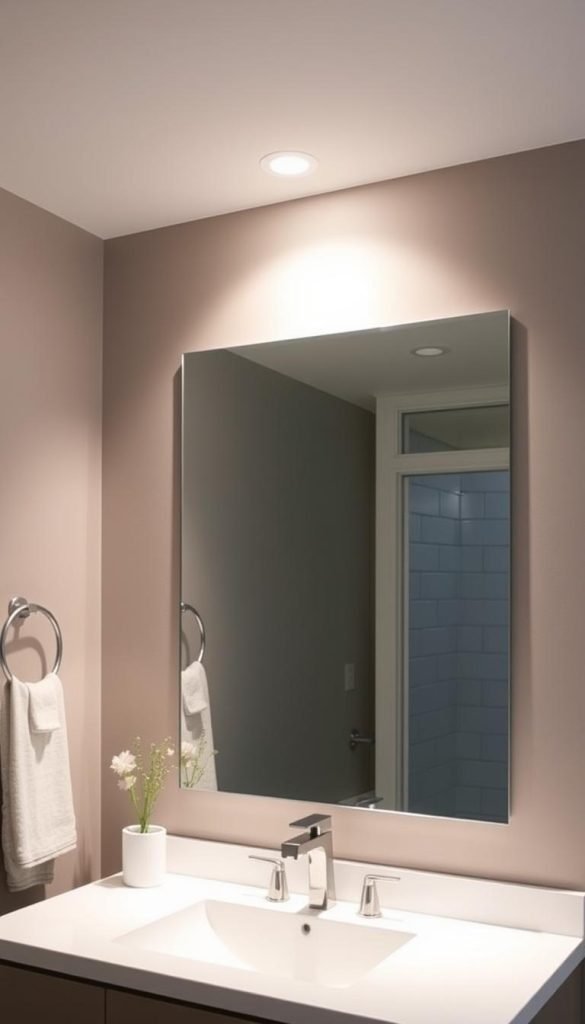
Standard eight-foot ceiling guidance: I usually set the bottom edge 4–6 inches above the countertop. That gives room for backsplash and keeps reflections useful.
Target height: aim for a panel about 30–40 inches tall so the top lands near 70–72 inches from the floor for most adults.
Using taller ceilings to stretch the room
With nine- or ten-foot ceilings, I pick taller glass to draw the eye up and make the bathroom feel airier. I check overhead light clearances so fixtures do not crowd the top edge or cause glare.
The 2/3 vanity-height guideline
For a 34–36 inch vanity, two-thirds yields roughly 22–24 inches as a minimum. I often go taller so faces and upper torsos show clearly during daily routines.
- I tape mockups at 30, 36, and 40 inches to compare sightlines before drilling.
- Adapt edges lower for shorter users, or raise slightly for tall household members.
- If using an integrated medicine cabinet, confirm door swing and stud locations first.
| Ceiling | Bottom Edge | Typical Height | When to choose |
|---|---|---|---|
| 8 ft | 4–6 inches above countertop | 30–40 inches | Standard households; balanced look |
| 9–10 ft | 4–6 inches (or slightly higher) | 36–50 inches | Add vertical presence; watch lighting |
| Short users | Lower bottom edge | 22–30 inches | Improve visibility for children or shorter adults |
“Tape a few heights on the wall so you can live with the sightlines for a day before you commit.”
Lighting and placement that flatter your face
Good lighting can turn an ordinary bathroom into a flattering, functional space. I start with even illumination near face level. That makes grooming, shaving, and makeup much easier.
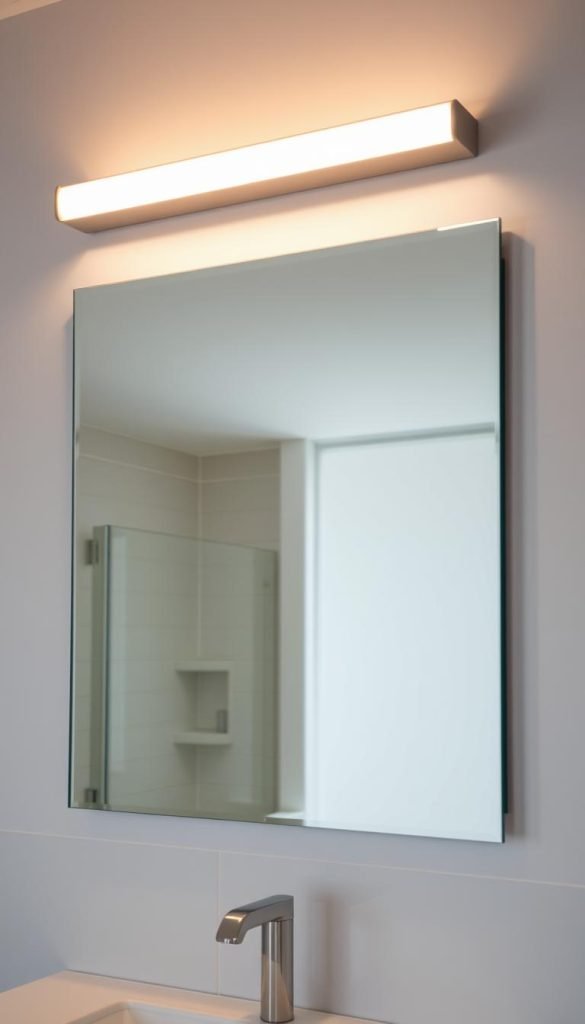
Side sconces and clearance
Even light from side sconces reduces facial shadows. I keep about 2–4 inches between each sconce backplate and the mirror edge to avoid visual crowding.
Wider mirrors can pinch sconce placement, so confirm final size before running electrical to the wall.
Overhead and backlit LED options
Overhead fixtures can cast downward shadows. Pair them with side lighting or choose an LED backlit model for softer, shadow-free light.
LED backlit mirrors create a halo that helps with makeup and shaving, especially in bathrooms with little daylight.
Mounting sweet spot
I place the bottom edge about 4–10 inches above the countertop. Adjust for faucet spout height and backsplash so the reflected face sits in the beam, not the ceiling.
- Install dimmers to fine-tune brightness for morning and evening.
- Use 2700K–3000K bulbs for natural skin tones.
- Watch glossy tile reflections; use diffusers if glare appears.
“Start with the mirror’s final size, then layer lights around it for comfortable, shadow-free grooming.”
One large mirror or two mirrors over a 48-inch vanity?
I prefer testing both layouts with tape so you can feel which option fits daily routines better.
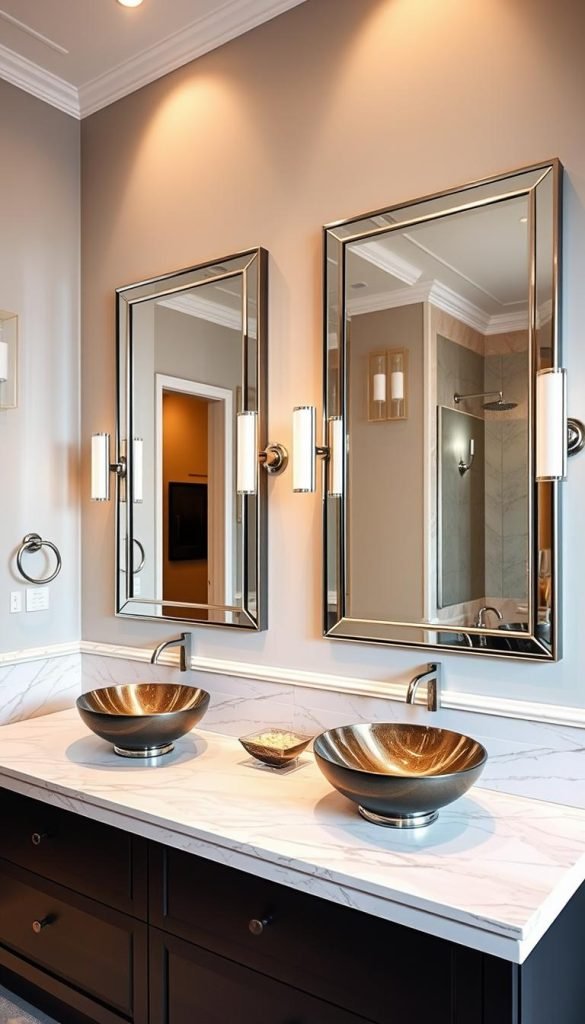
Single, wide mirror: a single, continuous glass gives a clean look and visually expands a small bathroom. It simplifies mounting and lighting, and it often reads as one calm plane across the room.
Single, wide: clean and roomy
Advantages: one long panel makes walls feel larger and makes lighting simpler with one bar or overhead fixture.
It also avoids awkward seams if switches or outlets sit between sinks.
Two mirrors: centered over each sink
When it works: for double-sink setups, two mirrors centered over each sink add symmetry and personal space during shared routines.
Aim for about 20–22 inches wide per piece when sink spacing allows, and keep a 4–6 inch gap between frames for neat balance.
- Two framed mirrors pair nicely with twin sconces for targeted light.
- Two pieces can add more style and character in traditional baths.
- One broad panel often reads better if sinks are close together or wall fixtures interfere.
“Tape both options on the wall so you can live with scale and sightlines before committing.”
| Layout | Best use | Notes |
|---|---|---|
| Single wide | Modern, seamless look | Easier lighting; hides switches between sinks |
| Two mirrors | Shared sinks, personal stations | Use ~20–22 inches each with 4–6 inch gap |
Style, shape, and finish that match your bathroom design
Picking a look ties together hardware, countertop, and lighting so the room reads as one.
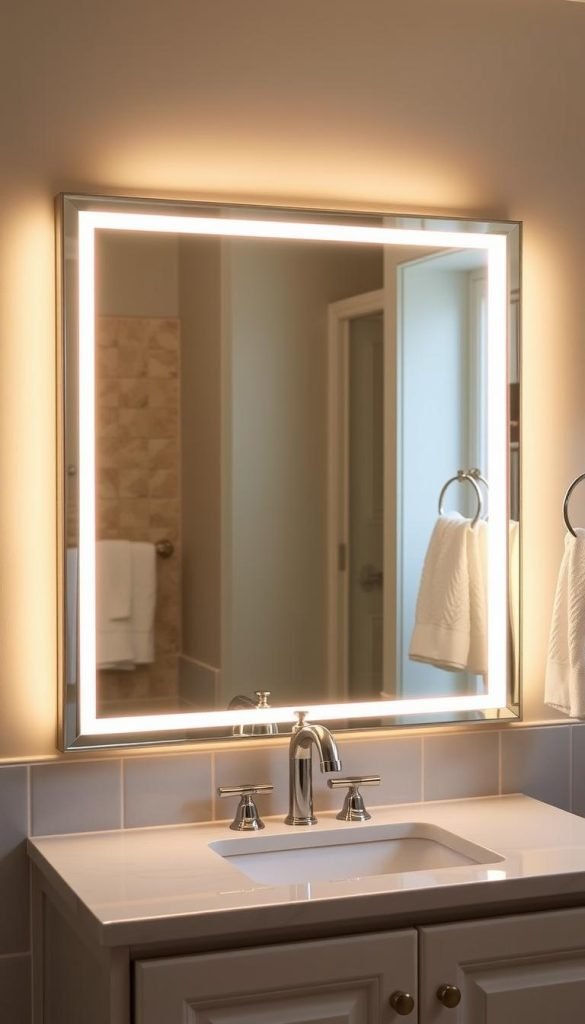
Modern choices favor clean rectangles, softened corners, and integrated LED for that hotel-level glow.
Frameless and LED options keep sightlines simple and maintain an airy aesthetic. I recommend matte black, brushed nickel, or chrome to match faucets and pulls.
Traditional and transitional finishes
Arched or oval pieces with brass, gold, or bronze frames add warmth and polish. Heavier frames reduce available glass width, so measure before ordering.
- I advise coordinating frame finish with hardware so elements feel cohesive.
- Beveled edges read formal; flat edges read minimal.
- Vertical orientation lifts the ceiling; horizontal emphasizes counter width.
- Choose humidity-friendly finishes in busy baths to protect your investment.
| Style | Best Use | Finish |
|---|---|---|
| Frameless rectangle | Modern, minimal rooms | Chrome / brushed nickel |
| LED integrated | Even lighting; hotel look | Matte black or chrome |
| Arched / oval | Traditional or transitional | Brass, gold, bronze |
“Pick a style that complements your countertop, doors, and lighting so every piece feels intentional.”
Conclusion
My final note is to prioritize fit, light, and everyday use when choosing glass for your bathroom. Start with a width between 36 and 44 inches to keep edges clear, or go frameless only if wall elements allow.
, mount the bottom edge about 4–10 inches above countertop and aim for a top near 70–72 inches on standard ceilings. For two-sink setups, center two pieces with a 4–6 inch gap; give sconces 2–4 inches of breathing room or choose LED backlit glass for even light.
Measure twice, tape out the outline, then order. For more hands-on guidance, see this quick guide: mirror planning checklist.