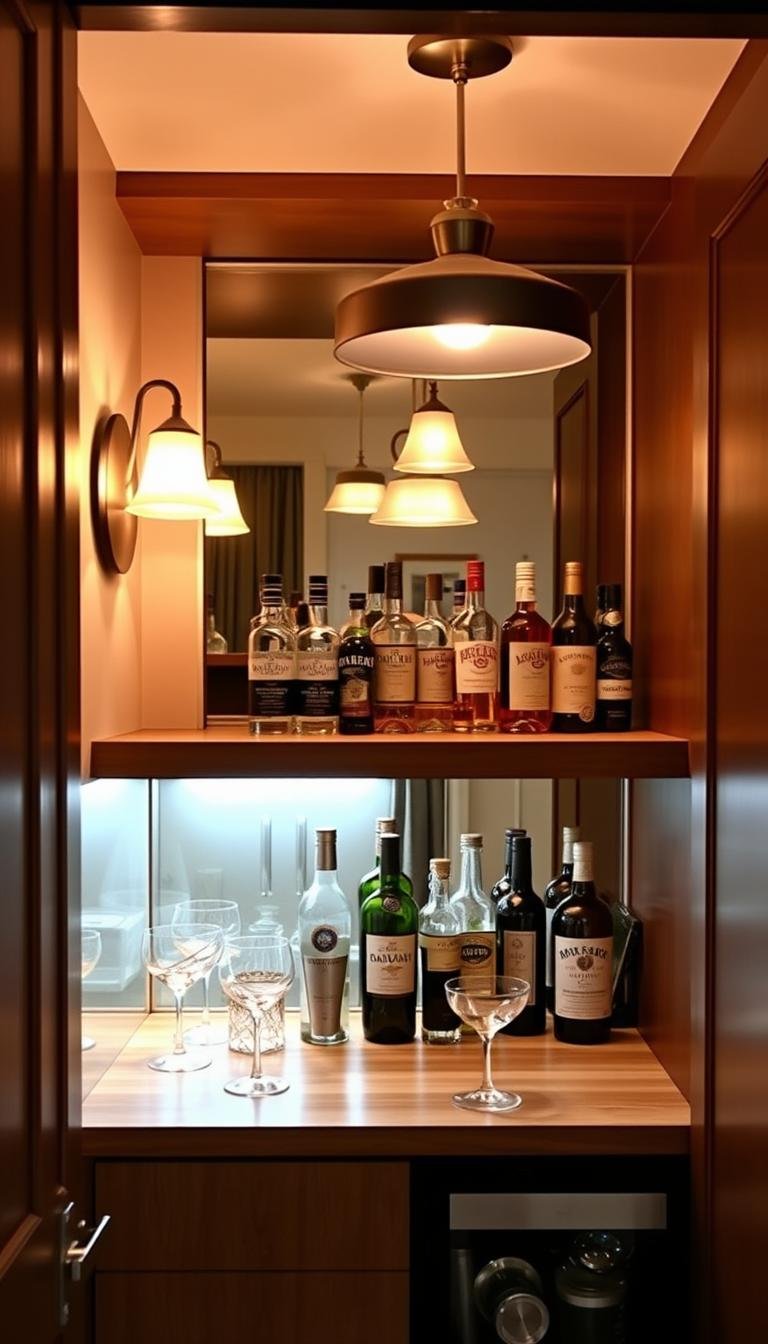
How can I turn a closet into a mini home bar?
I love the idea of reclaiming underused space to make something useful and stylish. A shallow closet can become a polished nook with built-in cabinets, glass shelving, and bold wallpaper for drama. Designer touches — think tortoise prints or deep teal cabinetry — make a small spot feel luxe.
When I open doors, guests get that speakeasy thrill. Sliding or pocket doors hide the setup when it’s not in use. Brass or antique bronze hardware, mirrored tiles, and jewel tones add surprise and charm without wasting square footage.
In this article I’ll guide my planning: measuring and layout, door options, storage that prevents clinking bottles, durable counters and wet-bar choices, plus lighting and finishes. I’ll also share pro examples from designers like Holly Freres and Studio Shamshiri to help me make smart, livable choices.
Key Takeaways
- Small closets can become high-impact spots with built-ins and bold finishes.
- Sliding or pocket doors create a hidden reveal and keep things tidy.
- Choose glass shelving and soft lighting for a luxe, practical feel.
- Durable counters and smart storage stop clinking and save space.
- Designer accents—mirrors, jewel tones, brass—make a tiny bar feel intentional.
Start here: my plan to turn a closet into a mini home bar
I begin with a simple, practical goal: build a compact bar that lifts my entertaining without losing storage or disrupting traffic. That clarity keeps material and layout choices focused and budget-friendly.
I sketch the evaluation steps I’ll take. I check proximity to outlets, the nearest water line if I opt for a sink, and how people move through the room during parties.
Next comes a short plan: measure the opening, map prep and storage zones, pick doors and layout, choose finishes and lighting, then install and style. Designers like Holly Freres and JHL Designs encourage tailoring materials and texture for a memorable compact result.
Quick wins matter in tight footprints: sliding or pocket doors save aisle space, counter-depth work areas fit well, and multi-use shelves double as display. I set a design direction that complements nearby rooms with jewel tones, brass hardware, and glass accents for cohesion.
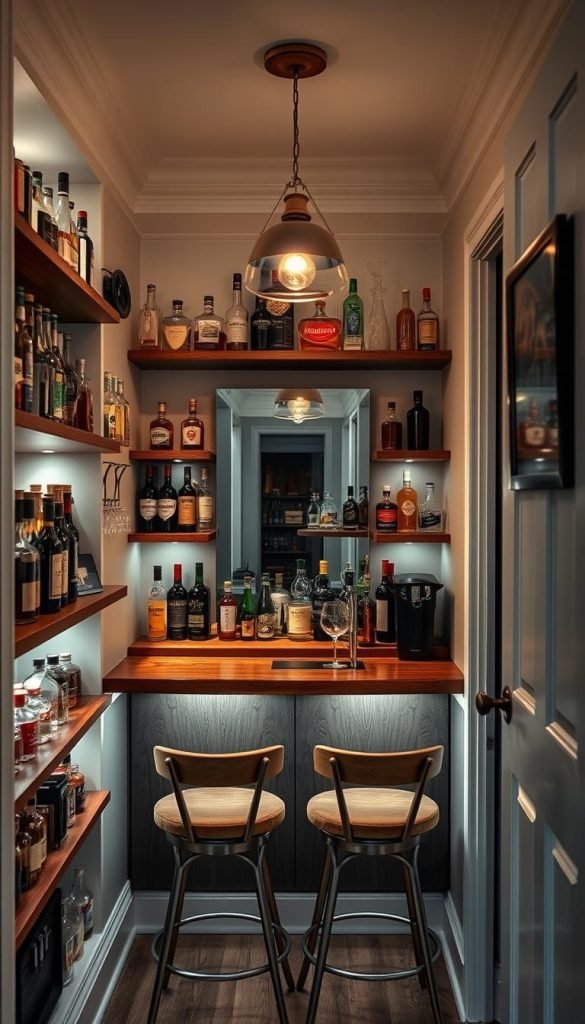
I preview lighting and power early so I don’t backtrack, decide between wet or dry use, and keep a running shopping and reading list of product specs to avoid surprises. These small steps unlock big returns in style and function.
Measure the space and map the workflow
Before anything else, I empty the nook and record real measurements. This gives an honest picture of depth, width, and height so fittings and appliances actually fit.
Next I mark the work area where a counter or landing will sit. I check reach heights so bottles and glassware live between shoulder and waist height for easy access.
Capture true dimensions
I note clear depth with doors closed, usable width between jambs, and finished-floor-to-header height. These numbers guide the fit of narrow wall units and ceiling-height brass shelving from makers like Amuneal.
Plan zones for flow
Sketching zones keeps mornings and parties smooth. I define prep for tools, storage for bottles and glassware, display for feature shelves with lighting, and a serving landing for trays.
Account for door clearance
Confirm how the door or pocket track interacts with hardware and adjacent furniture. I place pulls and drawer dividers so nothing collides when opened.
- Measure twice: record depth, width, height.
- Mark counter area and ideal reach heights.
- Plan at least one deep shelf and one shallow shelf for small items.
- Locate outlets and note vents or baseboards that affect cabinet depth.
- Pick drawer organizers (Heidi Piron Design and Cabinetry) to stop bottles from clanking.
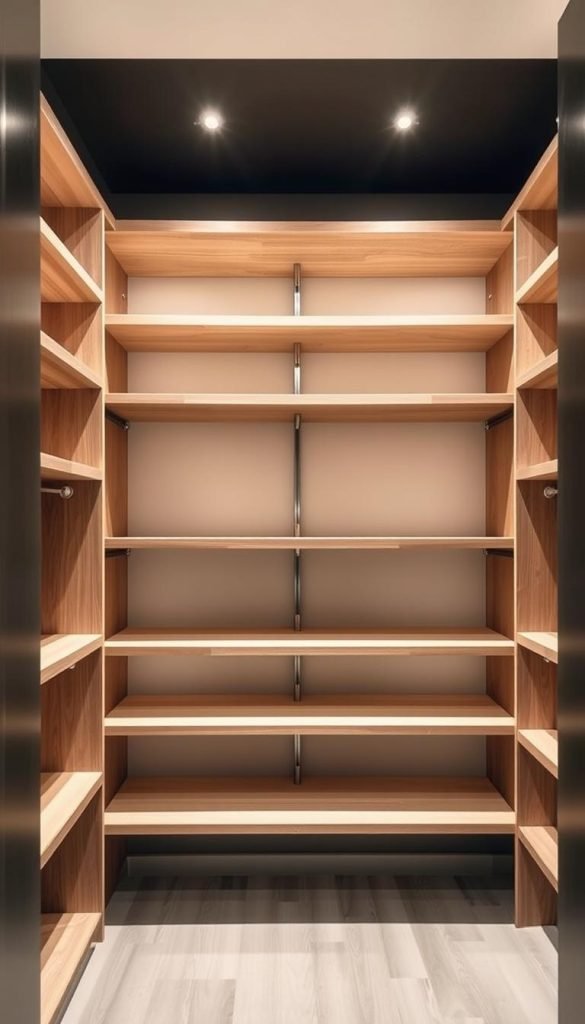
Choose the right doors and bar layout for small spaces
Door selection and layout decide whether the nook feels hidden or integrated. I look for an approach that keeps my living area open while giving easy access when I host. The right choice protects glassware and preserves traffic flow in tight spaces.
Pocket, sliding, bifold, or hinged options each have trade-offs. Pocket doors save swing clearance but need good hardware. Sliding doors, like the Studio Shamshiri example, tuck away and reveal a full serving zone without stealing floor. Bifold panels work where side clearance is limited. Dutch doors are handy for reach-in wet bars and pass-through service.

Pocket, sliding, or bifold doors for easy access and concealment
I compare options by how they open and how they affect adjacent furniture. Quality pocket tracks and smooth rollers matter when the bar sits near the main living path.
Counter-closet layouts when you can’t go floor-to-ceiling
When full-height cabinets aren’t possible, I frame a full-depth counter with storage underneath and shelves above. JHL Designs’ foyer counter-closet is a good model: marble inside, wood paneling outside for a cohesive look when closed.
Hidden-in-plain-sight speakeasy vibes with flush panels
For that surprise reveal, I align panel seams with surrounding millwork so the door face disappears. I pick low-profile hardware to avoid snags and verify ventilation around any mini fridge if the enclosure seals tightly.
- Tip: Check pulls and clearances before finalizing the layout.
- Test airflow for appliances hidden behind doors.
- Match panel finish to the room for seamless style.
Smart storage and shelving that fits a closet bar
Good shelving and clever organizers turn tight spaces into efficient service zones. I focus on systems that free counter space while keeping essentials within reach.

Glass racks, adjustable shelving, and bottle organizers
I spec under-shelf stemware racks to free up shelves for bottles and tools and to keep glass steady. Adjustable shelves let me set tall spirits on one level and mixers on another.
Pull-out drawers and dividers to prevent clanking
Pull-out drawers with flexible dividers stop bottles from clanking and make labels easy to read. Heidi Piron Design and Cabinetry has great divider options I often use.
Vertical wall-mounted shelves and door-back storage
When floor space is tight, vertical wall-mounted shelves capture unused height. Amuneal’s narrow, ceiling-height brass units bridge kitchen and bar zones without eating footprint.
I also use the back of the door for shallow racks to hold bitters and tools. NICOLEHOLLIS-style interior door compartments add capacity without widening the cabinet.
| Feature | Benefit | Brands/Notes |
|---|---|---|
| Under-shelf glass rack | Frees shelf space, secures stemware | Universal fit, reduces breakage |
| Adjustable shelves | Maximizes vertical space | Easy reconfigure for bottles |
| Pull-out drawer | Prevents clinking, easy access | Use flexible dividers (Heidi Piron) |
| Door-back racks | Extra shallow storage for tools | NICOLEHOLLIS-style compartments |
Quick tip: keep a small restock bin so active storage stays tidy and useful.
Countertops, sinks, and surfaces that work hard
Durable surfaces let me enjoy the reveal without fuss. For tight nooks, I pick materials that resist stains, heat, and daily wear while still reading as intentional design.

Compact counters that hold up
I choose compact, durable counters—marble, quartz, stone slabs, or sealed butcher block—so spills wipe away and the finish stays fresh. JHL Designs often pairs marble tops with brass hardware for an elevated look.
Wet versus dry use
A plumbed wet bar with a prep sink and under-counter fridge drawers speeds service and cleanup, as designer Vani Sayeed notes. If plumbing is impractical, I keep the area sink-free and add ice and drainage-ready trays instead.
Stretching surface area
Pull-out trays or flip-up shelves give instant workspace for shaking cocktails or staging garnishes without increasing the footprint. I set the counter at a comfortable working height and confirm faucet reach and backsplash depth won’t block movement.
| Choice | Benefit | Notes |
|---|---|---|
| Marble or quartz | Elegant, stain-resistant | Pair with brass or antique bronze hardware (JHL Designs) |
| Sealed butcher block | Warm, repairable surface | Seal well to resist moisture |
| Pull-out tray | Extra prep space when needed | Good for narrow openings |
| Prep sink + fridge drawers | Streamlines service and cleanup | Requires plumbing; ideal if room layout supports it (Vani Sayeed) |
Finish tip: seal porous surfaces and choose an easy-clean backsplash—mirrored glass, stone offcuts, or wallpaper protected by a clear panel—to keep the nook tidy and stylish.
Light it right: wiring, task lighting, and ambiance
Lighting choices do more than brighten; they shape mood and guide workflow in tight spaces. I plan fixtures so the nook works for prep and feels dramatic when guests arrive.
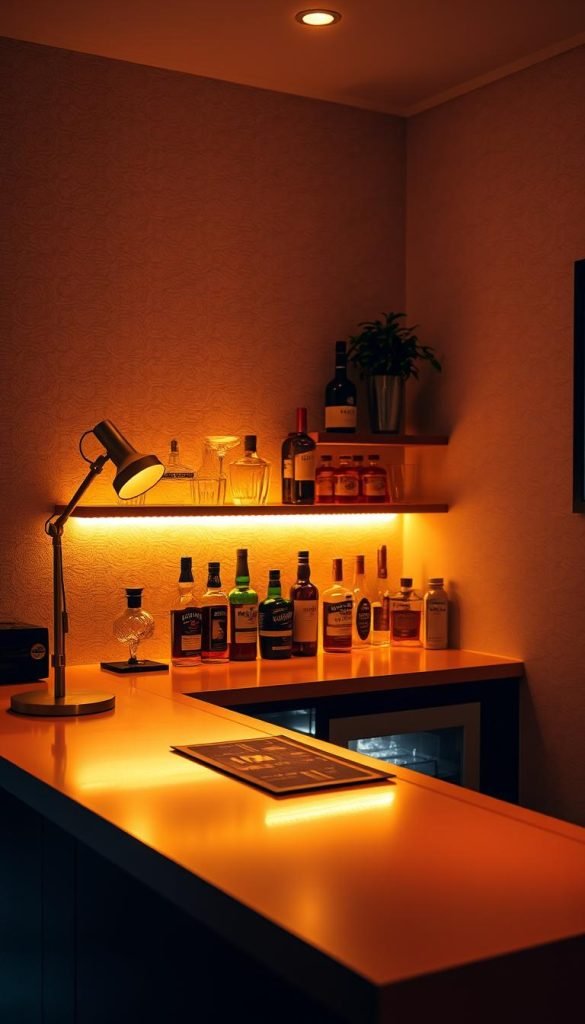
Integrated LED strips and under-shelf lights for a polished glow
I hardwire or plug in LED strip lights beneath shelves to highlight labels and glassware without glare. A dimmer lets me shift from task to party mode quickly.
Statement pendants or puck lights for drama
A tiny pendant or recessed puck lights creates a jewel-box reveal when the doors open. I pick warm white bulbs so the area feels inviting and the finishes read rich on camera and in person.
Electrical planning for mini fridges and safe power use
I plan dedicated outlets for a mini fridge and route cords through channels so nothing snags when doors close. I also add an easily reachable switch and verify outlet ratings for fridge and lighting loads.
- Hardwire or plug in LED strips with a dimmer.
- Spot the counter with a pendant or puck lights for drama.
- Run safe power for appliances and tidy cord channels.
- Use mirrored or high-gloss backdrops to bounce light around the interior.
Finishes that wow: paint, wallpaper, mirrors, and metals
The right finishes turn a tiny nook into a memorable destination. I pick treatments that read bold when open and subtle when closed.
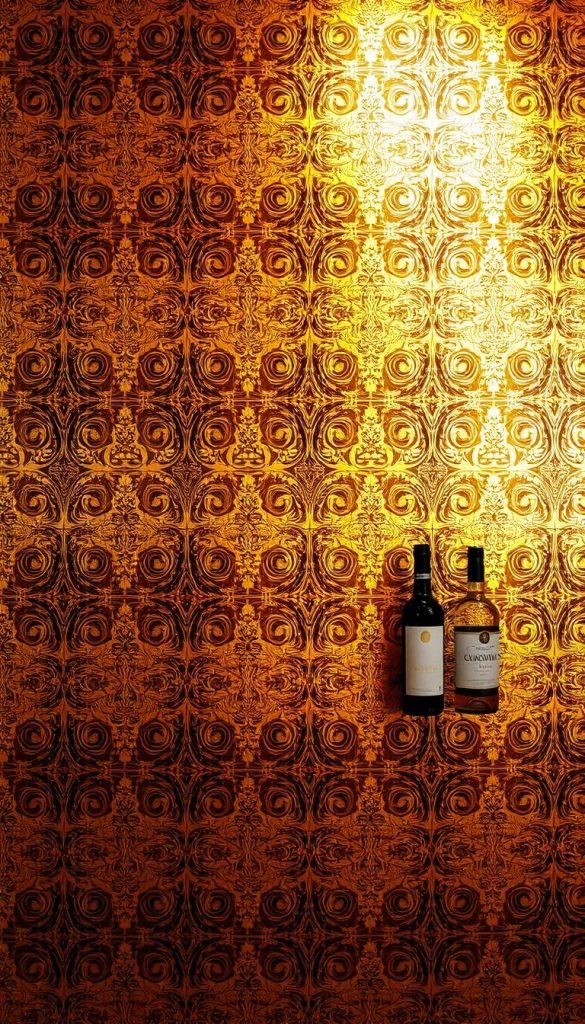
Wallpaper or a mural makes the bar feel like a scene. Claire Staszak’s hidden mural using Isidore Leroy’s Toits de Paris Nuit proves the point. A cityscape or large-scale floral gives instant personality and drama.
I favor deep, jewel tones and high-gloss paint for a rich effect. Paris Forino’s metallic, inky indigo example shows how color and sheen lift the interior without extra square footage. Jean Liu’s use of mirror tiles and deep teal cabinetry brightens and adds depth.
Finish choices at a glance
| Finish | Effect | Where to use |
|---|---|---|
| Bold wallpaper / mural | Creates a destination vignette | Back wall for drama |
| High-gloss paint | Reflects light, looks luxe | Cabinet faces and trim |
| Mirrored backsplash | Visually enlarges and brightens | Behind shelves and counters |
| Brass / bronze hardware | Warm, tactile luxe | Pulls, rails, light fixtures |
- Tip: coordinate finishes with nearby rooms so the closed facade blends in.
- Use a single focal finish — mural, glossy tone, or mirror — for clear impact.
Appliances and add-ons for a functional home bar
Appliances and smart accessories are the backbone of a compact service area that actually works. I outfit the space so bottles chill, tools live within reach, and cleanup never slows the flow.
Mini fridges, wine coolers, and under-counter drawers
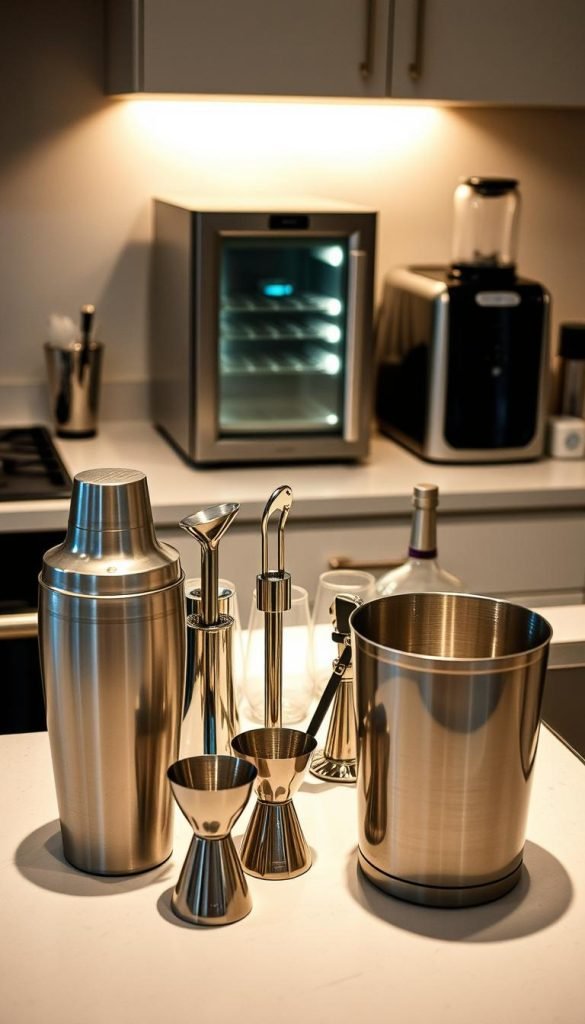
Under-counter refrigerator drawers keep beverages chilled and streamline service, a trick I learned from Vani Sayeed. They fit in a shallow cabinet and avoid full door swing.
I pick a mini fridge or wine cooler that vents properly and suits the drinks I serve most. Pairing a small fridge with a bar cart gives me cold storage plus a prep surface when I need more room.
Ice solutions: countertop makers, buckets, and placement tips
If I host often, a compact countertop ice maker earns its weight in convenience. For occasional use, I stage an insulated bucket where drips won’t damage finishes.
Practical add-ons round out the setup: a slim trash pull-out, a spot for towels, and a drawer for tools and spare items so everything is easy to grab mid-mix.
- I check decibel ratings so the bar stays quiet while a fridge runs.
- Hidden under-stair bars work well with shelves, a counter, cabinets, and LED lighting for extra polish.
- Plan vents in the cabinet to prevent overheating and maintain efficiency.
“Under-counter refrigerator drawers keep beverages chilled and streamline service.”
For more layout and gear inspiration, I often bookmark curated lists like these home bar ideas.
Styling the shelves: glassware, bottles, and personal accents
A well-edited collection of glassware and objects gives the interior purpose and personality. I keep the display simple so the finishes and lighting read through each piece. That restraint makes the nook feel intentional rather than cluttered.
Curate glassware, decanters, and cocktail tools for display
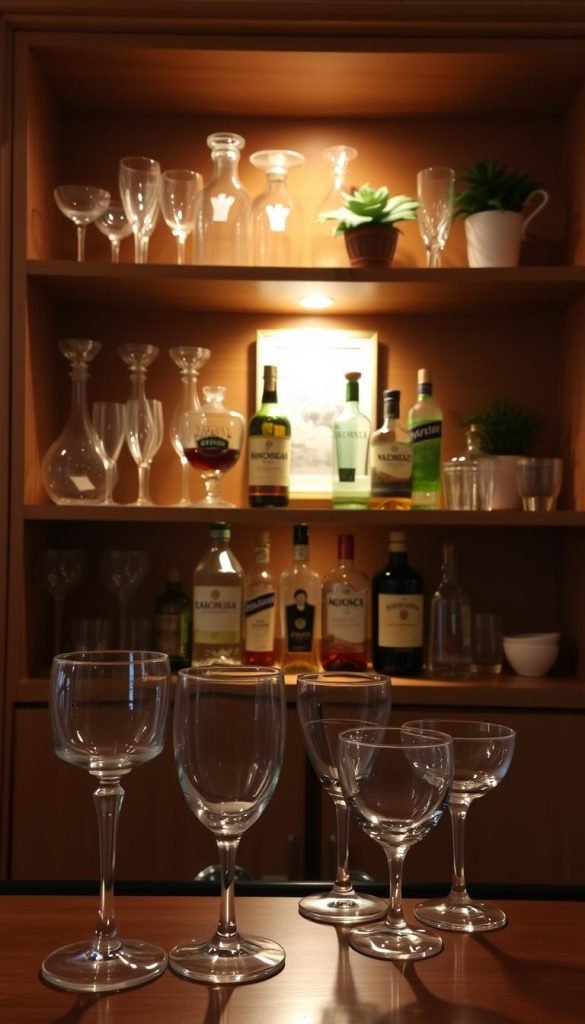
I edit my glassware to the essentials: rocks, coupes, and highballs. A handsome decanter or two anchors the shelf and signals luxury, a tip Paris Forino often recommends.
Art, plants, and travel mementos to give the area character
Holly Freres suggests small art, a low-light plant, or a found object to make the space personal. I arrange bottles by height or color family and put the best labels at eye level.
- Edit: keep only the glasses you use most.
- Arrange: group bottles by height or hue for cohesion.
- Corral: place shaker, jigger, and strainer on a tray so tools read tidy.
- Breathe: leave negative space so finishes and objects stand out.
How can I turn a closet into a mini home bar? My step-by-step
A quick, hands-on checklist gets me from empty nook to guest-ready serving station in a few focused steps.
Declutter, repair, and finish the interior
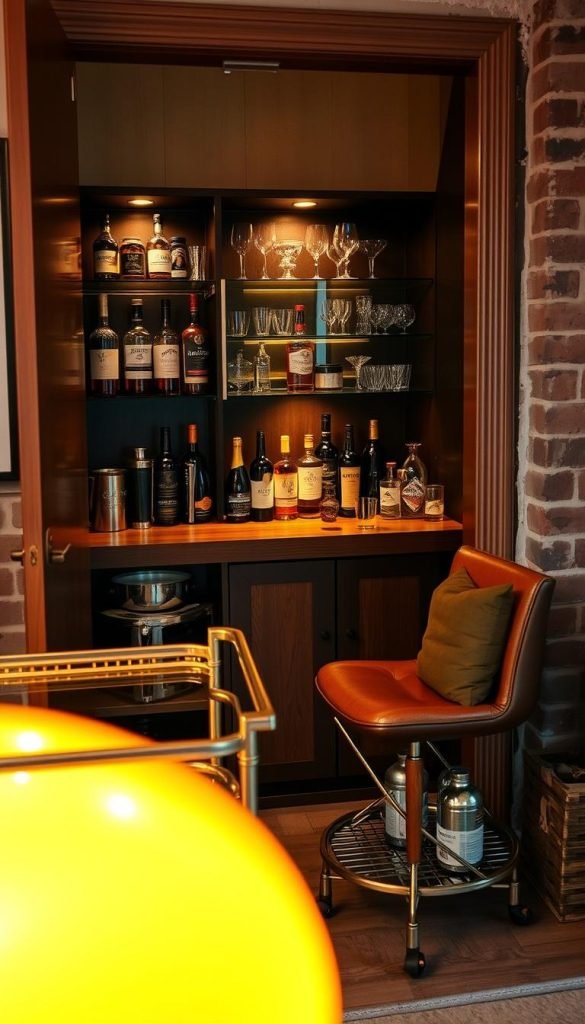
I clear the space, make necessary repairs, then prime and paint or hang wallpaper before any fixtures go in.
Removing closet doors and building in cabinetry creates an out-of-the-way nook, as John Fondas suggests, and lets me set the tone early.
Add shelving, counter, lighting, and hardware
I install the counter and adjustable shelving next. I add under-shelf LED lighting on a dimmer to lift the mood—Holly Freres uses this to great effect.
Choose hardware that clears door tracks and won’t catch when panels slide.
Install appliances, organize, and style
I place the mini fridge or refrigerator drawers, test ventilation, and load essentials. Flexible drawer dividers from Heidi Piron Design and Cabinetry keep bottles quiet.
I style shelves with glassware and a few personal accents, tidy cords, and confirm door clearances and threshold fit.
Test the workflow
I hold a mock cocktail night to watch the flow, note bottlenecks, and adjust shelf heights, lighting, or tool placement before the next party.
Small-space alternatives if you’re short on closets
When space is scarce, clever furniture choices make a full bar feel possible. I look beyond traditional closets and find that wardrobes, desks, and carts often hide surprisingly roomy setups.
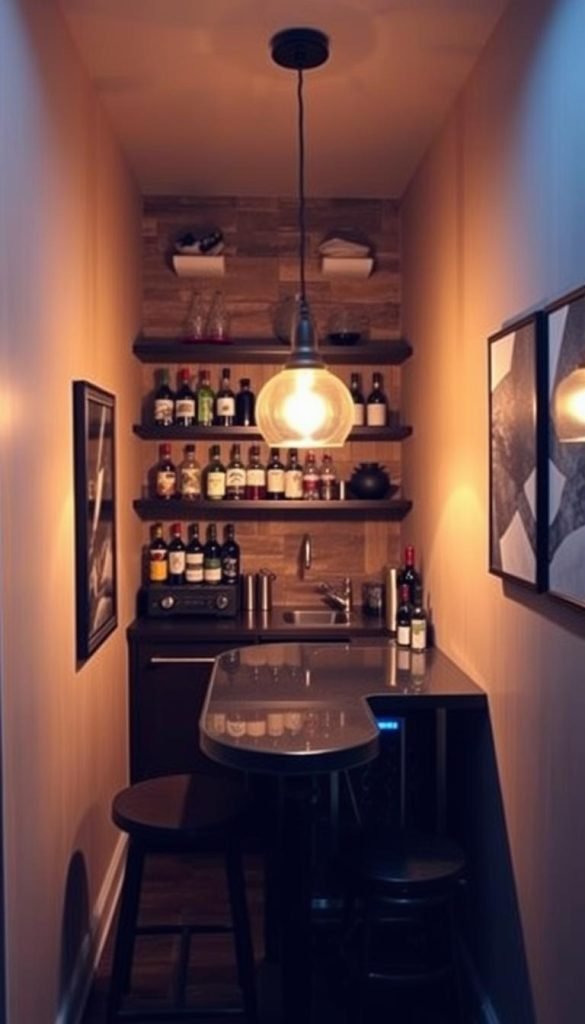
Wardrobe or armoire bars are my top pick when no built-in nook exists. An optimized armoire hides generous shelving and interior door racks for slim bottles and tools, a trick I borrow from NICOLEHOLLIS.
Secretary desk and vintage dresser conversions
A compact desk like a secretary unit tucks away into narrow spots and offers a pull-down work surface for mixing. Philip Gorrivan’s ideas show how drawers become linen and tool storage while the top stage becomes a mixing counter.
Bar carts, round trolleys, and wall-mounted units
For total flexibility, I roll in a bar cart or a compact round trolley to a corner. It takes little room, dresses the living area, and stores away when guests leave. Wall-mounted cabinets add a permanent option without stealing floor space.
Under-stair nooks and hallway makeovers
Under-stair spaces convert beautifully with shallow cabinets, a short counter, and hidden LED strips that highlight bottles and glassware. A refreshed hallway cabinet with one new shelf and tidy lighting becomes an unexpected living space moment when opened.
- Tip: match finishes to nearby rooms so the piece reads intentional when closed.
- Use interior door racks and shallow dividers to maximize usable shelf depth.
- Pick portable solutions for renters or tight corners to keep options flexible.
Designer-inspired closet bar ideas I love right now
My favorite designer edits show how a tiny nook becomes an unexpected focal point. These curated concepts prove that bold material choices and careful lighting make the reveal feel intentional and cinematic.
Hidden mural bar, shiny metallic finishes, and surprise reveals. Claire Staszak’s mural using Isidore Leroy’s Toits de Paris Nuit reads like theater. When doors open, the wallpaper provides an instant narrative and a Parisian mood that ties the interior together.
Pocket-door pink bar with full-depth benchtop and drawers. Lisa Breeze’s pocket-door plan gives full prep space in a narrow footprint. The upper open shelf with glass hangers and lower drawer stacks keep tools and bottles organized for fast service.
Color-drenched closets with mirrors and teal cabinetry. Jean Liu’s mirrored tiles and deep teal cabinets amplify light and depth. Paris Forino’s metallic indigo finish does the same, adding luxe shimmer that surprises behind wood doors.
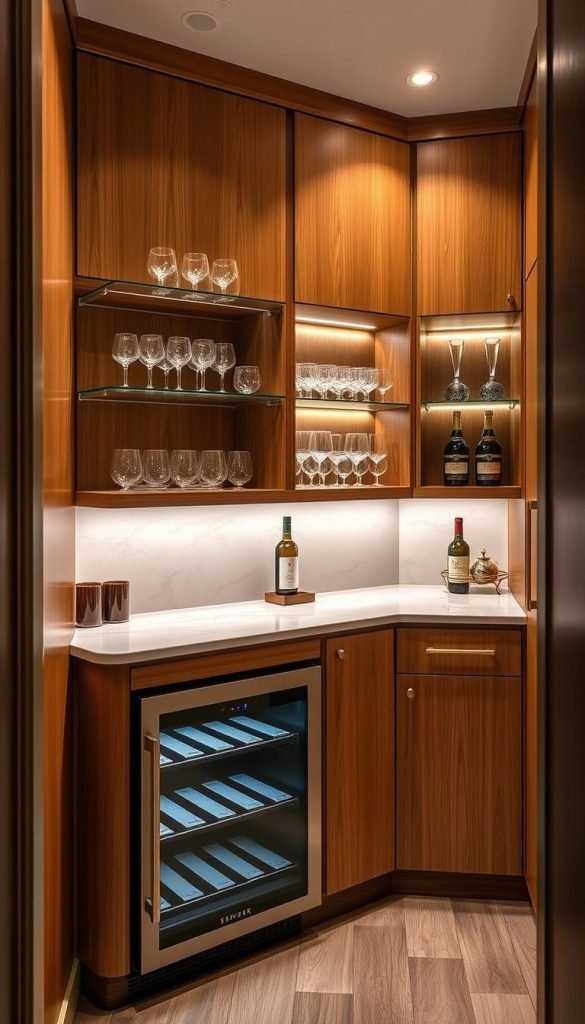
Quick take: I keep a swipe file of these designer ideas to adapt wallpaper, doors, mirror accents, and color so each small bar reads custom and deliberate.
| Designer | Signature Move | Why it works |
|---|---|---|
| Claire Staszak | Hidden mural (Isidore Leroy) | Sets a story-driven backdrop and adds instant drama |
| Lisa Breeze | Pocket doors + full-depth benchtop | Maximizes prep area and conceals mess when closed |
| Paris Forino | Metallic indigo finish | Creates a jewel-box reveal with luxe shimmer |
| Jean Liu | Mirror-backed deep teal cabinetry | Brightens and visually enlarges tight interiors |
Conclusion
Good storage and layered lighting are the quick wins that make the space work. Measure precisely, plan zones, pick sliding or pocket doors, and choose durable finishes so every bottle and glass has a home.
Designer moves—wallpaper, mirror backs, rich tones, metallic accents—lift the interior and give the room a true reveal that guests remember.
Practical hacks matter too: drawer dividers, door‑back racks, and adjustable shelving keep noise down and tools handy. If the closet isn’t right, an armoire, desk conversion, bar cart, or under‑stair nook offers the same function and fun.
Next steps: read specs, order parts, and schedule a weekend build so this bar piece comes together smoothly for quick weeknight cocktails and easy hosting.