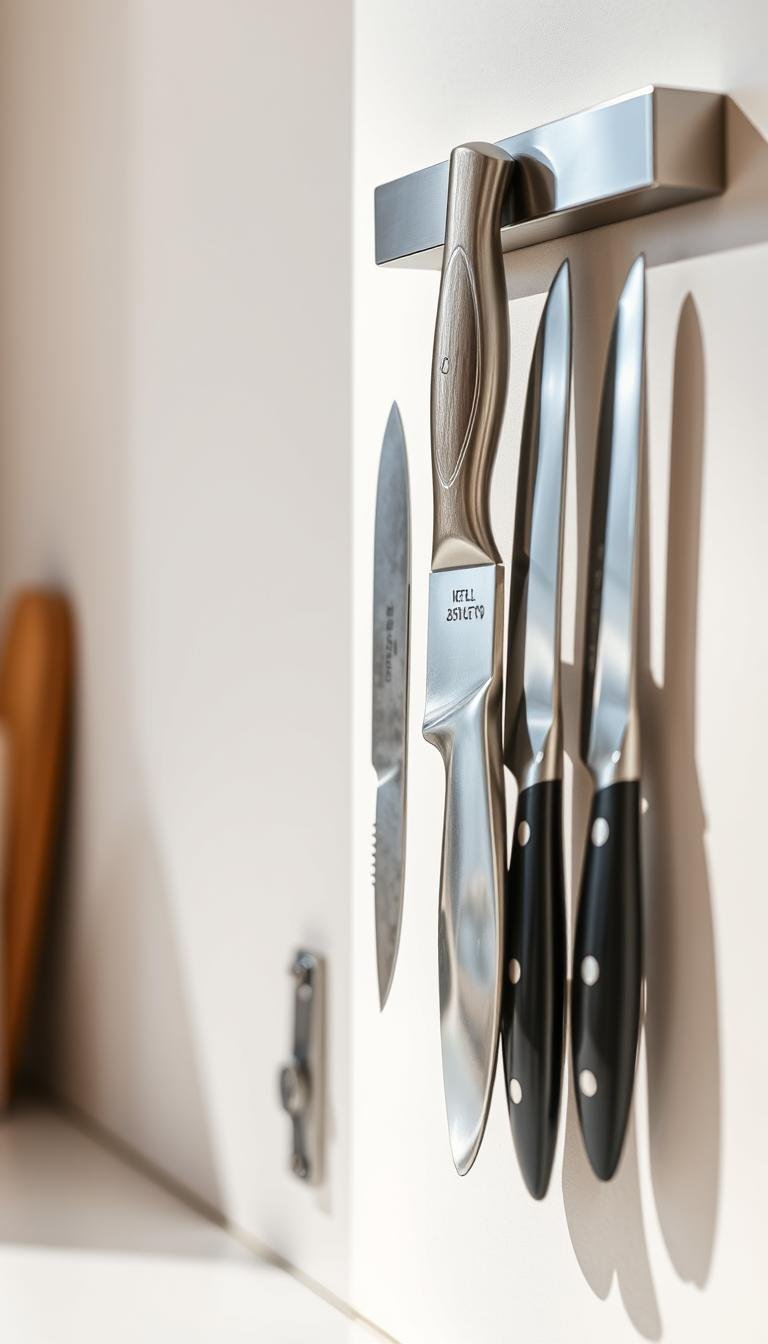
What are the best magnetic knife strips that won’t scratch blades?
I tested a range of holders to find options that keep knives visible and safe without scuffing edges. My hands-on checks focused on surface feel, magnet layout, and how each strip handled real use in a busy kitchen.
Top performers stood out for strength and gentleness. The Jonathan Alden wooden bar topped the group at 870.3 Gs and held everything from a cleaver to a paring tool without shifting. Benchcrafted’s 18-inch Mag Blok hit 811.7 Gs and fit nine knives comfortably. Global’s stainless bar measured 633.1 Gs and used a textured polka-dot face to cut sliding risk.
Wood-faced holders proved quieter and kinder to edges, though they need periodic oil or wax. Continuous magnet designs avoided dead zones that can make small knives slip. I also checked capacity, install ease, and day-to-day handling before making recommendations.
Key Takeaways
- Jonathan Alden led testing with 870.3 Gs and reliable hold for mixed knives.
- Benchcrafted’s 18-inch option fits nine blades with good spacing.
- Wood surfaces are gentler; plan on occasional oiling for upkeep.
- Continuous magnets reduce dead zones and slipping of small knives.
- Textured stainless, like Global’s, limits sliding while staying easy to clean.
- Measure kitchen space; a 16-inch bar often fits eight knives safely.
Why I trust magnetic knife strips to keep knives sharp and visible
I trust wall-mounted holders because they keep each edge exposed and out of harm’s way. Storing tools vertically keeps edges cleaner and sharper than blocks or jammed drawers.
Visibility helps me work faster and safer. When I can see every blade on the wall, I grab the right one and handle it with care. That small change reduces accidental bumps and dulling.
Placement matters. I always place the spine first and roll the blade on so the edge never drags. Angling the edge into a bar can ding a knife, so technique protects both the metal and the surface.
Mounting height decides orientation: I hang tip-up for high installs and handle-up for low ones. Drying knives fully before hanging prevents rust on metal bars and avoids wood warping from trapped moisture.
Continuous magnets and a gentle finish keep items from shifting. A stable wood face cushions contact and lowers the chance of tiny chips. Compared to a block or drawer, wall storage frees counter space and keeps knives in view while I cook.
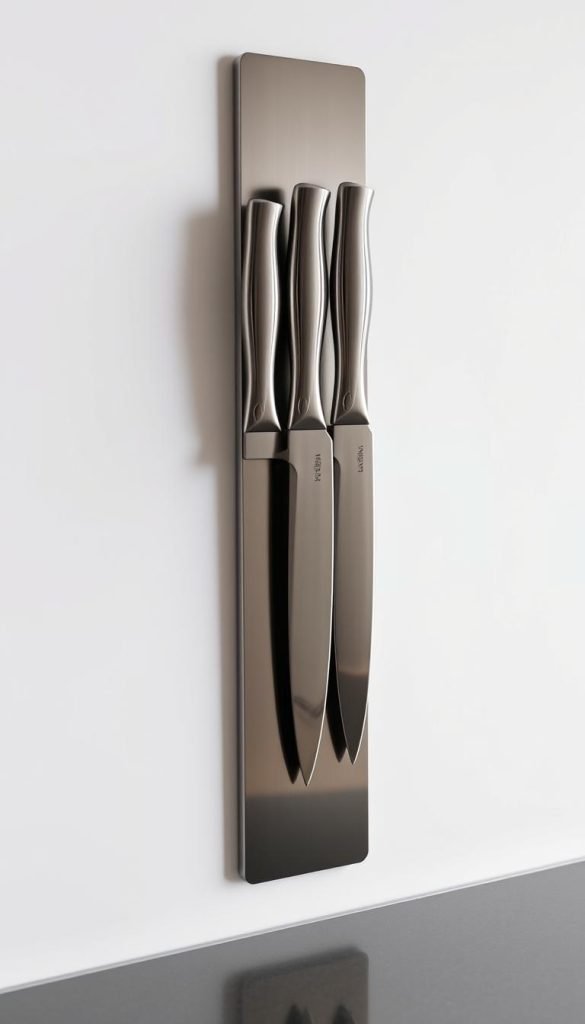
“I place the spine first and roll the blade on; never drag the edge across the surface.”
- Wall display prevents rubbing in block slots.
- Dry before hanging to prevent rust and wood damage.
- Proper magnet strength holds without wobble yet releases smoothly.
How I chose blade-safe magnetic holders that won’t scratch
I started by testing how each finish met metal on contact, listening for clicks and watching for slips. I wanted a quiet landing and no pivoting, so surface and magnet layout led my scorecard.
Surface material: wood vs stainless steel
I favored wood-faced bars because they softened contact and cut down on noise. Wood muted impact and reduced movement, which preserved edges over weeks of use.
Stainless steel can be safe, but only when its surface adds friction. Global’s textured face proved that a patterned finish stops small knives from sliding while being easy to wipe clean.
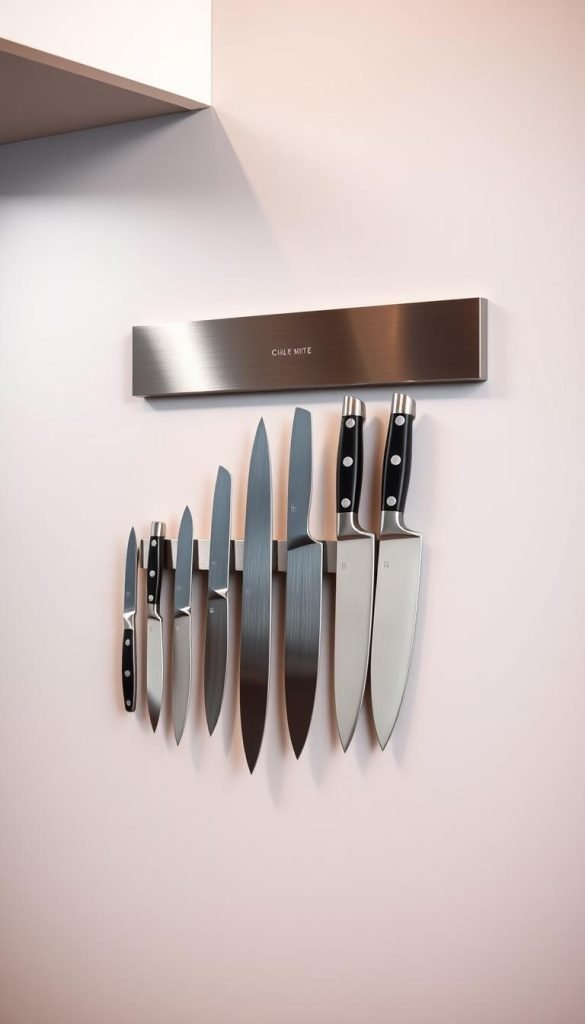
Continuous magnets, field strength, and small-knife security
Continuous magnet design was essential. Segmented layouts created dead zones and left paring and utility knives insecure.
I measured fields where possible. Stronger readings—Jonathan Alden at 870.3 Gs and Benchcrafted at 811.7 Gs—matched real-world hold across chef and small tools.
Quiet, no-shift contact and tip protection
I verified knives docked quietly and did not pivot after placement. That no-shift result protects both tip and cutting edge during daily use.
- I prioritized blade-safe surfaces first, choosing wood-faced strips as a default.
- When using steel, I looked for texture to add grip for smaller knives.
- Measured field strength to confirm consistent hold across sizes.
- Continuous magnets avoided dead zones and improved security.
My top pick overall: Jonathan Alden Magnetic Wooden Knife Bar Holder
I found a single 16-inch wooden bar that balanced raw hold with gentle contact across all knife sizes.
Why it stood out in testing: 870.3 Gs, secure cleaver-to-paring hold
This bar recorded 870.3 Gs and kept eight knives steady, from two 8-inch chefs and a cleaver to a paring tool. It never allowed swing or tilt during repeated docks.
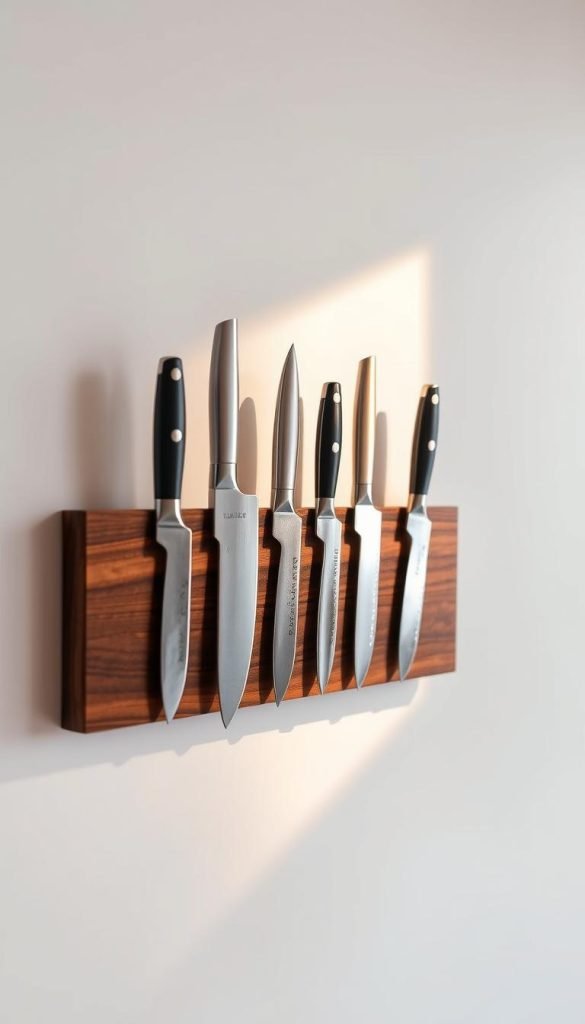
Design, materials, and easy installation with template
The face is cherry or walnut with small inlaid metal dots. That wood finish hides tiny nicks and gives a soft landing for edges.
The bar uses grade 1 neodymium magnets in a continuous layout and includes a paper drilling template. I marked, set screws, and hung it quickly during installation.
| Length | Gauss | Capacity | Material | Mount |
|---|---|---|---|---|
| 16 in | 870.3 Gs | 8 knives | Cherry or walnut | Screws with template |
| Continuous | Grade 1 magnets | Cleaver to paring | Wood face, inlaid dots | Paper template |
“If you want the most secure, blade-safe performance and easy setup, this is the holder I recommend first.”
Maintenance is simple: wipe after use and oil or wax the wood occasionally to keep it looking and performing well.
Best high-capacity strip: Benchcrafted Mag Blok (18 inches)
When my collection outgrew a 16-inch bar, I reached for an 18-inch model to gain breathing room between pieces. The Benchcrafted Mag Blok proved roomy and reliable for larger sets.
Room for large sets without blade rub or slide. The 18 inches held nine knives comfortably — three chef’s, a cleaver, nakiri, santoku, bread, utility/petty, and a paring — with no crowding or edge-to-edge contact.
Its 811.7 Gs reading gave confident hold for long, heavy profiles across the full length. The continuous magnet kept even pull so small tools didn’t shift toward stronger zones.
The light wood finish hides minor marks and blends into most kitchens. Two front screws make the install direct and sturdy, so the holder sits rock solid on the wall.
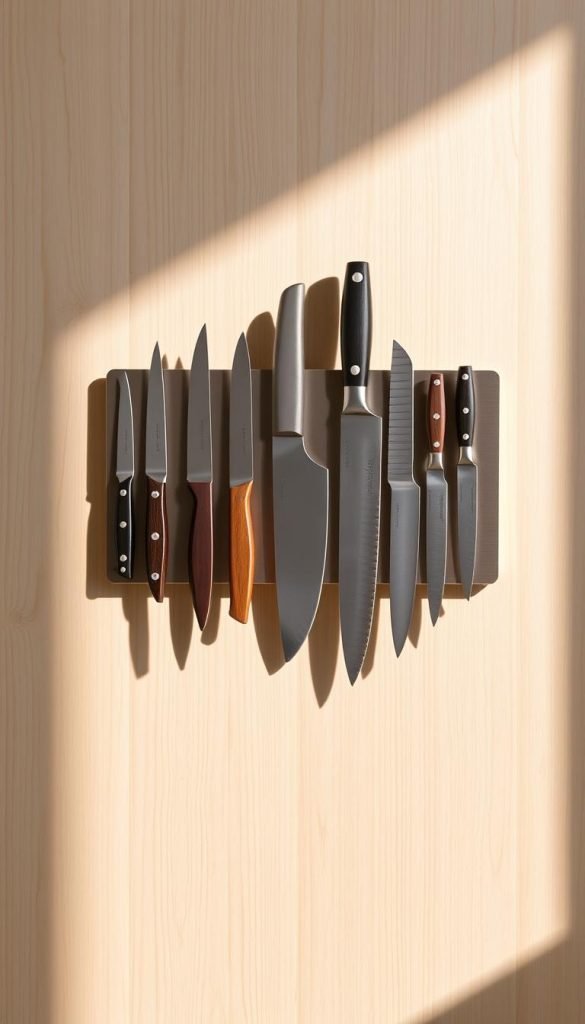
Why I recommend it for bigger rotations
- Plenty of space to separate handles, so I pull one tool without nudging others.
- Included Block-Butter keeps the surface smooth with a quick oiling.
- Despite larger size, knives released cleanly without dragging, which preserves edges.
“For cooks with growing sets, this is the roomy, blade-safe pick I trust.”
| Length | Gauss | Capacity |
|---|---|---|
| 18 inches | 811.7 Gs | 9 knives |
Best stainless option that resists sliding: Global Magnetic Bar
When I needed a metal look that held knives firmly, Global’s textured bar caught my eye.
The 16-inch stainless steel bar measured 633.1 Gs in my tests. Its raised polka-dot surface reduced slide and kept contact quiet. The even magnetic field showed no dead zones, so small tools stayed as secure as larger ones.
Installation was straightforward. I removed side caps, drove screws through the front-mount holes, then snapped the caps back for a neat finish.
Cleaning is faster than wood. A quick wipe removes splatter and keeps the steel finish looking new. It costs more than many alternatives, but the durability and low upkeep justify that premium for busy cooks.
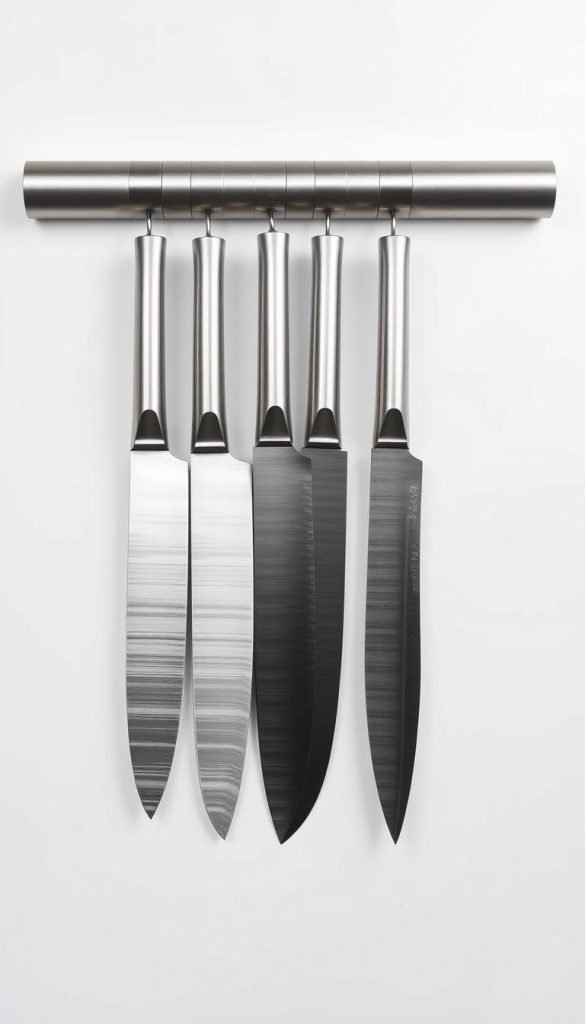
- This stainless pick gives grip where smooth metal often fails.
- At 633.1 Gs it held chef knives, paring, and heavier pieces securely while still releasing by the handle.
- Good for cooks who want a metal aesthetic and simple maintenance.
| Model | Length | Gauss | Material |
|---|---|---|---|
| Global Magnetic Bar | 16 in | 633.1 Gs | Textured stainless steel |
| Key features | Front-mount holes | Even field | Polka-dot surface |
“For a metal finish that actually grips, this was my go-to stainless holder in testing.”
Best value picks others loved in testing
I looked for options that give strong daily performance without premium pricing. Two models stood out for fair cost, reliable hold, and simple install.
Wüsthof 18-inch magnetic holder:
Wüsthof 18-inch magnetic holder: balanced strength and coverage
The Wüsthof 18-inch delivered a sweet spot of hold and easy release. I liked its near edge-to-edge magnet coverage, which kept knives steady from tip to bolster.
It comes in acacia, walnut, and stainless steel finishes, so it fits many kitchen styles. Installation was quick and clean, giving a minimalist, built-in look with little fuss.
Why it’s good value: usability and secure feel make this knife holder a smart spend when you want a longer bar that performs every day.

Gorilla Grip stainless steel strip: budget-friendly, space-saving
Gorilla Grip’s stainless strip proved to be the budget hero. It’s slim, strong along its full length, and can mount to a fridge or wall if you prefer no drilling.
It shows fingerprints and can scratch more easily, but its low price and flexible mounting make it a great choice for small kitchens or second stations.
- Both picks held knives confidently without stubborn grip.
- Wüsthof suits cooks wanting a longer, nicer-looking bar.
- Gorilla Grip works well when you need a compact, affordable holder.
“For new setups or secondary stations, these give dependable performance without premium pricing.”
Best for small kitchens and dual storage: Novaware magnetic strip
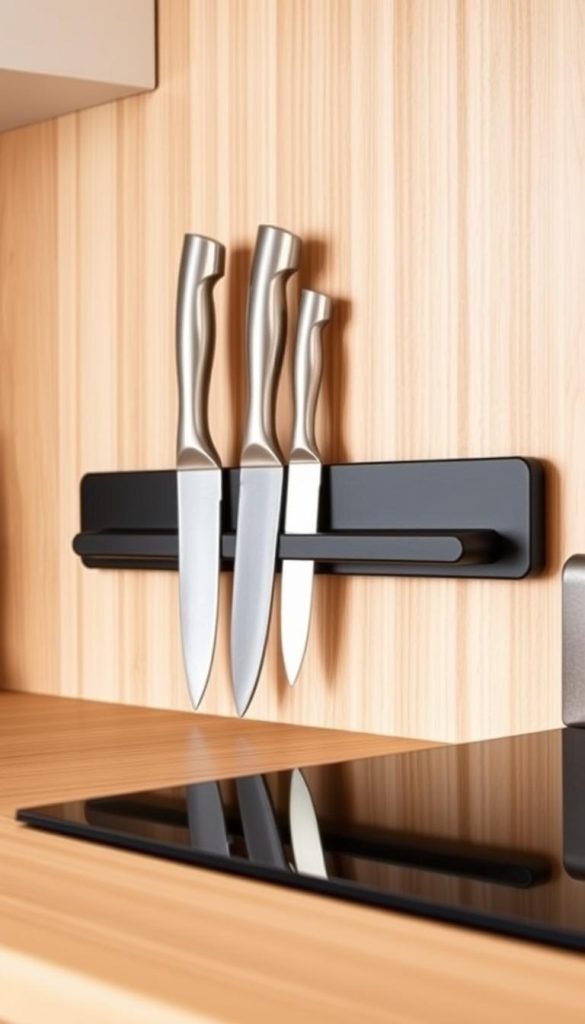
I often pick Novaware when counter space is tight. Its clever two-in-one design pairs inner slots with a strong front magnet to double capacity without a wider footprint.
Available in 10, 16, and 24 inches, the 16-inch hits a sweet balance for compact walls and a solid number of knives. Keyhole slots make uninstalling or adjusting fast, which helps when I test placement under cabinets.
The front magnet gives even pull across the length with no dead zones, so small blades sit securely anywhere along the face. Using both storage modes together works best with tips down; that keeps removal smooth and prevents handle clashes on the side-by-side row.
Cleaning is simple. Few nooks mean a quick wipe keeps surfaces fresh. For renters or evolving kitchens, this holder trims visual clutter while keeping tools easy to grab on busy prep days.
“If capacity and compactness must coexist, this is the strip I reach for.”
For more options and a full comparison, see my full guide.
Countertop alternatives if you can’t drill
For renters or anyone avoiding screws, a freestanding block keeps knives handy and visible on the counter.
Countertop magnetic blocks give display-style storage without any wall work. They free up drawer space and keep tools within reach during busy prep sessions.
Material Kitchen’s The Stand is double-sided and holds up to eight knives across both faces. Its weighted metal base stops tipping, and the angled layout helps stagger long chef knives and shorter pieces so handles don’t crowd each other.
Made In’s beechwood block uses neodymium magnets and fits narrow counters with a slim footprint. It holds four knives per side, has a nonslip base, and arrives preassembled for quick setup.
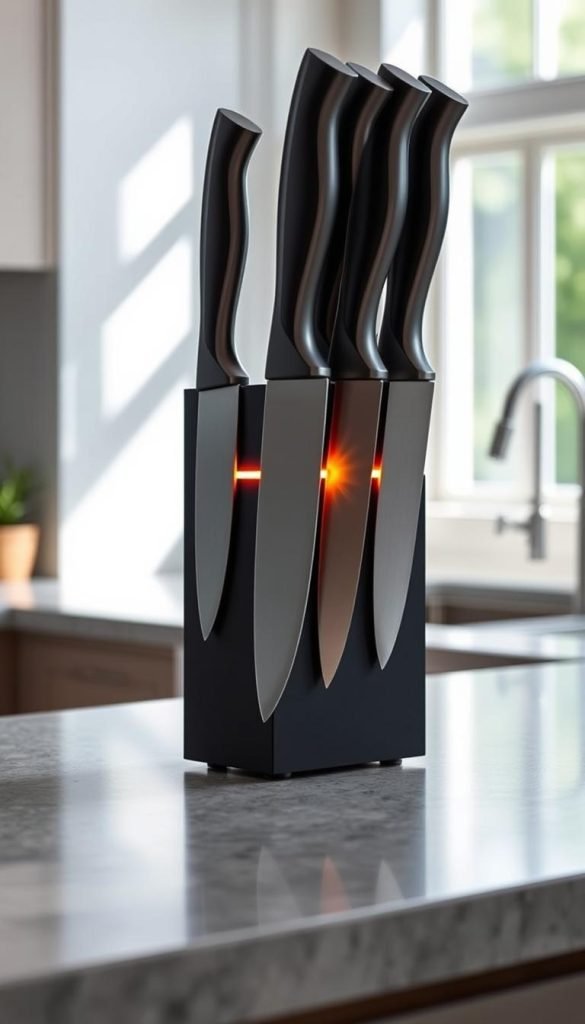
I liked both for renter-friendly use and mobility. They let me move my set to match my workflow and clean under the base easily.
“If you need display-worthy storage without a single hole in the wall, these two top my list.”
- Preassembled and ready in minutes — great for temporary kitchens.
- Double-sided design stores more without taking more space.
- Check that the base resists tipping when you pull a heavy blade; both felt solid in daily use.
Wood vs stainless steel: which finish is truly blade-safe?
I judge a bar by three things: contact softness, slip risk, and how it handles moisture.
Wood wins for quiet, edge-friendly landings. I hear a soft thud when knives meet a well-finished wood face, and that reduced clanging limits micro-wear on polished edges.
Wood needs care. Darker finishes show nicks faster, so I oil or wax periodically to keep the surface smooth and gentle. Also, dry each knife before hanging—wet metal can warp wood over time.
Stainless steel cleans fast and needs less upkeep. But slick faces can let a knife slide unless the design adds texture. Textured steel, like Global’s, gives grip when a blade first contacts the bar.
I worry about trapped water on metal bars; it can cause rust spots where metal meets metal. For daily cooks who want low maintenance, stainless steel often fits better. For edge care and quieter use, wood usually wins.
“Match finish to how you cook and clean—sound and feel tell you more than specs.”
- I find wood surfaces quieter and kinder to edges; knives land softly instead of clanging.
- Stainless cleans quickly, but texture is key to prevent sliding.
- Dry knives fully before hanging to avoid warped wood or rust spots.
What are the best magnetic knife strips that won’t scratch blades?
I narrowed my shortlist to models that balance gentle contact with confident hold. Below I give a quick, use-case focused rundown so you can match finish and performance to your kitchen.
Quick shortlist by use case and material
Overall wood pick for most kitchens: Jonathan Alden, 16-inch — strongest field and ultra-secure hold with a drilling template included.
High-capacity wood: Benchcrafted Mag Blok, 18-inch — room for extra pieces while keeping knives steady across the length.
Stainless standout: Global, 16-inch — textured face reduces slide and keeps small tools planted.
- Value wood/steel: Wüsthof 18-inch — balanced strength and full-length coverage in multiple finishes.
- Budget stainless: Gorilla Grip — slim, strong, fridge or wall mount, easy on the wallet.
- Dual-storage space-saver: Novaware — front magnet plus internal slots to double capacity.
- Countertop options: Material Kitchen The Stand (double-sided) and Made In (neodymium, slim).
Final picks: choose stainless for low maintenance or wood for gentler contact. Match size to your set — 16 inches fits most cooks; go 18 inches if you carry extra long knives.
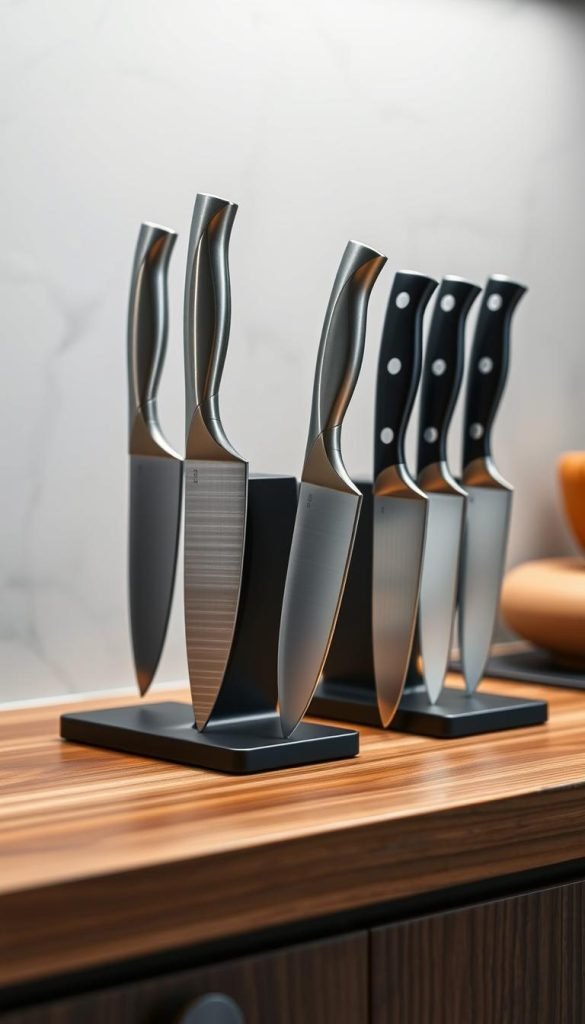
“Your final choice should balance magnet strength, finish, size, and how you arrange daily-use knives.”
| Use case | Model | Key trait |
|---|---|---|
| Most kitchens | Jonathan Alden 16″ | 870.3 Gs, template |
| High capacity | Benchcrafted 18″ | Roomy, steady |
| Stainless | Global 16″ | Textured, non-slip |
Testing insights: magnet strength, capacity, and durability
I logged how each bar behaved under repeated grabs and heavy impacts to judge real-world resilience. My goal was simple: match measured pull to what actually held during busy prep.
Gauss readings, continuous magnets, and real-knife loads
I compared gauss readings to in-use holds. Jonathan Alden read 870.3 Gs, Benchcrafted 811.7 Gs, and Global 633.1 Gs. Higher numbers correlated with steady grip on both a chef knife and a heavy cleaver.
Mount stability, repeated-use wear, and dead zones
I ran 25 placement/removal cycles with a cleaver to test wear. Continuous magnets eliminated weak spots; segmented layouts created dead zones where small knives could slip or jump.
Mounting mattered, too. Direct-screw installs stayed firm during repeat pulls. Some metal plate systems pinched fingers on install, and steel strips sometimes needed more force to uninstall for service. Wood faces demanded occasional oil or wax, but they proved kinder long term.
“Durability is about how a holder holds up after dozens of heavy placements, not just surface finish.”
| Metric | Reading/Result | Impact |
|---|---|---|
| Jonathan Alden | 870.3 Gs | Secure for 8 knives, cleaver tested |
| Benchcrafted | 811.7 Gs | Holds 9 knives, roomy layout |
| Global | 633.1 Gs | Textured steel, resists sliding |
Sizing and placement: 12, 16, or 18 inches—and where to mount
Measure your wall and count handles before choosing a length for a safe, tidy display. I match bar length to my set so knives never crowd or overlap during grabs.
Quick sizing rules: a 12-inch option holds essentials, a 16-inch fits about eight knives in my tests, and an 18-inch gives room for roughly nine. Pick the size that matches your daily rotation so handles don’t bump when you pull one tool.
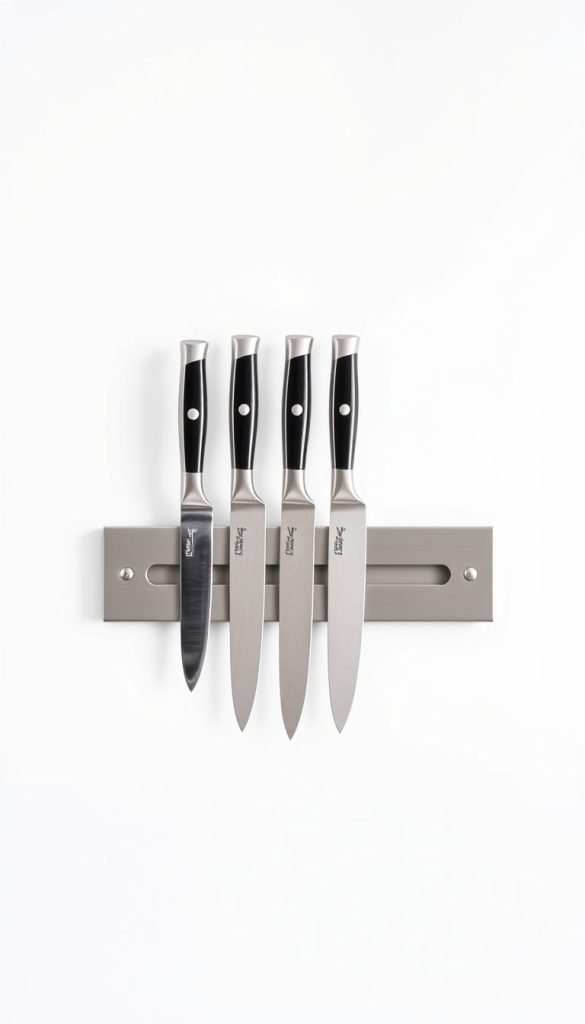
- I often use two medium holders stacked when one long bar won’t fit my layout.
- Mount higher and place tips-up if the bar is out of reach; lower mounts work better handle-up.
- Leave clear vertical space so long slicers won’t hit a backsplash or countertop.
- Avoid steam and heat zones near stoves or dishwashers to protect finish and metal.
- Group knives by use so my most-used tools sit at dominant-hand height for fast access.
“Measure first, then buy; a well-placed strip saves counter space and speeds prep.”
Installation and uninstalling: methods, screws, and safety
I always start an install by picking the right anchors and mapping clearances for every handle. A careful setup makes daily use safe and keeps edges from bumping nearby cabinets or shelves.
Studs, wall plates, direct-mount holes, and finger-safety tips
Find a stud or use a rated anchor so the load won’t shift when you pull a heavy knife. I count handles and mark level lines before any drilling.
Template-guided installs, like Jonathan Alden’s, made marking and drilling holes straightforward. Direct front screws (Benchcrafted, Global) felt fastest to remove later. Screw-hang via back holes works well too, if you can reach the fasteners.
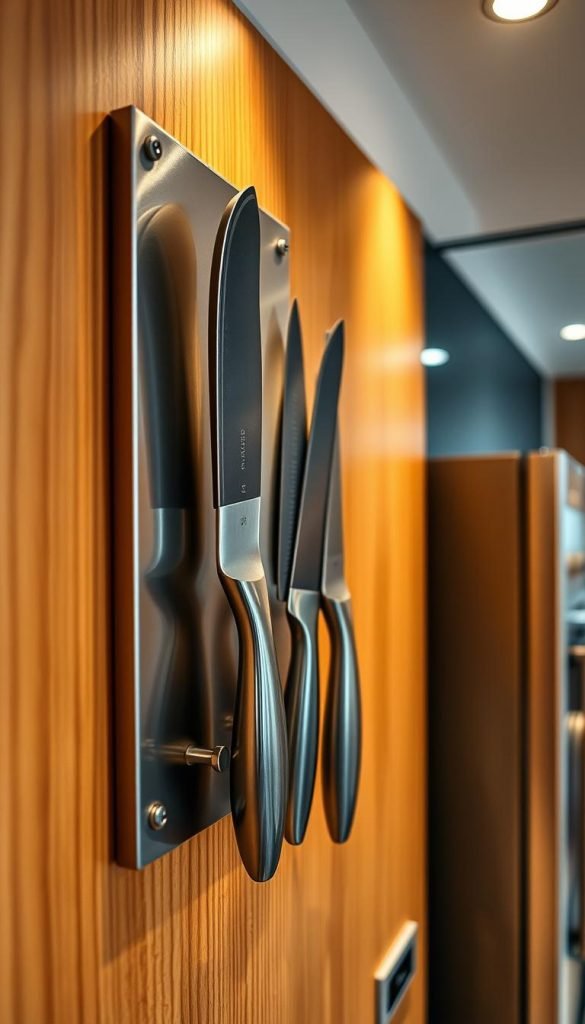
- I use the correct screw length for the wall type; short screws fail to bite into studs or anchors.
- Magnetic wall plates align quickly but can pinch fingers when the bar snaps to the plate—exercise caution.
- Pre-check clearances on either side so handles don’t hit other objects after hanging.
- I test stability with a heavy cleaver; no wobble means the installation is dialed.
- Skip adhesive-only mounts for long-term safety; they degrade under load.
Uninstall tip: reverse the install steps. Direct screws come off easiest with the right driver bit. Metal bars sometimes need a firmer pull, so keep a helper nearby to steady the load.
“A secure mount starts with good anchors, a steady level, and one final stability test before regular use.”
Care and maintenance to prevent scratches and rust
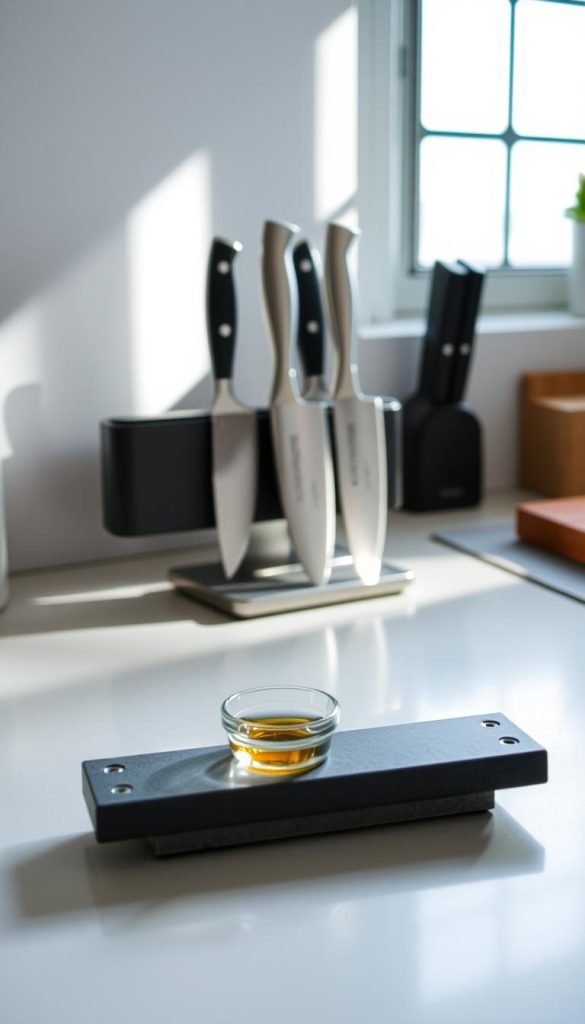
A little daily care prevents rust and keeps finishes looking new. I follow a simple routine after each use so my tools and holder age well together. Drying and gentle upkeep take a minute but save time and trips to the sharpener later.
Dry knives fully before hanging. Moisture trapped between metal and a wood face can cause rust spots or warp the wood over time.
I always place the spine first, then roll the blade on to avoid dragging an edge across the surface. That technique protects both the knife and the finish.
Simple steps I use
- I dry each knife completely; wet metal plus wood invites rust and damage.
- For wood-faced bars, I treat the surface with oil or wax from time to time to keep it smooth and blade-friendly.
- Stainless and steel finishes clean quickly with a damp cloth; I buff dry to prevent spots.
- I inspect mounting screws and anchors periodically to keep the setup stable and durable.
- Wipe grease splatter promptly and lift knives straight off—don’t slide them sideways.
“A minute of maintenance saves a lot of edge touch-ups down the road.”
| Task | Why it matters | Frequency |
|---|---|---|
| Dry after washing | Prevents rust spots and wood warping | Every use |
| Oil or wax wood | Keeps surface smooth and hides small nicks | Every few months |
| Wipe steel faces | Removes splatter and prevents streaks | Weekly or as needed |
| Check mounts | Ensures stable holding and long-term durability | Monthly |
Models and pitfalls I’d skip based on tests
Several popular models failed my long-run tests and showed real-world flaws I couldn’t ignore.
I found a mix of problems: weak fields, poor hardware, and trims that fell off under load. NorPro’s aluminum bar shed plastic edges. Messermeister and HIC showed low pull. Modern Innovation and Ouddy let small blades slide toward stronger zones.
Some designs had installation or stability issues. Schmidt Brothers Acacia shifted on the wall with heavy knives. HOSHANHO was tough to mount and underpowered. FINDKING held tight in the center but let ends go slack.
- Avoid inconsistent fields — small knives should not “seek” stronger spots.
- Skip flimsy trim — plastic that pops off is a safety red flag.
- Beware complicated plates — they can pinch fingers or use poor fasteners.
- Steer clear of wobble-prone bars — heavy knives must not shift the mount.
| Model | Issue | Impact |
|---|---|---|
| Dalstrong | Complex plate mount | Hard install, finger risk |
| Wüsthof strip | Magnets peeled | Unreliable hold after install |
| 360KnifeBlock | Segmented magnets | Small knives jumped between zones |
“I skip any product that favors style over secure, uniform hold — long tests reveal those trade-offs.”
Conclusion
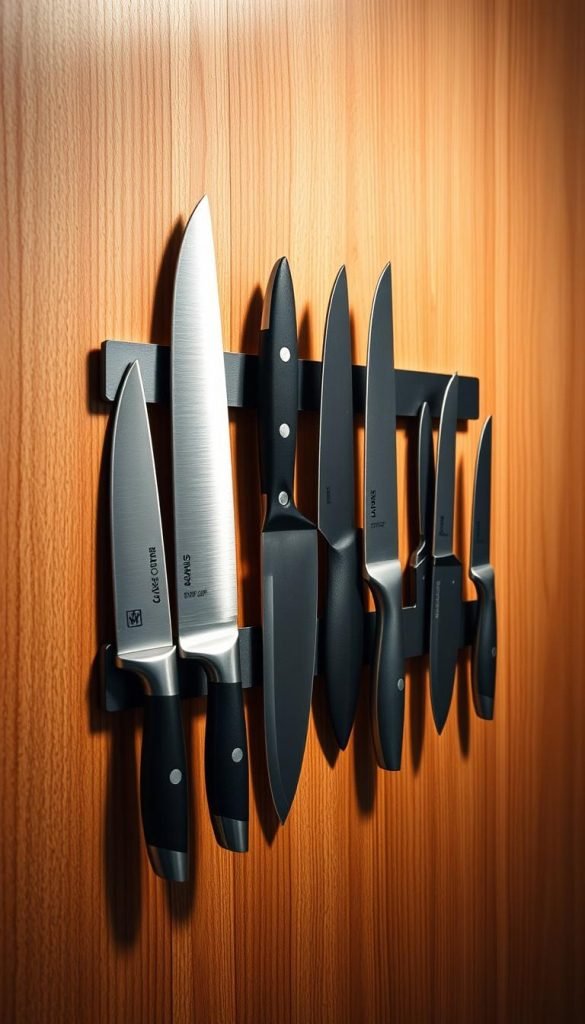
In daily use, a continuous-magnet wood bar delivered the quietest, most secure storage.
For most cooks I recommend a wood-faced magnetic knife strip with continuous magnets to protect edges and keep knives steady. Jonathan Alden led testing at 870.3 Gs and includes a template that makes install simple.
If you need more room, Benchcrafted’s 18-inch gives extra capacity without crowding. Prefer a metal look? Global’s textured stainless keeps items from sliding. For value, Wüsthof and Gorilla Grip gave reliable performance without overspending.
Can’t drill? Material Kitchen’s double-sided Stand and Made In’s slim neodymium block save counter space and look smart. Choose the right length for your chef knives, dry each piece, and place the spine first. With one solid holder, you free space, speed prep, and protect your set for years.