How do I stop my gallery wall frames from tilting?
I keep a crisp display by fixing crooked picture placements fast. I explain what causes a frame to lean and share the quick, low-cost trick I reach for first. Short fixes take minutes; better hanging adjustments lock pieces in for the long run.
Vibrations, long wires, and uneven attachment points are the usual suspects. I check wire length, attachment height, and weight balance before any hardware swap. That way the right solution is obvious before I touch a nail.
I rely on simple products and a few small skills to get a professional look. If a tiny forward lean improves viewing, I leave it—no need to fight physics. For a cheap, effective tip that I use often, see this short trick for keeping pictures straight.
Key Takeaways
- Identify wire length and hook height first to find the root cause.
- Use cheap, quick fixes for single pieces and stronger fixes for whole arrangements.
- Balance weight and attachment points for longer stability.
- Small forward tilt can aid viewing; don’t overcorrect.
- Simple products like bumpers work well and save time.
Why frames tilt and the quick fix I reach for first
A quick look at weight and hang points usually tells me why a picture leans. I inspect the hanging wire, the attachment height on the back, and any front-heavy glazing. Small changes there often fix the issue fast.
Common causes include a long hanging wire that drops the frame’s center of gravity, a front-heavy picture that pulls forward, or a low attachment point that invites tilt. Even light vibrations from doors or stairs can nudge a piece over time.
Common causes of tilting: weight distribution, wire length, and attachment points
- I find long wire creates a lower triangle behind the art, increasing forward tilt.
- Front-heavy weight in the picture frame makes the face pull away from the wall.
- Poorly placed hooks or a single off-center hook allow yaw to one side.
My go-to fast fix: I press two clear cabinet bumpers on the lower corners of the back. They act as discreet spacers so the frame meets the wall evenly and resists sliding or twisting.
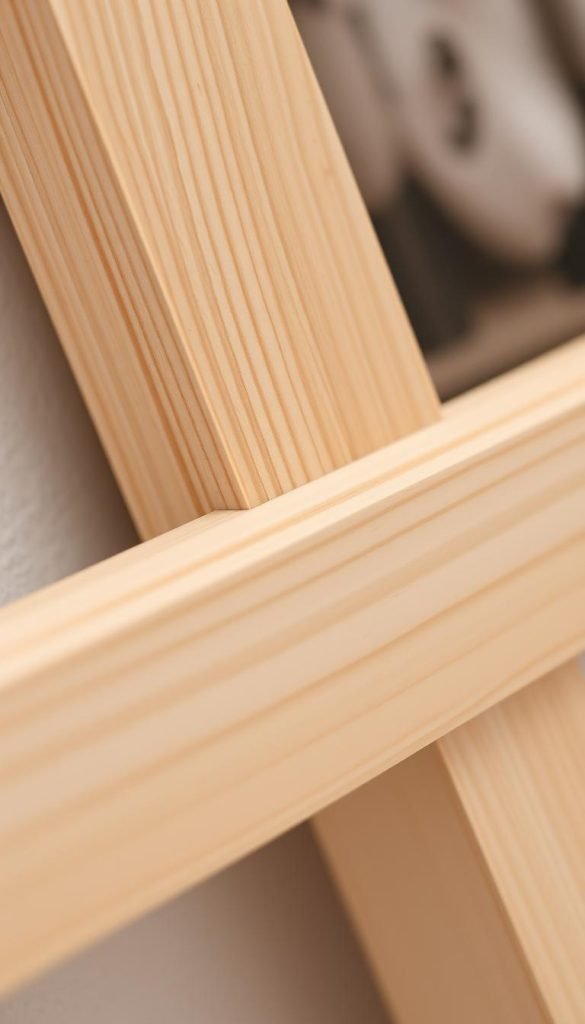
“A pair of clear bumpers saves time and looks invisible from the side.”
| Issue | Easy fix | Next step if needed |
|---|---|---|
| Long hanging wire | Trim excess or tape to the back | Use thinner 1 mm wire |
| Front-heavy picture | Add back spacers or bumpers | Raise attachment point on the back |
| Side yaw | Use two hooks or two wires | Install paired hooks for wider items |
I always try bumpers first because they’re cheap and quick. If a piece still leans, I shorten the wire, move the hang points higher, or add a second hook. For more guidance on preventing tilt, see this short guide to prevent picture tilt.
How do I stop my gallery wall frames from tilting?
A few small adjustments make a big difference when pictures refuse to sit straight.
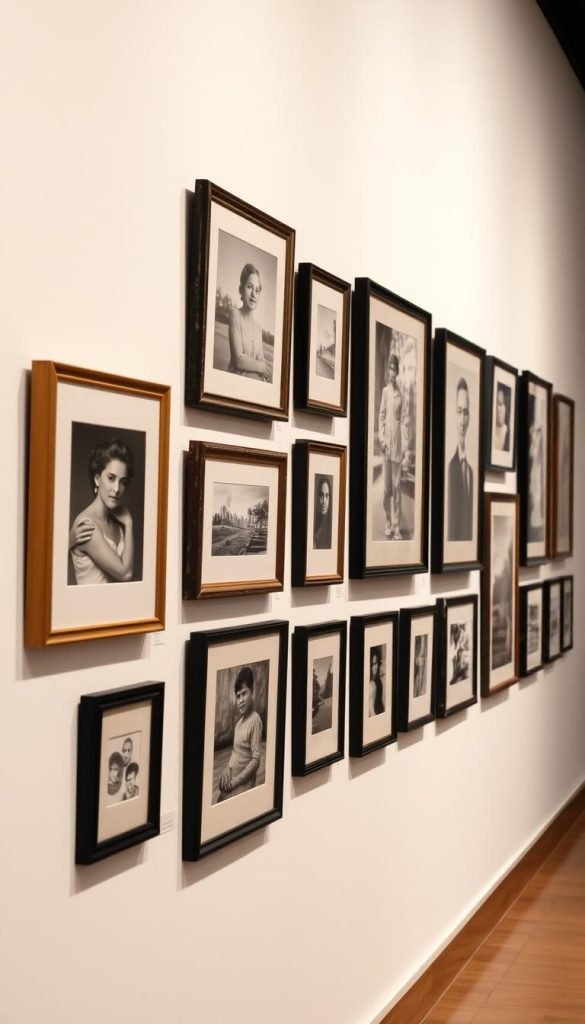
Use two hooks or two wires on wider pieces so the picture can’t pivot around a single point. That doubles the supported weight and keeps the art level longer.
Reposition attachment points higher on the back
Move D-rings or screw eyes up so they sit about three-quarters of the way toward the top of the back frame. This pulls the hanging wire nearer the top and cuts forward lean without showing hardware.
Trim or secure excess wire
Cut off stiff wire ends when possible. If not, roll and tape the extra neatly to the back so the wire’s spring won’t push the picture forward. Using thinner wire (1 mm) reduces that stiffness.
Add soft spacers and sandwich the wire
Add clear bumpers to the lower corners to stop side-to-side shimmy. For extra control, place a small Velcro or Command strip between the hanging wire and the back so the wire stays snug but still allows micro-adjustments.
“Simple fixes—two hooks, neat wire, and tiny spacers—save time and keep pictures square.”
- Tip: Keep a bit of slack in the wire; overtightening stresses the frame sides.
- Tip: Press bottom corners to engage spacers, then step back and check alignment.
Pro tips for gallery systems, different wires, and when a slight lean helps
Smart pairings of hangers and hooks prevent stress and help artwork stay square. I use a hanging system with paired hangers so the wire angle is more oblique. That reduces side strain and keeps the picture level for longer.
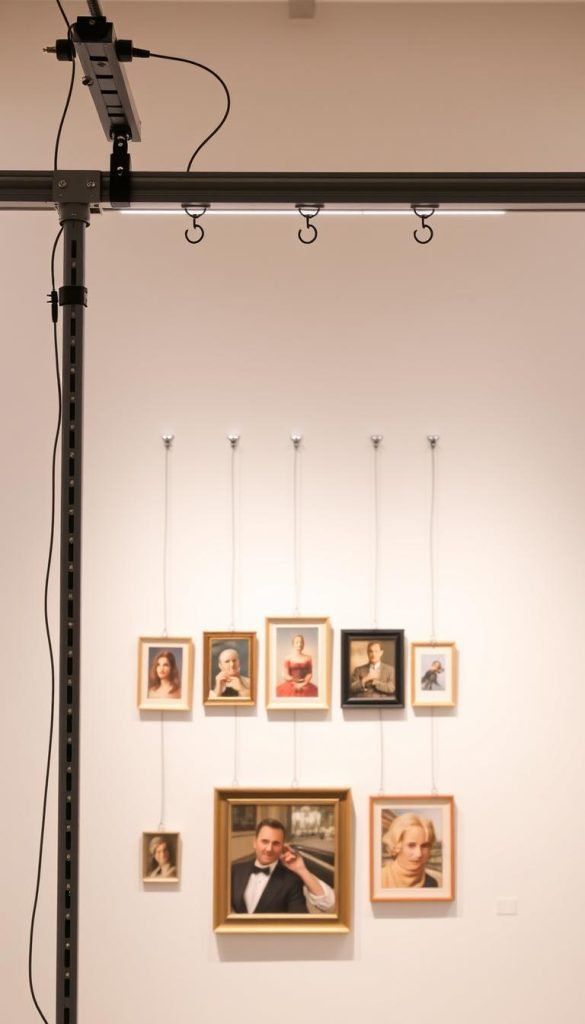
Choose wire and attachment height carefully. I pick thinner 1 mm wire when I want flexibility and less push to the front. For heavier artwork I step up to 2 mm, but I cut all wire to exact length so no spare coils press the back into the wall.
Pair hangers and hooks on a hanging system
I place D-rings high—about three-quarters up the back—and use two hooks on wider pieces. That keeps the hanging wire angle steeper and spreads weight across the system, reducing stress on the sides.
When a small forward tilt helps viewing
For salon-style displays or high-placed pieces, a slight forward lean improves sightlines from below. I aim for uniform tilt across the display so each piece reads well from common seating and walking paths.
“Pairing hooks and trimming excess wire gives a cleaner hang and far less fuss over time.”
| Tip | Benefit | When to use |
|---|---|---|
| Paired hangers and two hooks | Less pivoting; even load | Wide or heavy artwork |
| 1 mm vs 2 mm wire | Flex vs stiffness control | Light artwork / heavy artwork |
| Bumpers + sandwiching | Fine vertical angle and stable contact | Textured walls or slight lean |
Conclusion
Small stabilizers and the right wire geometry make steady hanging effortless. Start with clear bumpers on the lower back corners, then trim or tuck excess wire so the face sits flat against the wall.
Keep geometry tidy by moving D-rings higher, leaving slight slack in the wire, and using two hooks on wider pieces. For larger displays, a hanging system with paired hangers gives consistent alignment across multiple frames.
Try one change at a time and watch each picture frame settle. With these simple tips you’ll spend less time adjusting and more time enjoying the art.