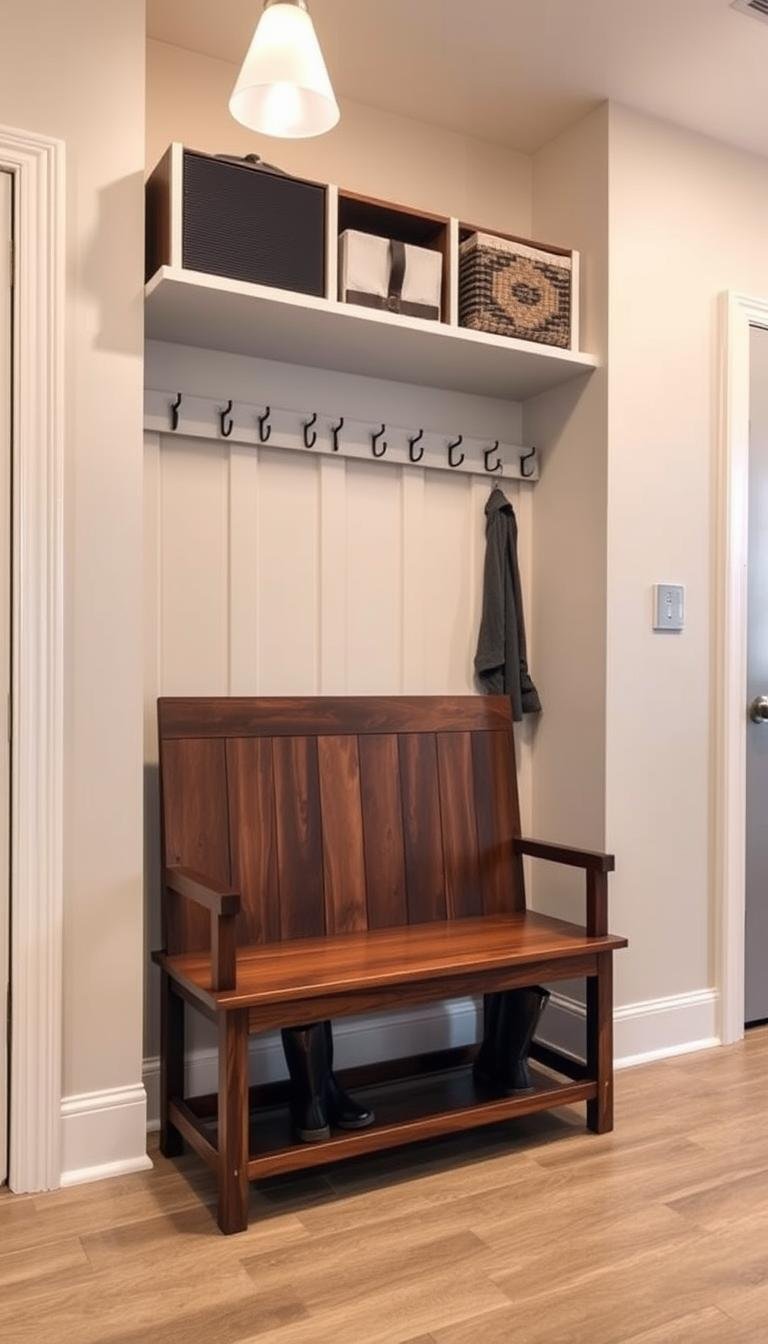
What’s the perfect bench height for a mudroom with tall boots?
I’ll answer exactly which seat height I recommend when you need a bench that handles tall boots and daily traffic without fuss. I write from real use and testing, so you’ll get practical numbers, simple measuring tips, and choices that balance comfort and storage.
Quick preview: I cover common seat heights (18–20 inches), seat depths that suit shoe tying, and how much clear floor you should leave in front.
We’ll also look at cubby and bay sizes that fit cowboy and work boots, hook heights that stop head bumps, and why one extra inch of seat height can change how much you can store beneath the seat.
Key Takeaways
- I recommend a seat near 18–20 inches to balance seating and under-seat storage.
- Keep seat depth about 14–17 inches for tying shoes and comfort.
- Leave at least 20 inches of open floor in front for ease of use.
- Plan about 48 inches from seat top to shelf or hook bottoms to avoid bumps.
- Design cubbies 12–16 inches deep; tall boot bays should be 14–18 inches high.
Why bench height matters when you’re dealing with tall boots
A few inches in seat rise can turn cramped storage into usable boot space. I look at how small changes affect everyday comfort and usable room. This helps you choose a bench that fits people and gear.
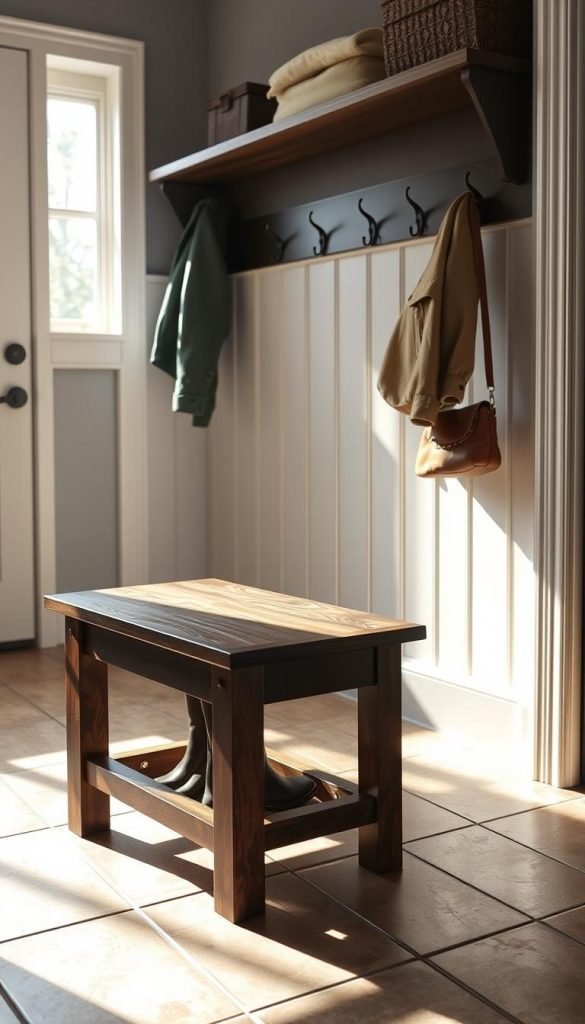
Comfort versus storage: striking the right balance
I test seating at about 18 inches and then at 19–20 inches. An 18-inch seat often feels ergonomic for most adults and supports steady posture when tying shoes.
Adding 1–2 inches gives more under-seat clearance and can accept taller storage without feeling high. That extra inch commonly unlocks space for tall boots or stacked trays.
How tall boots change under-seat clearance needs
Common boot heights vary: about 8 inches for work boots and roughly 12 inches for cowboy boots. That range changes whether boots fit under an apron or need vertical bays.
“I plan bench depth around 14–17 inches so sitting stays stable while storage remains reachable.”
| Seat option | Typical inches | Best use |
|---|---|---|
| Standard | 18 | Everyday comfort, low-profile storage |
| Storage-focused | 19–20 | Room for taller boots and bins under seat |
| Shallow depth | 14–15 | Small mudroom, quick sit-and-go |
| Deeper seat | 16–17 | Better support when putting on footwear |
- I weigh how easy it is to sit and stand. Too low strains knees; too high stresses hips.
- I consider other items—bags, umbrellas, sports gear—that compete for storage and shape layout choices.
My rule: prioritize usable under-seat space without making the mudroom feel crowded. That balance keeps boots tidy and daily comings and goings smooth.
What’s the perfect bench height for a mudroom with tall boots?
I pick seat heights that balance comfort and usable storage so boots slide under without a fight.
My go-to range: 18 to 20 inches seat height
I usually aim between 18 and 20 inches. An 18-inch seat stays classic and comfy for most people.
When storage is important, 19 inches is my sweet spot. It keeps sitting easy while giving more under-seat clearance.
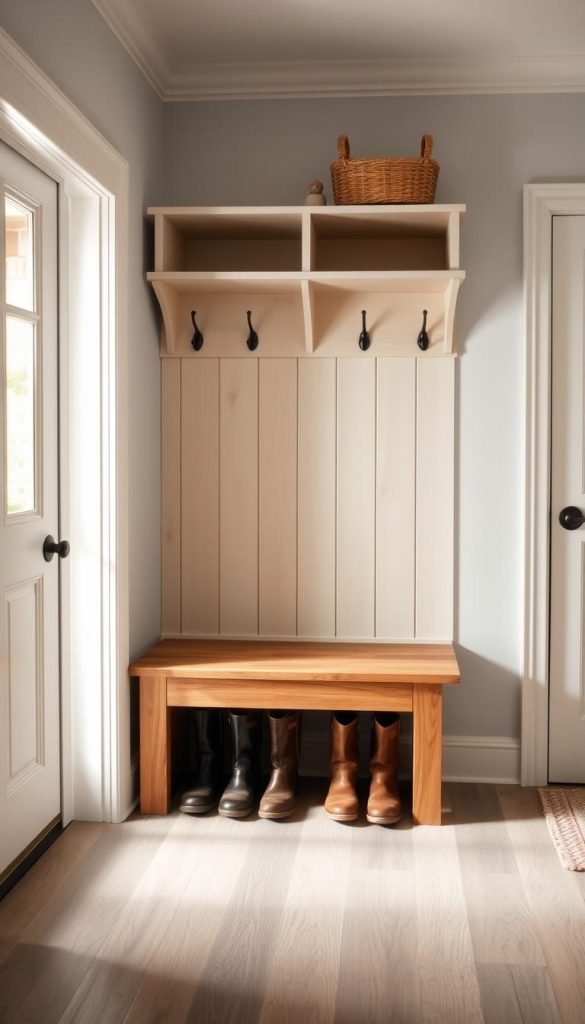
When I choose 19–20 inches for extra boot storage
If I need to slide in trays or taller pairs, I pick 19–20 inches. Common tray sizes like 20 x 15 inches or 34 x 16 inches fit if the apron allows.
I also watch seat depth. Keeping depth near 14–17 inches keeps putting on shoes and boots comfortable while preserving reachable storage below.
- I test sitting with winter layers to confirm a storage bench still feels good.
- In busy homes, many mudroom benches at 19 inches perform best—more room under without losing comfort.
How to measure your space the way I do before settling on bench dimensions
Before I pick final dimensions, I map the actual floor layout and mark clearance lines so nothing gets blocked. This quick check keeps plans realistic and avoids late surprises.
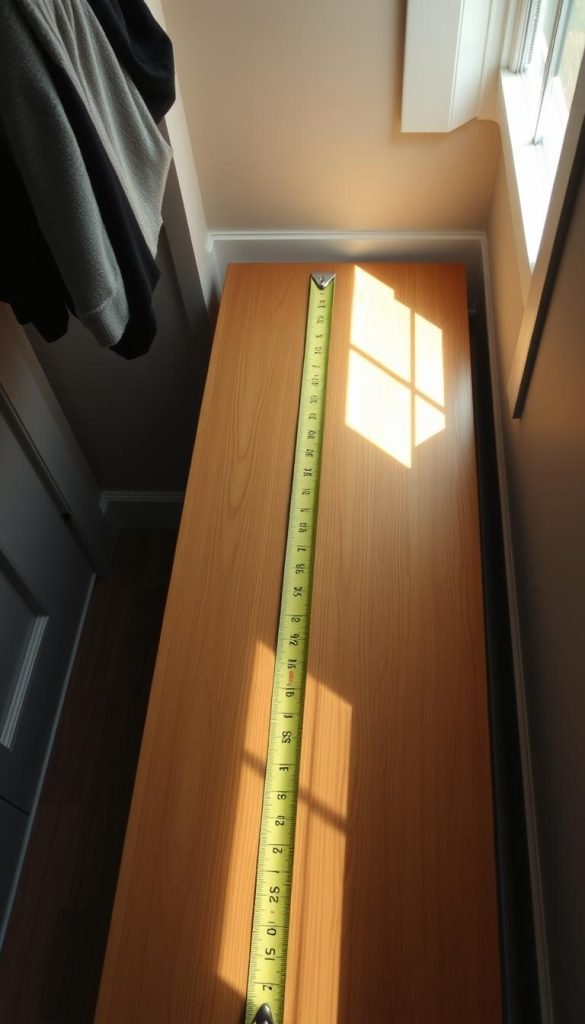
Confirm door swing, walkways, and a 20-inch minimum in front
I mark door arcs and walk paths and keep at least 20 inches of open floor in front so sitting and bending feel easy. Note where a door or hallway funnels traffic; that changes ideal width and placement.
Mockups with painter’s tape and chair tests for seat height
I lay out tape to show bench depth and width in actual inches. Then I test by stacking cushions on a chair at 18, 19, and 20 inches and try sitting, tying shoes, and standing.
Accounting for baseboards, outlets, and vents
Map the wall length, baseboard depth, vents, and outlets so the unit does not block utilities. Typical widths for two users run 36–48 inches, but leave circulation near the door clear.
- Tip: measure pockets behind trim so your final dimensions fit without hitting vents.
- Check adjacent storage so baskets and cubbies open without scraping the wall.
Mudroom bench dimensions I recommend for comfort and function
Clear, repeatable numbers help me pick a bench that fits people and gear without guesswork.
I stick to practical ranges so seating stays comfortable and storage stays usable. For most homes I prefer a seat at 17–19 inches. If under-seat storage is a priority, I raise that to 19–20 inches.
Depth matters as much as rise. A seat depth of 14–17 inches keeps sitting stable and keeps walkways open.
Size guidance I hand to builders or use when shopping
- Width: 36–48 inches fits two people; scale up by household size.
- Depth: 14–17 inches keeps seating comfortable while saving floor space.
- Seat rise: 17–19 inches typical; 19–20 inches when bins or trays go under.
- Match to upper storage: Keep roughly 48 inches from seat top to the underside of shelves or hooks for head clearance.
Small shifts in any dimension unlock real benefits. One extra inch of rise often makes room for taller bins or boots without making seating awkward.
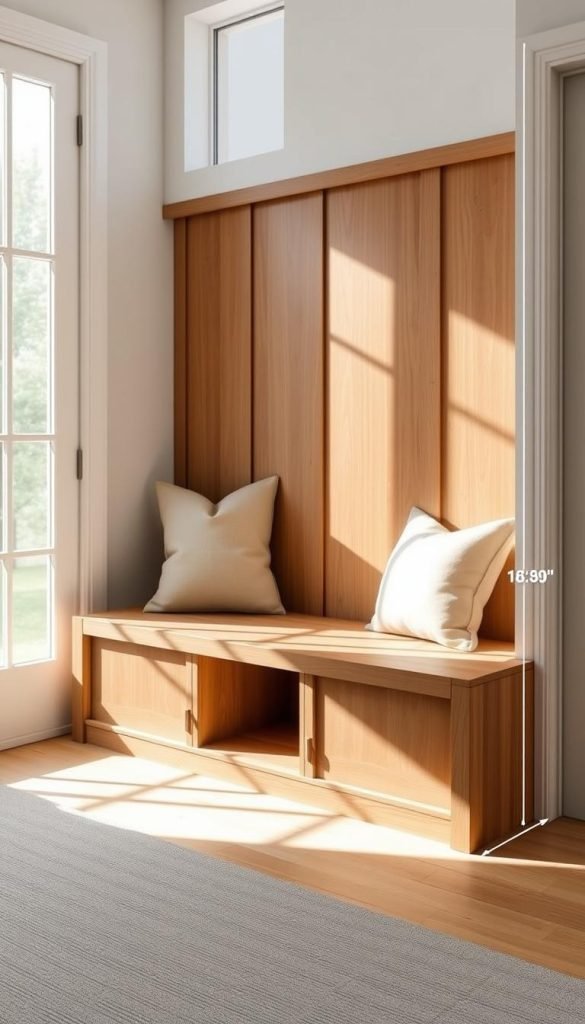
Designing for tall boots: cubbies, trays, and vertical bays
Designing cubbies around real boot measurements keeps storage useful and tidy. I size bays so footwear fits without bending or crowding. That keeps the mudroom organized and easy to use.
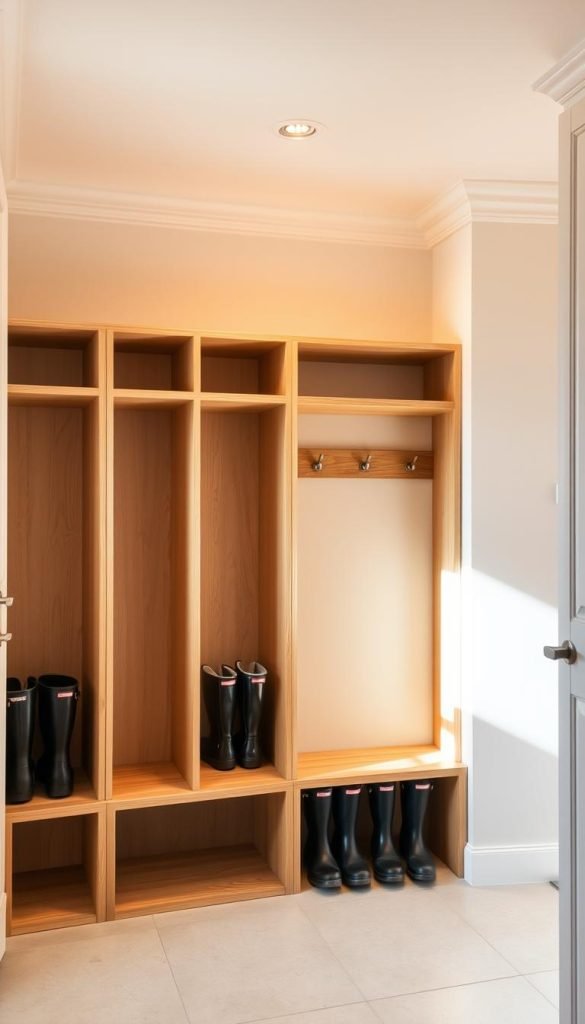
Tall bays and practical dimensions
I plan vertical bays at 14–18 inches high and 12–16 inches deep. This depth avoids crushed heels and cramped toes. Typical shoe heights range: 5-inch tennis, 8-inch work, 12-inch cowboy.
Trays and fit checks
Common tray sizes include 20 x 15 inches, 30 x 16 inches, and 34 x 16 inches. I verify bench depth and apron clearance so trays slide fully under the seat. That keeps walking paths clear.
- I mix low cubbies for daily shoes and one or two tall bays for seasonal items.
- Open-front or ventilated cubbies speed drying and reduce odor.
- Choose trays that hide completely beneath the bench instead of protruding.
| Tray size (inches) | Best fit | Notes |
|---|---|---|
| 20 x 15 | Single pair, shallow bench | Good for compact storage |
| 30 x 16 | Two pairs or boots | Needs deeper bench, check apron |
| 34 x 16 | Large boots or stacked items | Requires full under-seat clearance |
Clearances that make everyday use easy
I focus on simple rules that save time: open floor in front and plenty of headroom above the seat.
Keep at least inches of clear floor in front so you can sit, bend, and stand without squeezing. I use 20 inches as my minimum. That amount of open space speeds putting on shoes and keeps traffic flowing when people enter or exit.
Maintain about 48 inches from the seat top to the lower edge of any shelf or hooks. That gap prevents head bumps and lets short coats hang without landing on the seat.
In narrow rooms I trim bench depth slightly and protect floor space. Even a shallow seat keeps the area usable when two people move in opposite directions.
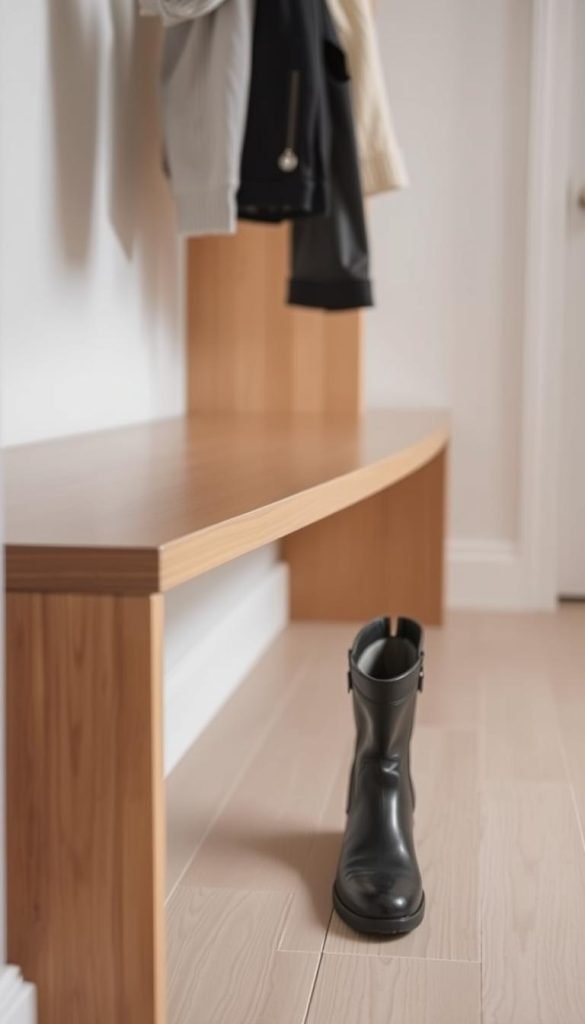
- I rely on painter’s tape to mock up clearances before I build or buy.
- These rules free up space and reduce daily friction in a busy mudroom.
- Confirm door swings and walk paths while you test the layout.
| Clearance | Recommendation | Why it helps |
|---|---|---|
| Front open space | 20 inches | Easy sitting, tying shoes, and traffic flow |
| Overhead gap | 48 inches | Prevents head contact with shelf or hooks |
| Shallow-room option | Reduce depth 1–2 inches | Preserves clear floor space in tight rooms |
Hooks, shelves, and hall-tree backs without bumping heads
I place hooks and shelves so coats hang cleanly without blocking heads when people sit. Good layout keeps daily routines quick. It also stops messy piles on seats.
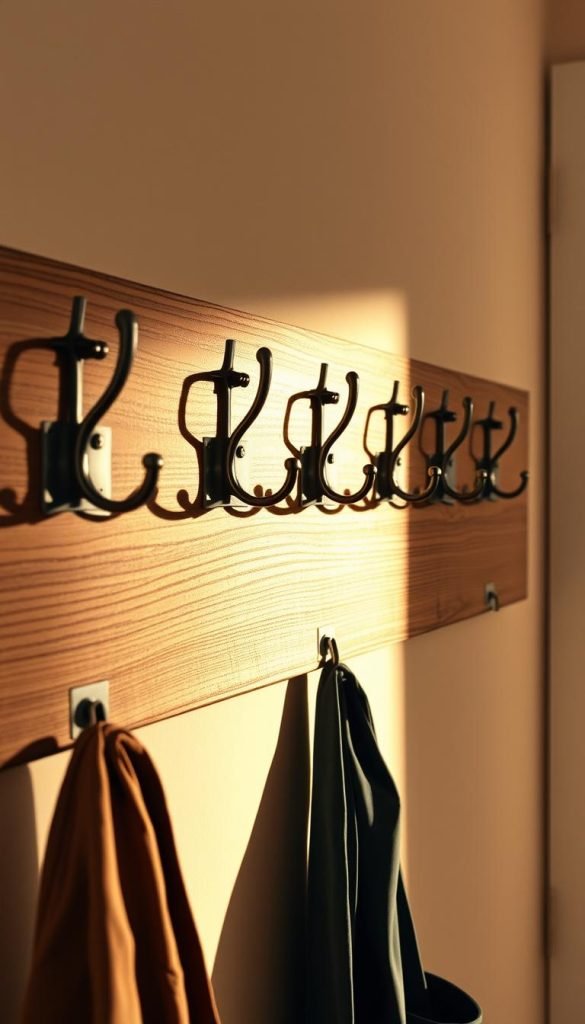
- I install adult hooks at 60–66 inches so most adults reach without stooping.
- I add lower hooks at 42–48 inches so kids can hang their own coats.
Spacing to avoid crowding
I space hooks 6–10 inches apart. This prevents overlapping coats and keeps the wall tidy.
Bench clearance and hall-tree backs
Aim for about 48 inches from the seat up to the underside of a shelf or hook. That gap stops heads from hitting when someone sits on the bench.
Hall-tree backs often run 5.5–6.5 feet tall. They combine hooks, a shelf, and a solid back to feel like built-in furniture.
Quick tip: place a few higher hooks toward the wall edge for long coats so hems don’t pile on the bench. This small change saves daily cleanup and keeps the space usable.
Choosing materials that stand up to wet shoes and grit
Pick materials that shrug off grit, water, and heavy daily use. I focus on components that stay useful and look good after seasons of traffic.
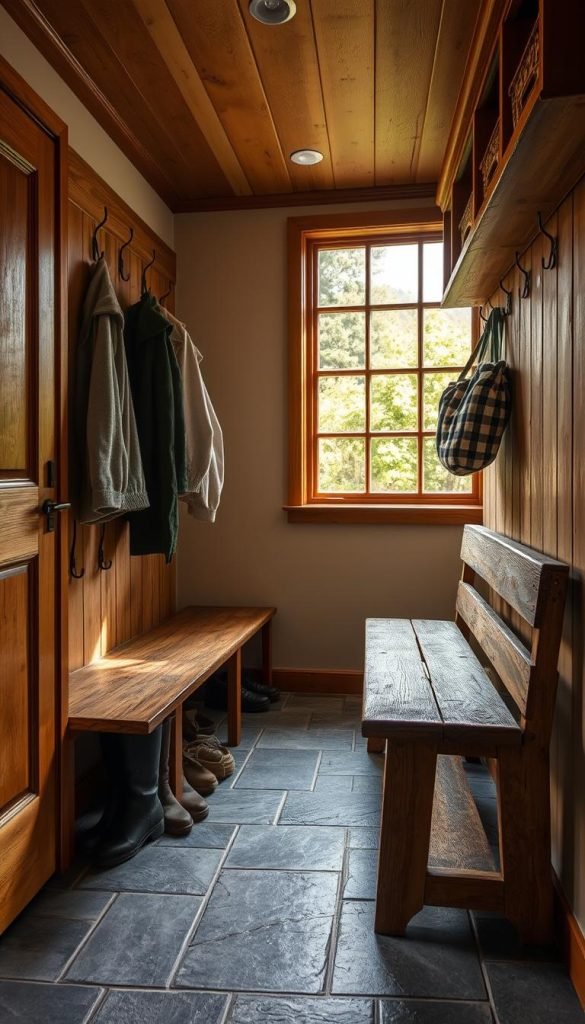
Start with structure: I pick solid hardwoods like oak or maple, or high-quality plywood with a hardwood veneer for strength. These options resist dents and give the unit a long life in an active entry.
Hardwoods, quality plywood, and powder-coated frames
For frame support, I use powder-coated steel that resists scratches and rust. That metal pairs well with wood tops and keeps furniture steady under heavy loads.
Moisture-resistant finishes and washable cushions
I finish surfaces with catalyzed varnish or a waterborne polyurethane so wet shoes and salt won’t cloud or peel the surface.
For seating, removable covers are a must. I choose washable, breathable fabrics so cushions dry fast and stay fresh.
- I protect cubbies with liners or trays to make cleanup simple after storms.
- I match materials to my home’s style so the bench looks intentional, not improvised.
Storage bench options: drawers, flip-tops, open cubbies, and floating benches
I pick storage layouts that match daily routines so gear is easy to grab and put away.
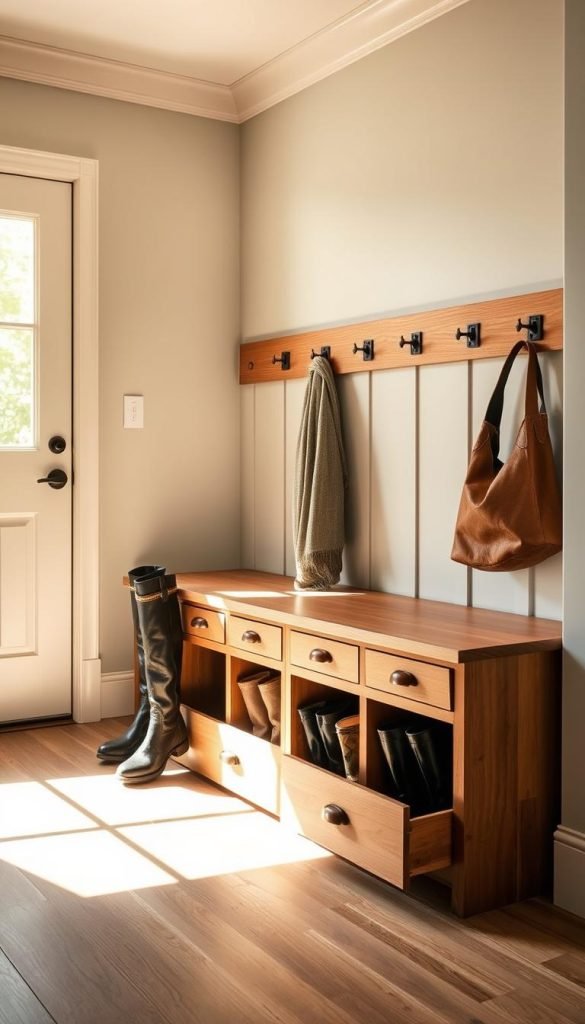
When I choose open cubbies for airflow and quick grab-and-go
I favor open cubbies when drying and speed matter. They keep small entries light and let footwear breathe.
Open cubbies help kids reach their things fast and cut down on wet-surface odors. This is my go-to for daily access and simple upkeep.
When I choose doors or drawers to hide visual clutter
Doors and drawers hide mess and pair well with a hall-tree style. Drawers tame small items and create cleaner sightlines.
Flip-top lids give deep, hidden storage but can reduce under-seat clearance for trays or taller pairs. A floating option saves floor space and works when circulation is tight.
- I compare open cubbies for fast access and airflow versus drawers when you want a neater look.
- Flip-top seats store bulkier items but may limit under-seat clearance.
- Floating choices free floor area and pair nicely with wall hooks.
- Match the design to your storage list so every item has a spot without cluttering the entry.
Small entry, big impact: layouts for tight mudrooms and closets
In tight entries I lean on clever layouts to gain real storage without crowding the path. A hall or coat closet can convert to a mini mudroom by removing the door and following my clearance rules. That change often frees up usable space and makes daily routines faster.
I keep at least 20 inches of clear floor in front of the seat so people can sit and tie shoes without bumping feet. I also maintain about 48 inches between the seat top and the underside of hooks or shelves to stop head strikes and let coats hang freely.
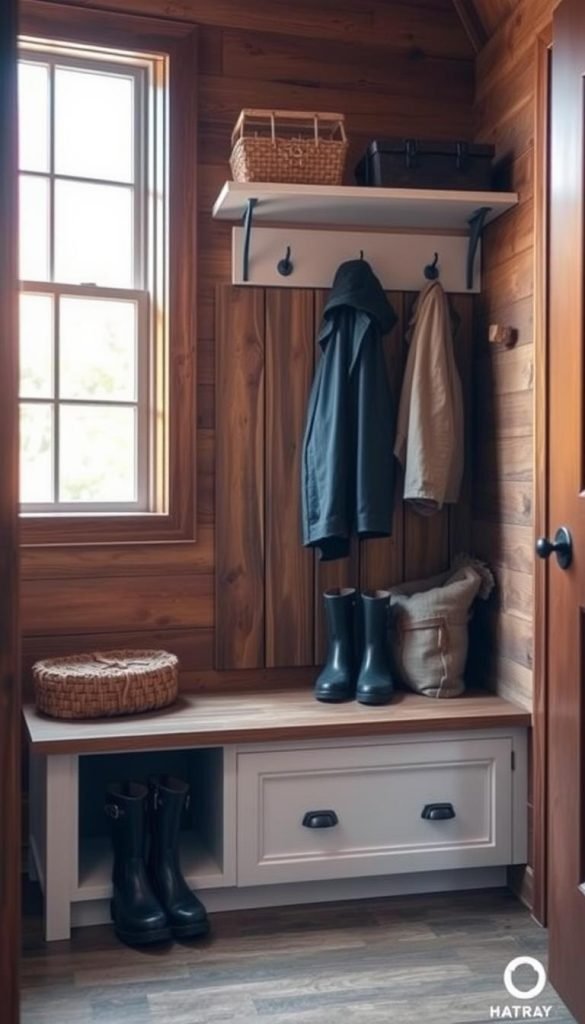
Turning a hall closet into a mini-mudroom
Remove or swing the door outward to keep the entry open. Fit a shallow bench against the back wall that still allows trays to slide under.
Floating benches to preserve floor space
Floating benches free the floor under the seat. That preserves sightlines and makes narrow room feel larger. They also keep vents and outlets accessible.
- I size the seat to fit trays and baskets while keeping the door frame clear.
- I place hooks about 48 inches above the seat and leave room for long coats at the side.
- I check outlets and vents before fastening any unit to the wall.
| Scenario | Recommended depth | Why it helps |
|---|---|---|
| Closet conversion | 12–15 inches | Saves walkway depth and fits slim trays |
| Narrow hall | 14–16 inches | Comfortable sit without blocking passage |
| Floating option | 10–14 inches | Makes room feel open and keeps outlets usable |
| Tray clearance check | Measure door frame vs tray | Ensures baskets slide fully under seat |
Right-sizing for your household: per-person planning
I size each seat area so every person has a clear, predictable spot to drop gear and sit. That simple rule keeps daily flow smooth and reduces arguments over where things belong.
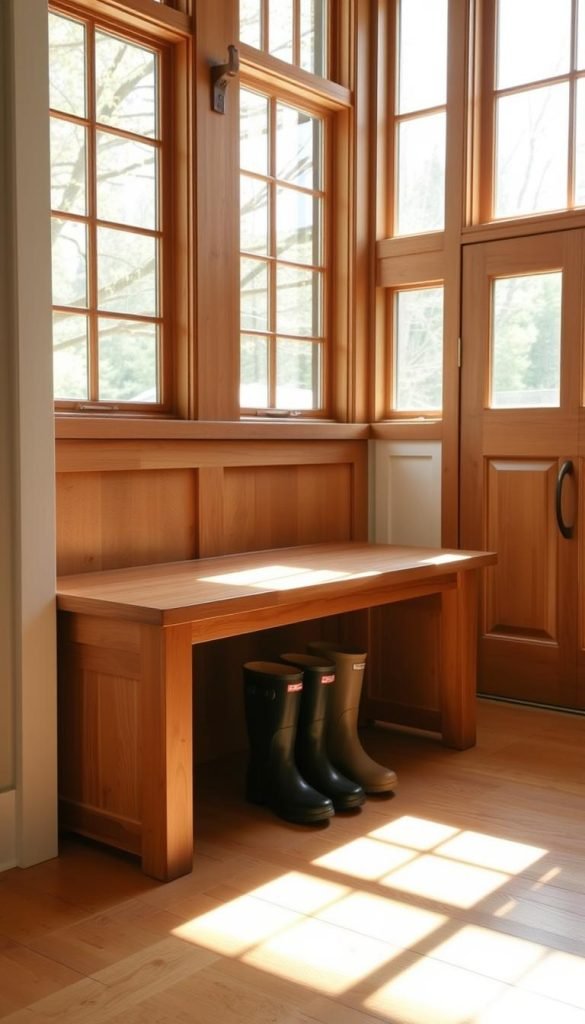
Allocating 18–24 inches of bench width per user
I plan roughly 18–24 inches of width per person. This gives space to sit and a small landing for shoes and bags.
For most families, one cubby column per person works well. Add at least one taller bay for shared bulky items like work or riding gear.
Labeling cubbies and rotating seasonal gear
I use labeled bins and washable liners so small items don’t vanish. Labels help kids learn responsibility and speed up mornings.
Seasonal rotation keeps daily clutter low: move off-season coats and boots up high and keep only daily-use items at bench level.
- Rule of thumb: plan consistent personal zones to avoid chaos.
- Use washable liners and labeled bins for gloves and hats.
- Reserve one tall bay for shared bulky items to save floor space.
Step-by-step: how I finalize the perfect height for tall boots
I start by measuring the tallest pair and the tray you plan to use so the final seat clears boots without guesswork.
Measure boots, then set rise and under-seat clearance
I measure common shoe and boot heights: about 5 inches for tennis shoes, 8 inches for work boots, and 12 inches for cowboy boots. That tells me the minimum under-seat room I need.
From that number I add clearance for trays and liners, then add the apron height. That gives practical dimensions to aim for.
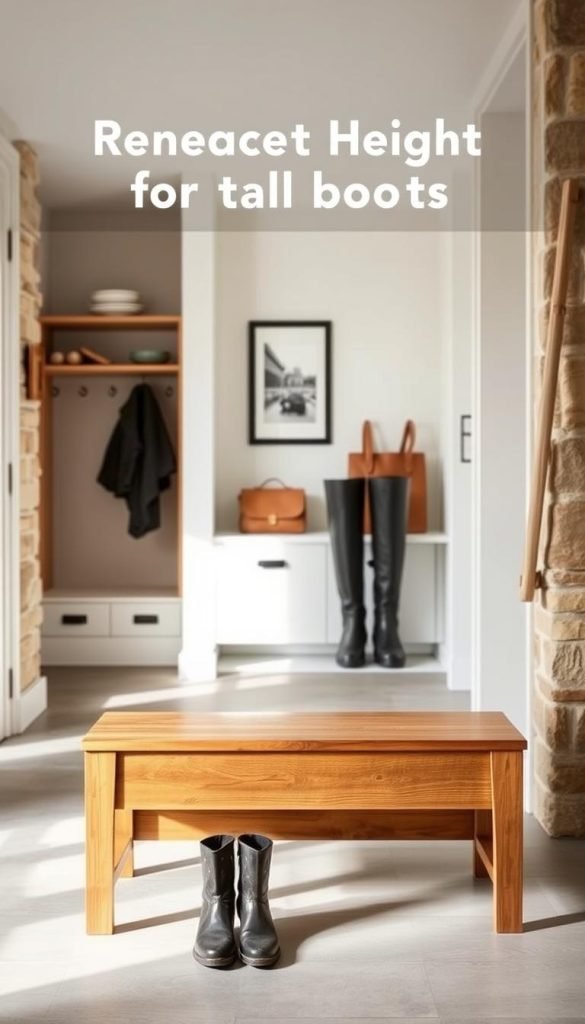
Test sitting at 18, 19, and 20 inches before you build or buy
I test by stacking cushions on a chair at 18, 19, and 20 inches. I sit, tie a shoe, and stand to check knee angle and ease of use.
That quick check reveals which seat feels natural and still leaves room for trays or tall pairs under the seat.
Balance cubby height with overall seat comfort
I keep seat depth in the 14–17 inch range so sitting stays stable and aisles remain clear. Then I size tall bays at about 14–18 inches high based on measured boot heights.
- I begin by measuring the tallest boot and preferred tray, then back into the seat rise that preserves clearance.
- I test ergonomics at 18, 19, and 20 inches to pick the best value.
- I adjust cubby and apron so storage fits without making sitting awkward.
- I finish with a quick dimensions checklist you can hand to a carpenter or use while shopping.
| Step | Action | Target inches |
|---|---|---|
| Measure footwear | Record tallest shoe/boot and tray depth | 5, 8, 12 |
| Mock test | Sit at different rises and try tying shoes | 18, 19, 20 |
| Set seat dimensions | Choose depth and under-seat clearance | Depth 14–17 |
| Finalize layout | Adjust cubby heights and apron | Tall bays 14–18 |
Finishing touches that keep mudrooms clean and odor-free
Finish choices matter more than you expect when wet shoes and grit arrive every season. I focus on simple, practical details that cut odor and speed cleaning so the entry stays ready for daily use.
I recommend ventilated cubbies or open backs so wet footwear dries faster and odors don’t linger in the room. A ventilated design moves air through each small bin and helps shoes dry between uses.
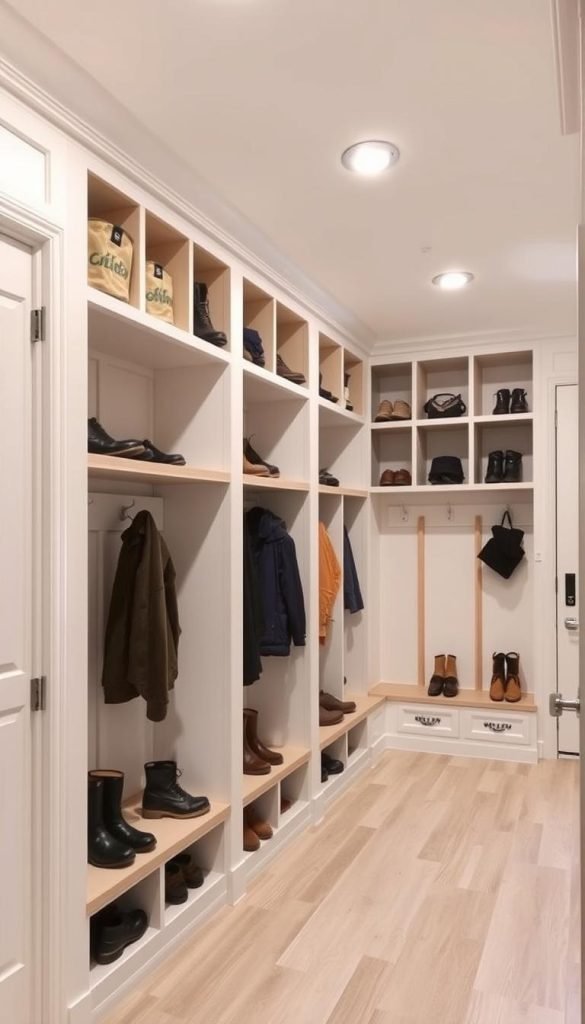
Ventilated cubbies, liners, and washable runners
Use washable liners and a runner to trap grit at the bench and protect floors. I choose liners that lift out and go in the washer after storms.
I size removable trays to fit under each seat bay so dirt stays contained and cleaning is fast.
Lighting and color choices that make the space feel intentional
I add layered lighting—ambient plus task—so mornings feel bright and safe. A focused light over the shelf and bench helps when you search for keys or lace a shoe.
Coordinate finishes across bench, hooks, and shelf so the mudroom looks designed, not improvised. I keep one small spot for keys and mail to stop essentials from roaming the space.
- I recommend ventilated cubbies or open backs for faster drying and less odor.
- Washable liners and a runner capture grit and make cleanup simple.
- Layered lights plus matched finishes tie the room together and improve function.
Conclusion
My closing point: simple measurements and small design choices make daily use far easier.
I recommend a seat near 18 inches for comfort, and 19–20 inches when extra under-seat storage matters. Aim for seat depth around 14–17 inches and bench widths of 36–48 inches for two people.
Keep at least 20 inches of open floor in front and about 48 inches from seat top to shelf or hooks to avoid bumps. Measure boots and trays first so final size works in real life, not in guesses.
Choose durable materials, plan cubbies or trays, and build a cohesive design that fits your home. For more on selecting dimensions, see my guide on choosing the perfect mudroom bench height. A well-planned bench makes coming and going feel effortless.