What’s the best way to display succulents on a sunny windowsill?
I start every project by reading my window and matching plants to the light it offers. A quick shadow check tells me if sun is strong or gentle, and that guides my choice of species and placement.
I favor real drainage and fast soil — a gritty mix and a cachepot system make watering simple and keep mess off my sill. I water deeply, let excess drain, then return pots to the window.
Styling matters: I aim for clean lines, repeated textures, and a clear focal point so the arrangement looks intentional and calm. Gravel top-dress keeps things tidy and cuts gnat problems.
I also pay attention to microclimate. I rotate pots weekly, move tender pieces from cold glass at night, and size containers to fit the footprint so nothing feels crowded.
Key Takeaways
- Match species to window direction and brightness for lasting health.
- Use fast-draining mix and real drainage; water thoroughly, then drain.
- Use cachepots for easy watering and neat windowsills.
- Top-dress with gravel to tidy the look and reduce pests.
- Rotate and adjust placement for leaning, temperature swings, and growth.
Read the window: light, direction, and microclimates before I style
I read every sill like a tiny climate map before placing any pots. This quick check saves time and keeps my arrangements healthy across seasons.
South and west exposures
Bright sun on these sides suits echeveria, sedum, many cacti, and other sun-loving rosettes. I set tough species closest to the glass and use terracotta or risers to boost air flow.
East-facing options
Morning light is gentler and ideal for haworthia and gasteria. They keep compact form without burning and do well a few inches back from hot glass.
Microclimates, drafts, and seasonal swings
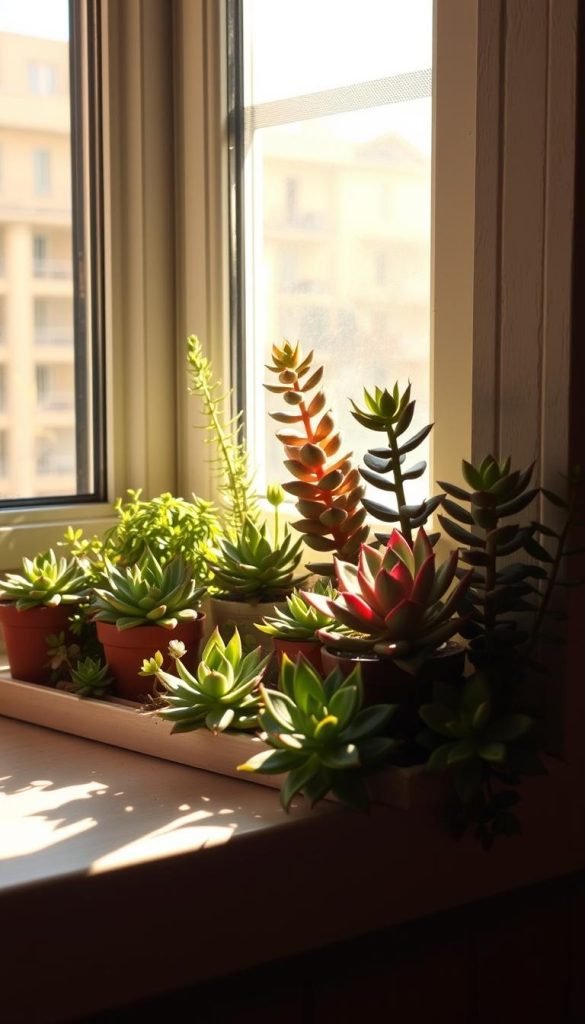
Heater vents, fireplaces, and drafty sills create hot or cold pockets. I use cork mats or wooden risers to buffer roots and pull tender pots away from cold glass in winter.
- Shadow check: crisp shadow = bright; fuzzy = medium.
- Rotate weekly to prevent leaning toward light.
- Plan placement in zones: hottest near glass, milder behind.
| Exposure | Typical plants | Placement tip |
|---|---|---|
| South/West | echeveria, sedum, cactus | Front row, risers for drainage |
| East | haworthia, gasteria | Set back a few inches from glass |
| North | slow-growers or add grow light | Use supplemental light; go slow |
Plants, pots, and soil that thrive in bright sun
Good displays start with plants that tolerate heat, containers that breathe, and a fast mix. I choose species that hold shape in strong light so I can enjoy color and texture without constant fuss.
Sunny picks that stay compact
Aloes, agaves, echeverias, crassulas, and columnar cacti are my go-tos for bright sills. These succulents take intense light and keep tidy crowns, which makes grouping simpler.
Containers and drainage
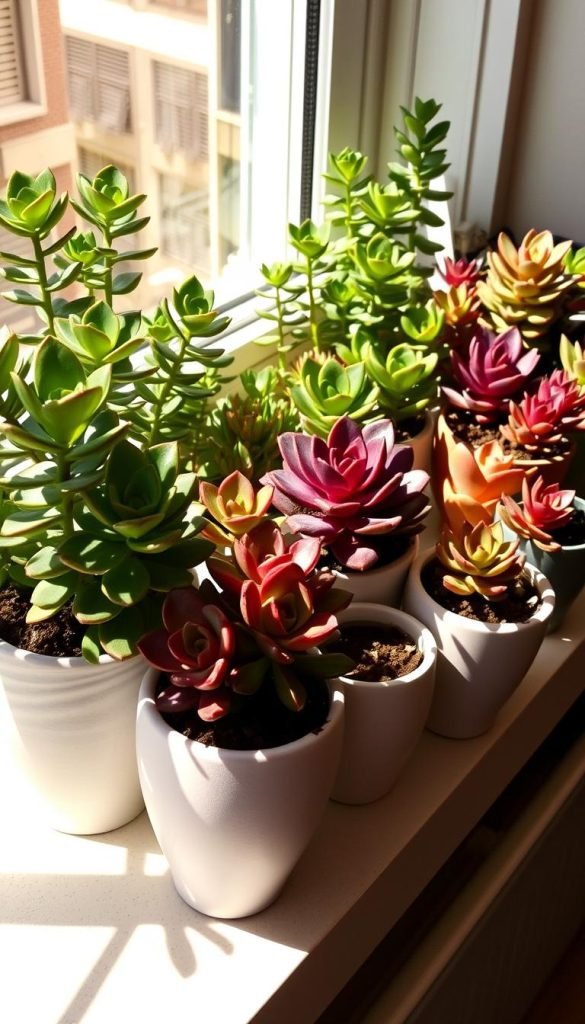
I insist on real drainage. Terracotta breathes, ceramic polishes a display, and a cachepot trick lets me lift the nursery pot, water, drain, then return it cleanly.
Fast-draining soil recipe
I use 2 parts cactus mix plus 1 part pumice or perlite. If the blend compacts, I fold in chunky orchid bark. I add a little coarse gravel under the soil and mesh over the holes to keep grit in place.
Proportion and finish: I follow a 1/3 rule for height, choose shallow bowls for rosettes, and tall cylinders for aloes. A thin top-dress of pebbles keeps the look tidy and cuts fungus gnats.
| Container | Benefit | Use |
|---|---|---|
| Terracotta | Breathes, helps avoid overwatering | Rosettes, medium-size pots |
| Ceramic | Polished color and finish | Showpiece pots, cachepot setups |
| Tall cylinder | Depth for roots and stability | Aloes, columnar cacti |
| Shallow bowl | Showcases rosettes, garden look | Echeveria groups |
- I water at the sink, let excess drain, then return the pot to its tray.
- Mix similar water needs together and leave breathing room between crowns.
- For trailing ideas, see my trailing plants care guide.
What’s the best way to display succulents on a sunny windowsill?
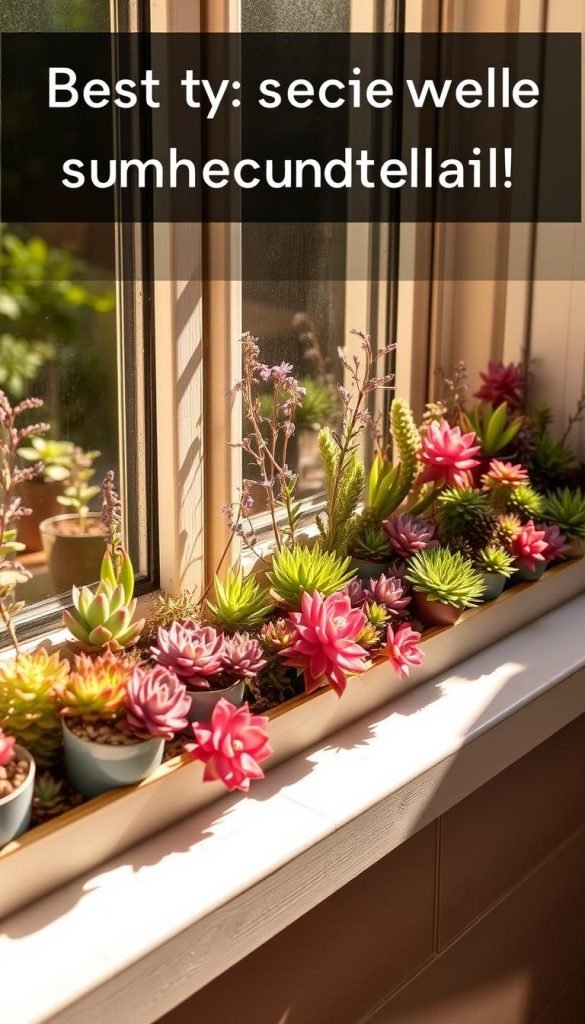
A narrow sill calls for a linear plan: three tight crowns in one shallow trough. This trio reads lush and stays easy to lift when I need to water or move the lineup.
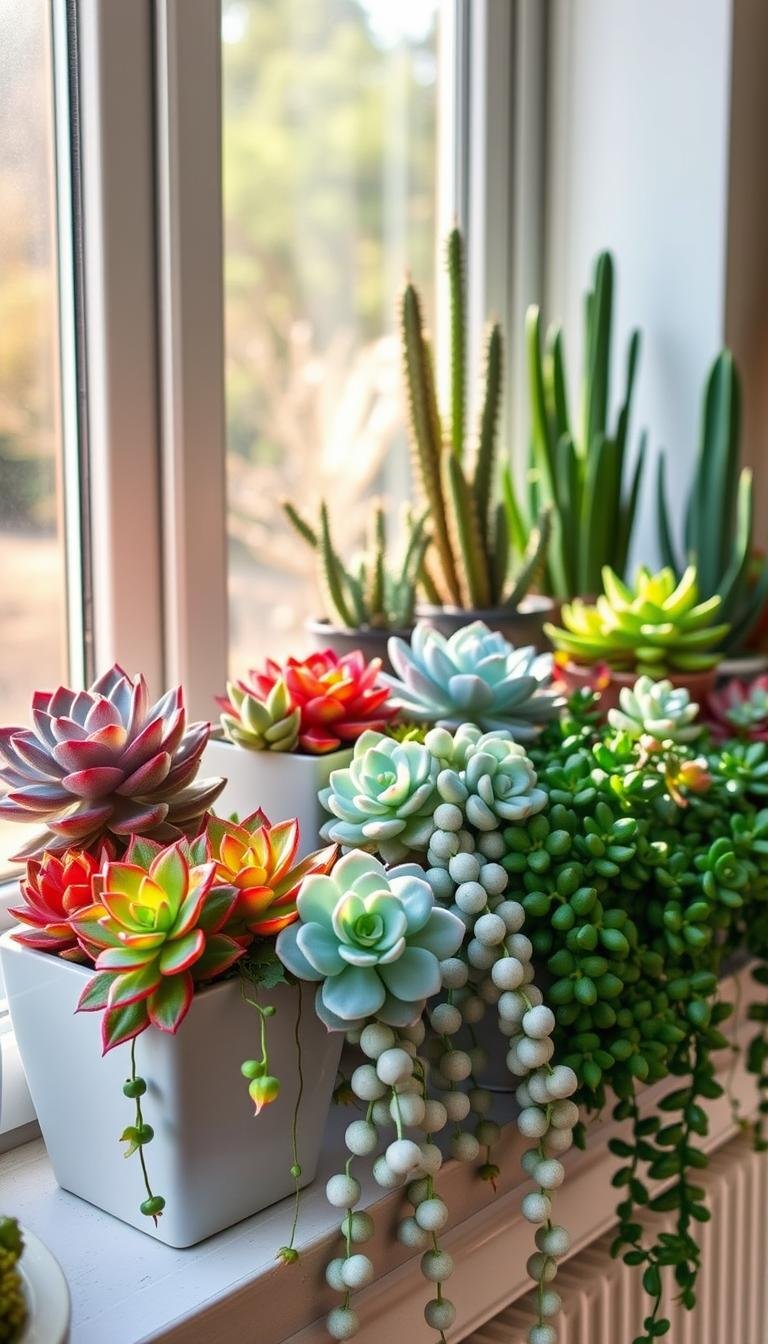
For a lively mini arrangement, I use a “thriller-filler-spiller” formula: a sculptural echeveria as the thriller, low sedum as filler, and a string-of-pearls spiller to soften the edge.
Space-saving hacks help when room is tight. I mount suction-cup planters rated for weight on the glass and attach magnetic pots to the frame. Those layers add a vertical garden without crowding the sill.
I keep crowns set back a couple inches from hot panes to prevent scorch. Weekly, I rotate each pot a quarter-turn for even growth and tidy silhouettes.
Small styling swaps refresh the look. I change top-dress colors seasonally and group matching containers or place pots on a narrow tray for quick lifts to the sink.
| Layout | Use | Care tip |
|---|---|---|
| Slim trough trio | Linear, mobile group | Lift whole tray to water; return when drained |
| Thriller-filler-spiller | Shallow bowl display | Pick one bold rosette, low fillers, trailing spiller |
| Suction/magnetic pots | Vertical layer on glass/frame | Confirm weight rating; secure mounts |
| Fitted drip tray | Protect sill surface | Match footprint and empty after watering |
Care routine on the sill: water, rotate, and adjust with the seasons
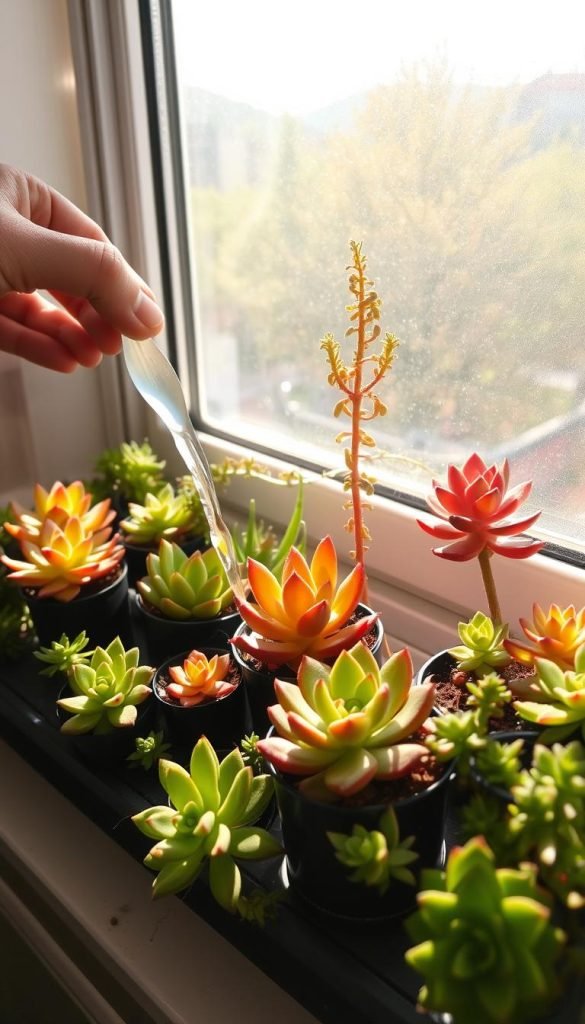
A good routine on my sill begins with evidence, not the calendar. I check the mix before I lift a watering can and let the soil tell me when it needs attention.
Water on proof, not a set date
I poke a skewer into the soil and only water when it’s dry about 1–2 inches down. That protects roots and keeps the mix airy.
In spring and summer I may water every 7–10 days. In winter those intervals stretch to 3–4 weeks as uptake slows.
Rotate, dust, and feed during growth
I rotate pots 90 degrees once a week so plants grow evenly. I also dust leaves with a soft brush so they absorb light well.
Fertilizer is half strength about once a month during active months to support steady growth.
Seasonal tweaks: cold nights and hot afternoons
I pull tender varieties away from cold glass at night and reduce water so roots don’t sit chilled. In early summer I increase exposure over several days to avoid sun scorch.
- Watch moisture: wipe condensation and empty trays so the soil stays dry between waters.
- Refresh top-dress seasonally and adjust at the first sign of wrinkling or mushy leaves.
Conclusion
Smart placement and simple habits keep my little sill bright and resilient year‑round.
I match succulents to light, use containers with holes, and build in true drainage with a gritty mix. That keeps roots airy and helps soil dry between waters.
I rotate pots weekly, dust leaves, and top‑dress with gravel for neat colors and fewer gnats. In winter I pull tender pieces off cold glass and cut back on water.
Small design moves—slim troughs, a couple magnetic pots, or a liftable tray—turn limited space into a layered garden that stays easy to care for.