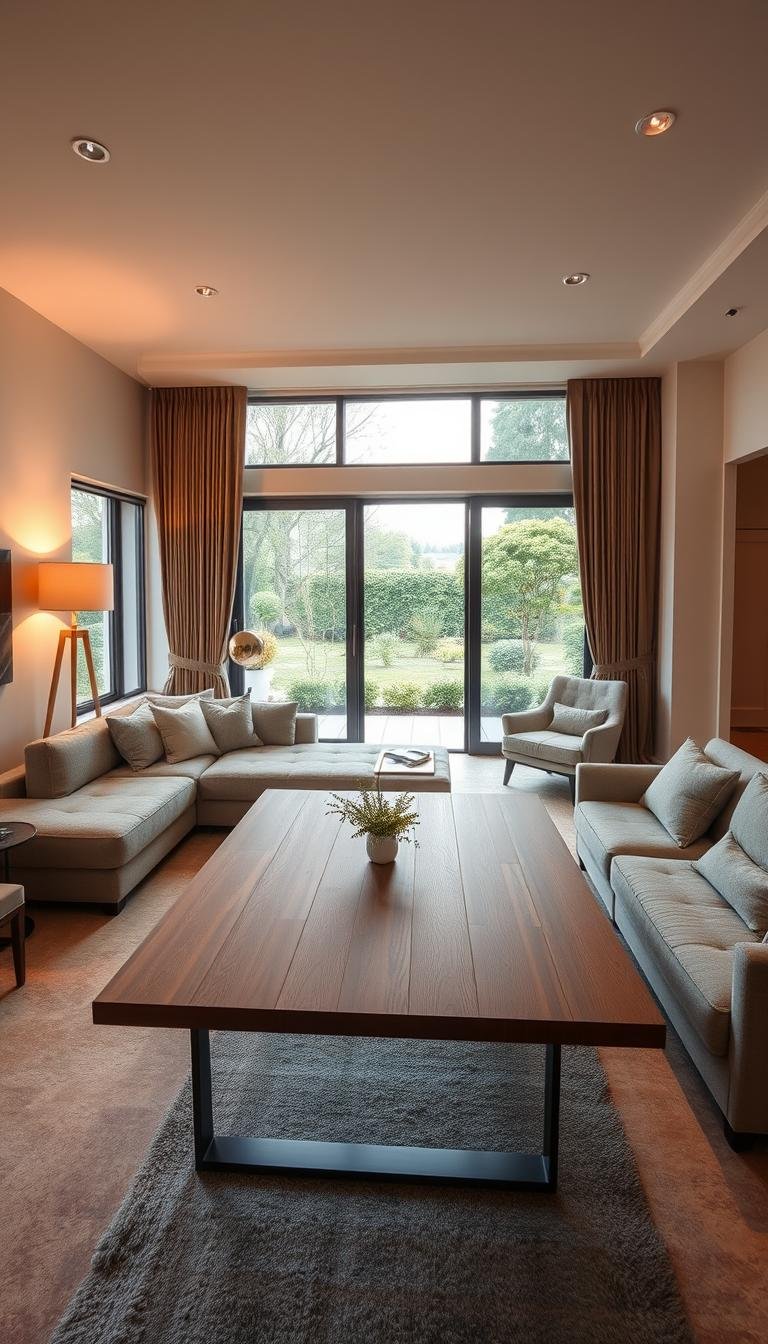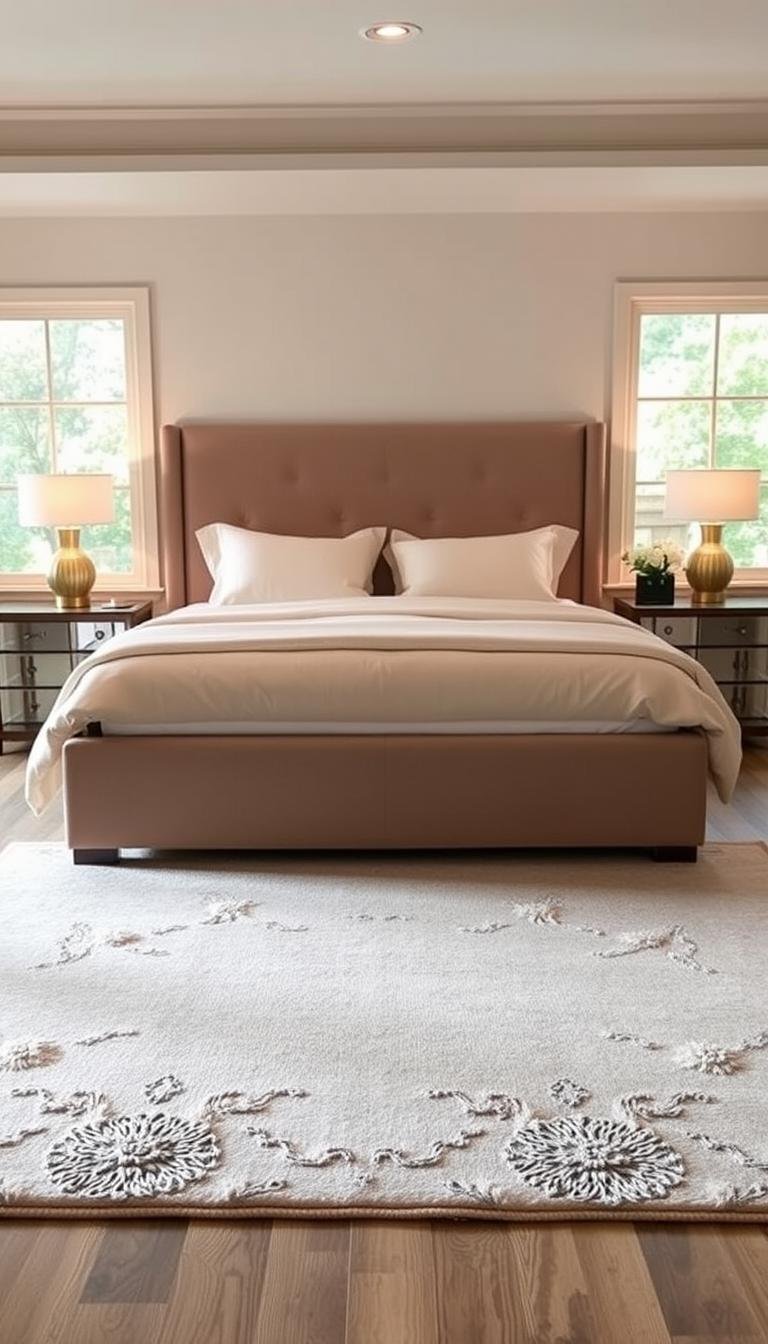
What’s the ideal rug size for a king bed with nightstands?
I wrote this guide to give you one clear answer up front, then the why behind it. I recommend starting with a 9-by-12-foot option for most king setups because it balances scale and comfort.
My rule of thumb is simple: let the rug extend about 18 to 24 inches beyond each side of the bed and leave 10 to 20 inches of bare floor between the rug and walls. This keeps the room airy and lets doors swing freely.
I explain how standard and California measurements differ — standard king is 76″ x 80″ and California king is 72″ x 84″ — so you won’t be surprised by fit. Decide early if nightstands and a bench will sit fully on the rug or fully off it to avoid a lopsided look.
Key Takeaways
- Start with 9×12 for most king bed layouts.
- Allow 18–24 inches beyond bed sides for balance.
- Keep 10–20 inches of bare floor to frame the space.
- Choose all-on or all-off placement for nightstands and bench.
- Use painter’s tape to test footprint before buying.
- Scale up to 10×14 or down to runners based on room layout.
My quick answer and rule-of-thumb for the right rug size under a king bed
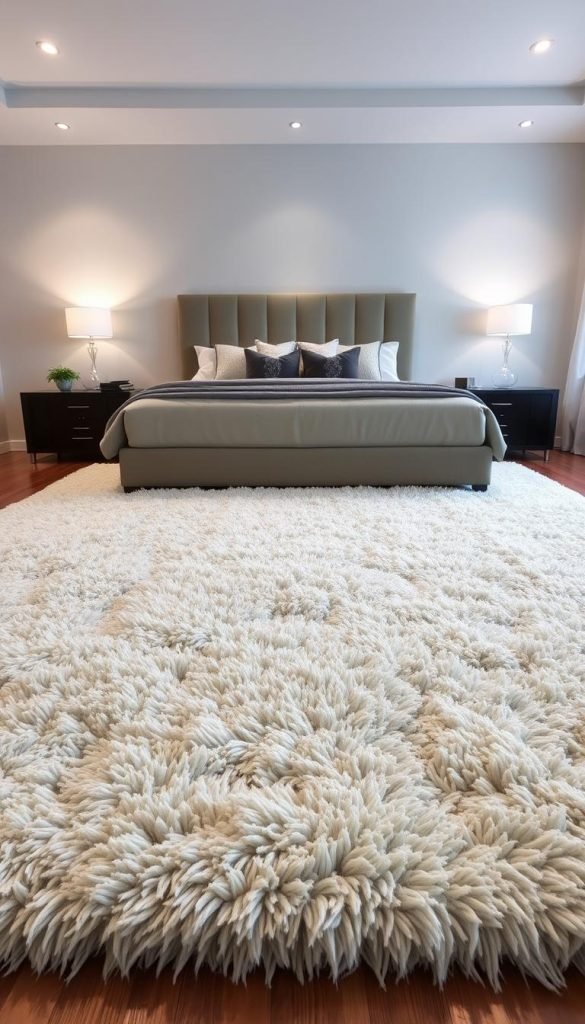
My go-to pick is a 9×12 rug because it balances coverage and visual scale under a large bed. I recommend it for most layouts since it usually holds both the bed and nightstands and keeps your feet on soft flooring.
Clearances I never skip: plan for 18–24 inches of rug beyond each side so you step onto fabric, not cold floor. Also leave 10–20 inches of bare floor from rug edge to walls to avoid a trapped look.
Smaller rooms may do better with an 8×10 placed under the lower two-thirds of the mattress, keeping nightstands off the rug. In very large suites, a 10×14 includes a bench at the foot and boosts a luxurious feel.
- Default: 9×12 for balance and coverage.
- Tight room: 8×10 under bottom two-thirds.
- Large room: 10×14 to fit bed, nightstands, and bench.
- Narrow layouts: use runners on both sides for comfort.
| Room type | Common rug choice | What it covers | Why I pick it |
|---|---|---|---|
| Small | 5×8 / 6×9 | Foot area or partial | Saves space, adds texture |
| Medium | 8×10 | Lower two-thirds of bed | Comfort without forcing nightstands on |
| Large | 9×12 or 10×14 | Bed, nightstands, bench | Balanced, anchored layout |
How I measure the bed, frame, and room so the rug actually fits
Accurate mattress and frame measurements are the fastest way to know which floor covering will actually fit and feel right.
Know your bed and frame
I confirm whether you own a standard king-size bed (76 by 80 inches) or a California king (72 by 84). These small differences change the final dimensions I choose.
Tip: chunky platforms, thick headboards, and wide footboards add visual width. I factor that extra bulk so the piece does not look swallowed or too small.

Map the layout and clearances
I tape candidate outlines—8×10, 9×12, 10×14—on the floor to check space around furniture and walls. I keep 10–20 inches of bare floor between the edge and wall to frame the area.
- I check door swing and thresholds so doors clear the pile.
- I leave a 2–3 inch gap from dressers or mirrors so things don’t look jammed.
- I measure walking lanes on both sides to ensure soft landings when you step out of bed.
What’s the ideal rug size for a king bed with nightstands?
I size rugs to the room so the arrangement looks balanced and your feet land on fabric, not hardwood.
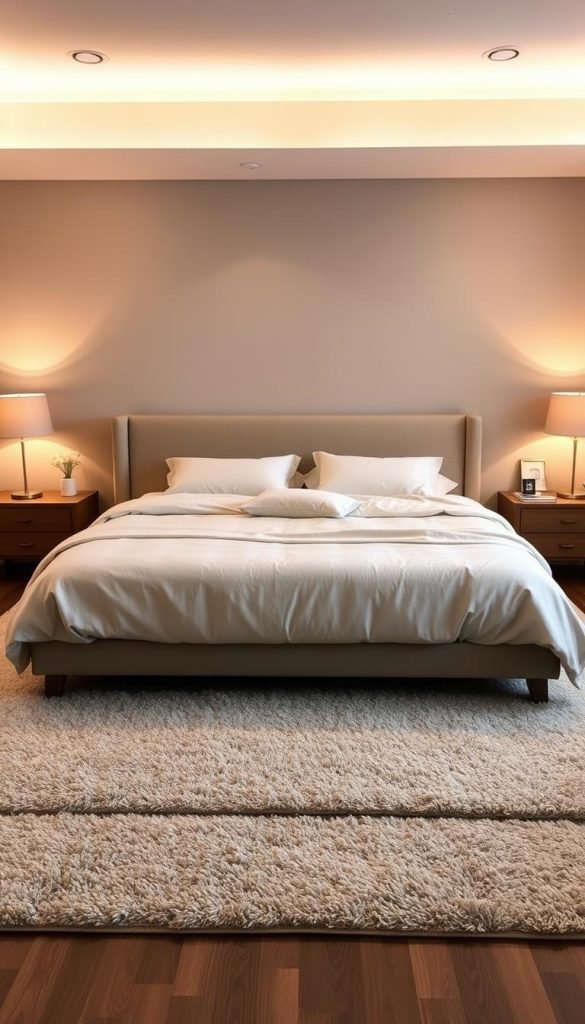
8×10 area rug: I use this when I want coverage under the bottom two-thirds of the mattress in medium rooms. Nightstands stay off the rug, which saves cost and keeps circulation open.
9×12 area rug: This is my most frequent pick. It usually holds the bed and both nightstands and often allows space for a bench at the foot bed. The result reads intentional and upscale.
10×14 rug: In larger rooms I step up to this size so the bed, nightstands, and bench sit comfortably with visible rug around the sides. It prevents the floor from looking empty.
12×15 for California king or expansive layouts: For wider king-size bed frames and extra framing, this keeps proportions right and preserves 18–24 inches past the bed sides. I also leave 10–20 inches from rug edge to walls.
- I keep nightstands entirely on or fully off to avoid awkward floating front legs.
- I tape outlines on the floor to test a bench and walking lanes before buying.
- Remember: mattress plus frame can push an 8×10 to its limits, which is why 9×12 wins most of the time.
Placement strategies I rely on for comfort and a cohesive look
My goal is to place furniture so every step feels soft and every sightline reads balanced. I choose one of three reliable approaches depending on room width and budget.
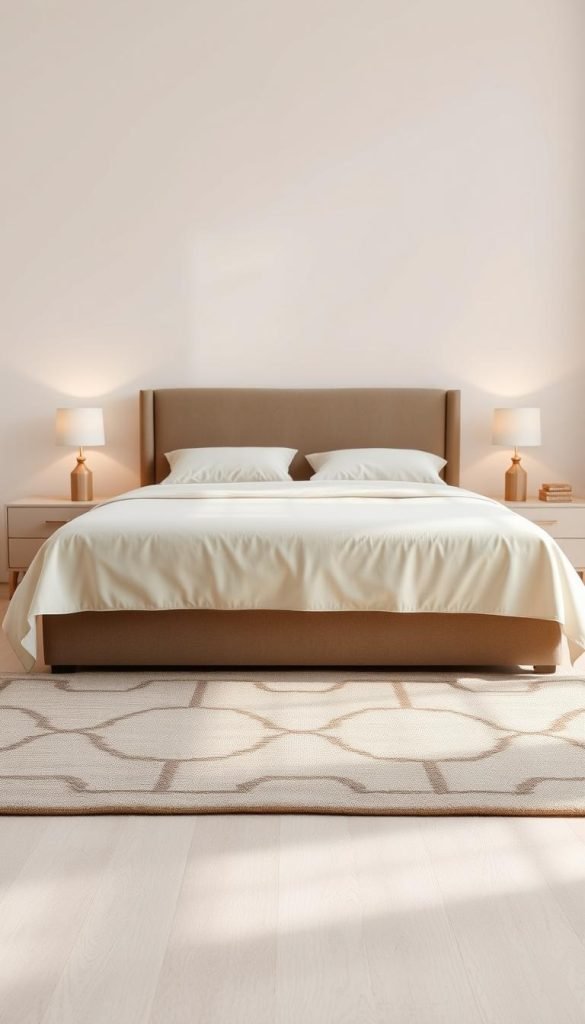
All furniture on the rug: grand and cohesive
When space allows, I set the bed, nightstands, and bench fully on a 9×12 or 10×14. This creates a unified look and a luxurious feel. It also keeps legs stable and sightlines clean.
Bottom two-thirds under the bed: versatile and cost-smart
I often place an 8×10 under the lower two-thirds so the headboard and nightstands sit off the rug. This saves money and still gives soft landings at the sides and foot.
Foot-of-bed rugs and side runners for tight layouts
In narrow rooms I use a 5×8 or two long runners to add comfort and color without crowding doors. Runners work best when spaced slightly from the frame to define crisp edges.
- I keep walkways clear so movement feels natural and safe.
- I match pile to function: low for doors, plus a rug pad for grip and comfort.
- I decide early whether nightstands and bench are all on or all off to avoid uneven legs.
- When I want to test placement, I tape outlines on the floor; it saves time and returns.
| Strategy | Common dimensions | What it holds | Best when |
|---|---|---|---|
| All on | 9×12, 10×14 | Bed, nightstands, bench | Room is wide enough for full framing |
| Bottom two-thirds | 8×10 | Lower mattress area, sides soft | Medium rooms, budget-aware plans |
| Foot & runners | 5×8 / 6×9 / runners | Foot area or side comfort | Narrow or layered style needs |
For more layout tests and printable templates I often reference a helpful guide on real-world options: try a floor outline test.
Special cases and pro tips for tricky rooms and lifestyles
Tricky layouts need small, practical changes so the room still feels open and intentional. I rely on a few consistent rules when space, furniture, or floor type complicate placement.
Small rooms and one-side wall: keep 10–20 inches of bare floor at the perimeter and use painter’s tape to preview any candidate area. If one side of the bed sits against a wall, I tuck a 5-by-8 rug a couple of inches under the open side to add comfort without crowding.
Chunky frames and platform beds: a beefy bed frame can visually consume rug area. I either go slightly larger or shift to runners so furniture and sightlines stay balanced.
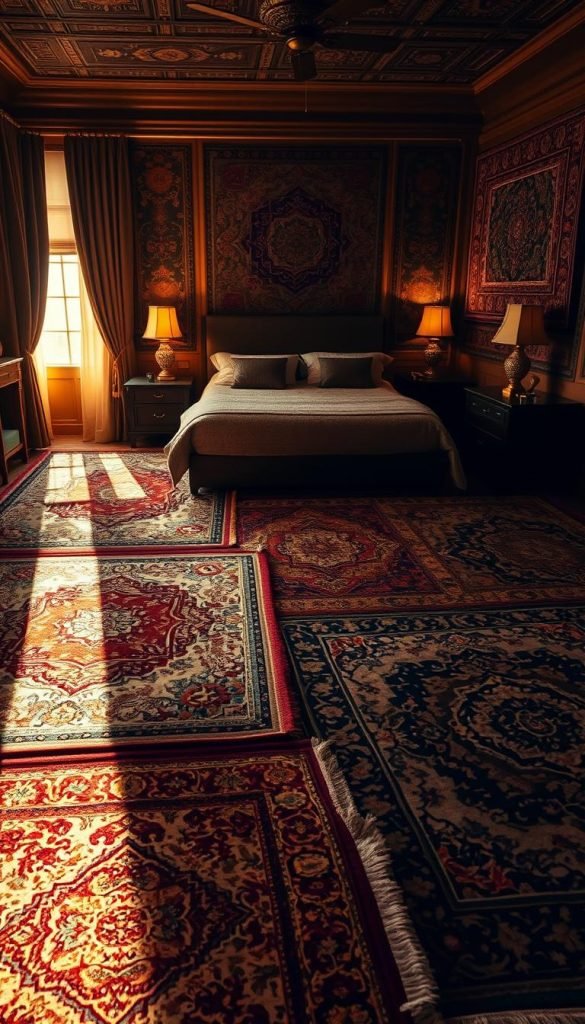
Carpet, layering, and maintenance
On carpet I layer a 5-by-8 or 6-by-9 at the foot, or place two runners along the sides to cushion feet and add color. Low-pile, machine-washable pieces cut cleaning time and handle pet hair better.
- I keep a 2–3 inch gap between rugs and furniture along walls to avoid visual clutter.
- I watch pile height at doorways so movement stays snag-free.
- Replace rugs that show matting, frayed edges, or stains that won’t lift.
Quick tip: taped outlines save you from costly mistakes. Test one layout, walk it, and adjust until the area and flow feel right.
Conclusion
Start with 9×12, then adjust up or down based on room layout and furniture. For most king bed setups that baseline usually holds both the frame and night tables while keeping visual balance.
Aim for clearances of 18–24 inches past the sides and 10–20 inches from walls. In medium rooms an 8×10 can cover the bottom two-thirds. In large suites move to 10×14 or 12×15 to include a bench and keep circulation open.
I always measure mattress, bed frame, and door swings, then test candidate footprints with painter’s tape. Add a low-pile option and a rug pad for comfort and easy care. If the taped layout looks right, the dimensions will work in real life.