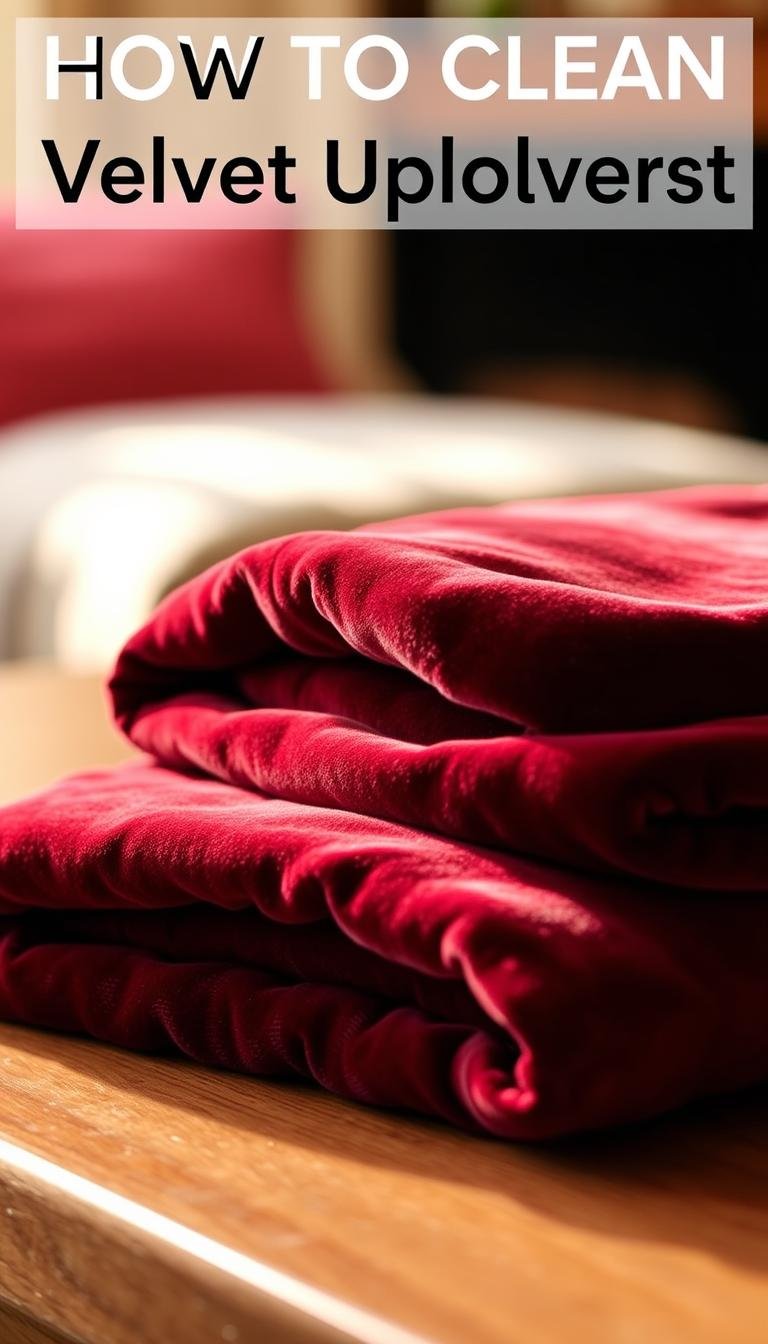
How do I clean velvet upholstery without ruining the nap?
I keep my velvet in great shape by using calm, low-impact steps. Velvet is a woven fabric with a cut pile, so pressure, heat, and rough rubbing can flatten fibers and dull the sheen.
I start with a soft brush vacuum to lift dust and loose grit. For spills I blot right away with an absorbent cloth and add a drop of mild detergent only for plant or animal fibers.
Polyester, nylon, and wool may hold oil stains, so I use a home dry-clean solvent sparingly and test a hidden spot first to protect color and texture.
Once the piece is dry, I brush gently in the direction of the pile. I also keep my sofa and other furniture out of direct sun to avoid fading.
Patience is key: air drying and working with the nap preserves that rich, plush look. For deep stains or color issues, I call a pro who uses low‑moisture or water‑free methods.
Key Takeaways
- Use a soft brush vacuum to lift dust without crushing fibers.
- Blot spills immediately and test spot treatments on a hidden area.
- Use mild detergent only for natural fibers; use dry solvents carefully for synthetics.
- Brush the pile back into place after drying to restore texture.
- Protect velvet furniture from direct sunlight to prevent fading.
- Call professionals for deep stains, odors, or overall color uniformity.
Quick-start answer: the safest way to clean velvet upholstery without crushing the pile
I begin by gliding a soft brush across fabric to lift dust without flattening fibers. I move the tool in the direction of the nap so the pile stays upright and the surface keeps its sheen.
For a fresh spot, I blot with a clean, dry cloth—never rub. That stops the spill from moving deeper.

When a mild treatment is needed, I test a hidden area first. Then I use light soap suds or a distilled water and white vinegar mix. I keep the fabric barely damp so moisture won’t wick into the backing.
- Vacuum gently with a soft brush attachment along the nap.
- Blot spills with a soft cloth; avoid pressure and high suction.
- Air dry fully; skip heat sources.
- Brush the pile back in the same direction once dry.
| Step | Why it helps | Common mistake to avoid |
|---|---|---|
| Gentle vacuuming | Removes grit that can abrade fibers | Using high suction or rough bristles |
| Blotting a spot | Prevents stain spread and fiber saturation | Rubbing or scrubbing the area |
| Mild spot solution | Treats many stains with low risk to color | Soaking fabric or skipping a patch test |
| Air dry & brush | Restores loft and prevents distortion | Applying heat or heavy pressure |
This simple way handles routine dust, light spills, and quick spots while protecting the pile. When in doubt, test first or call a pro for deep issues.
Step-by-step: clean velvet upholstery the right way
Begin by removing loose dust with a gentle brush on low suction so fibers stay upright. I run a vacuum fitted with a soft brush attachment, moving in the direction of the pile to avoid scuffing or flattening.
For fresh spills, I press a clean, dry cloth straight down to blot. That stops the liquid from spreading and keeps the backing from wicking moisture deeper.
When spot cleaning is needed, I whip mild soap into suds and apply only the foam. As an alternative, I use equal parts distilled water and white vinegar after testing a hidden patch first.
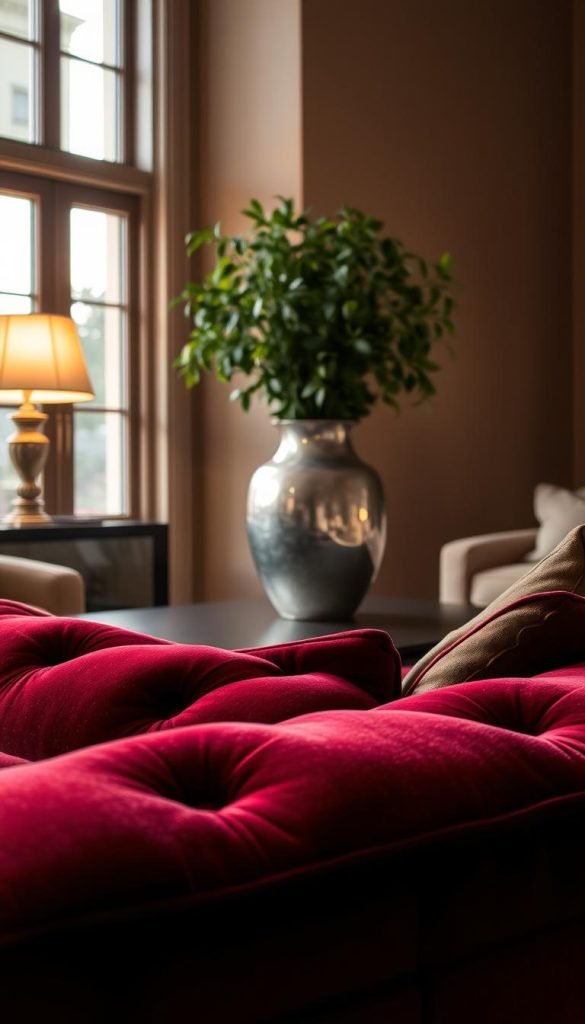
I work from the stain’s edge toward its center and keep the area barely damp. For odors, a light sprinkle of baking soda sits for a short time, then I vacuum gently.
- Loosen dust weekly with a vacuum and a soft brush attachment.
- Test any machine or tool on an inconspicuous area and use low suction.
- Air dry fully; never use heat or sit on damp fabric.
- After drying, brush fibers in one direction to restore texture.
| Step | Why it helps | Quick tip |
|---|---|---|
| Gentle vacuuming | Removes grit that abrades fibers | Use low suction and a soft brush attachment |
| Immediate blotting | Prevents stain spread | Press with a clean, dry cloth; do not rub |
| Light spot cleaning | Treats many stains with low risk | Use foam or distilled water-vinegar; test first |
| Air dry & brush | Restores pile and sheen | Brush in the pile direction after fully dry |
Smart stain strategies for velvet fabric and furniture
My first step is always a tiny patch test, then a soft, patient blot to protect pile and color. This keeps surprises to a minimum and lets me see how the fabric reacts in that area.

Water-based marks
I treat water-based messes with mild dish soap suds or a distilled water–white vinegar mix. I apply foam only and press straight down to lift a spot.
That avoids oversaturating backing and keeps fibers from matting.
Oil-based residues
For oily stains on synthetic or wool velvets, I consider a home dry‑cleaning solvent. I test an inconspicuous area first and use the lightest touch to prevent color change.
Deodorize and refresh
I lightly dust baking soda over an affected patch, let it rest briefly, then vacuum gently. This refreshes aroma and pulls grit from the pile without grinding dust into fibers.
What to avoid
Avoid heavy pressure, high suction, harsh chemicals, and heat. These actions can crush pile, fade color, or damage delicate fibers. If a stain proves stubborn, I stop and call a pro rather than overwork the surface.
Finish tip: after any spot work, I brush the nap in one direction to even out texture and sheen and keep my clean velvet furniture looking its best.
Restore the nap without damage: brushing, steaming, and direction of pile
Reviving plush surface and lift takes a gentle, stepwise approach. I inspect fabric in good light to spot compression or sheen differences. That helps me plan brushing and light steaming so fibers recover evenly.

Brush only with soft or medium bristles and always move in one consistent direction. A steady pass aligns pile and avoids scratches. If I see flattened bands, I use a low-steam setting on a steamer or iron held several inches away to relax fibers.
While fibers are slightly relaxed from steam, I brush gently in the direction nap faces to restore loft and even the sheen. I never press down on damp areas or use high heat, since that can singe natural threads or flatten synthetic ones in velvet fabric.
| Action | Why it helps | Key caution |
|---|---|---|
| Inspect in good light | Finds compression and guides work | Don’t skip—hidden issues can spread |
| Soft/medium brush, one direction | Aligns pile and restores finish | Avoid back-and-forth scrubbing |
| Low steam from a few inches away | Relaxes fibers without soaking | Keep heat low; avoid direct contact |
| Finish with uniform brush pass | Blends panels and evens sheen | Do not weight or press while damp |
- Work section by section and check pile direction regularly.
- Keep moisture light: steam to relax, then fluff with a brush.
- End with a final gentle pass to unify texture across panels.
How do I clean velvet upholstery without ruining the nap? Know your velvet type first
Knowing what your piece is made of guides every step I take with spills or refreshes. Identifying the exact type helps me choose safe methods that protect pile, color, and backing.
Cotton, silk, and rayon/viscose velvets: delicate care and dry-clean bias
Natural velvets such as cotton, silk, and rayon often need gentler handling. I lean toward professional dry-cleaning for silk to keep sheen and avoid fiber weakness.
For cotton or viscose, minimal moisture and spot testing are key. Too much wetting or strong detergents can distort pile and cause water marks.
Polyester and synthetic velvets: more forgiving for spot work at home
Polyester and other synthetics usually tolerate light at-home spot treatment better than natural fiber velvets. Micro‑velvet or polyester microfiber is often easier to refresh.
Even with synthetics, I keep pressure light and test first so color and texture stay stable.
Check labels and test hidden areas to prevent color loss or pile damage
I always read upholstery care labels and follow their symbols. When in doubt, test any product on an invisible seam and watch for color transfer, ring marks, or pile change.
- I note fiber details for each piece so future care is consistent.
- I keep delicate fabrics out of direct sun to slow fading.
- I treat velour and velveteen as separate fabrics since they react differently to cleaning.
Ongoing care: keep velvet sofas, cushions, and chairs looking plush
A short weekly routine keeps every cushion looking even and plush. I check seating for spots and loose grit so small issues don’t become bigger ones.
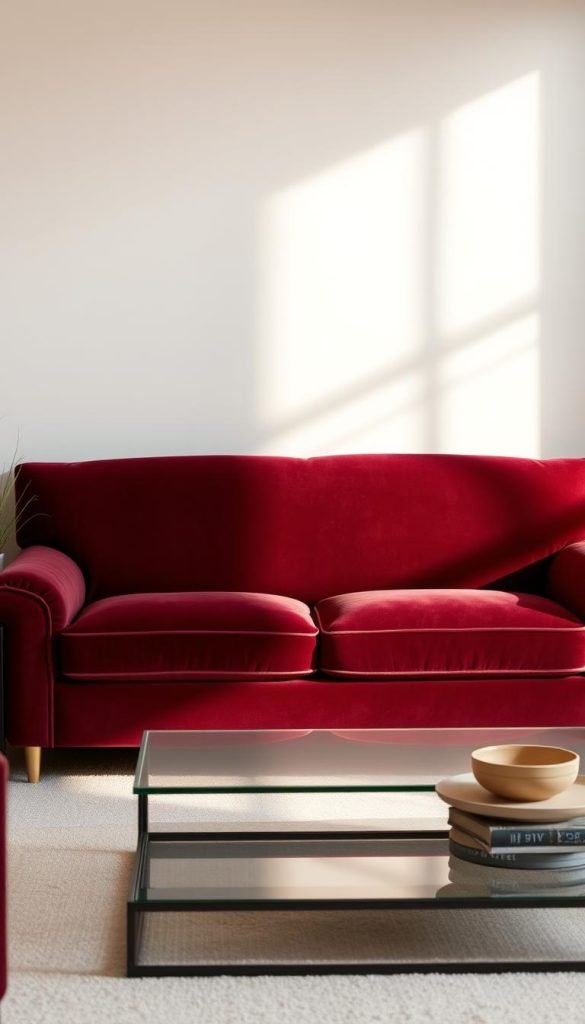
Weekly routine
Light dusting and a quick pass with a vacuum and soft brush attachment remove settled dust and crumbs. Finish with a gentle brush to realign fibers and restore sheen.
Rotate, protect, and manage moisture
Rotate and flip cushions to spread wear across surfaces. Keep the sofa out of direct sun and control indoor humidity so moisture won’t cause water marks.
Tools that help
I keep a soft‑bristle brush, microfiber cloths for blotting, and a dedicated velvet brush for finishing. For households with pets, I vacuum more often to pull hair and dust from pile.
| Task | Frequency | Why it matters |
|---|---|---|
| Dust & vacuum | Weekly | Stops grit from abrading fibers |
| Rotate cushions | Monthly | Prevents localized crushing |
| Deep refresh | 6–12 months | Restores overall texture and color |
Tip: keep drinks on trays and teach guests to blot, not rub, so your clean velvet furniture stays plush longer.
When to call a pro and what methods they use
Some problems are best left to trained technicians. Deep stains, embedded soil, persistent odors, or allergic reactions often need tools and chemistry beyond home kits. Calling a professional protects fiber, color, and backing when an area resists safe spot treatment.
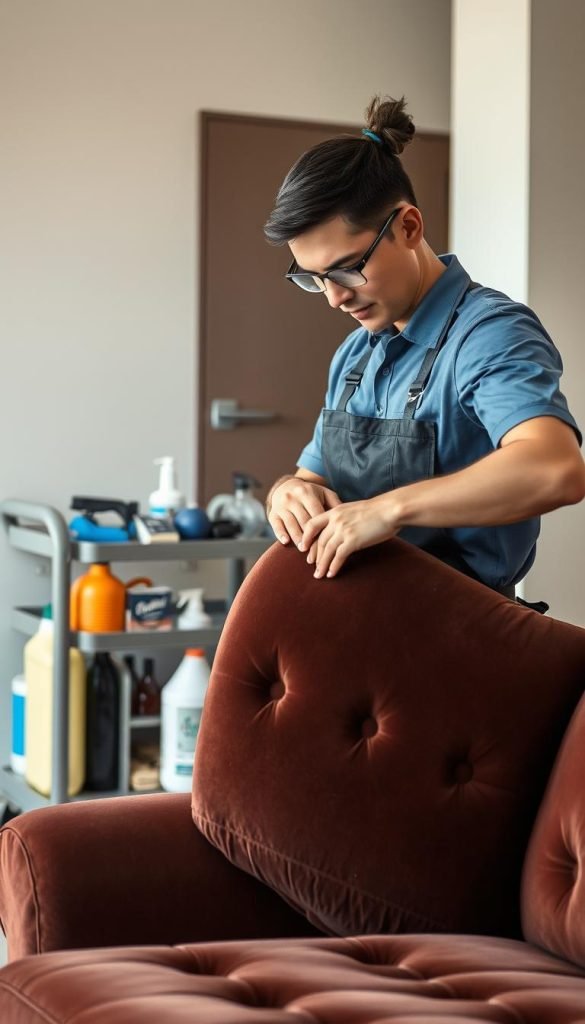
Deep stains, odors, allergens, or uniform color concerns
I call a pro when stains penetrate pile, when smells linger after drying, or when allergens persist despite vacuuming. Professionals also help when I want a uniform color across a whole piece after years of wear.
Low-moisture professional cleaning and water-free solvents for upholstery
Pros favor low-moisture methods that lift soil without overwetting fabric or leaving water marks. Many use pure, water-free solvents formulated for delicate fabrics to protect dyes and finish.
| Issue | Professional method | Benefit |
|---|---|---|
| Deep oil or set-in stains | Water-free solvent spotting | Removes oil while preserving color |
| Lingering odors & allergens | Encapsulation or dry cleaning | Removes contaminants with minimal moisture |
| Overall color unevenness | Low-moisture restoration | Uniform finish without overwetting |
- Check care tags and warranties—manufacturers may recommend periodic professional cleaning.
- Ask for a hidden-area test and a clear list of methods and solvents before work begins.
- After service, inspect the pile and request a final brush pass in one direction for a consistent finish.
- Consider yearly or biennial pro care for heavy-use furniture, homes with kids, or pets.
Material-specific watchouts and common mistakes
Different fibers demand different steps; a one-size approach often fails. Knowing what a sofa is made from helps prevent costly errors and keeps pile intact.
Upholstery velvets are usually dry-clean-only. Machine washing or wet agitation can loosen and shed the pile, causing pilling and a tired look.
Avoid machine washing and high heat exposure
Never tumble or use hot water on delicate fabric. High temperatures can singe natural fibers and deform synthetics.
Keep irons and dryers away and choose low‑heat or no‑heat treatments when any warmth is needed.
Do not press down on wet fabric; air dry before brushing
Pressing or sitting on a damp area flattens pile and creates rings. I let a spot air dry fully, then restore texture with a light brush.
- I never machine wash upholstery velvet—agitation loosens pile and ages the fabric’s look.
- I avoid heavy pressure, excessive suction, and hard scrubbing that can thin or pull fibers.
- I skip harsh chemicals like bleach; they strip dye and weaken fibers.
- I test any product on a hidden area to protect color and surface of a spot or panel.
“Light blotting, minimal moisture, and a final pile realign keep a couch looking uniform and fresh.”
Conclusion
A short, steady routine keeps plush sofas looking fresh and inviting. Gentle vacuuming with a soft brush, quick blotting of spills, and careful spot work protect pile and color. Air dry fully, then brush in one direction to restore texture.
Treat each piece as a premium fabric: shield seating from direct sun, rotate cushions, and keep drinks on trays to limit marks. For tough stains or color issues, choose low‑moisture professional methods to preserve finish.
For a practical reference and step list, consult this velvet care guide. With steady care, my sofas and other furniture stay rich, soft, and welcoming for years.