What’s the trick to hanging shelves that look floating but hold 50 lbs?
I like clean lines and solid builds. In my experience, a true floating shelf hides support hardware while tying into wood behind a wall. That hidden link, plus careful leveling and the right bracket, turns a delicate look into real strength.
I aim for at least two studs or blocking so each bracket hole bites into solid wood. I set shelves with set screws when I want future removal, or a bead of silicone for semi‑permanent hold.
I choose solid hardwoods like walnut or oak over MDF for long life and less sag. I also avoid relying only on drywall anchors for heavy loads and use shims to fix small tilts.
Key Takeaways
- Hidden support tied into studs gives real load capacity.
- Mount into at least two studs or use blocking for every back bar hole.
- Set screws let you remove a shelf later; silicone makes it snug.
- Choose hardwood and heavy‑duty hardware for long‑term strength.
- Avoid drywall anchors for heavy shelves; use shims to keep things level.
The quick answer: hidden heavy‑duty support in studs, precise leveling, and proper depth
Hidden heavy‑duty hardware fastened to studs is what makes a shelf carry serious weight. I hide a stout bracket inside the board, then drive structural screws into at least two studs. Each stud can add roughly 45–50 lbs when the system is engineered well, so two studs give real capacity.
I always use a level during layout and mounting. A plumb back bar and straight rods keep the shelf looking crisp and stop slow tilting under load.
I size bracket depth to the intended load and avoid relying on drywall anchors alone. Anchors help as backup, but studs do the heavy lifting. I also set every secure hole when possible and check bracket orientation so top holes face up.

“Mark studs, level the bracket, mount solidly, slide the board on, and lock it tight.”
- I make sure to hit at least two studs for strength.
- I choose solid board and robust fasteners for instant confidence when I load it.
- I test with incremental weight before styling—simple, safe, and reliable.
Plan it right: wall, studs, tools, and layout for floating shelves
Before I drill, I map every stud and obstacle so the layout is foolproof. I sweep the wall with a stud finder, then confirm with a light knock test near outlets and switches. I’ll also measure about 16 inches from a corner and check both edges of each stud to find the center.
I mark a level line at the height I want in inches, then transfer stud centers to that line and to the back of the shelf or bracket. That makes installation fast and reduces surprises when I lift the board into place.
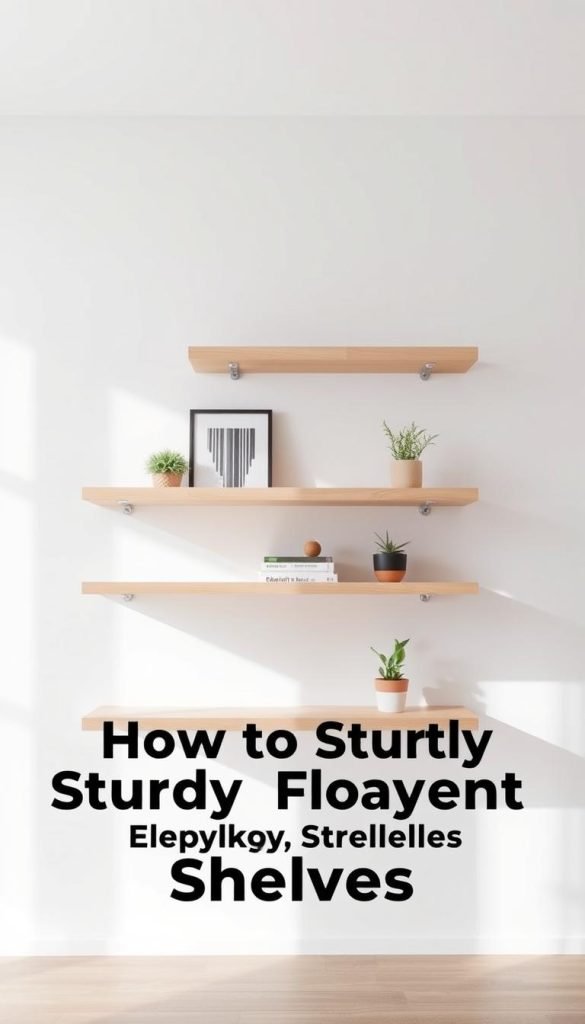
My go‑to toolkit: level, drill, the right bit, painter’s tape, stud finder, screws, and either a floating bracket or a Kreg jig. I label marks with tape so I can see everything while I’m drilling.
“Map studs, draw a level line, transfer marks to the back, and prefit before final mounting.”
- I make sure the bracket can hit every stud it crosses; I’ll drill new holes in a back bar if needed.
- I confirm wall flatness and plan shims if the drywall bows so the shelf sits tight and true.
Step‑by‑step: the way I attach floating shelves so they actually hold weight
My first move is to align the bracket with a level and fasten it into at least two studs. This gives a direct load path and avoids relying on anchors alone.
Mounting: I place the back bar on my level line, transfer stud centers, and drive structural screws into two or more studs. If factory holes miss a stud, I drill new holes in the back so every fastener lands on solid wood.
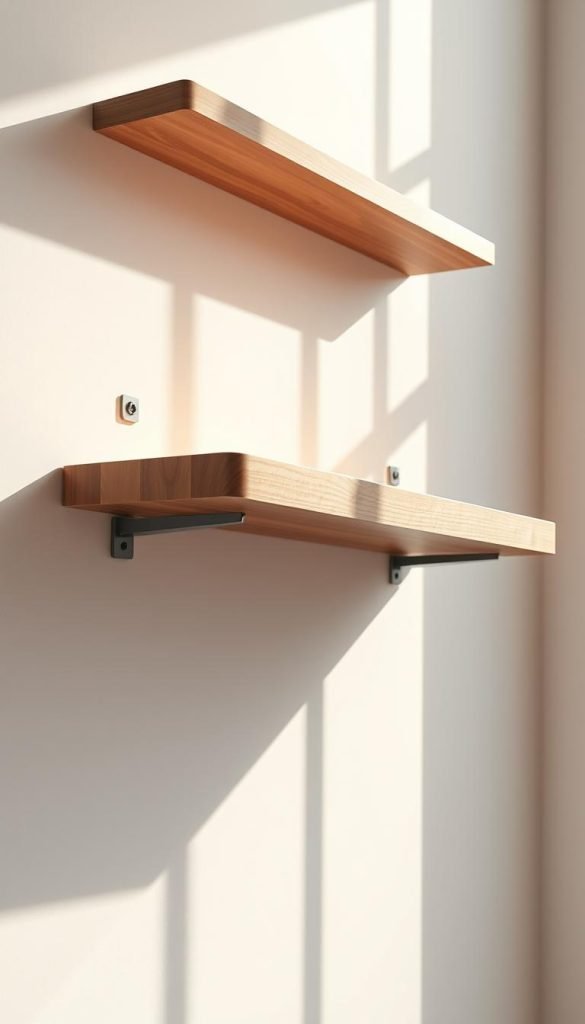
Boost capacity with blocking
Where possible I add blocking between studs. That lets every hole in the back bar bite into wood and can multiply support dramatically.
Secure the board
I dry‑fit the shelf on the rods, then lock it with set screws or a thin bead of kitchen/bath silicone for a snug but serviceable hold. I wipe any squeeze‑out and test with light loads before styling.
No‑visible‑hardware option
For a clean face, I sometimes use a Kreg jig and drive pocket screws through the back of a solid shelf into each stud. I plug and finish the holes for a seamless look.
“Mount into studs, add blocking when you can, slide the board on, and secure it—simple checks keep the shelf safe.”
| Method | Primary fastener | Best for | Notes |
|---|---|---|---|
| Back bar into studs | Structural screws | Medium to heavy loads | Drill extra holes to hit studs if needed |
| Blocking added | Screws into blocking | Max support and stiffness | Requires wall access or planning |
| Kreg pocket method | Kreg screws | No visible hardware | Plug and finish pocket holes after fastening |
For a full diy floating shelf plans tutorial, I link to detailed layouts and measurements that match these steps.
What’s the trick to hanging shelves that look floating but hold 50 lbs?
I plan capacity first, then shape the layout around real support points. I count studs and treat each as a rated anchor worth about 45–50 lbs when a heavy‑duty bracket is installed correctly and fastened with proper structural screws.

Do the math: aim for 45–50 lbs per stud and use every secure hole in the back bar
I make sure every hole in the back bar that can hit solid wood is used. More attachment points cut flex and spread weight across multiple studs.
Respect physics: shelf depth vs. leverage, wood thickness, and rod placement
Leverage matters. Every extra inch of depth increases bending moment, so I avoid deeper boards unless I up the bracket rod count and thickness.
I match rod count and spacing to shelf length so loads distribute evenly. Thicker hardwood resists sag much better than MDF or particleboard.
“Plan for load type—books, dishes, or speakers—and add a safety margin so shelf hold isn’t right at capacity.”
- I calculate capacity by counting studs and adding a safety margin.
- I use all secure back‑bar holes that line up with structure.
- I place rods away from knots or thin areas at the top of the board.
- I prefer removable set screws so I can inspect fasteners later.
| Factor | Guideline | Why it matters |
|---|---|---|
| Per‑stud capacity | 45–50 lbs | Gives a predictable design value for planning |
| Shelf depth | Keep minimal for use (increase rods if deeper) | Deeper shelves add leverage and reduce capacity |
| Material | Solid hardwood, adequate thickness | Prevents sag and preserves top fastening strength |
| Rod placement | Even spacing, avoid defects | Spreads load and reduces local bending |
For a full guide on bracket selection and layouts that match these rules, I link to a detailed resource on floating shelf hardware and plans.
Choose the right materials: wood, bracket, and hardware that won’t sag over time
I pick dense hardwoods when I need a shelf to stay straight under daily loads. Good material choices are the foundation of lasting floating shelves. A stiff board resists bend, and proper bracket sizing spreads load along its length.
Solid hardwoods win for durability: Walnut, Maple, and White Oak resist creep far better than MDF or particleboard. If I must use plywood, I pick high‑grade, multi‑ply panels and edge‑band them to limit movement.
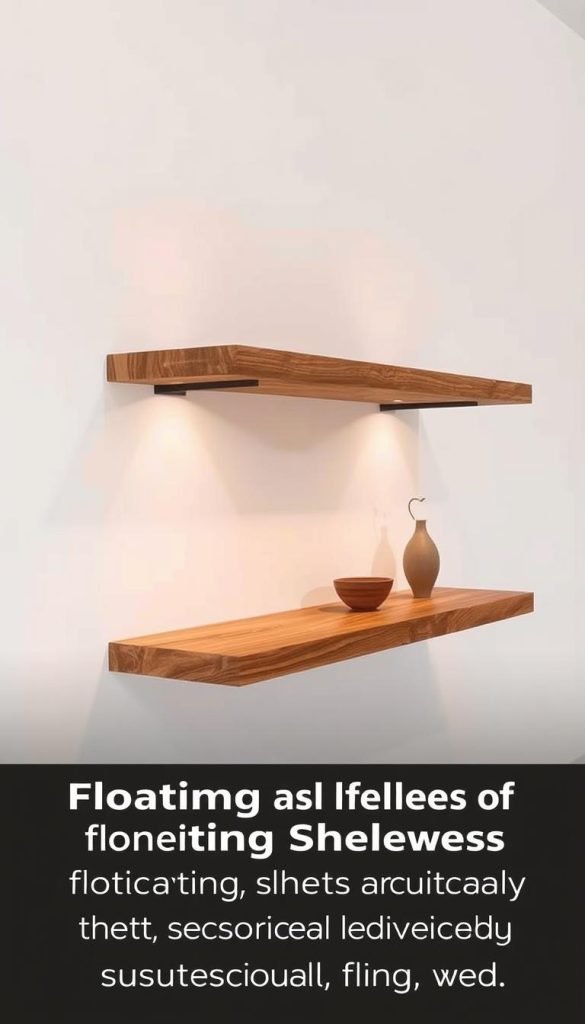
- I choose brackets with a stout steel back bar and multiple welded rods sized for shelf length and depth.
- Rods should be recessed and fully welded so they disappear when the board is milled for a clean face and true support.
- I size rod length to leave ample material around each hole and pick structural fasteners that match my wall and bracket thickness.
“Pre‑finish, dry‑fit, and document every piece so your install stays strong and serviceable.”
Troubleshooting and pro tips: keep shelves level, straight, and safe
If a shelf tilts or sags, most problems trace to fit, fasteners, or wall flatness. I always start with a quick inspection of bracket orientation and the back surface that meets the wall. Small gaps or flipped brackets explain a lot of wobble.
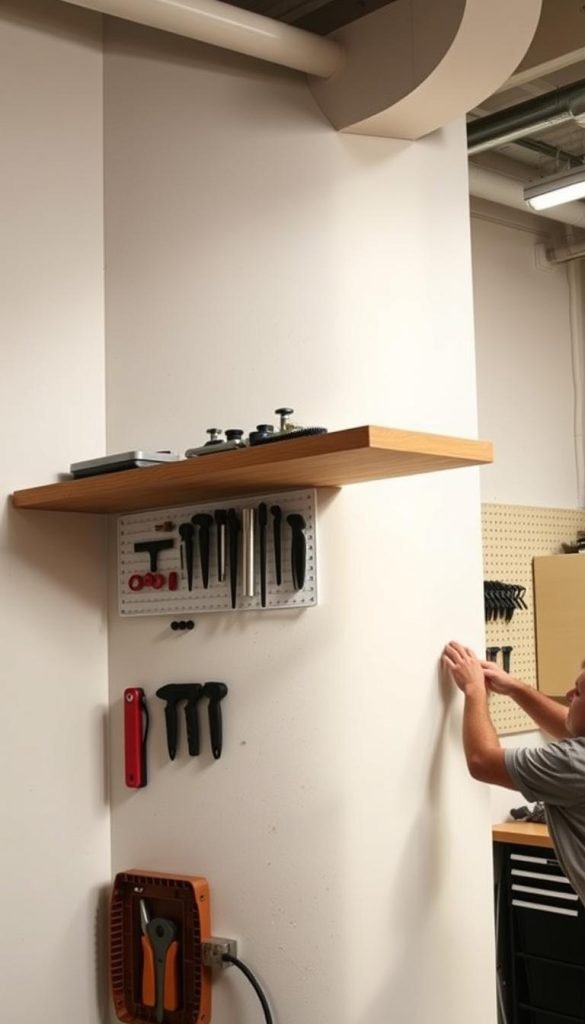
Fix sagging or tilting
I shim low spots between the bracket and wall with thin wood shims until the shelf sits level. Then I confirm the top row of holes on the bracket faces up so load doesn’t pull it down.
Secure from the top: tighten set screws into the rods or cure a thin bead of silicone so the board won’t creep forward over time.
When drywall anchors are okay—and when they’re not
Drywall anchors, toggles, or molly bolts help in hollow sections, but I never rely on them alone for a 50‑lb target. For heavy loads I attach floating brackets into at least two studs.
Real‑world tips
- I check that every fastener landed in a stud; if a hole missed, I move or add a screw into structure.
- I drill pilot holes to keep screws tracking straight and to avoid splitting wood.
- Avoid Command Strips for shelving; they’re for decor, not structure.
- Keep shims, structural screws, and plugs on hand for quick fixes and clean finishes.
“Flip the bracket, shim the back, and verify fasteners—simple steps fix most issues.”
Style and spacing: make it look seamless in any room
I place shelves to guide the eye across a room and keep proportions calm. A well thought out run on a back wall ties a space together and feels effortless.
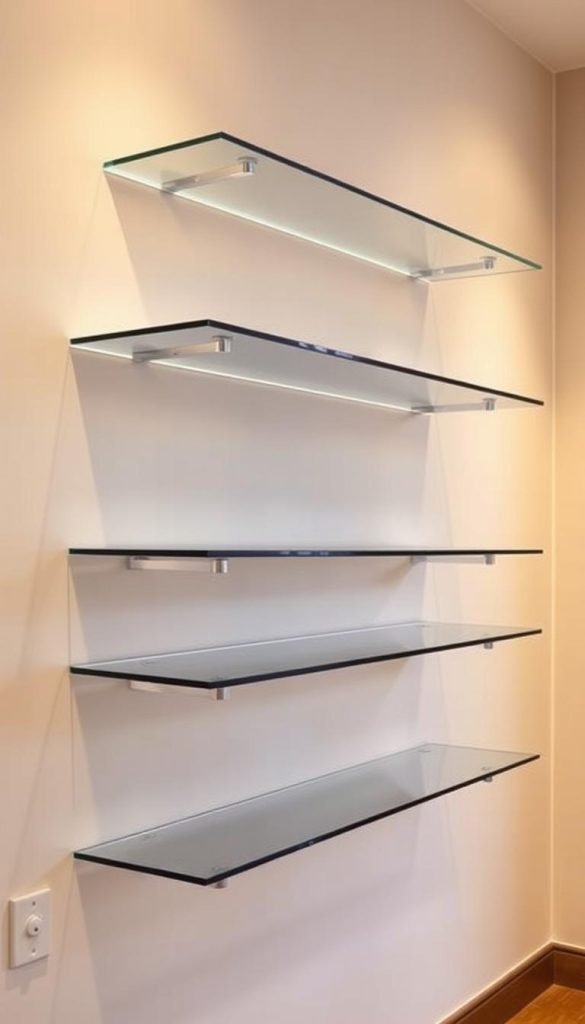
Eye level and spacing rules: I hang a wall shelf around 60 inches from the floor for balanced sightlines. For stacked units, 12 inches between shelves gives classic rhythm. When you need to show taller objects, I open spacing to 15–18 inches so pieces breathe.
Ideal placement by room type
- I set shelves about 60 inches high as a starting point, then tweak for a kitchen or office workflow.
- I space multiple units 12 inches apart for neat proportions; widen that to 15–18 inches for taller decor.
- I center a long run on a back wall so length reads smoothly and anchors furniture below.
- I pick shelf length to cover roughly two‑thirds of an open wall so the composition feels balanced.
- I coordinate bracket layout with stud placement early so style and structure match.
| Room | Typical spacing | Eye level | Notes |
|---|---|---|---|
| Kitchen | 12–15 inches | 60 inches | Shorter gaps near counters for easy reach |
| Living room | 12–18 inches | 60 inches | Open spacing for art and taller objects |
| Home office | 12 inches | 60 inches | Lower placement for frequently used books and gear |
| Long back wall | Adjust to furniture | Center visually | Keep negative space at both ends for balance |
“Step back and check sightlines from entries and seating—small shifts make a big visual difference.”
Conclusion
Conclusion
When I finish an install, I check every screw and hole so the board sits true and steady.
I wrap up with a simple formula: map the wall stud layout, mount robust hardware into structure, and size your shelf so parts share load. Use set screws or a thin bead of silicone at the top for a snug join and avoid relying on anchors as primary support.
Solid wood or good plywood keeps a shelf stiff over time. Keep a small box of plugs, stain, tape, and extra screws for clean touch‑ups.
Follow this guide step by step and your floating shelf will look effortless and carry real weight. For a full diy floating shelf tutorial, test fit, then secure—measure twice and finish once.