How do I stop radiator heat from fading my curtains?
I want to protect my curtains while keeping my room warm and stylish. This short guide shows simple placement tips and small hardware changes I can use today to reduce fabric wear and keep air flowing around the window.
Many homes have a radiator tucked below a window. That layout is normal, but when fabric hangs too close it can trap warm air and raise the risk of discoloration over time.
I’ll cover exact hem clearances, when to keep panels open, tiebacks, and how a shallow shelf or extended brackets push warm air into the room instead of into the fabric. I’ll also compare linings, blinds, and small layout tweaks that protect textiles and improve heating performance.
Safety matters too: I’ll note when electric units or hot pipes need extra caution and what truly counts as a risk. Expect quick measurements and real-world tips you can use right away.
Key Takeaways
- Keep curtain hems a few centimeters above the radiator to reduce contact.
- Open long panels or use tiebacks while the unit runs to improve air flow.
- Small shelves or extended brackets redirect warm air into the room.
- Choose linings or fabrics that resist discoloration for long-term protection.
- Check placement and wiring for safety with electric units or exposed pipes.
Why my curtains fade: heat, sunlight, and the way radiators warm a room
Radiators warm a space by moving air, and that flow is the main reason fabric near windows can age faster.
Convection 101: how warm air rises and gets trapped behind fabric
Convection means warm air lifts from the top of a radiator, travels along the ceiling, cools, then sinks to keep the room even.
When curtains hang low and close to a unit, they block that loop. The result is a pocket of warm air trapped behind the fabric that sends more energy toward the window instead of the room.
“If fabric blocks the grille, I create a warm pocket that speeds discoloration and lowers heating efficiency.”
Sun exposure vs. heat exposure: which is doing the damage?
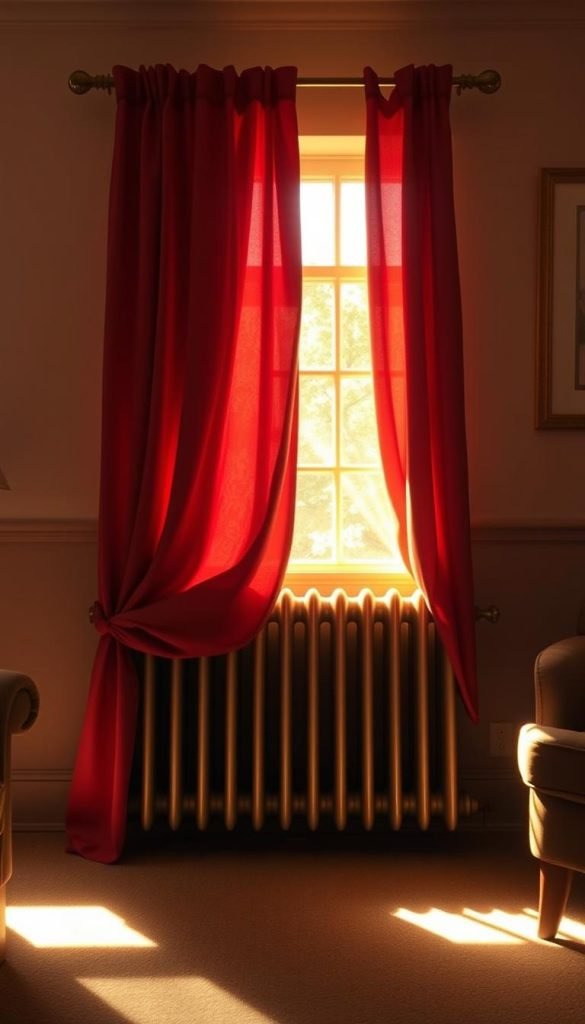
Direct sunlight often causes the biggest color loss in drapes, but sustained warm air against fibers accelerates wear.
When curtains cover both the window and the radiator, warm air can drift out through cold glass instead of warming the room. That wastes energy and shortens fabric life.
- Quick fix: keep hems 2–4 cm above the top surface of the radiator or at sill height.
- Leave the top grille clear so warm air circulates, improving heating efficiency and reducing trapped behind pockets.
- Combine light-filtering shades with drapes on sunny windows to cut UV while letting air flow.
Is it safe to hang curtains near radiators—and what’s actually a hazard?
Here’s what matters for safe curtains: actual temperatures, wiring condition, and nearby flames. Most modern hot-water radiators run well below fabric ignition temperatures, so with simple clearance and airflow they are a low safety risk.
Hot-water vs. old electric units: when I should call an electrician
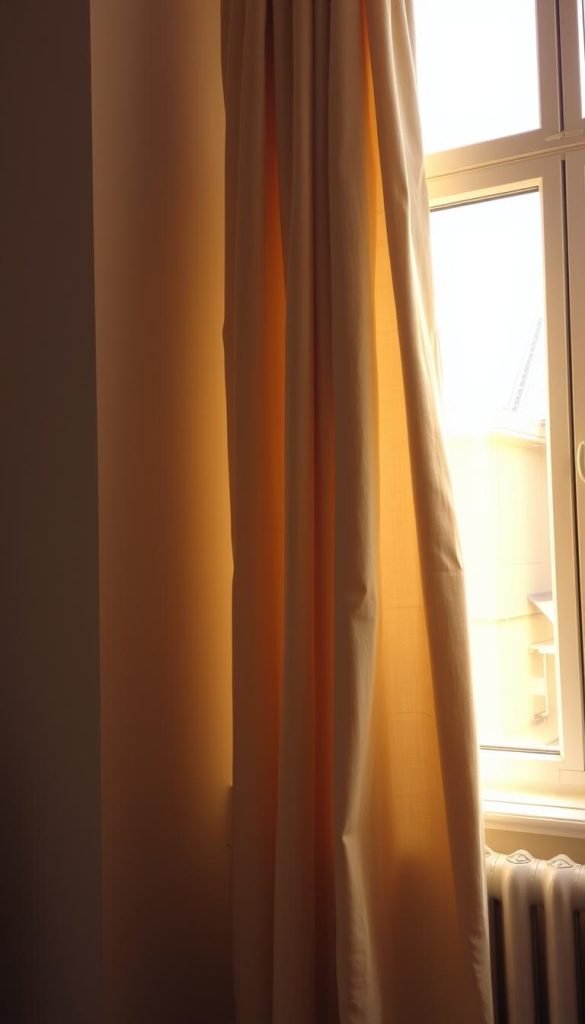
Hot-water radiators usually pose little fire hazard if curtains clear the top and the grille stays open. I check that hems sit a few centimeters above the unit and use tiebacks while the system runs.
Old or faulty electric radiators can spark or overheat. If I notice frayed cords, hot plugs, or discolored outlets, I call a licensed electrician rather than guessing.
Candles, A/C units, and hot pipes: real-world risks
Open flames near soft fabric are a clear fire hazard. I never place candles by panels or sheers. Built-in A/C units and exposed pipes can force odd placements; in those spots I use inside-mounted shades or move drapery aside.
| Item | Risk level | Recommended action |
|---|---|---|
| Modern hot-water radiators | Low | Keep hems raised; allow airflow |
| Old electric radiator | High | Stop use; call electrician |
| Candles / open flames | Very high | Keep away from curtains; use LED alternatives |
| Hot pipes / window A/C | Medium | Use shades or move panels aside for privacy and safety |
“Safe curtains are about airflow and condition checks, not sealing fabric tight against heat.”
How do I stop radiator heat from fading my curtains?
Practical steps make protecting fabric simple. I focus on a clear gap, routine habits, and small hardware tweaks that keep warm air moving into the room instead of pooling behind panels.
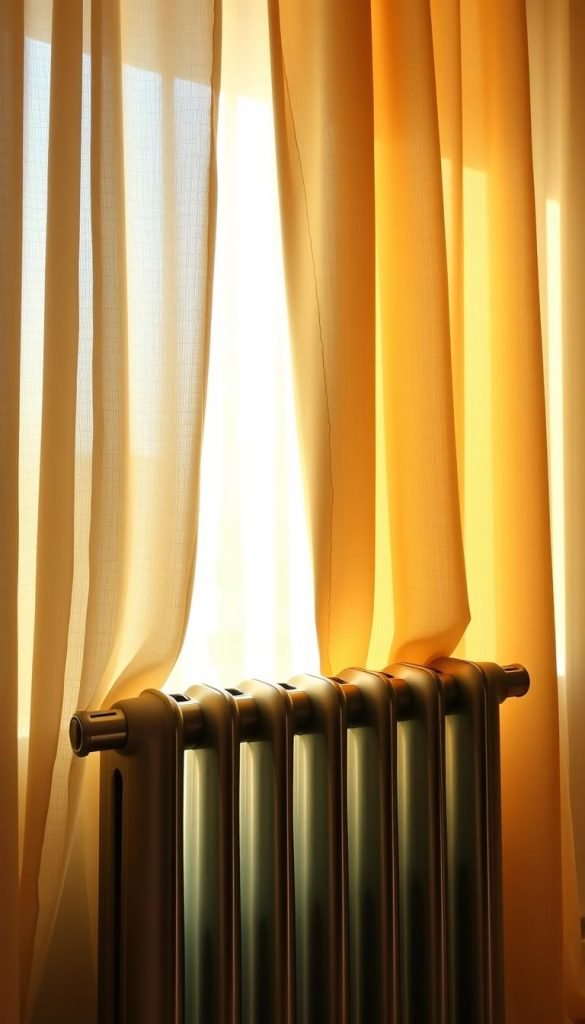
Create safe clearance: keep curtain hems 4–5 cm above the top
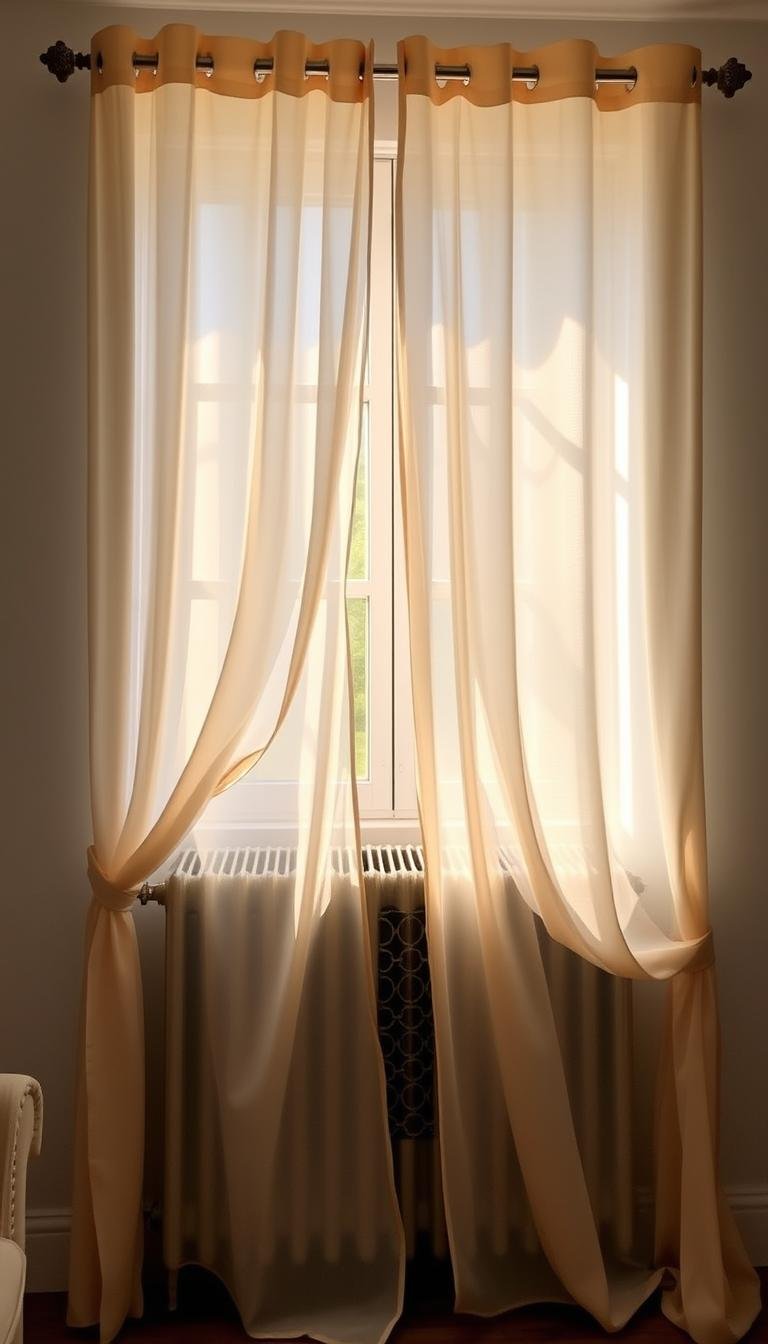
Measure the hem. I set drape hems 4–5 cm above the top of the unit or align them with the sill so air can flow under the fabric.
Keep panels open while the system runs
I make it a rule to keep curtains open during heating hours. This prevents warm air from getting trapped behind heavy fabric and reduces discoloration risk.
Use tiebacks and holdbacks
Tiebacks pull fabric away from the airflow. They work well for thicker fabrics that billow toward the heater and for rooms where I want the look of full drapes without the risk.
Add a shallow shelf or deflector
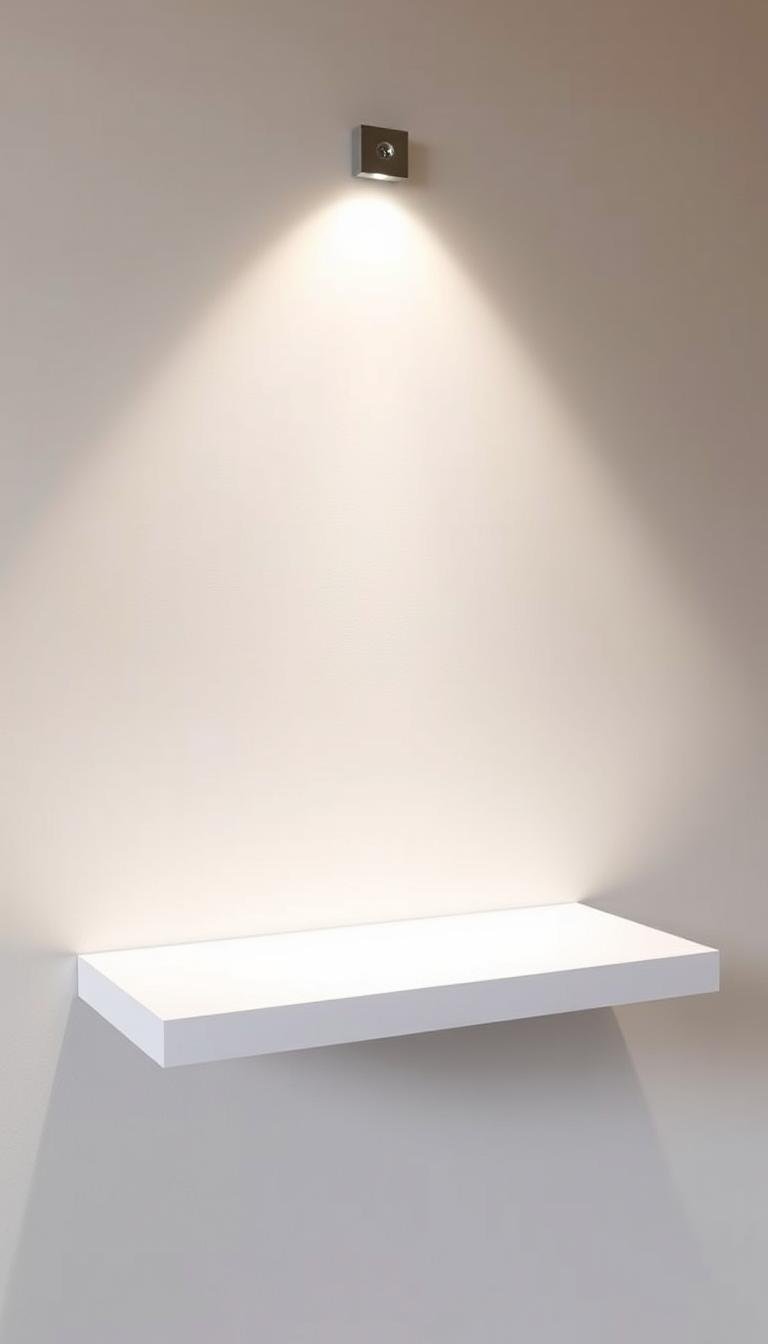
A slim curtain shelf or deflector above the unit redirects warm air into the room. This protects fabric and improves overall heating efficiency.
- I pair floor-length drapes with blinds for privacy while keeping drapes open during heating.
- Extended brackets or moving the rod outward adds an easy gap without new fabric.
- Keep a checklist: hem height, curtains open, tiebacks in use, and deflector fitted.
| Action | Benefit | Quick tip |
|---|---|---|
| 4–5 cm hem clearance | Improves circulation; less fabric wear | Use a tape measure at the top edge |
| Keep curtains open | Stops warm air trapped behind panels | Make it a household habit during heating |
| Tiebacks / holdbacks | Pulls fabric from airflow | Choose matching hardware for style |
| Shallow shelf / deflector | Directs air into the room | Install a slim shelf above the grille |
“A small gap and a brief habit change protect fabric and make heating work better.”
Smart hardware and layout fixes that protect fabric and improve heating efficiency
Small hardware changes create more space between fabric and warm surfaces and cut the impact on fabric life. These tweaks also help the room reach temperature faster and save energy.
Ceiling tracks and extended brackets
Use ceiling tracks or extended brackets to move panels away from the wall and radiators. This added space lets warm air escape into the room instead of pooling behind the fabric.
They are especially useful with deep cast-iron or steel column radiators and when furniture sits near the sill.
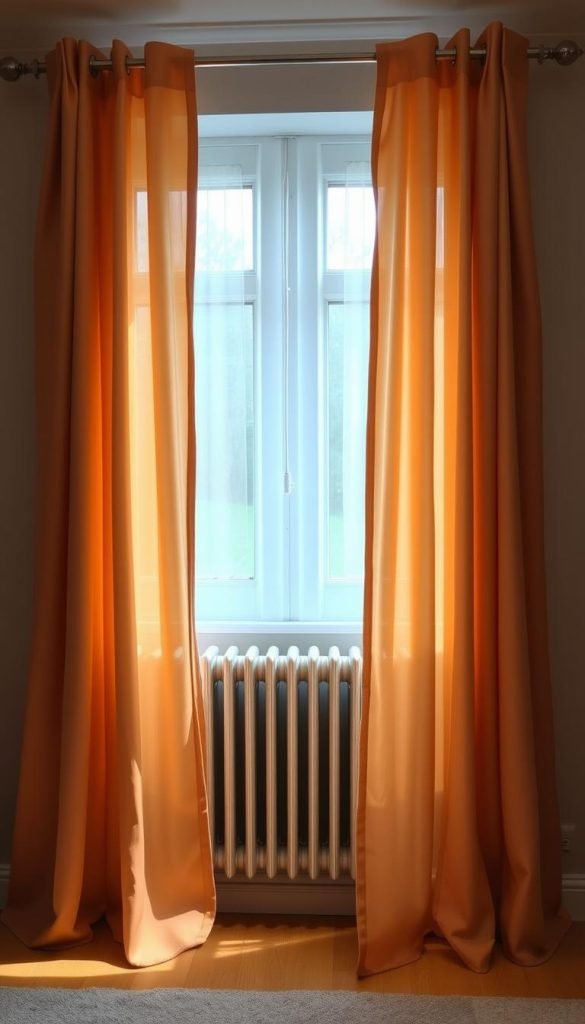
Inside vs. outside mounts: Romans, rollers, and shutters
Inside-mounted Roman or roller blinds give daily privacy while outside-mounted drapes add style without choking airflow. Shutters or cellular shades work well where wall space is tight.
Don’t tuck panels behind radiators
I never tuck fabric behind radiators. Blocking back and side panels cuts radiators’ output and wastes energy. Keep the front and top clear so warm air can rise and the room heats efficiently.
- Choose hardware that lets panels stack fully off the window for maximum light and efficiency.
- Use sturdy returns so the curtain edge sits straight and creates a clear channel for warm air.
Fabric and lining choices that resist heat damage and discoloration
Not every drape survives long-term exposure to warm air; material choice matters most. Picking the right fabric and lining helps preserve color and keeps the room efficient. Below are practical fabric tips and safer lining options for windows with under-window units.
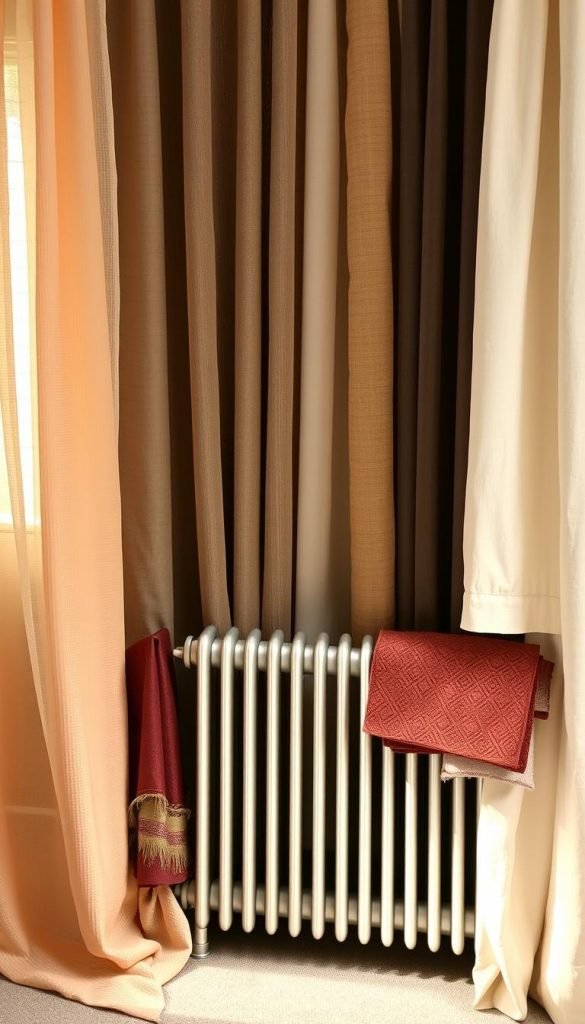
Best materials near heat: durable cottons and polyester blends
Cotton and polyester blends stand up well to sustained warmth. They resist warping and lose color more slowly than delicate silks or linens.
These blends wash well and are often colorfast, so they suit rooms where the unit runs regularly.
When to avoid heavy or fully lined drapes over radiators
Thick, fully lined curtain panels trap warm air and cut the unit’s output. That creates hot pockets and can strain fibers.
Instead, choose lighter-lined panels or use liners only when you can keep the top clearance open. Test by running the system for 15–20 minutes and feeling the hem; if it’s warm, raise the top or use tiebacks.
Thermal and blackout options: balancing energy savings and fabric safety
Thermal and blackout linings save energy and control light, but they must work with airflow.
Keep clearance at the top so warm air rises into the room rather than pressing against the fabric. Also check care labels for coatings that might react to sustained warmth.
- I choose stable cotton/poly blends for rooms with regular heating.
- Avoid heavy full linings directly over the unit; use lighter linings or removable layers.
- Pair dark or saturated drapes with a UV-filtering shade behind them on bright windows.
| Material | Performance near unit | Best use |
|---|---|---|
| Cotton/poly blend | High resistance to color change | Daily use near under-window units |
| Thick lined drape | Can trap warm air | Avoid directly over units; use with clearance |
| Thermal/blackout | Good insulation; needs airflow | Use when top clearance maintained |
“Think of fabric as part of the system—material, lining, and hardware must work together for comfort without stressing the textile.”
Alternative window treatments that keep privacy, light, and warmth in balance
Choosing slim, inside-mounted window coverings solves airflow problems without sacrificing style. I favor solutions that give privacy and let warm air move freely beneath the sill.
Roman shades and roller blinds work well inside the frame. They provide insulation and privacy while leaving the area below clear. Roller blinds are easy to clean and suit playrooms or tight spaces. Roman shades add fabric softness without letting curtains hang into the grille.
Shutters are my go-to when side stack space is limited. They let me control light and privacy precisely and keep the radiator’s path unobstructed.
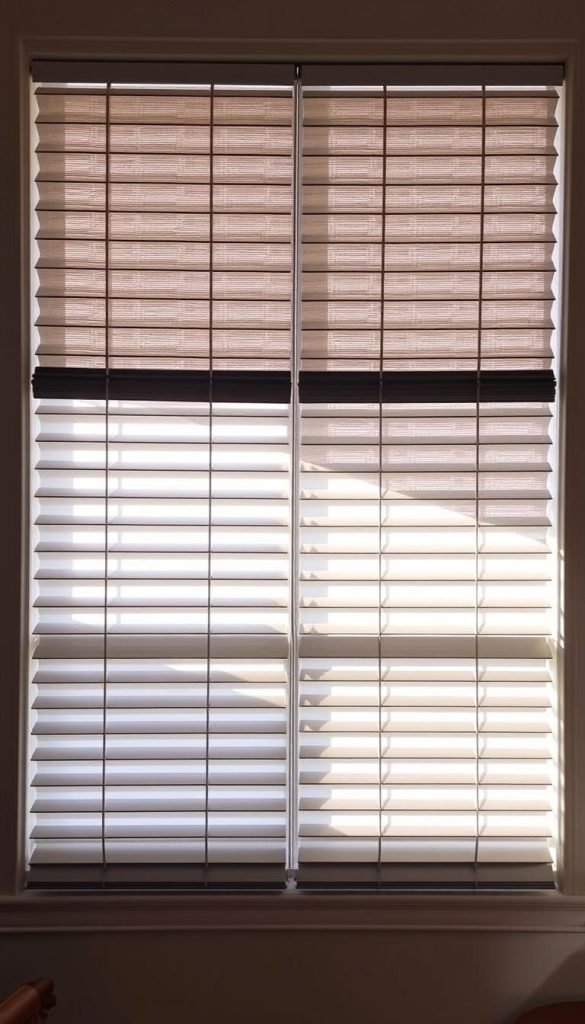
Privacy film and decorative panels for awkward windows
For windows complicated by A/C units or hot pipes, I use frosted or reeded privacy film. It gives daytime screening without bulky fabric near heat sources.
I often layer slim side panels purely for style so the shades handle daily function. This keeps the room open while preserving warmth and privacy.
| Option | Benefit | Best use |
|---|---|---|
| Inside-mounted Roman shades | Insulation + soft look | Under-sill units; living rooms |
| Roller blinds | Slim profile; easy cleaning | Tight spaces, playrooms |
| Shutters | Precise control; no stack space needed | Small side space; formal rooms |
| Privacy film | No fabric near piping; constant screening | Windows with A/C or exposed pipes |
“Layering a slim functional shade with decorative panels keeps the room feeling styled while keeping warm air free to circulate.”
Room planning tips: radiator placement, vertical radiators, and design ideas
Rearranging where heat lives in a room can free up design choices and cut wasted energy. Thoughtful layout changes help the space feel taller and work better without sacrificing style or privacy.
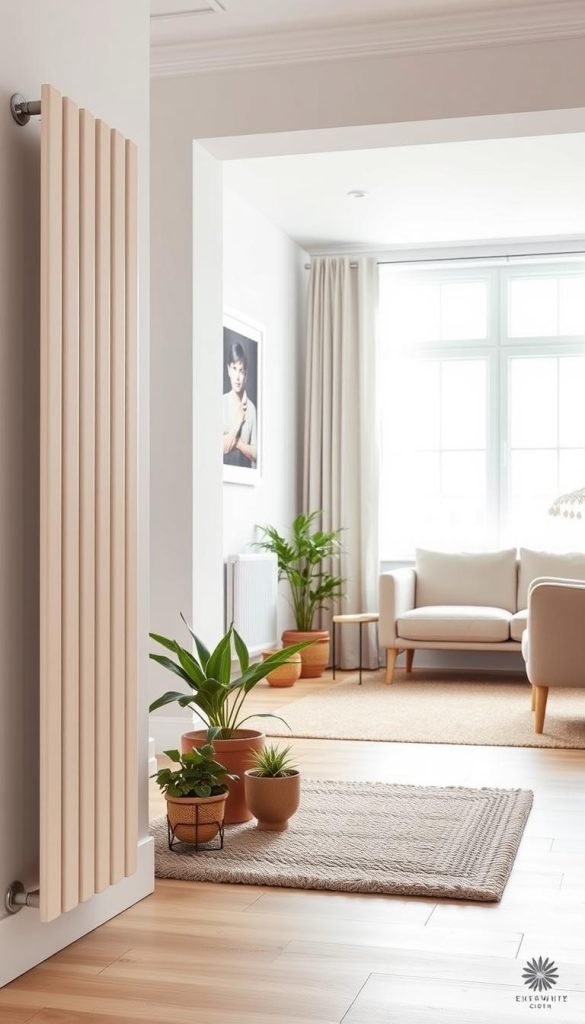
Relocating or going vertical: when moving the unit saves on heating bills
If floor-length curtains must stay, moving a unit is worth considering. A plumber can relocate a radiator to a different wall for roughly £150–£200. That move can improve heating performance and may reduce heating bills over time.
Vertical radiators are another idea. They free wall width, open space for furniture or storage, and give more choices for window treatments while heating the room effectively.
Coordinating sill-length curtains with shades for a cohesive look
Pair sill-length curtains with inside-mounted shades to keep a clean, cohesive window treatment that preserves airflow above the unit.
- Plan stacking space so panels sit well away from the grille and never cover the top.
- Mount shades a few inches above the frame to make the room feel taller and spread warmth more evenly.
- Match materials and colors across windows so the wall looks intentional, even when one opening must sit above a deep unit.
“Design that accounts for airflow heats the room faster and keeps fabrics looking new.”
Conclusion
This short wrap-up gives a clear checklist to protect fabric and keep warm air moving in the room. Aim for a 4–5 cm hem above the unit, keep long panels open when heating, and use tiebacks or a shallow shelf to send air into the space.
Remember: most hot-water units are safe when set up correctly; any suspect electric unit needs professional inspection. Never tuck panels behind the heater or push furniture tight against the front, since that reduces efficiency and stresses fabric at floor level.
Use shades, Roman or roller options, shutters, or privacy film where windows make full drapes awkward. These small changes are the practical part of my home heating plan—they save energy, preserve fabric, and make rooms feel cozier faster.