How can I add a breakfast bar to a kitchen with zero counter space?
I admit my kitchen has almost no usable counter, yet I still want a small bar that works for coffee and quick meals without blocking flow. Older narrow layouts and galley kitchens often lose circulation when seating is shoehorned in, so my aim is to keep movement clear while adding a neat spot for daily use.
I plan to test a few ideas: a fold-down surface, a slim wall-mounted shelf, extending the window ledge, or a tiny island with an overhang. Each option keeps depth shallow — typically 16–24 inches — and width modest so the bar reads light, not bulky.
Seating for one to three people is my focus. I’ll allow about 28 inches per stool and at least 36 inches of clearance behind them. I’ll measure first, pick mounting hardware and stools that match my look, and keep materials easy to clean so the place stays tidy and welcoming.
Key Takeaways
- Right-sized bars improve flow in tight kitchens without crowding circulation.
- Shallow surfaces (16–24 inches) and narrow widths work best for small homes.
- Allow ~28 inches per stool and 36 inches behind for comfortable seating.
- Try fold-down, wall shelf, window ledge, or small island with overhang.
- Measure first, pick matching hardware and stools, and choose easy-care materials.
Start here: my constraints, my layout, and what “zero counter space” really means
I map the whole cooking area before picking a plan. I measure usable wall, window, and floor stretches so I know where a slim surface could fit.
Defining the situation: zero counter means no spare prep ledge near my cook zone. That forces the bar to act as both a tiny prep counter and a casual eating place.
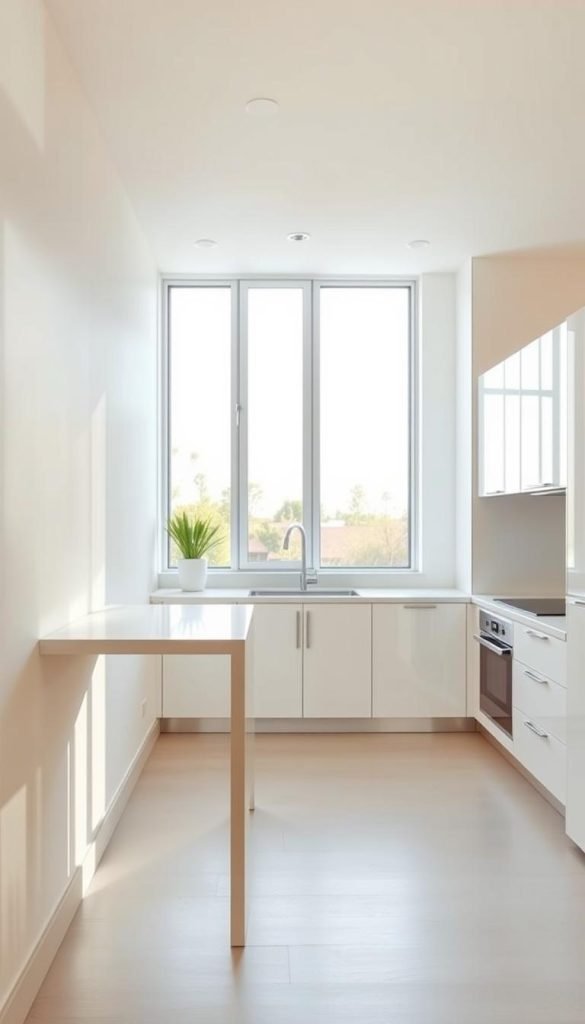
Defining my usable wall, window, and floor area
I check walls for studs, outlets, and trim. I test window operation if I plan to extend a ledge. I note floor space and where cabinets, doors, and appliance handles swing.
Prioritizing circulation so the kitchen doesn’t feel tighter
“I leave at least 36 inches behind stools and keep depth to 16–24 inches.”
I follow that rule and allow about 28 inches per seat. I sketch two or three placements and walk them with tape on the floor to see which place keeps the room open.
- Measure and map layout.
- Check wall strength or plan a freestanding base.
- Protect circulation and start small—one stool, then add if there’s enough space.
Small-footprint breakfast bar ideas that actually work in tiny kitchens
A tiny footprint can still host a neat, daily-use eating area if planned right. Below are practical, low-impact options I use when floor area is tight.
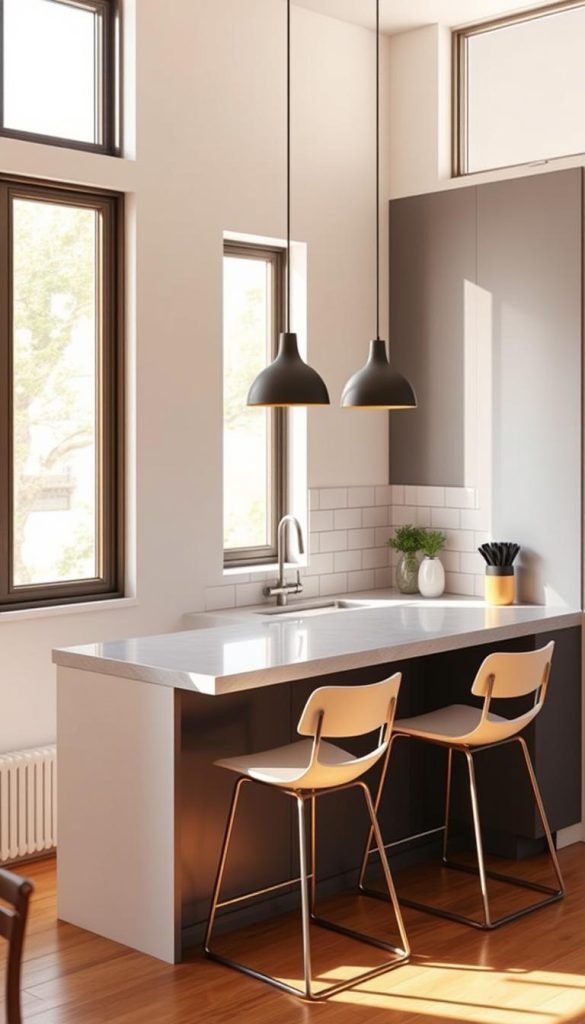
Fold-down leaf on an open wall
Stows when not in use. I mount a compact leaf with heavy-duty brackets so it flips down for coffee and folds up to clear the floor.
Wall-mounted shelf at counter height
This wall-mounted breakfast shelf keeps the floor clear and fits two stools. It’s an easy way to turn blank wall into daily-use space with minimal hardware.
Extend the window ledge
I match a slim slab to the sill to island create a bright perch. Natural light makes the spot feel larger and it pairs well with backless stools.
Mini island or narrow peninsula with overhang
A narrow kitchen island with a modest overhang doubles as prep and dining. I aim for 16–24 inches deep so the unit stays slim but usable.
Floating bar and freestanding slimline options
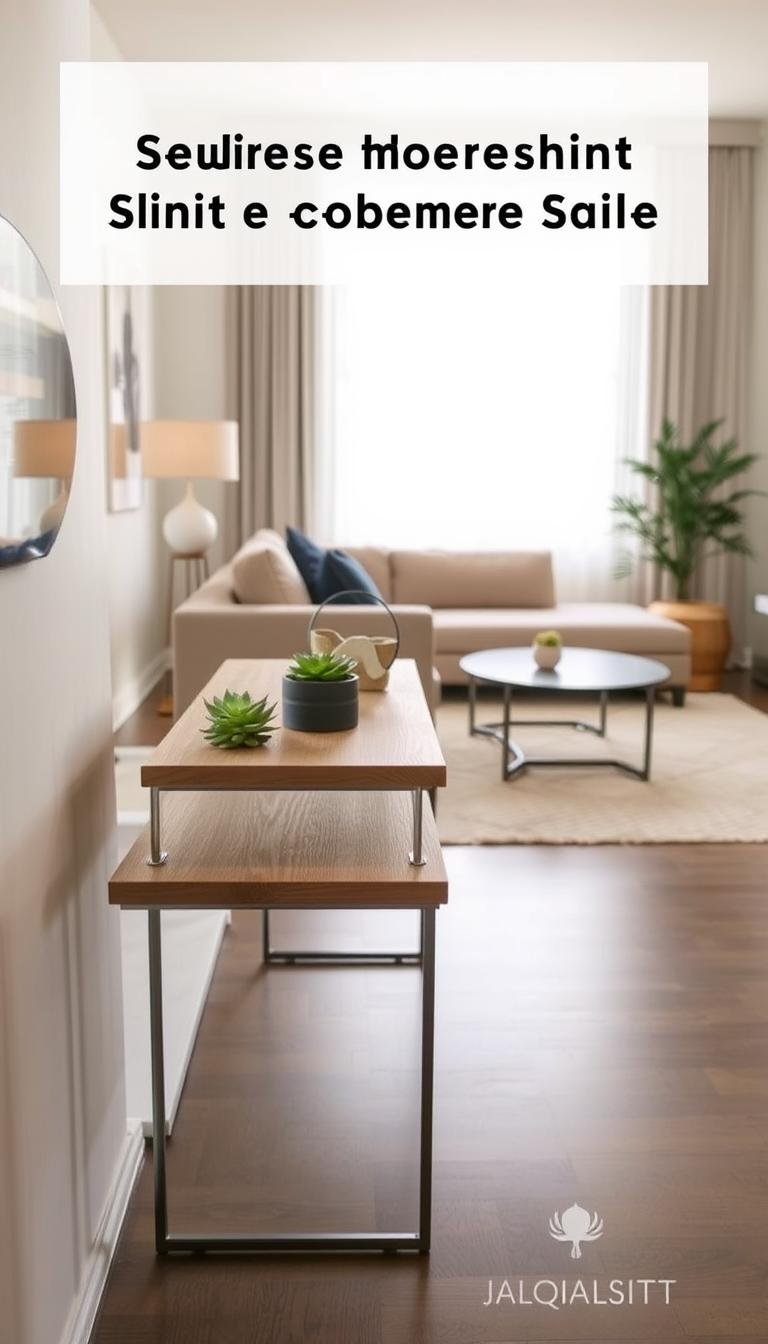
Hidden steel brackets give a floating look and more foot room. For renters, a lean freestanding console-depth bar rolls in and avoids drilling.
Pass-through edge and borrowed outside area
A widened pass-through or a thin hallway bar keeps the cook zone connected without crowding the main floor. This option serves and seats efficiently.
- Materials: wood, laminate, tile, or stainless for easy care.
- Sizing reality: 16–24″ depth, ~28″ per stool, 36″ clearance behind.
- Installation: strong brackets and stud anchors are nonnegotiable.
| Option | Depth (in) | Seats | Best for |
|---|---|---|---|
| Fold-down leaf | 12–18 | 1–2 | Maximizing floor clearance |
| Wall-mounted shelf | 16–20 | 1–2 | Use of blank wall space |
| Window ledge extension | 14–20 | 1–2 | Light and view while dining |
| Mini island / peninsula | 18–24 | 2–3 | Extra prep and casual dining |
How can I add a breakfast bar to a kitchen with zero counter space? My step-by-step plan
First, I tape out potential seating lines so I can feel the real traffic flow. That quick test shows if two stools squeeze in or if one seat is the smarter size. I make sure to mark 28 inches per stool and then tape another band for the 36-inch aisle behind.
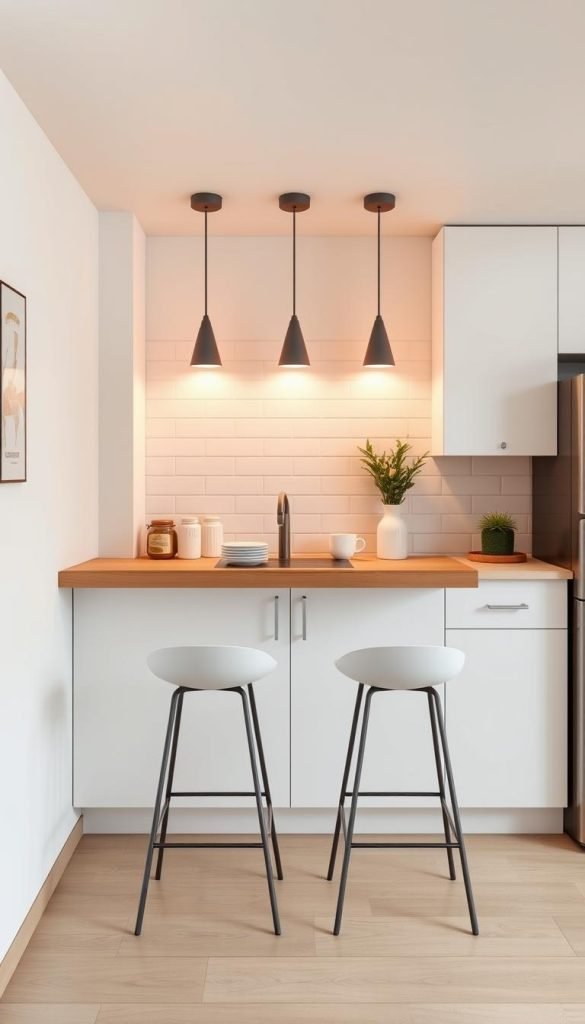
Measure for seating width and flow
Layout rule: 28 inches per stool and at least 36 inches behind for clear circulation.
I walk the taped layout, open doors, and sit on a stool to confirm enough space for passing and prep.
Pick the right height
Counter-height surfaces sit around 35–37 inches; counter stools have seat heights near 58–72 cm. Bar-height ledges sit near 41–43 inches and need taller bar stools (seat heights 72–82 cm).
Adjustable stools let guests of different heights use the setup comfortably and give flexibility if I change the countertop later.
Choose the mounting method
I balance weight, neat design, and installation limits: fold-down brackets for stowability, wall cleats or hidden steel supports for a fixed mount, or a small island base with an overhang for stability.
- Confirm studs or use proper anchors so the countertop won’t flex.
- Allow a 10–12 inch overhang for knee clearance if seating will tuck under the countertop.
- Dry-fit stools and the top, then fasten and finish edges for durability.
“Tape, test, then install — that simple loop saved me from a layout that felt crowded.”
For detailed installation steps and inspiration I checked a guide on create a breakfast bar. Finally, I test each stool, sit, and walk the aisle to ensure the design fits my daily routine and that there is enough space to move freely.
Design, materials, storage, and lighting to make a small bar feel bigger
A compact setup reads larger when the right materials, storage, and lighting work together. I focus on durable surfaces and simple layers of light so the place feels open and useful.
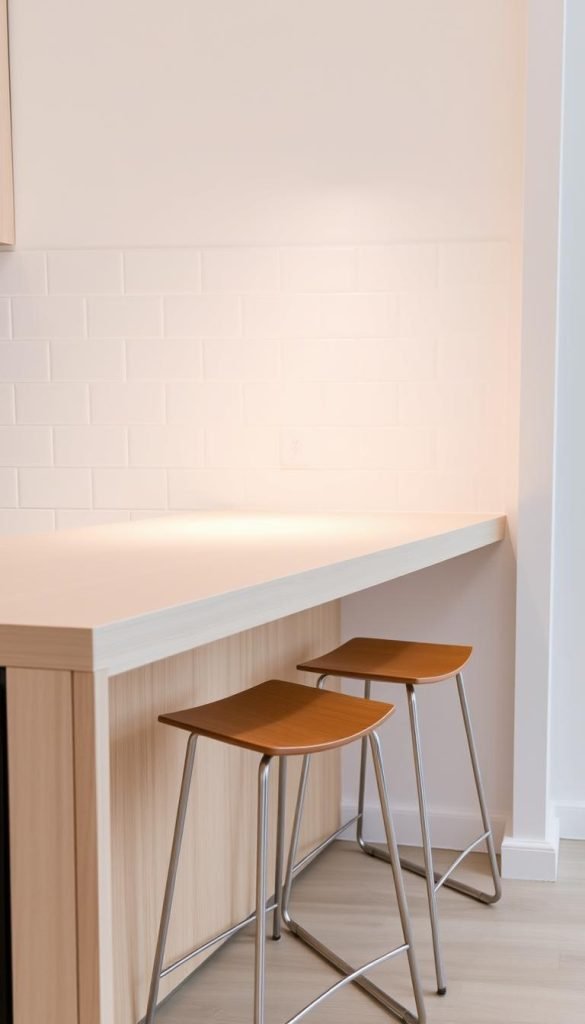
Slim, durable countertops
Wood, laminate, stainless, or tile all work. I pick wood for warmth, laminate for value, stainless for a sleek look, or tile for pattern.
Keep depth to 16–24 inches and use an eased edge so the countertop looks light and keeps the room flowing.
Built-in storage under or above
I add shallow cabinets or open shelves beneath the top for dishes and mugs. A narrow rail with hooks holds towels and cups.
Floating designs without a heavy base keep sightlines open and make the room feel larger.
Light it right
Pendants give directional task light, recessed fixtures brighten the whole kitchen, and under-shelf LEDs sharpen work areas.
“Warm light (2700–3000K) with a dimmer makes dining comfortable from morning to night.”
Conclusion
Small changes—right size and smart mounting—made the space feel useful, not crowded.
In short, I proved a breakfast bar kitchen works in tight layouts when size, placement, and a solid base are chosen carefully.
A compact bar can replace a dining table in a small home and provide a true casual dining spot for quick meals. Keep comfort in mind: about 28 inches per stool and 36 inches of clearance behind.
Pick the best option for your plan—fold-down, wall-mounted, floating, or a tiny island. Use quality hardware, warm lighting, and wipeable finishes so the area reads as part of the kitchen, not an afterthought.
Even one stool makes the floor feel more useful. With tidy upkeep and the right choice, the space becomes a friendly place to sit, snack, and connect.