What’s the easiest way to add a hidden cat litter box in plain sight?
I often need renter-friendly fixes that let my pet keep privacy without loud renovation. I found quick setups using everyday furniture that blend a litter box into my room. These solutions cut odors, limit tracking around the area, and stay simple enough for daily scooping.
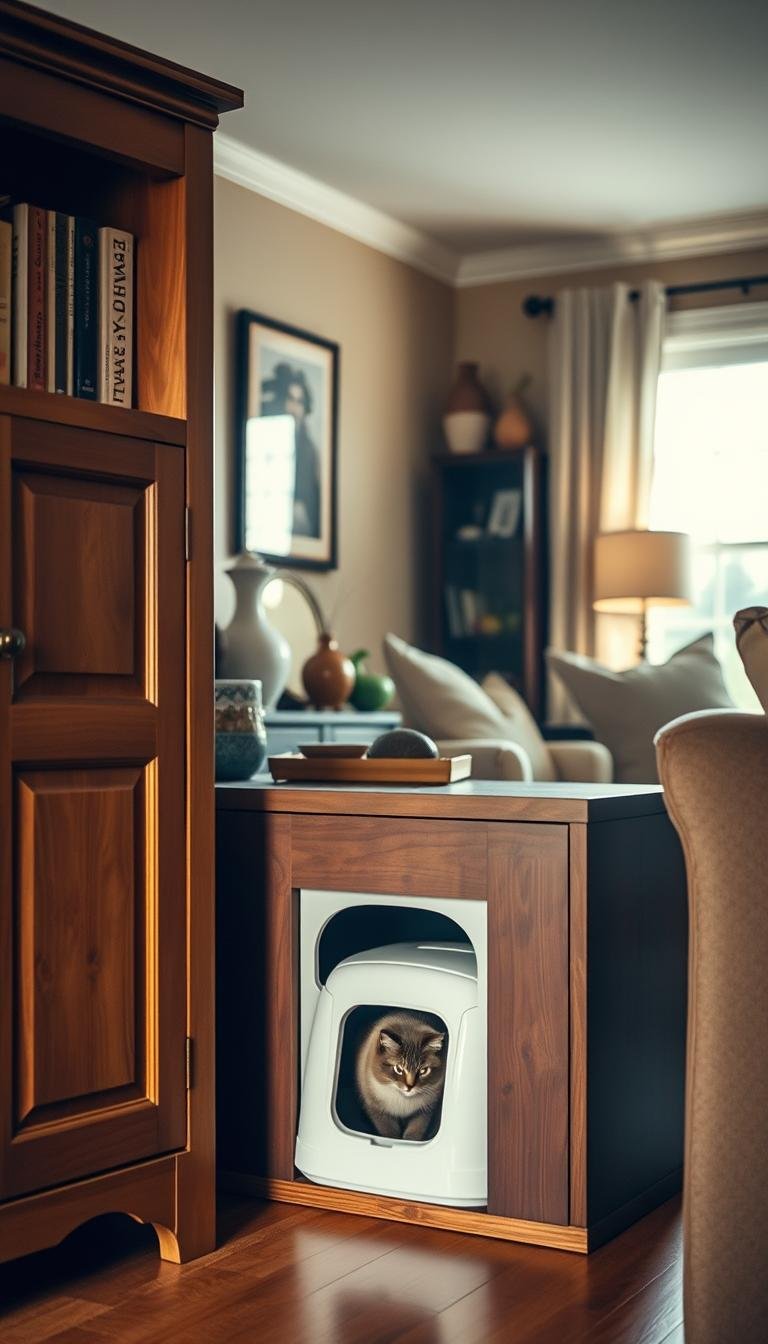
My favorite trick is converting an end table or small cabinet into a neat litter box enclosure with fabric panels and stick-on fasteners. It takes under an hour, uses low-cost materials, and avoids permanent cuts so a rental stays intact.
I place the box where it’s quiet, easy for my cat to reach, and out of direct traffic. Choosing the right litter plus routine cleaning keeps hidden litter from announcing itself to guests.
If you like DIY tweaks, you’ll find options that fit tiny rooms, narrow halls, or larger spaces while matching home décor.
Key Takeaways
- Use common furniture like a side table or small cabinet for a quick litter box enclosure.
- Keep setups renter-friendly with nonpermanent fasteners and fabric panels.
- Pick a quiet, accessible spot so cats feel safe and use the box reliably.
- Choose proper litter and clean often to control odors and tracking.
- Many DIY options fit different rooms and décor without big budgets.
The quick answer and what “easy” really means for me and my cat
For me, easy means quick setup, low cost, and no permanent changes to my home. I want a cat litter box that is quiet, private, and simple to maintain. I also want my pet to enter without jumping or squeezing.
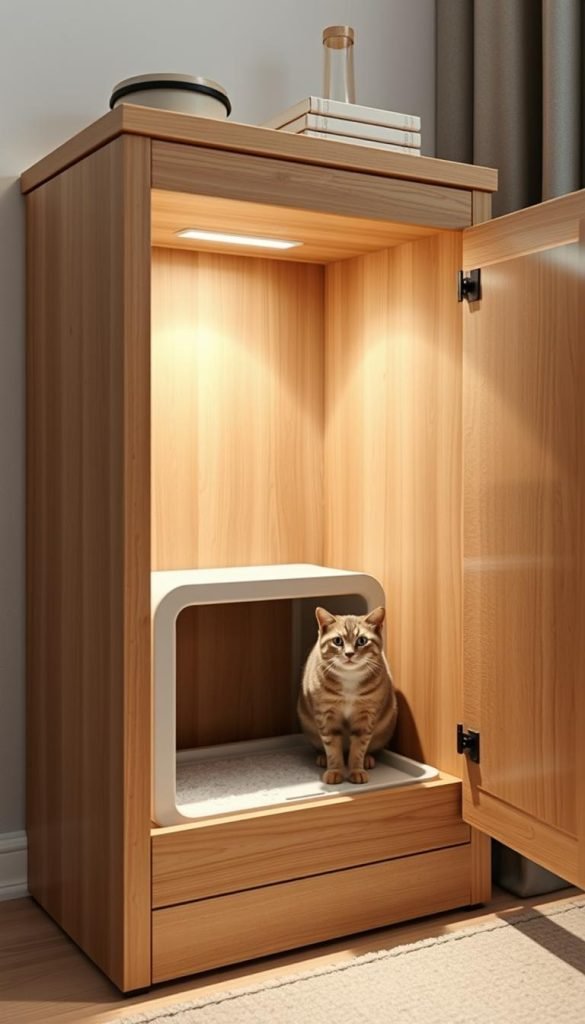
My criteria: minimal tools, low cost, fast setup, easy cleaning
I limit tools to a screwdriver and fabric. I pick spots where I can scoop daily and lift the pan for a weekly wash. That keeps cleaning painless and fast.
Top pick at a glance: skirted end table or vanity access panel
Skirted end table hides the box under an accessible front opening. It is cheap, renter-friendly, and gives privacy without noise.
“I hide the litter box under a skirted table or inside a vanity with a small access panel — it saves time and keeps things tidy.”
| Option | Cost | Speed |
|---|---|---|
| Skirted end table | Low | Under 1 hour |
| Bathroom vanity panel | Low–Medium | 1 hour |
| Closet with cat door | Low | Under 2 hours |
- Quick summary: I prefer hiding the box under a table or in a vanity for fast, renter-friendly results.
- I watch my cats for comfort; some avoid covered boxes, so I adjust as needed.
- Make sure the spot gives easy access and stays simple for routine cleaning.
Placement rules that keep cats using the box (and not my rug)
I pick spots where my feline can go without being watched or startled. Privacy matters more than tucking the unit away, because a nervous pet avoids a litter box and chooses other surfaces.
Choose a quiet, low-traffic room or corner so sudden noises or falling items won’t interrupt business. Keep the area free from toys, heavy objects, or open shelving that could spook your cat.
Accessibility is crucial. No stairs, no tight squeezes, and no jumps—especially for senior cats. If the spot sits behind a door that closes, I add a small cat door or pick another place with constant access.
I make sure cleaning is easy. Place the box where scooping and litter replacement are simple, so I don’t skip daily maintenance. For homes with multiple cats, I add extra litter boxes to reduce crowding and stress.
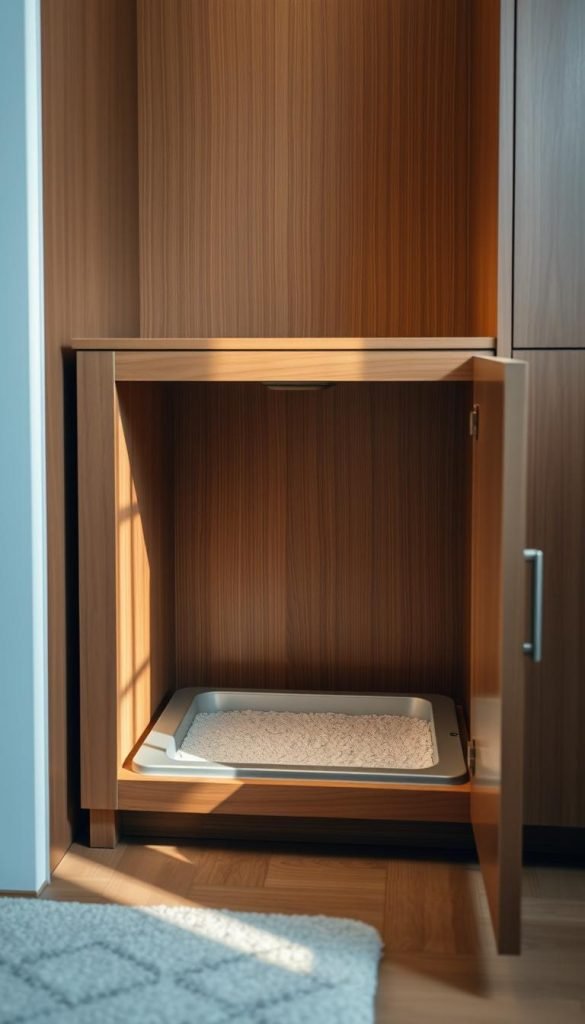
- Quiet space with low foot traffic
- Safe from other pets and falling items
- Open access 24/7, no obstacles
- Easy cleaning spot to keep habits consistent
What’s the easiest way to add a hidden cat litter box in plain sight?
My go-to fixes blend simple materials with furniture for discreet pet privacy.
Skirted end table trick
Fast setup: I tack fabric under a small table, leave a neat slit for entry, and slide the liner and pan inside. It hides sight and scent while matching décor.
Bathroom vanity or wall-mounted sink
For a wall-mounted sink I hang fabric on three sides so the litter box sits under the bowl. A vanity works if I cut a small door in a cabinet or hang a removable panel.
Closet with a cat door
I often convert a closet by installing a small door. That gives 24/7 access and keeps noise low. It’s renter-friendly if I use a removable panel.
Covered boxes and top/side entry
Quick privacy wins: Covered designs cut scatter and can add filters. I always check my cat accepts tight space before committing.
“A simple fabric skirt or tiny door usually gives privacy without major work.”
| Method | Speed | Best for |
|---|---|---|
| Skirted table | Under 1 hour | Small rooms, renter setups |
| Sink/vanity skirt | Under 1 hour | Bathroom or narrow space |
| Closet with door | 1–2 hours | Quiet, hidden space |
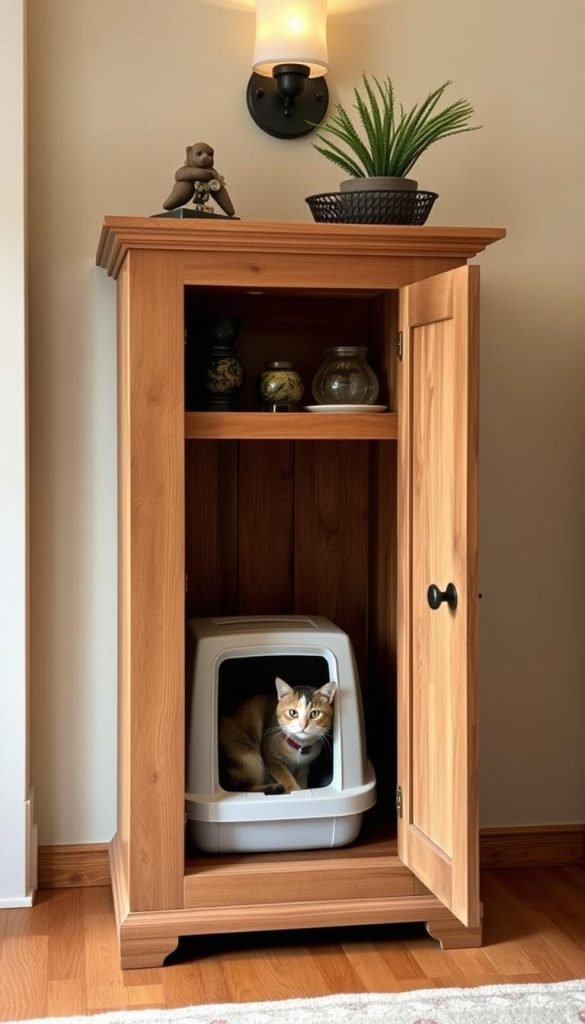
DIY litter box enclosure ideas I can finish this weekend
Weekend builds let me disguise a tray using items I already own. These quick projects hide litter without major carpentry and work well in small space apartments. I pick options that let me lift the box out for cleaning.
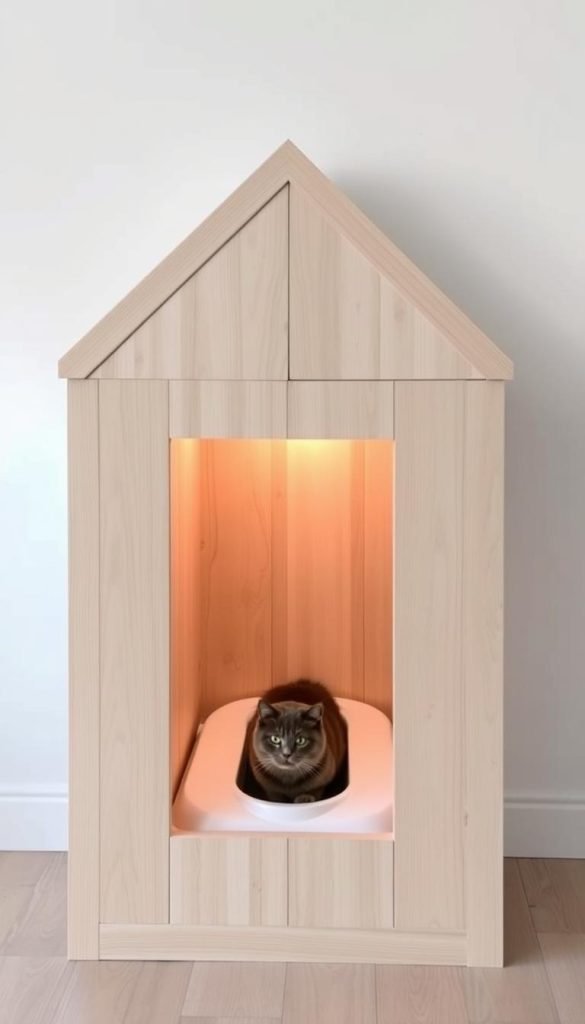
Wicker trunk or seagrass basket
I cut a smooth entry on the side or top and drop the litter box inside. Wicker is easier to modify than wood and looks like normal furniture.
Storage bin conversion
I trim 1/3–1/2 of the lid for top entry or cut a side opening for side entry. Top-entry bins reduce tracking and keep dogs out while still letting cats hop down.
Fabric skirt under a console or coffee table
A floor-length cloth hides the box with zero carpentry. I match fabric to my furniture so the setup blends into my living room.
“I size openings for my cat’s shoulders and sand cut edges so entry stays safe and snag-free.”
- Quick tips: sand or tape cut edges, size the entry for comfort, and test stability with a small amount of litter.
- I make sure the entire box lifts out easily for a weekly soap-and-water wash.
- Each diy project takes about 30–60 minutes and fits tight spaces without blocking walkways.
Litter box furniture that doubles as décor (and extra storage)
I prefer solutions that blend a litter area into real storage so rooms stay neat.
Purpose-built pieces give a polished look and useful surface. Nightstands, end tables, and foyer consoles made for litter box furniture come in many sizes. Ready-to-assemble options fit small spaces and match décor.
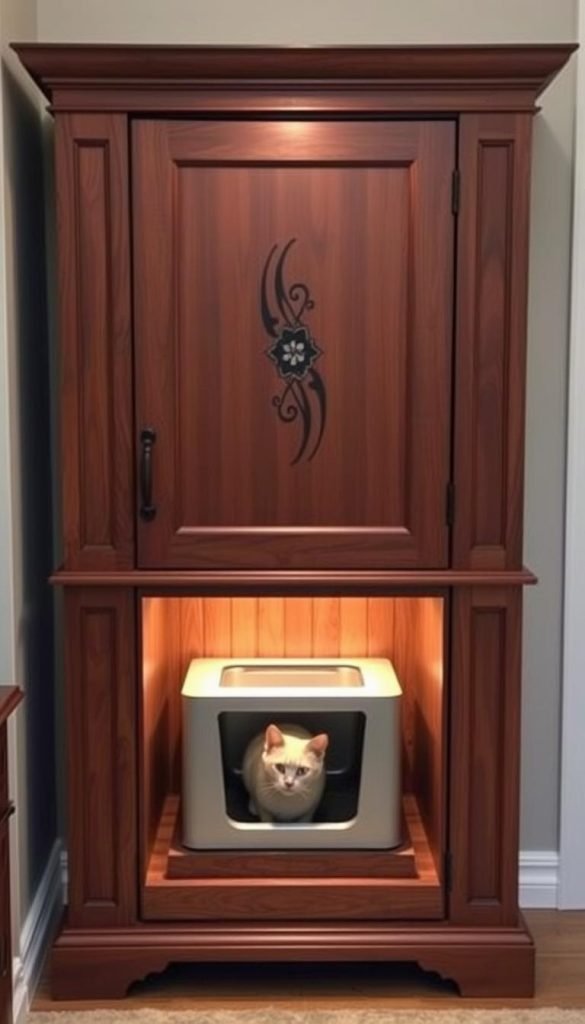
Nightstands, side tables, and cabinets built for litter boxes
These pieces offer discreet entry points and easy pan removal. I check interior dimensions so litter height and scooping space fit. Ventilation matters; I avoid tight, drafty enclosures.
Modifying existing furniture: add a small kitty door or removable panel
If I own a cabinet, I add a removable panel or fabric flap for renter-friendly access. A small door insert keeps 24/7 access and hides mess. I prefer designs where the front opens fully so I can pull the box out for cleaning without struggle.
| Type | Best for | Key feature |
|---|---|---|
| Nightstand | Bedroom | Top storage + hidden pan |
| End table / side table | Living room | Skirt or door entry |
| Cabinet / cart | Kitchen or entry | Removable front for cleaning |
“I pick finishes that wipe clean and pieces that add usable storage.”
Odor control and low-tracking litter so “hidden” really stays hidden
I want my disguised pan to smell fresh, not like a problem waiting for guests. Choosing the right mix of grains and a cleanup routine keeps odors down and tracking minimal.
I pick clumping, low-dust cat litter that seals odors fast. Options like ARM & HAMMER Clump & Seal AbsorbX, Cloud Control Breathe Easy, and Clump & Seal Complete work well in a small home or tight space.
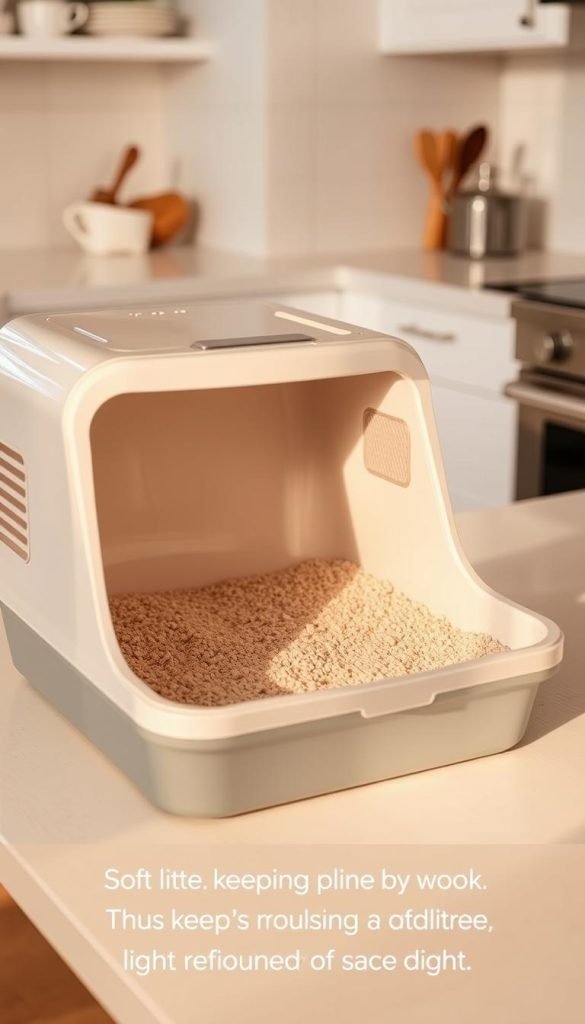
Simple habits that make a big difference
- I scoop daily and keep litter topped up so waste clumps cleanly.
- Once a week I empty the pan, wash with soap and water, and refill to prevent ammonia odors.
- I place a mat at the entry to catch grains and reduce tracking around furniture or a litter box enclosure.
- I allow airflow inside any box enclosure; covered units help odor but need ventilation for long-term freshness.
“Good odor control keeps a hidden litter truly hidden.”
For more placement tips I use this guide on top places for a discreet setup. Small adjustments in product or cleaning often solve subtle smell changes and keep my cats comfortable.
Make sure it’s safe, accessible, and easy to clean every day
I make safety my top priority when placing any litter setup in a shared room. I check routes, clear obstacles, and pick a spot that fits daily life. This keeps my pet comfortable and my home tidy.
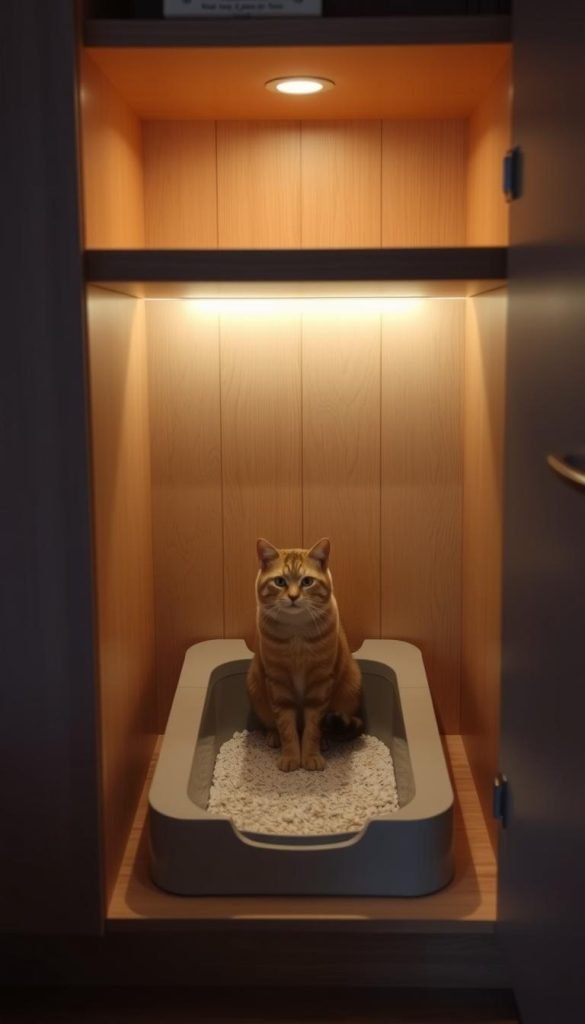
No climbing or jumping required—especially for seniors
I give my cat easy access with no steps or high jumps. Low-entry pans work best for kittens and older cats.
I place the box on one level so arthritic pets can enter without strain.
Keep doors open 24/7 and monitor bathroom habits for health
I avoid setups behind doors that close. If needed, I install a small door insert so access is constant.
Each time I scoop, I watch frequency, volume, and appearance. Changes can signal health issues. If I spot strain or avoidance, I call my vet right away.
- I make sure there’s easy access—no jumping, no steps.
- I choose a place I can scoop in seconds and lift the pan for weekly washing.
- I use a mat at the area entry, keep a small trash bin nearby, and place boxes in different rooms for multi-cat homes.
“Daily scooping plus a weekly soap-and-water wash keeps the setup safe, clean, and stress-free for cats.”
Conclusion
, I aim for setups that blend into decor while keeping daily care easy. A skirted table or vanity access panel is my top simple solution. It hides a hidden litter box in plain sight and fits small space living without heavy work.
I balance privacy, entry, and cleaning. I pick quiet corners, add a small door or fabric flap, and watch my feline’s habits. Good placement keeps cats using the box and prevents accidents on rugs.
For a polished finish, I choose litter box furniture or a wicker trunk conversion that offers storage, ventilation, and easy scoop access. With the right cat litter, daily scooping, and weekly washing, odors stay away and hidden litter stays hidden.