How do I pick blackout curtains that don’t look like hotel drapes?
I’ll show you how I choose panels that block light and still feel tailored and warm in a home.
Modern options blend form and function. I prefer triple-weave or thermal fabrics for true light control plus extra insulation and noise reduction.
Measure high and wide. Hanging a rod above the frame and adding fullness makes a window seem larger and more intentional.
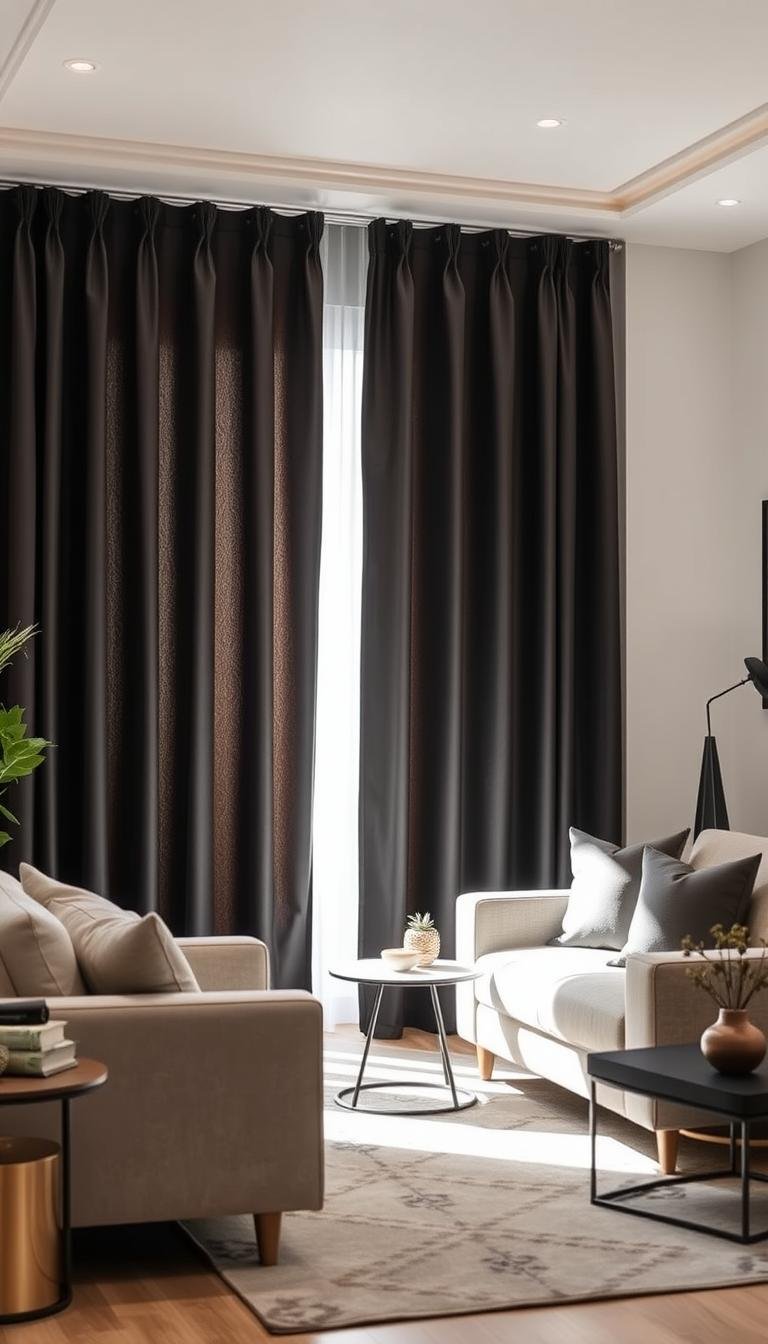
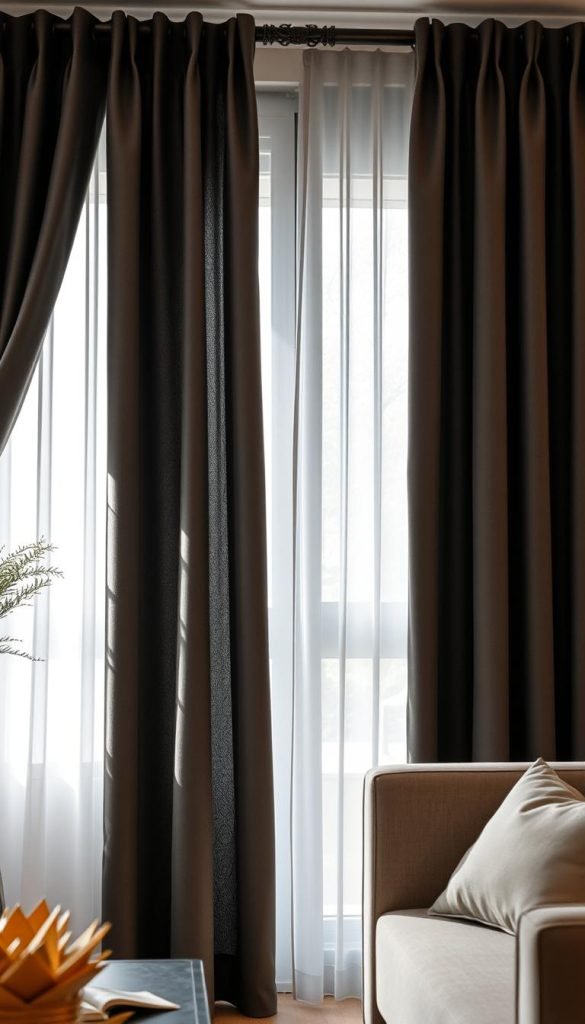
Avoid shiny finishes and limp construction. Instead, pick matte weaves, natural tones, and a heading that drapes well for a lived-in, designer finish.
I’ll walk you from fabric and lining to hardware and easy measuring tricks. You can get a polished result without custom pricing and still sleep in near-darkness.
Key Takeaways
- Choose matte, heavy weaves for both light control and good drape.
- Measure high and wide to create a tailored look.
- Prefer thermal or triple-weave for insulation and sound dampening.
- Skip shiny finishes and flimsy linings to avoid a mass-market feel.
- Select hardware and fullness to match your room’s design.
Why I care about blackout curtains that don’t look “hotel-y”
My priority is a room that reads residential and relaxed, not institutional. I want the window treatment to feel like part of the decor, not a utilitarian add-on.
Shiny, stiff fabrics often give that commercial vibe. Most hotel-style panels use glossy synthetics and heavy laminates. I avoid finishes that photograph as flat or plasticky.
Performance matters, too. True blackout fabrics bring more than darkness — they help stabilize temperature and slightly reduce street noise. That improves sleep and makes the space feel calmer.
- I favor matte weaves and textured hand-feel over glossy coatings.
- I choose materials that drape naturally and hold a neat pleat.
- Longevity and easy care are part of the style decision.
| Feature | Commercial-style | My preferred pick |
|---|---|---|
| Finish | High shine | Matte, textured |
| Hand-feel | Stiff, synthetic | Soft, tailored drape |
| Comfort benefits | Basic light block | Light block + insulation + noise damp |
| Longevity | Fades, loses shape | Holds pleat, cleans well |
Buyer’s Guide essentials: what actually makes blackout curtains look stylish
Good blackout panels combine substance with subtlety. Choose materials that read as part of the room while still giving serious light control.
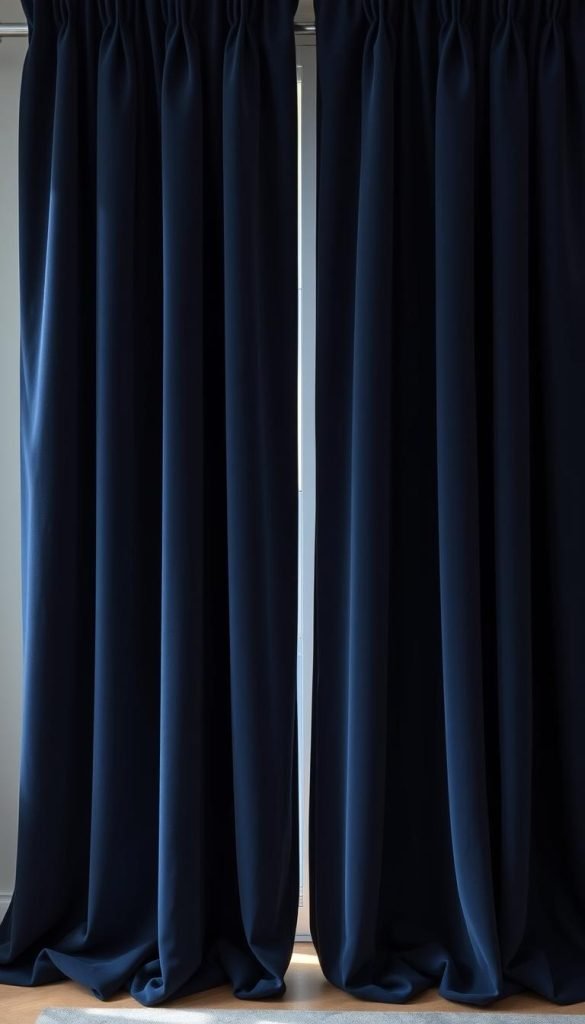
Balance form and function
Substantial, flexible fabric creates a clean fall without shine. I test the hand straight from the package; flexible panels steam smooth and look custom fast.
Triple-weave and lining choices
Triple-weave construction boosts opacity without a plasticky backing. Thin, shiny linings—examples include Eclipse Canova and Samara—can feel flimsy and iridescent. Best Home Fashion Thermal Insulated proved how a glossy finish reads theatrical even if it blocks light well.
- I favor weighty fabrics that still move; this yields a tailored fall and better hem recovery.
- Texture is key: subtle slubs or brushed cotton add depth and photograph well.
- Look for a soft, matte lining that blocks without broadcasting itself.
- Check seams and hem weight so daily opening and closing won’t pucker the panels.
How do I pick blackout curtains that don’t look like hotel drapes?
Start with what you feel under your hand: the fabric will set the tone for both style and function.
My quick decision framework: fabric, color, heading style, and hang
Fabric first. I choose linen blends, brushed cotton, or matte velvet so panels read warm and tailored. A matte textile with solid construction blocks stray light and avoids a slick finish.
Color and heading. I favor earthy neutrals or deep tones so the panels blend with the room. For an elevated fall I use back tabs or rings; grommets only when the metal reads clean and matte.
Hang and fullness. Hang high and wide, and get 1.5–2x fullness. That way the window looks larger and edge leaks shrink.
What I skip every time: overly shiny finishes and flimsy linings
- I avoid glossy microfiber and iridescent faces.
- No thin plastic backings or crunchy linings that reflect strange casts.
- Machine-washable matte options win if they keep drape and function.
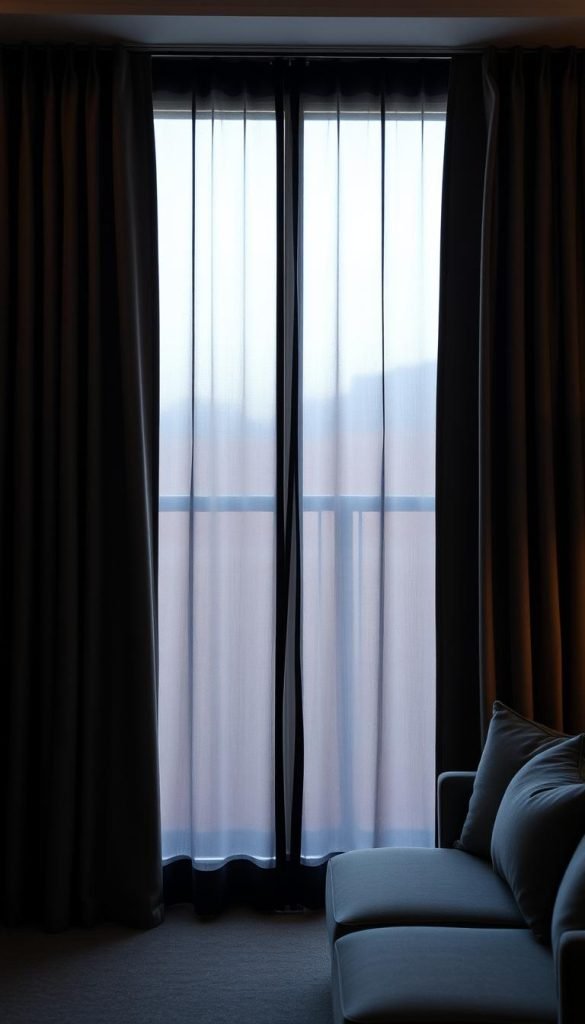
| Decision area | My preferred choice | What I skip |
|---|---|---|
| Face fabric | Linen blend, brushed cotton, matte velvet | High-shine microfiber |
| Heading | Back tabs or rings | Shiny grommets with visible finish |
| Lining | Soft blackout or matte thermal | Thin, glossy plastic backing |
| Hang | High & wide with 1.5–2x fullness | Exactly window-width, low rod placement |
The best fabrics for a non-hotel look: linen, cotton, and matte velvet
A well-chosen textile gives a room character while still keeping light under control.
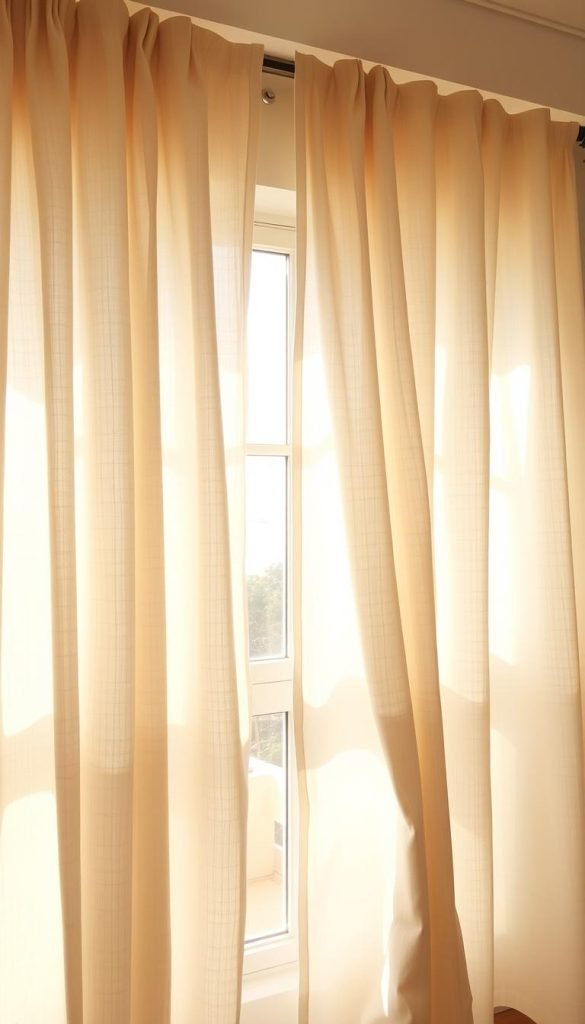
Linen and linen blends: textured, breathable, and elevated
Linen reads lived-in and refined. I like blends because they improve drape and light control while keeping that airy face.
Quince European Linen Blackout balanced softness and style and blocked about 80% of light. Blends often out-perform pure linen for practical blackout needs.
Brushed cotton and canvas: clean lines and soft matte finish
Cotton gives a tidy, modern fall with a soft matte surface. I favor midweight pieces with a good lining so panels fold quietly and hang straight.
Matte velvet: moody, luxe, and surprisingly versatile
Velvet brings depth without shine when the pile is dense and low-luster. Gracie Oaks Olivia Signature Velvet blocked roughly 90–95% and used a weighted hem plus back tabs for a polished hang.
- Favor textures that complement sofas, rugs, and paint.
- Avoid iridescent faces that read overly commercial.
- Steam samples: good fibers relax and hold a crisp line.
Color strategy: earth tones and deep neutrals that read “quiet luxury”
Earthy hues and deep neutrals create a quiet, collected backdrop for windows. They help the fabric read as part of the room instead of a standalone element.
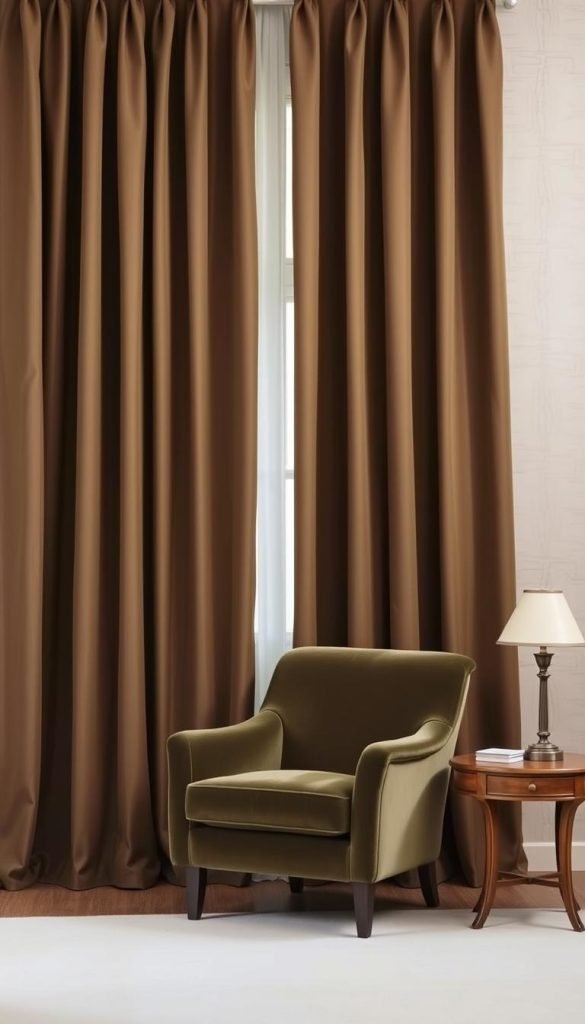
Oat, sand, olive, charcoal, navy, and warm whites that layer well
I reach for oat, sand, olive, charcoal, navy, and warm whites because these colors mix effortlessly with wood, stone, and soft metals.
Deep neutrals like charcoal and navy hide seams and hardware while absorbing light rather than reflecting it. Warm whites feel softer than stark whites and avoid cool blue casts in daylight.
Why I avoid high-shine hues and hard contrasts for blackout panels
High-shine or ultra-bright hues emphasize glare and seam lines. That makes panels read theatrical instead of homey.
When I’m unsure, I order swatches and view them in morning, midday, and evening. For small space treatments, I match panels to the wall or go one shade deeper so the whole space feels calm and cohesive.
- Keep curtain color slightly darker than sheers for depth without drama.
- Use neutral drapery to balance rooms with bold accents.
- Check backing color — soft backings prevent bright outlines at the edges.
Goal: a calm, matte field that supports the room instead of grabbing the spotlight.
Construction details that matter: heading types, linings, and fullness
The way a panel is built matters as much as the fabric itself.
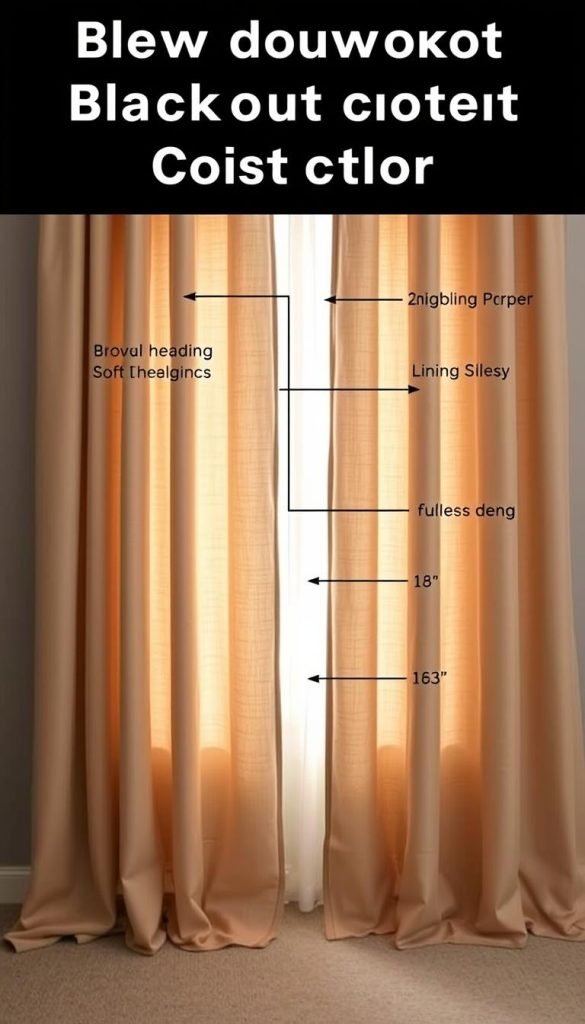
Heading choices define the mood. Back tabs and rings read tailored and designer. Grommets can slide smoothly but often feel casual unless the metal is slim and matte. A rod pocket blocks top light well but can be stiff to operate; I choose rings or a baton if I open panels every day.
Lining affects both performance and finish. Full blackout lining gives the most darkness, while room-darkening balances softness with a gentle glow—handy in living areas. Black-back liners block light efficiently but can show a harsh edge. Triple-weave gives opacity without a plasticky feel and usually drapes more naturally.
Fullness and weight make the fall look intentional. I buy panels at 1.5–2x the window width so curtains stack in soft S-curves and reduce edge light. Heavier fabrics and weighted hems keep edges straight and limit gaps. I also check rod diameter and bracket projection so the curtain clears trim and returns close to the wall for cleaner control of light.
| Feature | My pick | Tradeoff |
|---|---|---|
| Heading | Back tabs or rings | More tailored; needs rings or slim rod |
| Lining | Triple-weave or soft blackout | High opacity without shiny backing |
| Fullness | 1.5–2x window width | Better drape; greater stack-back needed |
| Hardware | Minimal matte rods with hidden returns | Elevates look; installs carefully for proper stack |
For more on fabric and heading options, see a quick guide to types of curtains.
Hanging like a designer: rods, height, width, and the “optical illusion” trick
A well-placed rod can turn modest windows into an architectural feature. The hardware you choose and where you mount it make the biggest visual difference.
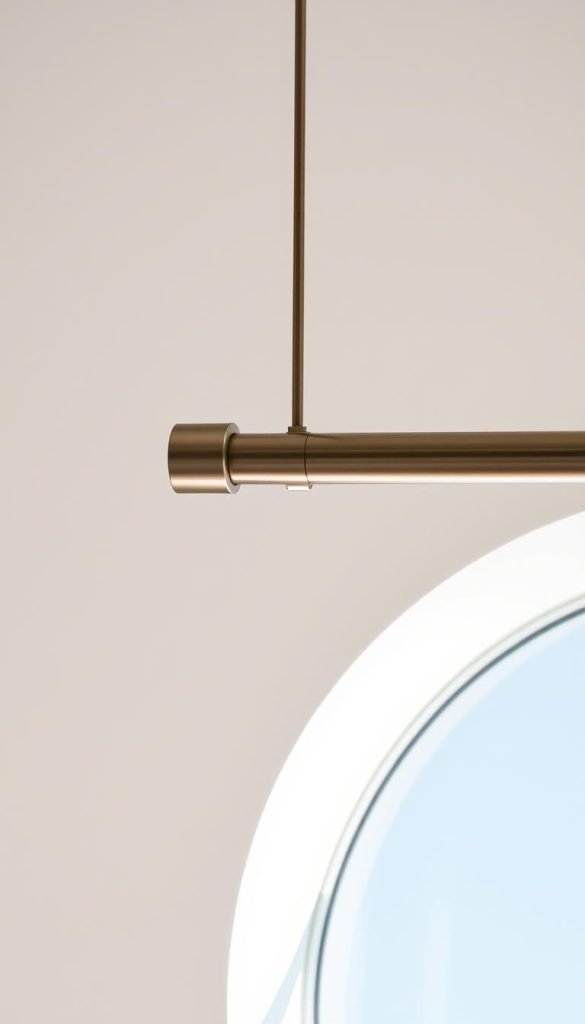
Hang high and wide for a bigger feel
Mount rods 4–8 inches above the frame to visually raise the opening. Extend the rod 8–12 inches past each side so panels clear the glass by day and stack off the window.
Choose the right finish and fittings
I prefer matte black or brass rods with slim brackets. They read intentional and hold heavier fabric without fuss. Skip tension options; they sag and reveal cheap hardware.
Length and light control
A floor-skimming hem reads custom. If you like a soft pool, keep it slight (1–2 inches). Return edges toward the wall to limit side light leaks and tighten the silhouette.
“Measure twice and test in both day and night.”
- Check center overlap so no light pokes through.
- Verify bracket placement so rings or tabs slide freely.
- Order the correct rod and curtain widths before installation.
My tested picks that look good and actually block light
Below are a handful of favorites I’ve tested for real darkness without the commercial finish. Each balances performance, care, and an elevated look so you can match the room and the need.
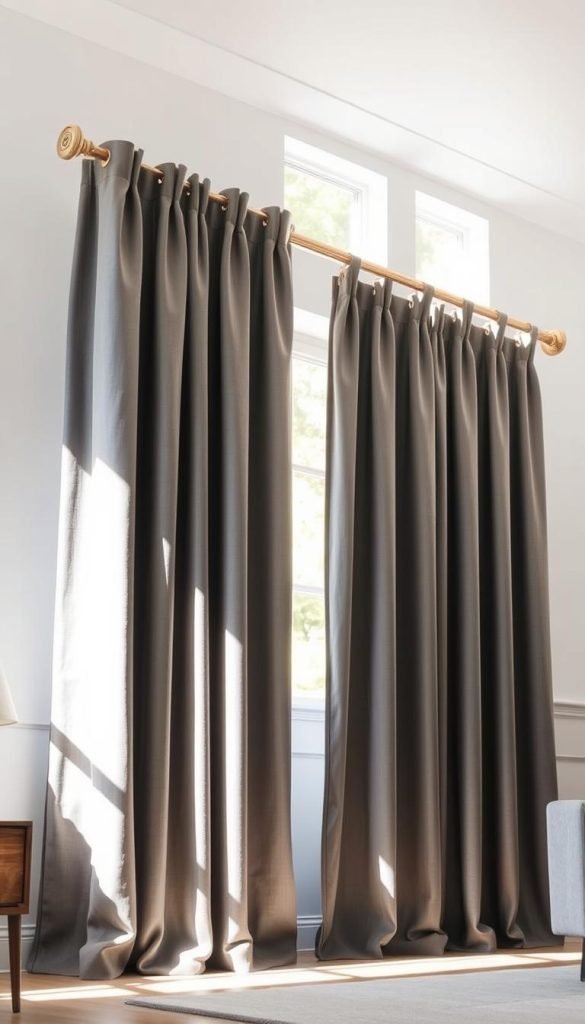
Sun Zero Nordic — best overall value
Why I like it: effective light block, soft hand, and machine-washable ease.
Grommets slide smoothly and the heavy black back makes nights near-dark.
IKEA Majgull — budget workhorse
Surprisingly solid for the price. Tests showed ~95% block and a bit of insulation and noise reduction.
Quince European Linen Blackout — linen face, softer block
It reads elevated with a linen surface and polyester backing. Expect about 80% darkness, which suits many bedrooms.
Gracie Oaks Olivia Signature Velvet — moody matte velvet
Dense pile, weighted hem, and 90–95% block. Care suggests professional cleaning, but the finish is luxe and deep.
Rose Home blackout liner — nearly total block
If you love your existing panels, add this liner. It blocks near 100% and comes with pocket and rings for flexible fit.
- Match the product to the room: stronger block for east-facing windows, softer for living spaces.
- Care matters: machine-washable panels save time; velvet needs gentler upkeep.
- Heading and hardware: pair back tabs or rings for tailored falls; choose matte grommets only if the finish is minimal.
| Model | Approx. block | Care & style |
|---|---|---|
| Sun Zero Nordic | ~95% | Machine wash; modern grommet look |
| IKEA Majgull | ~95% | Basic, durable; limited colors |
| Quince Linen | ~80% | Linen face; softer, elevated |
| Gracie Oaks Velvet | 90–95% | Weighted hem; pro clean suggested |
Brands and styles I skip—and why they read “hotel”
Not all popular labels pass my two-part test: strong block plus a warm finish. Some panels block light well but have a sheen or stiff hand that flattens a room’s personality.
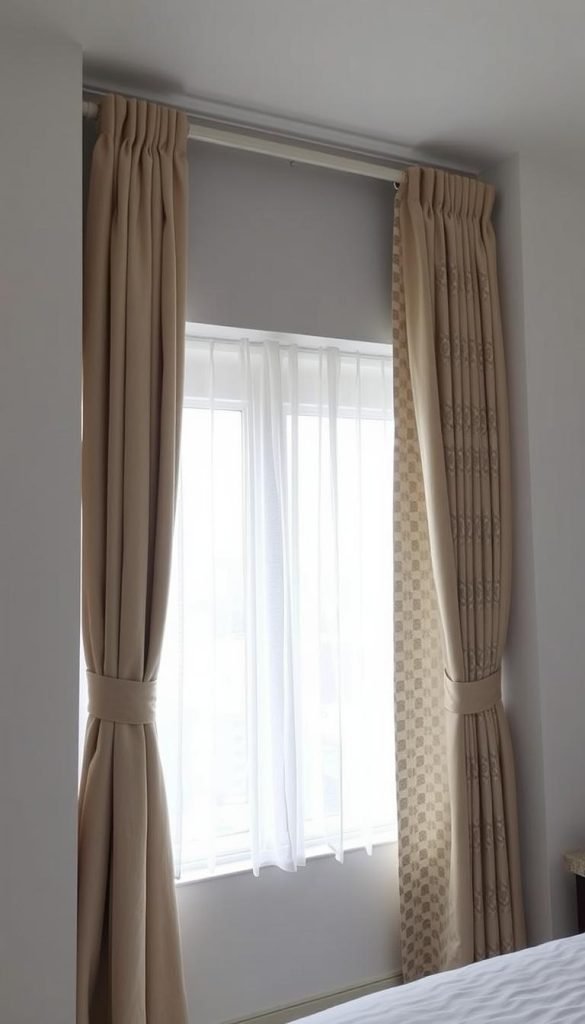
Shiny or stiff finishes: I avoid pieces with glossy faces or rigid weaves. Examples include some Eclipse models (Canova, Samara) and Sun Zero Evan/Easton — they felt plasticky and underwhelmed in blocking tests.
Pretty but underperforming: Anthropologie’s Luxe Linen Blend looked lovely but gave weak block for the price. Pottery Barn Emery shared the same tradeoff: beautiful face, disappointing night performance.
- Best Home Fashion Thermal Insulated blocked everything but read iridescent and theatrical.
- IKEA Sanela felt soft and luxe but behaved like a standard panel; Vilborg had sheen and a stiff weave I didn’t love.
- Target Threshold Aruba offered insulation but only ~70–75% block — heavy, yet not blackout-first quality.
| Model | Approx. block | Main issue |
|---|---|---|
| Best Home Fashion Thermal | ~100% | Iridescent finish |
| Eclipse Canova / Samara | Thin lining; flimsy | |
| Anthropologie Luxe Linen | ~80% | Pricey; weak block |
| Target Threshold Aruba | 70–75% | Heavy but not dark enough |
“Performance and finish must both be strong; one without the other yields a generic, commercial effect.”
Linen blackout curtains: getting the breezy look without losing sleep
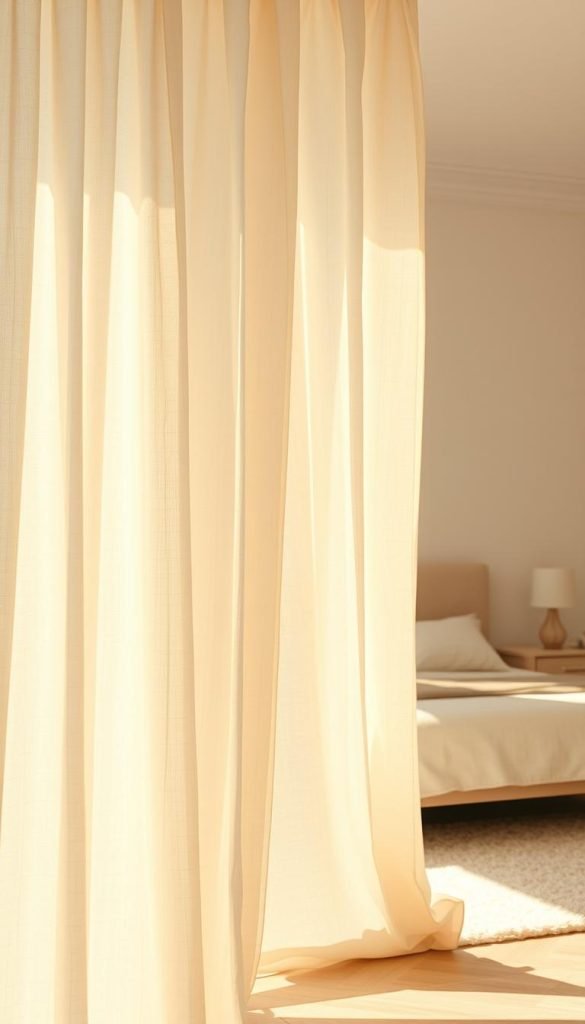
A linen face reads breezy and lived-in, yet pure linen often needs help to reach true darkness.
When linen blends beat pure linen for light control
I love linen’s texture and breathability, but pure linen can be semi-sheer. Linen blends usually drape better and block more light while keeping that tactile look.
Quince European Linen Blackout proved the point: soft and stylish, with roughly 80% block in testing. That level works well in many bedrooms where full night silence is not required.
Pairing with liners to boost darkness and insulation
For true darkness, add a liner. I layer a Rose Home Fashion blackout liner behind linen panels to push darkness near 100% and gain thermal benefits.
Check the liner tone at the edges. A softer backing avoids a harsh outline and keeps the installation feeling refined.
- Aim for fuller widths so linen folds look tailored.
- Steam linen well—wrinkles read sloppy and cheapen the effect.
- Choose deeper neutral faces in bright rooms to absorb stray light.
| Product | Approx. block | Notes |
|---|---|---|
| Quince European Linen Blackout | ~80% | Elevated face; best with added layer |
| Rose Home Fashion liner | ~100% | Attaches or hangs; adds insulation |
| Linen blend panels + liner | 90–100% | Breezy look with true darkness |
“The result is a breezy, elevated texture with genuinely restful nights.”
Finish tip: Pair linen with matte black or brass hardware to keep the presentation polished instead of overly casual.
Measurement cheat sheet: my quick, no-return guide
Take a few clear numbers and you’ll avoid returns and late-night fixes. Accurate measuring makes the install look intentional and improves light control.
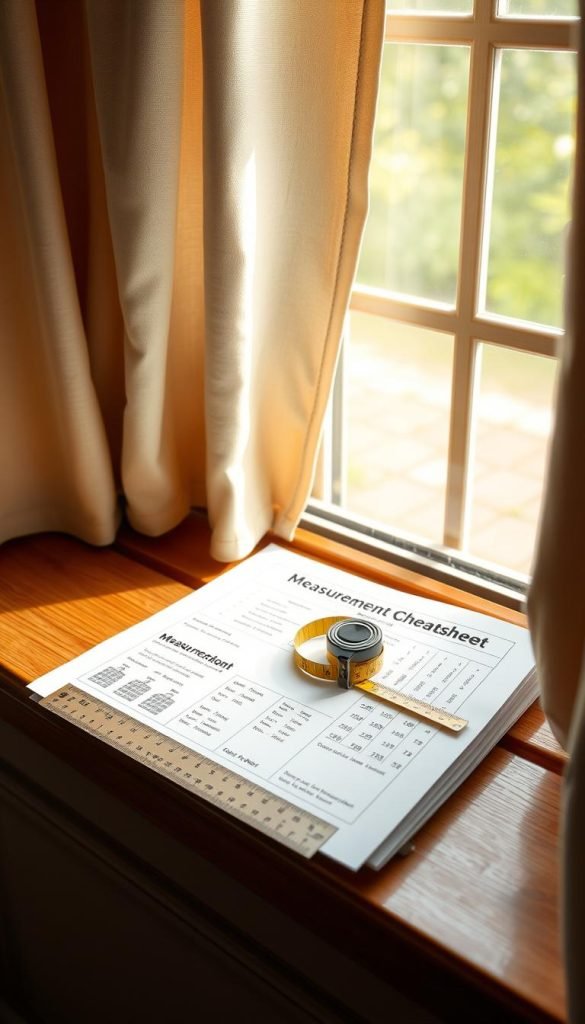
Width, fullness, and overlap to kill center light leaks
Start with the glass width. Measure the full window and multiply by 1.5–2x for total panel width. That gives the fullness needed so panels stack neatly and block center light.
- Mount the rod 4–8 inches above the trim to lift the opening visually.
- Extend the rod 8–12 inches past each side so panels clear the glass by day and seal edges at night.
- Plan a center overlap—use extra fabric or an overlap master so no bright line slices through the middle.
Length targets: just kissing the floor or a slight pool
Aim for floor-skimming hems for a crisp, tailored look. If you prefer a puddle, keep it modest: 1–2 inches only.
- Account for bracket projection and returns so the curtain pulls close to the wall and limits side leaks.
- Confirm ring or tab clearance so panels glide without snagging and keep a clean pleat.
- Double-check measurements against your actual rod and hardware before ordering to avoid surprises and returns.
“Measure twice, install once — then test at night with a light behind the window.”
Follow this cheat sheet and your windows will read custom. With proper width, hang height, and a small center overlap, the blackout performance will feel intentional and the day-to-night transition will be seamless for your curtains.
Blackout vs room-darkening: how much light block do I really need?
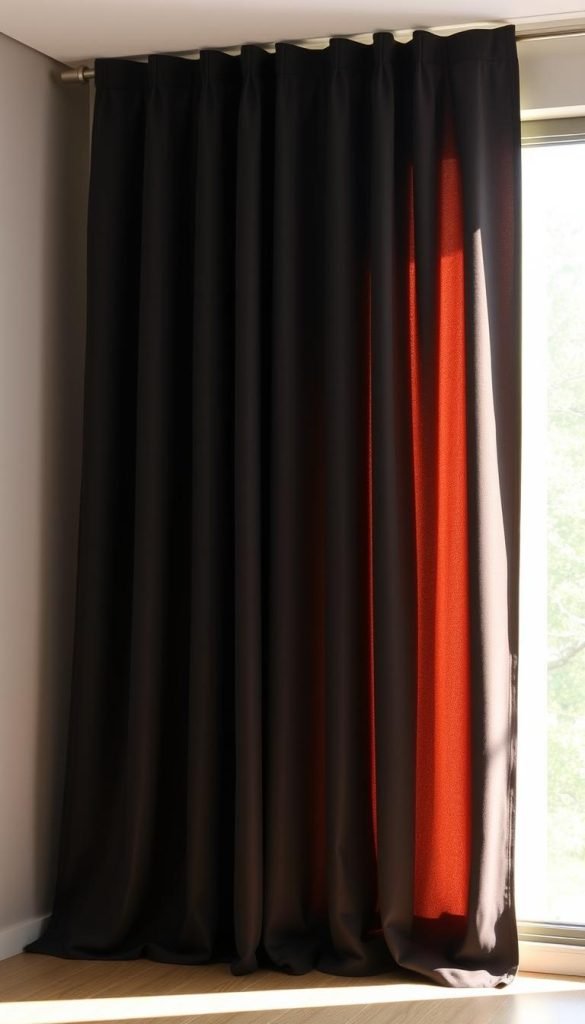
Not every room needs total darkness; the level of block should follow the room’s purpose. I match performance to use because a single solution rarely fits every space in a home.
Bedrooms, nurseries, and home theaters usually demand the heaviest control. For true darkness I choose panels that hit roughly 90–100% blackout. Sun Zero Nordic and Gracie Oaks Olivia Signature Velvet tested near 90–95%, and adding a Rose Home liner pushes that toward 100%.
Living spaces and casual rooms often do well with gentler treatment. Quince European Linen Blackout blocked around 80%, which keeps mornings soft while still reducing glare and offering privacy.
When 70–80% is enough—and when to aim for 90–100%
- 70–80% is fine for living rooms, dens, and areas where some daylight is welcome.
- 90–95% suits bedrooms, nurseries, and media rooms where darkness aids sleep or viewing.
- Near 100% is worth it for shift workers, new parents, or dedicated screening rooms; stack a liner behind a panel.
I also weigh orientation and external light sources. East windows and bright streetlights push me toward higher block. Lastly, I always test at night with an interior light on to see residual glow. The right choice balances comfort, healthful sleep, and how you use each room every day.
| Use | Typical block | Example product |
|---|---|---|
| Living / casual room | 70–80% | Quince European Linen Blackout (~80%) |
| Bedroom / nursery | 90–95% | Sun Zero Nordic; Gracie Oaks Velvet (~90–95%) |
| Shift work / home theater | ~100% | Panel + Rose Home liner (near 100%) |
Care, cleaning, and longevity: keeping curtains soft, matte, and dust-free
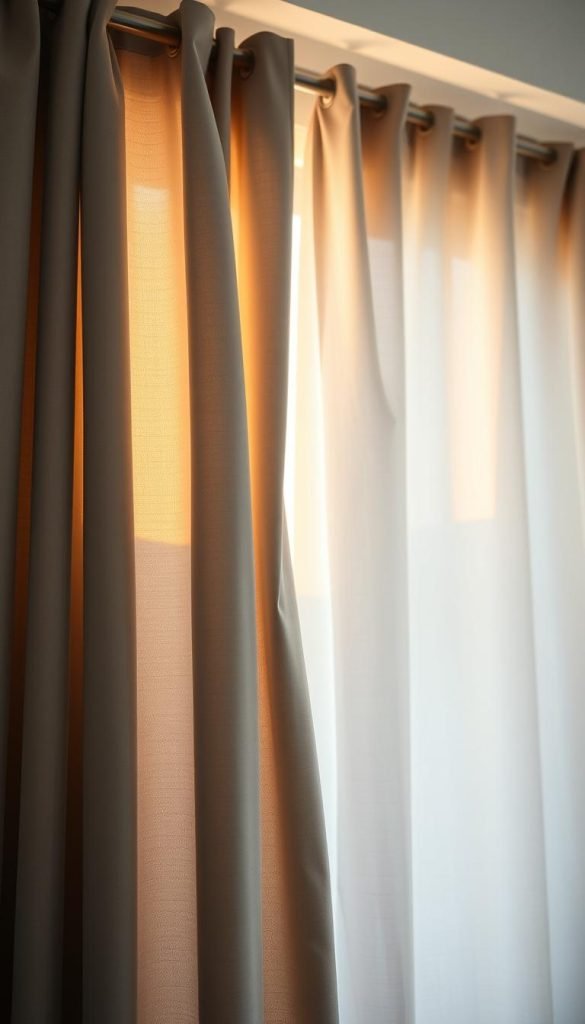
A little routine care keeps panels feeling soft and matte for years. Gentle maintenance preserves both look and performance so your night and day control stays reliable.
Steaming and light cleaning are the fastest wins. I steam panels right out of the package to release creases; matte fabrics relax nicely and read custom fast. Sun Zero Nordic held up well after months of machine washing. Rose Home liners wash easily and refresh the whole system.
Steaming wrinkles, vacuuming dust, and when to dry clean
I vacuum curtains monthly with a soft brush to lift dust and pollen, especially in rooms with open windows. IKEA Majgull stood up to vacuuming and trimming without fraying.
For velvet, I vacuum in the pile direction and use a lint brush. Gracie Oaks velvet cleaned best with careful vacuuming and occasional professional cleaning.
- Spot first: treat hems and high-touch areas before a full wash.
- Gentle wash: avoid harsh detergents and high heat; hang dry when possible.
- Rotate seasonally: even out sun exposure and fading.
- Hardware check: tighten brackets and inspect rings so panels glide from day to night without stress.
“A little care keeps the fabric soft, the finish matte, and the look elevated for years.”
| Product | Care note | Longevity tip |
|---|---|---|
| Sun Zero Nordic | Machine washable; stayed like new | Wash gentle cycles; hang dry |
| IKEA Majgull | Vacuum friendly; trims without fray | Monthly vacuum; steam wrinkles |
| Gracie Oaks Velvet | Responds to vacuuming; lint roll | Occasional pro clean to protect pile |
| Rose Home Liner | Machine washable; refreshes block | Wash to restore insulation and effect |
Conclusion
, Good panels marry purpose and polish so your windows read intentionally. Choose matte, substantial fabrics and calm colors for an elevated result. The right construction and a proper hang finish the job.
Use the measurement cheat sheet to get width, length, and overlap correct. Small adjustments at install time change how a window reads and how well it stops light.
My tested picks — Sun Zero Nordic, IKEA Majgull, Quince European Linen, Gracie Oaks Olivia Velvet, and Rose Home liners — cover a range of budgets and needs. They show the best options for strong blackout performance and a non-commercial aesthetic.
In short: favor drape and finish, match blocking levels to daily life, and treat hardware as part of the design. With a little planning, blackout curtains become quiet luxury at your window, blocking light beautifully while supporting your room’s style and look.