What are the quietest ceiling fans that still look designer?
I define a quiet ceiling as a unit that hums below room conversation and blends with your room style.
I test motors, mounts, and blades by listening at low and medium speeds. Hunter models often sit near 30–40 dB thanks to vibration-absorbing mounts, sealed bearings, and precision-balanced blades.
Good aerodynamic blades and DC motors move more air with less effort, so you spend less time running a high setting and hear less noise. ENERGY STAR-rated units also save energy; some models deliver much better air velocity while staying efficient.
Price matters when it buys a quieter motor, stronger balance, and lasting finish. Installation and proper sizing decide if a quiet ceiling fan stays quiet in your bedroom or open-plan living area.
Key Takeaways
- Look for DC motors and precision-balanced blades for whisper-quiet operation.
- Hunter and SureSpeed tech often hit low dB ranges and high air velocity.
- Higher price can mean better motor and durability, but installation matters most.
- A good quiet ceiling fan moves more air at lower speeds, saving energy and noise.
- Match fan size and mount to room height for the best result.
My quick take: what “quiet” and “designer” really mean for ceiling fans today
I focus on real-room tests to separate tidy marketing lines from measurable comfort. I listen in a bedroom and a living space to judge whether a fan hums, wobbles, or blends into background sound.
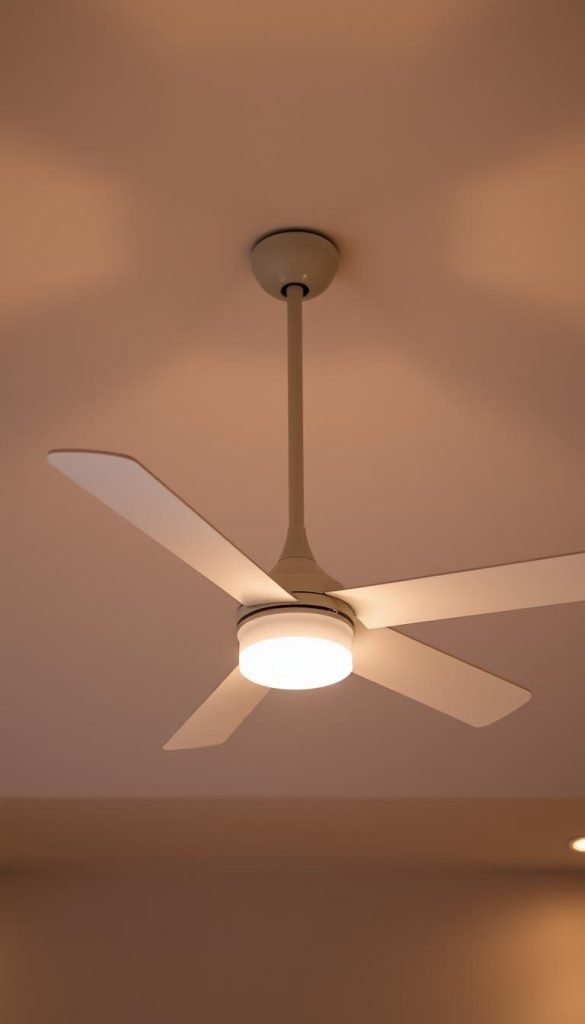
Quiet ceiling to me means low mechanical hum, minimal wobble, and smooth air that does not compete with talk or sleep. A designer piece pairs those traits with considered proportions, clean lines, and finishes that read premium in multiple spaces.
- Performance comes from engineering: motor housing, balanced blade fit, and mount quality matter more than size alone.
- DC motors usually run quieter and use less energy, though some premium AC models can surprise you.
- LED lighting is silent when paired with proper drivers; buzzing often points to dimmer or driver issues, not the light itself.
I use real metrics—low-30s decibels on low/medium—as a practical yardstick when comparing options and price tiers. Balance, blade profile, and correct fan sizing for rooms trump raw blade count. Finally, scale and ceiling height change both design impact and quiet performance, so pick a model that fits the space, not just a photo.
How I evaluate a quiet ceiling fan that still looks designer
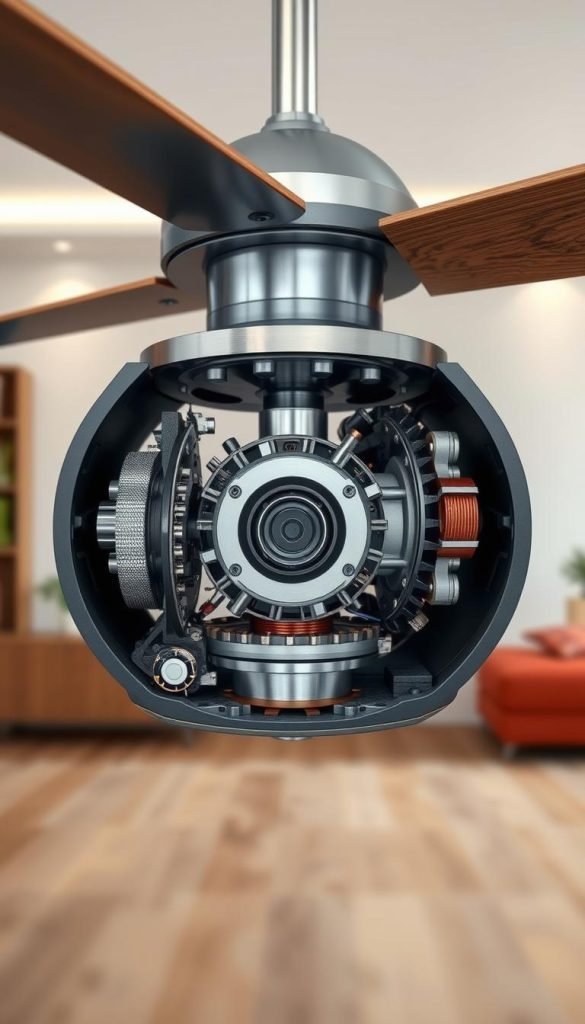
I start with the motor because drive quality sets the baseline for sound and performance. I compare DC units to premium AC designs like Hunter’s WhisperWind, which uses sealed bearings and insulated housing to cut internal hum. Motor technology often predicts long-term quiet.
Motor choices and real noise control
DC motors usually win for silence and efficiency, but WhisperWind-style AC motors can be impressively quiet thanks to vibration-absorbing mounts and sealed bearings.
Blade design and balance
Good blades use proper pitch and aerodynamic profiles. Precision-balanced blades and sturdy mounts reduce wobble and stop resonance from growing over time.
Noise benchmarks and room context
I expect low-30s dB on low/medium in bedrooms and living rooms for top models. That keeps sound below normal conversation and allows comfortable sleep.
Fit, finish, and lighting
Designer credibility comes from clean silhouettes, consistent materials, and colorways that match modern interiors. I also test dimmable LED drivers for buzz-free lighting.
- Air per watt at low speeds shows smart engineering.
- ENERGY STAR models usually mean better efficiency and quieter running.
- I weigh price against motor build and proven testing.
| Motor Type | Noise Target (low/med) | Key Benefit |
|---|---|---|
| DC | 30–35 dB | High efficiency, quiet steps |
| WhisperWind AC | 32–40 dB | Sealed bearings, durable |
| Standard AC | 35–45 dB | Lower price, variable noise |
Room-first selection: matching fan size, speeds, and style to your space
I always match fan size and mounting to the specific room before anything else. That simple rule prevents oversizing or underpowering a unit and keeps noise in check.
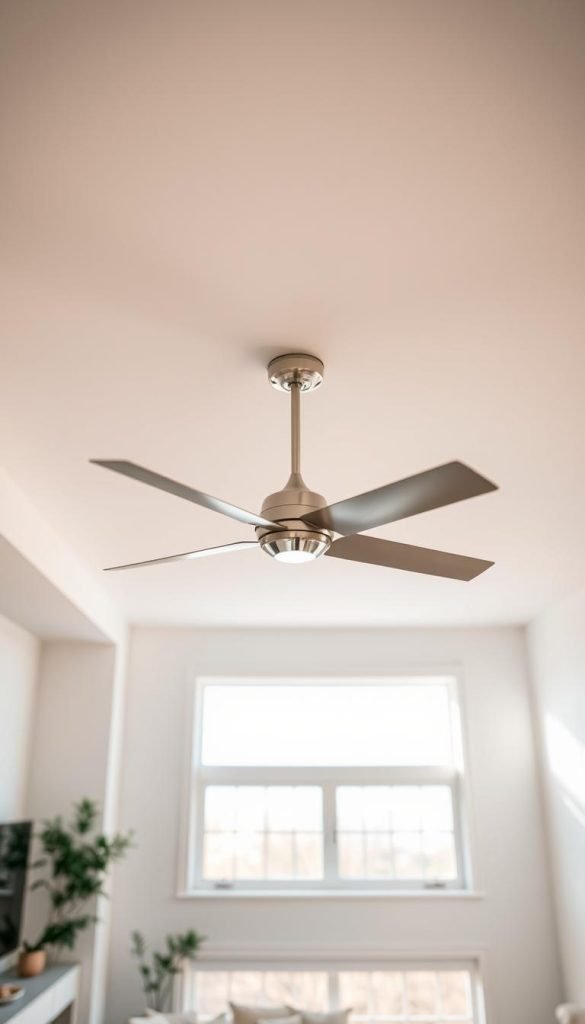
Bedrooms need steady, low-speed airflow, dimmable light, and a calming silhouette. Hunter recommends settings that move air quietly at night while offering soft, indirect light for sleep.
Bedrooms and primary suites
I favor fans with low-speed torque and smooth blades so you don’t have to run high RPMs. A dimmable driver helps avoid buzz and keeps mood right for rest.
Living rooms and open concept spaces
In larger living rooms I pick efficient blades with aerodynamic profiles. SureSpeed-style designs deliver high-velocity air with controlled noise so you get cooling without turbulence.
- Right size: match blade span to room dimensions and ceiling height.
- Mount choice: low-profile for short ceilings, downrod for tall spaces to reduce resonance.
- Use and price: balance cost against motor quality and long-term quiet performance.
Top designer-quiet picks for bedrooms
I pick models that deliver smooth air on gentle speeds so nights stay cool and calm. Below are two bedroom-ready options I trust for low noise and tasteful design. Both ship balanced and include remotes for easy control.
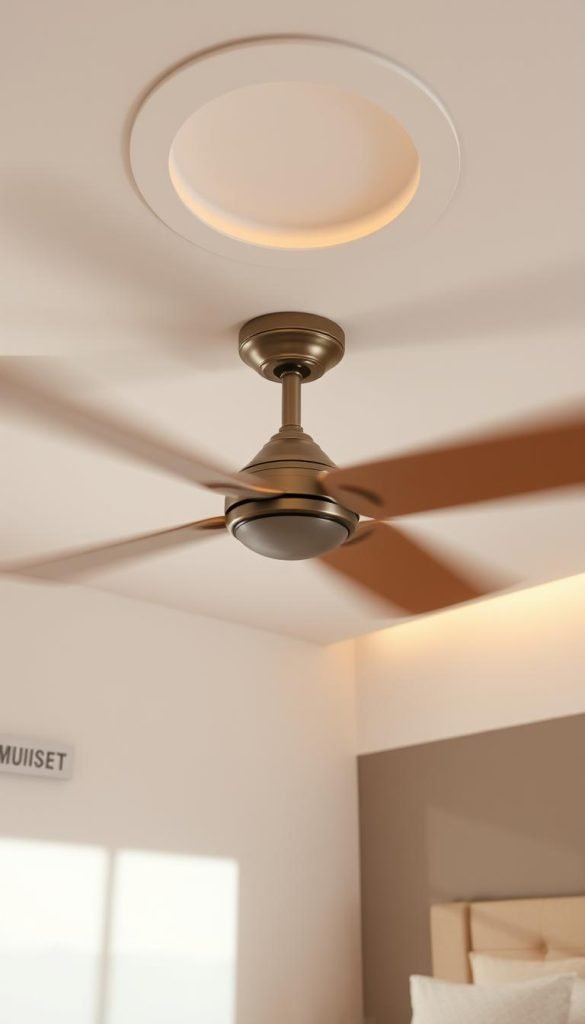
Monte Carlo Minimalist 56″
Why I like it: The Minimalist uses a DC 85 motor and hand-carved balsa blades. Those featherlight blades move steady air at low speeds with minimal rotor noise.
Extras: It’s damp rated for covered outdoor spots and comes with a remote for bedside adjustments. For bedrooms that need calm airflow and a refined profile, this one is my favorite.
Minka Aire Simple 52″
Why I like it: The Simple combines a quiet DC motor with a balanced three-blade design. It’s wet rated, so it works indoors or in protected outdoor rooms.
Extras: Remote included; WiFi via Bond is available for routines. It ships without a light, which is ideal if you prefer no overhead illumination in a sleep space.
- Performance note: Both fans move enough air on low/medium that you rarely need top speeds, cutting noise and energy use.
- Build and price: They sit above entry-level in price, but the quiet motor and blade quality justify the cost for long-term calm.
- Balance: Out of the box these models come well-balanced, so you avoid late-night rattles.
| Model | Motor / Blades | Rating | Included |
|---|---|---|---|
| Monte Carlo Minimalist 56″ | DC 85 motor / Hand-carved balsa | Damp rated (indoor/covered outdoor) | Remote |
| Minka Aire Simple 52″ | Quiet DC motor / 3 balanced blades | Wet rated (indoor/outdoor) | Remote; WiFi via Bond (optional); light kit sold separately |
Standout quiet ceiling fans for living rooms and open layouts
For large living spaces I focus on how a fan spreads air without adding hiss or turbulence.
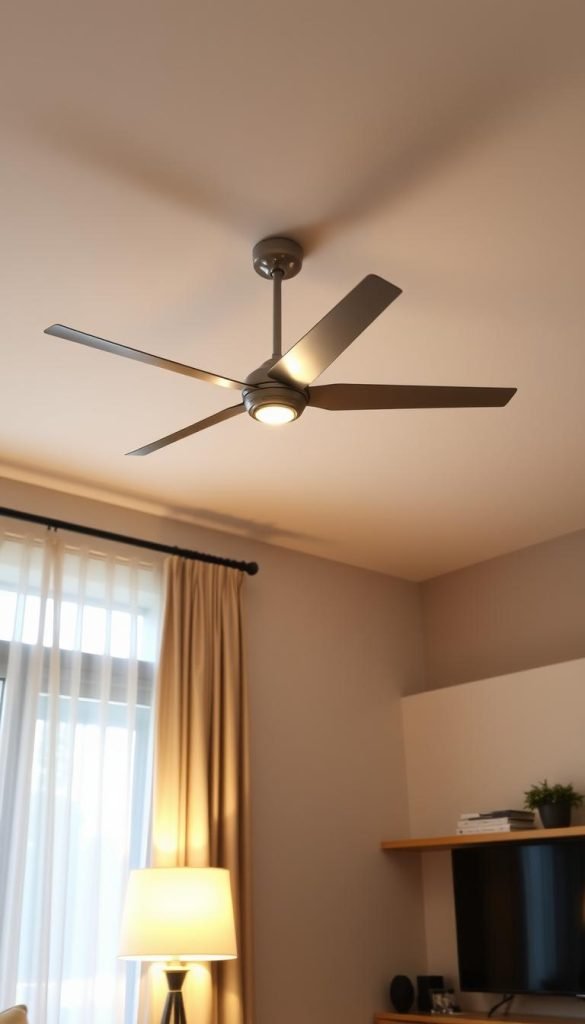
Monte Carlo Turbine 56″ deserves a spot in big rooms. It uses eight perfectly balanced blades and a reversible DC motor with six speeds. That combo moves serious air while keeping background noise low.
The Turbine’s double lighting—downlight plus uplight—adds layered ambiance without audible buzz. Its blade array spreads load evenly to avoid resonance or a chopping sensation.
Hunter SureSpeed options
Hunter tunes aerodynamic blades and balanced motors to push higher velocity air while limiting noise. In my tests, SureSpeed designs deliver roughly 33% higher airflow versus many rivals, which helps cool open plans faster at lower speeds.
- I like 6-speed ranges for smooth control and steady performance.
- Both families pair modern style with practical light kits or quiet LED options.
- Watch price—you pay for engineering that preserves low noise in large rooms.
| Model | Key Specs | Best use |
|---|---|---|
| Monte Carlo Turbine 56″ | 8 balanced blades; reversible DC; 6 speeds; down+uplight | Large living rooms needing steady airflow + layered light |
| Hunter SureSpeed series | Aerodynamic blades; balanced motors; high air velocity; quiet LED kits | Open concept homes that need strong air with low noise |
| Performance notes | High airflow at lower RPMs; reduced resonance; solid remotes | Movie nights, gatherings, and everyday living |
For more quiet options from Hunter I link to a selection I trust: Hunter quiet ceiling fans collection.
Quietest designer fans with integrated LED light
I prioritize fans that give steady air delivery while offering quiet, built-in lighting for everyday use. Below I compare two models that balance low noise, efficient lighting, and tasteful design.
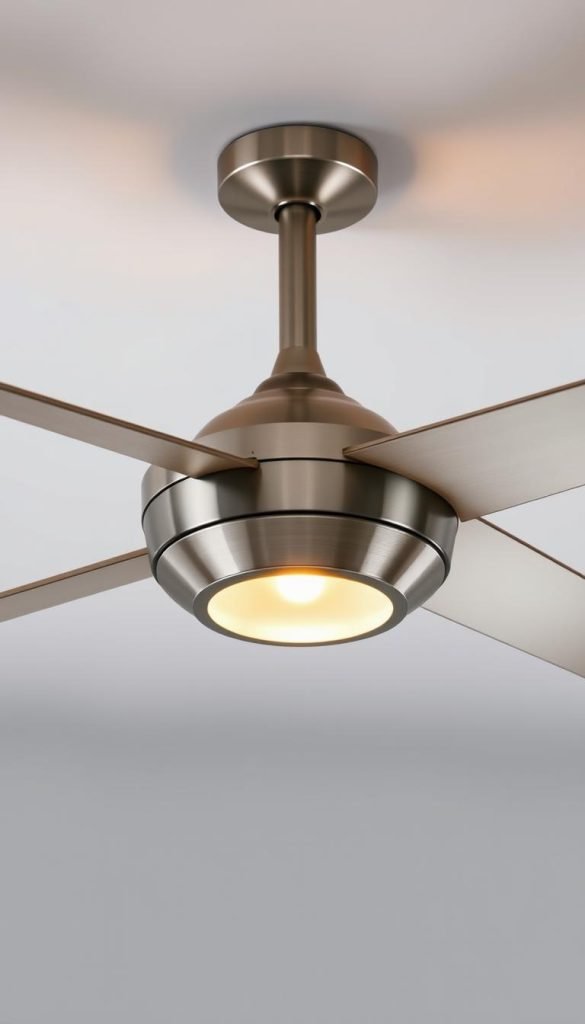
Emerson Luray Eco 60″
Why it stands out: The Emerson uses an EcoMotor for ultra efficiency and lower noise. It is Energy Star rated and includes an integrated LED light for consistent lighting with no buzz.
The angled blade design and six speeds let you run lower RPMs while moving the same amount of air. That reduces sound without sacrificing comfort in mid-to-large living rooms.
Reiga 52″ LED
Why I like it: The Reiga pairs a very quiet DC motor with a 24W color-tunable LED and a simple remote. It’s budget-friendly and suited for bedroom use or a covered patio.
The LED offers smooth dimming and multiple color temps. Combined with the quiet motor and compact span, it gives good lighting and gentle airflow at a modest price.
My quick pick: Choose the Emerson Luray Eco 60″ for larger rooms and integrated lighting with Energy Star efficiency. Pick the Reiga 52″ LED when price and bedroom-friendly calm matter most.
What are the quietest ceiling fans that still look designer? My curated shortlist
I selected fans that keep background noise down while adding a clean, modern silhouette. Below are four clear recommendations for different rooms, budgets, and lighting needs.
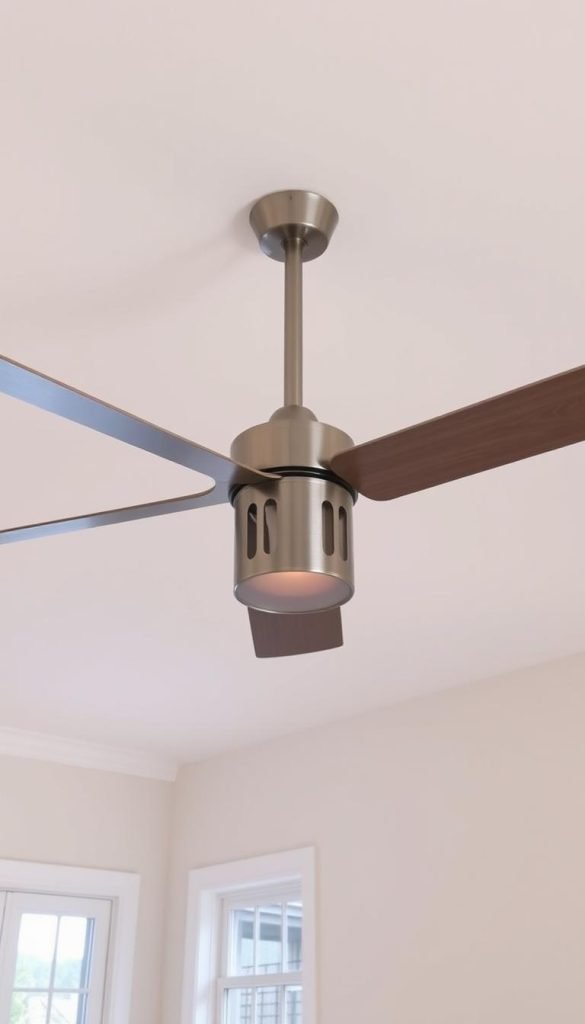
Best overall bedroom pick
Monte Carlo Minimalist 56″ — A DC 85 motor with hand-carved balsa blades delivers whisper-level calm and elegant form. It’s damp rated, so it works for covered patios too.
Tip: Use a short downrod for low ceilings to preserve quiet and balance.
Best open concept pick
Hunter SureSpeed series — Designed to move more air across large rooms with roughly 33% higher velocity while keeping the noise floor low. Great for living areas and entertaining.
Installation note: A downrod length that places the blades at recommended height improves airflow and reduces resonance.
Best with LED light
Emerson Luray Eco 60″ — EcoMotor plus integrated LED gives Energy Star efficiency and steady, buzz-free lighting. Expect solid low-speed air with refined illumination.
Best budget designer look
Reiga 52″ LED — Quiet DC motor, 24W color-tunable LED, and a remote make this an affordable option that reads upscale. It’s a smart choice when price matters without sacrificing calm performance.
- Room guidance: Monte Carlo for bedrooms; Hunter for open spaces; Emerson for rooms needing integrated light; Reiga for cost-conscious style.
- Price advice: Spend more on motor and balance; save on finish or extras if budget is tight.
- Low-speed results: All four provide usable air and soft light at gentle settings—where quiet gains matter most.
| Pick | Best use | Key benefit |
|---|---|---|
| Monte Carlo Minimalist 56″ | Bedrooms, covered patios | Quiet DC motor; elegant profile |
| Hunter SureSpeed | Open concept rooms | High airflow with low noise |
| Emerson Luray Eco 60″ | Mid-large rooms needing light | Energy Star LED; hush motor |
| Reiga 52″ LED | Bedrooms, budget-friendly spaces | Quiet motor; tunable LED |
Smart, energy-efficient, and low-noise: features I prioritize

I choose features that keep daily use simple while cutting hum and wasted energy.
Smart control and convenience
Smart fan integrations matter to me. HunterSMART works with Alexa, HomeKit, and Google, so voice or app control keeps a fan quiet without walking to a switch.
Energy Star and efficient airflow
Energy Star ceiling models use far less power—about 64% more efficient on average—and deliver more air at lower speeds. SureSpeed systems prove you can get high air velocity while keeping noise low.
Lighting and dimming quality
I check LED drivers for smooth dimming and no buzz. Good lighting electronics stop flicker and avoid adding an audible hum to an otherwise calm room.
“I prioritize controls, efficient motors, and LED drivers that keep a room calm and well lit without extra noise.”
| Feature | Why it matters | Real benefit |
|---|---|---|
| Smart control | Voice/app + remote | Hands-free quiet settings |
| Energy Star motor | Higher efficiency | More air at lower speeds |
| LED driver | Smooth dimming | No flicker or buzz |
- I prefer well-tuned speeds so you can find a near-silent low setting.
- Check default behavior after outages and avoid cheap power supplies that add noise.
- Match smart features to how you use the room; sometimes extra cost buys daily ease worth the price.
AC vs DC motors, blade count, and balance: what actually affects noise
Noise comes from a few predictable sources: motor behavior, blade interaction with air, and how a fan mounts to the ceiling.
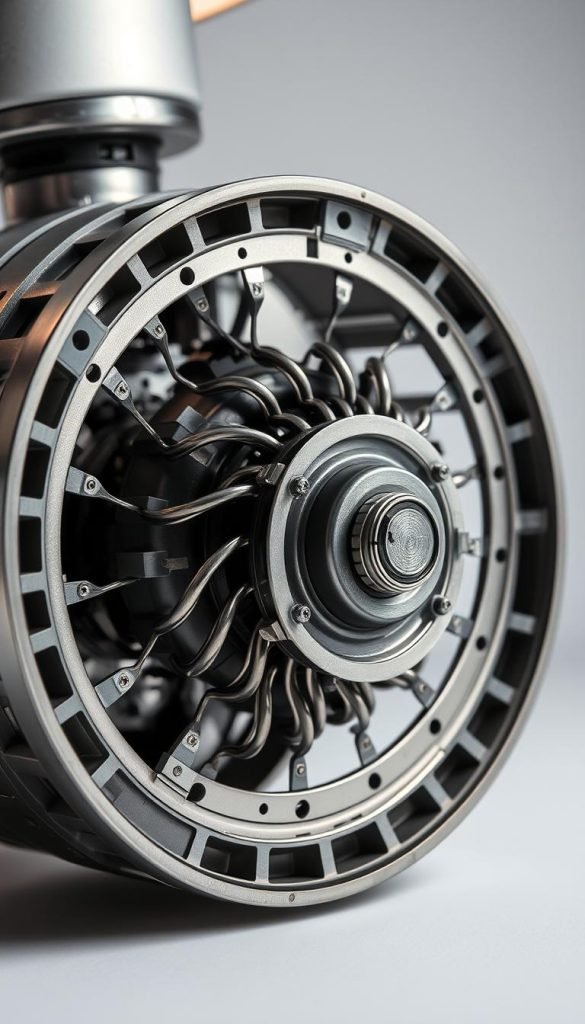
Why DC often wins
DC motors use smoother commutation and compact housings. That reduces vibration and gives better low-speed torque so you avoid strain and rough hum.
More speeds let you dial in a calm setting that moves air without turbulence.
Premium AC options
High-end AC builds use sealed bearings and insulated housings. When factory-balanced and paired with good mounts, those models can be nearly as quiet as DC units.
Blade count, pitch, and the chopping effect
Blade shape and pitch matter more than pure count. Wide surface area, trailing-edge shaping, and correct pitch move steady air with less turbulence.
Poor balance or harsh edges cause a chopping sensation and amplify sound at mid-to-high speeds.
- Mounts and hardware: tight downrods and vibration-absorbing mounts keep structure-borne noise out of the room.
- Price buys: better bearings and factory balancing often reduce noise from day one.
- Lighting: a clean LED driver and neat wiring stop hum when lights are on.
“Choose motor quality, blade design, and pro-set balance as the features that most directly control noise.”
Installation and maintenance tips to keep fans whisper‑quiet over time
A careful install and small seasonal checks keep a fan whisper-quiet for years. I recommend a pro for mounting to ensure the junction box, bracket, and downrod align and sit tight. FLC Select stresses that correct mounting cuts vibration from day one.
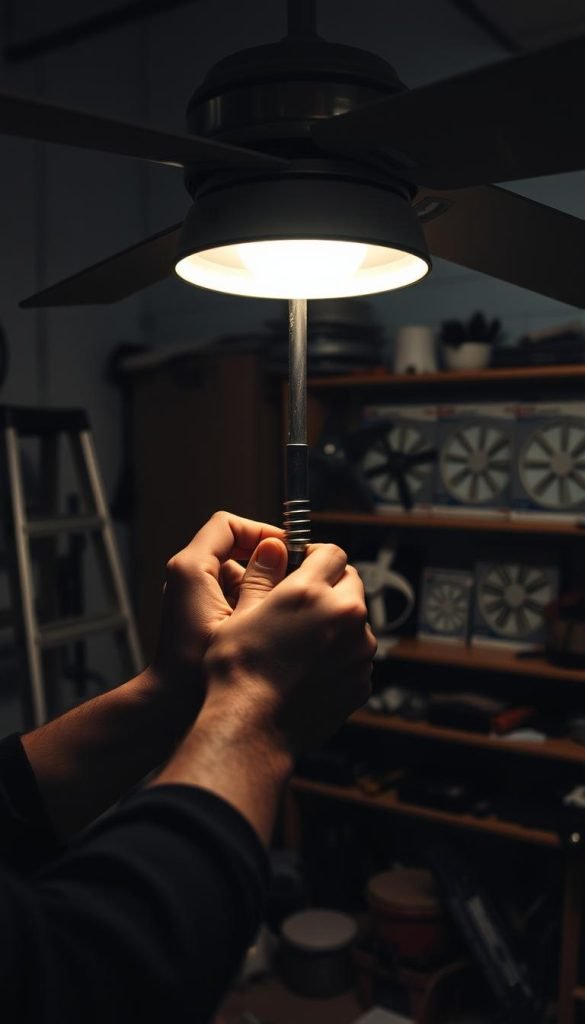
Professional mounting, seasonal tightening, and blade cleaning
Professional mounting preserves long-term quality. A trained installer checks for worn hardware and fits parts so structure-borne noise stays out of living spaces.
Seasonal checks mean snug canopy screws, blade arms, and light kit fasteners. I tighten but avoid overtightening; even torque prevents transmitted vibration.
Regular cleaning keeps balance. Hunter advises removing dust from blade edges so air flow stays smooth and balance stays true in bedrooms and other quiet rooms.
- Level-check blades and use the included balancing kit if wobble appears.
- Route wiring neatly in the canopy to avoid contact buzz or a rattling receiver.
- Use genuine replacement parts to protect bearings and mounts and preserve fan quiet.
“I keep a modest maintenance budget in my price plan—small upkeep prevents big noise problems later.”
| Task | Frequency | Benefit |
|---|---|---|
| Mount inspection | Once at install | Reduced vibration |
| Tighten hardware | Seasonally | Stops loosening noise |
| Blade cleaning & balance | Every 3–6 months | Smoother air and quieter use |
Budget vs premium: finding the right price-performance-style balance
I help readers match spend to results. You can get calm operation on a budget, but there are clear reasons to spend more when long-term quiet matters.
When to spend more on motor technology and materials
Pay up for motors and bearings when you need lasting silence. DC motors and premium AC builds with sealed bearings and insulated housings reduce vibration and hum.
Energy Star models bring better efficiency—about 64% on average—and lower running costs. Premium finishes and stiffer mounts also help damp structure-borne noise while elevating room style.
Where budget models still shine without sacrificing quiet
Budget options can be very capable in bedrooms and small rooms. Models like Reiga pair a quiet DC drive with an integrated LED light and give good low-speed air at a modest price.
My practical take: match choice to room size and use. Spend more for large open rooms, or pick well-reviewed budget options for bedrooms and patios to save up-front without trading away calm.
“Focus on motor build, balance, and LED driver quality—those features most often justify higher price.”
| Price Tier | Best use | Key benefit |
|---|---|---|
| Premium | Large rooms, formal living | Top motors, sealed bearings, long warranty |
| Mid | Most homes | Good balance, Energy Star, solid LED drivers |
| Budget | Bedrooms, small spaces | Quiet DC options, integrated led light, value |
- Consider operating costs: efficient fans reduce bills and narrow the long-term gap between tiers.
- Check warranty and parts availability when comparing price—service protects quiet performance.
- Prioritize LED driver quality so you don’t trade light buzz for silent airflow.
Where I shop for quiet, designer ceiling fans in the U.S.
I often begin shopping by visiting local showrooms to feel finishes and test quiet operation in person. That helps me judge lighting dimming, motor hush, and overall design before buying.
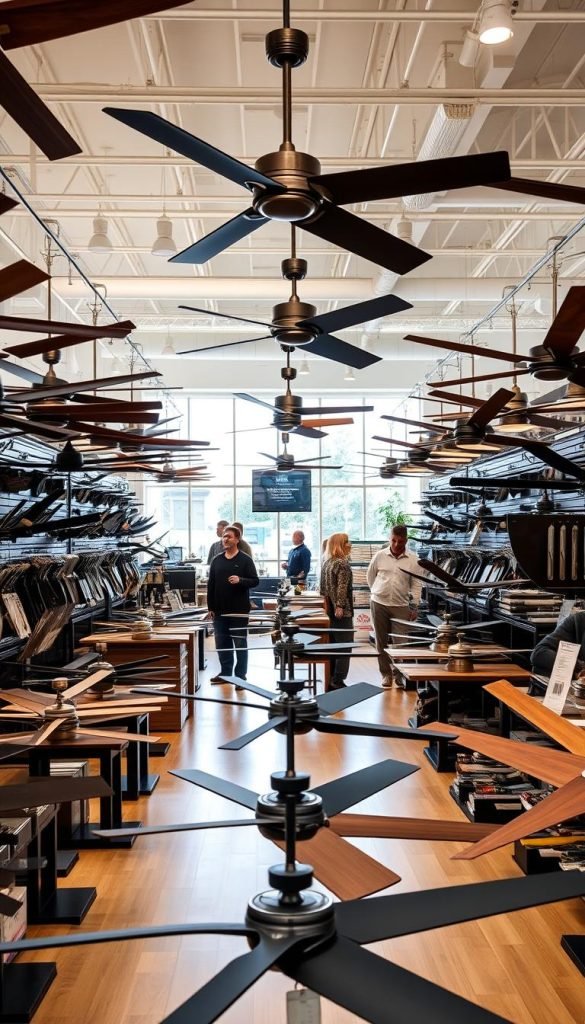
I start with specialty retailers like FLC Select for curated picks from Minka Aire and Modern Forms. Their team offers hands-on guidance for rooms and spaces and helps pick mounts and downrods.
I buy direct from Hunter when I want SureSpeed airflow, ENERGY STAR efficiency, and full HunterSMART smart fan integrations with Alexa or HomeKit.
- I compare price and warranty across official sites and trusted dealers.
- I check delivery and return policies for remodel timing.
- I verify LED drivers and remote/app support so lighting stays silent.
“Use showrooms and trusted dealers so you get genuine parts, proper mounts, and smoother installs.”
| Retailer | Strength | Best for |
|---|---|---|
| FLC Select | Curated picks + showroom help | Bedrooms & small spaces |
| Hunter (direct) | SureSpeed, Smart integrations | Large living rooms |
| Trusted dealers | Warranty & accessories | Fast installs & service |
Conclusion
I close with a simple rule: pick engineered hardware and the right size so noise stays background and comfort stays front. ,
I value sealed bearings, balanced blades, aerodynamic profiles, and correct mounting because those features drive quiet ceiling performance. Hunter targets about 30–40 dB on lower speeds, and SureSpeed raises air velocity while holding sound in check.
Match span and speeds to bedrooms and living rooms so you can run lower settings most of the time. Consider Energy Star models and solid LED drivers for long‑term efficiency and no-buzz light.
Balance price against daily comfort, plan a careful install, do a few minutes of seasonal care, then pick a model from my shortlist and enjoy the quiet.