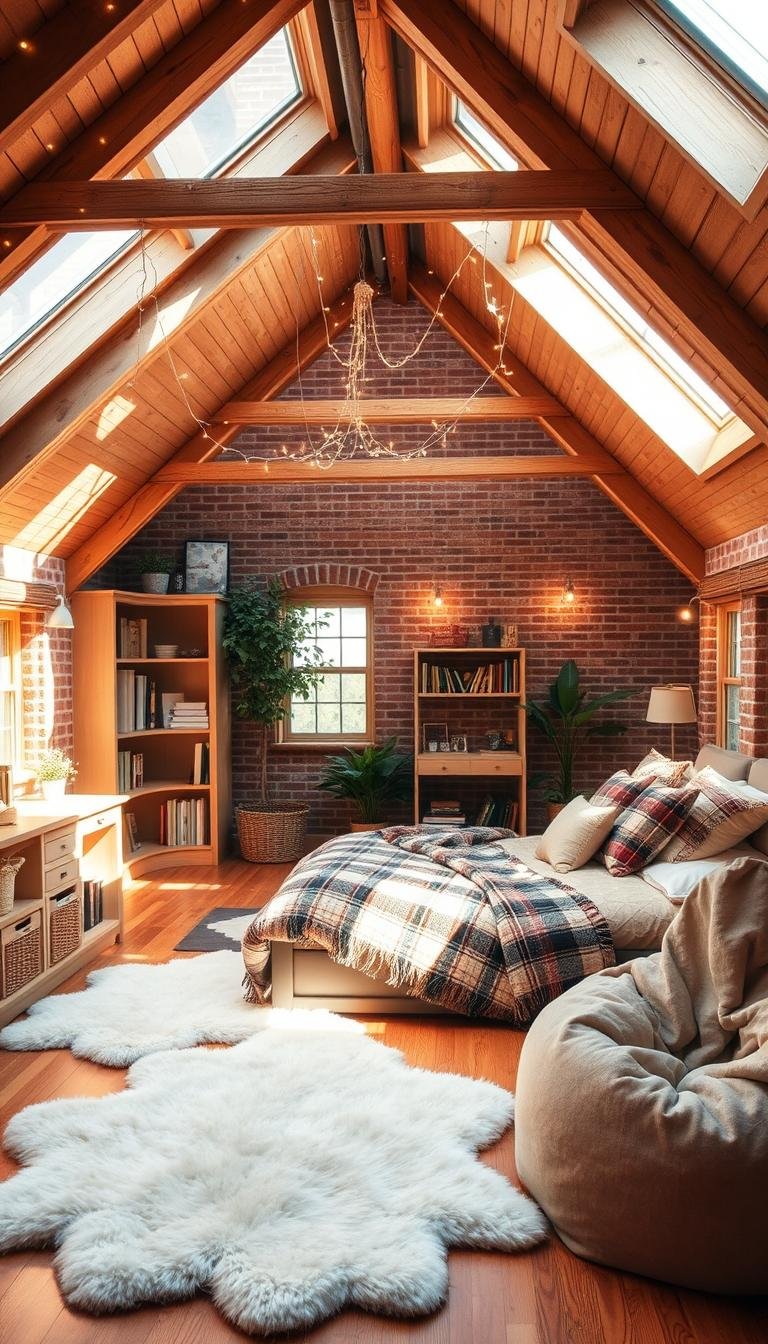
How do I turn my attic into a cozy sleepover loft for kids?
I reshaped a tricky upper-level area in my house into a playful, restful bedroom that guests still talk about. Low ceilings and odd slopes felt limiting at first, so I leaned into those quirks and treated them as design strengths.
In one Seattle project I studied, two twin beds sat in an L-shape while a third twin-and-trundle freed the center floor for games. That layout opened real space for play without crowding the room.
We added solar-powered Velux skylights for fresh airflow and remote-controlled room-darkening shades that block 99% of light. Built-in drawers under beds, a corner nightstand/bookcase, and vertical shelves kept toys and books tidy.
Finishes were playful yet flexible: wallpaper that climbs the vault, a canopy reading nook, Roman shades, and string lights that feel whimsical but age well. I also focused on safety and ventilation habits from day one so the loft stays calm and truly restful.
Key Takeaways
- Work with slopes: embrace low head height to make charming, usable zones.
- Choose layouts that free the center floor, like an L-shape plus trundle.
- Use skylights and room-darkening shades for light control and airflow.
- Hide storage under eaves and in built-ins to keep the space tidy.
- Select finishes that blend whimsy with lasting appeal so the room grows with children.
What I assessed first in my attic space before starting
Before any design or shopping list, I ran a quick, practical audit of the area to avoid costly surprises.
I measured ceiling height at the peak and near the eaves to find safe head clearance for beds and walking lanes. I mapped slopes and dormers so I could place low-profile furniture where headroom was limited.
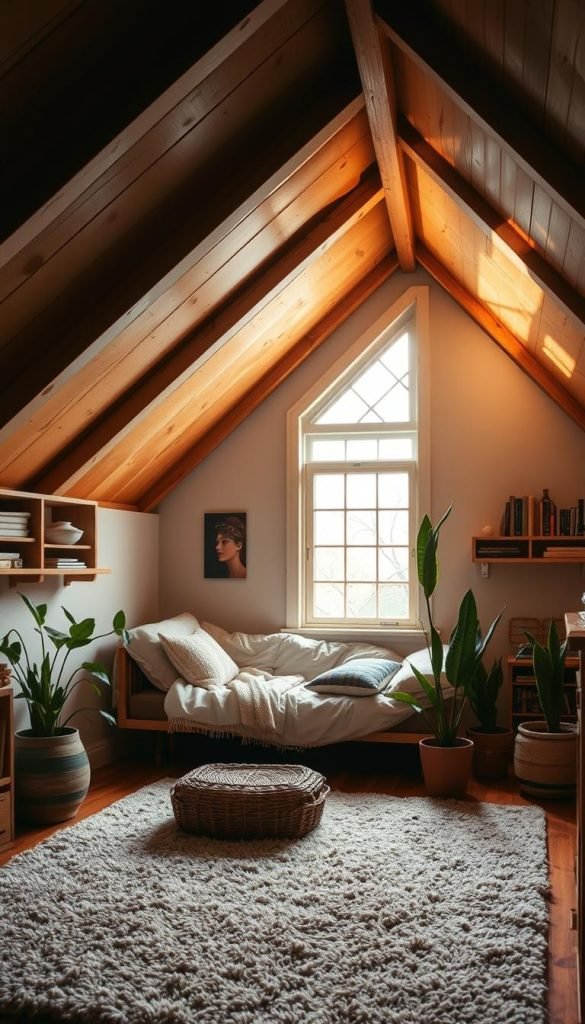
Ceiling height, slopes, and where beds actually fit
- I used painter’s tape to outline twin beds and pathways on the floor to confirm circulation.
- I checked the floor for bounce or squeaks and planned rugs and pads to quiet footsteps.
- Low knee walls and access hatches were flagged so they could become storage or design features, not obstacles.
Windows, skylight potential, and existing ventilation
I took note of existing windows and considered adding operable solar-powered skylights to bring more light and airflow. In a past project, two skylights plus two windows completely changed a once-dark attic bedroom.
| Measure | Why it matters | Action |
|---|---|---|
| Peak & eave ceiling | Determines bed and walking placement | Mark clear zones with tape |
| Window/skylight count | Affects light and ventilation | Plan operable skylights and shades |
| Wall lengths | Spot for a feature wall or wallpaper | Test paint and pattern on mock panel |
Quick cosmetic fixes—paint touch-ups, a feature wall, and fresh trim—were added to my prep list so the space felt finished before furniture arrived.
For inspiration on layout and light solutions, I linked a helpful resource on attic layouts and brightening small rooms: attic bedroom ideas.
Lighting that makes a tiny attic feel big, bright, and safe
Adding operable skylights and careful fixtures made the small space feel larger and more usable at night.
I prioritized solar-powered Velux skylights to flood the space with natural light and to bring fresh air when needed. These units open by remote or app, have slick glass that sheds dust with rain, and come with a No Leak warranty.
I also fitted room-darkening shades that block up to 99% of light so naps and late sunsets don’t interrupt sleep. A relaxed Everhem Roman shade softened an angular window and kept the view readable without feeling heavy.
Layered lighting for comfort and play
My plan layered fixtures so every corner had purpose. I used wall sconces for bedside reading, clip-on or table lamps for task zones, and flower string lights to add whimsy at night. Warm-white bulbs (2700–3000K) tied the look to daylight and calmed the mood near beds.
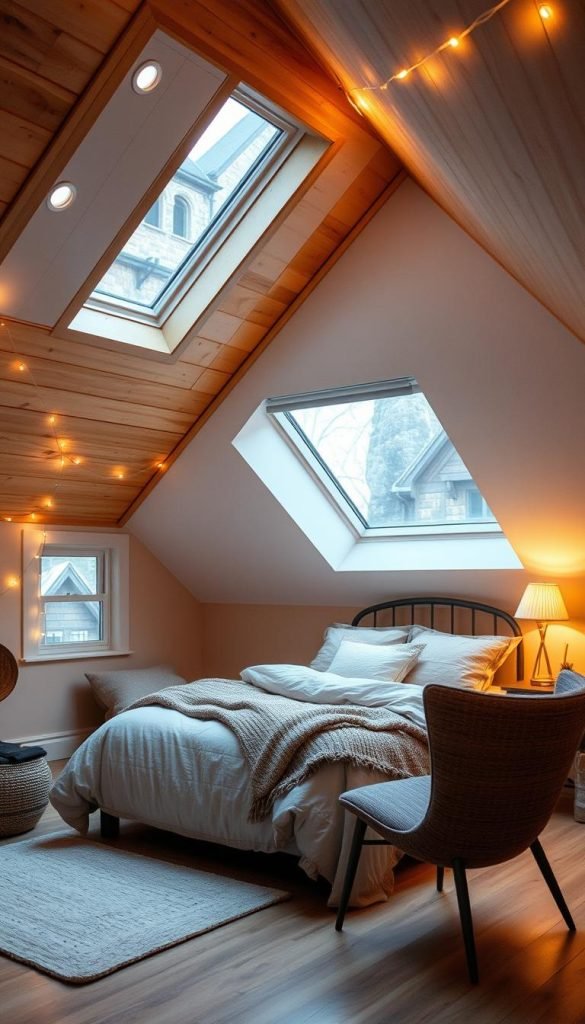
| Element | Benefit | What I chose |
|---|---|---|
| Operable skylights | Daylight + airflow | Solar Velux, remote/app, slick glass, No Leak warranty |
| Room-darkening shades | Sleep control | 99% block, integrated into skylights |
| Layered fixtures | Task, ambient, and mood light | Sconces, task lamps, string lights; warm-white bulbs |
| Window treatment | Softens angles | Relaxed Roman shade (Everhem) |
- I kept cords along trim and under furniture to keep paths clear and safe.
- I aimed fixtures so beams wash walls and ceiling, reducing glare and brightening the whole room.
- Reading lights went where each child could control them without getting out of bed.
Smart space planning: zones for sleeping, reading, and play
Clear zoning keeps an attic functional and fun. I split the area so each part of the room had a role: an open center for play, a tucked sleeping area under low eaves, and a cozy reading nook by a dormer.
Feet-to-feet and L-shaped layouts work wonders. An L-shaped placement with two twin beds along corner walls pushed furniture to the perimeter and freed the middle for games. When the upper level ran wider than it was long, I tried a feet-to-feet twin setup as Country Living suggests. That preserved walking lanes and kept beds from blocking circulation.
Curtains and temporary separation made the sleeping area feel private. I mounted a ceiling track and hung lightweight curtains to close off the beds at night. This simple trick helped with earlier lights-out and gave kids a sense of their own sleeping area without permanent walls.
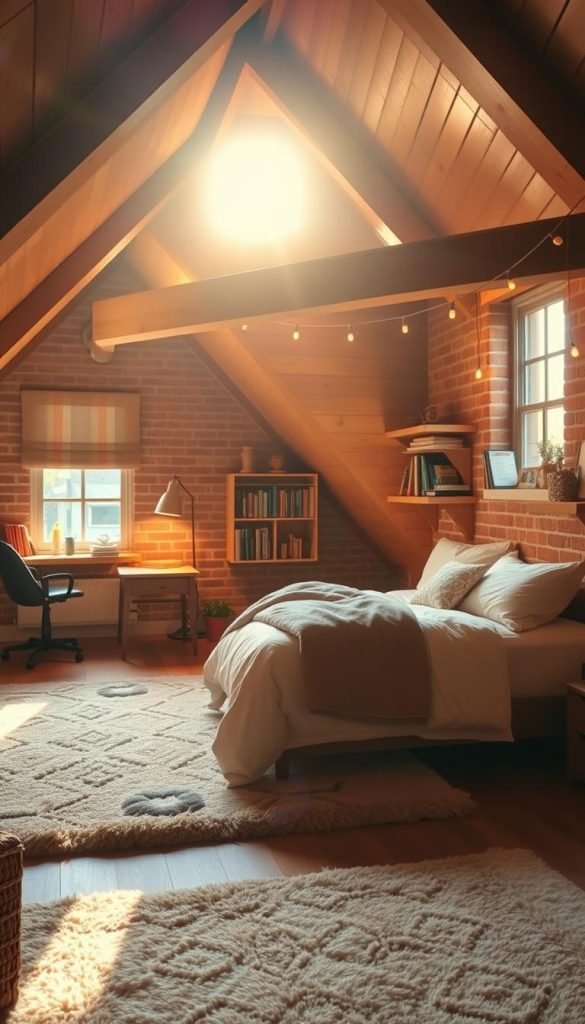
- I added a trundle under one bed to increase capacity without bulk.
- Reading lights and low shelves lived within the reading zone for easy reach.
- Rugs defined zones and softened sound, while 24-inch paths kept circulation clear.
- Short wall segments under eaves became headboard spots; taller storage stayed in higher areas.
- I revisited the layout after a few overnights and tweaked curtain overlap and bed angles until it flowed.
| Layout | Best for | Benefit |
|---|---|---|
| L-shaped beds | Small footprints with corner walls | Opens central space for play and circulation |
| Feet-to-feet twins | Rooms wider than long | Uses width efficiently; keeps walkways clear |
| Twin + trundle | Extra guests without permanent bulk | Added sleeping capacity, hidden when not in use |
| Curtain separation | Shared sleeping zones | Quick privacy and better sleep without construction |
Storage that disappears under eaves and keeps the room tidy
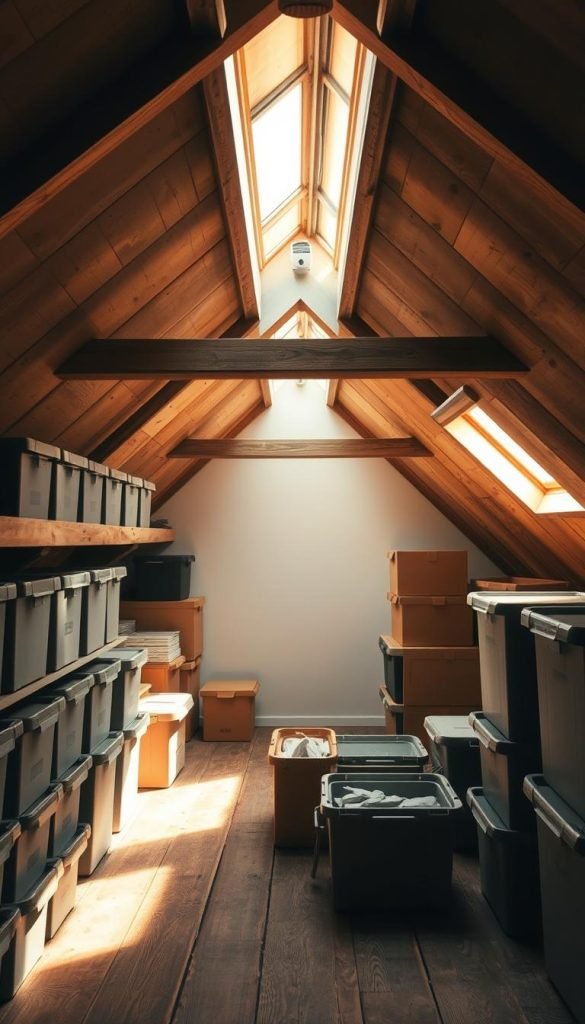
Hidden drawers and low cabinets turn awkward eaves into usable, tidy places.
I tucked built-ins under low walls to capture lost inches. Shallow drawers held pajamas while low cabinet doors hid board games and bulkier items. A corner unit doubled as a bookshelf and nightstand, with mounted sconces so each child controlled their own light.
I used modular cubes and labeled stacking bins with clear fronts so kids saw where things lived. Sturdy hooks near the entry kept bags ready and traffic lanes clear. A boucle ottoman added hidden storage for blankets and doubled as extra seating.
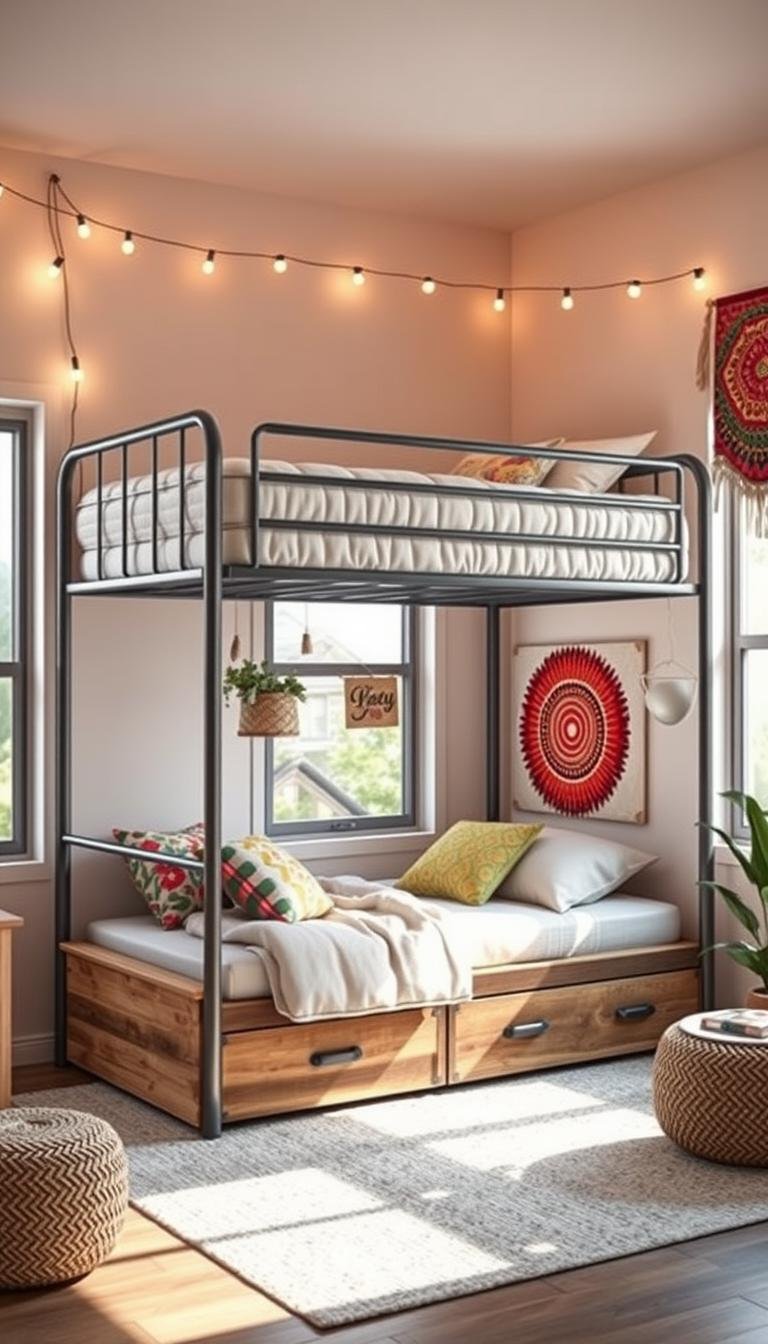
- Multi-functional pieces—beds with deep drawers, a daybed with trundle, and benches with lift tops—kept the floor open.
- Slim wall bookshelves displayed covers; deeper shelves stored toys.
- I finished built-ins with durable paint and easy-clean hardware to resist fingerprints.
| Solution | Where | Benefit |
|---|---|---|
| Under-eave drawers | Low wall runs | Uses lost space; frees central play area |
| Modular bins | Open shelving | Fast clean-up; labeled for clarity |
| Hidden ottoman | Foot of bed / corner | Extra seating + blanket storage |
| Hooks | Entry wall | Keeps bags off the floor; clears walkways |
Tip: keep heavy items low on the floor and rotate toys seasonally to keep this attic bedroom calm and clutter-free.
Beds and seating that maximize sleepover capacity
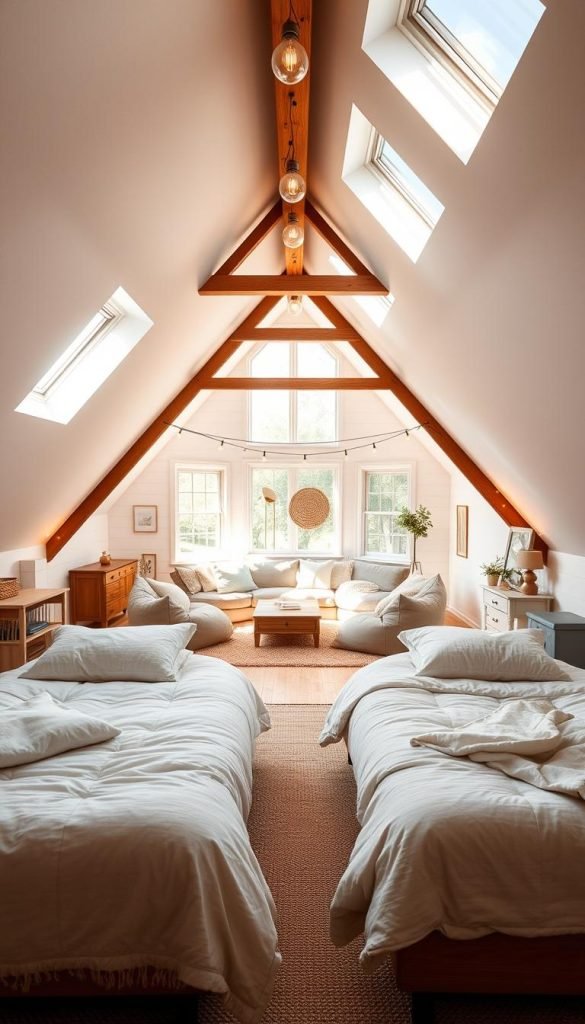
A flexible sleeping plan made this small upper space work hard without feeling crowded. I arranged perimeter beds so the center stayed open and easy to use. That kept the room readable and safe at night.
Daybeds, twins, and low-profile frames
I used low twin frames under the slopes to keep sightlines open and lower the chance of head bumps. One twin had a pull-out trundle that popped up as an extra bed for a friend or a parent on standby.
Storage-friendly frames with built-in drawers hid spare bedding and pillows. Plug-in sconces and clamp lamps sat by each bed so each child could control their own lighting without waking others.
I added a boucle ottoman and a soft lounge chair to create a hangout side where kids could read or relax before lights-out. Paths stayed clear along each bed so trips to the bathroom were safe in the dark.
- Mixed mattress types made different sleepers comfortable.
- Breathable mattress protectors and labeled under-bed bins sped changeovers between guests.
- Lightweight quilts layered easily to keep everyone cozy in the compact attic bedroom.
Walls, ceilings, and floors: finishes that add visual interest
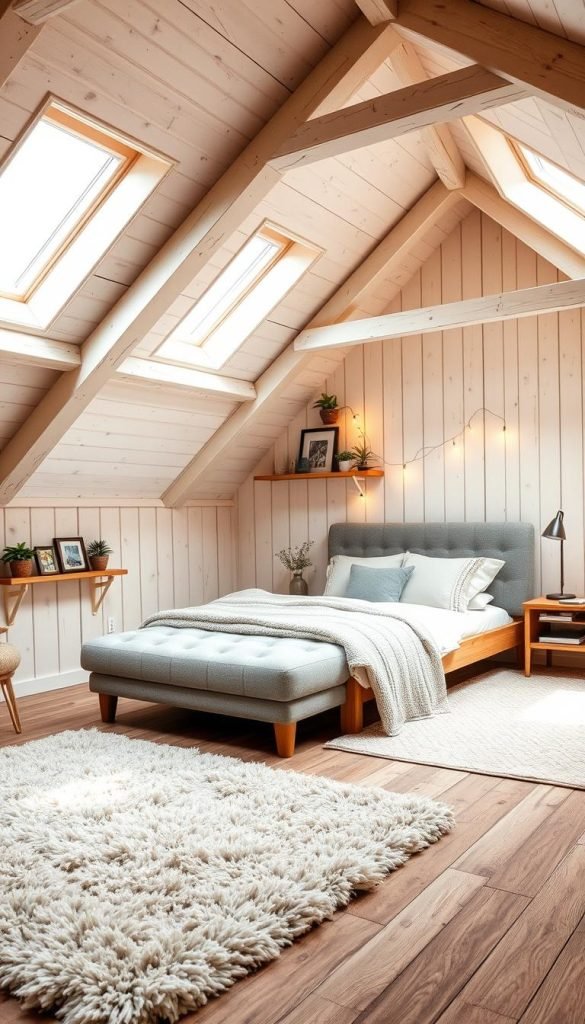
Finishes set the tone—soft paint, lively wallpaper, or white floors can change how the whole room reads.
Feature wall ideas and patterns that climb
Wallpaper with organic movement that climbs the vault softens angles and feels storybook without shrinking the space.
Extend a pattern onto the ceiling plane to visually connect broken surfaces and make the whole shell read as one.
Bold paint palettes vs. light, airy schemes
A deep, cocooning paint can make the room snug at night, while a light palette bounces daylight and feels larger.
Sample swatches on sloped surfaces to pick a paint color that flatters both daylight and evening lighting.
White painted floors and rugs that warm the space
White floors bounce light and let rugs pop. Layer washable rugs for softness where children play.
- Semi-matte finishes hide drywall imperfections.
- Trim color can frame dormers and draw the eye to natural light.
- Place sconces and pendants to highlight texture and add visual interest.
| Strategy | Effect | When to choose |
|---|---|---|
| Saturated paint | Cocooning, dramatic | Limited natural light |
| Light palette | Airy, reflective | Bright skylights/windows |
| Wallpaper + white floor | Storybook charm + bounce | Mix of pattern and light |
Design moments kids love: nooks, canopies, and mini hideaways
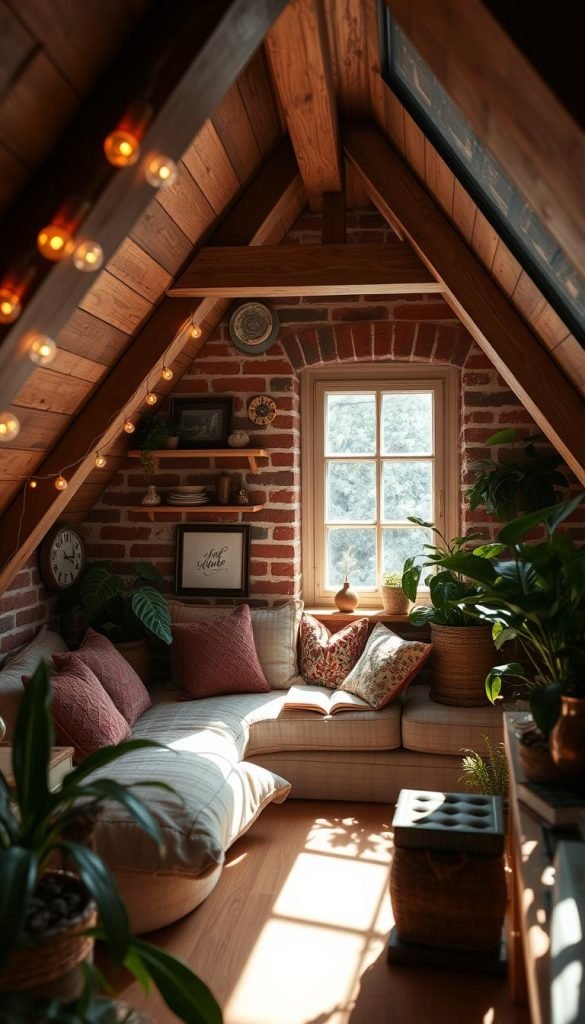
A small dormer can become the room’s most-loved spot when fitted with a snug reading corner and low shelves. I carved one such nook and kept the scale gentle so it fit the slope without feeling cramped.
Reading nook under a dormer with slim wall bookshelves
I lined the short wall with slim face-out shelves so covers are visible and easy to grab. Low baskets held favorites at kid height, which made cleanup fast and kept the zone ready for wind-down time.
Canopy tents and leafy or starry themes for instant magic
I hung a light-as-air canopy over a cushion pile and looped a flower garland of string lights along the edge. Leafy or starry motifs felt immersive and required almost no extra floor space.
- I added a small, comfy chair and a soft throw to anchor the spot.
- A curtain panel can close the mini hideaway when privacy is wanted.
- I left headroom so kids can sit up without bumping the slope.
- Finally, I tied the nook’s colors to the rest of the attic bedroom so it reads as part of the whole.
Decor that grows with the family while staying playful
A simple, tight palette let me add playful accents that can change with time. I aimed for a balance between current trends and pieces that last so the room stays useful for years.
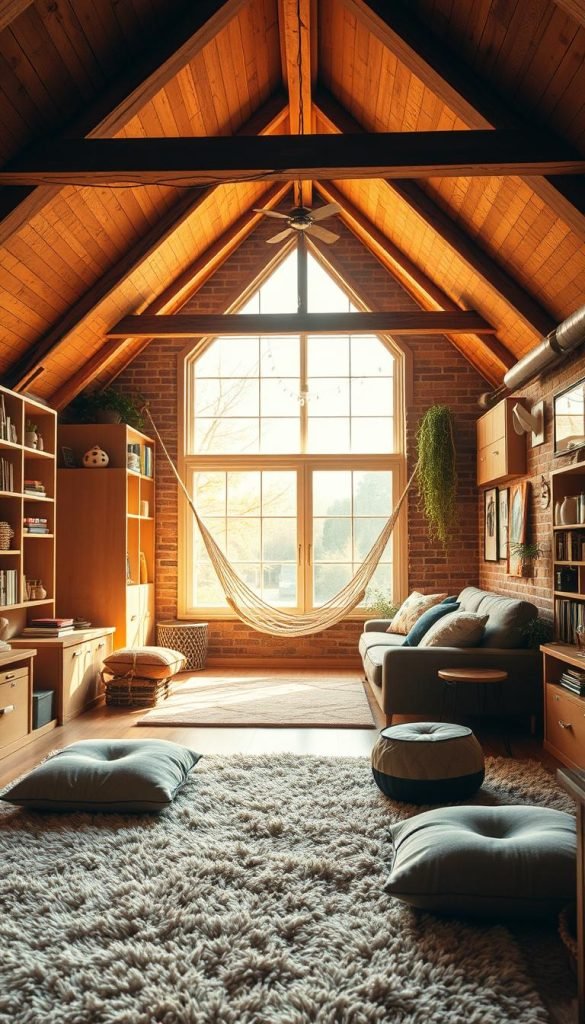
Matching bedding or a tight palette that mixes
Country Living suggests matching bedding for a crisp, cohesive look or mixing patterns within a narrow palette for a collected feel. I weighed both and chose mix-within-a-palette so the space feels personal but not chaotic.
Tip: limit family colors to one or two families and add pillows and art that are easy to swap as tastes change.
Art, mirrors, hooks, and clever storage
I kept playful accents—like a heart mirror and painted hooks—so they read modern rather than “little kid.” Stacking bins and labeled baskets held art supplies and backpacks at kid height.
- I added a gallery strip for rotating artwork to avoid many holes in the wall.
- Durable, washable fabrics and a textured ottoman give style that lasts.
- I tested paint color samples next to bedding and rugs to make sure light and lamp light worked together.
These small design choices keep the bedrooms flexible and make the small space feel ready for each new chapter of family life.
Safety, ventilation, and sleep quality in an attic bedroom
Good nights start with practical decisions. I focused on clear head paths, secure furniture, and shade solutions so the sleeping area felt safe and restful.
Clear circulation matters. I mapped routes from each bed to the door so no one ducks under a slope during midnight trips. Corner beds kept the center open and reduced bump risk.
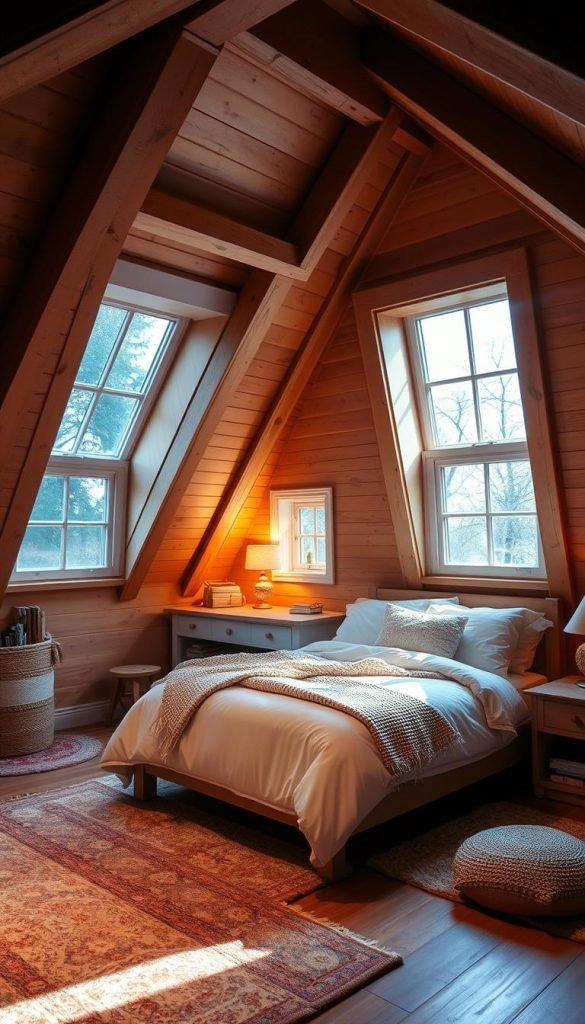
Secured furniture, shade, and gentle airflow
I anchored tall pieces to studs and chose low units along knee walls to keep heavy items out of head range. Sharp corners got cushions and nightstands stayed low under slopes.
Operable solar-powered skylights open for cross ventilation and shut quickly when needed. Room-darkening shades on skylights and each window block up to 99% of light for deeper sleep, with a small nightlight layered in for orientation.
“I kept cords clipped and labeled bins near the door so the place is tidy and trips are rare.”
- Individual sconces let one reader stay up without flooding the rooms with bright lighting.
- Breathable bedding and lighter quilts in warm months prevent overheating near the roofline.
- I run a quick post-guest check—tighten hardware, reset shades—so the house is ready for the next stay.
My step-by-step plan: the easiest way to turn an attic into a cozy sleepover loft
Start by brightening the room so every design choice reads clearly and mistakes are easy to fix. A bright, well-shaded shell makes layout and finish decisions obvious and fast.
Sequence: light first, then layout, storage, furniture, finishes, and styling
- Light: Install or upgrade skylights and Roman shades first so you can see true color and scale. In one project we added Velux units during delays to lift mood and guide the plan.
- Layout: Tape out beds and paths. I usually pick an L-shape twin pair plus a trundle to keep central space open and usable.
- Storage: Fit built-ins under eaves, hang hooks at the entry, and place modular cubes early so clutter has a home before big pieces arrive.
- Furniture: Bring in beds and seating, add task lights at each spot, and confirm clear paths from every pillow to the door.
- Finishes: Paint the shell, pick a feature wall, and lay rugs. If you use wallpaper, carry the pattern up the vault for drama.
- Styling: Layer sconces, task lamps, and string lights. Add bins, hooks, and a canopy reading zone with slim wall bookshelves for a cozy corner.
Final checks: Anchor furniture, secure cords, label storage, and run one week of use. Live in the space briefly and make micro-adjustments to refine the design.
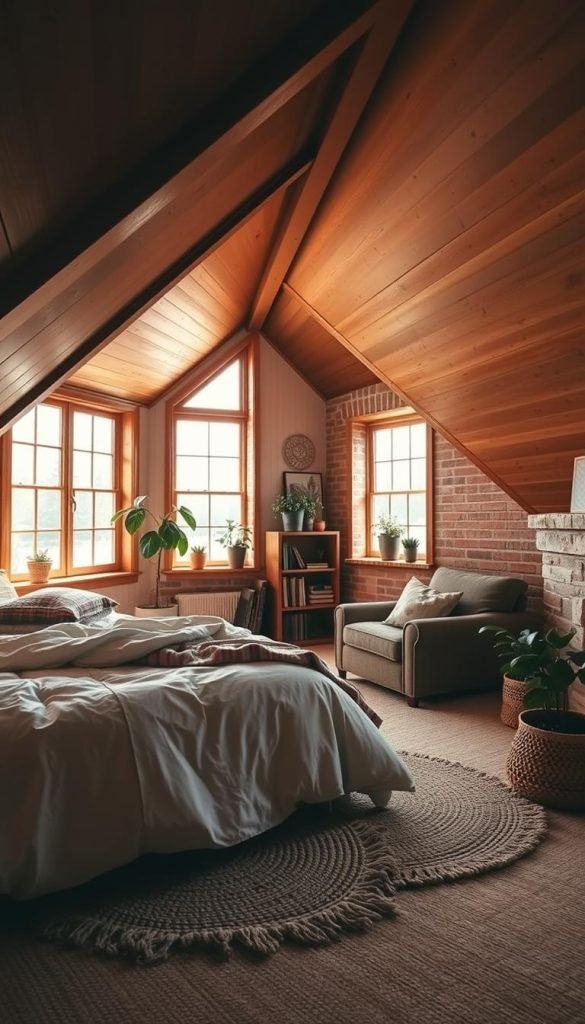
| Step | Goal | Quick action |
|---|---|---|
| Light | See real colors and space | Install skylights & shades |
| Layout | Open center, safe paths | Tape beds; choose L-shape + trundle |
| Storage | Keep clutter controlled | Built-ins, hooks, modular bins |
Conclusion
Small changes—an extra trundle, under-eave drawers, and a simple nook—had outsized impact.
I turned an awkward attic space into an inviting attic bedroom by leading with light, organizing storage early, and picking layouts that protect open floor. , These steps kept the bedroom usable and bright while adding playful touches that last.
Durable pieces, fun pillows, wallpaper that climbs a wall, and a painted ceiling and floor helped add visual interest without crowding the place. A mini reading nook under a dormer and layered shades balanced sleep with safe movement through the sleeping area.
Follow the sequence—light, layout, storage, furniture, finishes, styling—and you’ll find simple ways to make your house’s loft the best place for family gatherings and guests.