What Are the Best Scent Diffuser Placements for Home Ambiance?
I love how a well-placed aroma can change a room the moment I step inside. A smart unit can make my space feel calm and welcoming without overpowering anyone.
I focus on two things: choosing a quality option and finding the right spot. Placement amplifies fragrance while saving oil and keeping the result consistent.
I usually test locations at mid-level height and away from strong drafts. Cold air or waterless units keep oil integrity and spread a fine, residue-free mist that feels refined.
I clean cartridges between scents with alcohol and wipe exteriors to remove dust. I also keep units out of reach of kids and pets and follow manufacturer guidance for safe use.
For more on whole-house options and HVAC connections, I link to a concise guide that helped me refine airflow-aware choices: how to enhance your home’s ambiance with scent.
Key Takeaways
- Position at mid-level to let aroma spread evenly without being too strong.
- Use cold air or waterless units to protect oil and create a clean mist.
- Avoid open windows and vents that whisk scent away.
- Clean cartridges between fragrances and wipe exteriors regularly.
- Keep units away from children and pets and follow safety guidance.
Why placement matters for a calmer, better-smelling home
The spot I pick for a unit shapes how fragrance moves through air. Air is the vehicle that carries aroma, so currents, drafts, and room flow decide whether a scent rises, lingers, or vanishes.
I pay attention to temperature and humidity because warm air lifts molecules faster, while cool, still air lets them settle. This impact guides where I place devices to match the mood I want.
A thoughtful placement helps create a calm home environment. I use softer blends near seating to relax and brighter notes by entries to lift energy. Small shifts often beat cranking output.
I also read my layout. Furniture, open pathways, and doorways either support or stifle diffusion. When I align a unit with natural movement—hallways or open doors—I cover more square footage with less oil.
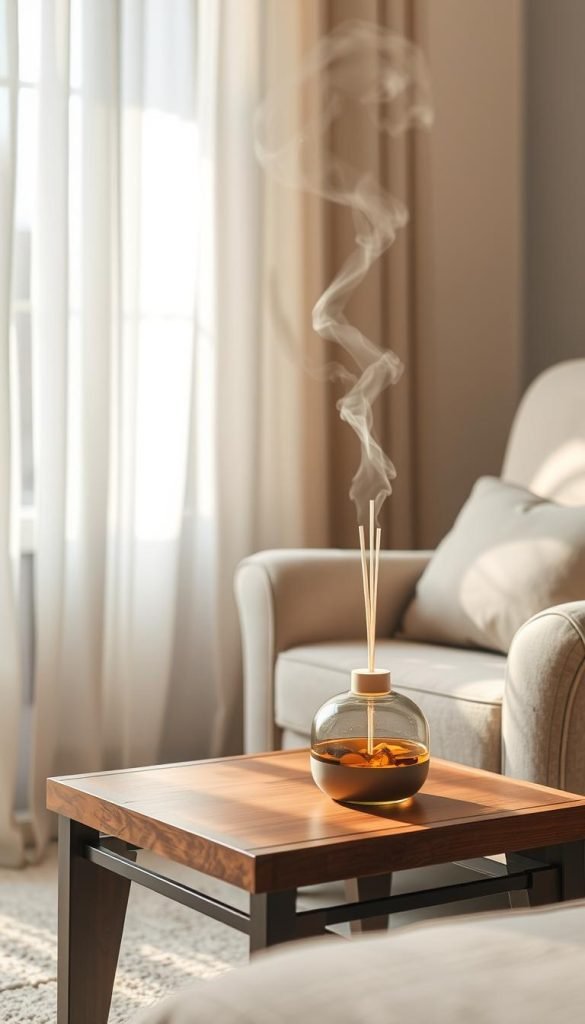
- Role of placement: directs flow and reduces waste.
- Atmosphere choice: placement pairs scent with light and sound for a cohesive experience.
Core placement principles I follow for any room
Good placement starts with noticing how air moves through my rooms. That observation guides every decision I make about where to place scent devices in a shared space.
Use airflow to your advantage, not against it. I favor gentle movement paths over strong streams so aroma drifts naturally along walkways. I keep units nearer output airflow and farther from return vents to avoid losing fragrance into HVAC returns.
Choose mid-level height for breathing-zone fragrance
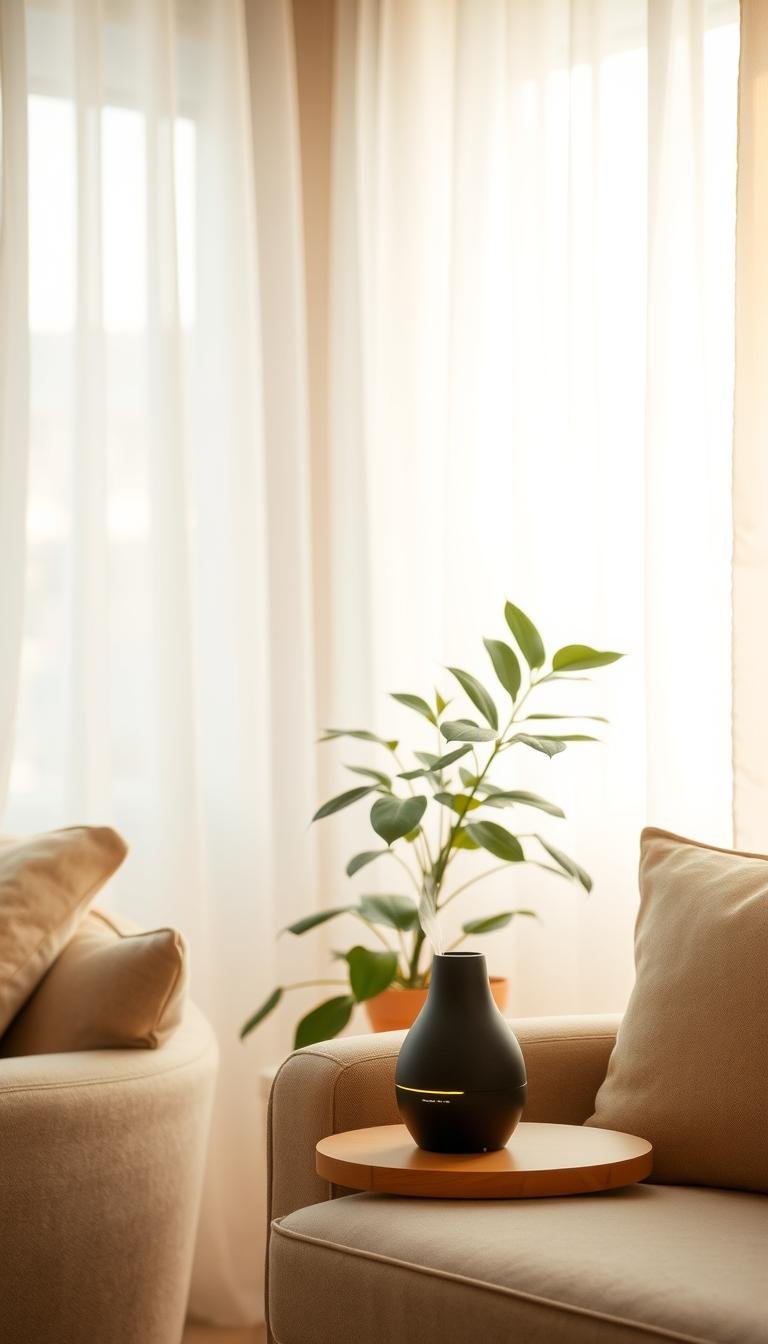
I set a diffuser on a shelf or console roughly at chest height. This lets fragrance arrive where people breathe instead of pooling low or rushing to the ceiling.
Avoid corners, alcoves, and heavy obstacles
Corners and crowded shelves block movement. I steer clear of tight spots and behind curtains because they mute diffusion and waste oil.
Start central, then test and adjust coverage
I begin in the center of a room, then move a foot or two until coverage feels even. Small nudges or a slight rotation often fix a weak drift without raising output.
- Quick tips: keep sightlines to open pathways, note what works per room, and place units away from vents that pull air back into the system.
Room-by-room: where I place a scent diffuser for the best fragrance experience
Placing units by natural walkways helps scent reach connected areas without extra power. I start near an entry or a main hall so a cold air unit can push aroma down a corridor and into adjacent rooms.
Entryway and hallways:
- I set a unit near open paths so every step spreads a light scent across linked areas.
- Avoid the corner trap by pulling a device a few inches from walls or heavy drapes.
Living area:
I place units on a central console away from return vents. This keeps fragrance in the living space and prevents it from vanishing into HVAC returns.
Kitchen and dining:
I pick fresh, citrus-forward blends and position the unit where gentle circulation lifts odors without fighting cooking smells.
Bedroom:
I place the unit away from direct fan streams so the scent stays calm and settled at breathing height.
Bathrooms and closets:
These spaces often lack airflow. I use secondary diffusers on an elevated perch to keep aroma present without exposing units to steam.
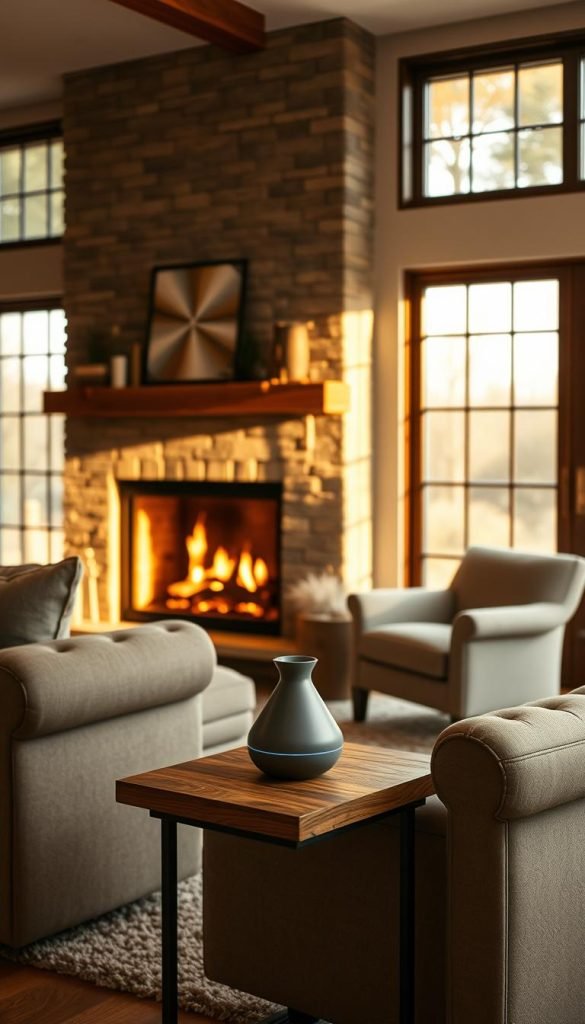
“Test cracked windows for soft mixing, but avoid strong drafts that push scent outside.”
| Space | Recommended spot | Tip |
|---|---|---|
| Entryway / Hall | Near pathway, mid-height | Cold air units spread aroma to multiple rooms |
| Living area | Central console, away from return vents | Use single stronger unit or two spaced for large opens |
| Kitchen / Dining | On a shelf with gentle airflow | Choose fresh blends to complement food |
| Bedroom | Nightstand or dresser, away from fans | Low output for calm, steady scent |
| Bathroom / Closet | Elevated corner-free perch | Secondary units help small, low-airflow spaces |
How HVAC, vents, windows, and fans shape scent in my space
I watch vents, windows, and fans to learn which paths carry scent well. That quick survey guides my choices so aroma travels, not disappears.
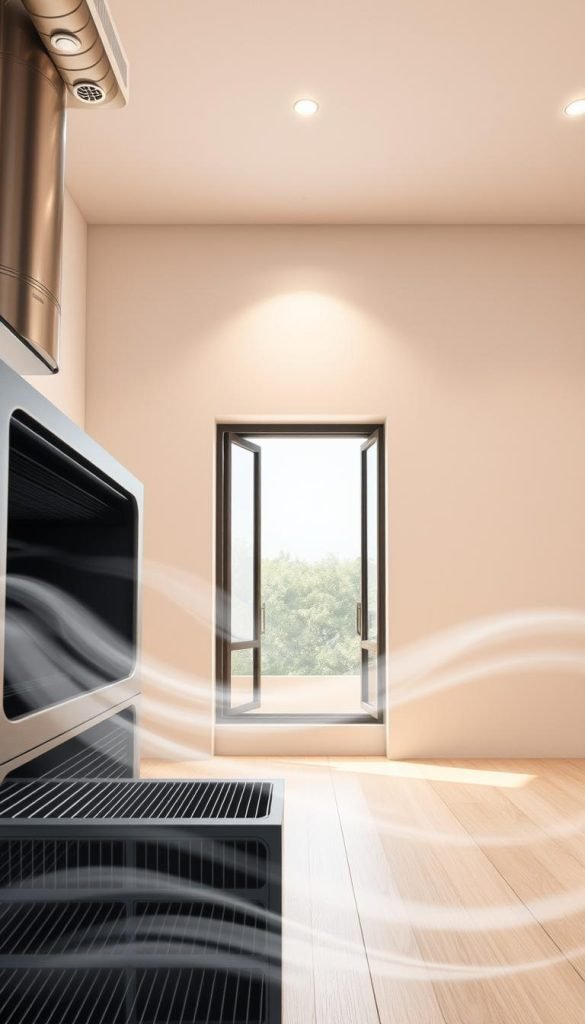
First, I keep any unit away from return vents that draw air inward. Those pulls steal oil and ruin coverage.
Leveraging output vents and avoiding return vents
I place devices near output airflow so fragrance rides the current into living zones. Near a return, I lose diffusion and waste oil.
Seasonal shifts: warm air rising in winter, cooler air in summer
In winter warm air rises and can carry scent high. I nudge placement lower when I want aroma at breathing level.
In summer cool air holds fragrance nearer the floor. I move a unit a few inches up to rebalance the environment.
Gentle fan modes and cracked windows for balanced movement
I use fan mode on my thermostat to keep light, even motion without heating or cooling cycles. A gentle ceiling fan helps spread notes evenly.
On calm days I crack windows and run a soft fan to blend fresh outdoor air with indoor fragrance. I avoid strong drafts that push scent outside.
“Treat vents like highways: near output I get coverage; near return I lose diffusion.”
| Action | Why it helps | When to use |
|---|---|---|
| Place near output vents | Fragrance travels farther | Daily, main living areas |
| Avoid return vents | Prevents scent loss and oil waste | Always |
| Seasonal repositioning | Balances height and strength | Switch seasons |
| Clean HVAC filters | Clears dust so scent reads true | Every 3 months or as needed |
- I map my home’s air paths and place units where airflow helps, not hinders.
- I log what works each season so resetting placement is quick.
What Are the Best Scent Diffuser Placements for Home Ambiance? My do’s and don’ts
Smart placement makes fragrance feel natural, not forced, as I move through a space. I focus on small moves that yield steady coverage and a pleasant experience.
I follow a few clear rules so scents reach breathing level and do not vanish into drafts.
Do: place near open pathways and breathing height
I set a scent diffuser at mid-level along walkways so aroma greets me at chest height. For large rooms, I use two diffusers spaced for even spread.
Don’t: park it by strong drafts or open windows that whisk scent away
I avoid placing units directly in front of AC blasts or open windows. Strong air moves steal oil and ruin coverage.
Do: use multiple units for wide, open plans
I test a few nearby spots, then pick the one that gives consistent coverage across the space. I keep output gentle so fragrances unfold naturally.
- I don’t hide units behind books or curtains; blocked output flattens the experience.
- I do dial output down before increasing scent intensity; placement comes first.
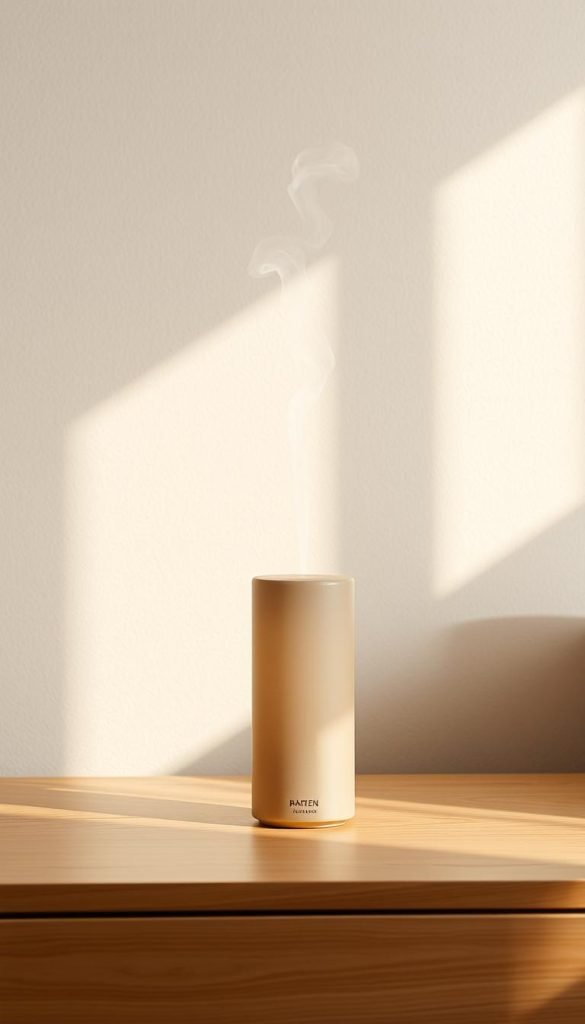
“Small shifts in position often fix uneven scent faster than raising power.”
| Action | Why it helps | Quick tip |
|---|---|---|
| Mid-level on pathway | Delivers scent to breathing zone | Start here |
| Away from drafts | Preserves oil and coverage | Keep clear of AC and open windows |
| Multiple units | Even scent in open plans | Space them evenly |
Avoid placing mistakes that weaken scent or waste oils
I’ve learned quick fixes that stop scent from vanishing and save every drop of oil. A clear routine helps me catch placement errors before I crank up output.
Too low or too high: scent trapped at floor or ceiling
Keep units near breathing height. I avoid placing a diffuser too low where cool layers hold aroma near the floor.
I also steer clear of very high shelves that trap notes near the ceiling and out of reach of people.
Directly in front of AC blasts: aroma dissipates too fast
I never aim the output into strong AC streams. Fast-moving air strips fragrance and shortens refill life.
This mistake wastes oils and gives poor coverage across connected spaces.
Tight corners and behind curtains: blocked diffusion
I pull units a few inches out of a corner or away from curtains. Walls and fabric stop flow and create dead zones.
When coverage is weak, I move the diffuser into open flow before raising intensity.
- I watch furniture that creates stagnant pockets and lift the unit to mid-height when needed.
- I find the lowest setting that still fills rooms to reduce waste of oils.
“Small shifts often fix uneven scent faster than boosting output.”
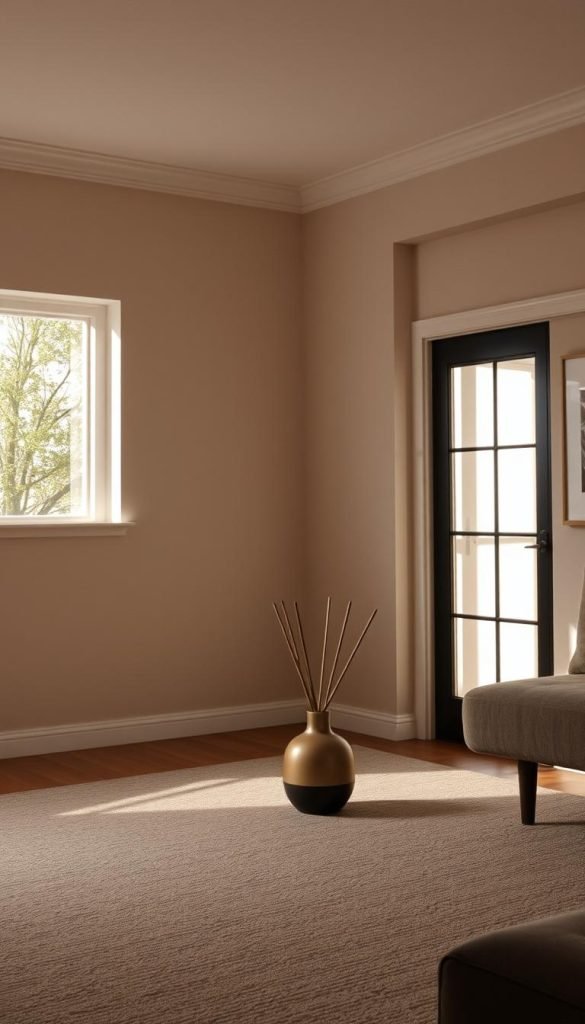
| Common mistake | Effect | Quick fix |
|---|---|---|
| Placed too low or too high | Scent pools at floor or ceiling | Move to mid-height |
| In AC blast | Fragrance dissipates rapidly | Shift away from vents |
| Hidden in corner or behind drape | Blocked diffusion and dead zones | Pull into open flow |
| Too high output instead of placement fix | Wastes oils and creates spikes | Lower setting after adjusting spot |
Maintenance, safety, and oil choices that elevate ambiance
Regular care keeps my units performing and protects the value I’ve invested in a small perfume collection. I focus on a few simple steps that preserve clarity and extend life.
Clean, reset, and rotate scents for clarity and longevity
I clean my diffusers between scent changes by running a small amount of alcohol through the oil cartridge. This clears residue and helps each new aroma read true.
I also wipe external surfaces to remove dust so oils don’t mix with particles and dull output.
Rotate through a collection to avoid nose fatigue and to keep the house feeling fresh with each season.
Safe placement away from pets, kids, heat, and water
I place units out of reach of children and pets and well away from heat sources or standing water. That reduces spills, burns, and damage.
Bathrooms work when the device is elevated and kept away from direct steam. For whole-house coverage, I consider HVAC-connected diffusers for consistent scent across rooms.
- I store oils upright and label bottles to repeat favorite pairings.
- I use lighter scent settings in small rooms.
- I run a quick monthly check to keep diffusers in top condition.
“A small routine keeps each fragrance clear and makes every oil last longer.”
| Action | Why it helps | When |
|---|---|---|
| Alcohol flush | Clears cartridge residue | Between fragrances |
| Wipe exterior | Prevents dust mixing with oils | Weekly |
| Rotate collection | Prevents nose fatigue | Seasonally |
Conclusion
A simple shift in position can turn uneven coverage into a steady, pleasant aroma.
I close by saying placement matters more than power. When I set a diffuser at mid-level along open air paths, fragrance spreads evenly and feels effortless across my home.
I watch how air moves in each room and tune spot and output instead of over-scenting. I avoid return vents, strong drafts, and tight corners so oils last longer and the atmosphere stays calm.
Quick reminders: space units 8–12 feet in large areas, clean cartridges with alcohol between scents, use fan mode or a cracked window for subtle mixing, and check HVAC filters for clear diffusion.
With a little attention, small tweaks deliver a refined experience. I pair a rotating collection of favorites to zones so transitions between spaces feel thoughtful and inviting.