How Do I Decorate a Sunroom for Year-Round Enjoyment?
My goal was to make this room feel like an extension of my home, not a pass-through. I welcome natural light and build layers of light for evenings so the space works day or night.
I set clear zones for reading, dining, and conversation. That keeps the layout intuitive and supports living needs across each season. I choose colors and materials that echo my interior so the transition feels seamless.
Practical choices matter: insulation, heating, and good windows tell me whether the sunroom will be cozy in winter or best used in mild months. I favor fade-smart fabrics and easy-to-swap accents to refresh the mood without a full redesign.
Key Takeaways
- Plan the room as part of your home with clear living zones.
- Layer light sources to extend use after dark.
- Match colors and finishes to create a cohesive atmosphere.
- Choose heating or cooling based on three- or four-season performance.
- Use durable textiles and seasonal accents for simple updates.
Start With How I Use the Space: Reading nook, dining area, lounge, or home office
I begin by picturing how each hour of the day will feel in the room. That snapshot guides whether this will be a reading corner, dining area, home office, lounge, or kids’ spot. I assess the season performance first so the plan fits the months I’ll actually use the space.
Assess three-season vs. four-season
Assessing comfort and months of use
Four-season rooms include insulation and built-in heating, so they work in cold months. Three-season options need portable heat and heavier textiles to extend use into shoulder months.
Choosing the primary function
I commit to one main purpose so furniture, storage, and lighting support that goal. For a reading nook I add a comfy chair or hanging rattan seat, a warm lamp, low shelves, and a side table for a mug and book.
- Dining area: confirm clearances for the table and pick a round option for tight areas.
- Home office: map glare, add light-filtering shades, and budget storage to keep focus high.
- Kids’ or studio: divide the area into zones and place work surfaces where light is best.
- Plan storage early—benches with cabinets, slim dressers, or closed bins keep the design tidy.
Plan a Flexible Layout That Maximizes Natural Light and Views
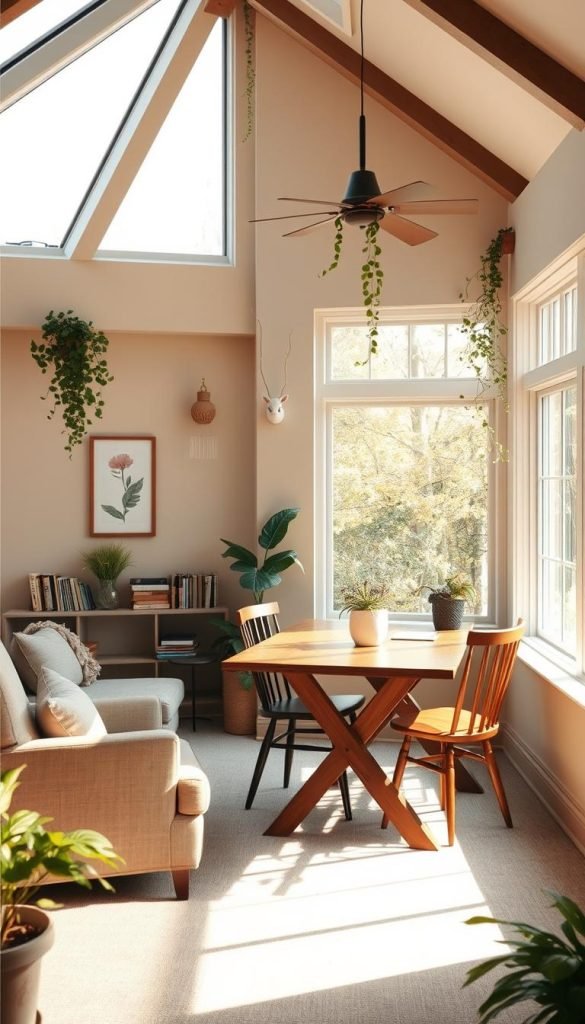
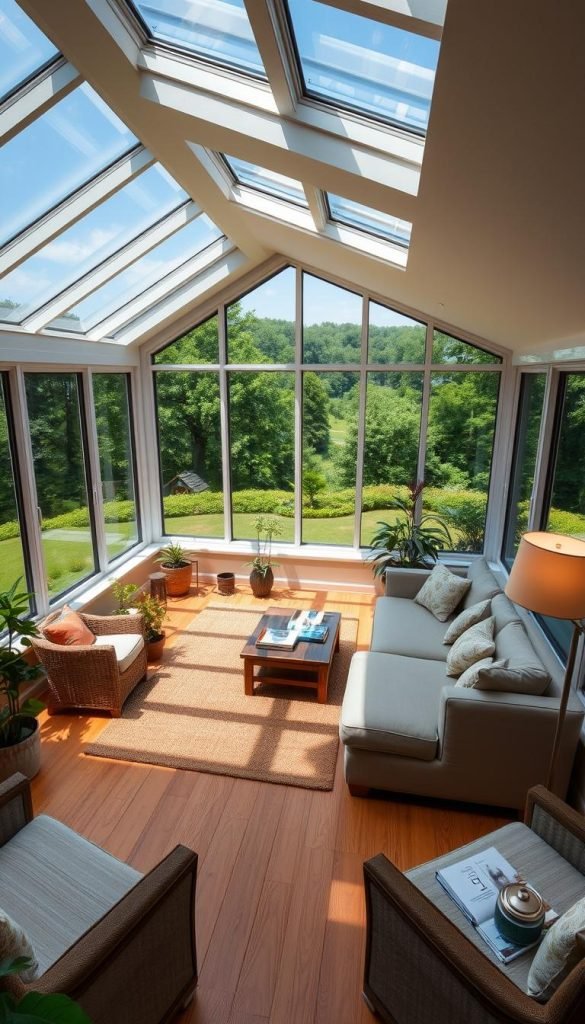
Furniture arrangement makes or breaks how sunlight and views perform in this room. I start by mapping sightlines from large sliders and transom windows. That tells me where seating and a table can sit without blocking the outdoors.
Zoning that protects sightlines
I float sofas away from glass and choose low-back or curved pieces so the connection to the outdoors stays intact. I create clear zones for conversation, dining, and compact entertainment while keeping traffic paths open.
Seating that respects the view
I anchor the living area with a rug and coffee table, then angle chairs toward the best views and sunlight. Tall storage goes on interior walls; slim benches fit under windows to avoid stealing light.
Splitting long, narrow rooms
In narrow places I divide the room into two halves: living plus dining. This prevents clutter and keeps both spaces useful for reading, socializing, or watching entertainment without glare.
“Keep a clear perimeter along windows — plants and airflow make the room feel airy and alive.”
- Use nesting tables or a movable ottoman to adapt the space quickly.
- Test TV placement and add light-filtering shades if needed to reduce glare.
- Coordinate layout with door swings and sliders so access to the outdoors stays easy.
Windows, Treatments, and Privacy: Managing sunlight from summer to winter
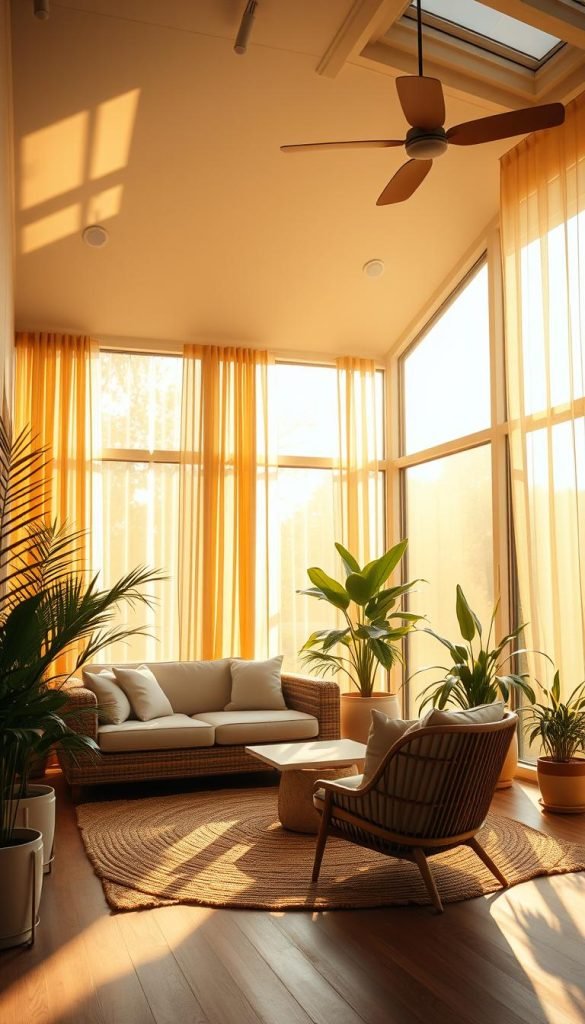
Controlling sunlight starts at the glass: thoughtful treatments let me keep brightness without the glare. I favor layers that work together so the room stays airy in spring and shaded when the midday sun gets strong.
Sheers, gauzy drapes, and light-filtering shades
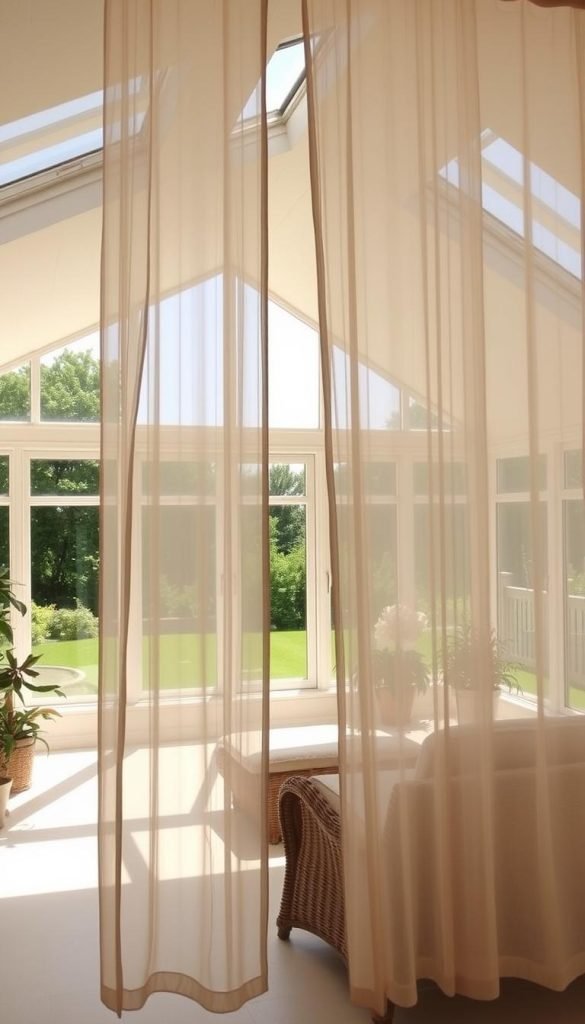
Floor-to-ceiling sheer drapes provide privacy without blocking natural light. Long, gauzy linens add a classic look and soften harsh rays.
I layer treatments—sheer panels with light-filtering shades—so I can protect finishes and control heat while keeping brightness.
Mirrors, walls, and reflective elements
I place a mirror opposite the largest window to bounce light into darker corners. White or pale walls amplify brightness and make the area feel larger after sunset.
- I hang rods high to elongate walls and improve the light wash.
- I keep sills clear and use stands for plants so views and airflow stay open.
- I add UV-smart shades on strong sun banks to reduce fading without dimming the room.
“Small choices at the window pay off: better color retention, softer lighting, and more usable space year-round.”
Seasonal Comfort: Insulation, heating, cooling, and ventilation
Seasonal comfort begins with the building envelope—seal, insulate, and plan airflow before adding decor. Weatherstripping, insulated glazing, and area rugs cut drafts and raise comfort quickly.
Adding warmth for colder months
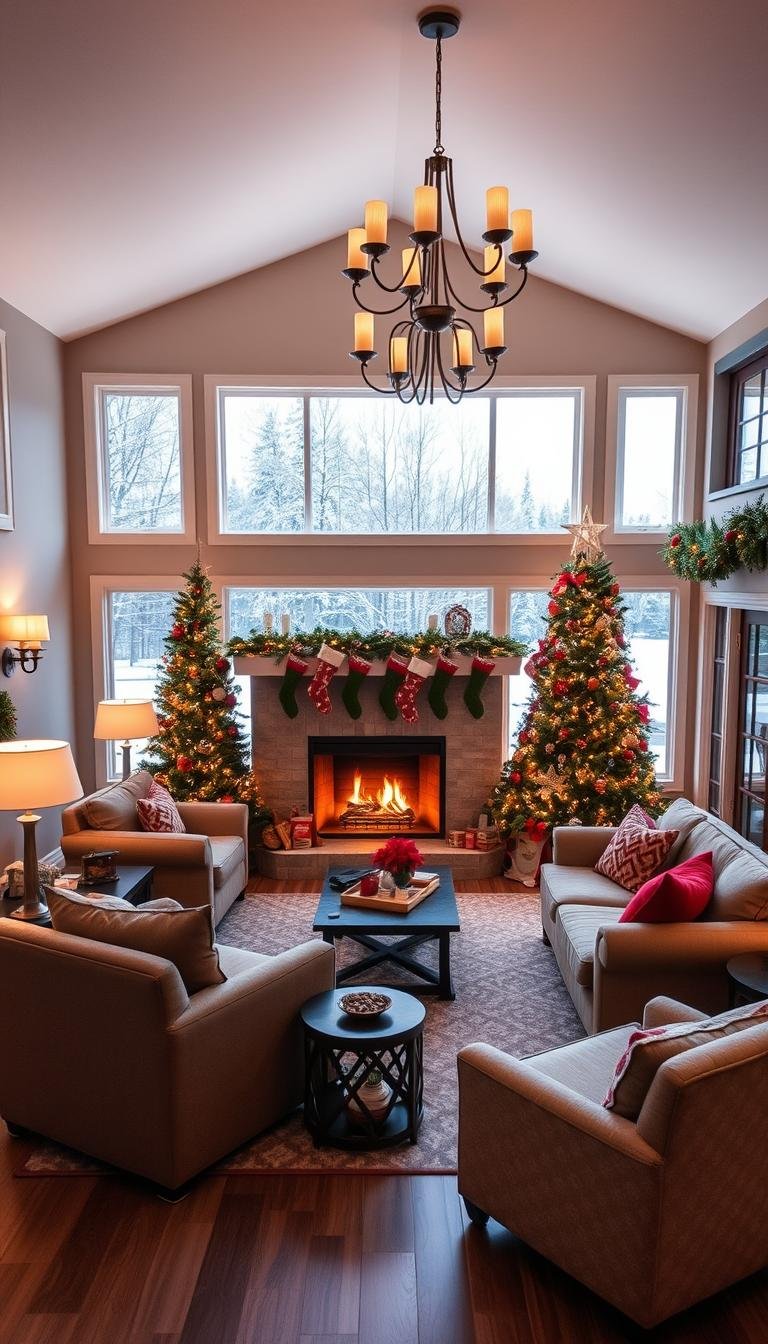
A stone fireplace or efficient space heater can anchor the room and warm seating without replacing furniture. I use thicker throws and cushions to add cozy layers that are simple to remove when the season shifts.
Windows and storm control
Retractable windows and motorized storm shutters give weather-friendly control. They close tight during storms and disappear when I want fresh air and more light.
Ventilation and ceiling airflow
I install a reversible ceiling fan to push warm air down in winter and cool in summer. Cross-ventilation with opposite window openings plus a quiet floor fan keeps breezes moving through the living space.
“Tighten the shell first; comfort systems work far better in a sealed, well-vented room.”
| Element | Benefit | Best Use |
|---|---|---|
| Insulated glazing | Reduces heat loss and drafts | Four-season rooms |
| Fireplace / space heater | Quick, cozy warmth for seating areas | Colder months |
| Retractable windows / shutters | Weather control and fresh air | Storms and breeze days |
| Ceiling fan & ventilation | Even temperatures and airflow | All season comfort |
Furniture That Fits a Sunroom: Durable, comfy, and fade-smart
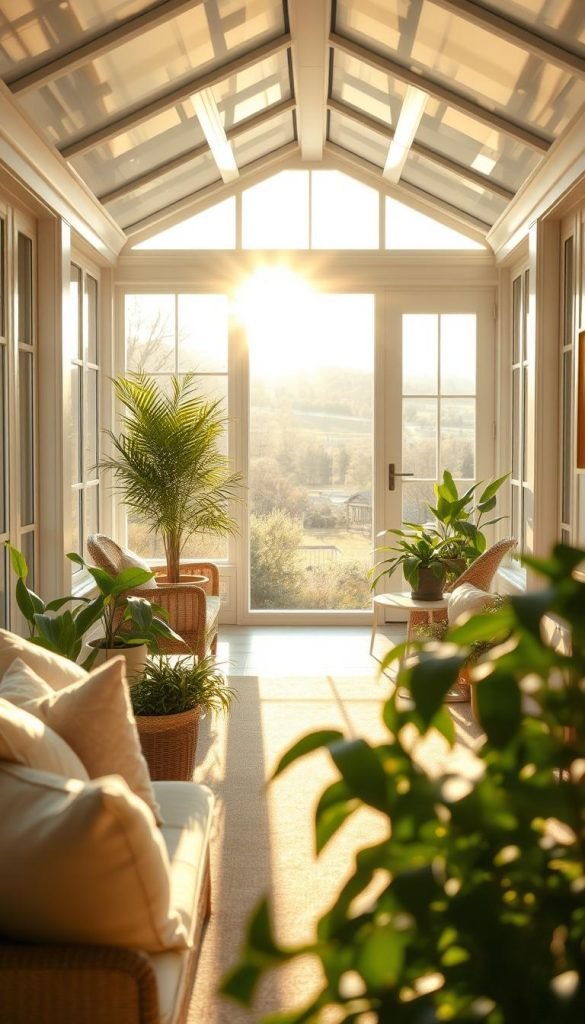
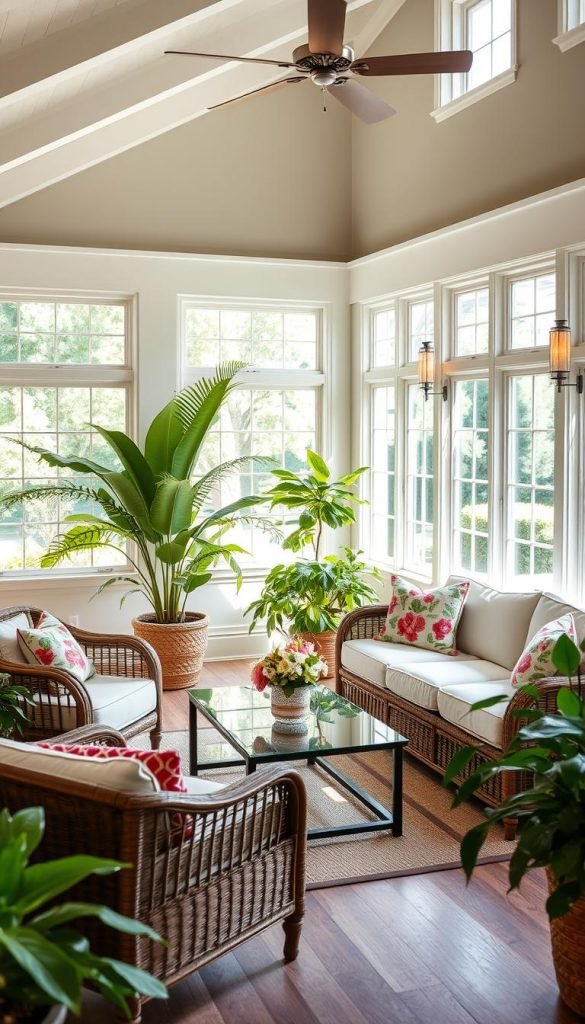
Choose seating that breathes: light frames and outdoor-grade cushions keep the room usable through shifting seasons. Pick pieces that resist sun and humidity so maintenance stays low and the look endures.
Wicker, rattan, and outdoor-rated materials
Wicker and rattan stand up to moisture and UV exposure when paired with weatherproof finishes. I favor aluminum, teak, and resin wicker as base options; they deliver longevity without heavy upkeep.
Swappable, lightweight pieces for easy reconfiguration
Keep mobility front of mind. Lightweight stools, nesting tables, and slim accent chairs let me change zones in minutes for gatherings or seasonal flow.
- Outdoor-rated materials: aluminum, teak, resin wicker, performance fabrics.
- Comfort with resilience: indoor-level cushions wrapped in fade-resistant fabrics.
- Smart storage: built-ins or a slim dresser to hide blankets and seasonal decor.
- Rotate cushions and place sun-sensitive items away from harsh rays.
- Ground settings with durable indoor/outdoor rugs and choose open-leg pieces to keep the space airy.
“Light, durable elements let the room evolve without a full overhaul.”
Color and Pattern Play: From modern sunroom neutrals to bold, moodier hues
A calm base palette frees the design to add bold pops where they matter most. I start with cream, warm gray, and black to set a modern sunroom tone that feels grounded and clean.
Texture becomes the second language: rattan, linen, and warm wood add depth without competing with natural light. I keep large furniture neutral so fading is less visible and updates stay simple.
I use high-gloss lacquer on a single wall or trim to reflect light and create drama. Deep trim shades—oxblood or pool-blue—help balance very bright exposures while tying in flooring tones.
- Pattern mixing: layer rugs, pillows, and slipcovers for energy that’s easy to swap seasonally.
- One statement rule: choose lacquered walls, a bold rug, or patterned drapery and keep the rest supportive.
- Nature echoes: repeat greens and blues to reinforce views and the indoor-outdoor connection.
“Test paint and textile samples at morning and late-afternoon light. Color shifts with the sun.”
| Element | Effect | Quick Tip |
|---|---|---|
| Neutral palette | Calm, cohesive atmosphere | Anchor large pieces in cream or gray |
| High-gloss trim/wall | Reflects light, adds drama | Limit to one focal surface |
| Patterned textiles | Add energy without permanence | Rotate rugs and pillows seasonally |
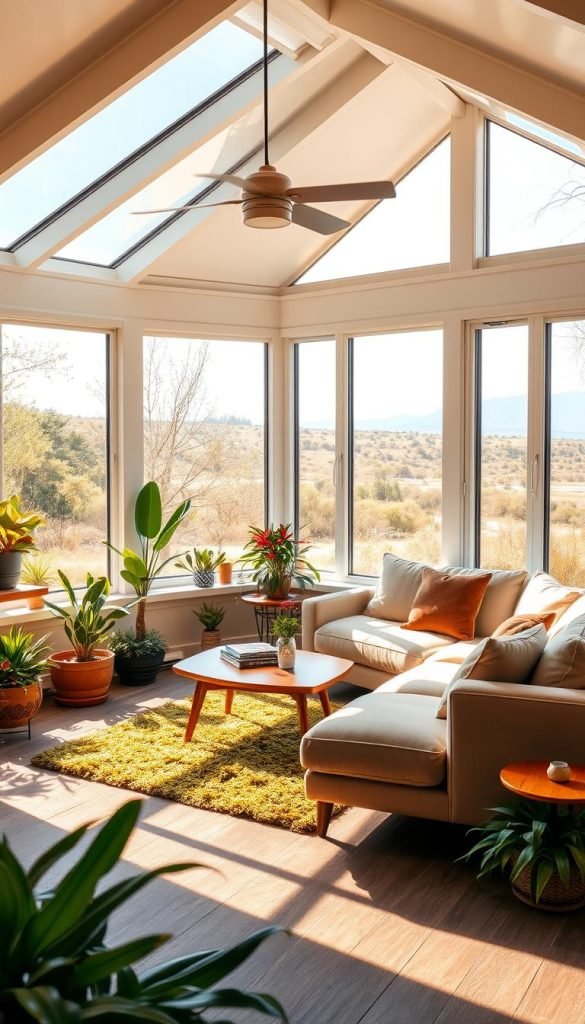
Layered Lighting for Every Hour: Sunlight by day, ambiance by night
Layered fixtures make this glass-wrapped space usable and inviting at every hour. Daylight carries the mood, but well-planned evening lighting keeps the room warm and functional.
Balance matters: overhead or ceiling fixtures provide general glow, while table and floor lamps add focused tasks. String lights bring a soft, summer-evening charm that keeps the atmosphere relaxed without harsh glare.
Balancing ceiling fixtures, lamps, and string lights for evening comfort
My rule: combine three elements — general, task, and accent light — so the living space adapts easily from chores to quiet nights.
- I place lamps near seating for reading and conversation and choose warm bulbs (2700–3000K) so the room feels cozy after dark.
- Use dimmers across circuits to shift scenes from bright family living to mellow evening atmosphere.
- Trace beams or windows with string lights to highlight architecture and add twinkle without glare.
- Mix materials — brass, rattan, painted wood — in lamp bases to echo room elements and keep shades light to amplify output.
- Avoid tall fixtures that block views; prefer low-profile ceiling lights or slim chandeliers to preserve sightlines.
- Conceal cords under rugs or along trim, and keep a spare bulb kit plus smart plugs to automate scenes effortlessly.
“Layered lighting prevents a too-stark white feel in all-glass rooms and makes evenings feel intentional.”
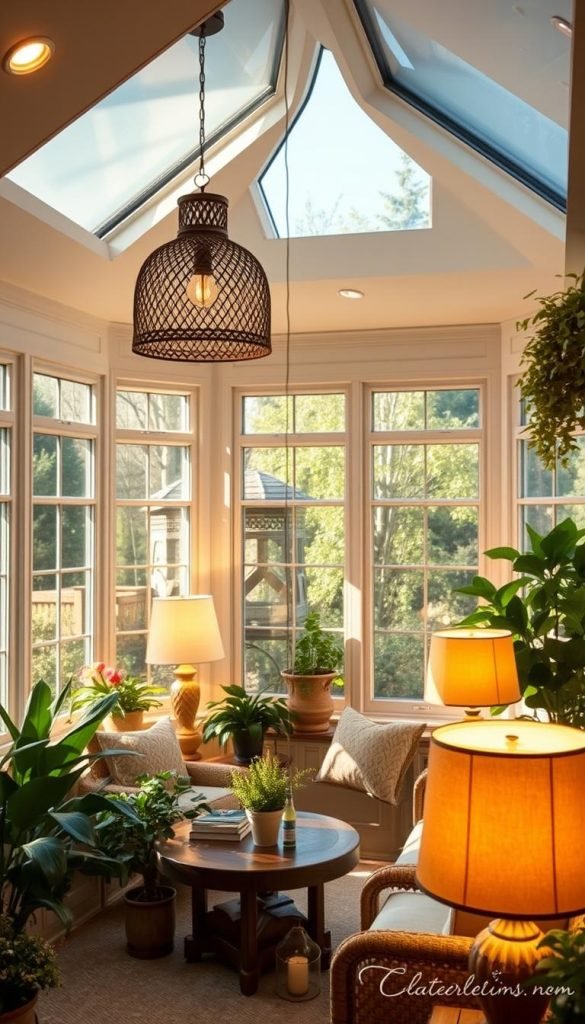
Bring the Outdoors In: Plants, winter gardens, and natural materials
A layered green scheme makes the room feel like an alfresco corner indoors. A winter garden acts like a greenhouse, giving plants steady warmth and plenty of natural light so growth continues through cold months.
I curate a plant palette that thrives in my light: ferns for filtered spots, vines for trellis climbs, and potted citrus or ficus for height and drama.
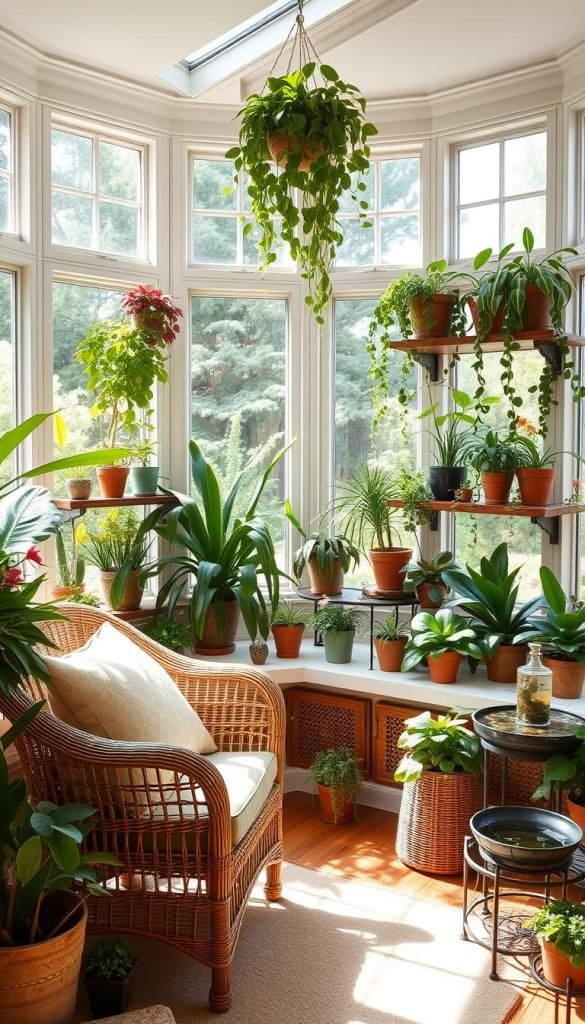
Group pots by water and light needs to simplify care. Use rattan, wicker, stone, and wood stools or stands to blend greenery with warm textures. Protect floors with trays and easy-clean rugs; elevate planters to avoid moisture damage.
Creating a small winter garden
Include a potting bench or shelf to start seedlings and keep herbs. Place larger trees near corners to frame views and let windows flood the rest of the area with light.
- Use adjustable shades to temper midday brightness.
- Install a small fan to mimic outdoor airflow and cut mildew risk.
- Keep tools—mister, pruners, fertilizer—organized for quick upkeep.
“Blend leafy greens with sculptural pots so the garden area reads curated, not cluttered.”
Design Focal Points: Fireplaces, statement storage, and curated walls
A single, strong focal point gives the room instant character and makes arranging seating simple. Pick one anchor — a substantial stone hearth, a dramatic dresser, or even a piano — and let that choice drive the plan.
A stone fireplace extends use into colder months and visually grounds the space. Place seating so it faces the hearth in winter, then pivot pieces to frame views when weather is mild.
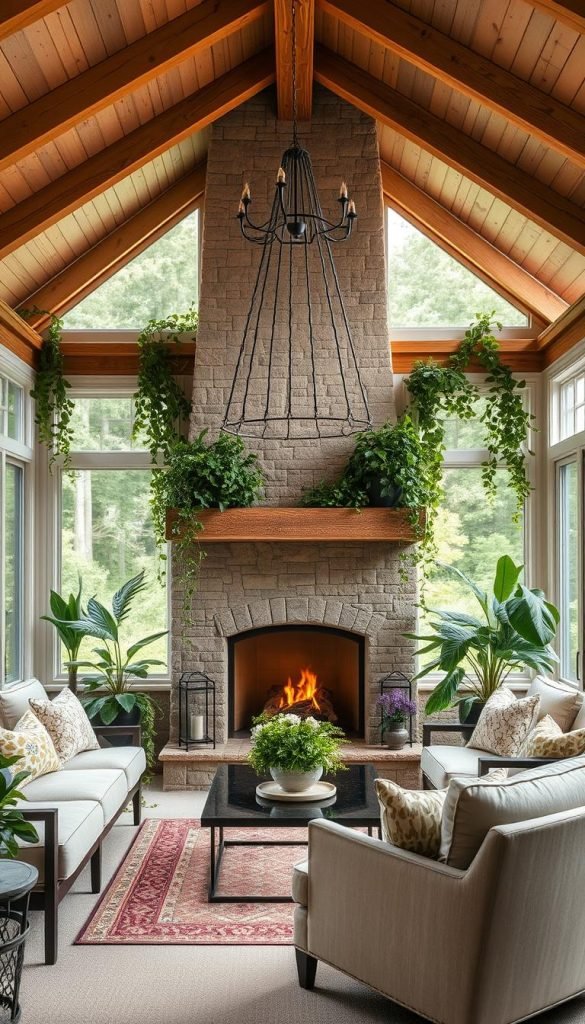
Anchoring the room with a stone fireplace or dramatic dresser
Use a statement dresser as hidden storage for games, blankets, and barware while its scale supports the seating layout. Coordinate surrounding colors to echo the mantel or finish so the palette feels cohesive.
Style curated walls with art, mirrors to reflect light, and a few sculptural pieces so displays enhance rather than compete with views. Keep tall units off window walls so natural light pours in and the room stays airy.
- Add a picture light or sconce to highlight the focal element without clutter.
- Edit decor so negative space surrounds the feature; this makes the living area feel refined.
- Use trays and boxes on top of storage for simple, seasonal vignettes that move easily.
“One bold element pulls many small choices into a confident design.”
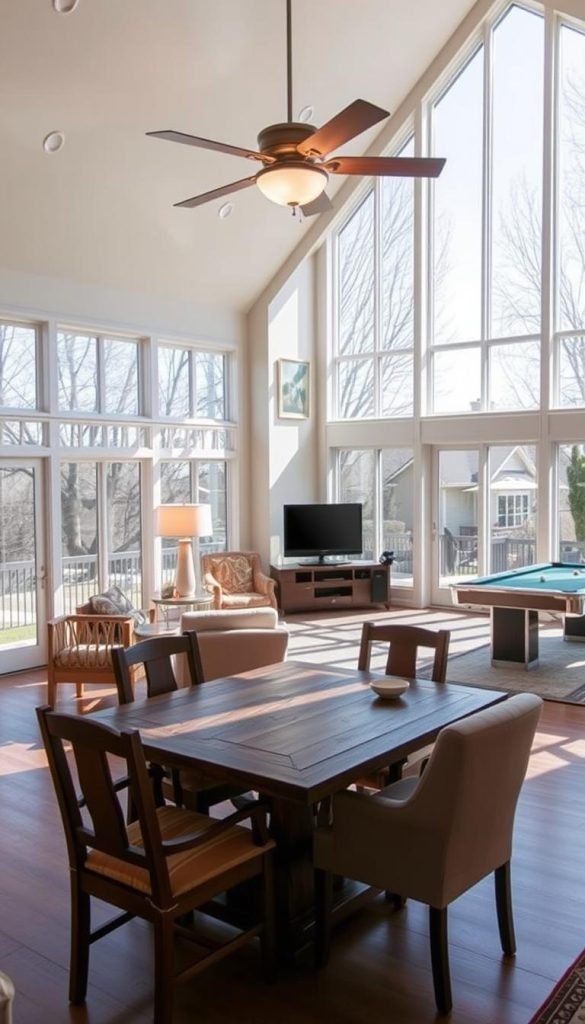
Purpose-Driven Zones: Dining, reading, entertainment, and game room ideas
Designing with intent turns the glass room into friendly zones that welcome different moments. This makes the area feel organized and useful without crowding light or views.
Cozy reading corner
A hanging rattan chair or a cushy armchair forms the core of a warm reading spot. I add one warm lamp and a side table so books and mugs stay close.
Keep a small shelf or basket for extra throws and reading material.
Breakfast nook that shifts to dining or games
A compact table anchors morning meals and doubles as a game or laptop station. Choose stackable stools to expand seating for guests.
Social setups: bar, games, and media
Place a slim cart or tray on a dresser for a modest bar and easy entertainment. Store board games and throws in a bench so the living space stays tidy.
Plan media in a non-glare corner with hidden cords and add plants near seating to soften edges and boost comfort.
“Define each zone with a rug and its own light source so the room reads as intentional.”
Protecting Surfaces and Fabrics From Sunlight
Bright exposures call for strategies that preserve color and material life.
Lighter tones age more gracefully. I pick lighter-toned upholstery and slipcovers because they hide fading better than deep hues.
Add UV-smart window solutions—solar shades, lined drapery, or low-visibility films—to reduce UV without dimming the view. Mirrors and a white palette keep the space bright even when shades are down.
Choosing lighter-toned upholstery and UV-smart window solutions
Rotate cushions and seasonal decor so one spot does not take all the sun. I keep delicate pieces off the sunniest sills and stash extras in closed storage to extend their life.
- I select materials with fade resistance and stain protection for rugs and fabrics.
- I add breathable throws as protective layers over sofa arms during peak sun hours.
- I test shade openness (for example, 3% vs. 5%) to balance view-through with protection.
- Small pads under decor prevent heat rings on wood surfaces and preserve finish.
“Simple defenses—lighter fabrics, smart shades, and small swaps—keep the room bright and long-lasting.”
| Strategy | Benefit | When to Use |
|---|---|---|
| Lighter upholstery | Slower visible fading | High sun exposures |
| UV film / solar shades | Blocks UV, keeps view | Bright windows and afternoon sun |
| Rotate & store | Even wear and longer life | All seasons |
| Mirrors & light palette | Maintains perceived light | When shades are partially drawn |
How Do I Decorate a Sunroom for Year-Round Enjoyment? My Month-by-Month Checklist
A simple monthly routine keeps the space fresh and ready, from bright summer days to cold snaps.
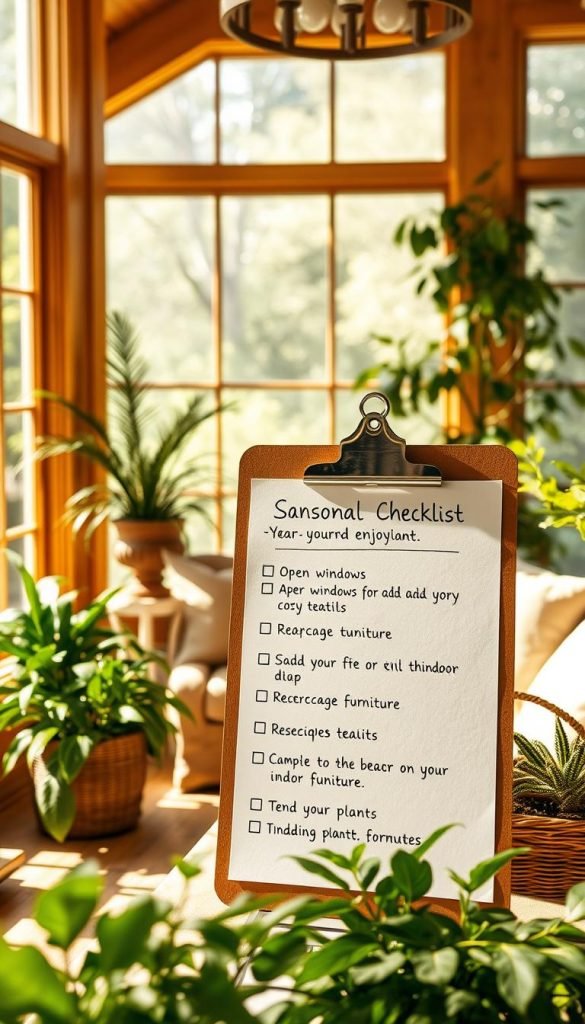
Summer tweaks: swap to breathable cushions, close solar shades at peak light, and run a ceiling fan or cross-ventilate to boost airflow. Move sensitive plants out of direct rays when heat spikes and water on a schedule so greenery stays healthy.
Summer tweaks: breathable fabrics, shade control, and airflow
Close solar shades midday, use lightweight throws in the evenings, and test retractable windows for quick cooling. Dust fans, check shade mechanisms, and rotate cushions so wear stays even.
Colder months: thicker cushions, cozy throws, and added heat
As temperatures dip, replace summer cushions with thicker fabrics and add cozy throws. Light a fireplace or place a safe space heater near seating to keep mornings inviting.
- Monthly tasks: clean windows, check weather seals, and test shade hardware.
- Shoulder months: add a thin rug layer and shift seating to chase or avoid sun.
- Swap pillow covers and table accents seasonally to change atmosphere without cost.
- Review what worked each season and note small improvements for the next set of months.
Tip: retractable windows and storm shutters can open or enclose the area with a button press, making seasonal transitions simple.
Conclusion
Thoughtful layout and layered lighting turn this bright sunroom into a flexible extension of home life.
My goal was a room that welcomes sunrise coffee and evening relaxation with string light charm. The plan keeps sightlines clear so views and natural light stay central.
I blend layout, materials, and lighting so the space adapts to living, dining, reading, or casual gatherings. Durable finishes, smart shades, and a fireplace or heater stretch use into chilly nights.
Rotate textiles, plants, and table accents seasonally to refresh the place. Small rituals—quiet mornings, shared meals, or a favorite spot for reading—make this modern sunroom one of the most cherished spaces that connects indoors to the outdoors.