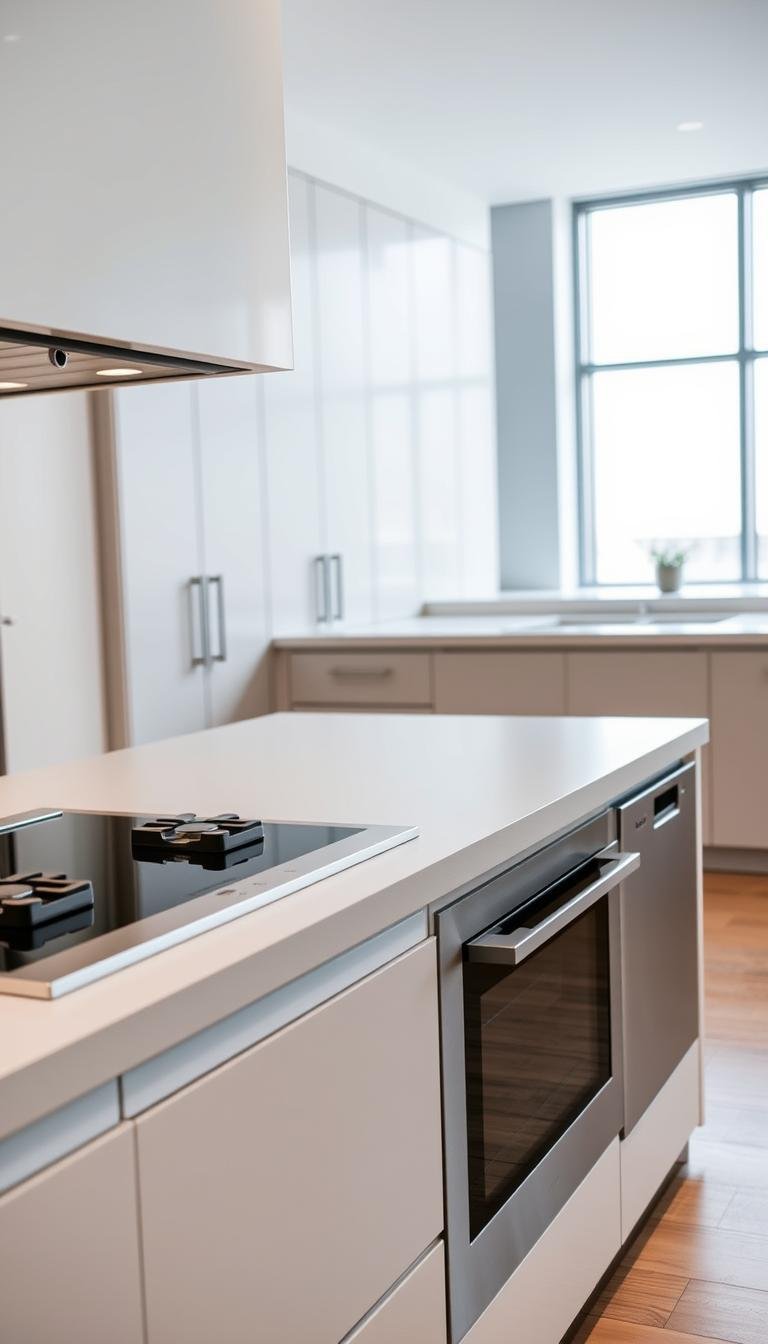
What Are the Tips for Integrating Appliances Seamlessly into Cabinetry?
I plan kitchens so appliances and cabinets read as one cohesive piece, not a collection of separate items. I begin by mapping the sink, stove, and refrigerator to keep movement efficient. This simple work triangle shapes how I place major gear before I lock in counters or storage.
Careful measuring saves money and headaches. I always allow for door swings, ventilation, and utility access so nothing gaps or binds. Choosing built-in or panel-ready models helps me get that flush, custom feel without overdoing the budget.
I match finishes and handles across brands so stainless, matte, or black options look unified. I also look to ENERGY STAR and smart, counter-depth models to add convenience and efficiency while keeping a clean aesthetic. Small moves like trim kits often deliver a high-end look on a modest spend.
Key Takeaways
- Plan appliance locations first using the classic work triangle.
- Measure with clearance and ventilation in mind to avoid surprises.
- Choose built-in or panel-ready units for a flush, custom look.
- Match finishes and handles across brands for a cohesive style.
- Consider ENERGY STAR and counter-depth options for efficiency and fit.
Plan the layout first: workflow, triangle, and appliance placement
I start every kitchen plan by sketching how people will move between sink, range, and fridge. That simple drawing guides my layout and keeps tasks close at hand. It also prevents awkward cabinet runs and tight counter zones.
Lock in appliance positions before you order cabinets or an island. When I decide exact spots for each refrigerator, oven, or dishwasher, I avoid misfits and odd gaps. Counter-depth models often help a run look straight and intentional.
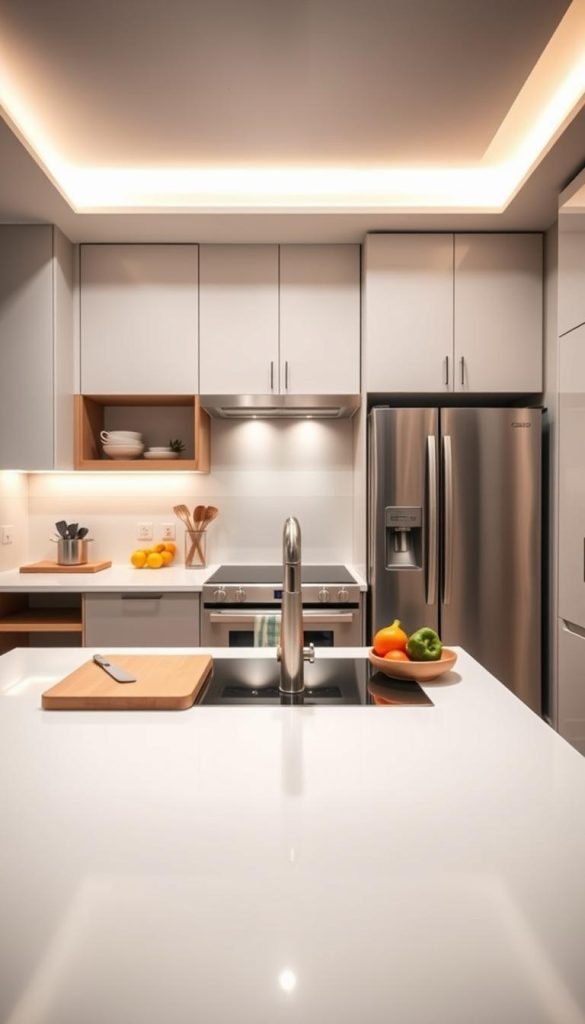
Map the triangle to streamline movement
I pencil the sink, range, and refrigerator so steps stay minimal. This saves time when I cook and keeps traffic out of prep zones.
Measure twice for every appliance zone
I check cutout, overall, and service clearances. I note door swings and ventilation needs so a fridge or dishwasher door won’t hit a cabinet.
Plan utilities and clearances early
Electric, gas, and water lines must land where the appliance needs them. I plan vents and soffits during cabinetry layout to avoid pricey changes later.
- I sketch the work triangle first to reduce steps.
- I lock appliance locations before finalizing cabinets or counter details.
- I double‑check dimensions, door swings, and aisles around an island.
Built-in vs. integrated vs. freestanding: choosing the right integration level
I decide early whether an appliance should sit proud or tuck into cabinetry. This choice shapes the kitchen’s final line and affects cost and installation time.
Freestanding units are the fastest option and work in most homes. They give flexibility when layouts change, but they often leave small gaps and can sit slightly ahead of cabinet faces.
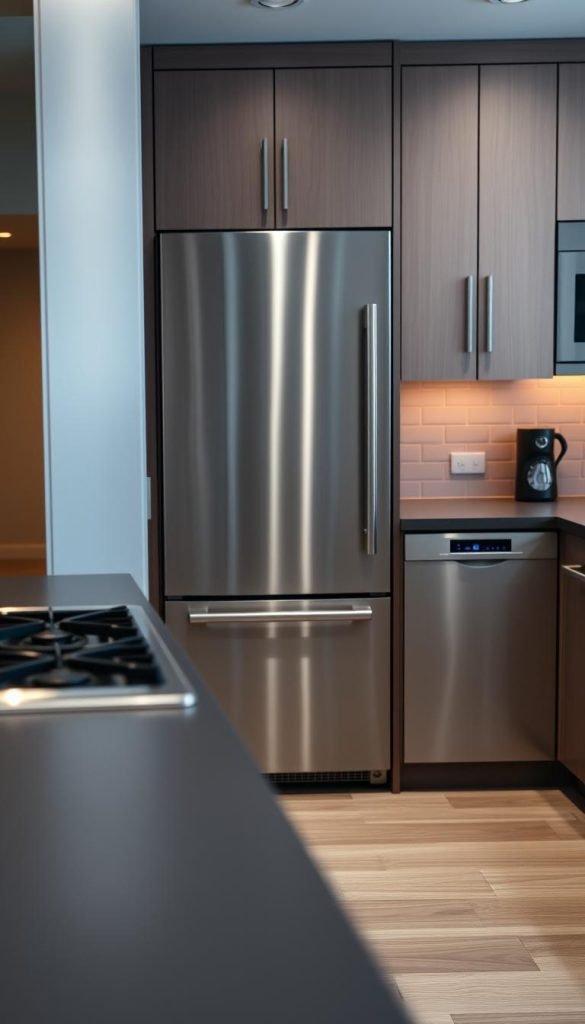
Freestanding appliances: fast, cost-effective, with potential gapping
Use freestanding when budget or future changes matter most. Expect visible edges and occasional filler pieces to align sightlines.
Built-in appliances: custom-fit for a clean, near-flush appearance
Built-in appliances sit into tailored openings. I prefer them in tight layouts where a refined appearance matters. They raise perceived quality and reduce clutter.
Integrated appliances: fully flush alignment for a seamless line
Integrated models are the gold standard. With matching fronts they disappear into cabinets and create one uninterrupted design line.
Panel-ready models: add matching cabinet panels to hide a fridge or dishwasher
Panel-ready units accept custom panels so a refrigerator or dishwasher blends with adjacent cabinets. This is a smart option when you want a uniform façade without replacing every appliance.
- I recommend finalizing appliance specs before building cabinets when possible.
- Trim kits help bridge gaps around ovens and microwaves on a budget.
- Consider service access and long-term flexibility when weighing cost versus finish.
| Type | Fit & Appearance | Cost & Installation | Best Design Styles |
|---|---|---|---|
| Freestanding | Visible edges; may sit proud of cabinets | Lower cost; simple install | Casual, transitional |
| Built-in appliances | Near-flush; tailored openings | Higher cost; precise install | Transitional, modern |
| Integrated / Panel-ready | Completely flush; hidden with panels | Highest cost; custom fit, panel work | Modern, minimalist, traditional with panels |
What Are the Tips for Integrating Appliances Seamlessly into Cabinetry?
I plan appliance specs alongside cabinet dimensions so every opening lines up perfectly. I coordinate cutouts, ventilation, and reveal lines early to avoid surprises during install. This approach keeps the kitchen layout consistent and reduces late changes that add cost.

Design cabinetry and appliances together—or buy appliances first, then build around them
I treat cabinets and appliances as one system. If timing forces a choice, I buy major units first and build cabinet openings to match. That saves money and gives a custom look without guessing dimensions.
Select counter-depth refrigerators to align with cabinet runs
Choosing counter-depth refrigerator models keeps a straight line along the counter. It prevents a bulky unit from breaking the visual run and makes the kitchen look cleaner.
Use trim kits and filler panels to refine edges and maintain consistent reveals
Trim kits close gaps around microwaves and wall ovens. Slim filler panels fix tight corners and keep even reveals. I also map handle heights so pulls and appliance handles align across the room.
- I prioritize panel-ready on big units where it matters most to control cost.
- I confirm hinge clearances and ventilation paths so panels don’t bind or overheat.
- I seek simple control faces and hidden displays when I want a quiet, unified look.
Style and finish cohesion: make appliances complement your cabinets
I pick a dominant finish early so each appliance reads as part of one calm composition. Starting that way makes decisions about handles, panels, and trim much easier.
Stainless steel remains the go-to for flexibility, while matte black and white are gaining traction. Panel-ready models let me hide big kitchen appliances behind real cabinet fronts for the smoothest aesthetic.
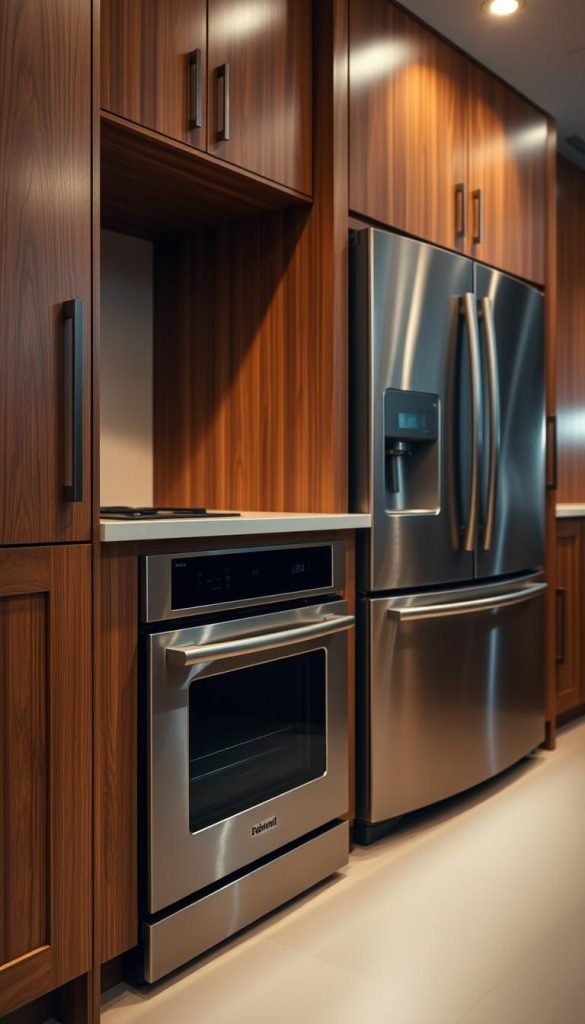
I match handle profiles and control layouts to cabinet hardware so reflections and sightlines feel intentional. Modern design favors flat fronts and hidden pulls; traditional styles welcome paneled faces and warmer tones.
- I choose a finish family—stainless, matte black, or custom panels—and keep it consistent across major appliances.
- I align trim and reveal lines so doors and drawers form one continuous line across the run.
- I prefer smooth fronts and hidden controls to minimize visual clutter and aid cleaning.
- I use panel-ready models and compatible models where I want units to disappear into cabinets.
- I mix brands only when sheen, handle geometry, and color temperature match closely enough.
Appliance placement that fits how I cook and live
I set ovens and ranges close to prep counters to cut steps when I bake and roast. This keeps trays and pans moving smoothly and reduces spills. I prefer built-in oven stacks near storage for sheet pans and baking tools.
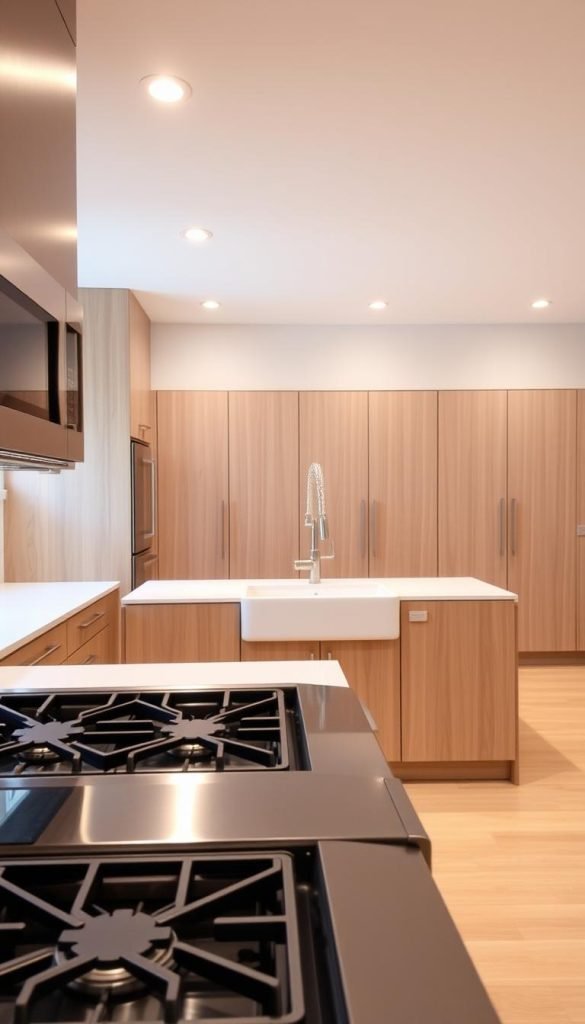
Position ovens, cooktops, and hoods near prep zones
Place wall ovens and cooktops beside prep counters so you don’t carry hot dishes across busy lanes. Align the range with ventilation and duct routes to match your searing or simmering needs.
I weigh a statement canopy hood for strong capture against a downdraft when I want a low profile and clear sightlines. Confirm clearances and reachable controls before finalizing.
Add a beverage center or compact refrigerator near seating or the island
I add a compact fridge or beverage center by the island or seating so guests grab drinks without crowding the cook. Panel-ready undercounter units keep lines clean in entertaining zones.
- I keep oven stacks near storage for pans, trays, and spices.
- I measure landing zones on both sides of cooktops and ovens for safe handling.
- I plan kid-safe heights for microwaves and ovens to reduce spills.
- I separate snack and drink access from the main cooking triangle during parties.
| Feature | Placement | Benefit |
|---|---|---|
| Wall ovens | Adjacent to prep counters | Efficient baking workflow; easy access to sheet pans |
| Range / Cooktop | Near main prep zone with ducted hood | Better capture for smoke and odors; safe landing space |
| Beverage center / Undercounter fridge | Island or seating area | Reduces traffic in cooking lane; keeps lines tidy |
Smart features, energy savings, and budget-savvy integration
Smart features that let me check a fridge from my phone make daily life simpler and safer. I pick units that send alerts—like LG’s InstaView model that warns if a door is open—so I avoid spoiled groceries and wasted energy.
I choose ENERGY STAR models to cut utility costs and reduce environmental impact without losing the clean, integrated look I want. These certified models use less electricity and water, lowering cost over time and helping a modern home run more efficiently.
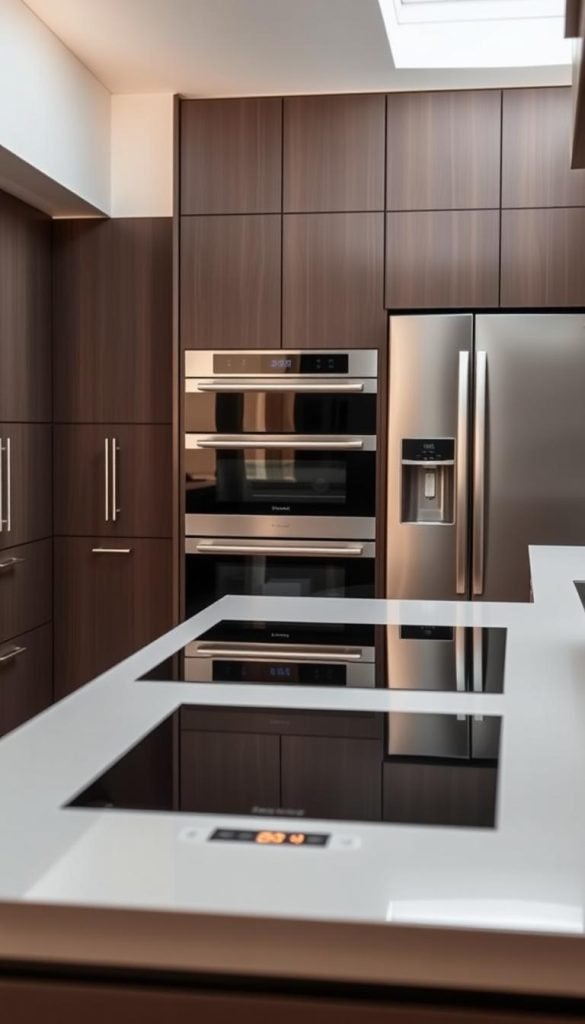
I stretch my budget by paneling visible pieces—usually the refrigerator and dishwasher—and matching finishes on the rest. Trim kits and panel-ready units give a built-in appearance without full custom cabinetry.
- I lean on smart routines and remote control to save time and avoid food waste.
- I weigh total cost over years; durable brands often last two decades with proper care.
- I plan maintenance access and reserve budget for good ventilation to protect finishes.
| Feature | Benefit | Budget impact |
|---|---|---|
| ENERGY STAR models | Lower electricity and water use | Save on bills; moderate premium |
| Smart-enabled units | Remote monitoring, alerts, timed routines | Small to moderate added cost; time savings |
| Panel-ready / Trim kits | Custom look without full cabinetry | Lower cost than full integration |
| Durable premium brands | Long service life (10–20 years) | Higher upfront cost; lower replacement cost |
Conclusion
I begin by locking layout decisions so every oven, fridge, and range finds a deliberate home.
I keep plans simple: place major gear first, measure clearances, and map vents and service access. Good planning saves time and protects cabinet finishes while helping a clean kitchen look emerge.
Choose between freestanding, built-in appliances, or panel-ready options that match cabinet fronts. Pick counter-depth refrigerator models and use trim kits or slim panels to refine sightlines and maintain even reveals.
Finally, align finish and handle choices so appliances and cabinets read as one. Use this blog as a guide when you choose ovens, dishwashers, or a new fridge to make space feel intentional every day.