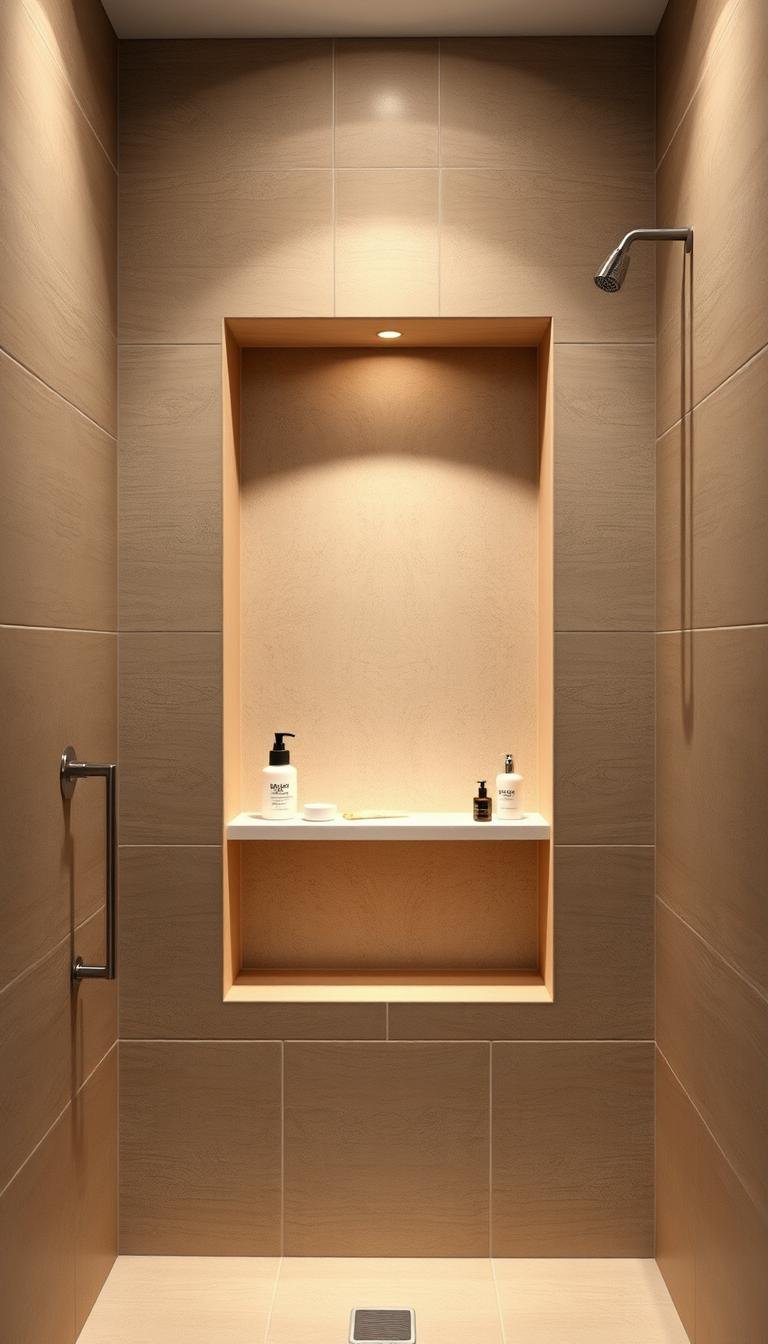
What Are the Innovative Shower Niche Ideas for Storage?
I write this to help you clear clutter and lift your bathroom style. I explain how a recessed shelf built into the wall saves floor space and creates a clean, custom look that beats hanging caddies.
I’ll walk through types and placement that fit every layout. From built-in and modular to vertical or corner options, each choice improves ergonomics and keeps toiletries handy without bulk.
Small footprints let you try bold tile or a glass shelf as a focal point. Watertight surfaces cut mold risk and make cleaning fast. I also share quick tips on ideal heights, lighting to highlight texture, and moisture-wise materials.
Throughout, I focus on real-world details: reach ranges for seated or standing users, slip-resistant finishes, and spots to add a bench or recessed shelf for extra convenience.
Key Takeaways
- Recessed shelves clear clutter while saving floor space.
- Choices include built-in, modular, vertical, corner, and glass-shelf designs.
- Watertight finishes reduce mold and simplify cleaning.
- Small niches let you use special tile without a full remodel.
- Plan height and lighting for comfort and visibility.
Why I Love Shower Niches for Smart Bathroom Storage
A built-in niche turns wasted wall space into neat, usable storage that feels custom. I rely on this trick to keep shampoo, conditioner, and soap within reach without messy caddies. A tidy shelf makes my morning routine faster and my space calmer.
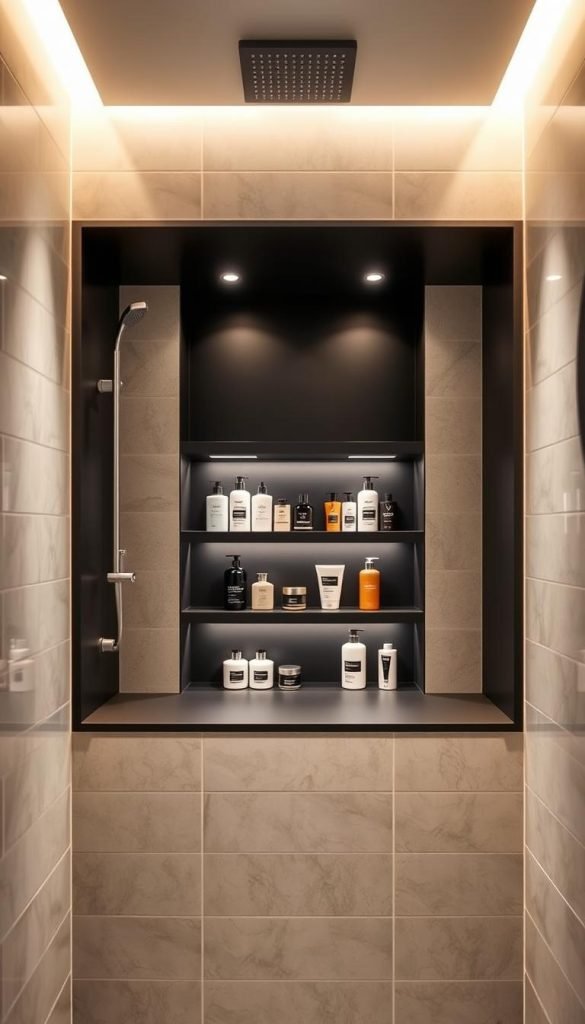
I like how a recessed unit adds character to a bathroom while using vertical wall area efficiently. In small rooms, that saved floor room lets me add a bench or bolder tile without crowding the layout.
Practical perks matter most to me: sizing a niche for multiple items stops bottles from tumbling to the floor. Watertight liners and smooth finishes make cleaning quick and cut mold risk.
- I get a sleeker shower experience with fewer dangling caddies.
- Family or guest baths stay organized—each person can spot their essentials fast.
- Matching or contrasting tile helps the niche either blend in or stand out as a design touch.
Built-In and Recessed Niches That Maximize Space Without Bulk
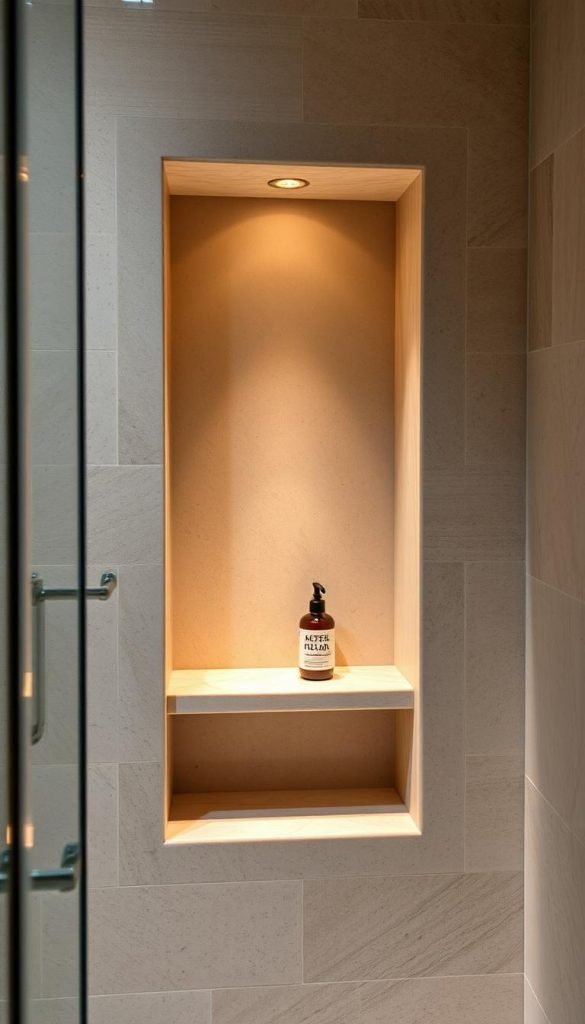
Using in-wall cavities for storage keeps bottles organized without adding bulk. I favor a built-in approach when I want a seamless, custom look that uses stud space efficiently.
Built-in niches are framed during installation and finished to match surrounding tiles or stone. Recessed versions sit flush with the walls and give a minimalist profile that fits small layouts well.
I follow a few construction basics: frame between studs, add reliable waterproofing, and plan tile finishing so grout lines align with the shower tile. That keeps the niche looking intentional.
- Size the opening deep enough for standard bottles plus tile and grout.
- Place the niche away from direct spray to limit pooling.
- Pick porcelain, ceramic, or stone to balance daily maintenance and slip resistance at the base.
Tip: set heights for the people who use the shower—adults, kids, or seated users—so the niche truly boosts function and bathroom design.
Modular and Prefab Niche Systems for Faster Remodels
I choose prefab units when I want predictable sizing and fewer surprises during a remodel. These modular kits come in set dimensions and styles, which speeds framing and waterproofing. That makes timelines simpler for DIYers and contractors alike.
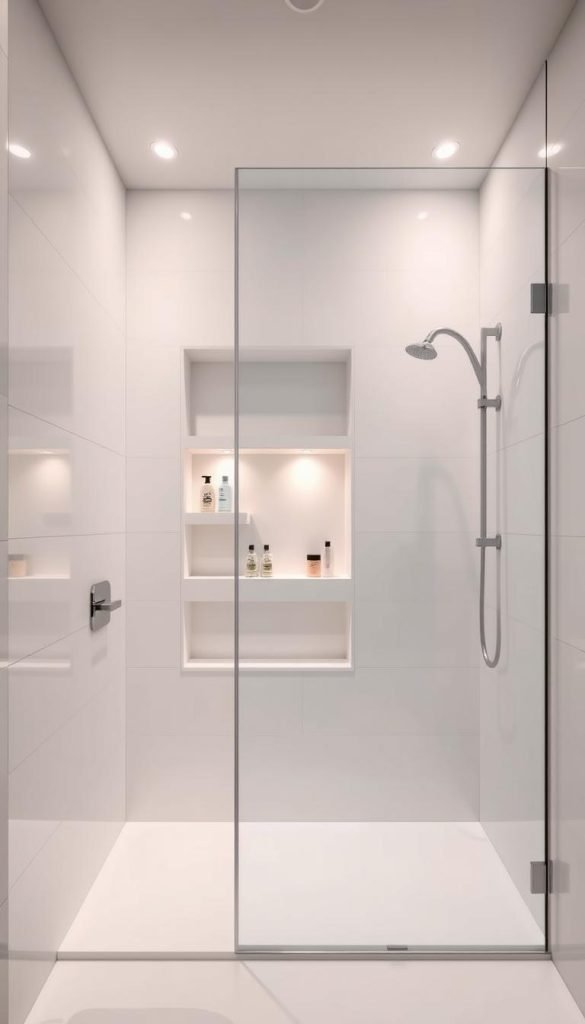
Common materials include acrylic and composite panels that mimic stone but weigh less and need less upkeep. Consistent dimensions mean tile and grout line up neatly, so finishing goes faster.
- Use modular options when plumbing or vents limit placement — they fit around obstructions.
- Measure tall bottles and allow extra room for pump heads as a quick way to pick dimensions.
- Confirm stud layout before ordering to avoid on-site modifications.
| Material | Weight | Maintenance | Best Use |
|---|---|---|---|
| Acrylic | Light | Wipe clean | Fast installs, low upkeep |
| Composite | Moderate | Low porosity | Mimics stone, easier tile edge |
| Tile-ready frame | Varies | Depends on tile | Seamless finish with grout |
Finishing options include tile-ready flanges for a seamless look or integrated lips for a clean edge. In practice, prefab units reduce the number of trades and create predictable lead times, which is a reliable way to keep a remodel on budget and on schedule.
Floating Shower Niches for a Sleek, Minimal Look
I favor shelves that seem to hover, which instantly sharpen a modern bath look. Thin glass and hidden brackets create a weightless effect that keeps a compact space feeling airy.
For a crisp, minimal aesthetic, use low-iron glass or a lightly tinted option to set a subtle mood. Decanted bottles and premium dispensers look elevated on a clear shelf, so the unit doubles as display and storage.
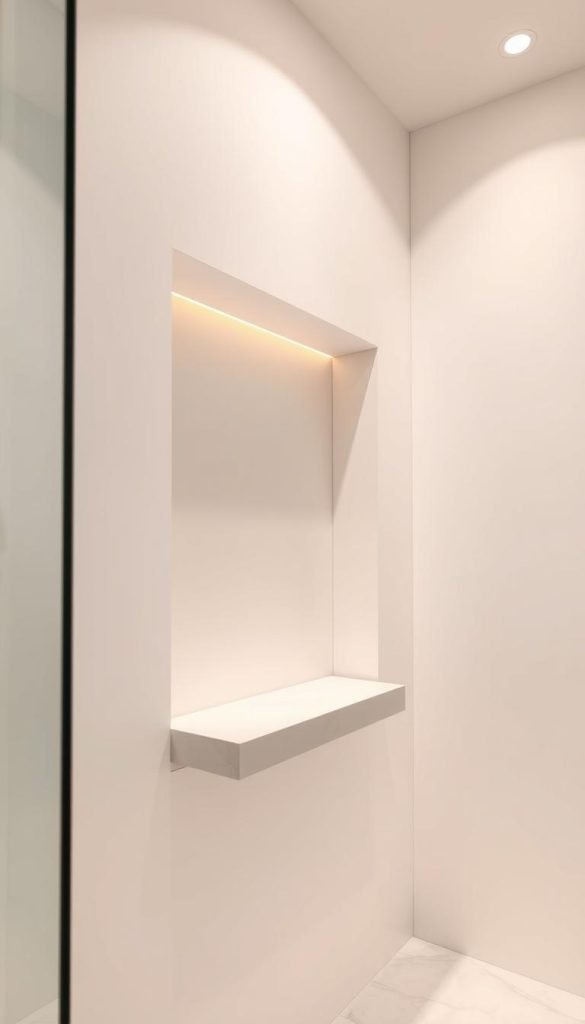
Installation matters: anchor brackets into studs, check load ratings, and keep tolerances tight so the shelf truly reads as floating. I align the shelf visually with grout lines or fixture centers to keep sightlines balanced on the wall.
- Choose glass for maximum lightness and an airy look.
- Confirm bracket specs and hidden supports with your contractor.
- Consider placement that flatters modern bathroom design and everyday use.
When done well, a floating niche lifts the overall style and makes shower routines feel both elegant and simple.
Vertical Niches That Stretch Storage From Floor to Ceiling
A tall, narrow niche turns a skinny strip of wall into a stacked organizer that frees floor space and holds essentials. I use this approach when a bathroom is small but needs more order. Vertical units stack shelves upward so you keep everything handy without widening the footprint.
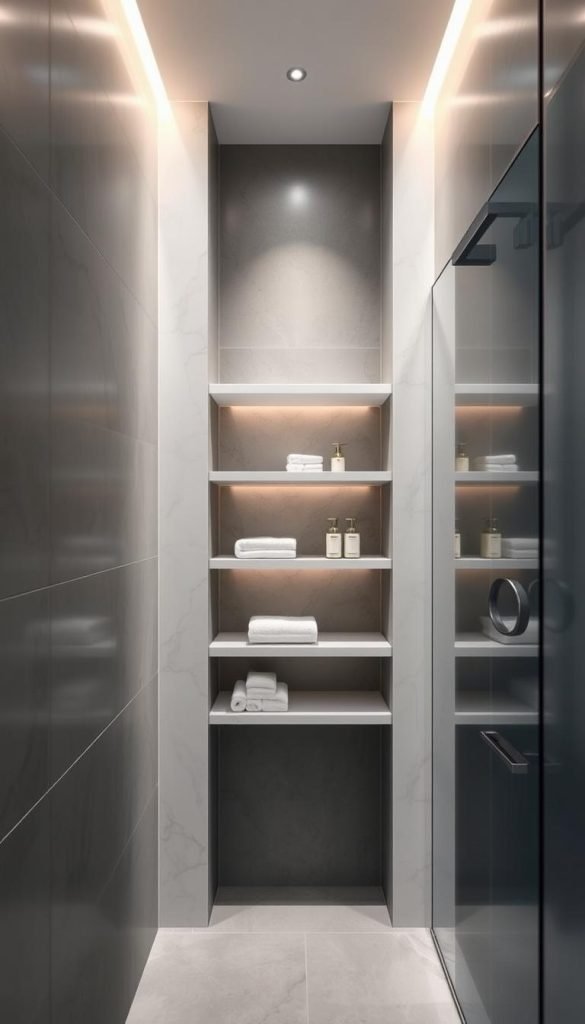
Best placement and height so everything stays within reach
I aim the primary shelf at chest-to-shoulder height so standing users grab shampoo without bending. Add a lower shelf if someone will sit while showering.
For safety and function, align the unit with fixtures or grout lines. Proper placement makes the built-in read intentional instead of an afterthought.
Framing with accent tile to create a bold focal point
Framing a vertical run with decorative tile transforms storage into a confident focal point. Use a slightly deeper middle shelf for tall bottles, and shallower top and bottom tiers for small essentials.
- I favor dedicated shelves for bottles and bars to avoid slippery mixes.
- Running a niche to the floor calls for excellent waterproofing at the base to handle splashes and cleaning runoff.
- Careful alignment keeps sightlines clean and the shower visually balanced.
For planning tips and sizing guidance, see my short guide to plan for your bathroom niche. It helped me pick heights that match real use and keep bottles tidy.
Corner Shower Niches That Use Every Inch of Wall Space
In tight baths, a corner shelf often gives more usable storage than a flat wall pocket. I use corner units when straight-wall real estate is limited and every inch must pull double duty.
Corner niches fit naturally into small layouts. They make a narrow area work harder while keeping bottles out of the main splash zone.
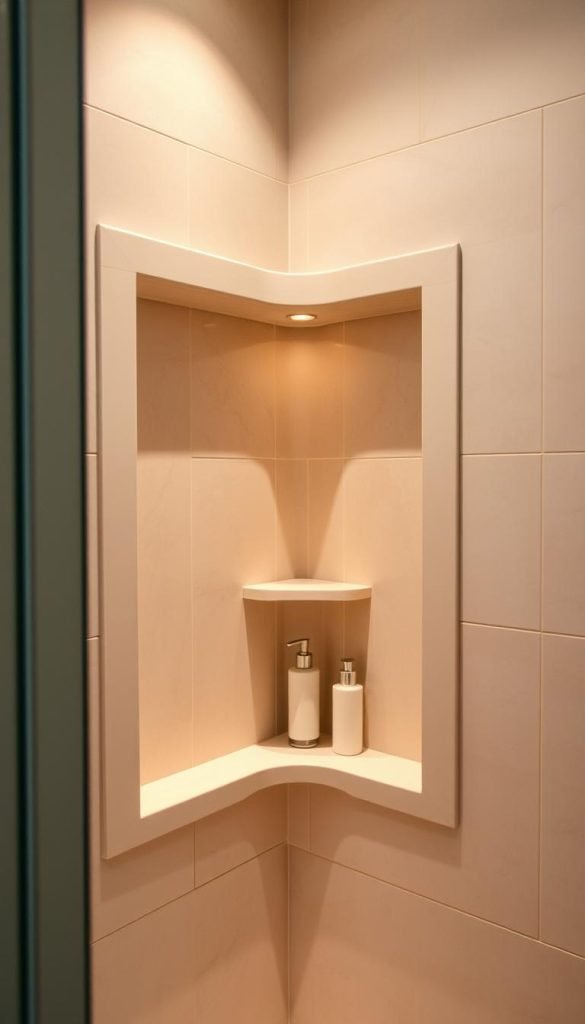
When a corner niche outperforms a standard option
Corner shelves can hold as much as many wall niches while reducing bump hazards in tight enclosures. I prefer triangular or quarter-round shapes because they soften edges and save elbow room.
- Capacity & reach: corners stack vertically to store tall bottles without sticking into the showering area.
- Material match: use the same tile or finish as the surrounding shower for a built-in look.
- Placement tip: keep the niche near the water stream but not directly under the spray to limit pooling.
- Hardware check: confirm glass door swing and clearances so the niche won’t block hardware or elbow room.
| Feature | Corner Niche | Standard Wall Niche |
|---|---|---|
| Space efficiency | High — uses otherwise wasted area | Moderate — uses visible wall plane |
| Safety in narrow showers | Better — less intrusion into showering area | Worse — can stick out into the path |
| Design cohesion | Easy to match materials for seamless look | Requires careful alignment with tile lines |
Final note: corners hide visual clutter and keep main wall lines elegant. I plan placement with fixtures and door swings in mind so the niche adds function without getting in the way.
Mosaic and Statement Tile Niches That Double as Decor
A mosaic-backed niche can act like a tiny gallery wall inside your shower, adding instant personality. Because the shelf area is small, I treat it as a place to try bold pattern or rich color without a full remodel.
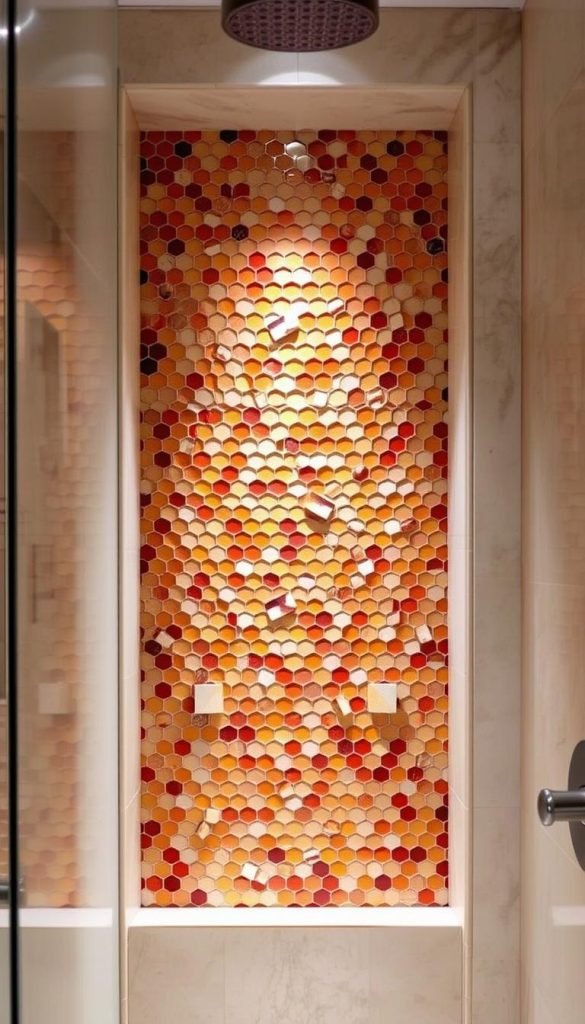
Choose grout with intent: a tone-on-tone grout makes patterns read as one surface, while a contrasting grout outlines each tile for graphic pop.
Where to splurge and how to balance it
I like to spend on artisanal or specialty tiles here. A costly accent runs small and feels luxurious without breaking the budget.
Matching versus contrast
Matching the back panel blends the shelf into the wall for a subtle effect. A bold pattern makes the niche a clear statement and draws the eye.
- Practical tip: use slip-resistant, easy-clean finishes at the base for soaps and razors.
- Echo an accent color in towels or hardware to pull the room together.
- Frame the opening with a mitered trim for a crisp, custom look.
Glass-Shelf Niches and Open, Airy Storage Ideas
Glass turns storage into a visual pause instead of a crowded shelf line. I use glass when I want a light, modern look that keeps walls feeling open. Thin panes float products without adding bulk, and they work well in tight showers.
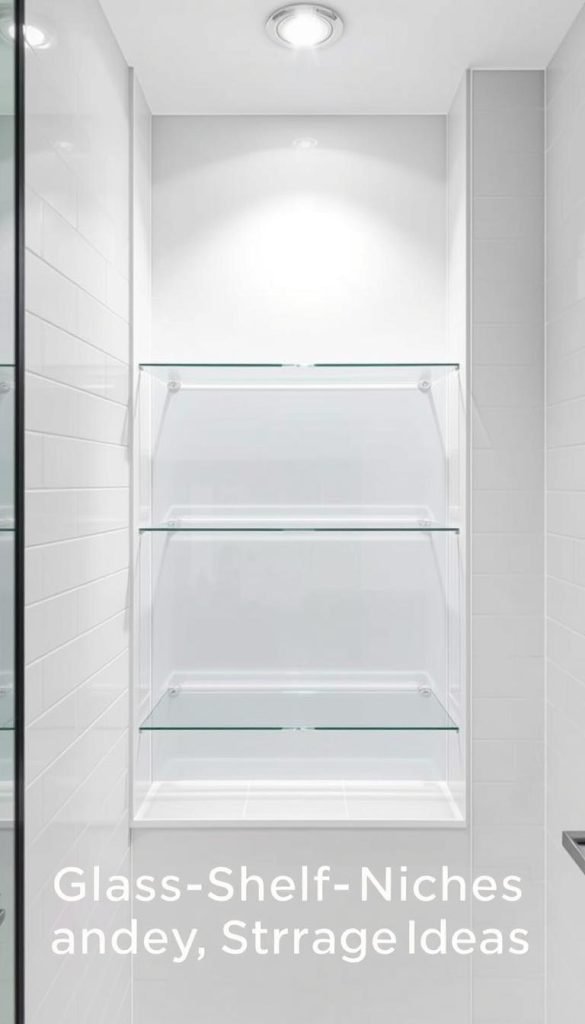
Clear, frosted, or tinted glass: picking the right style
Clear glass maximizes reflectivity and makes bottles easy to spot. It suits minimalist style and bright tiles.
Frosted glass softens glare and hides messy labels. It offers privacy if you hide razors or personal items.
Tinted glass adds subtle color and reduces contrast. I pick tints that echo grout or fixtures for cohesion.
- Safety first: always pick tempered glass with polished edges for strength and a refined finish.
- Install with discrete brackets or routed tile slots to cut shadow lines and keep sightlines clean.
- Match shelf thickness to tile scale so the proportions feel balanced on the wall.
- Glass amplifies light, making small showers feel larger and products easier to spot.
- Pair glass with matte or honed finishes to balance reflectivity and add depth to the space.
“Glass shelves let me showcase nice dispensers while keeping the enclosure airy and uncluttered.”
| Style | Privacy & Glare | Best Use |
|---|---|---|
| Clear | High glare, low privacy | Bright, minimal baths; display products |
| Frosted | Low glare, medium privacy | Conceal labels; softer light |
| Tinted | Medium glare, low privacy | Add color accent; reduce contrast |
Tip: good installation prevents water damage and ensures long-term integrity. I recommend consulting a pro to set glass correctly and seal any tile penetrations.
Shelf-Style and Stacked Niches for Families and Shared Showers
Stacked shelves turn a shared enclosure into an orderly system where each person claims a row. I use this approach in family baths to keep bottles and essentials from crowding a single ledge.
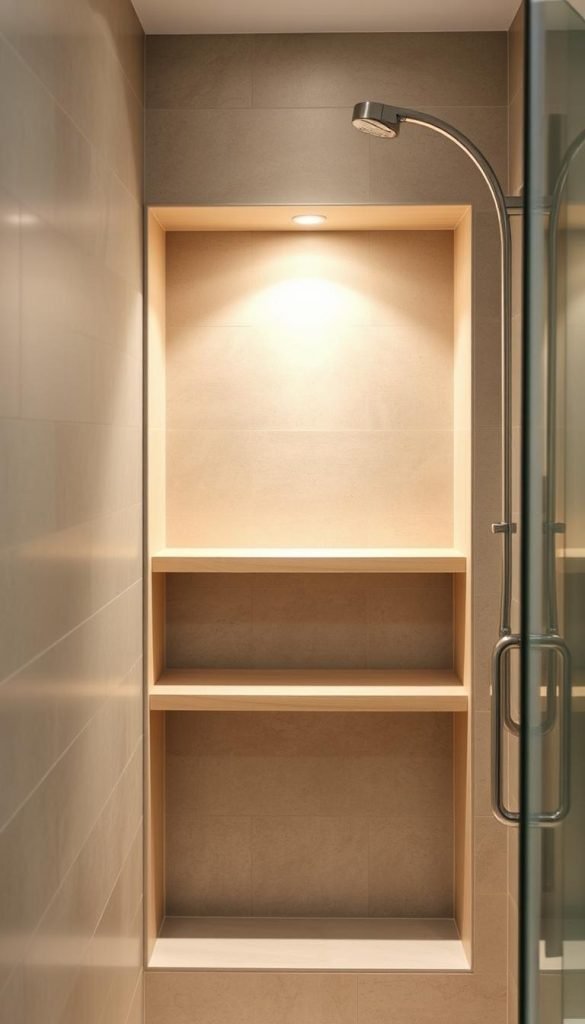
Tiered layouts for different bottle sizes and users
Design with height in mind. I map the center tiers with taller clearances for shampoo and large bottles.
Smaller tiers above or below hold bars, travel items, and soap so nothing tips over during use.
Mixing materials: marble, stone, and glass shelves
Combine durability and lightness. A stone base resists wear where bottles sit, while glass upper shelves keep sightlines airy.
Rounded front edges and small inserts prevent chipping where items get moved often.
“Labelled tiers or subtle dividers cut confusion in shared bathrooms and help everyone find their essentials fast.”
- I recommend multi-tier niches so each person gets a dedicated shelf and less clutter results.
- Slope shelf surfaces slightly toward the shower to aid drainage and simplify cleaning.
- Add a small razor or loofah hook under a shelf to free flat storage space.
| Feature | Benefit | Best Use |
|---|---|---|
| Multi-tier layout | More organized storage space | Family or shared shower |
| Mixed materials | Durable base + airy upper shelves | Spa-like feel with daily resilience |
| Rounded edges & inserts | Less chipping, safer handling | High-traffic shelves for bottles |
Quick tip: I label tiers for kids and guests and align heights to actual needs so every bottle has a clear home.
For more layout ideas, see my favorite bathroom niche inspiration to match plans with real-world designs.
Bench and Seat Niches for Spa-Like Comfort and Accessibility
Installing a recessed seat upgrades comfort and helps with mobility without stealing floor space. I find a built-in bench turns a simple wash area into a calm retreat where shaving, resting, or dressing becomes easier.
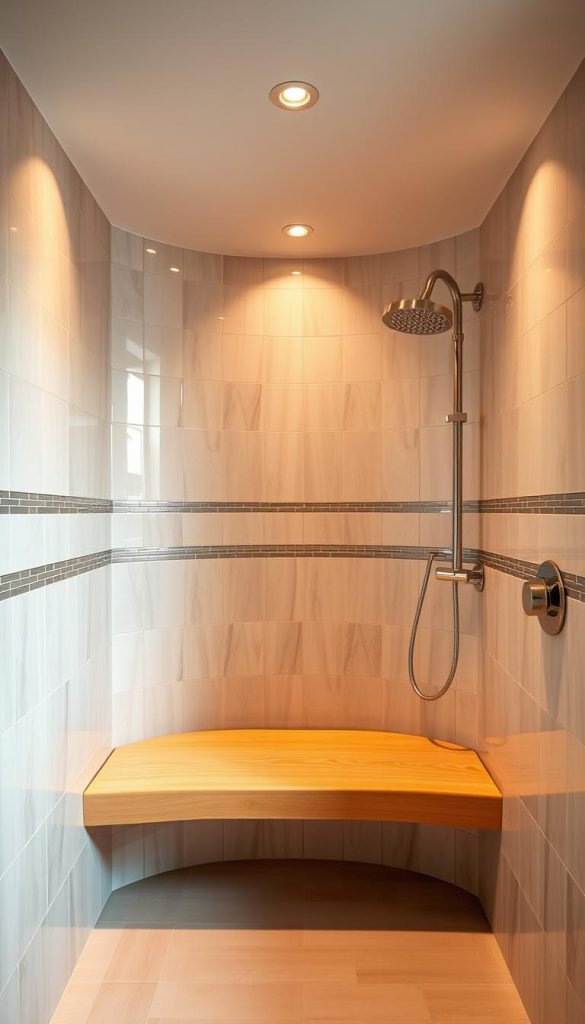
Choose durable, water-resistant materials like sealed stone, porcelain slab, or textured tile so the seat resists wear and stays slip-aware.
Design and material tips
I size a bench about 17–19 inches high and 14–16 inches deep for comfortable seating and stable foot placement while shaving. A gentle slope toward the drain helps water run off, and eased edges prevent pressure points.
- Dual use: the bench can act as extra storage or pair with a nearby cabinet for more capacity.
- Mini-niche: tuck a lower pocket beside the seat to corral tall bottles and bath accessories.
- Waterproofing: seal seams where seat meets floor and wall to prevent leaks and mold.
“A wrapped stone seat reads luxurious and simplifies cleaning while keeping a cohesive look.”
| Feature | Benefit | Best Use |
|---|---|---|
| Porcelain slab | Low maintenance | High-traffic room |
| Sealed stone | Durable, luxe look | Spa-like experience |
| Textured tile | Slip resistance | Accessible seating |
What Are the Innovative Shower Niche Ideas for Storage? My Curated List
I favor small, carved stone pockets that disappear into the wall, keeping lines clean while holding essentials. These subtle cut-outs blend with tiles and make cleaning fast.
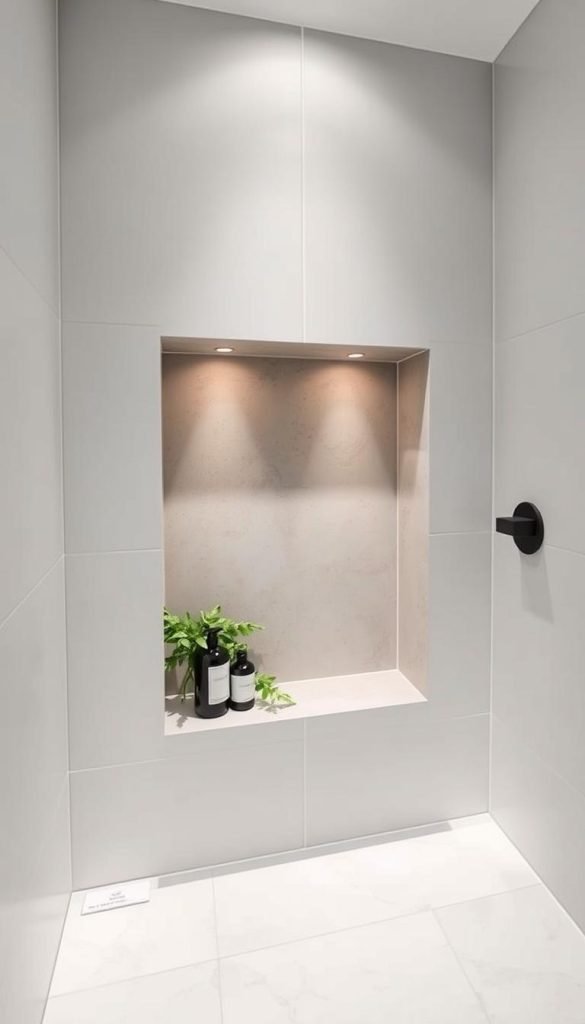
Subtle stone cut-outs for a minimalist aesthetic
Minimal stone recesses sit flush with the wall and hide gear without interrupting sightlines. I use matching stone on the base to lengthen the visual plane and avoid cluttered edges.
Dual niches at staggered heights for tub-shower combos
I recommend pairing a low pocket for bath salts and toys with a higher shelf for daily shower gear. Splitting storage by height streamlines routines for both quick showers and long soaks.
Wood-framed or wood-shelf accents to warm up tile
Adding an oiled wood frame or shelf contrasts cool tiles and metal finishes. Mixed materials like matte stone plus wood add a spa-forward style, but confirm waterproofing and seal wood properly.
- I suggest using matching tiles at the niche base to visually extend the wall.
- Check height and place niches to suit who uses the bath most often.
| Approach | Visual Effect | Maintenance | Best Place |
|---|---|---|---|
| Stone cut-out | Seamless, minimalist | Easy wipe-down | Neutral tile walls |
| Dual-height niche | Flexible, family-friendly | Moderate; more grout lines | Tub-shower combos |
| Wood-framed shelf | Warm contrast | Requires sealing | Accent or statement walls |
Materials and Finishes That Elevate Niche Design
Material choices make or break a niche’s lifespan and daily use. I pick surfaces that match how a bathroom gets used and how much upkeep I want.
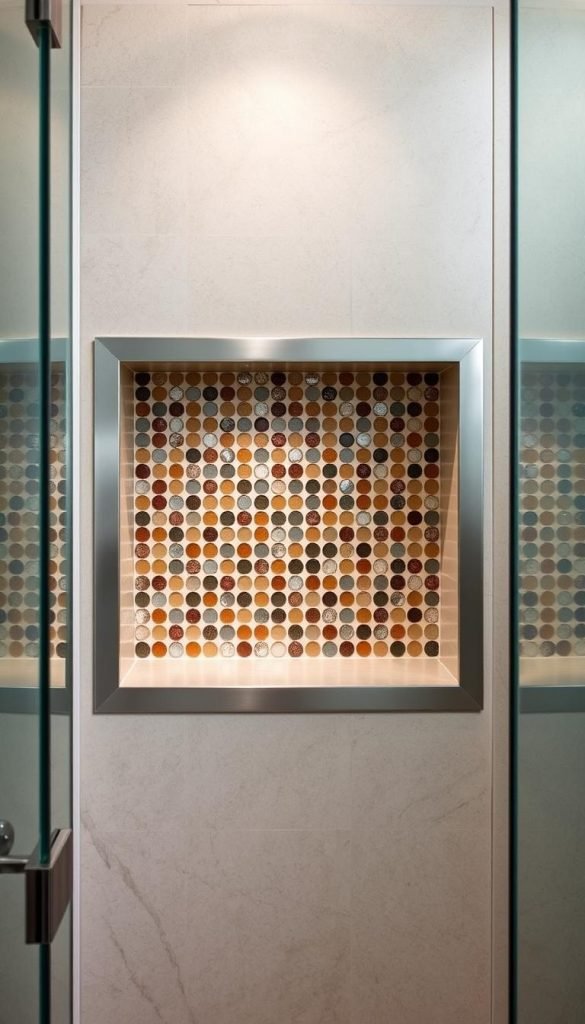
Tile, stone, acrylic, and glass: pros, cons, and style fit
Tile offers water resistance, durability, and many textures. Porcelain is hardy and low-porosity. Ceramic is cost-friendly. Natural stone reads luxe but needs sealing to avoid stains.
Acrylic or composite units are light, fast to install, and come waterproofed. I use them when I want consistent results and fewer trades on site.
Glass brings light and elegance but shows water spots. It works best in airy, modern design where upkeep is acceptable.
Neutral palettes vs bold contrast
Neutral walls let a colorful niche pop. Or match tones for a calm, cohesive wall. I always test a small sample with soap and water to check sheen and slip.
- Choose honed or textured finishes on bases for grip.
- Use polished verticals for shine and easy wipe-downs.
- Seal stone per manufacturer guidance and re-seal as needed.
“A small sample board showed me real-world grip and cleanup time before I committed.”
| Material | Pros | Maintenance |
|---|---|---|
| Porcelain tile | Durable, low porosity | Easy clean |
| Acrylic | Light, quick install | Wipe clean |
| Natural stone | Rich look | Requires sealing |
Lighting and Shelf Integration That Make Niches Truly Functional
Backlighting and slim shelving work together to keep sightlines clean while boosting visibility. I use wet-rated LEDs to light shelves so labels are readable and tile texture shows without glare.
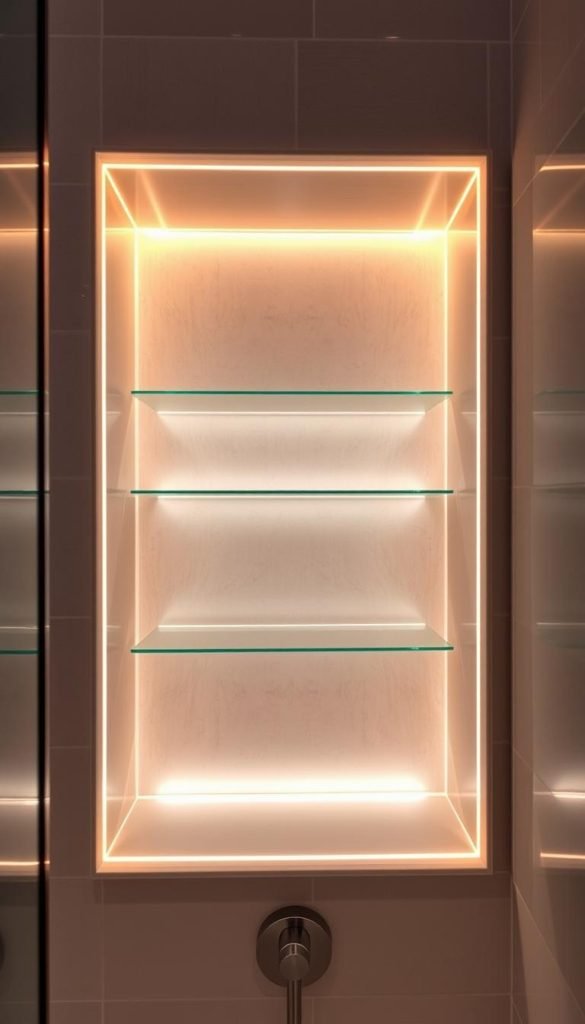
Waterproof LED backlighting and shadow control
Wet-rated LED strips or pucks hide behind a recessed lip to create an even glow. Backlighting reduces harsh shadows and highlights color and texture.
Slimline shelves, hidden brackets, and clean sightlines
I favor slimline shelves with concealed brackets so the shelf profile won’t cast large shadows on shower walls. Proper spacing and sealed cable runs keep fixtures safe in wet areas.
- Use wet-rated fixtures and sealed channels to prevent moisture damage.
- Choose dimmable drivers so you can shift from task light to a softer look.
- Align lights with shelf tiers so every shelf gets even illumination.
“Warm tones feel spa-like; neutral white shows true product color.”
| Feature | Benefit | Best Use |
|---|---|---|
| Wet-rated LED strip | Even backlight, low profile | Accent tile and shelf lighting |
| Recessed puck | Focused task light, less glare | Spotlighting deep shelves |
| Concealed bracket shelf | Clean sightline, minimal shadow | Modern, narrow niches |
Tip: coordinate light temperature with finishes so the niche supports the overall design and makes your shower look intentional and calm.
Placement, Height, and Accessibility for Every User
Thoughtful shelf height and position cut risky reaches and keep daily routines smooth. I plan placement so people reach naturally, whether standing or seated. Good sightlines and lighting matter as much as measurements.
Optimal heights for standing and seated use
I follow simple reach guides: set a main shelf about 48–54 inches for standing users and 34–38 inches for seated access. These ranges reduce bending and stretching.
Wider, deeper builds for larger bottles and safer reach
I recommend slightly wider and deeper cavities when big bottles are used. Extra depth prevents awkward angles and keeps products from tipping forward.
Grab bars and tactile surfaces that enhance safety
Install a grab bar beside the shelf so someone can steady while reaching. Match the finish to tile or fixtures so the rail blends with the design.
Use textured niche bases and tactile floor finishes to cut slip risk. Good lighting makes labels visible and cuts hazardous twisting.
Quick check: mock up the planned locations on walls with tape before framing to confirm comfort for everyone and to meet local codes and universal design needs.
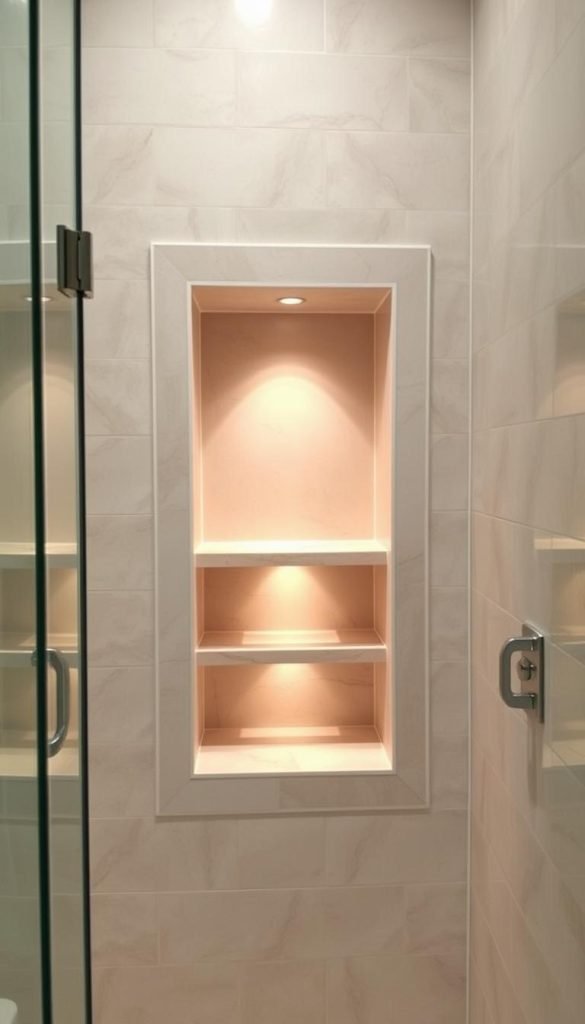
| Feature | Recommendation | Benefit |
|---|---|---|
| Primary shelf height | 48–54 in | Easy standing reach |
| Seated access height | 34–38 in | Safe seated reach |
| Depth & width | Deeper/wider for large bottles | Less reaching, more stability |
| Safety add-ons | Grab bar + textured base | Improved balance and slip control |
Maintenance Tips to Keep Niches Clean and Mold-Free
Keeping a niche tidy is mostly about routine and small checks. I follow a few simple steps after every use so tile and grout stay in good shape. This approach stops mildew, protects finishes, and keeps your bathroom feeling fresh.
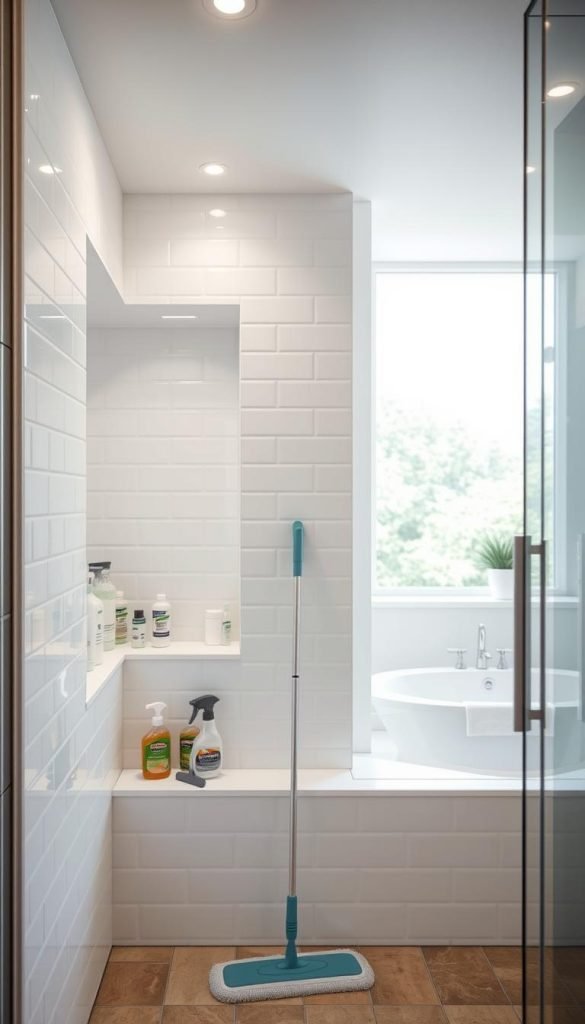
Daily rinse routines and non-abrasive cleaners
Right after each shower, I rinse the shelf and use a squeegee to remove excess water. I rely on pH-appropriate, non-abrasive cleaners for tile and stone so surfaces stay intact.
Grout and caulk checks to prevent leaks
Quarterly I inspect grout and caulk lines. Cracks get repaired promptly to stop moisture intrusion and hidden damage.
- Quick routine: rinse and squeegee after each use.
- Use mildew-resistant cleaners matched to your tile or stone.
- Check grout and caulk every three months and fix gaps fast.
- Reseal natural stone per manufacturer guidance.
- Keep minimal, well-organized items so air circulates and surfaces dry.
- Install micro-slopes on shelves to aid drainage and avoid standing water.
- Avoid metal cans or unsealed wood on shelves to prevent rust and swelling.
“A few minutes of care each week prevents bigger repairs and keeps products handy.”
Design Cohesion: Matching Your Niche to the Bathroom’s Style
I believe a niche should either blend quietly into the tile or stand out as a confident accent that pulls the whole room together. Choosing which route shapes how the niche reads against surrounding surfaces and fixtures.
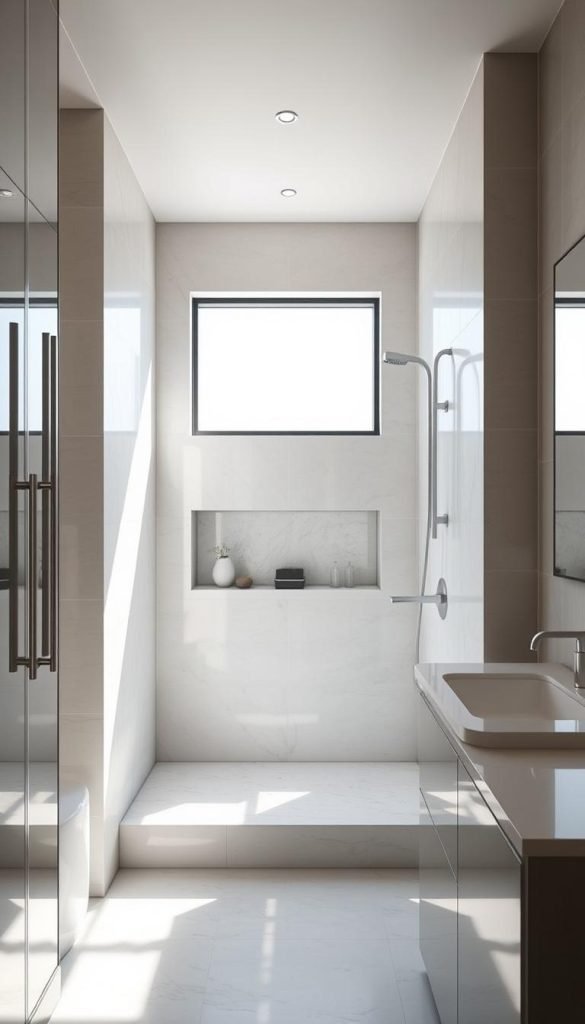
Coordinating specialty tiles with shower walls and floor
Match or echo a hue from the floor or vanity to tie finishes across the space. Pulling one color into the niche makes distant materials feel connected.
Let the niche be the focal point—or let it disappear
A neutral back keeps attention on other features and calms busy walls. Conversely, a patterned panel or bold tile creates a clear focal point that anchors the design.
- Two strategies: an integrated pocket that disappears, or a bold accent that anchors the composition.
- Repeat a pattern at a different scale inside the shelf for a curated, designer look.
- Trim choices matter—mitered edges, Schluter profiles, or stone returns finish the perimeter cleanly.
- Balance textures so the niche complements, not competes with, your hero materials.
- Photograph tile samples together under your actual lighting to confirm harmony before ordering.
“A small test photo saved me from a color mismatch and made the final install feel intentional.”
Conclusion
Choose one smart shelf that solves a routine need and lifts the whole bathroom look.
I wrap up by saying a good shower niche ideas plan blends function and beauty. Built-in or recessed pockets give seamless storage space, prefab kits speed a remodel, and floating glass keeps the area airy.
Think vertically: tall stacks, corner pockets, and multi-tier shelves reclaim wall room and sort essentials for the household. Durable tile or porcelain, easy-care acrylic, and tempered glass each suit different upkeep and style goals.
Plan placement and height for comfort, add grab bars where helpful, and use wet-rated lighting so labels read clearly. Finish with thoughtful grout color, trim, and pattern so the niche feels intentional.
My final tip: pick one idea to try—a mosaic-backed pocket or dual-height setup—and let that small change make daily routines simpler and your shower experience better.