What Are the Smart Pantry Organization Systems for Small Kitchens?
I start with a simple plan: clear out expired items and pare down excess so my pantry becomes a usable room, not a catchall. From there I map zones that match how I cook and shop.
Good design makes tight areas feel calm. I install floor-to-ceiling shelves and trim for a tailored look while reclaiming every inch of space. Slim slide-outs and pull-out drawers keep cans and jars visible so nothing gets lost in deep cabinets.
I save room by decanting dry goods into clear, stackable containers and by swapping swing doors for pocket or sliding barn styles. These moves free up walkways and keep my daily tools within reach.
I also plan vertical access: a rolling ladder makes high shelves safe and useful, not decorative. Small changes in storage and placement help me cook faster and stress less.
Key Takeaways
- Declutter first to create a clean base for smart storage choices.
- Use floor-to-ceiling shelving and slim pull-outs to maximize space.
- Decant staples into clear containers to improve visibility and cut wasted packaging.
- Choose pocket or sliding doors to save clearance in tight kitchens.
- Map zones so daily items sit at eye level and heavy items stay low.
Start Fresh: How I Declutter, Check Dates, and Map a Small Pantry Now
I begin by emptying every shelf so I can see exactly what I own and stop grabbing duplicates. I check use-by dates, test seals, and toss any food with damaged packaging to cut future mess.
I sort things into three piles: keep, donate (shelf-stable and in date), and discard. This quick triage helps me reclaim space and focus on ingredients I’ll actually cook with.
I make a short inventory as I go, noting key items and use-by dates. That list helps me plan meals around what must be used first and prevents waste.
Grouping saves time: I cluster baking, breakfast, snacks, and cans so I can map where each category will live before returning anything to its spot.
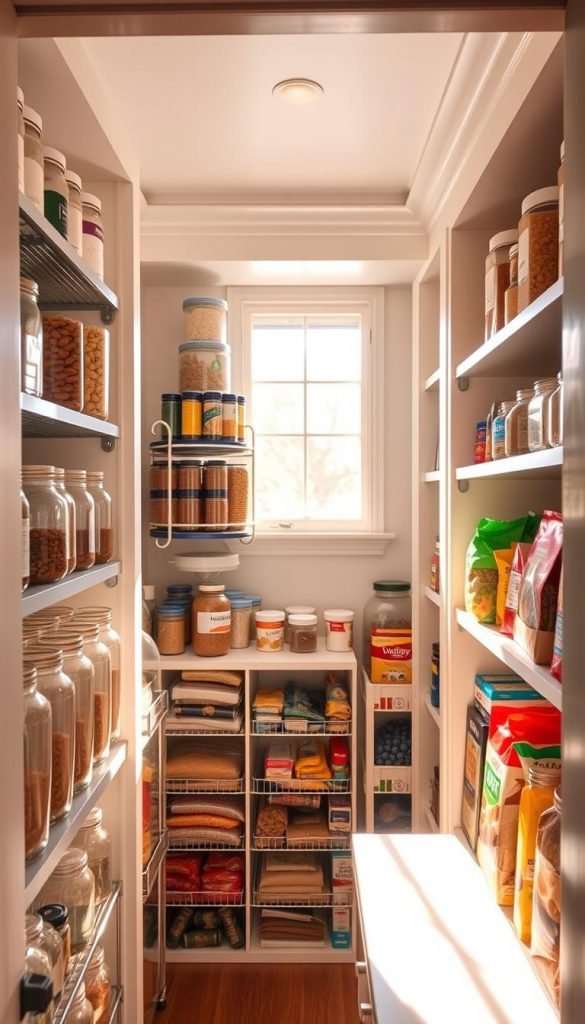
- I stage daily-use items at eye level and move long-term backups to high shelves.
- I set a small open-zone for active packages and a “first to use” basket for near-dates.
- I finish with a quick restock list so I don’t overcrowd the space the day after organizing.
Use Every Inch: Floor-to-Ceiling Shelves and Adjustable Shelving That Fit Your Space
I design shelves that climb to the ceiling so no vertical space goes unused. This approach captures overhead room and gives a custom, finished look when I add elegant trim.
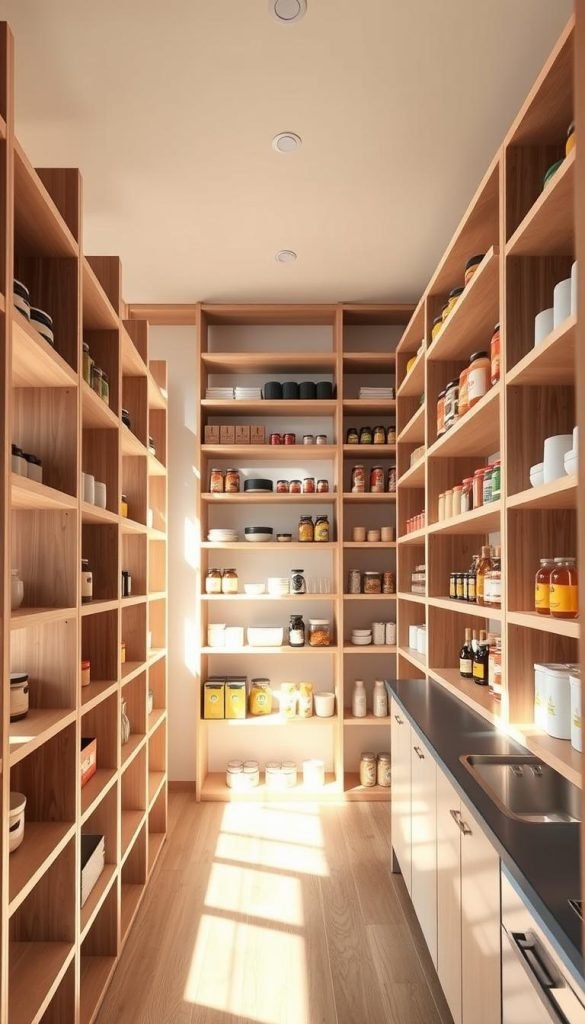
Adjustable shelving is my go-to. I change shelf heights to fit tall cereal boxes or short spice jars. When shelves are fixed, I bring in tiered risers to create a stadium view for cans and jars.
I stack flat-top containers to reclaim storage space above rows and avoid dead zones. I also size shelves to the tallest container in each group so labels stay visible and lids don’t scrape the shelf above.
- Built-ins to the ceiling for a polished wall of shelves.
- Adjustable shelving to flex with my groceries and appliances.
- Tiered risers where shelf changes aren’t possible.
- Label each shelf by category to keep the pantry orderly.
- Balance deep and shallow sections and leave clearance for a step stool or ladder.
With these moves I use every inch wisely and keep the small kitchen neat and easy to shop from.
Pull-Out Power: Drawers, Baskets, and Slim Slide-Out Cabinets That Keep Items Easily Accessible
I rely on slide-out drawers to turn deep, dark cabinets into simple, visible storage. This change stops ingredients from hiding and saves time when I cook.

Upgrading deep cabinets with pull-out storage
I convert deep cabinet voids to full-extension drawer runs so I can see canned goods and jars end to end. I add soft-close hardware to protect glass and cut noise.
One dedicated drawer holds canned goods with adjustable dividers so labels face up and duplicates are easy to spot.
Narrow rolling units that scan like a grocery aisle
I measure tight gaps and slide in a slim pull-out cabinet or rolling unit. In one motion I can scan inventory, grab things, and slide it back out of sight.
- I use wire baskets on lower pull-outs for onions, potatoes, and snacks for airflow and easy cleaning.
- I standardize drawer depths so inserts move between runs as my needs change.
- I place slide-outs near prep zones for oils, baking goods, and daily tools to keep the kitchen efficient.
Door Intelligence: Back-of-Door Shelving, Guardrails, and Command Centers
I reclaim hidden real estate by outfitting the inside of my pantry door with shallow, easy-to-scan shelves. This move makes daily items visible and frees shelf space across the room.
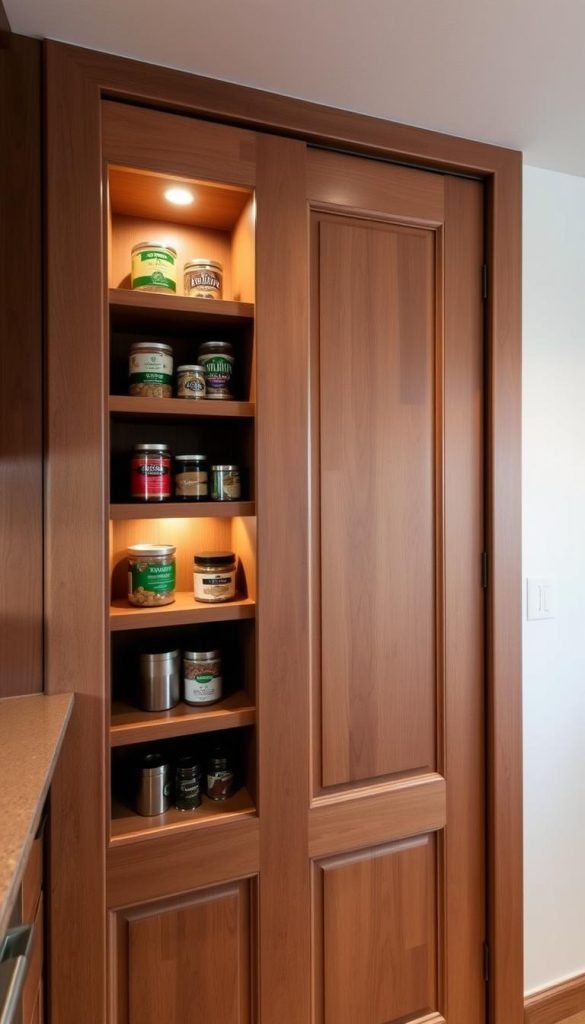
Shallow racks hold bottles and spice jars one-deep so labels face me. I choose units with guardrails to stop toppled glass when the door swings.
Shallow shelves with rails for spices, oils, and condiments
One-deep storage keeps everything in sight and cuts reach time. I group spices, oils, and condiments by use and label edges so restocking is fast.
Interior door floating shelves for light, non-breakables
I add a slim floating shelf inside the door for trash bags, paper towels, and other light supplies. I avoid heavy or fragile items here to protect hinges and wall mounting.
A pantry-door command center for lists, mail, and keys
I mount a small command center with mail slots, a pinboard, key hooks, and a pencil cup. Clear bins and tiny baskets corral loose packets and keep drips contained.
| Feature | Best use | Why I use it |
|---|---|---|
| Guardrail racks | Spices, oil bottles | Prevents toppling when door swings |
| Floating shelf | Light supplies | Saves shelf space; avoids breakables |
| Command center | Lists, keys, mail | Keeps counters clear; quick access |
What Are the Smart Pantry Organization Systems for Small Kitchens?
I design storage that changes with me, not the other way around. A modular track system gives me open shelves and pull-out drawers that I can shift as shopping habits evolve.
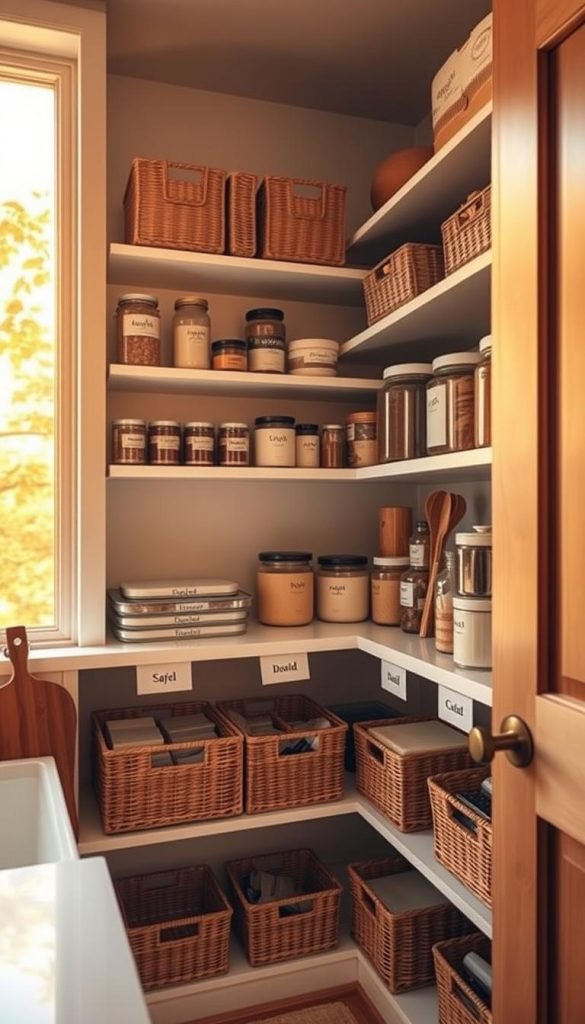
I stack solutions—containers, risers, a lazy susan, and track shelving—so each shape gets the best spot. I place a lazy susan near oils and condiments to spin what I need into reach.
Mixing levels helps: I use L-shaped floating shelves in corners to keep baking staples visible and light flowing. Below, an open-front lower cabinet stores cans and cereals for fast grabs.
I tuck a tiny counter inside the room to hold bread and fruit and to act as a quick prep surface. A rolling ladder makes tall shelving safe and usable so high space stops being wasted.
“Modular pieces let me rearrange shelves and drawers in minutes, which saves time and keeps the pantry tidy.”
- Combine open shelves above with pull-out drawers below for light and heavy items.
- Choose modular track components to future-proof your storage.
- Use risers to display cans and speed cooking.
Decant to Save Space: Glass Jars, Airtight Canisters, and Stackable Containers
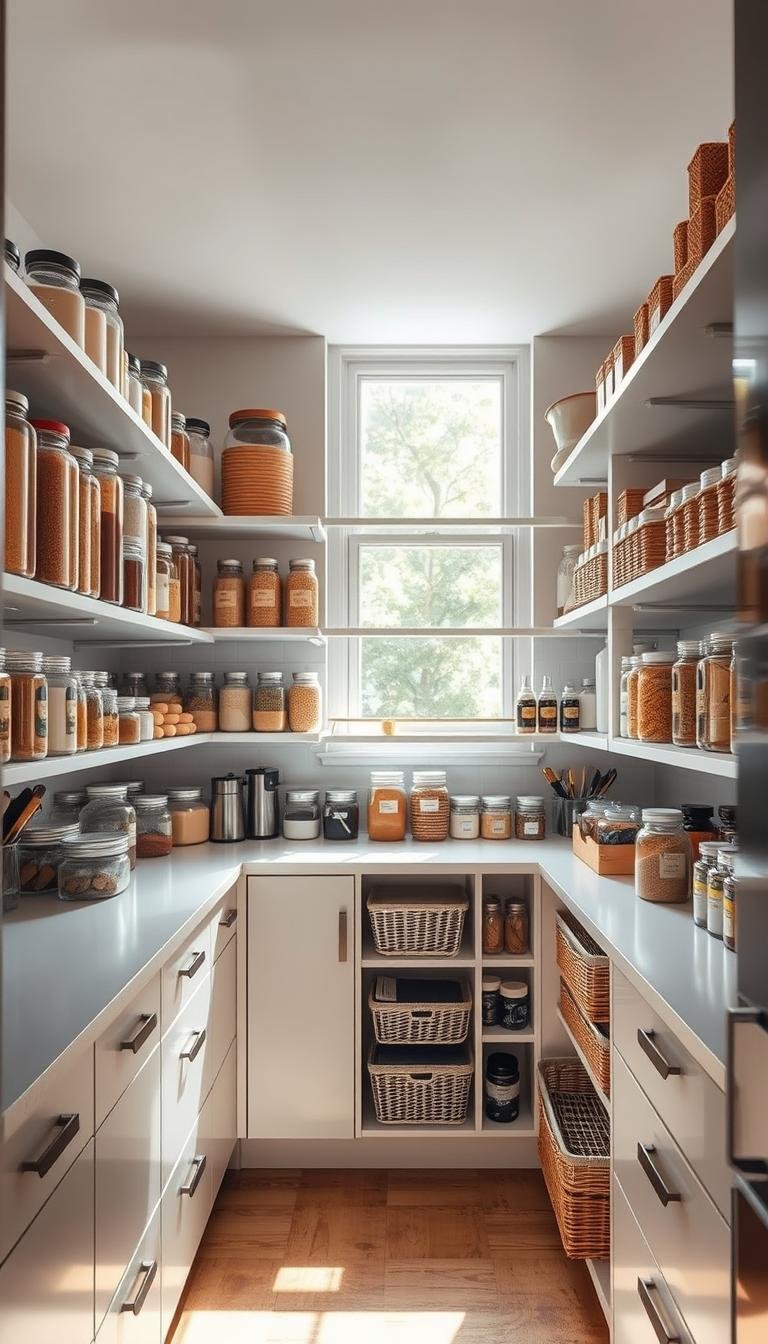
I free up valuable shelf inches by moving boxed staples into clear, stackable jars and containers. This simple swap shrinks bulky packaging and gives a clean, uniform look that makes shopping the cupboard faster.

Airtight canisters keep flour, rice, and cereal fresher and let me stack without wobble. Flat-top lids maximize vertical storage space so one shelf holds more without crowding.
I label every container with a product name, expiration date, and prep note when helpful. Those small notes save meals and stop mystery tins from lingering past their prime.
I use coordinating bins for kids’ snacks and narrow jars for small goods like nuts and seeds. Baskets hold bagged chips and root vegetables so loose items stay tidy and easy to reach.
| Use | Best option | Benefit |
|---|---|---|
| Grains & flours | Glass jars with airtight lids | Longer freshness; visible levels |
| Snacks | Matching bins | Quick grab-and-go access |
| Loose produce | Open baskets | Airflow; prevents bruising |
| Small seeds & nuts | Narrow jars | Neat rows; no wasted gaps |
Quick tip: I keep one spare container per staple and a small decant station with a funnel and marker. That makes refills fast and keeps my system consistent.
Corner and Deep-Shelf Heroes: Lazy Susans and Can Risers
I use spinning trays to rescue corner real estate so sauces and jars don’t vanish behind a stack. A quick turn brings the back row forward and stops me from buying doubles I already own.

Lazy susan inserts make corner shelves usable and keep round bottles from toppling. I size each turntable to the shelf depth so it spins freely without rubbing the wall or door.
Turntables that bring the back row to you
I group oils and condiments on one turntable and baking extracts on another. That keeps sticky drips in one spot and saves cleanup time.
Stair-step risers for canned goods at a glance
I add stair-step risers on deep shelves so canned goods display like a store aisle and labels stay readable. Heavy cans sit on the lowest step and lighter goods go above to keep the riser stable.
Tip: I use a small lazy susan in the fridge to mirror pantry storage and speed prep. I also pair a turntable with a narrow back bin to catch odd items that fall outside the circle footprint.
“One quick spin and the item I need is in front — no rummaging, no wasted food.”
| Solution | Best shelf | Primary benefit |
|---|---|---|
| Lazy susan | Corner or shallow shelf | Makes corner items reachable; reduces duplicates |
| Stair-step riser | Deep shelves for cans | Labels visible; safer weight distribution |
| Small fridge turntable | Refrigerator door or shelf | Speeds meal prep; contains drips |
| Turntable + narrow back bin | Deep shelving near wall | Catches odd items; keeps rotation smooth |
Custom Track Systems: Modular Shelves, Drawers, and a Small Counter Zone
I mount a simple track and then layer in shelves and pull-outs until the layout feels right for daily cooking. This modular shelving lets me test placements without a big remodel.
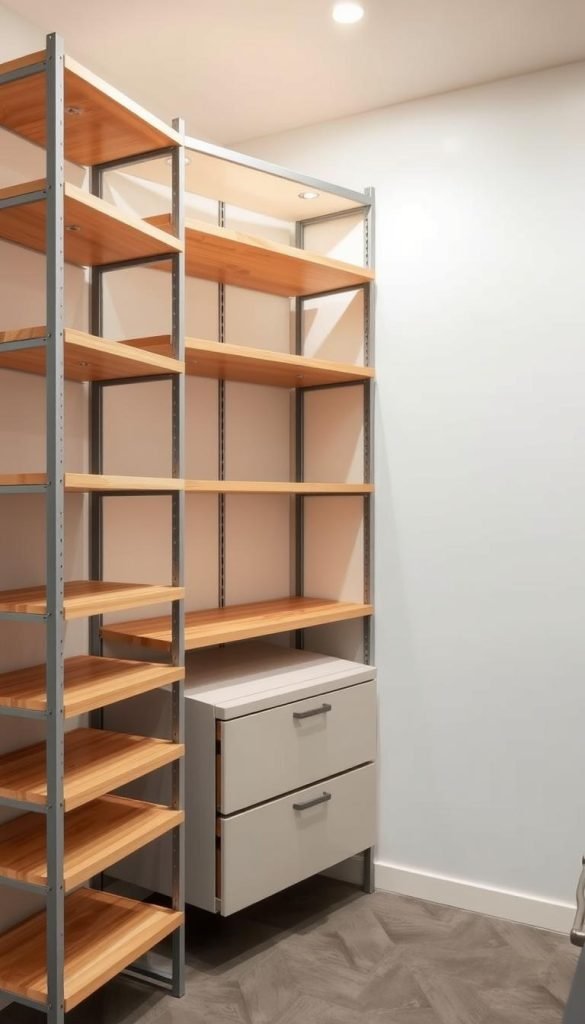
DIY or pro-installed, a track rail accepts open platforms and full-extension drawers. I place open shelves up top for light jars and display, and slide-out units below for heavy use.
Configuring pull-outs and open shelves as needs change
I set one deep drawer for bulk flour and rice and a shallow one for wraps and bags. An open-front cabinet holds cereals and canned soup so I can scan items quickly.
Adding a mini counter for bread, fruit, and daily prep
I add a shallow counter at arm height as a mini prep zone. It holds bread, fruit, and a small cutting board without stealing too much space.
- I start with a rail and add pieces as I learn my flow.
- I balance open top shelves with pull-outs below to protect weight and reach.
- I leave 2–3 inches above the top shelf for airflow and cleaning.
“A flexible track turns one cabinet into many configurations, so my storage grows with my cooking.”
Light It Right: Interior Pantry Lighting So I Can See and Grab Fast
Good lighting changes a cramped storage into a bright, usable room where labels pop and tasks flow. I treat lighting as a functional upgrade, not an afterthought. Bright, even light reduces fumbling and speeds cooking prep in my kitchen.
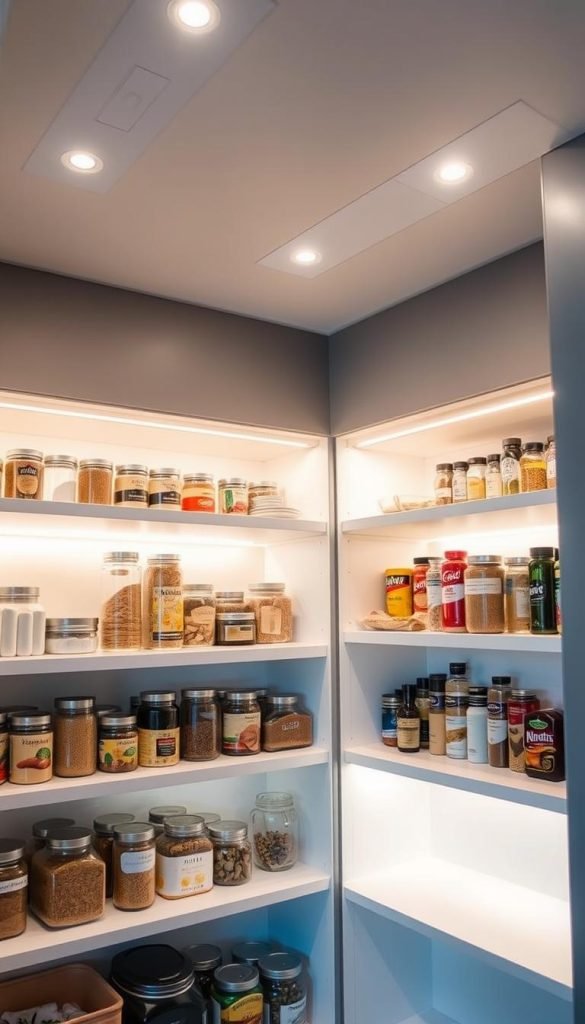
Overhead fixtures and task lighting inside cabinets
I usually install a single overhead fixture for even coverage. Hiring an electrician pays off here; properly wired lights feel built-in and safe.
For deep shelves I add LED strips or puck lights so items stay easily accessible without pulling everything forward. Door-activated switches or motion sensors give me hands-free entry when my arms are full.
I sometimes mount a sconce on the wall near the door if overhead wiring is tricky. That small change improves the whole room and makes late-night snack runs kinder on tired eyes.
- Choose warm-to-neutral LEDs to match the kitchen and avoid glare on glossy containers.
- Hide cords and drivers as part of the install so it looks neat at home.
- Add dimming and keep spare batteries for tap lights.
“Layered light makes the whole space feel larger and more usable.”
High Storage, No Stress: Rolling Library Ladder and Safe Step-Stool Strategies
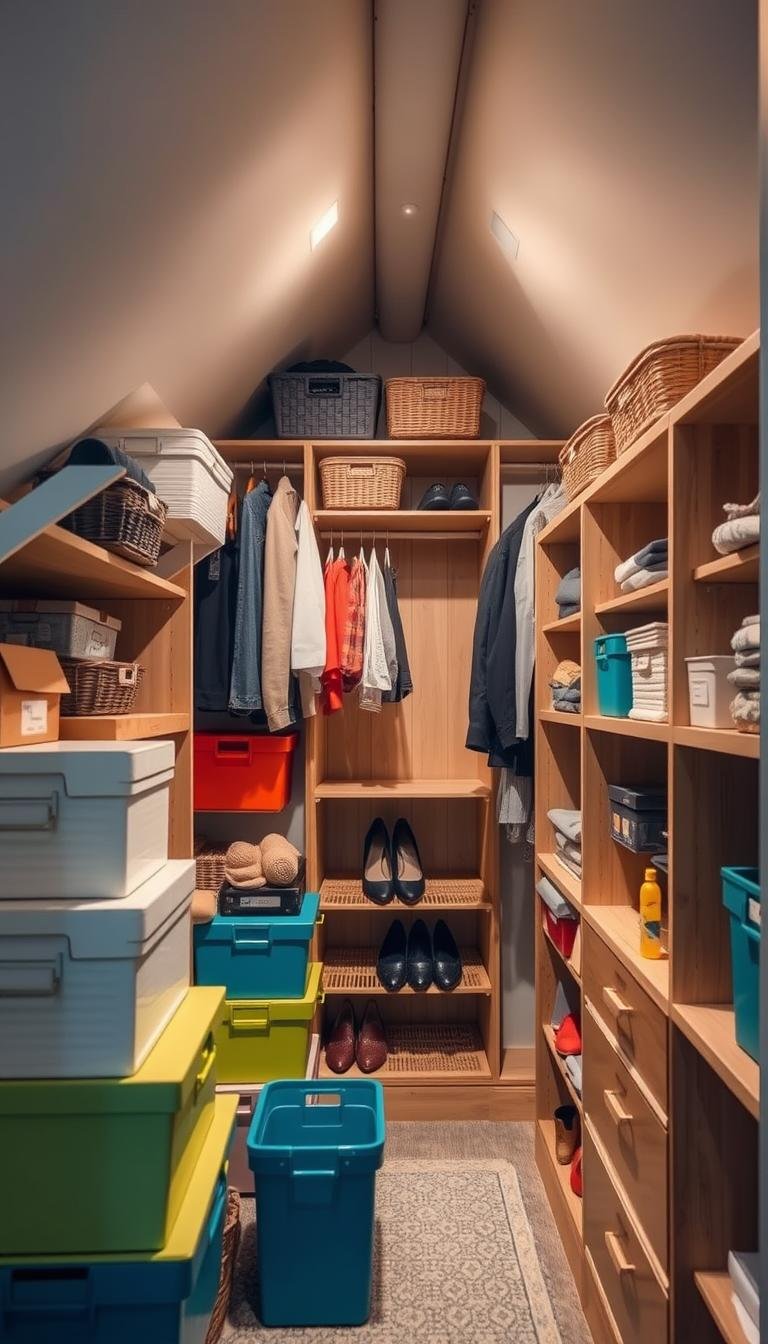
I mount a rolling ladder so upper rows stop being storage limbo and become part of daily reach. A ladder turns tall shelving into usable space and brings seasonal bins into the open.
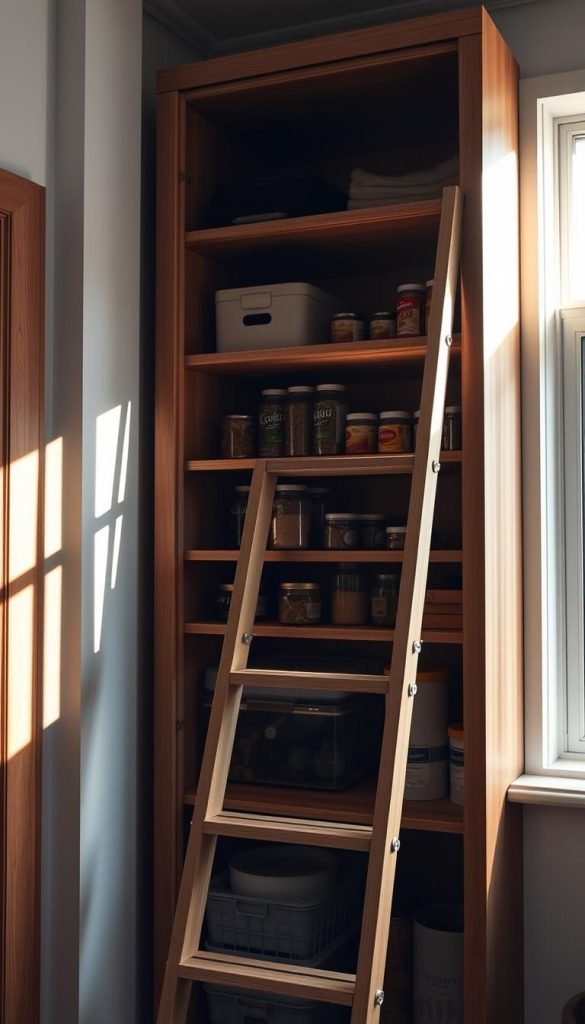
I attach a secure rail so the ladder glides smoothly and locks when I step on. That lock gives me confidence when I fetch light items from high shelves.
I keep a wide-step stool nearby for quick grabs and tuck it where it won’t block the kitchen flow. Heavy appliances and bulk goods stay low for safety, while lightweight, seasonal goods live up high.
- I design upper shelves with taller clearances for large bins and easy lids.
- I label both lids and fronts so I can read contents from the floor or ladder.
- I avoid loading one high bay; I spread weight across shelves to stay stable.
- I mark a safety zone on the floor as a consistent place to park the ladder.
“A smooth glide and a marked safety zone made high storage useful again — no more forgotten boxes.”
| Tool | Best use | Safety tip |
|---|---|---|
| Rolling ladder | Upper shelves, seasonal bins | Attach rail and locking pin |
| Wide-step stool | Quick access to upper cabinets | Keep near entry; non-slip feet |
| Top-shelf design | Lightweight, infrequent items | Label lids; leave clearance |
Smart Zones: Category Shelving and Priority Placement at Eye Level
I treat each shelf as a task station so breakfast, baking, and dinner prep flow without backtracking. With clear zones, I know exactly where to reach and return an item.
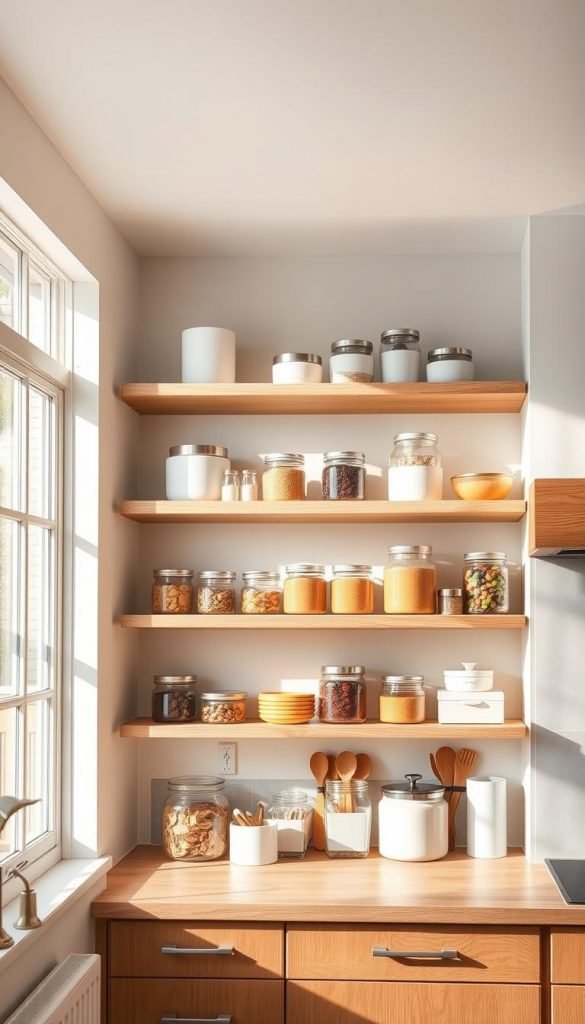
Group baking, breakfast, canned goods, and appliances
I put baking ingredients next to my stand mixer so flour, sugar, and spoons live in one spot. Canned goods sit together on a readable row so labels face out and I avoid repeats.
Cookbooks or recipe cards get a nearby shelf so I can grab instructions while I cook.
Heavy low, daily-use mid, seasonal high
I keep heavy appliances on low shelving to protect my back and the structure. Daily-use items sit at eye level, where my most-used place is fastest to access.
Light, seasonal goods go up high. I use open bins for grab-and-go snacks and a basket for loose packets so they don’t slip between goods.
- Assign shelves by category to speed prep: breakfast, baking, canned goods, and tools.
- Label shelves and bins so everyone returns items correctly and maintains pantry organization.
- Leave a small staging zone for meal-prep overflow so temporary piles don’t spill into other space.
- I revisit zones quarterly and tweak shelving heights to match how I actually cook.
“Placing ingredients next to their partner tools changed how smoothly I work in the kitchen.”
Cookbook and Beverage Station: Keep Favorites in One Handy Place
I create a tiny station that holds my go-to cookbooks and a few bottles for easy weeknight pairing. It keeps recipes at arm’s reach and makes drink choices simple while I cook.

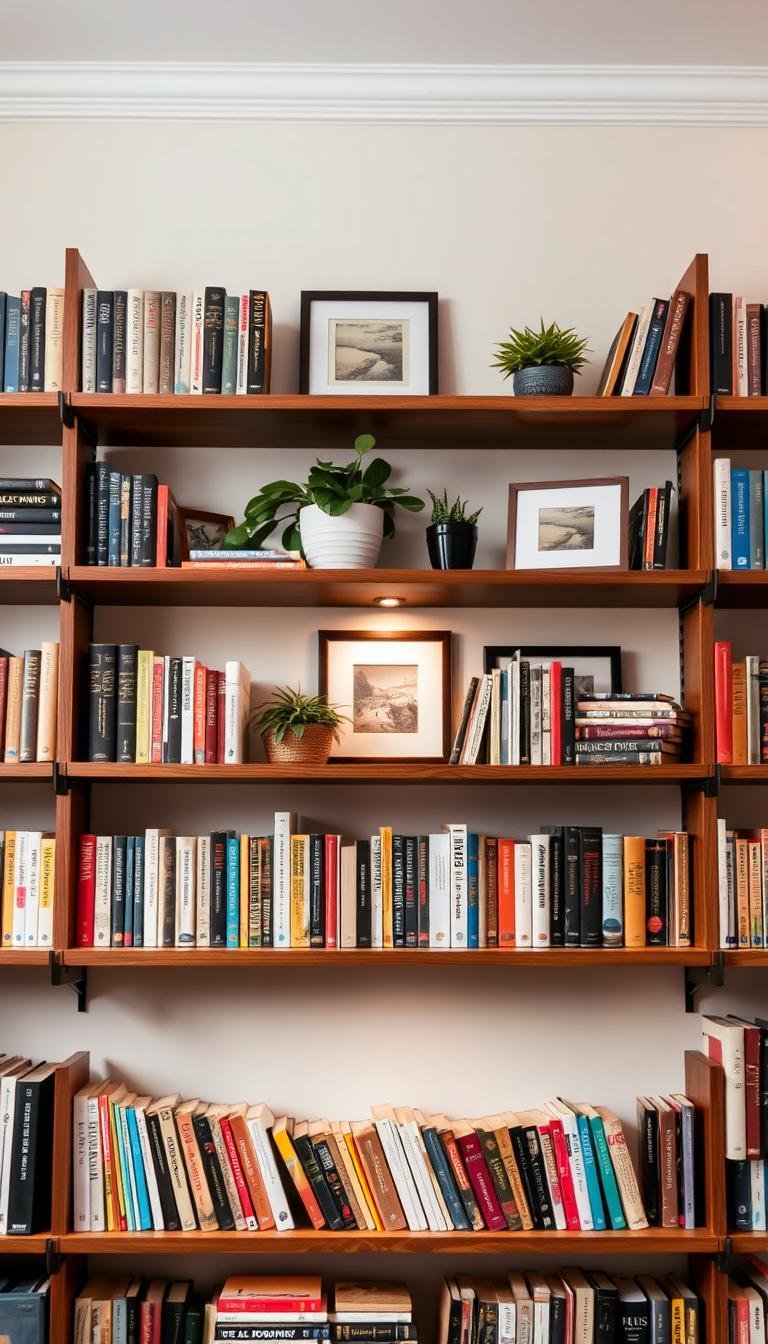
I dedicate one pantry shelf to upright cookbooks, or I stack them by author or cuisine so I can flip to a favorite in seconds. If there’s a pantry window, I add a shallow ledge below it to use extra wall space as a mini recipe shelf.
Cookbook ledges and wine rack inserts
I tuck a slim wine rack into a shelf bay to cradle bottles and keep them stable. That small insert protects glass and frees other shelves for dry goods and jars.
- I group my most-used cookbooks on a dedicated shelf so recipes are easy to flip open while I cook.
- I keep a notepad and pen nearby to jot food ideas and shopping notes.
- I store corkscrew, stoppers, and a small tray under the shelf so beverage tools stay with the station.
Task lighting above the ledge helps me read spines without glare. I give the area a wipeable tray to catch drips from open bottles or damp recipe cards, and I keep tasting glasses tucked away from the stove so aromas stay true.
“A small, focused station turns a busy kitchen moment into something calm and useful.”
No-Pantry Pantry: Standalone Cabinets and Repurposed Furniture
I refinish a vintage armoire and turn it into a hidden pantry when built-ins are missing. Inside, adjustable shelves and clear bins keep everything sorted by category so I can grab what I need fast.
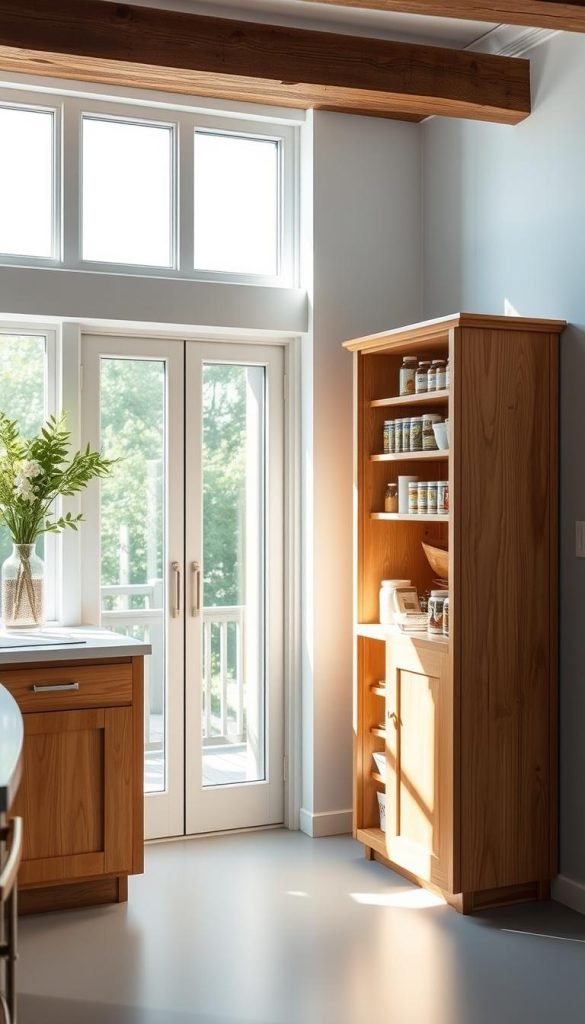
A compact cabinet can hold twice what it looks like if you add slim risers and shelf dividers. I line surfaces with wipeable mats to protect finishes from spills and install door racks for bottles and packets.
- I measure the room wall first so doors open fully and don’t block traffic.
- I dedicate one cabinet to baking or snacks so categories stay tidy and separate.
- I mount child-safe latches in high-traffic home areas for safety.
- I style the top with a serving tray for fruit or bread so it serves as storage and a small station.
“A refashioned cabinet gave me a functional pantry look without a remodel.”
Wall Space Wins: Floating Shelves for Spices, Condiments, and Canned Goods
I turned spare wall space into neat tiers of shelves that display spices and canned goods like a mini store aisle. A narrow open wall becomes extra room when I mount small floating shelves one above another.
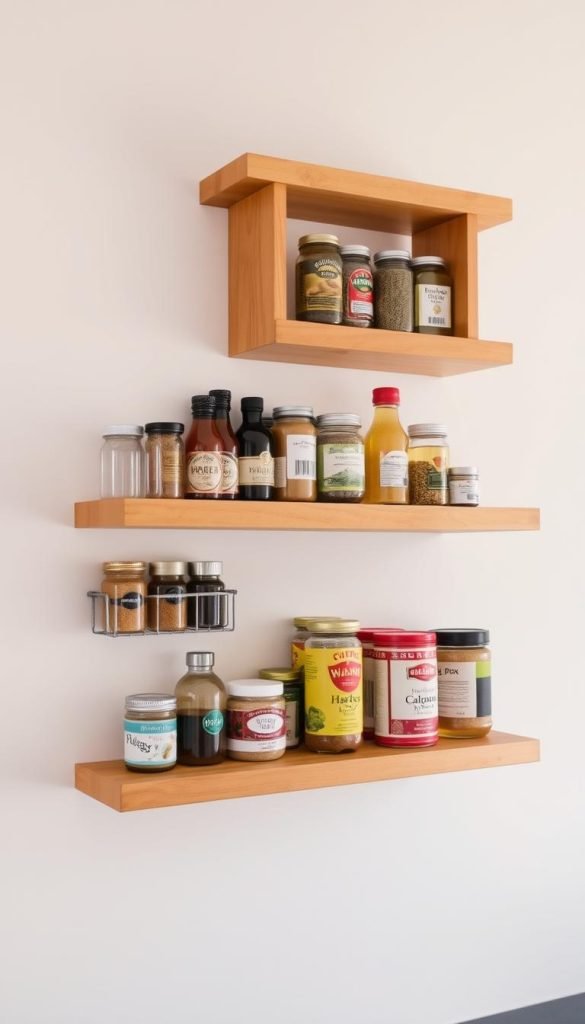
I place the shallowest shelves up high for spices and the deeper ones lower for heavier goods. I label each shelf clearly so items return to their home and my pantry stays tidy.
Near a pull-out pantry I add a couple more floating shelves for tea and kids’ snacks. I decant loose staples into matching jars so exposed storage reads as intentional kitchen storage, not clutter.
- I stagger heights so tall bottles fit without wasted space above shorter containers.
- I add a small lip to lower shelves to stop cans or bottles from slipping off.
- I keep a refill list on the wall and wipe shelves weekly to prevent oil buildup.
“Stacked floating shelves turned a blank wall into an efficient, visible storage zone.”
Spice and Dry-Goods Tactics: Magnetic Jars, Easy-Scoop Canisters, and Drawer Dividers
A quick wall row of labeled metal jars turned my spices into a glance-and-grab system. I freed shelf space and now find what I need without rummaging.
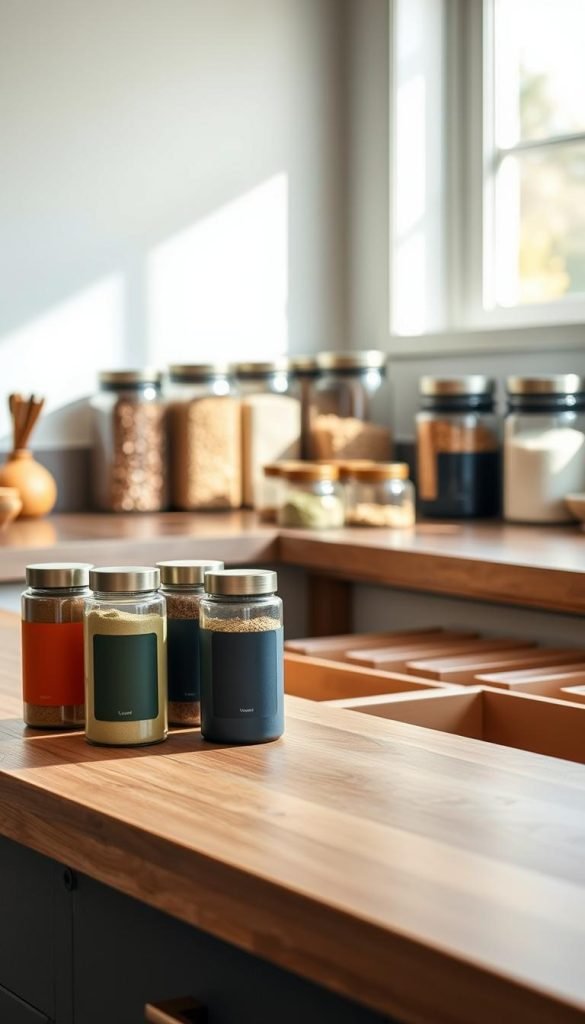
Magnetic racks on a wall to free shelf room
I mount magnetic tins on a slim board and label each lid so every spice is readable at eye level. This keeps fragile jars off crowded shelves and protects flavor by keeping things sealed and cool.
Candy-jar canisters with scoops for grains and tea
I pour loose grains and tea into wide-mouth canisters and drop a metal scoop inside. The angled opening makes scooping neat, and matching lids let me stack jars without wasting space.
Drawer dividers with reusable labels to tame deep drawers
I use drawer dividers to map zones: spices, wraps, and baking tools. Reusable labels help me swap contents without redoing the layout.
Quick tips: keep heat-sensitive items away from the oven wall, choose low-friction inserts so a loaded drawer glides, and schedule a seasonal scrub-and-refill to rotate stale blends.
“Labeled jars and tidy drawers cut prep time and keep small kitchens calm.”
| Solution | Best use | Why I use it |
|---|---|---|
| Magnetic spice rack | Everyday seasonings | Saves shelf space; fast ID |
| Candy-jar canister | Grains, loose tea, flour | Easy scooping; stackable |
| Drawer dividers | Deep drawers | Zones stop sliding and clutter |
Style That Works: Bold Paint, Beadboard Backs, and Chalkboard Walls
I pick one bold hue and paint the interior so the small pantry feels like a designed room. A strong color gives personality without stealing attention from the rest of my kitchen.
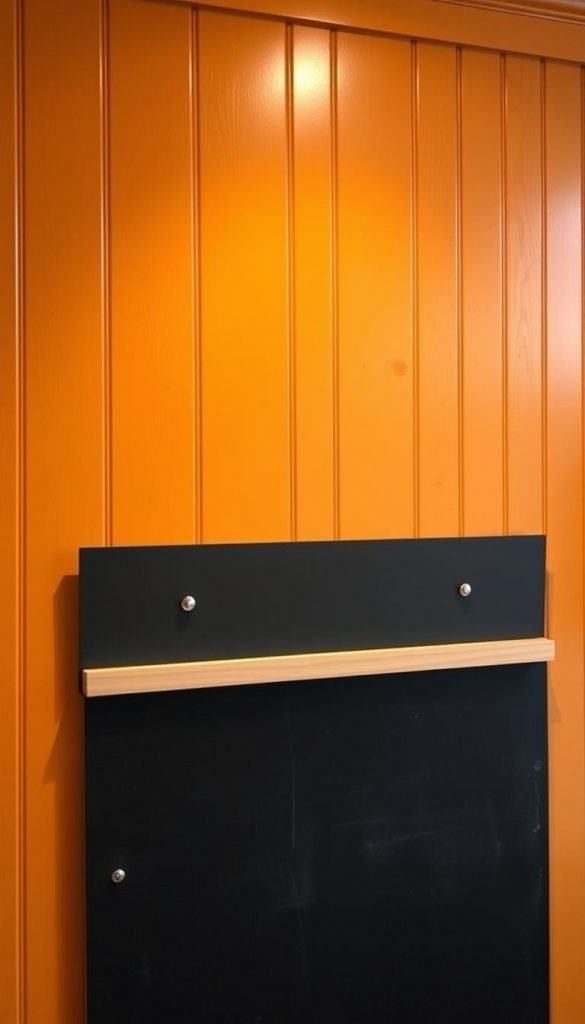
I add beadboard to the back wall behind shelves for a classic look that wipes clean easily. It protects surfaces and adds texture so jars and containers read as intentional, not clutter.
For notes and menus, I paint a chalkboard panel on a cabinet side. It becomes my weekly shopping list and a place to jot meal ideas.
- I choose semigloss paint for easy wipe-downs when spills happen.
- I match hardware finishes to shelf brackets so the finish feels cohesive.
- I frame the chalkboard zone with trim to keep chalk dust off food areas.
- I keep a small cup with chalk and a microfiber cloth mounted nearby for quick updates.
- I swap accent tones seasonally to refresh the look without repainting everything.
“Bold color inside a small pantry makes the room feel intentional and joyful.”
| Feature | Benefit | Quick tip |
|---|---|---|
| Bold paint | Adds depth and personality | Use one or two coats of semigloss for durability |
| Beadboard back | Durable and easy to clean | Install behind shelves for protection |
| Chalkboard panel | Running shopping list and menu | Frame it to limit dust near food |
Small-Kitchen Hacks: Backs of Doors and Cabinets for Supplies and Cleaning Goods

I keep usable space by outfitting the back of a door and inside cabinet faces with smart holders. Interior door floating shelves are perfect for light, non-breakable items and free shelf room for bulk staples.
I hang a slim rack on a pantry door for spices and tiny bottles so shelf storage stays neat. I install hooks inside cabinets for oven mitts and measuring spoons so those supplies are always at hand.
Under the sink I add caddies on the inside of the cabinet door to corral cleaners and spray bottles. A shallow drawer bin by the sink holds dish tabs and sponges so wet items stop spilling into prep areas.
- I swap swinging doors for sliding barn or pocket doors to open a tight kitchen walkway.
- I fit narrow vertical rails inside a cabinet to store wraps and foil where I use them most.
- I label door racks by category to keep pantry organization consistent on busy nights.
- I keep a mini toolkit in one cabinet so I can tighten hooks or racks without a trip to the garage.
“Small adjustments behind doors turn unused faces into useful storage and make daily tasks smoother.”
Conclusion
, I tie together rails, risers, and roll-outs to make every shelf and shelf bay earn its keep.
I use lazy susans in corners and risers on deep shelf runs so back rows stop hiding. Pull-out drawers and a full-extension drawer reveal the depth of a cabinet and keep things visible.
I outfit the inside of the door with guardrail racks and floating interior door shelves for light items only. I decant staples into flat-top containers, label lids, and keep a few bins for snacks and tea so restocks are painless.
Track systems and a rolling ladder make vertical space useful. With bold paint or beadboard finishes, this pantry organization plan becomes a functional, stylish place that fits my small kitchen and stays simple to maintain.