How Do I Upgrade a Laundry Room to Feel More Inviting?
I started with small, doable changes that made my washing area better every day. Swapping simple fixtures, adding a thin rolling cart, or laying down a flatweave rug gave instant comfort without major work.
Better lighting, a basic countertop, and smart storage turned the space from purely functional into something I enjoy using. I chose bold wallpaper in a small section and added sconces for layered light.
Practical touches—like a butcher-block counter over front-loaders, wall-mounted drying racks, and labeled jars—keep supplies visible and tidy. Luxury Vinyl Tile or sealed basement floors handle spills and simplify cleaning.
I plan the rest of the guide around lighting, storage, drying solutions, floors, walls, and safety so each step feels manageable. Start with one change per day and you’ll notice the look and function of your room improve fast.
Key Takeaways
- Small updates can transform function and warmth without a full remodel.
- Layered lighting and a simple countertop deliver big usability gains.
- Skinny rolling carts and wall racks save tight storage space.
- Durable floors like Luxury Vinyl Tile make maintenance easier.
- One change per day leads to dramatic improvement in a week.
Understanding the goal: make laundry feel easier, brighter, and more welcoming
When the right light hits a tidy counter, laundry shifts from chore to quick, manageable task.
My measure of success is simple: the laundry room should help me spend less time hunting and more time finishing loads. I focus on layered lighting, intuitive storage, and one small style move that makes me smile.
Good lighting—overhead plus under-cabinet LEDs—lets me spot stains and read labels without squinting. Reflective finishes and light paint boost brightness in tight rooms.
Storage choices reduce friction. Wall-mounted drying racks, fold-down worktops, and counters over front-loaders add function without crowding small spaces. Everything has a place so tasks move faster.
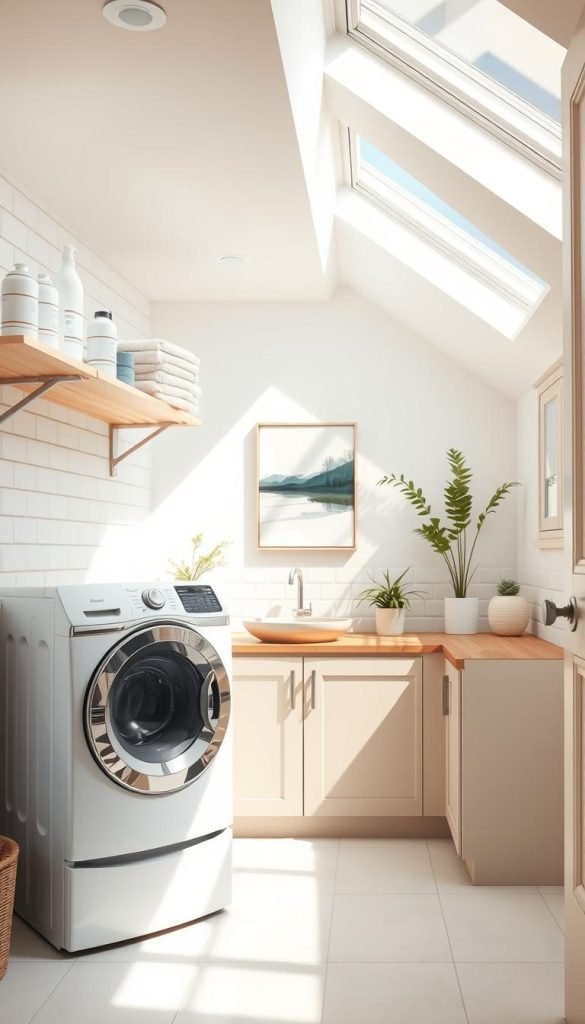
I plan clear zones for sorting, washing, drying, and folding so traffic flows and I save time. Then I add a comfort touch—a soft rug or little art—so this part of my home feels purposeful and pleasant.
- Goal: make laundry room brighter and more useful.
- Priority: lighting, workflow, and simple design choices.
Start with a plan: measure your space and map your workflow
I map every hookup and door swing before picking between side-by-side or stacked units. That simple step keeps choices realistic and prevents costly mistakes.
Front load vs. stackable washer dryer: choosing the right layout
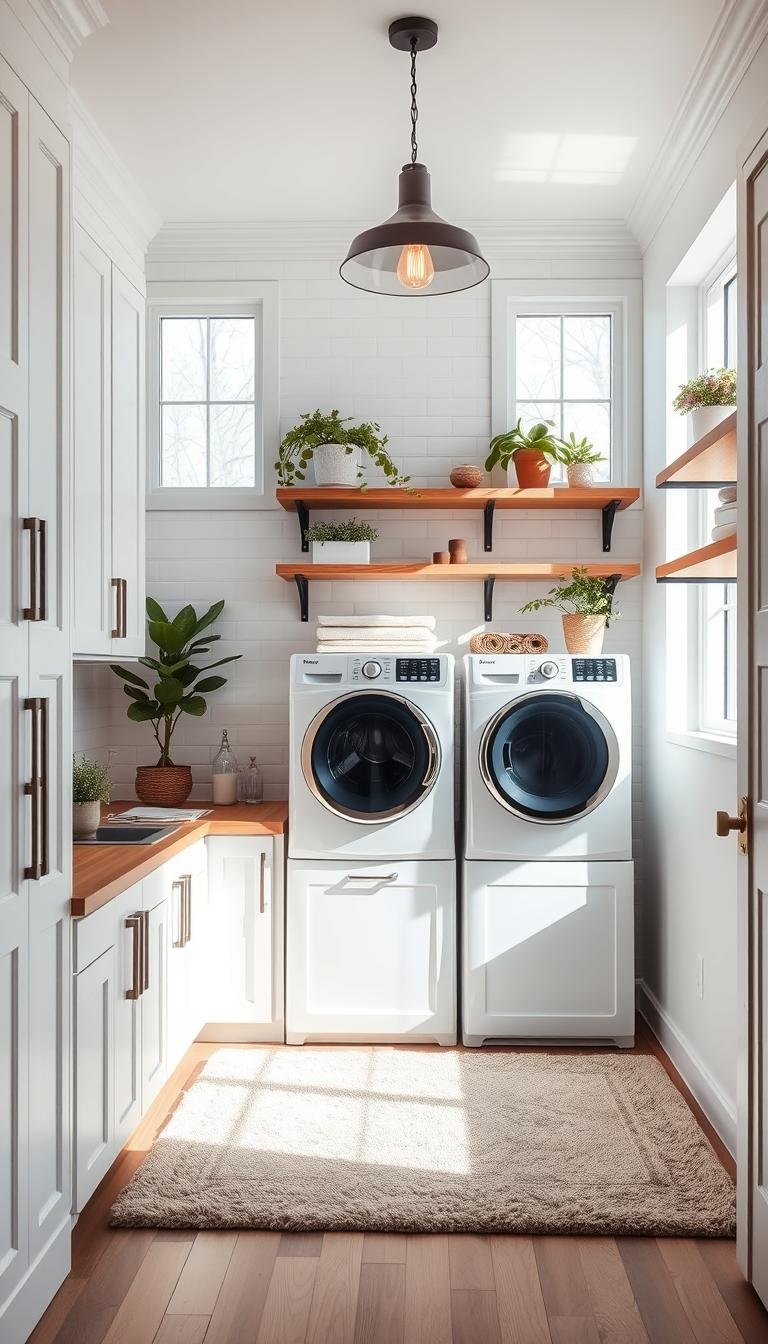
Side-by-side front loaders work great when you want a continuous counter for folding. Counters above machines give a solid work surface and hide clutter.
Stackable washer dryer units free floor space. That vertical room can hold solid shelves, upper cabinets, or a narrow pantry for supplies.
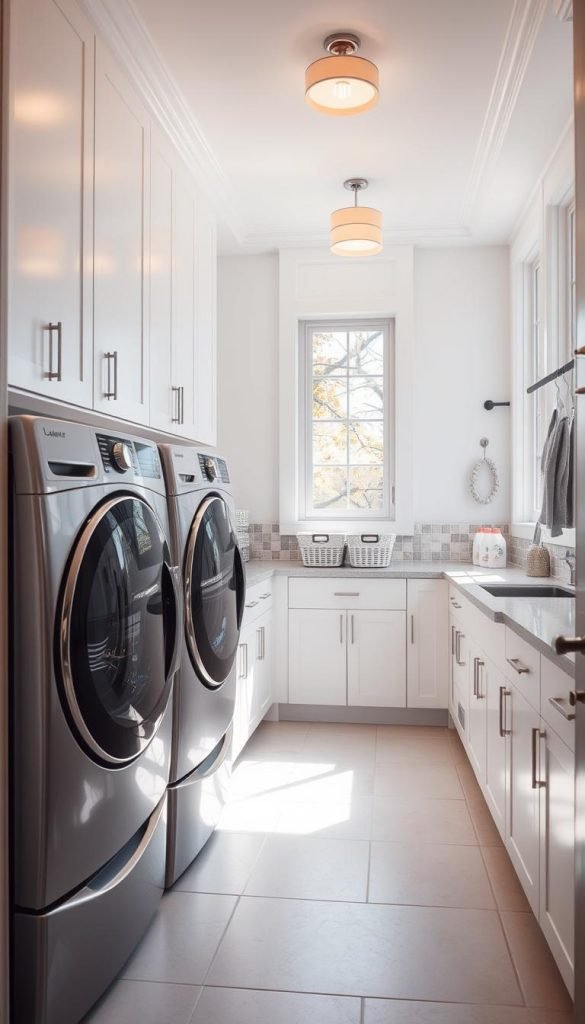
Zone planning: wash, dry, fold, hang, and store supplies
I define clear zones: sorting by the washer, a path to the dryer, a folding counter, hanging spots, and a tidy storage area. Solid shelves beat builder wire for durability and keep small items safe.
- Measure width, depth, height, and note clearances.
- Slide in skinny rolling carts for detergents and stain pens.
- Use retractable racks and rods for drip-dry clothes without losing floor space.
| Layout | Best for | Storage | Key benefit |
|---|---|---|---|
| Side-by-side | Folding counter | Under-counter cabinets | Continuous work surface |
| Stacked | Tight footprints | Vertical shelves/cabinets | More floor space |
| Side gaps | Detergent storage | Skinny rolling cart | Hidden organization |
| Wall mounts | Air-dry needs | Retractable racks | No floor clutter |
Let there be better light: lighting upgrades that transform the room
Small lighting changes gave me instant control over task clarity and the room’s mood.
Bright, energy-efficient LED fixtures on dimmers let me dial up light for stain-spotting and dial it down for late-night loads. I picked options with adjustable color temperature so whites read true and the space feels warm rather than clinical.
Under-cabinet LED strips or puck lights eliminate shadows on counters where I fold and pre-treat. These lights make close work easier on my eyes and keep the surface clear of glare.
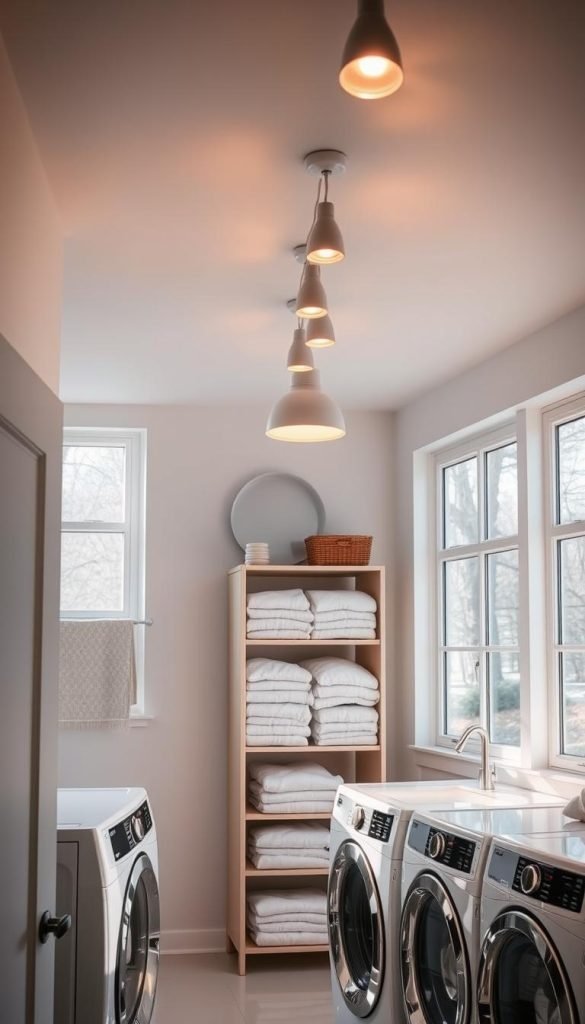
Overhead LEDs and dimmers
I replaced the builder-basic fixture with a brighter LED on a dimmer. A low-profile linear or wide flush mount spread light without lowering ceiling height.
Under-cabinet and shelf lighting
LED strips and puck lights go under cabinets and shelves to brightened work zones. High-CRI choices avoid color shifts when sorting and treating items.
Style meets function
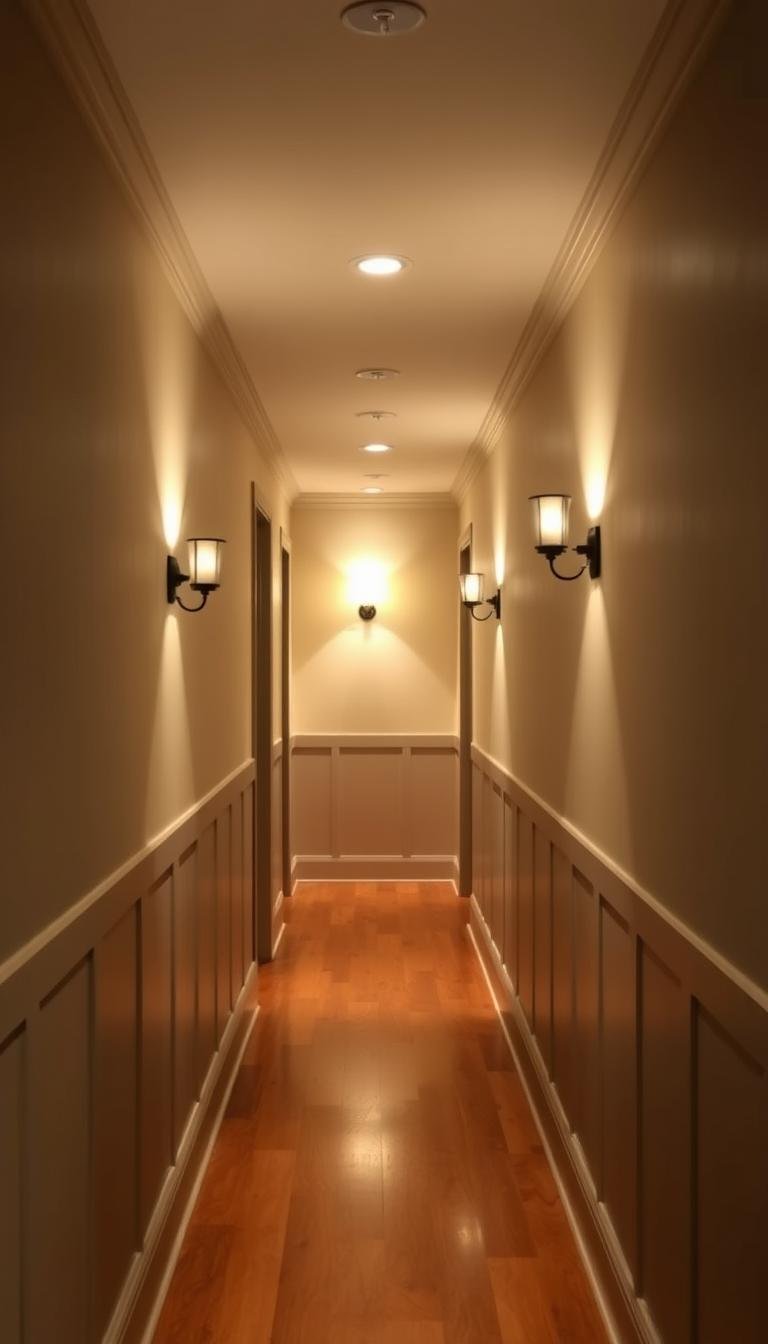
Sconces flanking a window or sink layer task and ambient light while adding style. I matched metal finishes to my hardware so lighting feels like part of the design.
- I wire main switches at the door and task switches by the counter for intuitive use.
- I avoid flicker-prone bulbs and favor sealed, easy-clean fixtures to keep lint and dust at bay.
| Option | Best for | Benefit |
|---|---|---|
| Dimmable LED overhead | General tasks | Adjustable brightness, energy efficient |
| Under-cabinet strips | Folding counters | Removes shadows, focused work light |
| Flush mount / linear | Low ceilings | Wide spread without low profile |
| Sconces | Window or sink areas | Layered ambient and task light |
Smart storage solutions that actually solve problems
Smart storage makes the space work harder so I spend less time searching for supplies. Good choices let the room stay tidy and keep essentials within reach.
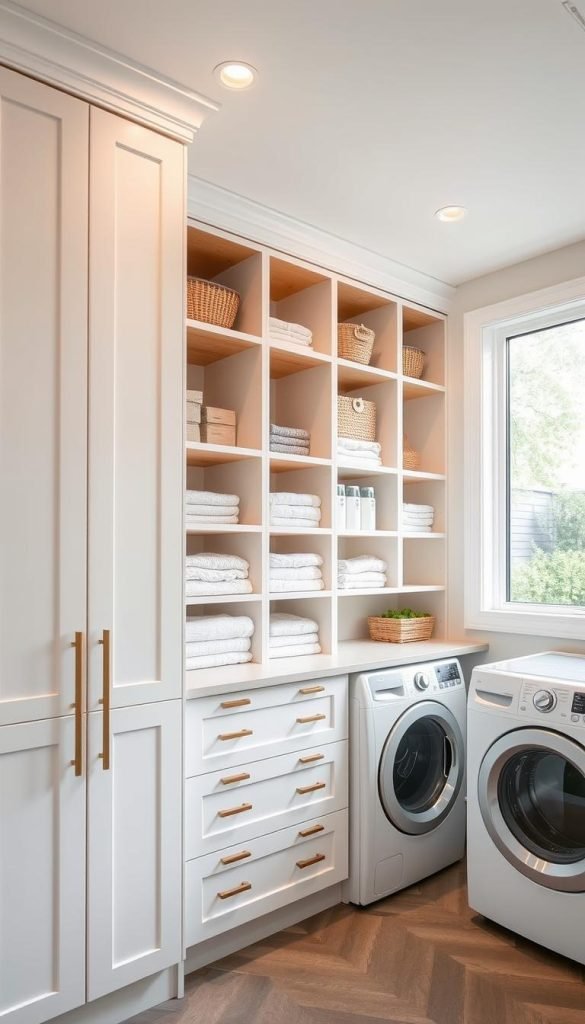
Upper cabinets vs. open shelves: access, style, and maintenance
Upper cabinets hide less-attractive items and stop dust from settling. They are perfect for bulk items and things you want out of sight.
Open shelves make narrow spaces feel lighter and put grab-and-go items front and center. They do demand regular tidying and neat containers.
Deep drawers, pantry cabinets, and freestanding units
Deep drawers corral pods, lint rollers, and small items so countertops stay clear for folding. A pantry-style cabinet stores bulk detergent, linens, and overflow.
Freestanding shelves work well in basements or corners where built-ins aren’t possible. Solid shelves beat wire for stacked towels and small items.
Skinny rolling cart between washer and dryer for detergents
Slide in a skinny rolling cart as narrow as 5–7 inches. It holds detergent, mesh bags, a lint bin, and stain tools within arm’s reach.
- Mix cabinets for hidden storage and shelves for quick access.
- Label jars and bins so everyone returns supplies properly.
- Keep daily items at chest height to reduce bending during folding.
Add a countertop: butcher block or laminate for easy folding
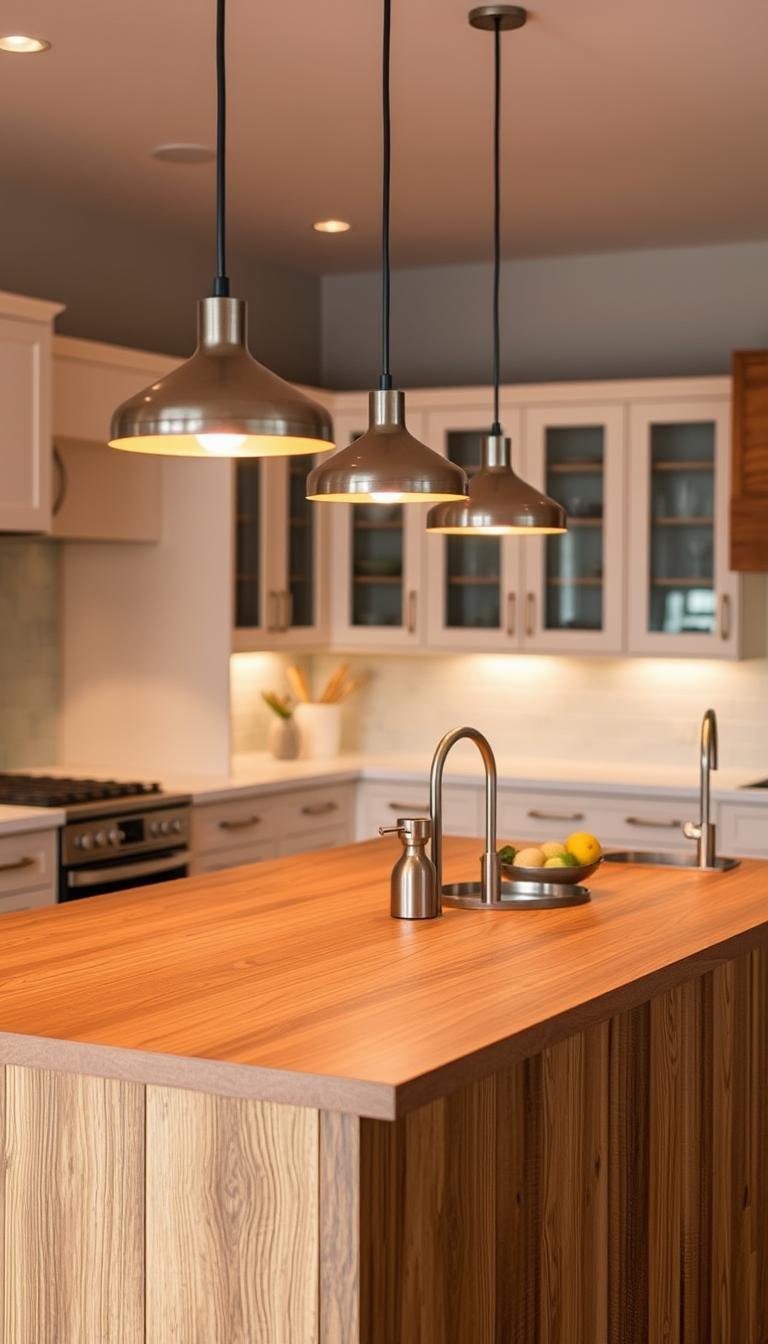
A well-chosen counter changed the awkward gap between machines into useful, everyday space. A butcher block brings warmth; laminate offers wash-and-wear convenience. Both give me a flat work surface and a staging spot for baskets.
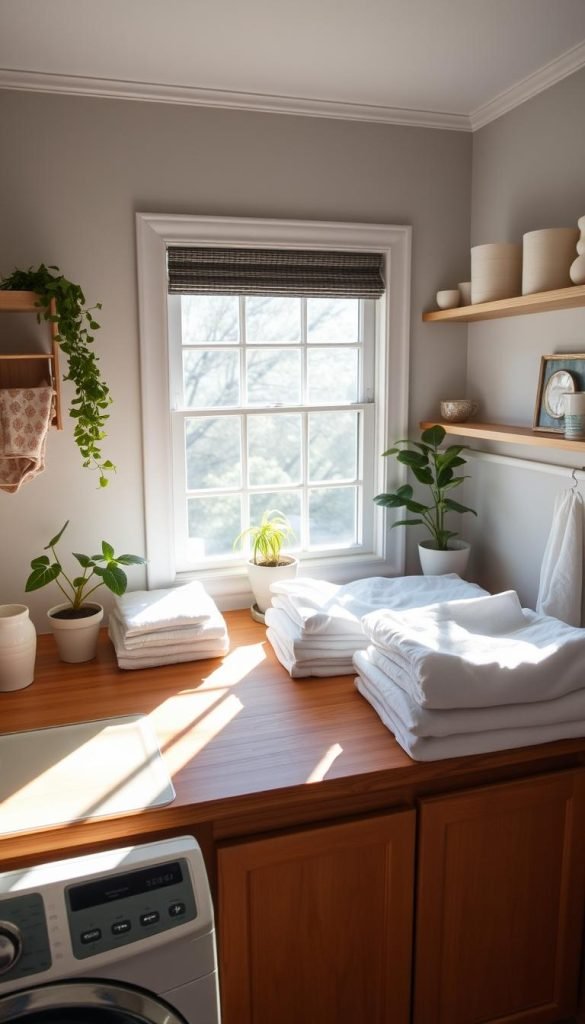
I span my front-loading washer and dryer with a continuous top made to fit. Precut countertops crafted for washer dryer setups save measuring headaches and speed installation.
Drop-down and rolling table options for tight spaces
If stacking is necessary, I use a drop-down wall-mounted surface that folds away when not in use. For flexibility, a rolling utility table with shelves stores baskets and stain kits, then tucks out of sight.
- I seal wood counters and round edges to protect from moisture and soften elbows.
- I add a small lip or backsplash so items don’t slip behind machines.
- I support the counter on rails or side panels so vibration won’t transfer to the surface.
- I keep a clear counter rule—no random storage—so folding stays fast and satisfying.
Drying made simple: rods, retractable racks, and ceiling options
Drying needn’t eat floor space; smart racks lift clothes up and out of the way. I favor hang solutions that vanish when not in use so the room stays tidy and usable.
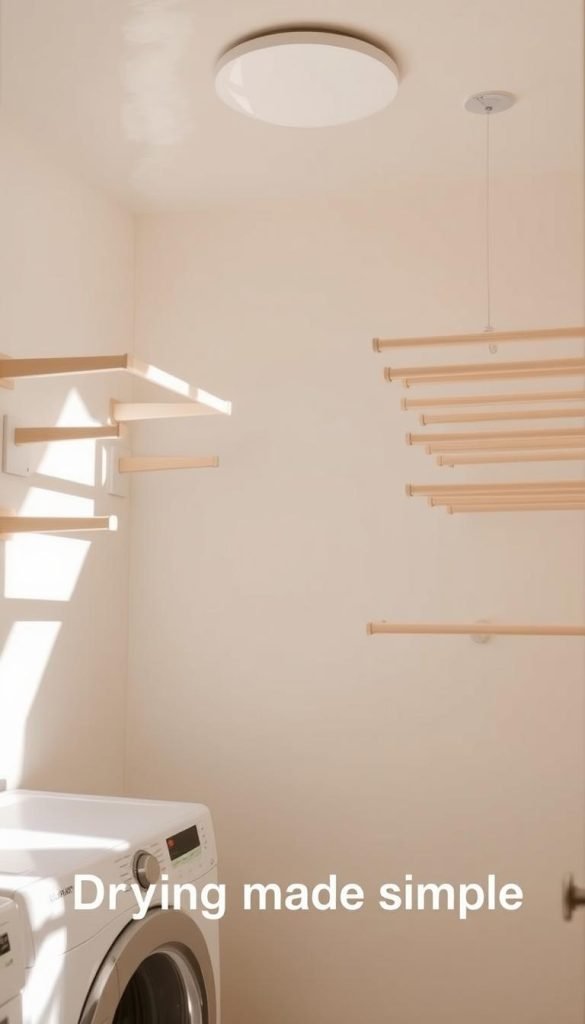
Wall-mounted accordion racks and retractable lines fold to about 1.5 inches from the wall and can extend to roughly 20 linear feet. That gives me ample hanging for delicates and activewear without losing floor area.
Hidden tension rods work inside tall cabinets or between shelves. They hide drying in plain sight and keep visual clutter low. A ceiling-mounted pulley rack is my go-to when every inch of floor space counts.
- I mount a retractable model that folds nearly flat yet offers generous hang space.
- I position rods near the dryer so shirts go straight from drum to hanger, cutting wrinkles.
- I keep clothespins and mesh bags handy in a small basket by the drying zone.
- I pick moisture-resistant finishes and leave clearance for airflow to speed drying.
For more compact ideas, see this short list of hanger ideas for small spaces. My rule: one primary rack plus one hidden rod gives flexibility without crowding the space.
Upgrade the utility sink and faucet for real-life messes
A sturdy basin changes how the space handles muddy boots, stained linens, and pet cleanup. Choosing the right sink and faucet turns a functional corner into something I use without fuss.

Stainless, ceramic farmhouse, or deep laundry basins
Stainless steel holds up to heavy use and chemical cleaners. It’s my pick when toughness matters most.
Ceramic farmhouse gives the room personality and makes the sink a design focal point.
Extra-deep laundry models let me soak bulky items and use washboards or high backs for splashes.
Pull-down sprayers that reach everywhere
I fit a pull-down sprayer so rinsing boots, spot-treating stains, and cleaning tools are fast. The reach and flow control save time and keep the counter dry.
- I replace flimsy tubs with a sink that matches how I live—stainless for toughness, ceramic for style, or deep for soaking.
- I store stain-treating supplies in a labeled caddy under the sink for grab-and-go access.
- I add a sink grid, backsplash, and sturdy cabinet support to protect surfaces and plumbing.
- I leave clear counter space beside the sink so soaking, scrubbing, and drying fit the workflow.
Flooring that looks good and stands up to splashes
A resilient floor makes the space easier to clean and keeps spills from turning into headaches.
Luxury Vinyl Tile (LVT) is my top pick for a laundry room. It is water-resistant, durable, and wipes clean fast. LVT comes in wood- and stone-look patterns that hide lint and light dirt. A click-lock installation option lets most homeowners finish a weekend project and get big visual impact without pro labor.
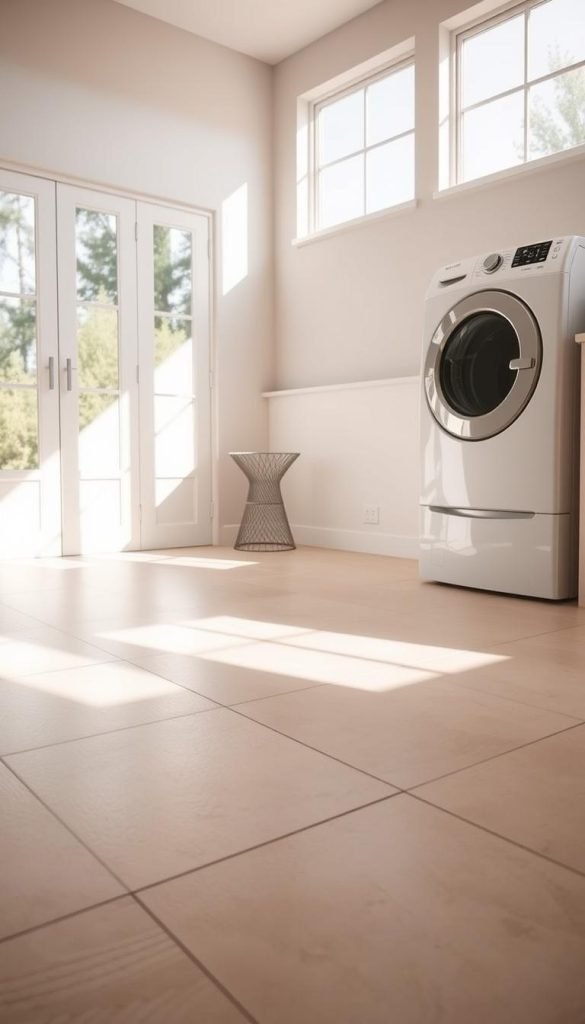
For basement areas, I refresh concrete with a paint-and-seal approach and layer in a large washable rug for warmth. That combo gives softness underfoot while keeping maintenance simple. Use a non-slip rug pad so wet floors stay safe and rugs don’t slide.
- Durability: LVT resists splashes, mud, and pet traffic in a busy laundry area.
- Practical finish: low grout, smooth surface, quick cleanup.
- Basement option: paint-and-seal concrete plus washable rugs for comfort.
| Option | Best for | Maintenance | Key benefit |
|---|---|---|---|
| Luxury Vinyl Tile | Main laundry area | Wipe, mop | Water-resistant, realistic look |
| Paint-and-seal concrete | Basement utility floors | Occasional reseal | Budget-friendly, durable |
| Washable rugs | Softness & warmth | Machine wash | Adds comfort, hides wear |
Tip: Keep transitions low and use moisture-resistant trim so the whole area reads as one cohesive part of your home while staying easy to clean.
Walls that wow: paint, wallpaper, and art that make laundry rooms smile
A wash of soft color can change how the whole area reads and make chores less dreary. I start with light, reflective paint—soft gray, pale blue, or a crisp white like Chantilly Lace—to open tight corners and bounce more light around the room.
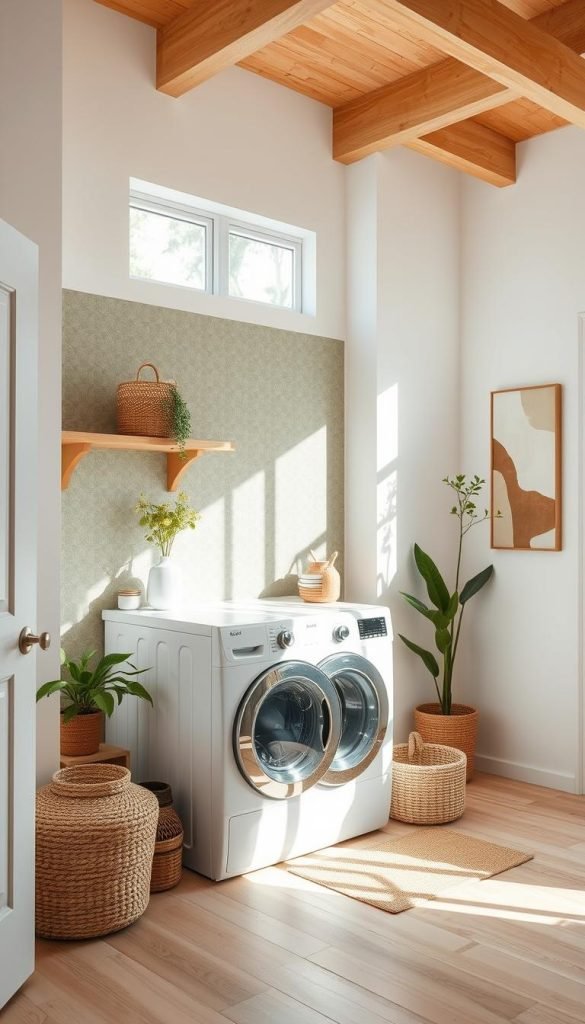
Light, reflective paint colors to brighten the space
Soft neutrals and cool pastels make small spaces feel larger and cleaner. I pick scrubbable finishes near sinks and counters so the wall stays fresh without sacrificing durability.
Bold wallpaper patterns that shine in small areas
I use patterned wallpaper on one wall, above a backsplash, or inside open cabinets so bold choices don’t overwhelm the space. Medium-scale prints add personality and frame the work area nicely.
Framed art, kids’ drawings, and washable flatweave rugs
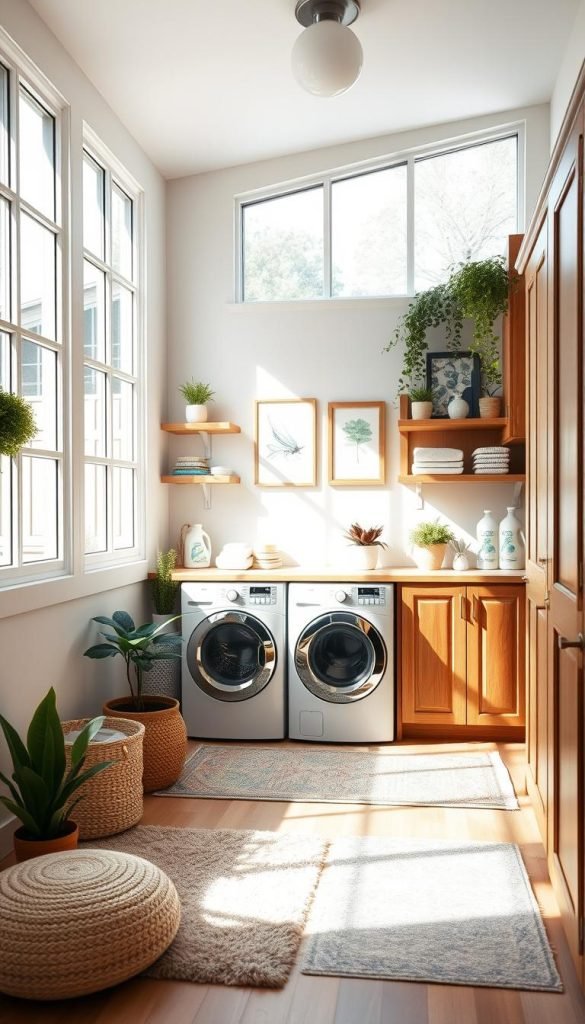
I hang framed prints or kids’ art on a small gallery ledge for easy rotation through seasons. A washable flatweave rug brings texture and hides lint while staying machine-cleanable.
“The right wall color and a few personal pieces make this room feel like part of the house, not just a utility space.”
- I style simple shelves with baskets and labeled jars for both function and charm.
- I match cabinet tones to the walls so the whole look reads calm and cohesive.
| Element | Best spot | Benefit |
|---|---|---|
| Reflective paint | All walls | Makes space feel larger, boosts light |
| Accent wallpaper | One wall / backsplash | Adds pattern without overwhelm |
| Flatweave rug | Floor area | Texture, washable, hides lint |
| Framed art / gallery ledge | Above counter | Personal touch, easy updates |
Organization that tames chaos: bins, labels, and clever add-ons
When every tool has a home, sorting and folding become quick rituals instead of chores.
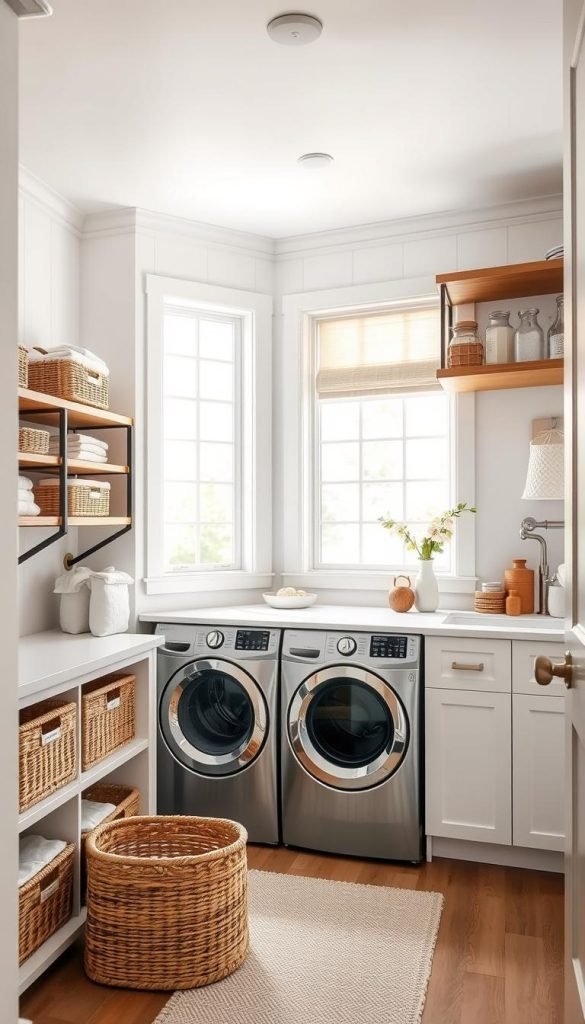
Tilt-out hampers sort lights, darks, and delicates so clothes never pile on counters. Clear jars hold detergent and boosters with scoops on open shelves. Labeled baskets keep dryer balls, lint rollers, and “found in the wash” items easy to grab.
I mount a magnetic strip for scissors and stain pens. A pegboard or slat wall stores brooms, mops, and a handheld vacuum so the wall stays tidy and safe. A small repair kit sits by the folding area for quick fixes.
Built-ins matter: a pull-out ironing board in a base cabinet hides hardware but keeps it ready. A charging drawer powers a cordless vacuum or fabric shaver out of sight. I keep a lint bin near the dryer and follow a one-in, one-out rule for extras so the space stays calm.
| Feature | Best use | Benefit |
|---|---|---|
| Tilt-out hampers | Sorting clothes | Reduces floor clutter |
| Clear jars & labels | Open shelves | Easy inventory, neat look |
| Magnetic strip / pegboard | Wall near counter | Small items never lost |
| Pull-out board & charging drawer | Under-counter cabinet | Hidden, ready-to-use gear |
Small upgrades, big impact: hardware, hooks, and baskets
Small details—new pulls, tidy baskets, and smart hooks—can shift the whole mood of a laundry room.
Swap dated cabinet hardware for modern pulls and knobs to update the look instantly. This low-cost change refreshes cabinets and makes the whole room feel newer without a remodel.
Mount hooks on the back of the door or a short wall for bags, mesh delicates, or a handheld steamer. Hooks free up space and keep things within reach.
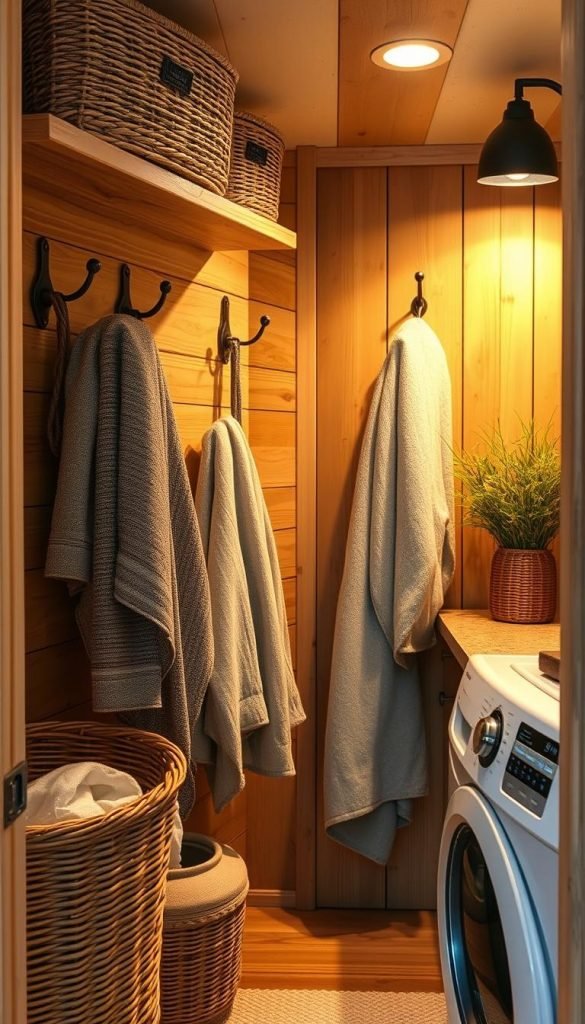
Bring in lidded baskets for quick stash-and-go of stray items so counters stay clear. Decant detergent into a neat container with a scoop for tidy daily use.
Place a washable runner on the floor for color and comfort while catching lint and drips. Slide a tray under liquid cleaners to protect shelves and add bumpers or felt pads for quieter cabinet closes.
- Coordinate finishes across hardware, hooks, and lighting for a cohesive look.
- Mount a key strip or clip for single socks and small items.
- Set a 30-minute weekend reset to tidy these small things so the space stays inviting.
Safety and maintenance: ventilation, moisture, and outlets
Safety matters as much as style in any utility space. I focus on clear airflow, reliable electrical protection, and early leak detection so the laundry room stays safe and usable.
Dryer venting is first. I keep transition ducts short and smooth and vent to the exterior to reduce lint buildup and lower fire risk. Regular annual cleaning of the vent run improves drying performance and energy use.
Electrical and leak protections follow. I upgrade outlets near the sink and washer to GFCI and add water alarms beside machines. A drain pan or shutoff valve under or behind the washer gives extra peace of mind.
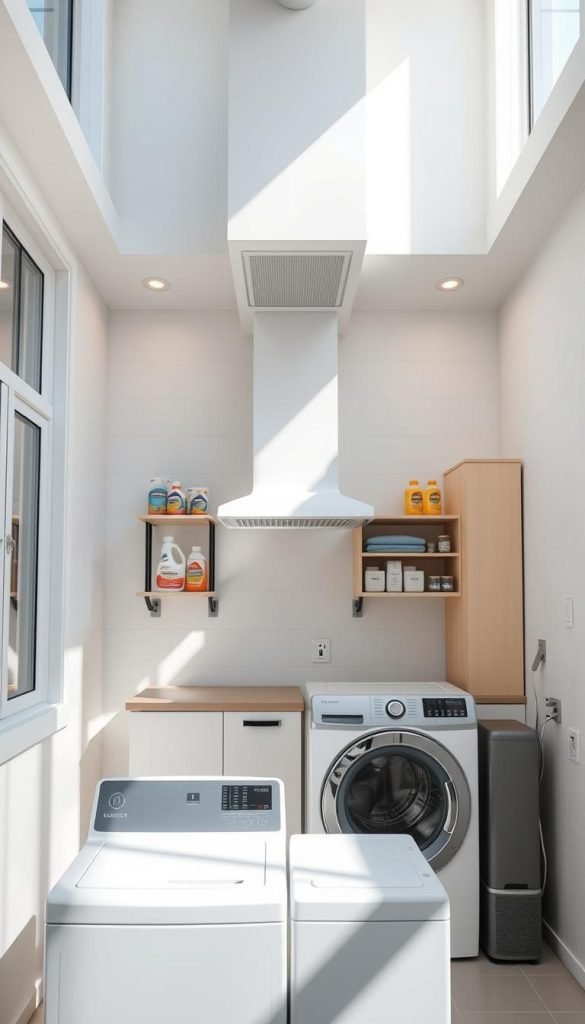
- I seal gaps around wall and floor penetrations to limit moisture intrusion.
- I keep appliance clearances so heat dissipates and hoses remain visible for quick checks.
- I add a dehumidifier or boost ventilation in damp areas, especially basements.
- I clean the lint filter each load and inspect cords and hoses regularly.
Make safety part of the design: smart placements, tidy hoses, and easily read alarms keep this room reliable and protect your home.
How Do I Upgrade a Laundry Room to Feel More Inviting? My step-by-step game plan
Start with a clear sequence so each update builds on the last and momentum stays high.
Quick wins first
I begin with lighting, paint, and hardware. Swap in dimmable LEDs, roll on a fresh coat, and change pulls and knobs. These changes take little time and lift the mood immediately.
I add baskets and labeled jars so clutter no longer steals my motivation. Small edits keep the room usable while I plan larger moves.
Mid-tier moves
Next I install a countertop over front-loaders, swap wire shelves for solid shelving, and fit retractable drying racks. These upgrades improve workflow and create a better folding zone.
Big upgrades last
I save the deep utility sink, pull-down faucet, LVT floor, and cabinet rework for a focused weekend or contractor window. These investments give long-term function and polish.
| Phase | Primary tasks | Benefit |
|---|---|---|
| Quick | LEDs, paint, hardware, baskets | Immediate lift, low time |
| Mid | Countertop, shelving, drying solutions | Better workflow, more folding space |
| Big | Sink, LVT floor, cabinetry rework | Durability, long-term value |
- Batch purchases and set checkpoints.
- Keep safety in mind: GFCI outlets and vent checks.
- Plan rest between phases and celebrate progress.
Style your space: personalize with color, scent, and small decor
When finishes, color, and scent work together, my chores feel quicker and the space reads like part of the house.
Pick a palette that ties the laundry room into nearby rooms so the area looks intentional instead of improvised. I keep finishes consistent—hardware, light fixtures, and hooks in one metal tone—so tiny details read as thoughtful design.
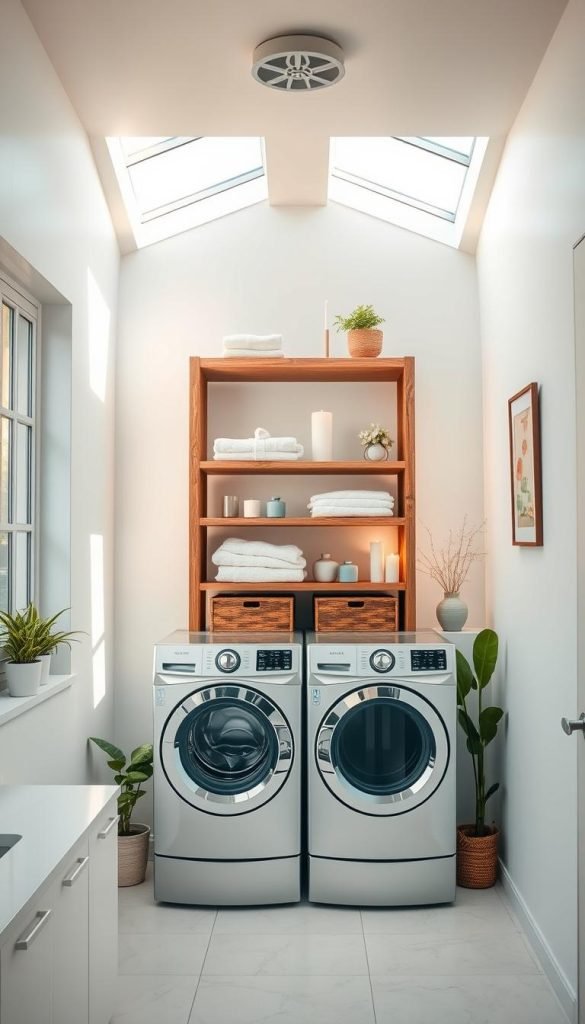
I choose one piece of art that makes me smile. Framed prints, kids’ drawings, or a cheeky quote add personality without stealing working surfaces. A washable flatweave runner softens the floor and visually lengthens the space while staying easy to clean.
Light, fresh scent helps. A small diffuser or a low-wick candle keeps the laundry area smelling clean without overpowering fresh clothes. I tuck chargers and cables into a drawer and style a small tray for everyday bits like a fabric shaver and lint brush so counters stay tidy.
- Pick a home-connected palette for cohesion.
- Add one artwork piece and repeat finishes for unity.
- Use a flatweave runner and a subtle scent to lift the look.
- Edit decor—choose meaningful pieces and avoid clutter.
“A few curated touches turn practical spaces into places I want to use.”
Conclusion
Simple, focused changes deliver the biggest wins. Better lighting, a solid countertop, clear storage, resilient LVT, and a pull-down sprayer change daily rhythm. Retractable drying and reachable supplies cut needless steps and save time.
Keep the plan phased and kind to yourself. Tackle one small idea today, rest between projects, and let momentum build. Label items, store everyday things within reach, and choose finishes that stand up to real use.
Finish with personality—one piece of art and a soft runner make this space feel like home. Celebrate a laundry room that supports your clothes, your schedule, and your way of living.