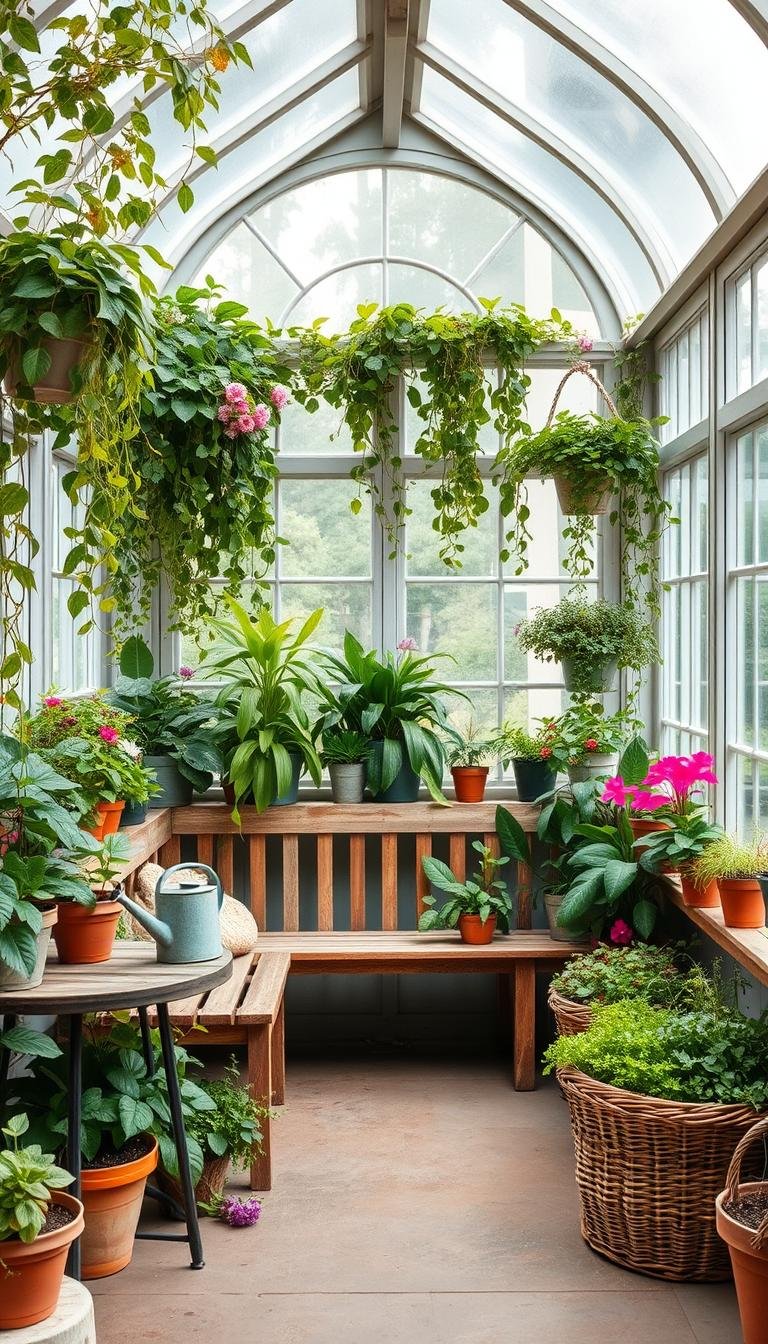
What Are the Top Greenhouse Nook Ideas for Plant Lovers?
I love turning small corners into a calm, green retreat. A compact greenhouse nook helps me group pots and tools so weekly care feels simple and focused.
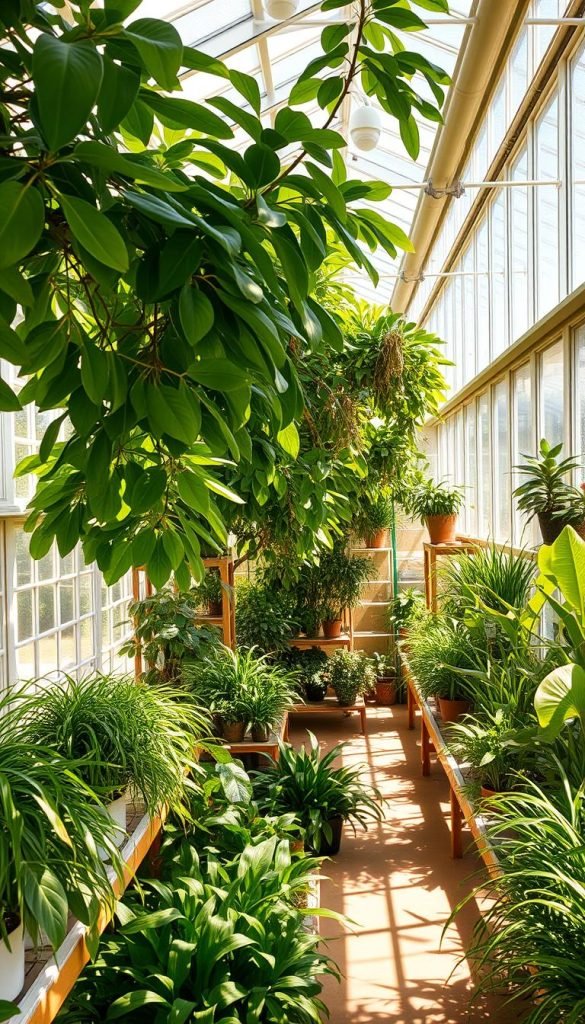
Glass surfaces and reflective finishes boost daylight without a sunroom, and I use adjustable shading to control heat and light. Shelving adds display space and room for humid-loving types.
I often start with clear zones for light, airflow, and humidity so the area looks good and works well from day one. A lit cabinet like the IKEA Rudsta makes it easy to show off tropicals while keeping humidity steady.
My practical approach is simple: mark the footprint, map light paths, add ventilation, and pick shelving depths so foliage can grow. Small builds, even a slim shelf by a window, can feel like a mini garden and a meditative plant room.
Key Takeaways
- Group plants to simplify watering and humidity control.
- Use glass and reflective finishes to amplify available light.
- Start with zones for light, airflow, and humidity.
- Lit cabinets like IKEA Rudsta offer easy humidity control.
- Plan footprint, light paths, ventilation, and shelving depths.
- Even a narrow shelf by a window can become a lush escape.
Why I Love Turning Small Spaces into Greenhouse Nooks
Small corners can become a daily sanctuary where I reset and breathe with my plants. This tiny space gives me a quiet routine that feels rewarding rather than like a chore.
The joy factor: a serene oasis at home
I get real joy watching new leaves unfurl. The sense of calm when a gentle fan hums and healthy foliage gleams is immediate.
My family often stops by to admire a shiny leaf or learn a quick watering trick. That shared moment adds another layer of joy and connection.

Benefit snapshot: light, air, humidity, and easier plant care
Grouping plants by needs in one room or cabinet makes weekly work simple. Watering, pruning, and pest checks happen in one spot, and I spot issues faster.
Better light control and steady air movement keep growth steady. Weather stripping on cabinets helps keep humidity stable for tropical types and reduces guesswork.
- Less time spent moving pots around.
- Natural humidity rises when similar plants share a corner.
- Low-light champs like snake plants and pothos keep the nook lush even in bedrooms.
Cabinet Greenhouses That Shine in Bedrooms and Beyond
My favorite small greenhouse approach is a cabinet build that blends design with easy plant care. A sealed cabinet makes a tidy, humid microclimate while keeping a room feeling calm and curated.

IKEA Rudsta and friends: my go-to lit cabinet setup
I walk through my IKEA Rudsta build step by step. I add full-spectrum LED bars and glass-safe cable pass-throughs so doors close cleanly.
I mention greenhouses hobbyists craft from aquariums as a budget, mini alternative with a clip fan and grow lights.
Humidity control, weather stripping, and airflow tips
Seal gaps with weather stripping, add a small water tray, and fit a USB fan for gentle circulation. I check door seals and fan speed weekly to keep humidity high without mold.
Shelf styling for foliage, succulents, and tools
I place taller foliage on the top shelf and tuck succulents on the sunniest tier. Shade-tolerant plants go lower away from direct blasts.
- Use magnetic hooks for tools and a hygrometer near the center shelf.
- Mix substrates and planters with drainage to avoid overwatering.
- Angle the cabinet a touch toward nearby windows to capture ambient light while LEDs fill gaps.
Neutral shelves, matte pots, and warm LEDs finish the design so the cabinet reads like a lush display, not storage.
What Are the Top Greenhouse Nook Ideas for Plant Lovers?
I craft bright corner setups that pull daylight deep into tight rooms. Each idea below shows a different way to shape light, airflow, and storage so plants thrive and your space stays organized.
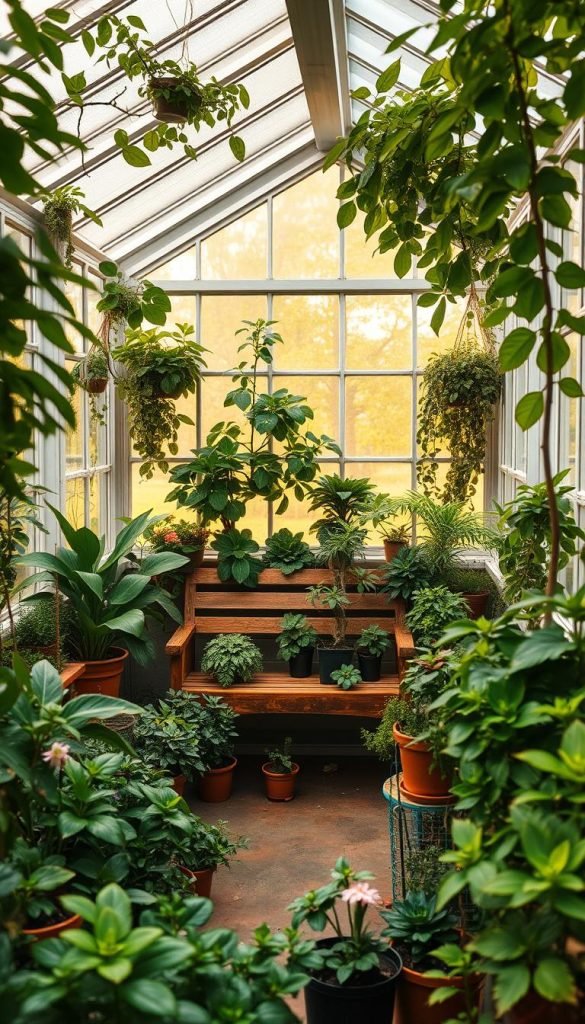
Sunlit sanctuary corners with glass and adjustable shading
Use large glass panels and reflective backs to bounce light far into corners. Add roller blinds or mesh screens to stop heat spikes while keeping morning and late afternoon light rich.
Modern minimalist layouts with hidden storage
Bench drawers and concealed caddies keep potting tools out of view. I stage tall pots at the rear and trailing vines upfront to keep sightlines clear and airflow steady.
Eco-friendly builds using recycled materials and rainwater
Reuse frames and fit a rain barrel for watering. Pair reclaimed timber with efficient LEDs to cut energy use and still boost growth.
Rustic charm hideaways with wood, metal, and earthy hues
Weathered metal shelves, warm colors, and textured wood make a cozy feel. Pale floors and reflective panels help plants get even light in small spaces.
- I recommend modular shelving so seasonal swaps are simple.
- Small shading solutions give precise control on bright days.
- A narrow hidden drawer keeps tools handy and the area clutter-free.
Match each design to your home style so the greenhouse concept suits your taste and space without a full remodel.
Space-Savvy Designs for Tight Rooms, Windows, and Mini Setups
When floor room is limited, I stack, slide, and slim down to keep plants happy and reachable. I focus on vertical solutions and retraceable surfaces so a compact greenhouse feels roomy and simple to use.
Vertical gardens and multi-tier shelving
I mount sturdy wall rails and multi-tier shelves to multiply growing area without stealing floor space. I put light pots high and heavy ones low for stability.
Sliding panels and retractable access
Sliding or retractable glass panels avoid door swing conflicts and make pruning and watering smoother in narrow spaces. This keeps daily work fast and tidy.
Compact botanical corners near windows
I place mini setups close to windows and add LEDs for evening light. Narrow ventilated shelves move air across leaves and cut moisture pockets in dense displays.
- Mini propagation trays let me root cuttings without a grow tent.
- Smart cord routing and drip trays protect floors and speed cleanup.
- Adjustable shelves adapt spacing as plants grow, extending the layout’s life.
| Feature | Benefit | Why I use it | Quick tip |
|---|---|---|---|
| Vertical shelving | More surface area | Maximizes space while keeping access | Secure rails to studs |
| Sliding panels | Clear access in tight spaces | No door swing conflicts | Use soft-close tracks |
| Ventilated narrow shelves | Better air flow | Reduces mold and stale pockets | Place a USB fan nearby |
| Window-adjacent setup | Stronger natural light | Keeps plants vigorous | Combine with LEDs for consistency |
Quick checklist: confirm airflow, ensure safe cord routing, use drip trays, balance weight, and keep easy work access as your collection grows.
Plant Room Vibes: Grouping by Needs for Effortless Care
I arrange my room into clear pockets so each plant gets the light and moisture it needs. Grouping by similar conditions makes weekly care fast and predictable.
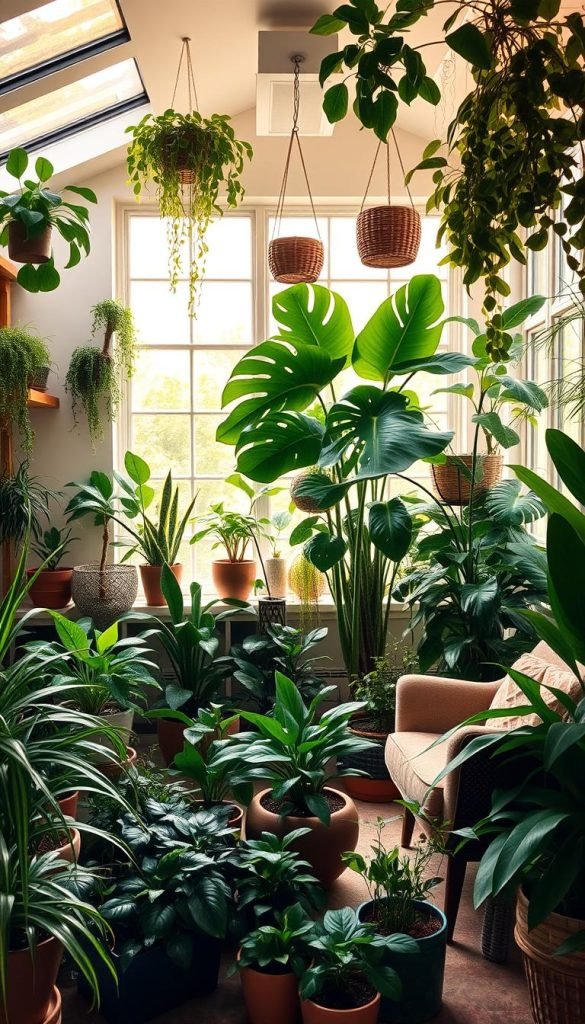
Light and humidity zones for tropical plants vs. hardy houseplants
I map the space into bright/warm and shaded/cool zones. Tropical plants sit in the warm pocket near a water tray or humidifier. Hardy houseplants live in cooler, lower-light sections.
This zoning means I water by section, check pests in groups, and keep humidity where it helps most.
Complementing shapes, textures, and colors for a lush look
I mix upright stems with trailing forms to add depth. Glossy leaves, matte pots, and fenestrated foliage create layers that read as a cohesive design.
- I use risers and stands to tier heights and stop leaf overlap.
- Thirsty species stay near fans or humid sources set low.
- A small caddy with shears and neem makes spot care instant.
Result: a room that looks intentional and lets me tend plants zone by zone as the collection grows.
High-Tech to DIY: Choosing the Right Build for Your Lifestyle
I balance automation and hands-on care so my corner does more growing and less babysitting. Picking a path depends on how much time I spend with plants and how much I want tech to handle daily chores.

Smart irrigation, LED grow lights, and automated climate control
Smart irrigation kits drip precisely into pots and pair with moisture sensors so each plant stays in its sweet spot.
I program energy-efficient LED schedules to mimic day length, which boosts growth and saves energy.
Compact climate controllers moderate heat, track humidity, and cycle air with USB fans to stabilize conditions.
DIY custom havens with upcycled materials and modular pieces
I often build frames from reclaimed wood and repurposed frames. Modular racks let me shift layout as my collection changes.
Light meters, Wi‑Fi plugs, and battery-backed monitors give data-driven control while guarding against power blips.
“I prefer smart plugs for lights and fans, a manual watering rhythm, and a DIY frame that looks custom.”
- I test for condensation and open vents or add fans to avoid mold on leaves and shelves.
- Cable management and drip protection keep the space tidy and safe over years of use.
- I weigh one-time costs against ongoing savings to decide if full automation is worth it.
| Option | Initial Cost | Ongoing Energy | Best Use |
|---|---|---|---|
| Full automation | High | Moderate (efficient LEDs) | Busy owners who want hands-off care |
| Hybrid (smart + manual) | Medium | Low | Balanced control with budget sense |
| DIY upcycled | Low | Variable | Creative builders who enjoy hands-on care |
My favorite balanced design uses smart plugs, a simple moisture meter, a small fan for air, and a handcrafted frame that fits my room and routine.
Curate the Mood: Tropical Escapes, Urban Jungles, and Vintage Conservatories
I pick a mood first, then layer plants and finishes to match it. That simple rule keeps each corner focused and easy to style.

Tropical paradise with warm humidity and water features
I paint a tropical paradise using warm humidity, layered canopies, and a small fountain. The fountain raises moisture and masks noise while nearby pebble trays boost humidity passively.
Quick materials: small pump, slate tray, humidifier, large-leaf plants, warm-toned pots.
Urban jungle energy with compact planters and industrial accents
I channel urban jungle energy through compact planters, mixed heights, and industrial touches like black steel and concrete. This keeps care simple and the look bold.
Quick materials: black steel shelving, concrete planters, compact trailing plants, wire hooks.
Vintage conservatory elegance with traditional glasswork
I evoke vintage charm with arched frames, classic pedestal planters, and antique brass fittings. The result feels timeless and perfectly suited to quiet mornings among foliage.
Quick materials: arched glass panels, pedestal pots, weathered terra-cotta, brass hardware.
Artistic glass retreats that play with color and light
I create an artistic retreat using colored or textured panes so morning light paints patterns across leaves and flowers. A limited palette unifies pots, tools, and accents at a glance.
Quick materials: stained or textured glass, warm LED uplights, mixed foliage, scented herbs for a subtle finish.
“I pick a mood first, then layer plants and finishes to match it.”
- Use a single primary palette and one accent color to tie a small area together.
- Mix fine and bold foliage to keep the eye moving without clutter.
- Add low, warm lighting for evening glow that flatters plants and doubles as ambient light.
| Vibe | Key Feature | Focal Plant | Starter Materials |
|---|---|---|---|
| Tropical paradise | Warm humidity + fountain | Bird of paradise or philodendron | Pump, tray, humidifier, large pots |
| Urban jungle | Compact planters + industrial accents | Pothos or ZZ plant | Steel shelves, concrete pots, hooks |
| Vintage conservatory | Arched glasswork + pedestals | Ficus or vintage orchids | Arched panes, pedestal pots, brass |
| Artistic glass retreat | Colored panes + patterned light | Assorted flowering vines or fern | Stained glass, LED uplights, scented herbs |
Care Essentials: Light, Heat, Air, Watering, and Daily Routines
I plan light and airflow first, then build a watering routine that fits my week.
Balancing natural light, reflectors, and shading
I confirm daily light hours and add reflectors to bounce sun into darker corners. Midday shading prevents scorched leaves and keeps heat steady under panes.
Airflow and humidity habits that keep foliage thriving
I run small fans on low to stop air from going stale and to help steady transpiration. Weather stripping on cabinets preserves humidity so tropical types stay happy.
My simple rhythms for reliable plant care:
- I check soil with a finger, lift pots to test weight, and confirm with a moisture meter for precise watering.
- I space pots to avoid hot spots under lights and use a thermostat when heat builds near windows.
- I place hygrometers at two heights to spot microclimates and add water trays or mist when needed.
- I batch tasks—prune one day, fertilize another—so routine fits real life and saves time.
- I rotate pots a quarter turn weekly and use silicone mats and trays for easy cleanup after watering.
“My weekly review saves time: tweak placement, note growth, and adjust humidity to prevent surprises.”
Result: a compact greenhouse that needs small, regular inputs and rewards me with steady growth and less stress.
Conclusion
Simple choices—one mood, one shelf, one reliable light—make a big difference over months.
There’s more than one way to build a greenhouse nook: from glassy sun traps to cozy cabinets that fit any space. Start mini with a lit cabinet or narrow rack by windows and scale as you gain confidence.
Group plants by need to simplify gardening, keep tools handy, and turn care into a calm routine. Balance energy use with efficient LEDs, timers, and a small fan before you add big systems.
Easy wins include succulents on the brightest shelf, herbs in a kitchen window, and a trailing vine to soften edges. Take a photo each week, celebrate change, and invite family or a friend to share the joy.
Choose one corner, one idea, one plant that makes you smile, then build from there—DIY touches welcome and progress shows up with small weekly edits.