What Are the Best Craft Room Organization Hacks for Creatives?
I promise practical, first-hand tips that help me find supplies fast without making visual chaos or busting my budget.
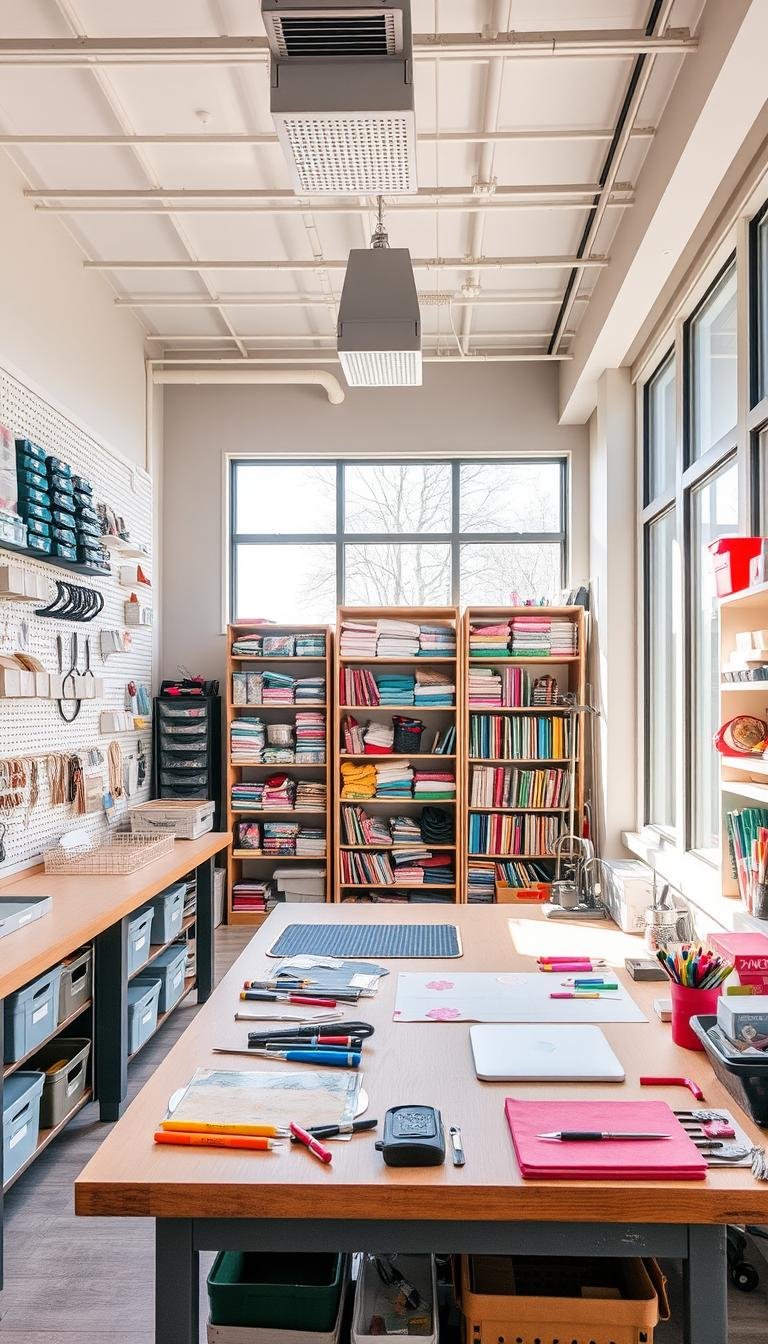
I start with a quick audit by category — paper, vinyl, fabric — so I right-size storage. Then I pick a central workspace and fit shelves, a desk, and rolling carts around it. This keeps daily tools within arm’s reach and less-used items tucked away.
I lean on thrifted shelves, IKEA Kallax, SKÅDIS pegboards, and simple fridge bins. Clear bins give fast visibility, closed baskets calm the view, and drawer units protect delicate tools. Labels keep the system honest, and chalkboard tags help me swap categories by season.
Vertical tricks double usable space. Floating shelves with a lip, over-the-door organizers, and 12×12 cube dividers free floor space. I’ll walk through category-by-category solutions and a curated shopping list from IKEA, Michaels, The Container Store, and Etsy.
Key Takeaways
- Begin with a quick category audit to avoid wrong storage buys.
- Choose a central workspace first, then add mixed storage types.
- Use vertical storage and modular units to maximize space.
- Mix clear bins, closed baskets, and drawers for balance.
- Label everything and use mobile carts for tidy projects.
How I Plan a Craft Room That Actually Works Right Now
I take twenty focused minutes to sort supplies into use-based groups before buying anything. That quick inventory—paper, vinyl, fabric, thread, paint, and tools—shows me which items need drawers, which need flat drawers, and which can live in baskets.
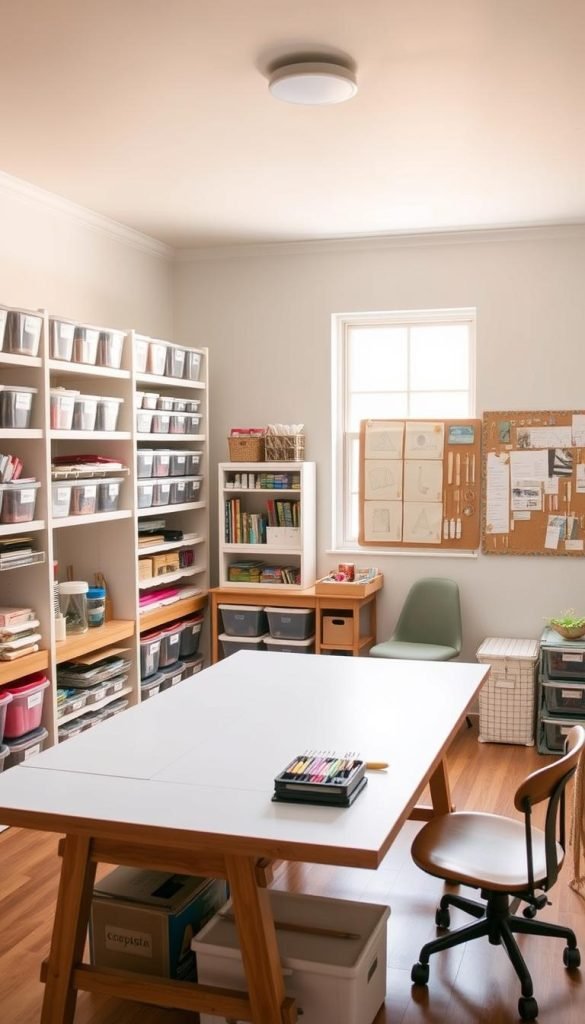
Next I pick main furniture: a sturdy desk plus two cube units or bookcases. I measure every shelf, drawer, and cubby before ordering bins so nothing wastes space.
I map workflows around my dominant hand so daily tools stay within reach and seldom-used items go up high. I sketch vertical zones for pegboards and floating shelves, noting heights for paints, scissors, and pens.
I use sticky notes as temporary homes during a test project, then move items into labeled containers that I will actually use. Clear boxes go where I need fast access; opaque baskets keep the studio calm.
“Measure twice, buy once—then test the flow with a real project.”
One practical tip: plan outlets and lighting, and leave wiggle room for a rolling cart when a big project hits. For more clever storage ideas, I often check curated galleries and adapt what fits my layout.
Budget-Friendly Craft Room Storage That Looks Designer
I hunt simple steals that solve storage and lift the whole room’s look. Thrift shops and discount aisles give me pieces that hide clutter and feel styled.
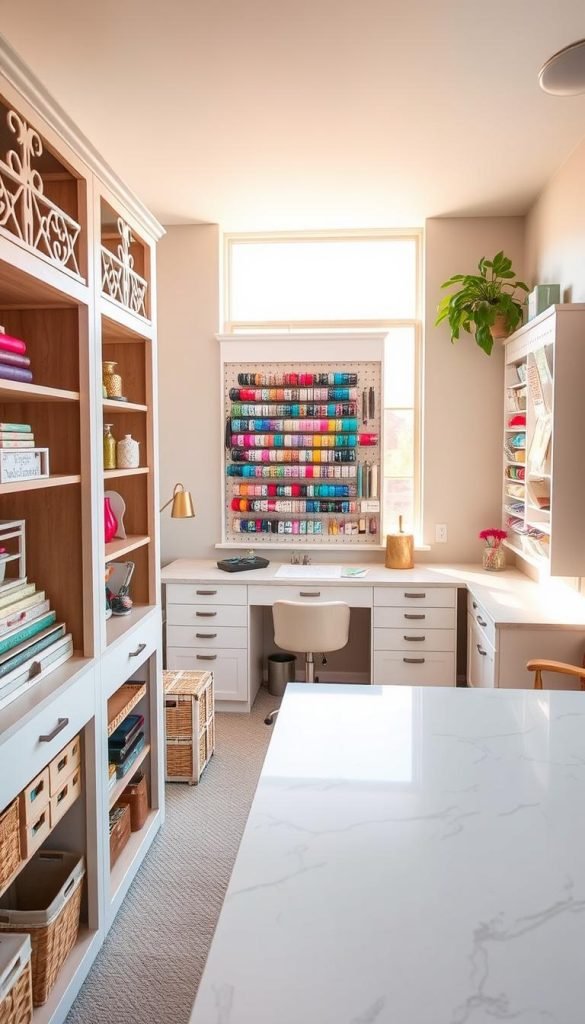
Thrifted scores transform small supplies into tidy displays. Jewelry boxes with tiny drawers tame charms and eyelets. Old sewing machine drawers hold brushes and tall tools upright. A china shelf makes pretty, useful shelving for buttons and jars.
Dollar-store wins fill gaps without a designer price tag. I buy matching bins, drawer dividers, and baskets so shelves read as a set. Clear fridge organizers slide into cubbies for fabric scraps and stamp sets.
- I reuse wine crates and cigar boxes to file papers, stamps, and dies.
- I paint or line mismatched finds so wood, white plastic, and woven textures feel cohesive.
- Friends save cookie tins and jars, which I use for small loose items.
| Source | Best for | Typical cost | Quick tweak |
|---|---|---|---|
| Thrifted jewelry box | Charms, brads | $5–$15 | Label drawers |
| Sewing machine drawers | Brushes, tools | $10–$25 | Stack on shelf |
| Dollar-store bins | Mixed supplies | $1–$4 | Paint to match |
| Fridge organizers | Fabric scraps | $3–$8 | Slide into cubbies |
IKEA and Modular Furniture That Make Space Work Harder
I turn modular cubes into a true work hub. I set a tabletop across two Kallax units to gain a wide surface plus eight or more cubbies below. This gives me one stable desk and instant, visible storage without new furniture.
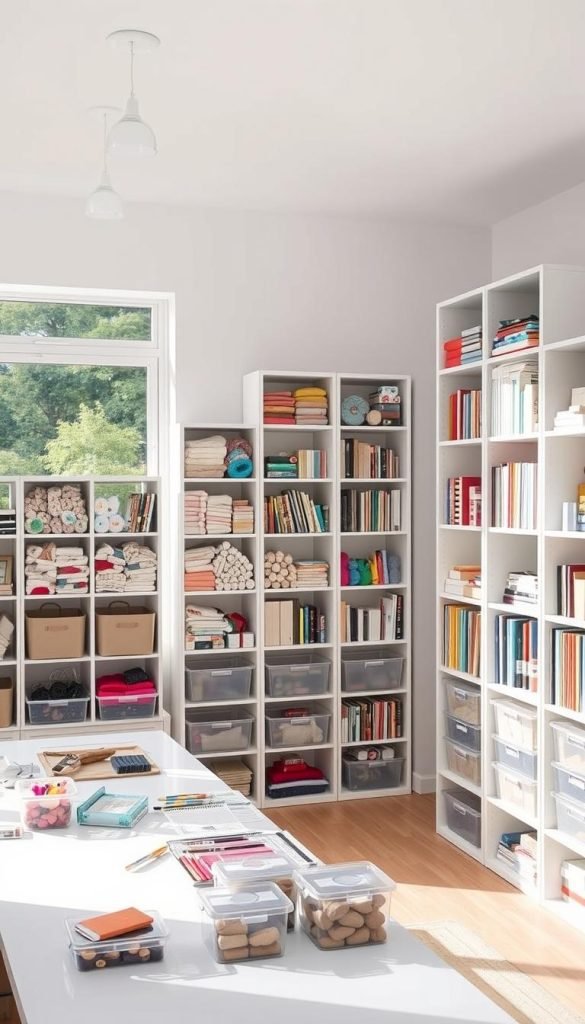
Shallow Alex drawers are my go-to for flat and rolled vinyl. The low-profile drawers keep sheets flat, dust-free, and easy to pull. Pairing Alex next to Kallax creates an L-shaped layout that uses corners well and adds many shallow drawers for materials.
I tuck heavy machines into lower cubes for stability and use labeled fabric bins up high to soften the look. I also add Besta cupboards when I need to protect inks and stamps from light.
- I mount SKÅDIS pegboard near the desk so scissors and pens have a vertical spot.
- A rolling cart carries adhesives and blades to either side of my workstation.
- I standardize label sizes so helpers can put things back fast.
| Item | Best use | Why I like it |
|---|---|---|
| Kallax + tabletop | Everyday tools, bins | Wide work surface and cube storage |
| Alex drawer unit | Flat vinyl, papers | Shallow drawers keep materials flat |
| Besta cupboard | Stamps, inks | Blocks light and adds closed storage |
Wall Power: Pegboards, Floating Shelves, and Framed Storage
I take a blank wall and turn it into an organized command center I actually use. Vertical solutions keep my main table clear and make supplies visible at a glance. That saves time and removes small, distracting piles.
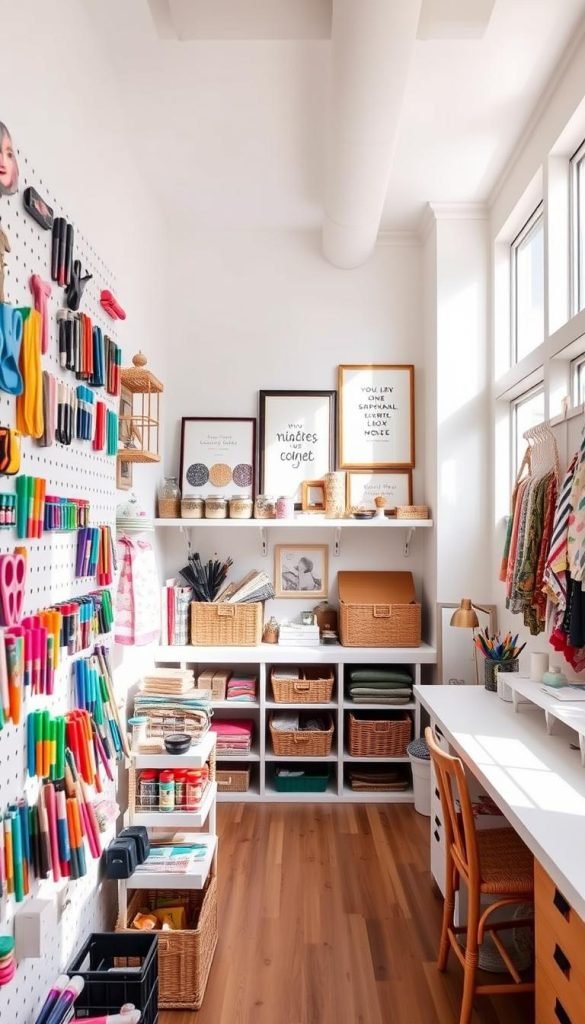
SKÅDIS setups for paints, pens, scissors, and tools
I mount SKÅDIS pegboards so scissors, glue guns, pens, and paint tubes hang on hooks and bulldog clips. Seeing every color in one glance speeds color choices and keeps my desk clear.
- Use cups, hooks, and bins to group by task—cutting, painting, stamping.
- Keep a magnetic strip nearby for metal rulers and snips.
- Leave one pegboard bin empty for in-progress bits.
Floating shelves with lips to contain glitter, paint, and jars
I add shallow shelves with a small lip so glitter and bottles won’t slide off when the room gets busy.
Stagger heights to fit tall spray adhesives and short jars, and use risers to tier paints in deep cubbies.
Framed trim displays and over-the-door organizers that use every inch
An old window frame becomes a hands-on lace and trim display when I string lines across it. Everything hangs tidy and cuts free.
Over-the-door shoe organizers hold punches, tapes, and small bottles. Magazine files and wrapping racks keep rolls tidy and upright.
Cubes, Cubbies, and Shoe Organizers to Tame the Chaos
A wall of 12×12 cubes gives instant order and a place for every paper and paint bottle. I depend on these modules because they fit scrapbook paper, fabric bins, and boxy machines in a neat grid that’s easy to style.
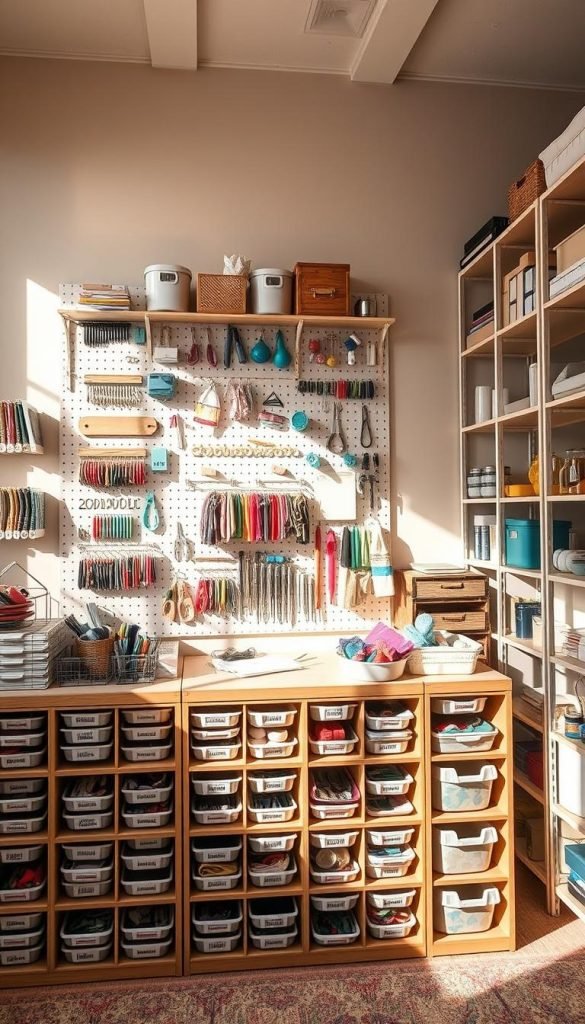
I add woven baskets to conceal visual noise and slide in magazine files for cardstock, vinyl offcuts, and manuals I reference often. Removable dividers inside cubes line up paint bottles so I can grab a color without toppling the row.
In a small room, I stack shoe cubbies in the closet to hold fabric by color. Clear fridge bins become pull-out trays that keep stacks tidy and reachable.
“Label each cube by category and frequency so helpers return items correctly.”
| Use | Why it works | Quick tip |
|---|---|---|
| 12×12 cubes | Fits paper, bins, and machines | Alternate open and closed fronts |
| Shoe cubbies in closet | Vertical fabric storage | Use clear bins as pull-outs |
| Dividers & baskets | Organize paints and hide clutter | Reserve one cube as charging bay |
Small-Item Heroes: Jars, Tins, Matchboxes, and Trays
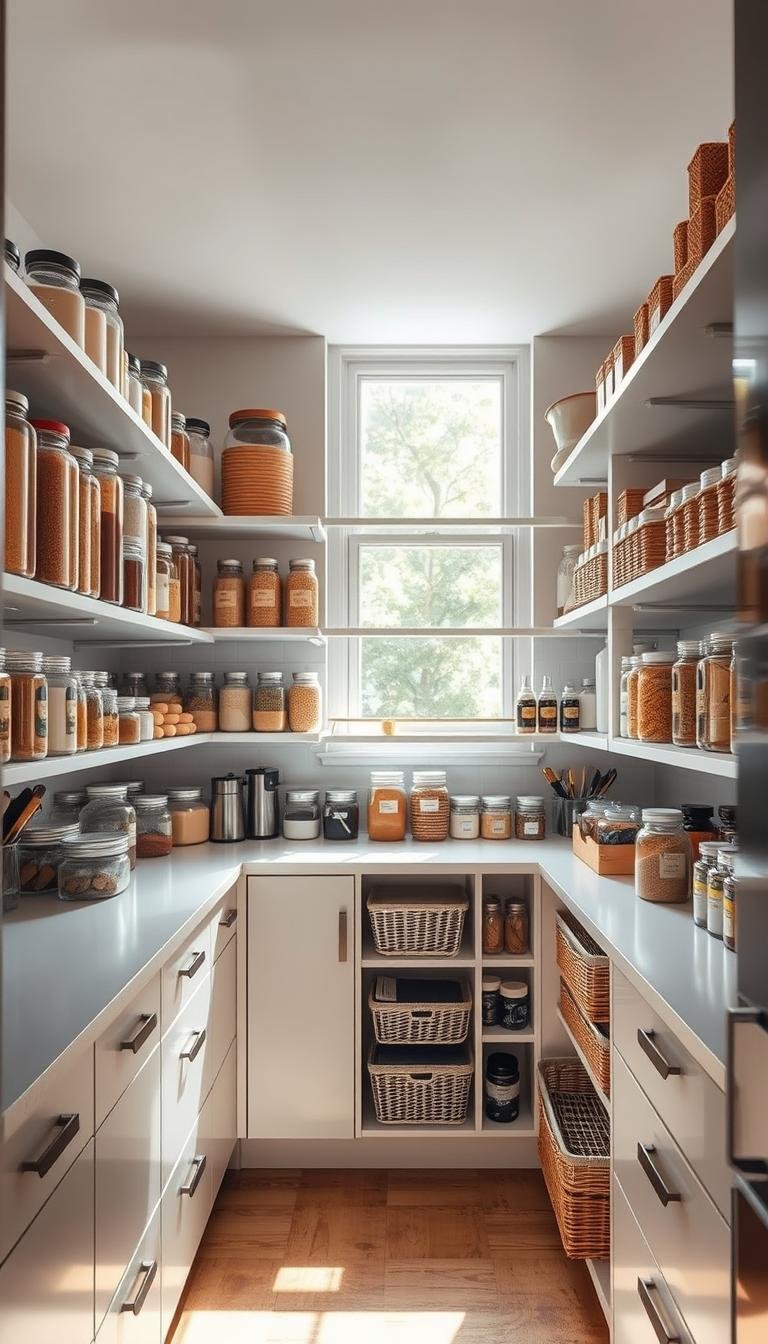
Small vessels and clever trays turn loose odds and ends into a visible, usable system. I line up clear canning and apothecary jars so buttons, beads, and brushes sit where I can see them at a glance.
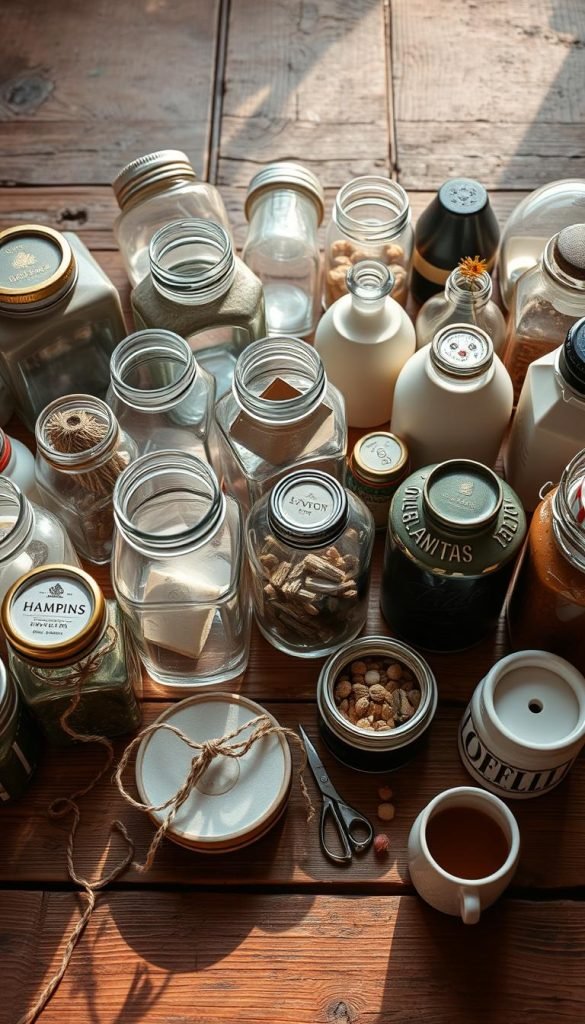
Cookie tins and recycled candle jars are stealth organizers. I use tins for clamps, blades, and oddly shaped bits that won’t stay in divided trays. Jam jars that get a soapy rinse become charming, free containers on a shelf.
A DIY matchbox drawer wall is one of my favorite small projects. I cut, score, and fold printable templates, line them up in a shallow box, and hang the whole unit. Each drawer gets a label so grabbing spare blades or tiny stickers is instant during projects.
- I park paint brushes upright in a tall jar to keep bristles safe and sorted by size.
- A lazy Susan with small cups becomes my rotating command center for scissors and weeding tools.
- Mini bento boxes and thrifted makeup organizers hold inks and small bottles snugly.
Group containers by task and color so your eye finds what you need mid-project. Trays corral jars and tins, letting me clear the desk in one sweep without losing order.
Drawers, Dividers, and Labels: My Find-It-Fast System
A small hardware cabinet changed how I sort beads, brads, and eyelets forever. I use one of those metal units meant for nails and bolts to store tiny craft bits. It holds hundreds of pieces and still fits on a shelf.
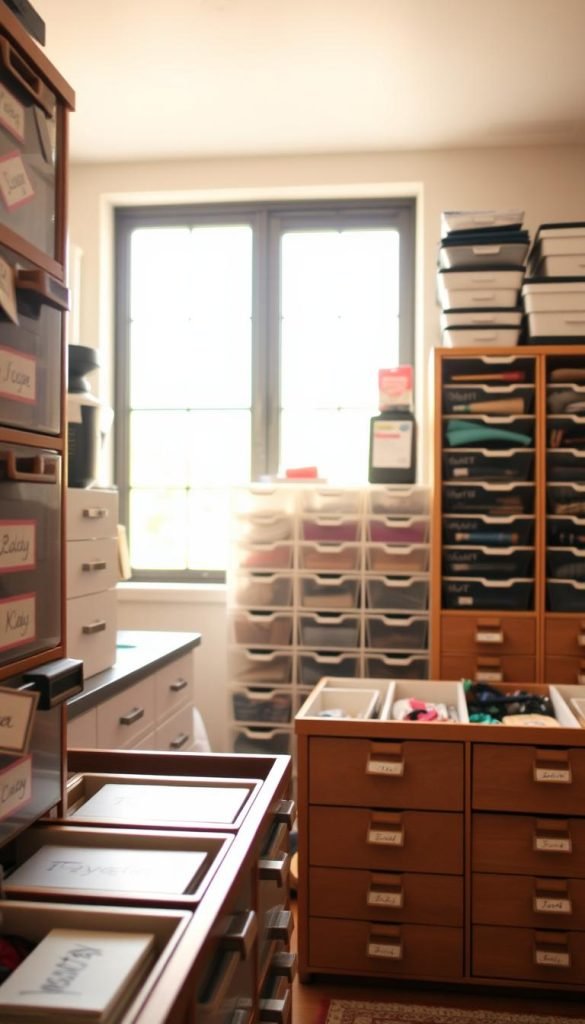
I pair that cabinet with acrylic trays in desk drawers so scissors, rulers, and tape don’t migrate to the back. Shallow drawers get flat materials like stencils and 12×12 offcuts to keep them uncreased.
I label every pull-out with chalkboard stickers when contents change often. For long-term categories I use vinyl labels that stay crisp.
- I keep one “inbox” drawer for new arrivals so the work surface stays clear.
- I line drawers with removable shelf liner or wrapping paper for easy cleanups after glitter or paint dust.
- A small map taped inside the cabinet door lists drawer numbers and contents for guests and helpers.
Quick seasonal relabeling saves time. When holiday dies move to the front, I swap chalk labels and update the map. I also keep a spare label sheet and chalk marker in the top drawer so changes happen in seconds.
“Open the right drawer” — that’s my goal every session.
Rolling Carts and Mobile Stations I Reach for Daily
I rely on mobile stations to keep work surfaces clear and projects portable. A well-chosen cart moves my current supplies where I need them and cuts cleanup time in half.
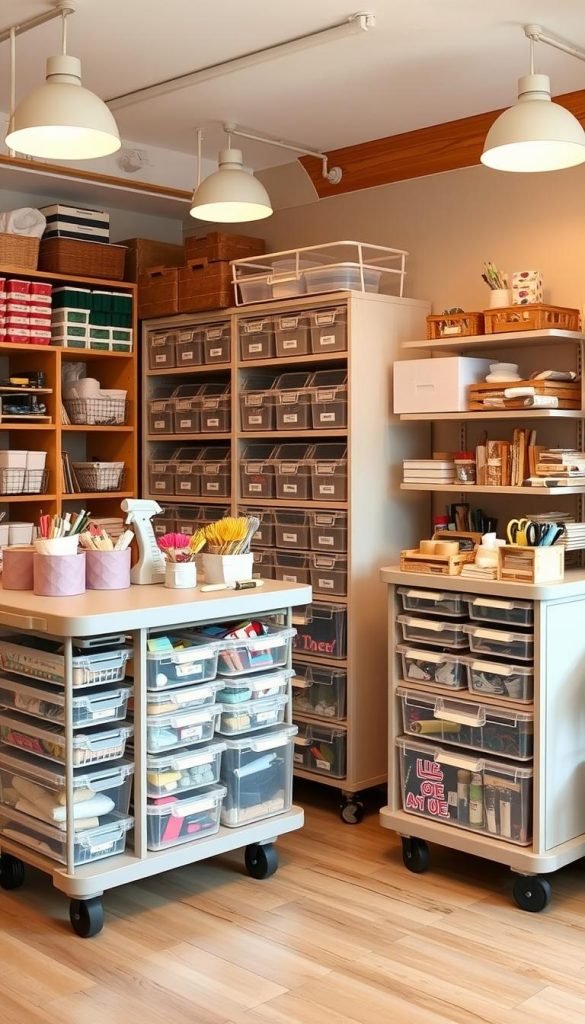
My setup mixes three-tier utility carts, drawer carts, and combo units. I clip cups and hanging rolls to the sides for pens and transfer tape. That adds capacity without eating floor space.
- I keep a 3-tier utility cart beside my desk loaded with current-project tools so cleanup is one quick roll away.
- Drawer-style rolling carts hold adhesives and blades that need dust protection but still travel with me.
- A rolling file cart becomes a mobile paper station when I spray-paint it to match and drop in wire baskets for cardstock and scraps.
- Baker’s racks or narrow shelf carts corral stamps and inks while staying light enough to push.
Wheels with locks matter. I lock a cart during cutting or painting so it won’t drift. I also top a cart with a cutting mat to create a secondary work surface for batch prep or weeding.
“Label the front edge of each tier so everyone returns things to the right spot.”
Over time I build themed carts—sewing, stamping, Cricut—so switching crafts is as simple as swapping a station. Mobile organizers keep my craft room tidy and protect my flow from clutter pileups.
Supply-Specific Hacks: Paper, Vinyl, Fabric, Thread, and Paint
I separate supplies by how I reach for them during a project, then give each group a custom home. That simple habit guides whether something needs a flat drawer, a hanging rack, or a clear jar.

Paper and paints
Use 12×12 cubes to file cardstock by color and slide in magazine holders for specialty prints and catalogs. Acrylic risers and spice racks tier paints so every bottle is visible and easy to grab.
Vinyl solutions
Keep flat vinyl in shallow drawers like IKEA Alex to stop curling. Save scraps in binders with plastic sleeves. Hang rolled vinyl on a door rack or wall unit so your whole collection is scannable.
Fabric, thread, and finishing
Wrap fabric around cardboard inserts and shelve in Kallax cubes for a quilt-shop look. In tight closets, use space-saver hangers; store leather in an old suitcase away from light.
Mount thread racks or use desktop stands and group by fiber and color. Add a small finishing kit—clear coat, lint roller, sanding block—so projects finish fast.
- Quick win: give each material a tailored home so your workflow stays tidy and efficient.
Repurpose Smart: Fridge Bins, Packaging, and DIY Organizers
I reclaim fridge drawers and tech boxes to build low-cost pull-outs and trays that fit my cubbies. Repurposing saves money and keeps the look cohesive.
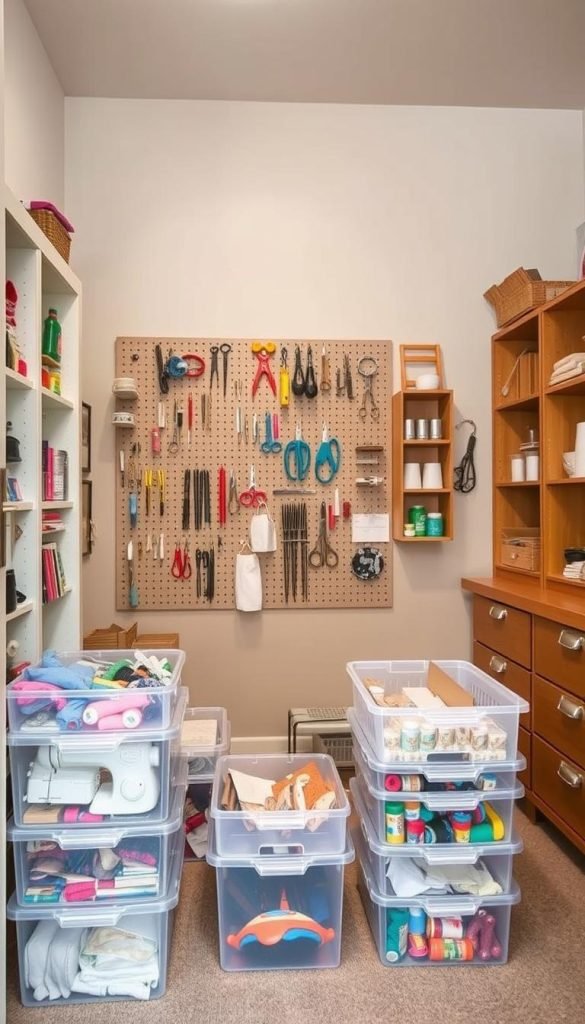
Transparent fridge bins slide into cubes as pull-out trays for clear stamp sets and larger rubber stamps. This keeps sets dust-free and makes flipping through stencils fast.
Packaging to purpose
I wrap Amazon boxes in pretty paper and add labels. Tech packaging becomes shallow drawer trays that tame adhesives and specialty glue. Piano roll boxes act like slim drawers for washi tape so my whole collection is visible.
- I make mini file-folder accordions for scraps and label tabs by color or pattern.
- Makeup organizers hold inks; over-the-door racks store wrapping rolls upright.
- I keep a tin for sharp metal blades clearly labeled and high on a shelf for safety.
“A small stash of cute jars and baskets prevents growth from becoming chaos.”
| Repurposed Item | Best use | Quick tip |
|---|---|---|
| Fridge bin | Stamps & stencils | Slide into cube, label front |
| Amazon box (covered) | Expanding categories | Reinforce corners, add label |
| Tech box tray | Adhesives & tapes | Nest in drawer for separation |
What Are the Best Craft Room Organization Hacks for Creatives?
I plan shopping trips with exact shelf and cubby measurements so nothing arrives too big or too small.
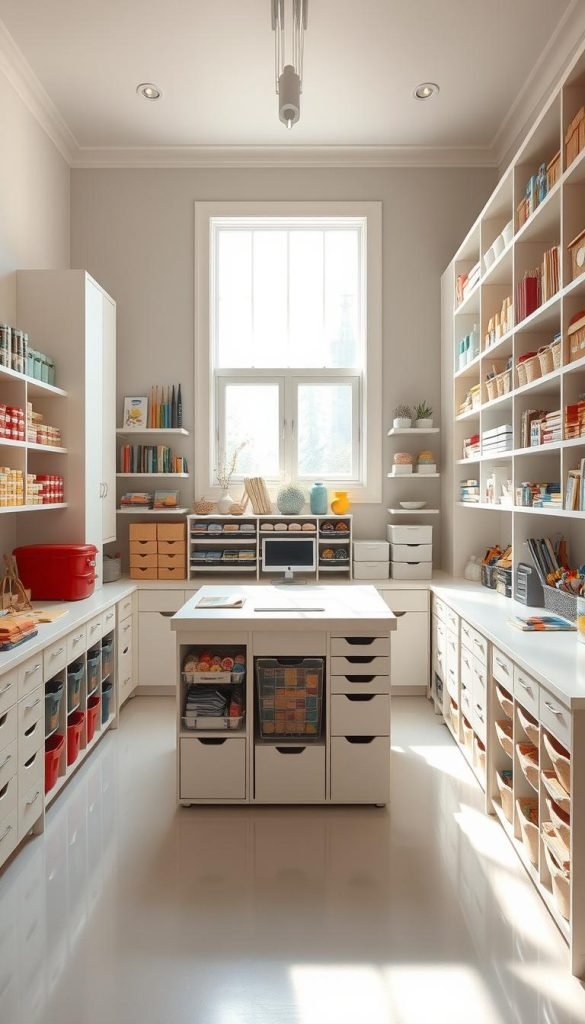
IKEA is my go-to for Kallax, Alex, and SKÅDIS plus baskets and inserts that make a modular setup sing. I pair units so one surface becomes work and the cubes hold my supplies.
Amazon fills niche gaps—matching jars, extra labels, and quick returns if a size misses. Michaels and Stamp-n-Storage supply carts, modular paper racks, and ink organizers I trust.
The Container Store is where I splurge on stackable drawers and Home Edit bins. Dollar stores keep my budget sane with cheap baskets and dividers. Etsy supplies pretty labels and custom decals to finish the look.
- I always bring measurements and a short list of target items before buying.
- Compare carts for hooks and cups if pens and small tools must travel with you.
- Finish with a set of labels so new pieces match your existing collection.
| Store | Core buys | Why I shop there |
|---|---|---|
| IKEA | Kallax, Alex, SKÅDIS | Modular, budget-friendly, easy to mix |
| The Container Store | Stackable drawers, clear bins | Durable, high visibility |
| Dollar Stores & Etsy | Baskets, labels, dividers | Low cost, customized finishing |
Conclusion
I keep one empty basket ready to catch new supplies before they spread out. This small habit saves time and keeps my craft and room tidy between sessions.
Start with inventory, measure, and label so each item has a true home. Mix IKEA modular pieces with thrifted baskets and jars to stretch a tight budget and add personality.
Use vertical wall zones and over-door pockets to gain space without renovations. Category tactics—paper in cubes, vinyl in shallow drawers, thread on stands—cut search time each session.
I keep a few empty baskets and jars on hand for overflow and quick resets. A simple next step: pick one messy corner, give it a place today, and label it.
With a couple of images and a short checklist, my craft room becomes a friendly home office where pens, glue, and sewing notions are easy to grab and even easier to put back.