How Can I Design Poolside Furniture That’s Both Stylish and Durable?
I want a pool area that feels like a retreat and holds up through summer use. I start by choosing proven materials—cast aluminum, resin wicker over aluminum, teak, and poly lumber—to resist rust, sun, and splash damage. Durability and ease of care guide my picks so the space stays inviting with minimal upkeep.
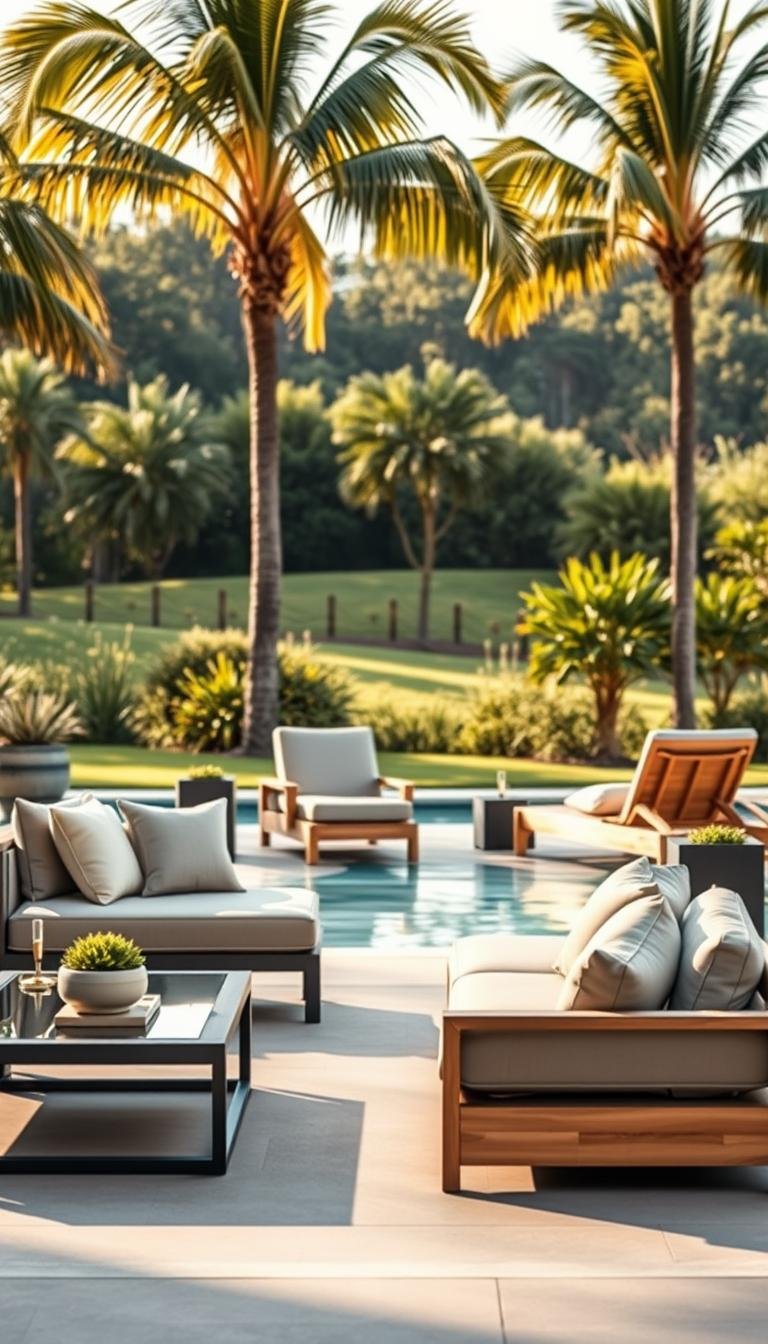
My plan mixes chaise lounge seating with modular sofas and a dining zone. I leave 24–36 inches between pieces for safe traffic flow and group areas for eating, chatting, and relaxing. Small touches—umbrellas, side tables, quick-dry cushions, and layered lighting—make the pool area both useful and cozy.
I use Sunbrella fabrics for cushions and pick finishes that fade gracefully. For ideas and a curated selection, I review reliable sources on poolside options at poolside furniture.
Key Takeaways
- Pick rust- and water-resistant frames like aluminum or poly lumber.
- Choose quick-dry cushions with Sunbrella performance fabrics.
- Plan zones for dining, lounging, and conversation with 24–36 inches clearance.
- Mix chaise, lounge, and modular pieces for flexibility.
- Add shade, side tables, and lighting to boost comfort and ambiance.
Start With My Pool Area’s Real-World Conditions and Goals
Before buying anything, I map the yard to mark sunny patches, windy corners, and splash zones.
I check the pool area several times a day to see where the sun exposure is longest and where gusts funnel across the patio. This quick survey tells me which materials will resist UV, chlorinated air, moisture, and wind.
Sun, chlorinated air, rain, and wind: what my pieces must handle
I pick frames and finishes that fight fading, rust, and mildew. Aluminum, cast aluminum, poly lumber, resin wicker over aluminum, and teak are reliable near pools.
“Outdoor furniture near pools needs to handle UV, chlorinated air, moisture, and wind to stay useful and good-looking.”
Defining how I’ll use the space: lounging, dining, and entertaining zones
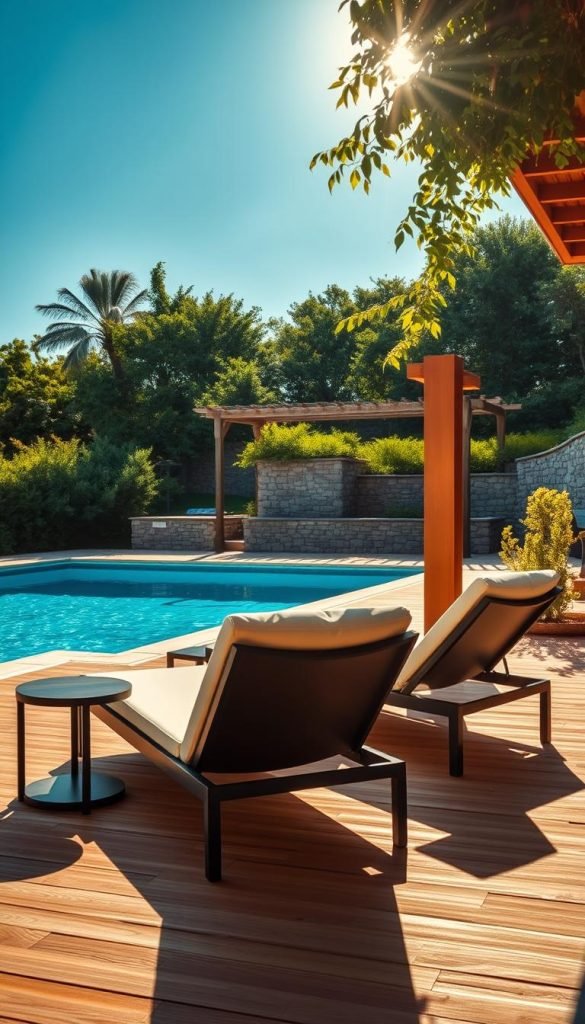
I list my main uses—lounging, dining, and entertaining—so I can place seating and tables without crowding pathways. I stage the dining set away from high-traffic spots and put chaise lounges where the sun lasts longest.
- I leave 24–36 inches between pieces for safe movement near the pool.
- I add shade—umbrellas or a gazebo—so the area stays cool during peak summer.
- I place side tables and storage ottomans where they help, not clutter, the space.
Result: a purposeful layout that matches site realities, keeps the pool area safe, and makes every visit relaxing.
Choose Materials That Look Great and Last in Poolside Conditions
I pick materials that handle sun, splash, and wind so the seating stays useful season after season. A clear material plan prevents frequent repairs and keeps the patio inviting.
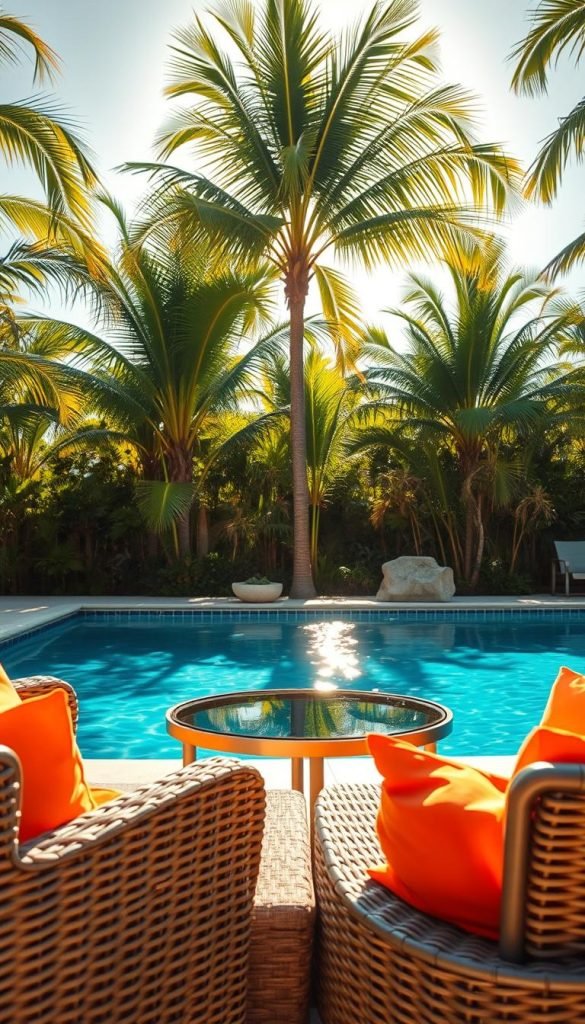
Cast aluminum and aluminum: rust-resistant frames with modern, clean lines
Cast aluminum offers intricate shapes, wind stability, and powder-coated color choices that hold up near pools. It resists rust and gives long-term durability for dining sets and lounge chairs.
Plain aluminum is lighter and ideal for stackable chairs and versatile sets with a crisp, modern look.
Poly lumber and marine‑grade polymer: fade-resistant, low maintenance, eco-friendly
HDPE poly lumber is made from recycled materials and resists cracking, fading, and weather. It needs almost no upkeep and suits Adirondack and casual patio pieces.
Marine‑grade polymer is colorfast and structurally strong, a great zero-maintenance option for heavy-use pool areas.
Resin wicker over aluminum: coastal look with all-weather durability
Woven HDPE wicker over an aluminum subframe gives a textured, coastal look while staying weather-ready. The weave pairs well with UV- and water-resistant fabrics for lasting comfort.
Teak: premium warmth that weathers beautifully with proper care
Teak brings warm color and natural resistance to insects and rot. It develops a silver-gray patina over time; periodic sealing will preserve its original hue.
“Match the most weatherproof pieces to high sun exposure and splash-prone spots for the longest life.”
- Choose frames with powder-coat finishes and quality weave to signal long-term durability.
- Use performance fabrics like Sunbrella for cushions to protect color and comfort near the pool.
- Blend materials—teak accents, aluminum frames, and wicker textures—to unify style and function.
Dial In Cushions, Fabrics, and Color Palettes for Style and Performance
I focus on fabrics and cushions first, since textiles set the tone for both wear and style. Start by prioritizing performance textiles so the seating stays vivid after long sun exposure and splash use.
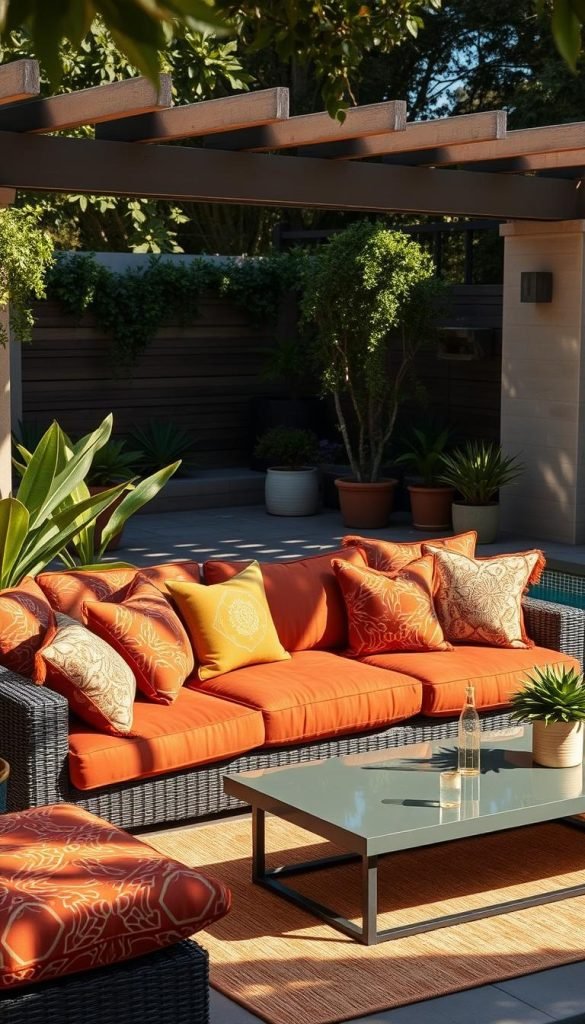
Sunbrella and outdoor performance textiles for UV, mold, and water resistance
Sunbrella and similar performance fabrics deliver fade resistance, water repellency, and easy cleaning. I pick these fabrics for cushions to guard against mold and chlorine while keeping care simple.
Color strategy: dominant, secondary, and accent hues
I follow the 60/30/10 rule: 60% dominant, 30% secondary, 10% accents. This keeps the patio cohesive and ties furniture to the home and landscape.
Comfort cues: quick-dry foam, removable covers, and supportive seat depth
Quick-dry foam and removable covers extend cushion life. I test seat depth and back height for long chats and brief sunbathing so comfort matches how we use the space.
- I test swatches outside to see shifts in natural light across the area.
- I repeat core hues across pieces and swap small accents seasonally to refresh the look.
- I mix textures—clean metal, woven surfaces, soft textiles—to layer style without sacrificing durability.
| Feature | Benefit | Example |
|---|---|---|
| Performance fabrics | Fade, mold, water resistance | Sunbrella cushions |
| Quick-dry foam | Drains fast, dries quickly | Outdoor cushion inserts |
| 60/30/10 palette | Balanced, cohesive look | Neutral base, blue secondary, coral accent |
“Choose textiles first; they define longevity and the visual anchor for the whole area.”
Plan a Functional Layout: Dining, Lounge Chairs, and Conversation Areas
I divide the yard into clear zones so each activity has room to breathe.
Creating clear pathways and spacing
I map the space into dining, lounging, and conversation zones so movement stays easy and safe. I leave 24–36 inches between pieces to protect towels, trays, and kids near the water.
Seating arrangements for sun and socializing
Chaise lounges go in the sunniest spots and angle to capture views. Sectionals or modular sofas form U or circular shapes to invite conversation without blocking circulation.
Bar-height and service-friendly sets
Placing a patio dining table away from busy paths keeps meals orderly. Bar-height or counter sets near the kitchen make serving easier and keep the main pool area uncluttered.
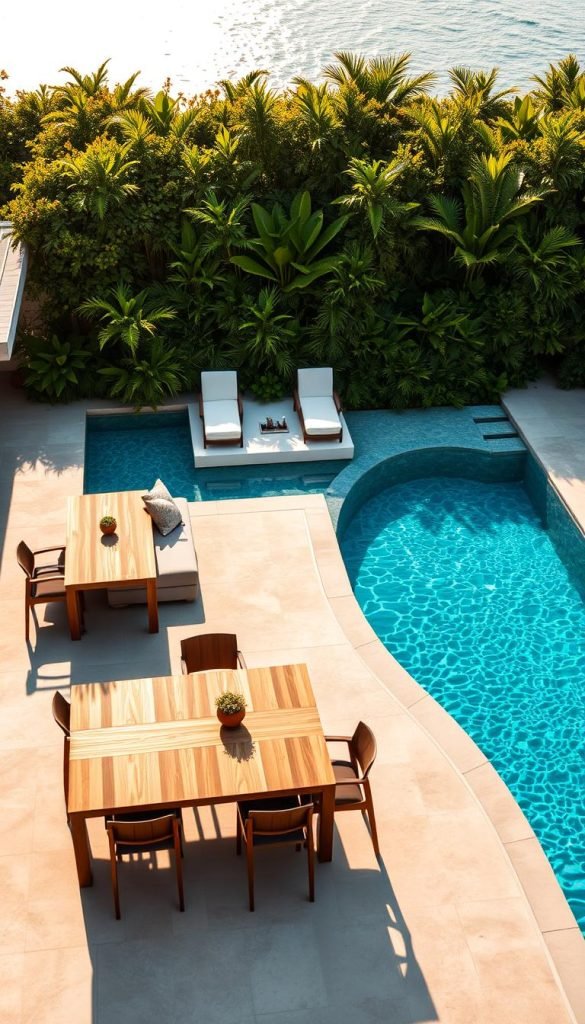
“Keep the pool edge and main paths unobstructed; safety is part of good design.”
- I add side tables near lounges and chairs for drinks and sunscreen.
- I include stackable aluminum chairs and storage ottomans for flexible setups.
- I match materials to function: aluminum where low upkeep matters, cushioned seats where long lounging happens.
| Zone | Recommended pieces | Key tip |
|---|---|---|
| Dining | Dining table, chairs, umbrella | Place away from main path; allow clear service route |
| Conversation | Sectional or modular set, side tables | Arrange in U or circle; keep 24–36 inches between pieces |
| Lounging | Chaise lounges, small side table | Locate in sunny spots; angle for views and shade options |
How Can I Design Poolside Furniture That’s Both Stylish and Durable?
A strong visual thread makes mixed materials feel intentional. A unified fabric or finish connects different frames so the whole patio reads as one cohesive look.
Mix aluminum, wicker, and wood textures, but repeat a single cushion palette to tie the pieces together. This small move gives variety without visual clutter.
Choose modular seating that swaps from intimate sets to larger arrangements. Corner modules, armless chairs, and ottomans let me change the seating for play, sunbathing, or a casual dinner.
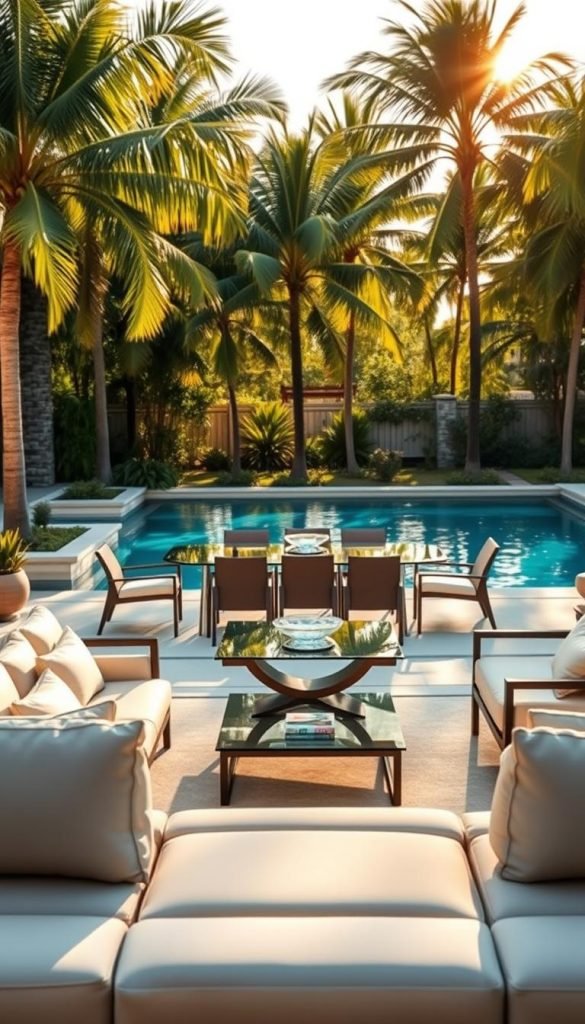
I keep finishes consistent across frames so wicker and aluminum share a unifying tone. That approach makes the set feel curated rather than accidental.
“Start with one dominant element, then layer complementary pieces so the space feels balanced.”
- Pick lightweight frames for easy reconfiguration.
- Scale chairs and sofas to keep sightlines clear toward the pool.
- Add a single statement piece to give the area personality without breaking harmony.
Elevate the Experience with Accessories, Shade, Lighting, and Outdoor Rugs
A few purposeful accessories make my pool area feel finished and easier to enjoy each day. Shade, rugs, and layered lighting are simple moves that boost comfort and safety. I look for weather-resistant options so pieces last through summer use.
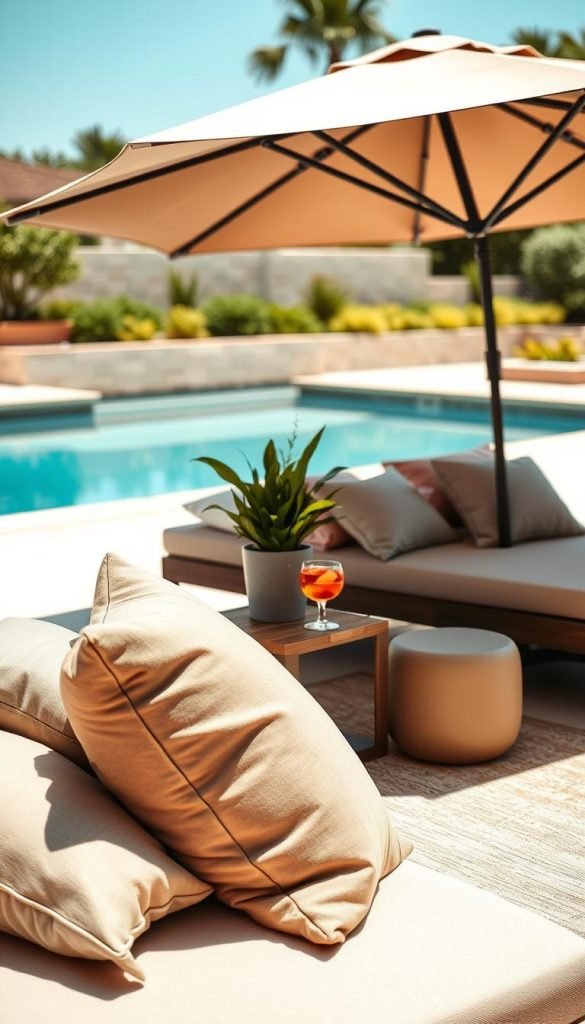
Umbrellas and gazebos for mid-day protection
Umbrellas and a small gazebo keep key seating cool during peak sun. I place them over dining and lounge clusters so guests stay comfortable and my furniture avoids excess fading.
Outdoor rugs to define zones and add color
Outdoor rugs anchor a dining set or a lounge grouping and add non-slip footing near the pool. I choose low-shed weaves in a color that ties back to cushions and throws.
Layered lighting for evening ambiance
I layer string lights for sparkle, lanterns for warm glow, and path lights for safety. This mix of lighting turns the space from daytime utility to a relaxed evening scene.
Side amenities for grab-and-go convenience
- I add side tables and storage ottomans to hold drinks, towels, and toys so clutter stays off the deck.
- Weatherproof hooks by entrances keep towels and bags organized and within reach.
- Planters, wicker accents, and a floating lounger bring privacy, texture, and a playful option on the water.
“Thoughtful elements—shade, rugs, and layered lighting—lift the pool experience without adding heavy upkeep.”
Budget Smart: Invest in Core Pieces, Save on Swappable Accents
I prioritize a few lasting pieces and rotate inexpensive accents to keep the patio fresh each season.
Where I splurge: I put most of my budget into the main dining table, sturdy chairs, and comfortable lounge seating. These pieces see the most use in a busy pool area and their quality affects overall durability and long-term cost.
Where I save: I choose affordable pillows, throws, planters, and seasonal decor. Swappable accents let me refresh the set without a big spend. Outdoor rugs and umbrellas are mid-range buys; they refresh style and offer big comfort gains for less time and money.
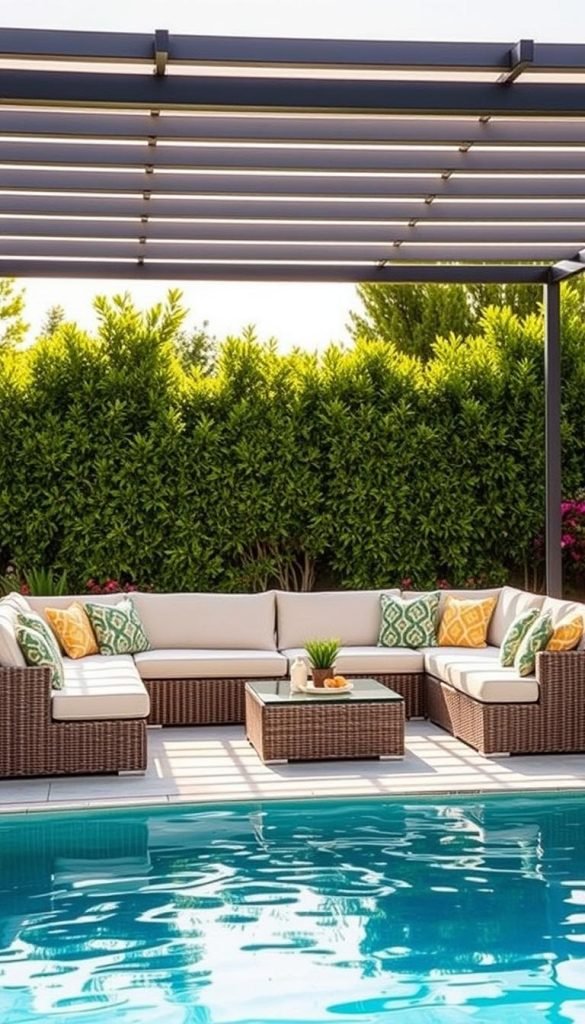
- I select aluminum or poly lumber when I want low maintenance, and teak when I’ll accept periodic sealing for a premium look.
- I weigh total cost of ownership—quality furniture often means fewer replacements over summer seasons.
- I budget for storage to protect accents off-season and keep the area tidy between uses.
“Invest in the pieces that anchor the space; let small accents carry the seasonal style.”
Care, Maintenance, and Off-Season Storage to Extend Lifespan
Tending frames, fabrics, and rugs on a schedule saves time and extends usable life. A few simple steps keep materials looking good through sun, splash, and storms.
Finish care and cover use
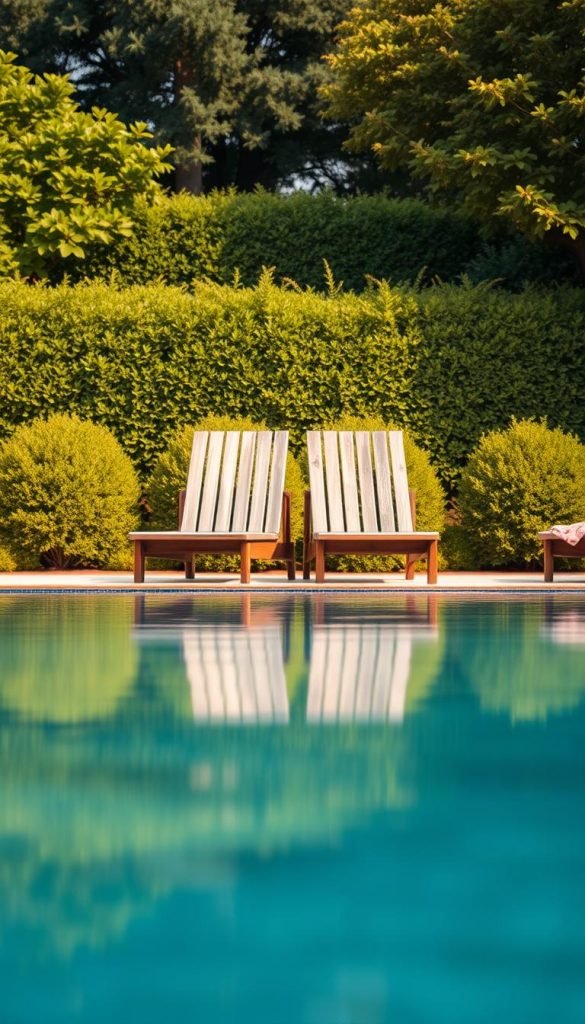
Powder-coated aluminum resists rust; I wash it with mild soap and water and avoid abrasives to protect the finish in any weather. Teak benefits from sealing about every six months to retain its warm tone, or I let it patina naturally.
Cleaning routines for textiles and weaves
I clean resin wicker over aluminum frames with gentle rinses and a soft brush to clear grit from joints. For fabrics, Sunbrella-style covers spot-clean with mild soap; removable covers make this quick.
- I store cushions in a dry space and use breathable covers during storms and off-season to prevent mildew and trapped moisture.
- I sweep and rinse outdoor rugs, let them dry fully, then roll them for storage when bad weather threatens.
- I check fasteners and feet regularly, rotating pieces in extreme sun so wear evens out across the space.
| Material | Routine | Off-season tip |
|---|---|---|
| Aluminum frames | Mild soap rinse monthly | Cover or move under shelter |
| Teak | Seal every 6 months or allow patina | Store cushions; cover wood |
| Resin wicker | Gentle rinse; soft brush for weaves | Keep covered and dry |
| Fabrics & cushions | Spot-clean; dry completely | Store cushions indoors |
“A short monthly routine tailored to local conditions protects durability and keeps pool furniture guest-ready.”
For a full seasonal checklist and commercial tips, see my guide on maintaining commercial poolside furniture.
Conclusion
A clear plan ties material choices, textiles, and spacing into a pool area that works year after year.
This short guide shows how a mix of cast aluminum, poly lumber, resin wicker over aluminum, and teak plus Sunbrella-style fabrics keeps the space resilient and low maintenance. Thoughtful color use (60/30/10) helps every piece read as part of the same look.
I lay out zones with 24–36 inches between pieces for safe flow from the dining spot to loungers by the pool. Accessories—umbrellas, rugs, and layered lighting—add comfort while refreshing the style without big expense.
With simple care routines and smart purchases, I end up with pool furniture that offers long-term durability, flexible options, and a welcoming patio experience for many summers.