How Can I Craft Seasonal Wreaths Using Foraged Materials?
Welcome. I show a simple, natural method to build a lovely wreath from things found near the garden and along trails.
Fall and winter offer the richest picks: branches, pinecones, acorns, colorful leaves, dried flowers, and seed pods. I gather small amounts, protect plants, and stick to areas where collecting is allowed.
My process saves time. I choose a sturdy base—grapevine, wire, or straw—then plan balance and layer textures. Tools I rely on include clippers, floral wire, wire cutters, gloves, and a hot glue gun.
Before assembly, I hydrate cut stems and arrange pieces until the design feels right. I finish with small accents and add a secure loop so the piece hangs well on a door or inside my home.
Key Takeaways
- Gather from the garden in the right season and take only small amounts.
- Pick a strong base and plan a balanced layout before attaching pieces.
- Use basic tools: clippers, wire, glue gun, and gloves to save time.
- Layer greenery, mid-accents, and small top touches for depth.
- Hydrate stems before work and mist after hanging to extend life.
Why I Love Foraged Wreaths for My Front Door Right Now
A single well-made wreath brings instant warmth to my front door and tells a tiny story about where I live. It feels welcoming whether guests stop by or I pass by after a long day.
Making one is low-cost and refreshes my home without fuss. A quick outing becomes useful; a short walk turns into a gentle search for textures and colors.
These wreaths work all year. I pay attention to what’s available—evergreens in winter, grasses in fall—and respect local rules when I gather. I take only small bits so plants stay healthy.
The process is grounding and social. Sometimes friends join after a short forage, and we spend a relaxed hour weaving pieces together. It’s a simple, sustainable way to bring the outside inside and leave a light footprint.

Smart Foraging: Where, What, and How I Gather Materials
I keep collection close to home, which makes each outing short, fun, and responsible. I start in my garden or on a quick walk through neighborhood paths. If I need more, I move on to parks or trails that allow limited gathering.
Ethics matter. I never trespass, I take only small cuttings, and I avoid protected plants. This protects habitats and keeps my foraging low-impact.
- I pack a simple kit: sharp clippers, floral wire or twine, a sturdy bag, and gloves.
- I bring a bottle of water and a bucket to store fresh stems until craft time.
- I rinse finds at home to remove dirt and bugs before they touch the wreath base.
| Location | Common Items | Kit | Best Season |
|---|---|---|---|
| Backyard | branches, vines, moss | clippers, gloves, bag | all year |
| Neighborhood paths | grasses, seed pods, small cones | twine, wire, water | fall to winter |
| Parks & trails | berries on stem, holly, ivy | sturdy bag, bucket | late fall |

How Can I Craft Seasonal Wreaths Using Foraged Materials?
Choose a foundation that fits your finds and style. I pick a base that matches the weight and look I want: grapevine for easy tucking, a wire frame for bundled pieces, or a straw form if I plan to glue on moss and small accents.
Choose or make the base
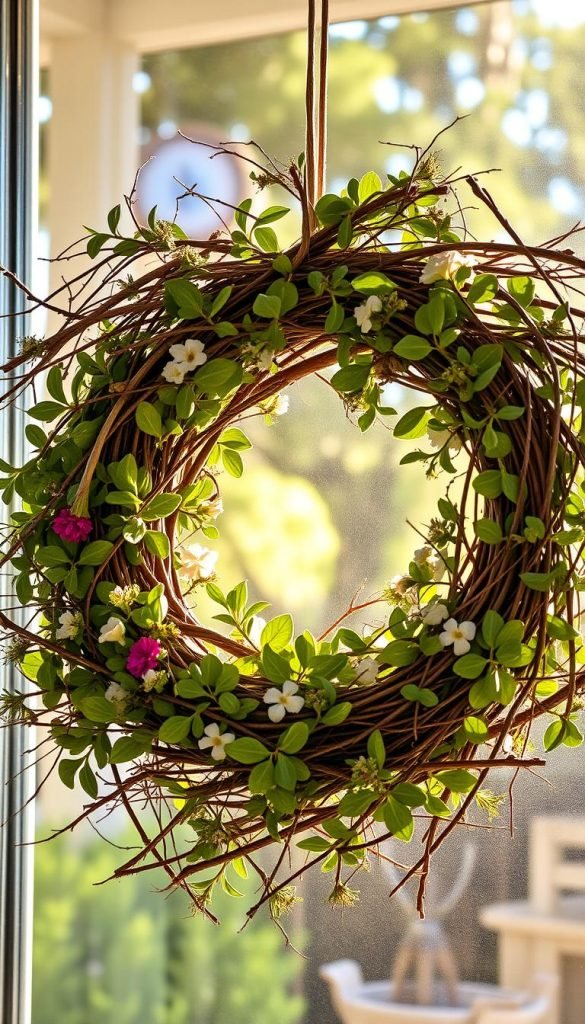
DIY hoops work well when local vines are flexible. I use willow or ivy and loop three to five vines, twisting them until the hoop feels secure. If vines are brittle I run them under water to soften and reduce breakage.
Make a sturdy vine hoop
I tuck the ends where they crisscross and form a natural hanger. Before adding décor I attach a 2-inch loop of floral wire to the back so the final piece hangs true and no stems get crushed.
Plan the pattern and build in layers
I lay out branches, stems, and flowers, balancing color and texture before I commit. My first step is a bottom layer of greenery or bundled grasses. Next I add mid-layer blooms, rose hips, and cones, wiring heavier pieces and using hot glue for small accents.
Finish and hang
I move in one direction around the circle, then break the repeat in a few spots to keep the eye moving. Finally, I trim any awkward stems, tuck light material to soften edges, and add a small ribbon or seed pod group as a focal point. This last step gives the wreath a polished back and front ready to hang.
“One well-made base saves a lot of time later.”
Seasonal Design Ideas I Use All Year
I rotate design ideas through the year so each piece feels fresh and true to the season.
Winter classics
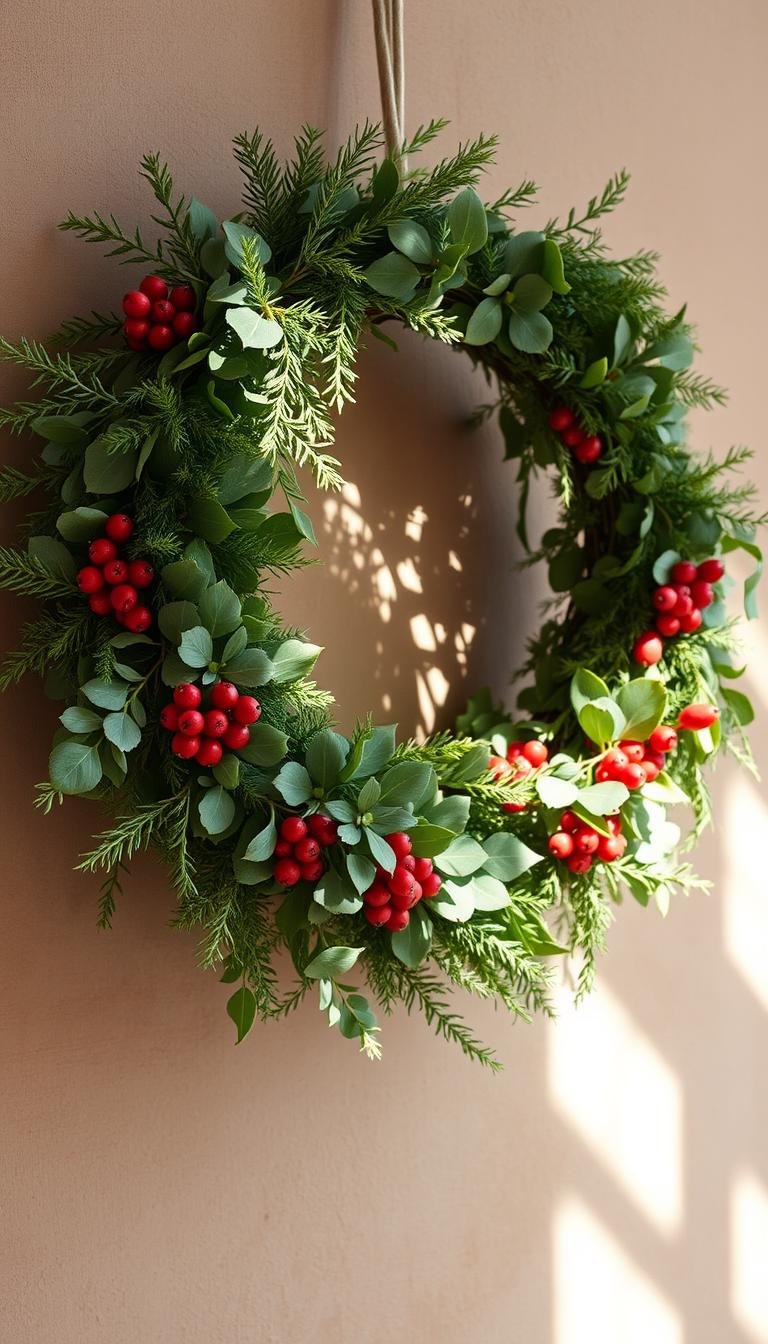
Cedar, pine, fir, spruce, and holly make a rich foundation. I favor a holly-forward look when I want glossy leaves and red accents to anchor a design.
Pinecone spotlight
A full pinecone wreath reads modern-rustic, while scattered cones add texture alongside soft greenery and small flowers.
Kitchen-friendly herbs
Rosemary, sage, bay, and thyme form edible rings I can snip for cooking. They smell great and hold up well on a door.

Scent therapy
Eucalyptus, incense cedar, juniper, and balsam lift the entry with bright, evergreen scent. I tuck sprigs where air moves to boost aroma.
Living textures and fall harvest
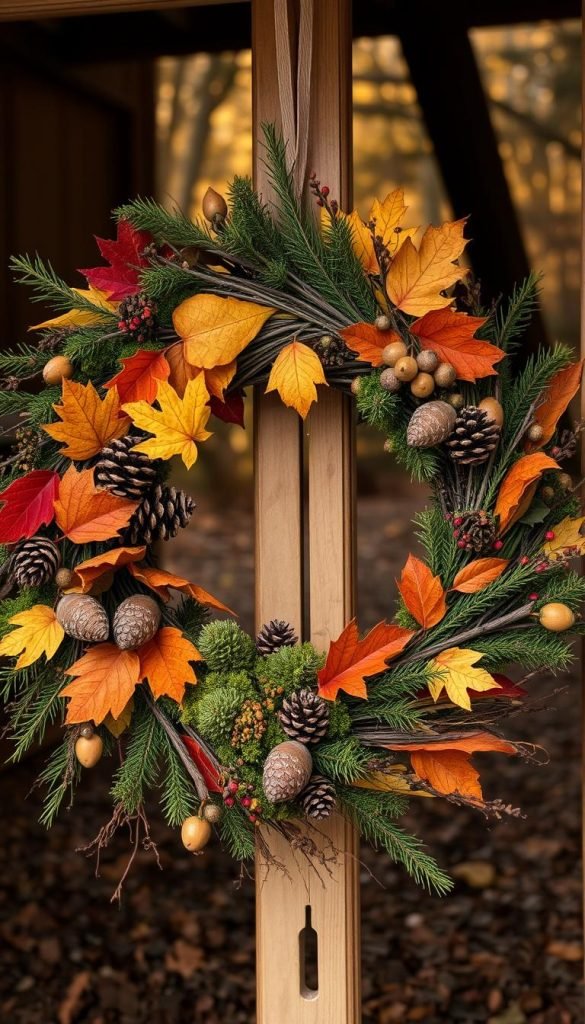
I plant small succulents into a grapevine base for a living wreath. In autumn I cluster hydrangeas, gourds, rose hips, and seed heads for warm color and shape.
“A single anchor of greenery makes seasonal changes easy and fast.”
Tip: I pick what’s abundant in my garden, then swap a few accents so one wreath becomes many looks across the year.
Care, Safety, and Longevity Tips That Save Me Time
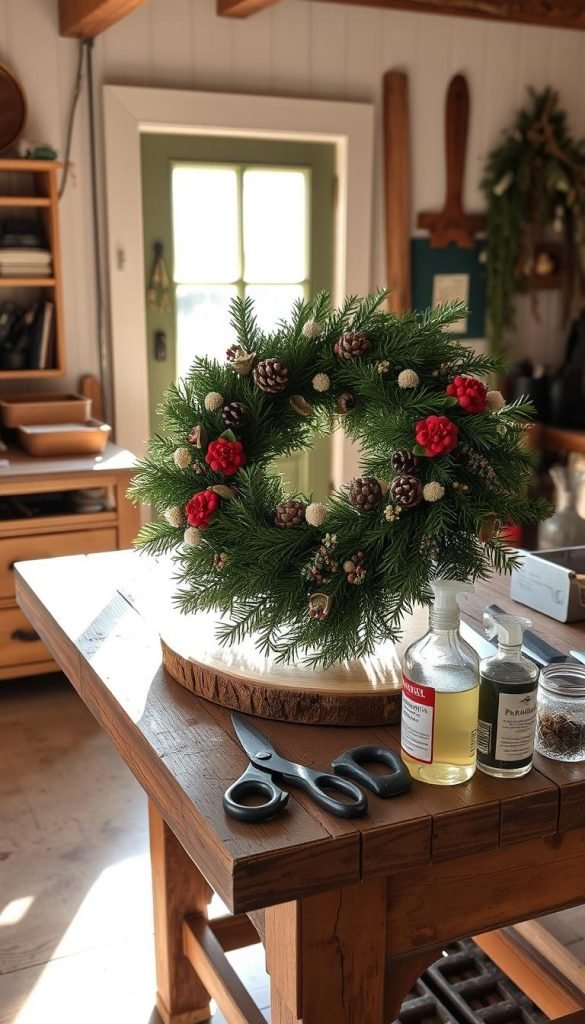
A few simple steps after hanging extend life and save me time. I start by letting cut stems sit in a bucket of water for a few hours before assembly so the greenery stays flexible and holds shape.
Make it last
Hydration matters. After the wreath is up, I mist the back where cut ends are reachable so stems absorb a bit more without dripping on the door. I also prepare two or three extra bundles during assembly for quick touch-ups later.
Climate matters
In cool U.S. regions outdoor wreaths can look great for months. In warm zones or inside the home, pieces dry faster and may need replacing within weeks. I avoid direct sun and heaters to keep the look fresh longer.
Safe, eco-forward crafting
I protect my hands with gloves when I work with prickly holly or rose hips. Spent greenery goes to the compost, and I save ribbon and wire to reuse next season.
“A little prep saves a lot of repair later.”
| Tip | Why it helps | How I do it |
|---|---|---|
| Hydrate stems | Keeps branches flexible and full | Soak cuttings in a bucket for a few hours before assembly |
| Mist the back | Gives cut ends a slow boost of moisture | Spray the wreath back once or twice a week, avoiding runoff on the door |
| Climate choice | Matches lifespan to local conditions | Hang outdoors in cool weather; refresh sprigs sooner indoors or in heat |
| Safe cleanup | Low waste and safer handling | Wear gloves, compost greens, reuse ribbon and wire |
For a short checklist and a useful reference on responsible gathering, see this detailed foraging guide.
Troubleshooting and Pro Touches for a Polished Look
A few quick adjustments will rescue a limp wreath and make it sing. Small repairs often keep a piece looking fresh without a full redo. I focus on simple moves that give the most return.
If stems feel brittle
Revive them: I soak brittle stems in water for a few hours to restore flexibility. Then I bundle weak cuts with floral wire so they hold when tied to the base.
If the design reads flat
Add depth quickly. I vary greenery types and angle branches in different directions. Mixing textures and heights changes the whole look in one step.
- I edit the base by removing a bulky branch and swapping lighter elements to restore flow.
- I group small accents in odd numbers so the eye sees deliberate focal points.
- I tuck ends deeply and cross-wire heavy pieces to stop droop and keep balance.
- I attach a narrow ribbon off-center for a subtle lift that doesn’t fight the natural elements.
| Issue | Quick Fix | Why it helps |
|---|---|---|
| Brittle stems | Soak and bundle with floral wire | Restores flexibility and adds structure |
| Flat look | Mix greens and angle branches | Creates movement and depth |
| Heavy droop | Cross-wire to the frame | Prevents sag and keeps shape |
| Loose accents | Hot glue or tuck deeply | Keeps small items secure after weather |
“A light shake and a stand-back review reveal the tiny fixes that make a wreath feel finished.”
Conclusion
One well-made piece shows how small branches and a sturdy base turn gathered stems into lasting decor.
Try making a wreath this year with what’s nearby—your garden, a park, or a short trail walk offer plenty of material. Start by choosing or building a strong base, plan one tidy cluster of greenery, then add a few flowers or berries for contrast.
Before you hang the piece on the front door, hydrate cut stems and add a secure loop. Mist the back now and then to extend life and keep the look fresh at home.
Choose sustainable options: forage lightly, compost spent greens, and save wire and ribbon to reuse. Return to this post when you need a quick step-by-step refresher and keep trying willow curves, holly shine, or a touch of pine as your style grows.