How Do I Layer Rugs Effectively in a High-Traffic Area?
I’ll walk you through simple, practical tips that make your living space feel cohesive and hold up under daily traffic. My goal is to show a step-by-step way to anchor seating, add depth, and keep the look polished without costing a fortune.
Start by choosing a sturdy base rug that fits under front furniture legs, then add a smaller top piece to bring color and pattern. A small vintage turkish find can become the focal point when placed over a neutral bottom rug.
Rug layering helps define zones in an open room, softens sound, and adds texture. I’ll also cover safety measures I use, like grippy pads and low-profile stacks, so people move freely without trips.
Key Takeaways
- Begin with a base rug large enough to anchor furniture.
- Add a smaller accent on top for pattern and color contrast.
- Use a rug pad and secure corners to prevent hazards.
- Choose darker or washable weaves where spills happen often.
- Let proportion guide placement so the design reads as intentional.
Why layering rugs works in busy spaces
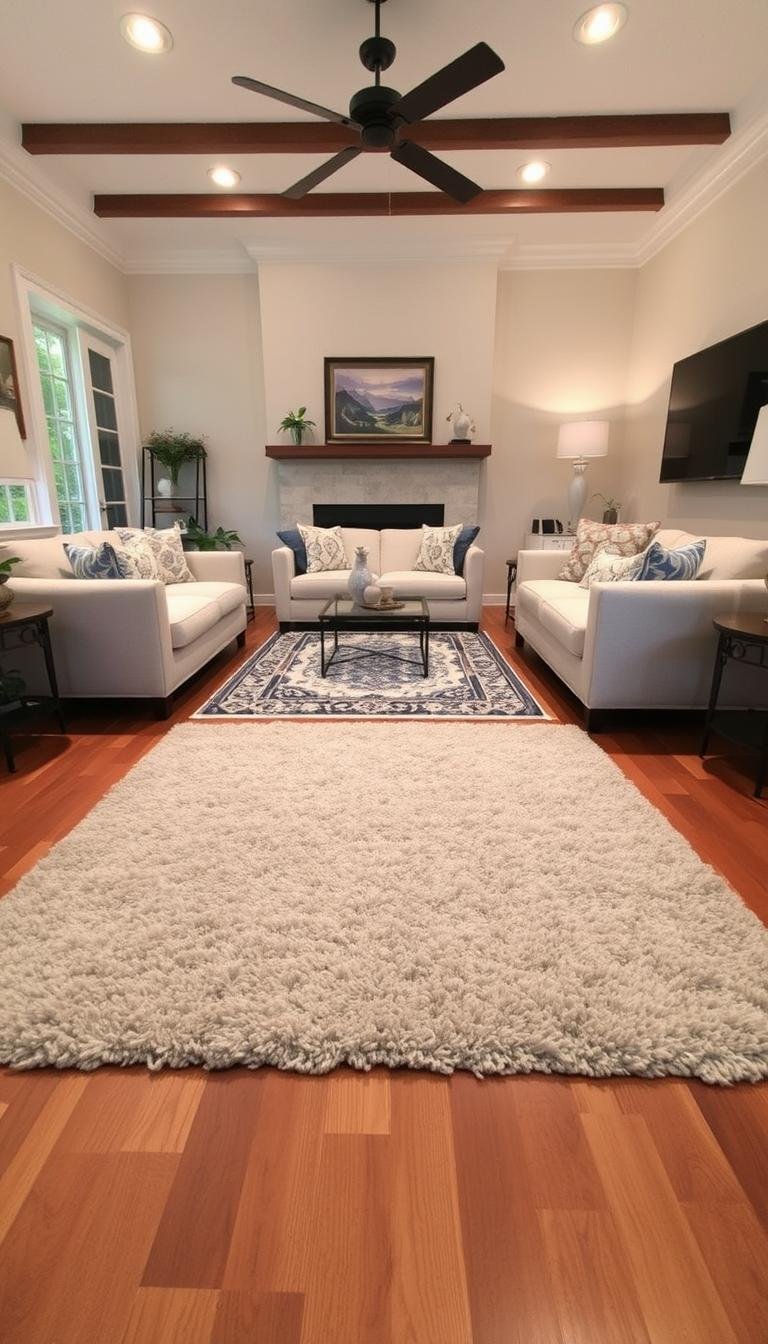
Anchoring zones with stacked rugs makes an open living room feel intentional and warm. I use a neutral base to ground seating and then add a smaller, patterned piece to bring depth and color.
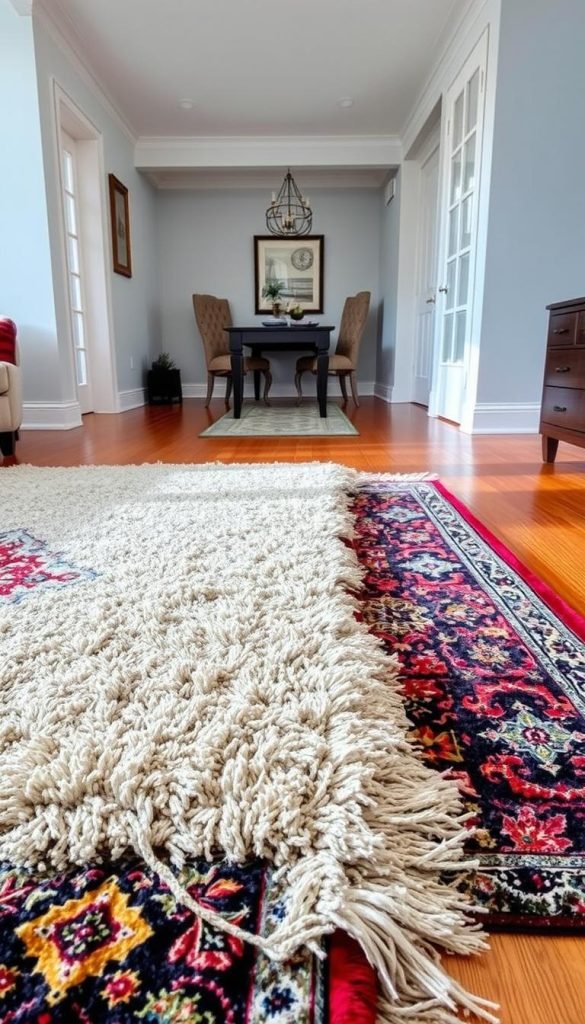
One busy pattern, one calm foundation keeps the look tidy. I pick a subdued jute or flatweave base and top it with an accent that carries the color note. That way the design reads as one cohesive statement.
- I define circulation by angling or slightly overlapping the two rugs to suggest flow without blocking traffic.
- Painter’s tape helps me preview proportions before buying; it saves time and returns.
- Mix textures—flatweave under soft wool—to add warmth and cushion underfoot.
“A calm base and a playful top make any room feel layered and livable.”
Result: comfort, sound absorption, and a polished look that guides movement while keeping the style practical.
Pick a durable base rug by room and traffic pattern
Choose the toughest rug first: your base should handle daily wear before you add personality on top. I pick the rug base based on real use so the top layer can be decorative without extra worry.

Entryway and mudroom
Stain resistance matters most. For the entryway I use polypropylene or woven vinyl because they clean fast after heavy ingress. Darker wool can work but needs stricter care.
Hallway runner
Hallways need contract-grade nylon or poly silk for long life. I always add a hugging rug pad and corner control so runners stay flat under steady traffic.
Living and family rooms
For living spaces I favor tight-weave wool or synthetic sisal. These options balance comfort, cleanability, and resilience under sofas and chairs.
Kitchen and bath
Backed polypropylene or cushioned woven vinyl wins for moisture-prone zones. Woven vinyl cleans with a hose and resists mildew better than unbacked weaves.
- Match size so the base creates the anchor; then use an area rug topper, like a small vintage turkish, without crowding.
- Material choice is about performance and feel—pick for traffic, not just looks.
“Pick the strongest base first, then add character with the second layer.”
How Do I Layer Rugs Effectively in a High-Traffic Area?
Pick a roomy base that tucks under sofa front legs so the seating group reads as one unit.
Start with scale, then add personality. The bottom piece should be much larger so it dominates while the top acts as an accent. That keeps the conversation area anchored and the path clear.
Start with a large base rug that anchors furniture legs
I always set a base rug that extends under front furniture legs. This makes the zone feel intentional and helps traffic flow without trips.
Add a smaller rug on top for color, patterns, or a vintage Turkish moment
A smaller rug placed centered, offset, or slightly angled becomes the focal point. I often let a vintage turkish occupy the rug top so its pattern reads like art.
Play with shapes and angles to define zones without disrupting flow
Mix one rectangular base with a round or wavy topper to add interest. Overlap or angle the layers to show separation while keeping sightlines open.
Use complementary colors and one “busy” pattern to avoid visual clutter
Keep one piece bold and the other calm. Tie them with one repeated color across pillows or art so the layered rugs feel like part of the room design.

- Anchor: base rug under front legs.
- Accent: smaller rug for color and patterns.
- Shape: try rectangular + round for contrast.
- Safety: keep shag as a small accent away from paths.
| Layer role | Best material | Placement tip |
|---|---|---|
| Base rug | Flatweave or sisal | Extend under front legs; visible border |
| Rug top | Wool or vintage turkish | Center or offset; slight overlap |
| Shag accent | High-pile small piece | Keep out of main walkways |
“One bold motif plus one quiet partner keeps the look composed.”
Textures that stand up to foot traffic and look great layered
Choose base fibers that take the wear—natural weaves like sisal or jute shine under daily use.

Start practical, then add personality. I use a rugged sisal or tight jute as the base rug because it handles wear and gives organic texture that pairs with nearly any topper.
Patterned flatweave or wool on top
A compact wool rug or patterned flatweave makes an elegant rug top. One busy pattern plus one subdued base keeps the look calm and high-style.
Use shag sparingly
High-pile pieces are lovely as accents, but I keep shag small and off main paths to avoid trips and snags.
Different textures, one palette
I mix coarse underfoot with softer surfaces and tie layers through shared colors. Texture creates depth without chaos, and a single hero pattern keeps spaces feeling larger.
- Base: sisal or jute for durability.
- Top: patterned flatweave or wool rug for style.
- Accent: small shag for touch and contrast.
“Natural bases age gracefully; swap the rug top seasonally for fresh color and life.”
| Layer role | Best fiber | Tip |
|---|---|---|
| Base rug | Sisal / jute | Tough and low-maintenance |
| Rug top | Wool / flatweave | Patterned focal point |
| Accent | High-pile (small) | Keep off main walkways |
Get the size and proportions right for your room
Get sizing right and the whole room will feel composed rather than crowded. Start by picturing the border the base creates; that visible edge keeps the composition intentional.
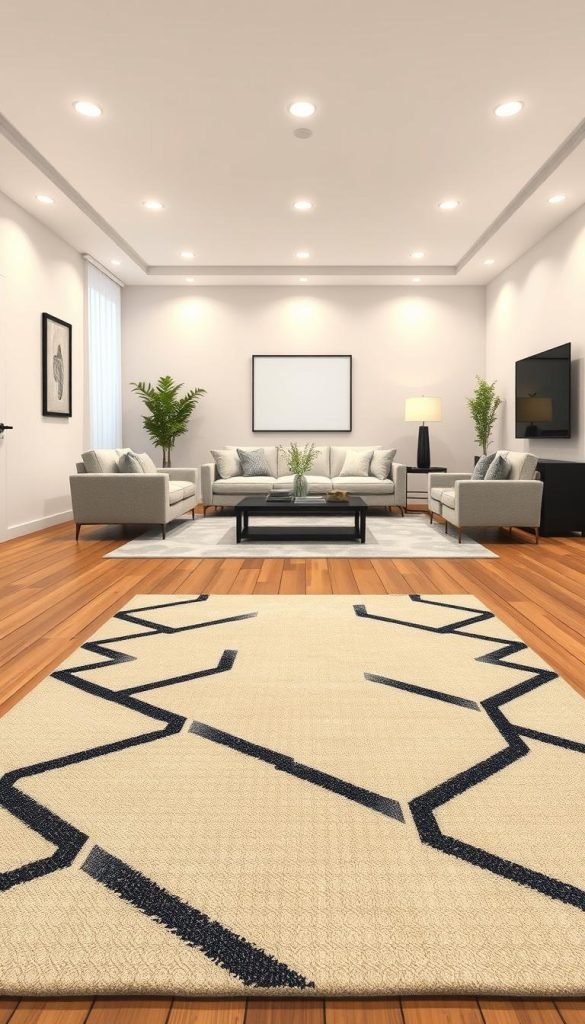
Bottom rug one to two sizes larger for a visible border
I size the base rug one to two sizes larger than the accent so the border reads as intentional. That margin gives the top piece room to breathe and the space to feel balanced.
Front legs rule and dining clearance
In living rooms, the base should tuck under front furniture feet so seating feels anchored and traffic stays predictable.
Under dining tables, make sure chairs slide fully on the area rug to avoid catches and noisy scrapes.
- Mock it up: use painter’s tape to outline both base rug and accent before buying.
- Keep the accent small enough to showcase the rug base border while still reading as purposeful.
- Align or rotate: set edges with architecture for calm order or nudge the top for playful energy.
- Check clearances: doors and furniture feet must move flat so the stack stays safe underfoot.
“A clear border and correct scale make layered rugs look planned, not patched together.”
| Rule | Why it matters | Quick tip |
|---|---|---|
| Base larger by 1–2 sizes | Creates a visible border and sense of proportion | Measure then tape outline |
| Front legs on base | Anchors seating and defines zones | Fit under sofa, chairs, and coffee table fronts |
| Dining clearance | Prevents chair catches and wear | Ensure chairs remain fully on the area rug |
Safety, maintenance, and longevity in high-traffic areas
Smart pads and minimal bulk keep layered pieces working together rather than fighting underfoot. I start with measures that prevent movement and reduce trip hazards. This approach preserves the look and extends life.

Rug pads, corner control, and avoiding bulky stacks
Use a grippy pad that hugs the floor so both rugs stay anchored and don’t creep with daily traffic. I secure corners with curl stops and pick low-profile borders to cut trip risks.
Avoid thick stacks that bunch under furniture feet. Bulk can bubble and make an uneven surface that feels unsafe. Never layer on stairs or in tight corridors where motion must stay clear.
Cleaning smarter for real life
I pick darker colors or washable weaves for dining, entry, or play areas because they hide marks and wash well. For pets and kids, I prefer solution-dyed synthetics or stain-resistant sisal and add stain protection where it helps.
- Tip: rotate the top layer seasonally to even wear and refresh the space.
- Tip: spot clean spills fast to keep the layered look crisp.
“Match maintenance to lifestyle: choose fibers and pads that fit your real routine.”
Materials that make sense: wool, sisal, synthetics, and woven vinyl
Pick materials that balance toughness and touch; this keeps the stack practical and pleasant.

Tight, flat construction matters most for busy rooms. A tight flat-woven wool rug resists wear and cleans well. I lean toward darker tones when spills are likely so stains hide longer.
Sisal and SISALplus offer a natural look with real backbone. SISALplus brings stain resistance and contract ratings suitable for steady traffic. Jute can work, but sisal wins for durability.
Solution-dyed synthetics—polypropylene, nylon, recycled PET, poly silk—deliver colorfast, easy-care performance. Look for contract-grade labels like SynSisal® or Terasa; Terasa handles indoor/outdoor use and resists mold and mildew.
Woven vinyl makes sense where moisture and mess rule. It is antimicrobial, slip resistant, and rinses off. Cushioned styles such as Wave or Beaufort add comfort for standing tasks.
- I choose a rugged base for longevity and a softer top for touch.
- Match designs and colors across fibers so patterns read true.
- Pick maintenance-friendly options that fit your home routine.
“Pair a practical base with a softer accent to get both performance and pleasure.”
| Material | Strengths | Best use |
|---|---|---|
| Wool (flat-woven) | Durable, refined hand; hides stains in dark tones | Living area, seating zones |
| Sisal / SISALplus | Natural look, stain-resistant, contract-grade | High-traffic corridors, entry |
| Solution-dyed synthetics | Colorfast, easy-clean, UV resistant | Dining, play areas, outdoor-adjacent spaces |
| Woven vinyl | Antimicrobial, hose-cleanable, slip resistant | Kitchens, mudrooms, utility zones |
Conclusion
A clear border, the right materials, and a single busy motif make layering repeatable and smart.
Start with a tough base rug that fits under front legs, then add a smaller rug as the rug top for color or pattern. Keep one piece bold and the other calm so the look reads as intentional.
Anchor seating in the living room and let dining chairs sit fully on the area rug. Use a snug pad, secure corners, and avoid bulky stacks to preserve safety and longevity.
Choose fibers to match wear: flat-woven wool, stain-resistant sisal, contract-grade synthetics, or woven vinyl. Place a vintage turkish on top when you want character without sacrificing performance.
Final tip: test outlines with tape, tweak angles, and repeat this simple order each time to make your rooms feel styled and sturdy.