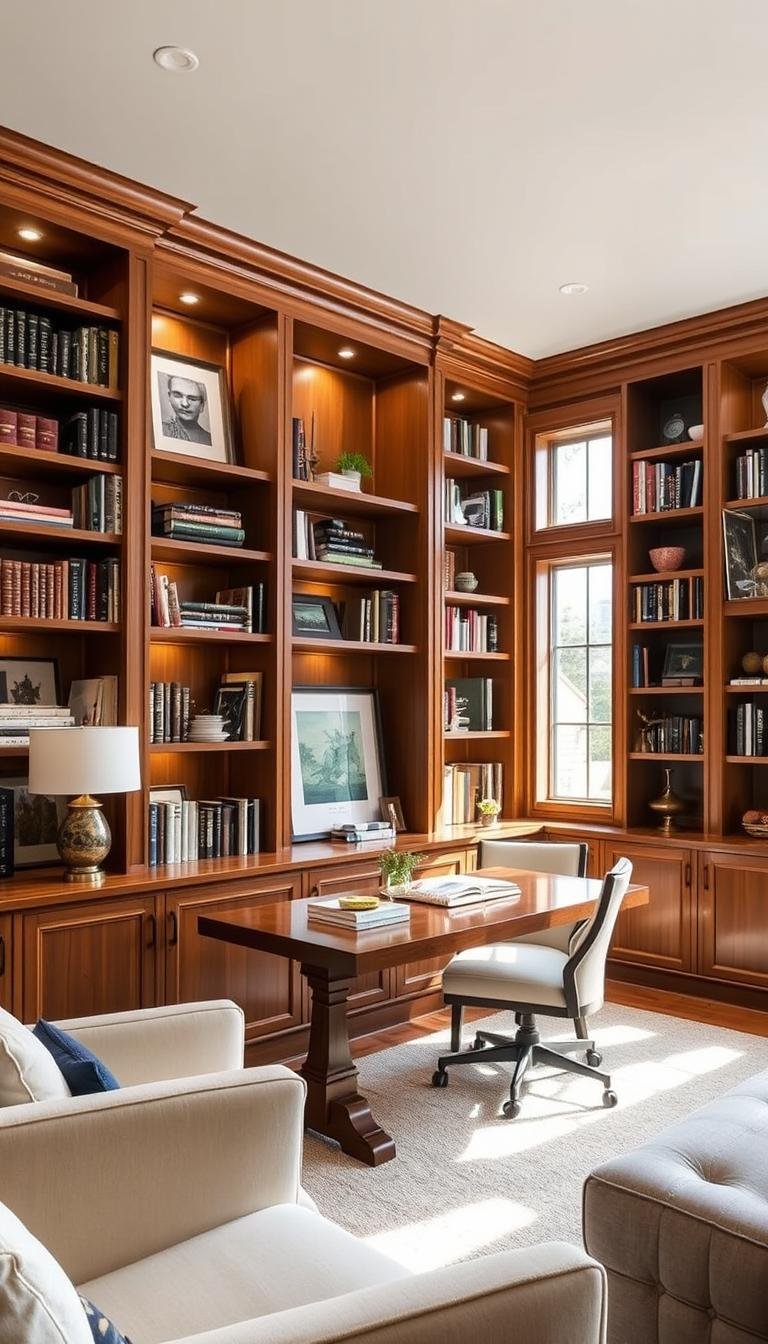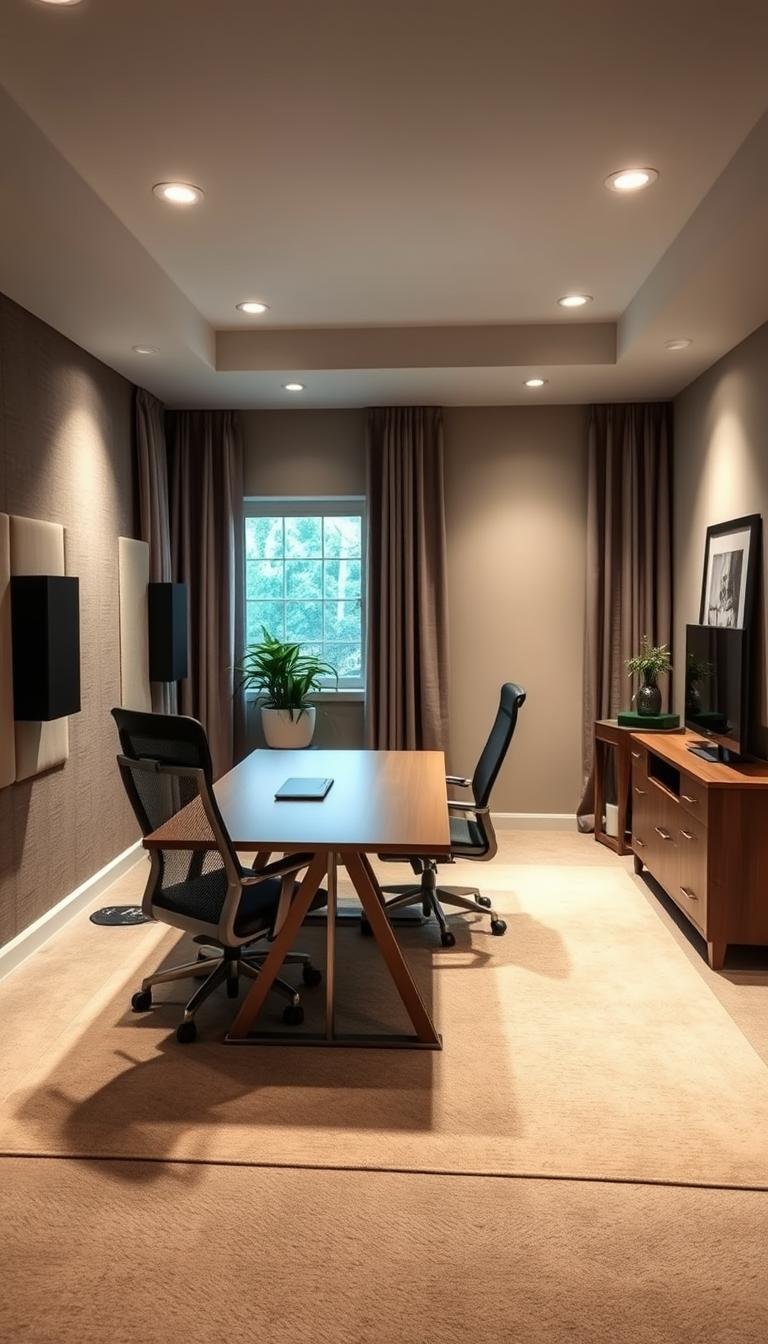
What Are the Easiest Ways to Soundproof a Home Office for Better Focus?
I set up my home office so I can work without constant interruptions. Background noise raises stress and drops task accuracy, according to research in the Journal of Environmental Psychology. NIOSH warns that long exposure above 70 dB can erode focus and clarity over time.
I treat my workspace as an acoustic system, not just a room. That helps me target sound paths through walls, doors, windows, and floors without wasting money on useless products.
My plan starts with fast wins I can do in a day — move furniture, add soft finishes, seal gaps — then layer in better materials only where needed. I focus on reducing distractions so calls stay clear and my productivity improves.
Key Takeaways
- Quick tweaks often cut most distracting noise fast.
- Seal leaks and use soft surfaces before buying panels.
- Measure noise sources so fixes match the problem.
- Think of the room as a system to avoid wasted purchases.
- Goal is balanced quiet for clearer calls and deeper focus.
Why a quiet home workspace matters right now
Keeping calm while working at home matters because steady background sound raises stress and reduces task accuracy.
Research in the Journal of Environmental Psychology links constant noise with more mistakes on complex tasks. NIOSH recommends steady exposure stay below 70 dB to protect focus and mental clarity.

I see this daily: family in adjacent rooms, pets, and traffic make small rooms feel louder. In a survey of 1,552 people, 73.4% had worked from home and top distractions were family (46.6%) and outside sources like cars (23.7%), neighbors (21.5%), and construction (19.6%).
- Design matters: most homes weren’t built for acoustic control, so a plan for the office pays off.
- Target first: treat the biggest noise paths — thin walls, windows, doors — before covering every surface.
- Keep it reversible: renter-friendly steps preserve comfort and productivity without permanent changes.
A calmer environment helps me switch tasks faster, recover concentration after interruptions, and keep energy up through the afternoon. This guide shows how to get measurable improvements with minimal fuss and the right materials in the right places.
Fast, low-cost wins I use to reduce noise today
Small changes made in one afternoon cut most distractions and let me work with less interruption. I start with moves that are reversible and cheap, so I can test what actually helps my focus.
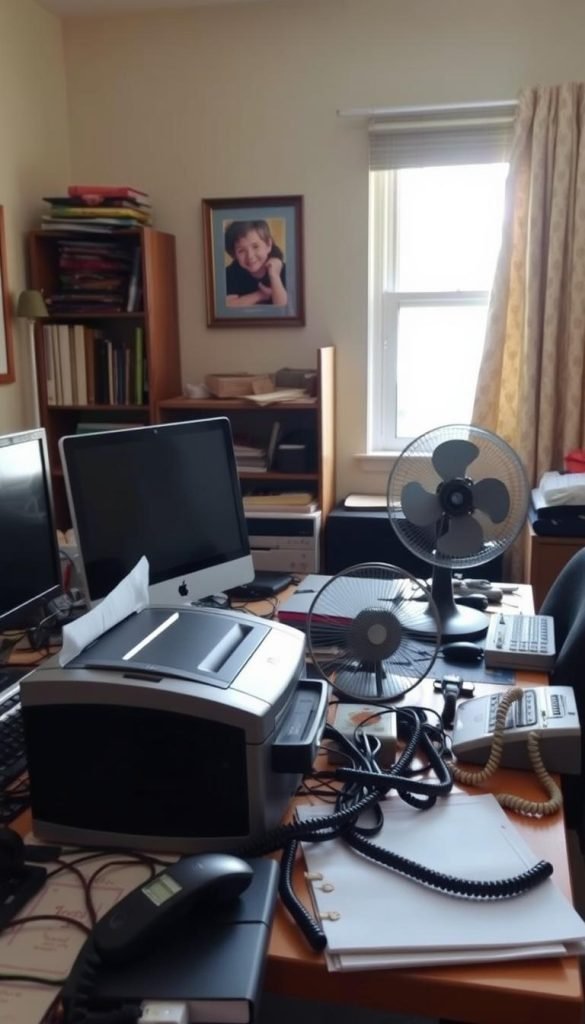
Rearrange furniture for extra mass
I push heavy furniture like bookcases and cabinets tight against shared walls. That added mass blocks voices and TV bleed far better than empty drywall. Books and dense storage make a big difference fast.
Soften the floor and surfaces
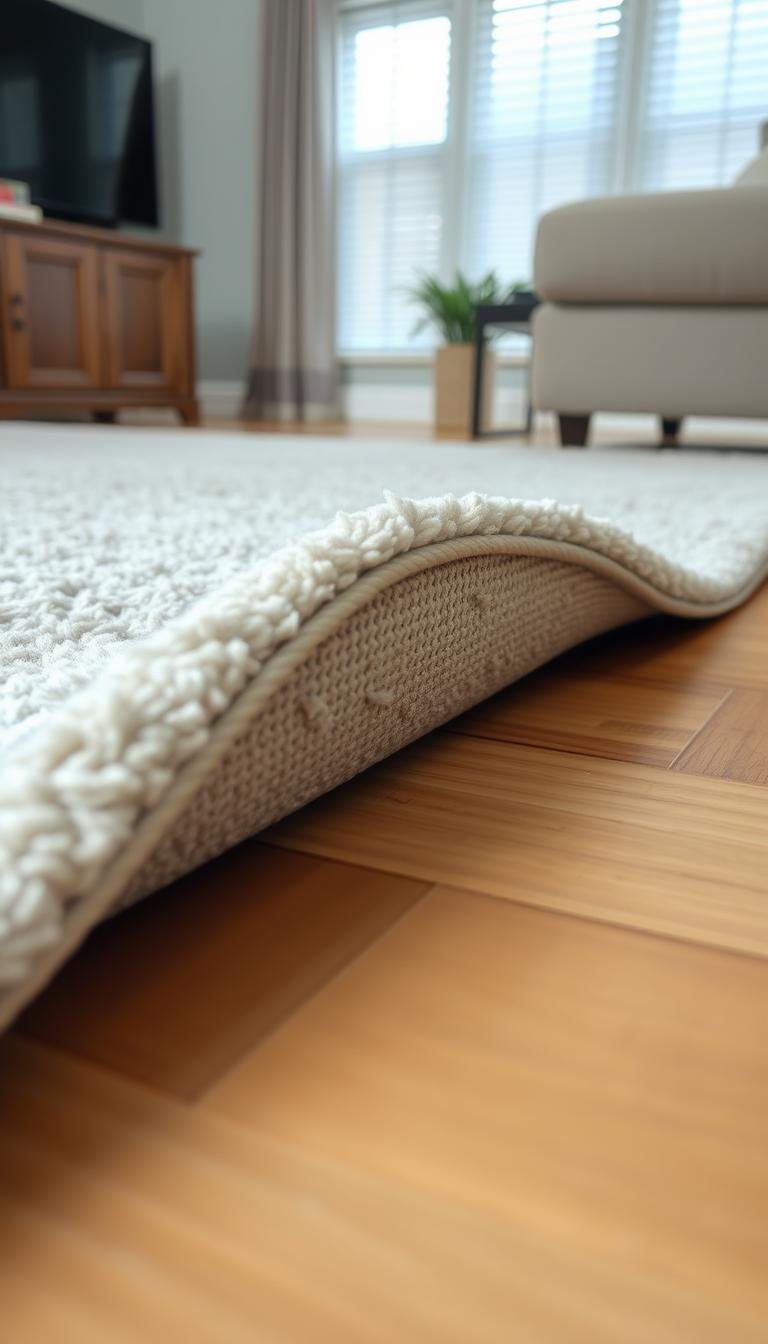
I lay down a thick rug and add cushions to tame reflections. Soft textiles on the floor and around the desk reduce sharp clicks and echoes in the space.
Move the desk and block common paths
I move my desk away from thin or exterior walls and windows, or float it toward the center of the room. Even a few feet of distance cuts incoming sound noticeably.
Seal gaps at doors and windows
I add a simple door sweep and weatherstripping around the frame. These low-cost soundproofing options close air gaps that let most stray noise through.
- I hang dense curtains or a quilt where reflections are worst.
- I try removable adhesive foam on hollow doors at ear height.
- I test masking sound at moderate volume when masking helps, then adjust.
Day-to-day approach: prioritize furniture placement, rugs, and a door sweep before buying heavier panels or vinyl. These quick wins often reduce noise enough for usable, calmer work sessions.
Seal the leaks that sabotage sound control
My first move is a room walk to find tiny leaks that cause big noise problems. Professionals say small cracks at frames, outlets, and vents are major weak points. Stellrr reports air leaks can cut sound isolation by over 50%.
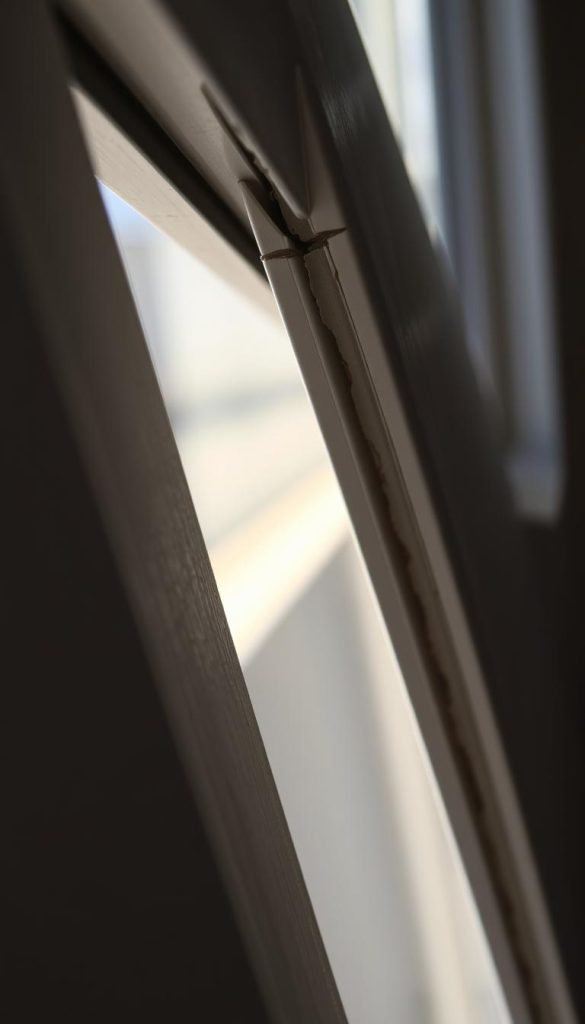
Upgrade doors: solid-core slabs, perimeter seals, and door sweeps
I swap hollow slabs for solid-core door panels where I can. Then I add stick-on perimeter seals and a door sweep. The gap under and around a door behaves like an open window for sound.
Tighten windows: acoustic curtains, frame seals, and gap fill
I weatherstrip sashes and caulk frame gaps first. Next I hang acoustic curtains on the noisiest side to cut both infiltration and reflections.
Fix overlooked gaps: outlets, vents, baseboards, and light fixtures
I check outlets and use foam pads or putty behind covers. I seal rim gaps along trim and around vents so tiny cracks don’t add up into major sound transmission.
| Upgrade | What I do | Expected gain |
|---|---|---|
| Door | Solid-core + seals + sweep | Large drop in corridor and voice noise |
| Window | Weatherstrip + curtains | Reduced external noise and reflections |
| Junctions | Outlet putty, trim caulk | Lowered sound transmission through walls |
- I treat shared walls near hallways first.
- I test after each fix by listening from adjacent areas.
- I choose reversible seals when I rent, then add MLV or denser materials only if needed.
I keep changes focused and precise; small, well-sealed areas beat extra materials that don’t address real leaks. In my home, that approach gives the biggest quiet gains fast.
Pick the right materials to absorb sound or block transmission
Choosing the right mix of materials makes the biggest difference between echo and calm. I separate two goals: tame reflections inside the room and stop unwanted transmission through walls.
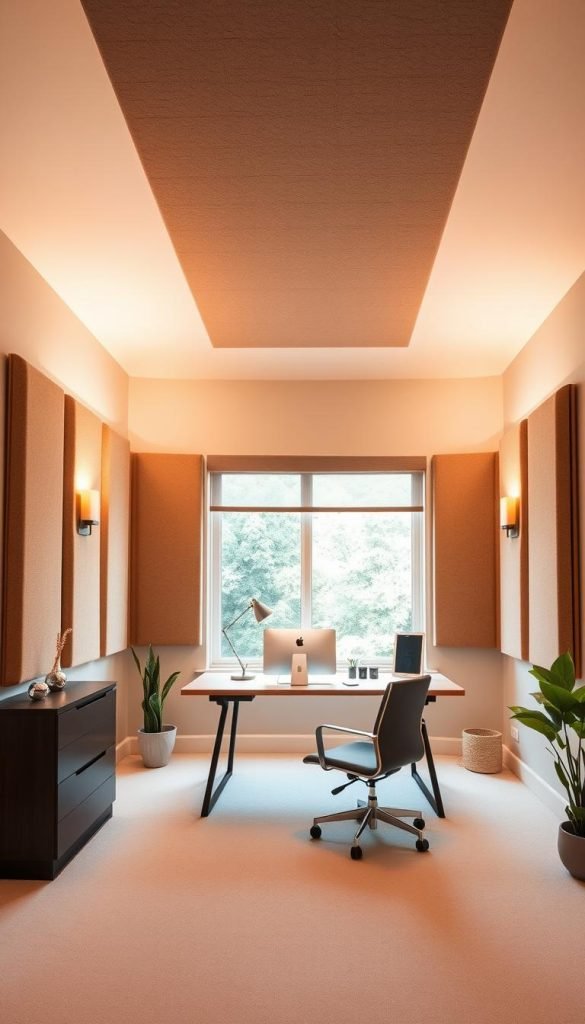
Absorption essentials: foam and fabric-wrapped panels
Acoustic panels and foam trim reverberation and improve call clarity. I place fabric-wrapped panels at ear height and on first-reflection points for voice.
I use foam where budget or coverage matters. It helps absorb sound waves but will not block noise coming through a wall.
Blocking the noise: dense layers and insulation
Mass-loaded vinyl and mineral wool work when I need real blocking. Layered drywall, a decoupled air gap, and good insulation raise STC and cut transmission.
Ceilings, floors, and final balance
Ceiling clouds tame flutter echo. A thick rug and underlay reduce footfall and keyboard clicks on the floor.
- I keep furniture as functional absorbers—bookshelves and fabric soften reflections.
- I check STC ratings before I buy products so I spend where it helps most.
- I test each step so my home office stays balanced, not over-dead.
Pro-level quiet without a remodel
When small fixes stop working, I look at modular privacy booths that give reliable quiet fast. A well-built pod combines dense panels, internal insulation, and sealed doors so it blocks and absorbs in one unit. Pros use these when thin walls or shared rooms make piecemeal treatments ineffective.
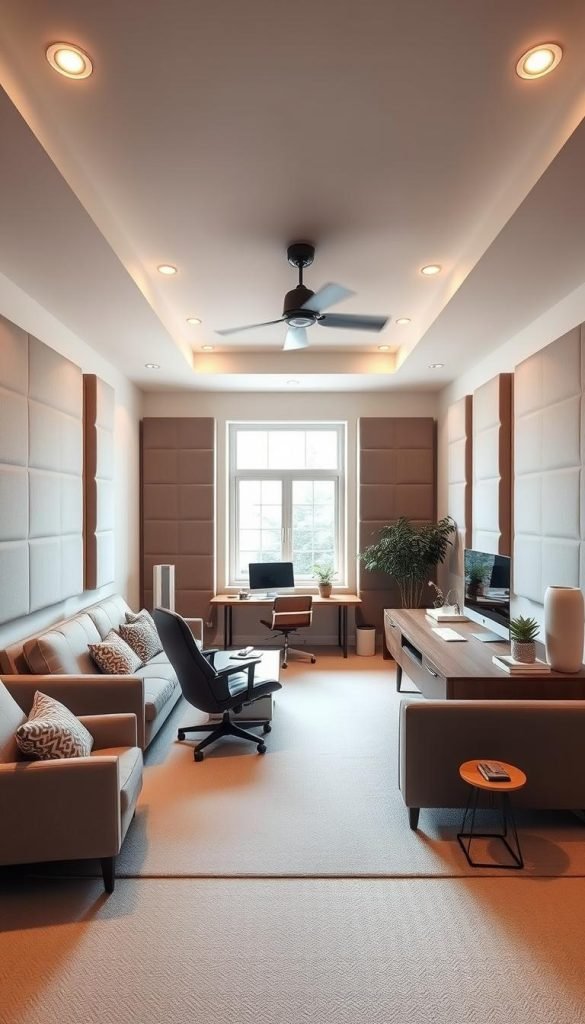
Why a privacy pod can outperform piecemeal fixes
Pods offer measurable reductions. Studies show enclosed units cut perceived distractions by about 60%, and modular booths often reduce complaints by 50%+. Look for published sound reduction figures—25–35 dB is a useful target for clear calls and deep focus.
Measure baseline levels and choose wisely
I use a decibel meter app to log daytime and evening readings. NIOSH recommends keeping steady exposure below 70 dB. If I’m consistently above that, a sealed booth or heavier materials is worth the cost.
“A self-contained pod can outperform piles of panels when space and rental rules limit permanent changes.”
- I weigh products and options for quiet ventilation and lighting.
- I still seal major room leaks so the rest of my workspace stays usable when I’m outside the pod.
- I use the pod for calls, recordings, and focused work.
What Are the Easiest Ways to Soundproof a Home Office for Better Focus?
I map noise sources so fixes match the real problem instead of guessing at solutions. I listen from adjacent rooms and outside, then pick actions that cut the loudest noises first.
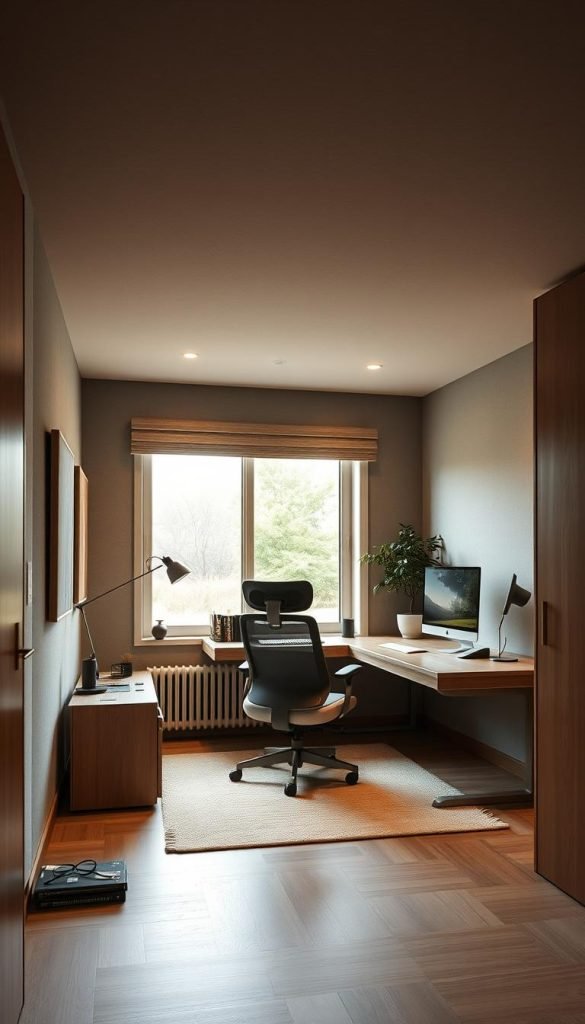
If noises come from inside my house
I set expectations with family or roommates and move my desk farther from traffic within the home. Portable partitions and room dividers give instant separation without remodeling.
Acoustic panels at conversation height tame echoes. Household quiet hours make the plan realistic and repeatable.
If the source is outside
I place my desk on the quiet side of the building when I can. I seal window frames and hang dense curtains to cut external noise like traffic.
Moving a few feet away from windows and adding thick fabrics reduces both infiltration and reflections.
If I share one big space
Floor-to-ceiling curtains, rolling partitions, or bookshelves carve a private zone without permanent changes.
I keep the setup flexible so I can reconfigure when schedules or rooms change. I use signals—calendar blocks or a door sign—so others respect focus time.
| Source | Quick fix | Why it helps |
|---|---|---|
| Inside noises | Portable partitions, panels, agreements | Blocks voice paths and reduces echo |
| External noise | Seal frames, move desk, curtains | Lowers infiltration and reflection from traffic |
| Shared space | Floor-to-ceiling curtains, bookshelves | Visual and acoustic separation without remodel |
Result: With a few targeted moves I can soundproof home areas enough for clearer calls and deeper work. I revisit the plan each season to keep it working.
Healthy, sustainable tweaks that make quiet last all day
I pick eco-friendly fixes that keep my workspace calm all day without adding toxins. Small, low-emission upgrades protect air quality and give lasting acoustic benefit.
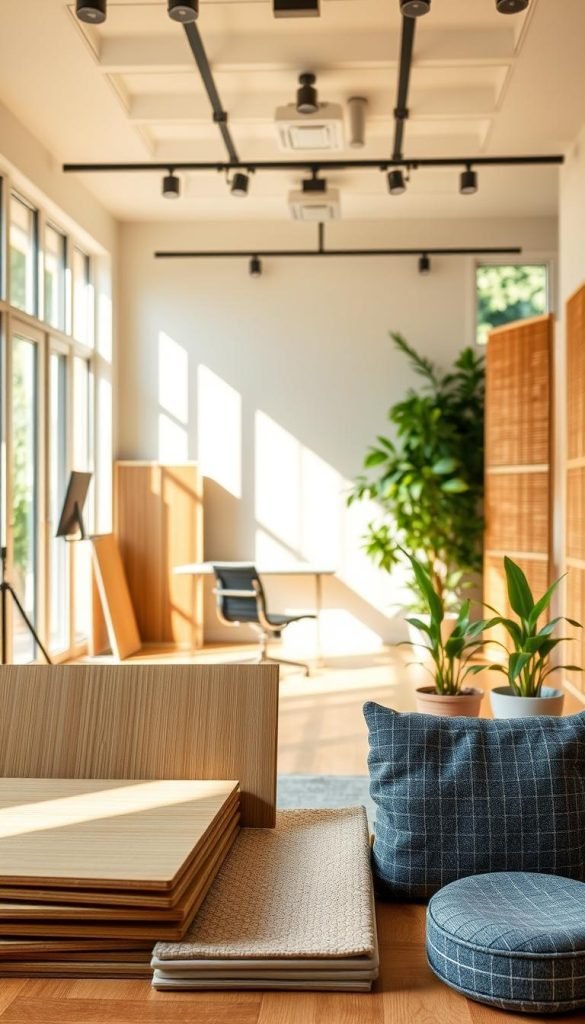
Choose low-emission, recycled acoustic materials
I opt for recycled polyester panels and cellulose insulation because they reduce indoor emissions while absorbing sound. Cork tiles and rubber underlays add mass and help regulate temperature.
WELL and LEED both emphasize acoustics with thermal comfort and air quality, so I pick certified products when possible.
Balance silence with airflow and lighting for comfort and stamina
I avoid over-sealing the room. I use quiet fans, pod ventilation, or a slightly open door paired with seals elsewhere so the environment stays fresh all day.
I tweak lighting with dimmable LEDs and indirect lamps that don’t buzz near my mic. Good light and steady air keep my productivity steady during long sessions.
- I favor reversible options: clip-in panels and removable mounts.
- I choose durable, recyclable materials that look good and need little maintenance.
- I check product claims against WELL or LEED for verified performance.
Conclusion
I wrap up with a simple rule: treat echoes and transmission separately, then layer solutions. Start by identifying the loudest sounds in your home and apply quick wins like rugs and a door sweep.
Panels and foam tune the room while mass, decoupling, and seals block sound through walls, door, and windows. Tight gaps at outlets and vents can undo good work, so check them carefully.
I track progress with a decibel meter app and aim to keep daily levels under 70 dB. With reversible steps, select materials, and seasonal tweaks, my home office becomes a quieter, more professional space for focused work.