What Are the Top Trends in Wallpaper for Bedrooms in 2026?
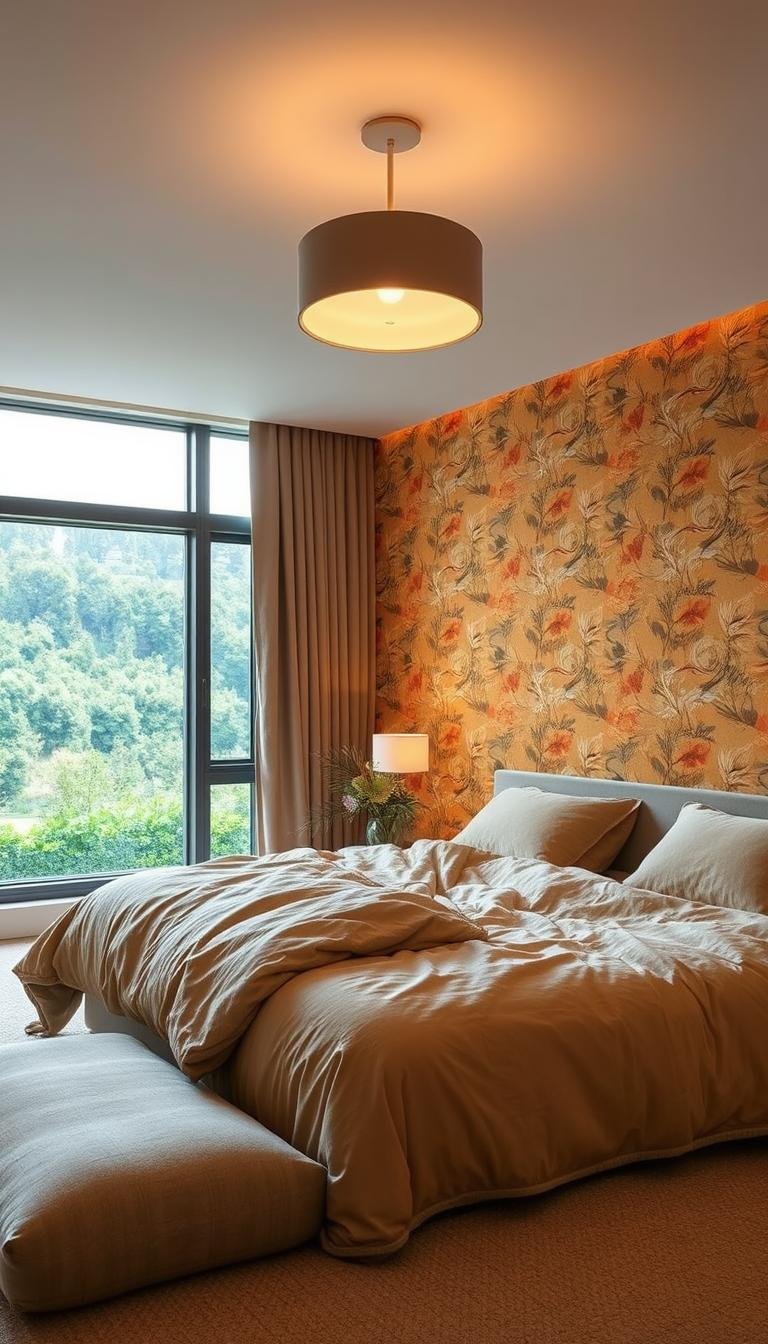
I’m watching bedroom design shift from single accent walls to fully immersive surfaces that wrap walls and even the ceiling. This year, designers favor cohesive color drenching and tactile finishes that make a small space feel intentional and calm.
Personalization matters: giant botanicals, Japandi neutrals, retro geometry, scenic murals and cosmic themes let your room reflect who you are. Peel-and-stick murals and raised textures make bold swaps easy, whether you rent or own.
Lighting gets built in. Orb lamps, mural backlighting and circadian LEDs now work with wall treatments to boost colors and restfulness across the day. Practical choices and finishes—stone looks, wood grain, and plaster-like surfaces—add depth without heavy renovation.
If you want impact, try the headboard wall or the ceiling as your canvas. I’ll help you weigh budget and effort so you can pick ideas that suit your home and your time.
Key Takeaways
- Immersive wall and ceiling coverings create a calm, intentional space.
- Designers push tactile finishes and integrated lighting for mood and detail.
- Peel-and-stick options make bold looks renter-friendly and low-risk.
- Use the headboard wall or ceiling for the biggest visual payoff.
- Materials like raised textures and stone-look papers add depth without demo.
How I’m Seeing Bedroom Wallpaper Trends Evolve for 2026
The shift I notice flips accent-first thinking to immersive finishes that let a room read as one thoughtful whole. Designers are favoring full-room wraps, murals, and ceiling treatments that make spaces feel calmer and more cohesive. This approach helps interiors feel curated rather than staged.
I also see people leaning on freestanding furniture and smart storage so a bedroom can change roles easily. Bedrooms now serve as work nooks, reading corners, and restful retreats without losing their restful vibe. Flexible pieces let homes adapt over time without a full remodel.
Texture matters: plaster reliefs, raised papers, and layered fabrics add warmth and depth without clutter. Architectural lighting that shifts tone through the day supports wellbeing while highlighting tactile surfaces and art.
“The best rooms feel like you; wallpaper should help tell your story.”
If you want an easy start, try a single mural wall or a tactile headboard wall. For more ideas, explore this inspiration hub: inspiration hub.
- Full-room wraps make a space feel grounded and serene.
- Layering eras and materials builds a personal, timeless look.
- Subtle zoning and flexible furniture let a bedroom multi-task well.
Color Drenching and Cocooning: Wrapping Walls and Ceilings for a Cohesive, Intentional Look
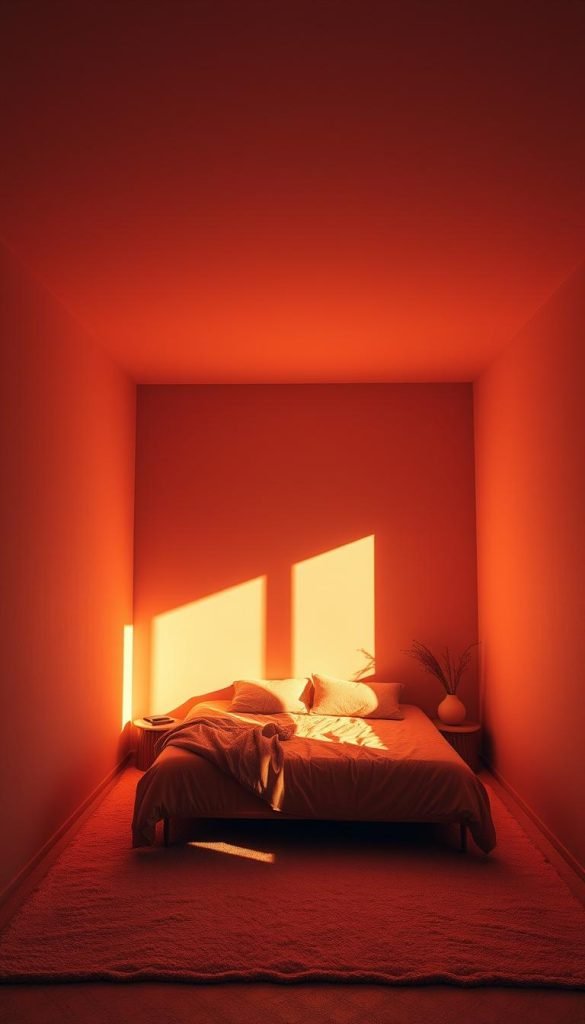
When every surface shares a hue, the room settles into a gentle, cocoon-like warmth. I recommend carrying that single color or pattern across walls and the ceiling to make a small bedroom feel curated and calm.
When I choose paint vs. patterned wallpaper: Paint gives a solid, soothing envelope for darker, saturated tones like clay pinks or deep sages. Patterned wallpaper adds character and texture—sketched botanicals or tonal stripes work best in bigger rooms with good light.
For bedding, I pick tonal linens and simple furniture silhouettes so the wrap can shine. A nubby throw, boucle chair, or soft stripe keeps interest without clutter.
Ceiling as the fifth wall
Match the wallpaper to a secondary hue or continue the pattern upward for depth. Renters can mimic this with peel-and-stick panels or painted removable canvases.
“Fewer, larger moves make a wrap feel luxe, not loud.”
| Choice | Best for | Maintenance tip |
|---|---|---|
| Scrubbable paint | High-contact walls and small rooms | Washable finish, low sheen |
| Vinyl-coated wallpaper | Textured or patterned wraps | Wipeable surface, durable seams |
| Peel-and-stick panels | Renters or quick installs | Remove gently, patch paint if needed |
Giant Botanicals and Lush Greens: Bringing Nature onto the Wall
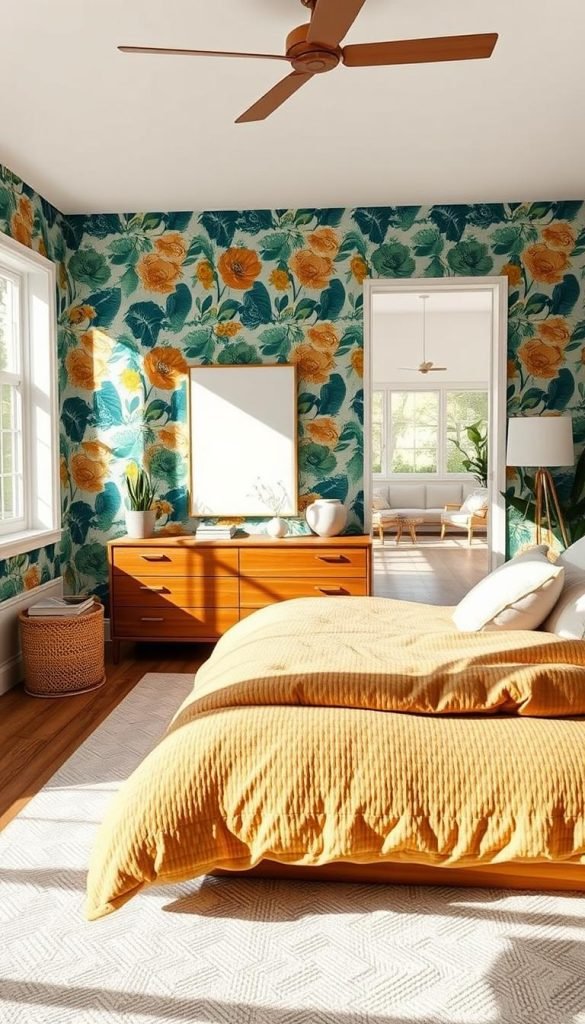
Oversized botanicals bring a bold sense of life and motion to a bedroom without cluttering the space. I favor deep palms, banana leaves, and jungle florals as instant focal points that add visual depth and a fresh colors palette.

For small rooms, pick murals with a lighter base or a foggy background so the scene reads airy instead of heavy. Larger repeats calm the eye; bigger motifs reduce visual busyness and make the wall feel expansive.
I advise pairing neutral linen bedding and a simple wood nightstand so the leafy artwork stays the star. Simple pieces like a rattan bench or a black metal reading light echo the botanical mood without adding clutter.
Edge and placement tips: wrap the mural into inside corners or trim cleanly around windows so leaves read as one cohesive piece. Place the pattern behind the bed to frame the headboard and make the whole wall feel like art.
- Palettes I use: inky greens, moss, and sage with soft sand or cream accents.
- Small-space trick: lighter mural bases keep airiness while preserving lush depth.
- Care tip: choose scrubbable vinyl and UV-stable inks where sunlight fades might be a concern.
Japandi Calm: Soft Neutrals and Zen Textures That Make My Bedroom Feel Like a Retreat
Gentle neutrals and tactile surfaces help me turn a small room into a calm retreat. I use quiet patterns and low-contrast palettes to keep visual noise low and invite simple comfort.

Materials matter: pale wood, cork accents, linen-look murals, and woven drapery bring warmth without weight. These choices lift an interior and add subtle texture that still reads minimal.
I pair a soft mural with a simple bed frame, rounded nightstands, and a low reading lamp so the room stays calm. Keep art minimal—a single plaster relief above the bed adds quiet dimension without competing with the wall.
- Use tonal, earthy hues and lighten textiles to avoid a heavy feel.
- Add a pale pine shelf with matte-black hardware for contrast and grounding.
- Include touch-friendly pieces—bouclé cushions, washed linen throws, ribbed pillows—for everyday comfort.
Lighting and upkeep: dimmable warm-white lamps and adjustable task lights make morning and evening routines easy. Choose washable fabrics and durable wallcoverings so this soothing design is simple to live with.
Geometric Retro Patterns: 70s-Inspired Shapes in Olive, Terracotta, and Mustard
When I use 70s shapes, small spaces feel like a deliberate, joyful discovery. Retro arcs, grids, and waves bring a lively pulse to hallways, powder rooms, and tucked-away nooks.

Olive, terracotta, and mustard colors give those motifs warmth and a nostalgic look that still reads modern. I often place a geometric mural behind the bed or on a headboard wall and keep surrounding pieces simple so the pattern can sing.
- I recommend aligning repeats with window and door frames so geometry lands cleanly.
- Use larger geometry on big walls, tighter repeats for closet niches or reading corners.
- Pair plain bedding and a sculptural lamp so wallpaper carries the visual punch.
- Designers echo mural shapes in a curved headboard or rounded dresser for cohesion.
- For renters, peel-and-stick panels make sampling this trend easy and reversible.
“A bold geometric wall can turn a small corner into a hidden gem.”
Durability tip: choose wipeable finishes if a wall sees frequent touches or sun. Good material keeps this playful look working for years.
Maximalist Statements: Bold Collages, Tigers, and Personality-Driven Designs
Maximalist walls let me tell a story about who I am without filling shelves or crowding surfaces. I lean into collage murals, wildlife scenes, and heritage motifs as a way to layer meaning and color into a home.

Balance is key. I pair loud prints with neutral bedding and simple furniture silhouettes so the art feels intentional, not chaotic.
- I place the feature wall behind the bed and keep adjacent walls calm to give the composition room to breathe.
- For furniture, I favor a streamlined bed frame, a quiet rug, and a single sculptural light to punctuate the scene.
- Color discipline helps: pull two to three hues from the mural into pillows or a throw to unify the space.
People connect with rooms that reflect their story. I suggest editing accessories—fewer, larger pieces beat many small items. Concealed nightstands or freestanding wardrobes keep storage tidy so art stays the focus.
“Let the walls speak, then let the rest play a supporting role.”
| Strategy | Why it works | Care tip |
|---|---|---|
| Neutral bedding | Keeps attention on murals and motifs | Choose washable fabrics for easy maintenance |
| Satin or matte nearby paint | Reduces glare and makes prints read richer | Use low-sheen finishes on trim and ceilings |
| Wipeable wallpaper | Makes bold choices livable in real homes | Pick durable vinyl with UV-stable inks |
Final way to approach a bold room: pick motifs you love, limit accent colors, and keep furniture calm. That way the design stays expressive and easy to live with.
Textured Illusions: Stone, Wood, Linen Looks That Add Tactile Depth Without Renovation
Faux finishes bring architectural weight to a bedroom without the mess of remodels. Faux stone, marble, brick, and oak grain wallpapers give rooms instant presence and visible depth while keeping cost and disruption low.
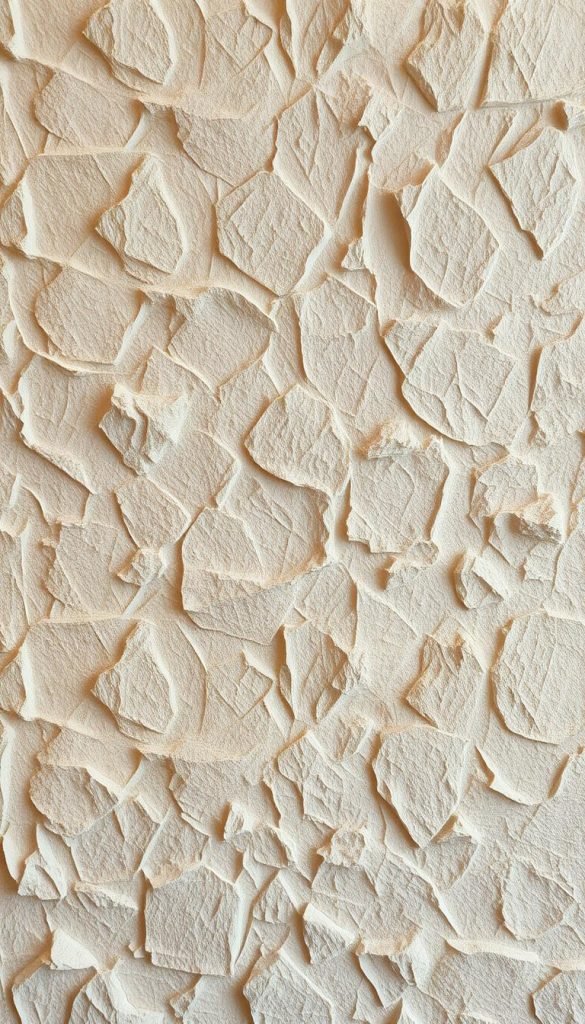
A textured wall behind the bed softens sound and adds calm. Plaster-look or linen-weave papers create a tactile backdrop that reads crafted and warm. Raised surfaces also catch light for subtle shadow and dimension.
Faux marble, brick, and oak grain for organic, modern interiors
I choose matte bases for realism, a slight sheen to lift stone veining, and thicker substrates so seams sit tight. Wrap a corner or clad a headboard wall to sell the illusion; full-room wraps feel luxe but a feature wall gives big impact with less material.
Where raised or plaster-look wallpapers make the biggest impact behind the bed
- Pair with solid wood nightstands or a stone-topped table for cohesion.
- Guide clients on color temperature: cool marble with chrome, warm oak with brass.
- Use grazing lights to emphasize texture without harsh shadows.
- Pick wipeable, vinyl-coated finishes for high-touch areas; avoid heavy scrubbing on embossed surfaces.
“Continue the texture into a headboard niche to make the bed feel custom.”
Scenic Escapes: Panoramic Landscapes That Visually Expand Small Rooms
A wide-format vista on one wall tricks the eye into thinking your space continues beyond the frame. I use misty mountains or coastal cliffs to make a compact room feel larger and calmer.

Keep the horizon low and wide so the mural elongates the room without crowding the ceiling. That low line adds immediate perceived depth and a relaxed look.
I recommend slim LED backlighting above the mural or a backlit cove. This subtle lighting shifts color through the day, enriches tones, and helps the scene feel like a real view.
- Center the focal point behind the bed or opposite the entry so your eye lands on the vista first.
- Zone a reading nook beside the mural with a quiet chair and floor lamp so the view stays the star.
- Echo a hue from the scene in a throw or lamp to knit the space together.
| Feature | Benefit | Installation tip |
|---|---|---|
| Wide, low horizon | Adds perceived depth | Align with bed height or eye level |
| LED backlighting | Enhances sunrise/sunset glow | Hide slim strip above mural |
| UV-stable inks | Protects colors in sunny rooms | Choose vinyl with fade resistance |
| Single scenic wall | Replaces multiple artworks, saves space | Keep surrounding finishes minimal |
“A single mural can open a small room into a memorable view.”
Celestial and Cosmic: Constellations and Moon Phases for Dreamy, Restful Bedrooms
A starry mural can turn a bedroom into a private night sky that calms and focuses the eye. I favor gentle constellations or moon cycles placed above the bed to cue rest without feeling busy.
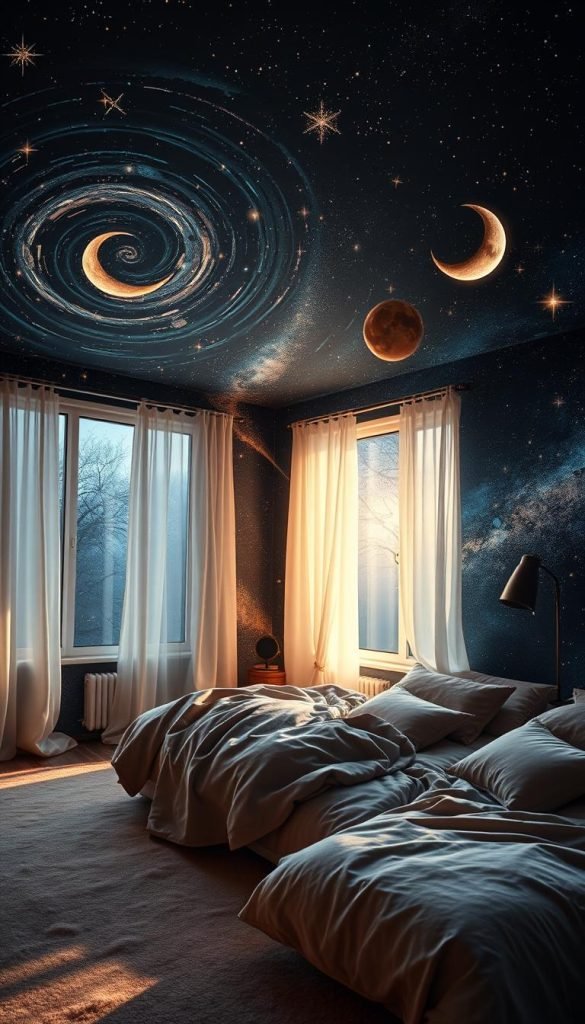
Deep midnight blue or soft charcoal makes a good base color that cradles a room in a starry envelope. I keep bedding matte and low-contrast so shimmer reads subtle, not glaring.
I layer lighting: soft fairy strings or dimmable lamps for evening comfort, plus cooler task light for morning routines. This approach follows circadian guidance so people sleep and wake more naturally.
Keep decor minimal: one tactile cushion or a small stone tray keeps the theme calm. For meaning, I sometimes add a personalized constellation map tied to a special date.
“A hint of metallic ink on a wall is magical; balance it with matte textiles to avoid glare.”
| Element | Why it helps | Tip |
|---|---|---|
| Base color | Creates a restful backdrop | Use midnight blue or charcoal |
| Layered lighting | Supports sleep rhythms | Fairy strings + dimmers + cool morning task light |
| Placement | Maximizes visual calm | Align constellations with bed centerline; avoid seams over clusters |
| Care | Keeps glow consistent | Dust string lights; test dimmers regularly |
Styling tip: pair a curved headboard to echo celestial arcs and add blackout drapery in a matching tone to deepen nights. Small choices like this make the design feel intentional and restful while staying true to current trends.
Travel and City Murals: From New York Lofts to Paris Balconies for Instant Focal Points
Cityscapes on a wall can transport a small room into a lived-in memory of a favorite trip. I use New York lofts, Paris balconies, and Tokyo nights to give a home an instant sense of place.

Place matters. I recommend narrow walls, the bed wall, or the area behind a desk as the best way to maximize a mural’s impact. Compact workstations and seating nooks keep spaces functional day to night, so you can work and unwind in one spot.
I favor a “postcard” approach: pick a view that shows your personality. Keep nearby pieces simple—a slim desk, a quiet chair, or a floating shelf—so the vista stays the star.
- Scale large prints for big rooms; choose tighter city grids for compact rooms so details read crisp.
- Pull color cues—stone, bronze, soft neutrals—into hardware and textiles for cohesion.
- Renter tip: peel-and-stick panels let you change the wall next year if your travel mood shifts.
| Placement | Benefit | Install tip |
|---|---|---|
| Behind bed | Creates a strong focal point | Center horizon with bed headboard |
| Narrow wall | Makes use of tight spaces | Use vertical crop; avoid splitting landmarks |
| Desk backdrop | Zones work without losing coziness | Align key buildings away from seams |
| Peel-and-stick | Renter-friendly refresh | Test position; remove gently |
This year, choose a city that means something to you and the mural will carry your story through your interiors.
What Are the Top Trends in Wallpaper for Bedrooms in 2026? My Buyer’s Guide to Materials, Lighting, and Layout
I start with one strong surface move, then test lights and layout so the room reads as a single idea.
Peel-and-stick vs. traditional
Peel-and-stick is fast, renter-friendly, and perfect for quick makeovers. It removes cleanly and lets you sample bold murals without long-term commitment.
Traditional pasted wallpaper wins for heavy textures and longevity. It handles complex seams and raised substrates better but needs primer and pro install for best results.
Lighting synergy
Orb lights offer portable, dimmable warm-white glow while circadian-friendly LEDs shift tone through the day.
Add slim backlighting behind a mural to dramatize scenic effects and tie mood to function.
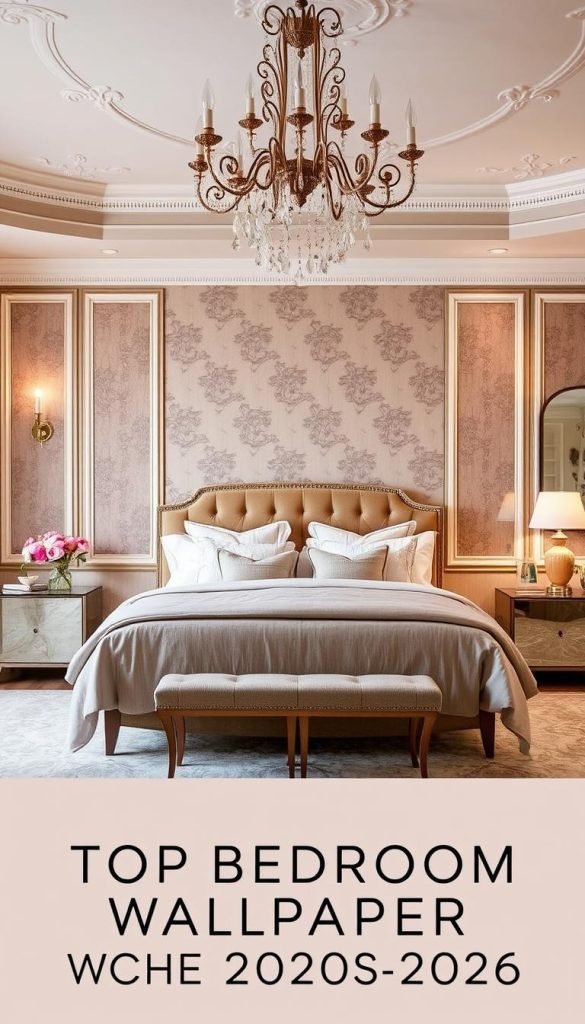
Zoning and pairing
- Use a headboard wall as the main anchor and a mural panel to define a reading nook.
- Pair Behr “Hidden Gem” or Valspar “Warm Eucalyptus” with terracotta, ochre, and sandy neutrals for balanced color.
- Match linen-look wallpapers with boucle bedding, faux stone with crisp cotton, and oak grain with wool throws.
“Plan primer, seam placement, and wipeable finishes before you hang—small details make a big difference.”
For more context on overall interior design trends, I check sources before finalizing choices so the whole home feels intentional.
Conclusion
One decisive design choice usually unlocks the rest of a bedroom’s look. Immersive wall treatments, tactile layers, and wellness-led lighting are the core design trends reshaping spaces now.
I suggest picking a single strong move — a scenic mural, a color-drenched envelope, or a textured feature — then adding bedding and furniture that bring warmth without competing.
Keep change easy over time with freestanding pieces and peel-and-stick options so your decor can evolve with you.
Quick plan: choose your theme, test lights at night, and map the bed wall first. Small details — finishes, seams, and trims — make good work feel exceptional.
I encourage you to lead with personality; when the wall tells your story, the whole room feels right.