How Do I Create a Home Theater Setup That Blends with My Decor?
I want a theater that feels like it belongs in my home. I start by matching scale and color so the room reads as thoughtful design, not gear dumped into a corner.
Balance, harmony, and proportion guide speaker placement, screen size, and seating. Dark finishes cut glare and lift contrast, while in‑wall speakers and hidden projector housings keep sightlines clean.
Cable routing and built‑in cabinets protect the look and keep guests focused on the viewing experience. I use dimmable, layered lighting so the space shifts from casual entertainment to cinema at a tap.
Comfort and sound remain nonnegotiable. I pick seating for long sessions and tune the design so audio performance never yields to style. The result is a curated interior space that invites friends and improves every movie night.
Key Takeaways
- Match scale and color so the room feels like part of your interior.
- Use in‑wall speakers and built‑ins to keep a clean, uncluttered look.
- Choose darker finishes where needed to reduce glare and boost contrast.
- Plan cable management and storage up front to avoid distractions.
- Layer dimmable lighting to move from casual to cinematic moods.
- Prioritize comfort and sound to protect the viewing experience.
Start with Balance, Harmony, and Proportion
A well-proportioned layout helps the screen, speakers, and seating read as furniture, not gear.
Balance distributes visual weight so the screen, seating, and speakers suit the room size and create symmetry.
Harmony comes from a consistent theme—modern, classic, or eclectic—that ties the theater into the rest of the home.
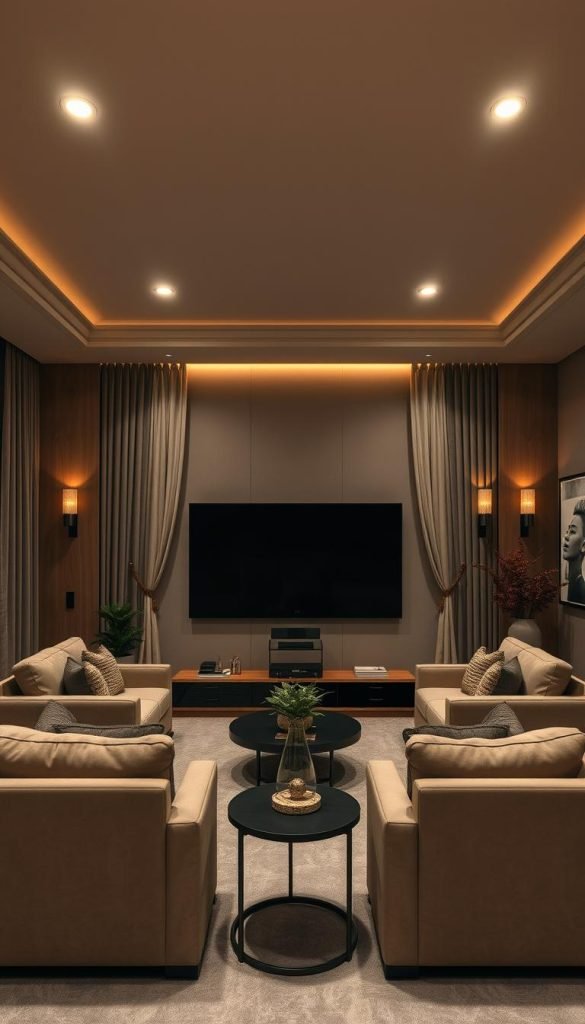
Match scale to the space
I right-size the screen for comfortable distance and height, then scale speakers and seating so nothing overwhelms the sightlines.
Choose a cohesive theme
I pick finishes and colors that echo the home’s interior so the theater design feels like part of the whole. Leaning darker around the screen wall cuts reflections and deepens contrast.
- I use proportion rules to keep the front wall calm and symmetrical.
- I match textures to performance: soft upholstery and rugs tame echo; hard surfaces get acoustic treatments.
- I plan seating count and layout so walkways stay clear and sightlines center on the screen.
Result: a room that sounds good, looks intentional, and reads as an integrated part of your home theater design.
Plan the Room Layout for a Seamless Viewing Experience
A clear room plan makes every seat feel intentional and keeps sightlines clean.
Seat placement matters. I center primary seats on the screen and keep sightlines open so every viewer enjoys a direct view. Leave at least 24 inches of walkway behind seats for easy flow when people enter or leave.
Place the TV on the longest wall and anchor it with a media console sized to the screen. Mount the display at eye level from the main row to make the front wall look purposeful. Paint the wall behind the screen darker to cut reflections and add blackout curtains to control daylight.
Run cables in-wall where possible and use cord channels when walls are closed. Route power and network outlets near equipment and plan ventilation so devices stay cool. These steps keep the room uncluttered and protect the viewing experience and sound quality.

Quick comparison for common layout choices
| Feature | Benefit | Notes |
|---|---|---|
| Centered seating | Clear sightlines | Align main seats with screen axis |
| Longest wall screen | Balanced front wall | Mount at eye level from main row |
| In-wall cables | Clean aesthetic | Plan outlets and ventilation near equipment |
| Darker screen wall | Reduced reflection | Pair with blackout curtains |
How Do I Create a Home Theater Setup That Blends with My Decor?
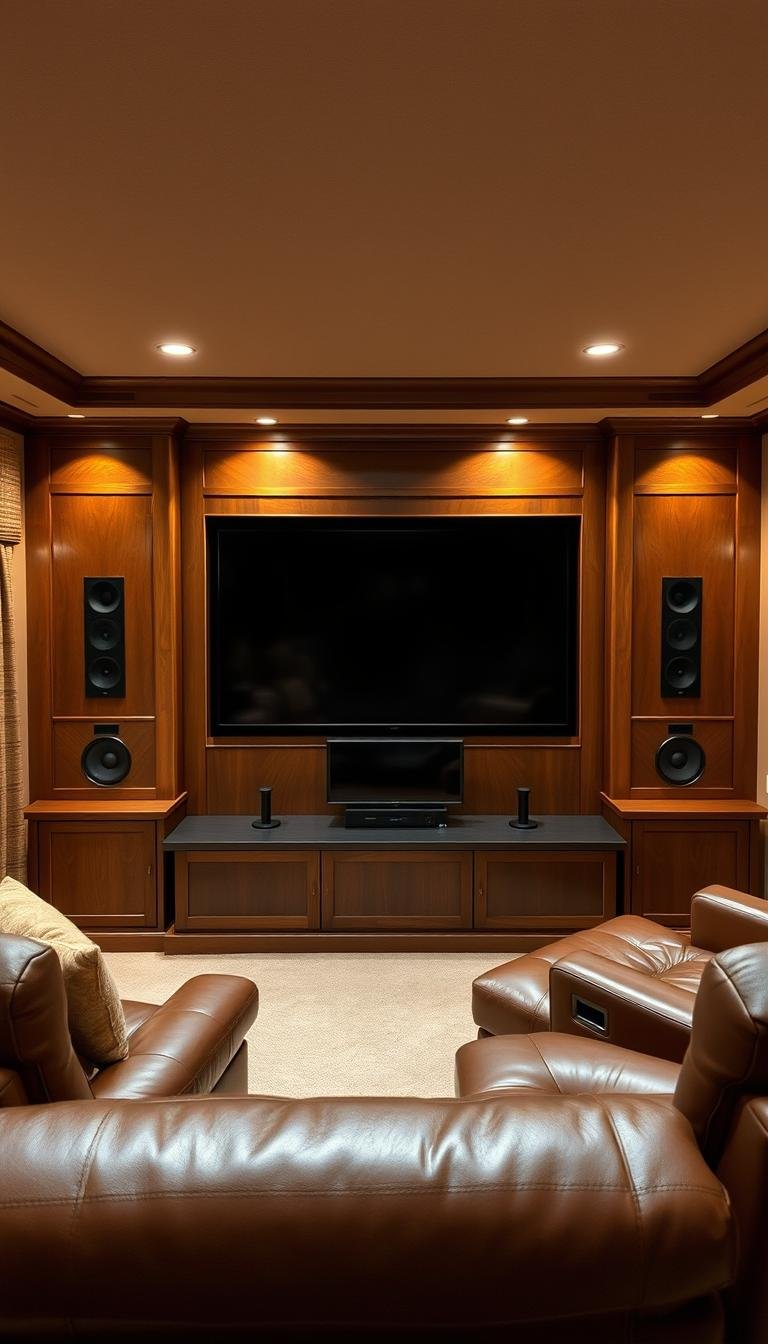
Make technology feel built‑in, not bolted on. I hide tech behind crafted millwork so the space reads as thoughtful interior rather than gear piled on shelves. Built-ins can frame the screen and hold speaker grilles flush with trim for a calm front wall.

Integrate speakers, screens, and equipment with built‑ins and finishes
I select in‑wall or on‑wall speakers with paintable grilles and match finishes to existing wood and metal. Ventilated cabinets conceal equipment while keeping airflow and remote control reliable.
Hide tech: in‑wall speakers, projector housings, and stylish cabinets
Recess a projector into a ceiling‑matched housing and route cables inside walls and furniture. Brush plates at connection points keep the install immaculate even up close.
- Design tip: echo the home’s interior materials—rugs, drapery, and upholstered panels—to improve sound and match the overall design.
- For extra ideas, see curated home theater design.
Lighting Design: From LED Accents to Starlight Ceilings
Good lighting makes the room feel cinematic without stealing attention from the screen. I plan layered fixtures so the space shifts from casual gathering to full cinema at a tap.

Layered, dimmable lighting to reduce glare and eye strain
Layered dimmers keep glare low and protect eyes during long movie nights. I use sconces, floor lamps, and hidden step lights that all sit on separate dim zones.
Colored LED strips, separate circuits, and blackout solutions
I add colored led accents sparingly to highlight millwork and risers. I run those led strips on their own circuit to avoid electrical noise in the AV chain.
Blackout curtains or layered drapery control daylight in multipurpose rooms so contrast stays steady during matinees.
Choosing darker paint colors to enhance contrast and mood
Painting the wall behind the screen in a deeper hue lowers reflectivity and makes images pop. I match fixture finishes to the home’s interior so switches and trim feel considered, not tacked on.
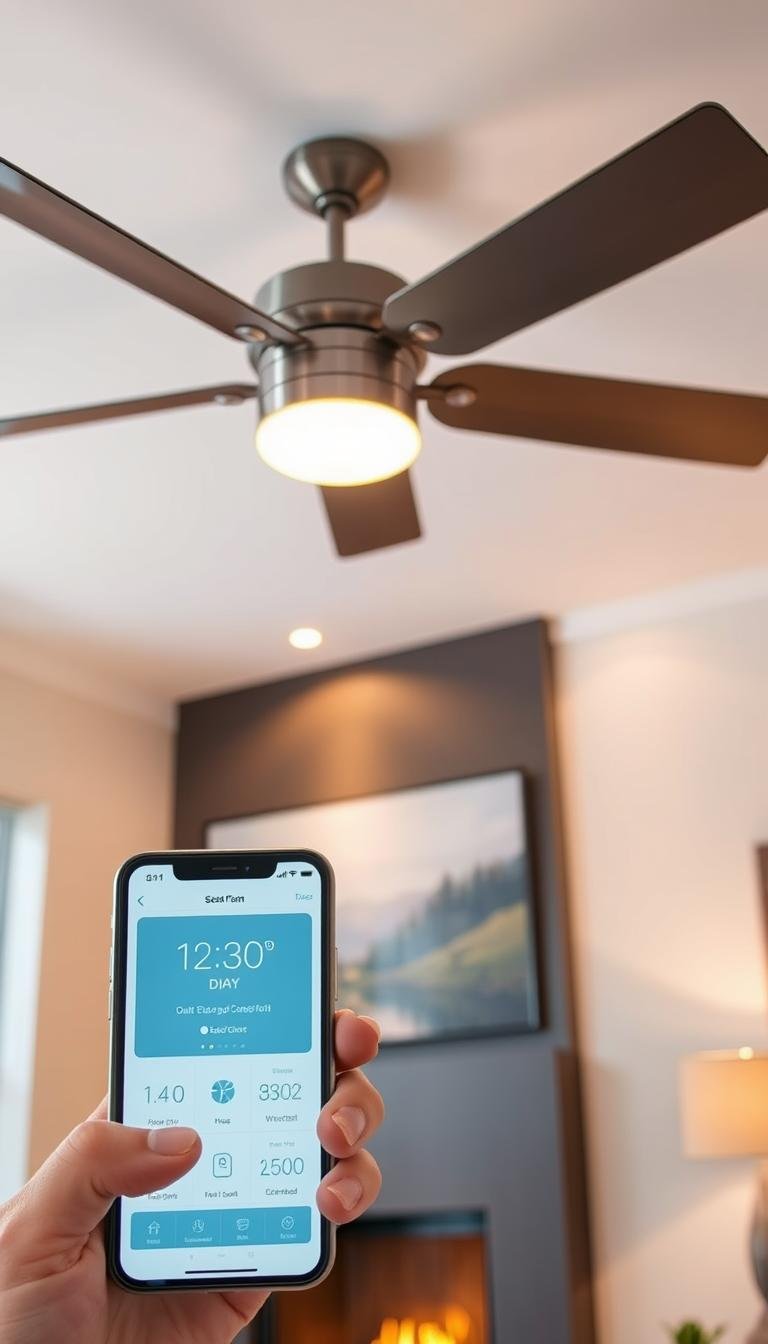
- Scene presets: smart dimmers for guest arrival, intermission, and full cinema.
- Warm, indirect fixtures: reduce eye strain; save bright task light for cleanup.
- Starlight ceilings: add character without creating screen reflections.
Acoustics and Wall Treatments That Look as Good as They Sound
Treating reflection points and bass corners gives immediate gains in clarity and balance.
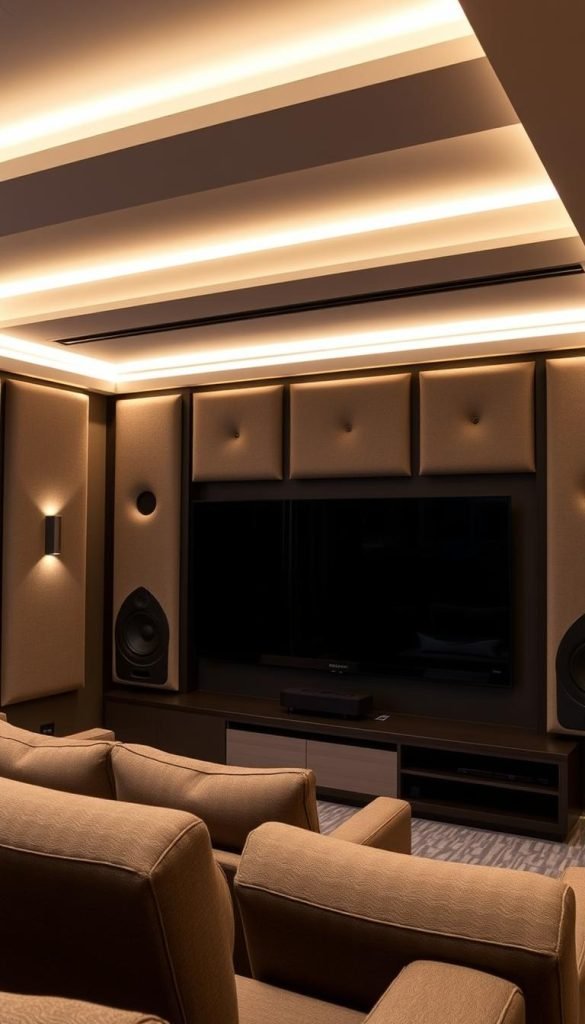
I start by placing acoustic panels at first reflection points and on the rear wall. I wrap frames in fabrics or custom prints so treatment becomes part of the design and not just gear.
Soft furnishings—plush seating, drapery, and rugs—absorb mid and high frequencies. Hard surfaces like wood or glass need extra attention, so I add diffusers or shallow panels where energy should remain lively.
Practical touches: darker finishes on the screen wall reduce glare and help the center channel read clean. Bass gets handled with discreet corner traps or behind-screen absorbers so low notes stay tight without bulky boxes.
Personalized treatments and placement
- I pick panel thickness to target problem bands and match fabric colors to the room palette.
- Custom prints turn panels into focal art that complements the home’s overall style.
- I listen after each change and tweak placement until the audio matches the visual polish.
“Good acoustics feel invisible — they simply make the movie clearer and more immersive.”
| Issue | Solution | Visual impact |
|---|---|---|
| First reflections | Wall-mounted acoustic panels | Fabric-wrapped, matches decor |
| Slap echo | Heavy drapery or textured wallcoverings | Soft, warm look |
| Bass buildup | Corner traps or behind-screen absorption | Hidden, low-visual profile |
Furniture and Seating that Elevate Comfort and Style
Good furniture anchors sightlines and invites long movie nights without feeling cramped.
Sectionals, sofas, and layouts need to match the scale of the space. For small rooms I favor compact sectionals that keep seating tight but plush. In open plans I pick sleek, low-profile sofas so the theater zone feels part of the home without blocking flow.
Sectionals, sofas, and layouts for small, open, or closed rooms
For closed rooms I choose deep, generous sofas that cushion long runtimes. I keep at least 24 inches of clearance behind seats so walkways remain comfortable and sightlines stay clean.

Multi-functional tables, ottomans, and storage-minded pieces
Multi-use furniture makes the floor plan flexible. Lift-top and nesting tables double as snack stations and laptop perches. Poufs and ottomans add portable seating and tuck away when not needed.
- I favor performance fabrics and supportive cushions for lasting quality.
- I match finishes—woods, metals, and upholstery tones—to the rest of the home for cohesive design.
- I plan storage for chargers, remotes, and trays so the room stays neat during every movie.
For more curated inspiration, see these home theater furniture ideas.
Conclusion
Close the plan with a simple checklist: centered seating, hidden cables, and lighting scenes that shift the space from casual to cinematic.
Confirm the fundamentals: right-scale screen and speakers, about 24 inches of clear walkway, darker paint behind the screen, and acoustic panels that double as decor. Keep in-wall speakers and equipment vents tidy so the room reads as intentional, not cluttered.
Document sources, control presets, and calibration notes so future upgrades stay straightforward. With layered lighting, smart dim scenes, and comfy furniture, the home theater delivers lasting sound and picture quality that improves every movie night.