How Do I Make DIY Wall Art for a Small Apartment Without Breaking the Bank?
I’ll show you practical, renter-friendly ways to turn a blank wall into a curated display that reflects my personality and style without spending much. I favor hand-painted abstracts, tape-based geometric designs, and moody palettes for a quick, personal upgrade.
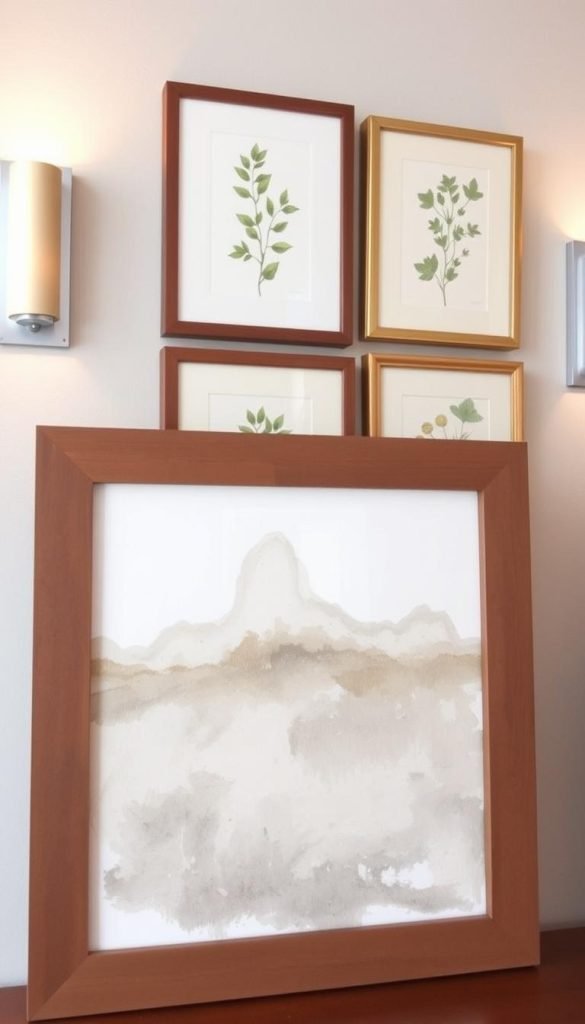
I use free museum downloads from The Metropolitan Museum of Art and The Art Institute of Chicago, then print on cardstock at Staples for a luxe look that costs only a few dollars. Thrifted frames, peel-and-stick wallpaper, fabric swatches, and woven baskets add texture without bulky expense.
My method focuses on planning layouts, testing pieces at eye level, and choosing lightweight, removable hangers so I can redecorate or move without damage. I reuse frames and buy canvas drop cloths instead of large canvases to keep costs low.
Throughout this post, I’ll guide you through planning, materials, beginner painting projects, printable options, gallery arrangements, and thrifted touches. By the end, you’ll have clear steps to create cohesive artwork that makes your space feel larger, brighter, and intentional—without breaking the bank.
Key Takeaways
- Affordable methods include hand-painted abstracts and tape-based geometric designs.
- Print public-domain masterpieces and use copy shops like Staples for cheap, high-quality prints.
- Thrift frames and repurpose materials for texture and style on a tight budget.
- Plan layouts and test pieces at eye level for a polished gallery look.
- Choose lightweight, removable hangers to protect rental rules and make moves easy.
Smart Start: How I Plan diy wall art small apartment budget projects
My planning starts with a quick measurement of the space and a rough sketch so I don’t buy the wrong sizes.
I measure width and height, then map the layout on kraft paper. That saves time and prevents misfits when I hang artwork.
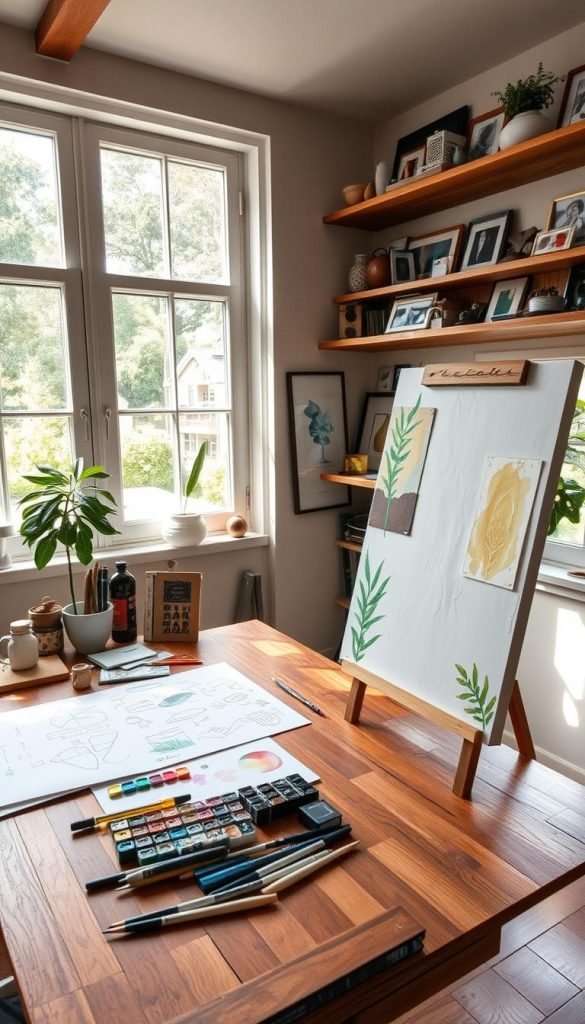
I aim for the center at about 57–60 inches—museums use this height because it reads well in most rooms.
I test placement in different light. Natural and artificial light change how colors look, so I move pieces at various times of day.
“Pre-arranging a gallery on the floor and using kraft templates avoids extra holes and guesswork.”
I favor modular, multi-panel designs for easy transport and flexible layouts. Grids, vertical trios, or an eclectic mix help the decor feel cohesive.
- I assign each idea a realistic time slot so a project actually finishes.
- I plan removable hangers—Command strips and lightweight frames keep my home damage-free.
Budget Basics: Materials, Tools, and Where I Save the Most
My projects start with smart material choices that stretch every dollar without sacrificing style.
Choosing affordable materials
Canvas options include pre-stretched canvases or heavy canvas drop cloths from the hardware store. I cut and staple drop cloths to simple frames for oversized looks that read gallery-grade at a low cost.
Paper matters: I print public-domain images or my layouts on bright cardstock at a copy shop like Staples. Multiple small prints can cost under $10, making grid galleries easy and cheap.
Fabric samples and Spoonflower squares make instant, textured pieces. I frame upholstery remnants or sample swatches for statement artwork without designer prices.
I also use reclaimed wood or thin plywood as backers to add depth while keeping weight low for apartment walls.
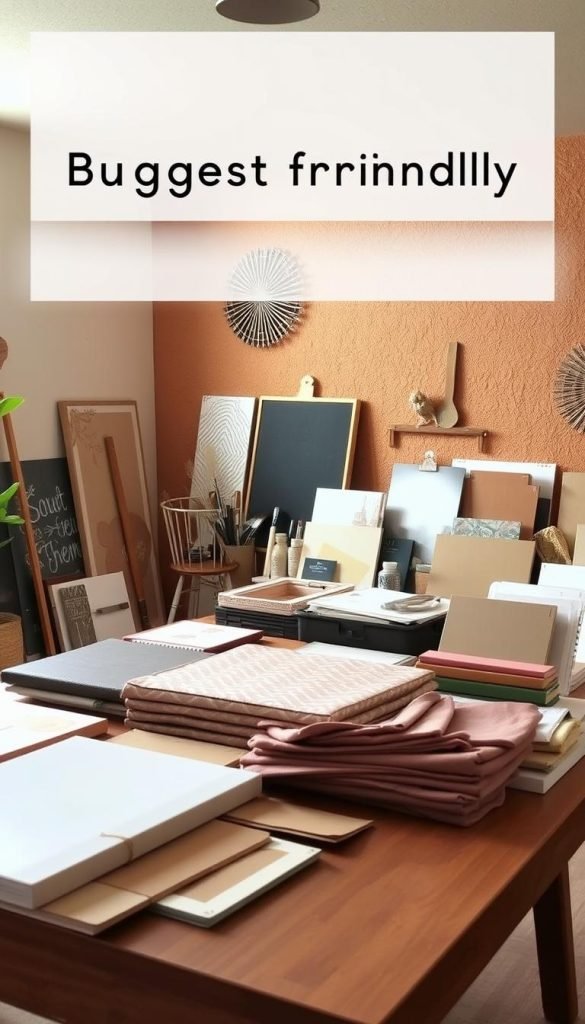
My minimalist tool kit
Keep it simple. I pack painter’s tape, a basic brush set (two flats, one detail), acrylics, scissors, a utility knife, level, and a tape measure.
Hanging and finishing: Command strips, kraft paper templates, plexiglass, and a few thrifted frames (spray-painted or re-matted) finish most projects with minimal cost and no damage to home walls.
- I avoid reprints by checking print dimensions against mats first.
- I reuse frames seasonally to stretch my spending further.
- Reclaimed wood and fabric give texture without heavy shipping or expensive pieces.
“Stretching a dollar on the right base materials makes every project look more intentional.”
Painted Pieces with Big Impact: Easy Canvas and Wall Art Ideas
Pick bold gestures and simple tools, and you can finish a striking canvas in an afternoon. I favor projects that read expensive but take little time. Start with a plan and four colors: one dark, one light, and two mid-tones.

Beginner-friendly abstracts you can finish fast
I block in broad zones of color, then softly blend edges with a clean brush. Step back and add white highlights using a dry-brush X motion for instant depth.
Geometric designs with painter’s tape
Use painter’s tape to map crisp shapes. Triangles, grids, or a single-color circular motif create a high-end look with minimal fuss.
Moody palettes and simple blending
Layer dark gray, gray-blue, pink, and white from bottom to top for stormy depth. Blend where hues meet and dry-brush highlights to catch light.
Oversized looks on a budget: drop cloth canvases
Stretch a canvas drop cloth over a simple frame and go big with wide brushes. Bold strokes and impasto-like texture read as gallery-scale without heavy cost.
- I knock out a beginner abstract in one session by choosing coordinated colors and blending at the seams.
- I test compositions on kraft paper first to save time on the final piece.
- I hang finished work at eye level so even one piece reads as a purposeful focal point.
Printable & Digital Artwork: Free Sources, Easy Design, Low-Cost Printing
Using Canva’s free tier, I build cohesive prints fast. Templates, fonts, and simple layout tools let me make typographic pieces, photo grids, or single-image prints without hiring a designer.
I pull public-domain images from The Metropolitan Museum of Art, The Art Institute of Chicago, The Cleveland Museum of Art, and the Museum of Fine Arts, Boston. Wikimedia Commons helps me find high-resolution files for classic paintings and illustrations.
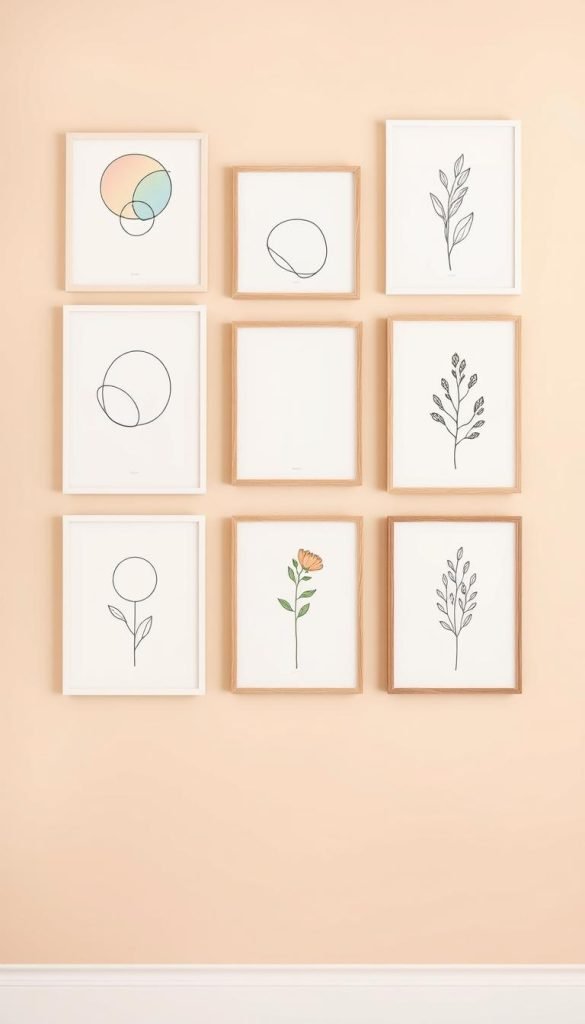
Smart printing hacks
I export high-res PDFs and send a batch to a copy shop like Staples for bright white cardstock that reads like museum paper. Scaling to standard sizes (8×10, 11×14, 12×12) saves trimming and matches existing frames.
- I mock up layouts in Canva, then export ready-to-print files.
- I crop images to fit common aspect ratios so subjects sit well in frames.
- I mix botanicals, typography, and classic art to build a collected gallery quickly.
“Batching prints and staging frames on the floor saves time and keeps cost low.”
Gallery Wall Magic for Small Spaces
I begin by tracing frames on kraft paper and taping the templates to the surface to test spacing and scale at eye level. This keeps me from making extra holes and helps the group read as a single piece.
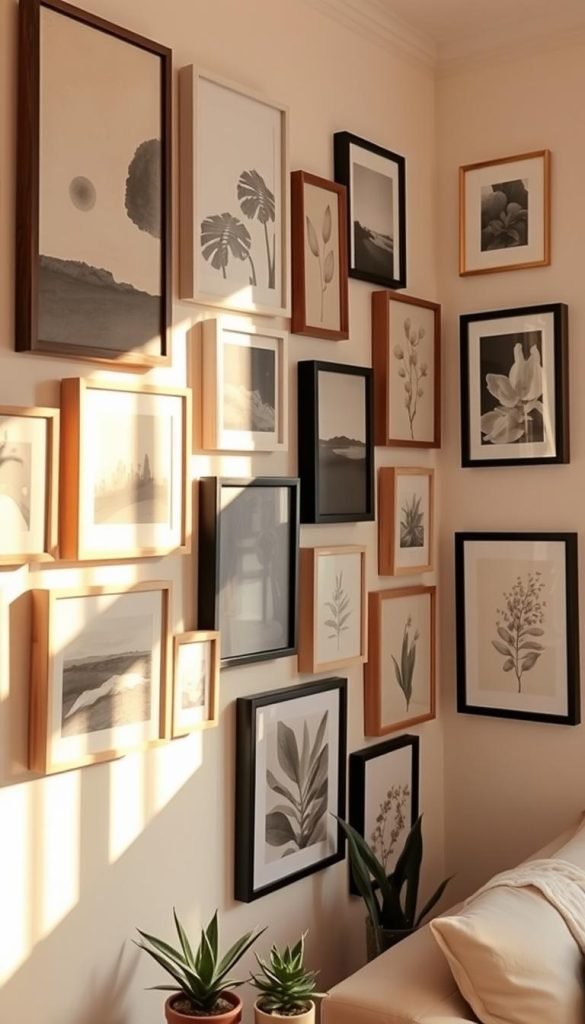
Layouts that work: tidy grids, vertical trios, and eclectic mixes
Tidy grids create calm — even spacing and matching frames make a narrow area feel organized.
Vertical trios are my go-to for tight spots by a door or next to a window. They add height without crowding the room.
Eclectic mixes let personality show. I balance sizes and weight so the whole grouping looks intentional.
Frame selection, spacing, and eye-level hanging in tight rooms
I prefer thrifted frames refreshed with paint and new mats. They stretch my spending without sacrificing style.
Tip: Aim for the center of the arrangement at eye level and keep 1.5–2 inches between frames for a cohesive look.
Mixing media: photos, prints, fabric swatches, and small 3D pieces
I mix photographs, cardstock prints, fabric samples, and tiny woven pieces to add texture. Small shadow boxes or a woven plate anchor the group visually.
- I mock up layouts on the floor, photograph them, then transfer templates to the wall.
- I hang with removable strips so I can tweak spacing while keeping surfaces renter-friendly.
- Printing on cardstock and swapping mats makes inexpensive pieces read more polished.
For more gallery wall ideas, see gallery wall ideas that work in a dining nook or living room.
Thrifted, Upcycled, and Textural Art: Creative Ways to Fill Your Walls
I rescue thrifted frames, repaint them, and swap in coordinated poster or wallpaper sections to make instant gallery sets. These quick updates make a collected look without buying new artwork.
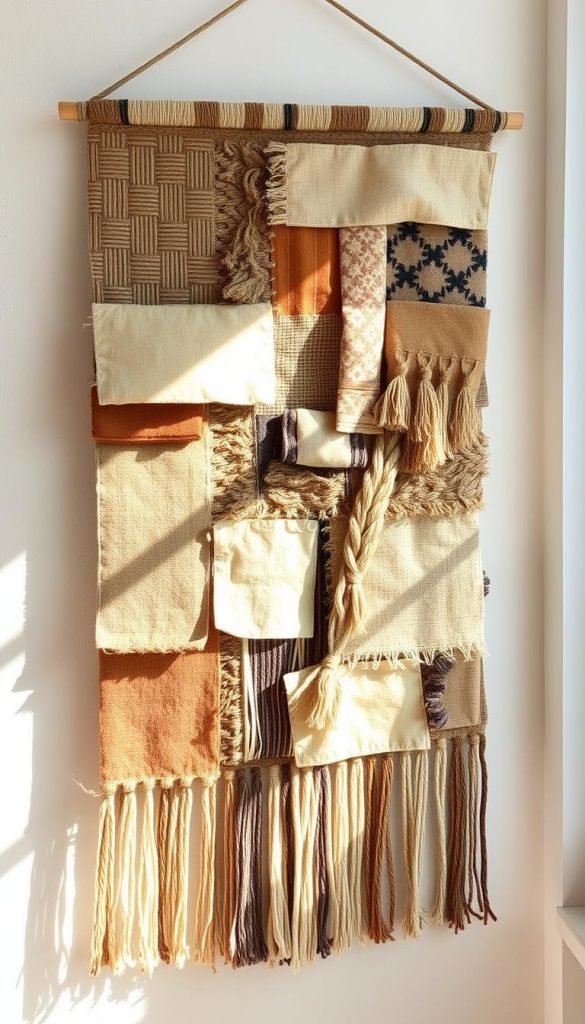
Peel-and-stick wallpaper is a great trick. Cut three matching panels for a triptych that reads like a designer piece. I can do this for under $60, excluding frames.
Textiles, burlap prints, and string designs
I wrap fabric samples around backing boards or frame small swatches to add texture. Printing vintage botanicals on burlap or canvas printer sheets gives a studio feel at home.
For tactile focal points, I hammer nails into a wood backer and weave yarn into letters, maps, or geometrics. Shadow boxes hold shells, pressed botanicals, or cork mosaics for personal, dimensional pieces.
“Cluster woven baskets to warm a neutral collection and balance the flatness of framed prints.”
- I scour the thrift store for sturdy frames, repaint mats, and slide in poster or wallpaper swatches.
- I finish with small paint touch-ups on frames and backers so the whole collection reads as one cohesive set.
| Method | Cost Range | Weight | Best For |
|---|---|---|---|
| Thrifted frames + poster inserts | $10–$40 | Light | Gallery sets, living room |
| Peel-and-stick triptych | $30–$60 (excl. frames) | Light | Console, over sofa |
| Fabric-wrapped panels / burlap prints | $5–$25 | Light–medium | Textured focal pieces |
| Yarn/string on wood or shadow boxes | $5–$30 | Light–medium | Personal, dimensional artwork |
Conclusion
, Start with a quick, visible win—one framed print or painted canvas—and build from there.
I wrap up by saying this: a mix of painted abstracts, tape geometrics, printed classics, and thrifted upgrades gives high style without breaking bank. Plan with kraft paper, print on cardstock at a copy shop, and reuse frames to stretch time and money.
Commit to one quick project this week (a Canva printable or tape geometric) and one weekend project (a drop-cloth canvas or mini gallery). Keep eye level, consistent spacing, and good light so pieces read as a collection and lift the whole room.
Lean on fabric panels, burlap prints, simple paint techniques, and small 3D pieces like woven baskets or shadow boxes to add texture and depth. Rotate seasonal ideas so your home evolves without new spending.
With these wall art ideas and diy wall habits, I have a repeatable system to decorate any space without breaking bank.