How Does Biophilic Design Improve My Living Space in 2026?
I want my home to feel like a calm, useful place where nature and daily life meet. I’ll use warm, earthy color palettes, curved lines, layered lighting, and smart systems that fade into the background.
My plan focuses on practical upgrades that feel good and perform well. I add natural light, indoor plants, and tactile wood and stone surfaces to reduce stress and support better focus.
Schaeffer Homes and others note low-VOC finishes and locally sourced materials are moving from niche to standard. That means healthier air and durable finishes that last.
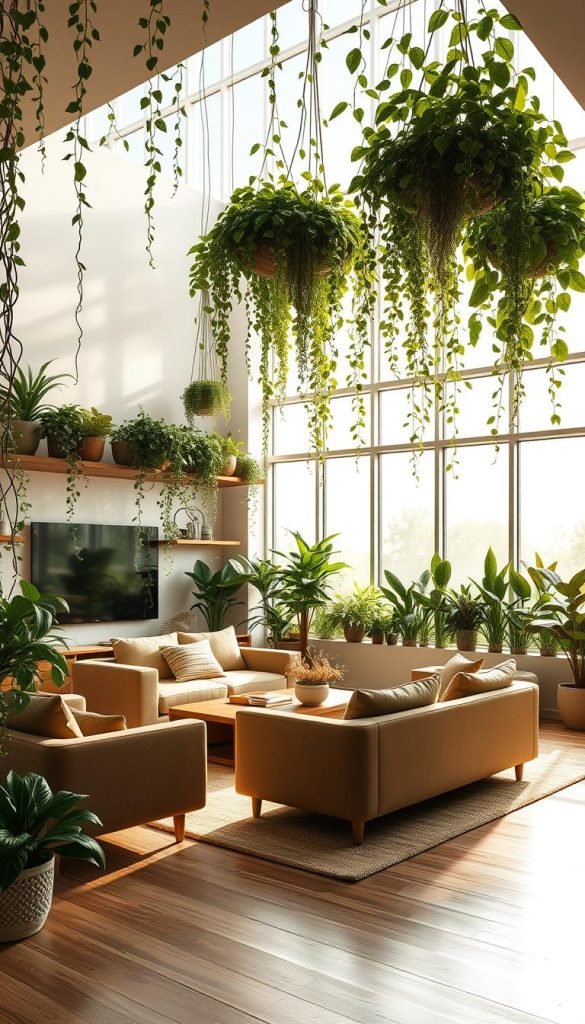
I’ll measure wins by mood, lower stress, clearer focus, and steadier light cycles. This is about function and comfort that outlast a single trend.
Key Takeaways
- I plan quick wins and long-term investments that scale from apartments to custom homes.
- Earthy palettes, curved forms, and layered light make interiors feel warm and human.
- Natural elements like daylight and plants boost wellness and reduce upkeep.
- Smart tech should be discreet and support daily routines without fuss.
- Choosing color and materials up front keeps future updates cohesive and budget-smart.
Why I’m Turning to Biophilic Design for My 2026 Home
I want rooms that feel calm, useful, and welcoming. I’m choosing a nature-first approach because it gives my home a calmer, more human feel while matching the broader shift toward wellness in the market.
I connect with nature through daylight, real plants, and tactile materials like wood and stone. These elements help me manage stress and enjoy my everyday routines more.
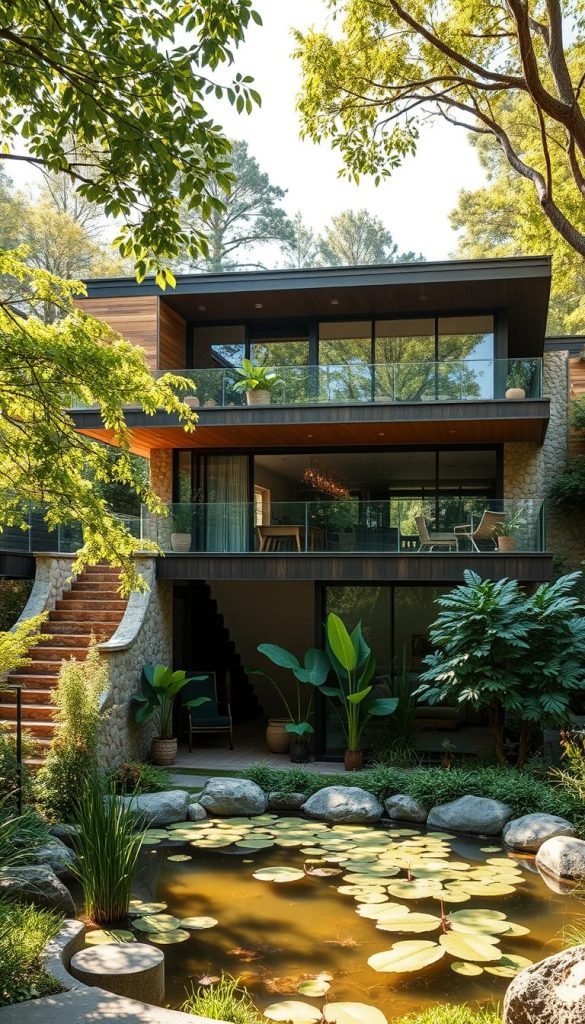
This approach blends function and feeling. Flexible layouts, layered lighting, and durable finishes answer practical needs and mood goals at once. It’s not a fleeting trend; it’s a resilient approach that fits how I live, work, and recharge.
“Nature-connected interiors help me focus better and relax faster.”
I’m also drawn to a clear shift toward sustainable choices—low-VOC paints, local materials, and long-lasting surfaces. These choices make my updates healthier, responsible, and easy to scale as I learn what works best in my interior.
Biophilic design, defined: how nature-first interiors boost my wellness
I choose features that connect me to the outdoors so my home supports mood and routine. At its core, this nature-first approach blends daylight, organic textures, greenery, and tactile surfaces to help me feel calmer and more focused.
Natural light and views: brighter rooms, better mood, smarter energy use
I plan for larger windows, reflective finishes, and lighter palettes so rooms feel bright and open. Bigger openings cut my need for artificial light and help my body follow natural rhythms.
Indoor greenery that works: living walls, plants, and maintenance realities
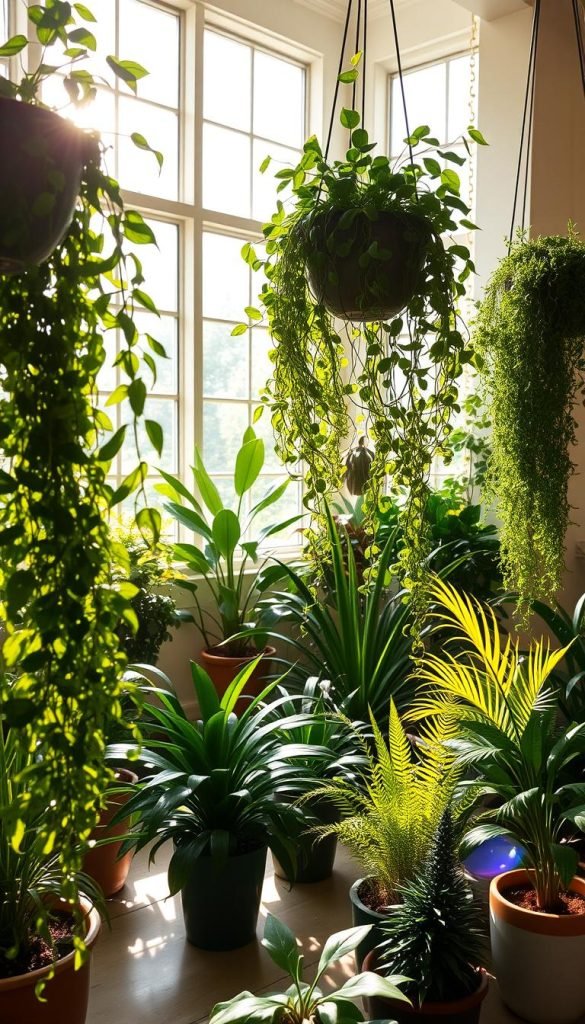
Indoor greenery can lift mood, but I pick low-care species and groupings that suit my time and climate. Where I can, I add living walls in high-impact zones; otherwise, clustered pots give similar benefits with less upkeep.
Materials that matter: wood, stone, and high-performing nature-inspired surfaces
I favor wood accents and stone textures for warmth and durability. Sintered slabs and stone-look panels offer a natural aesthetic while resisting heat, UV, moisture, and bacteria—perfect for kitchens, baths, and patios.
- Key elements: natural light, views, plants, wood, stone, and resilient surfaces.
- Practical note: balance maintenance and impact by choosing finishes and plant species that fit my routine.
- Outcome: calmer indoor environments with better air, acoustics, and daily comfort.
“Spaces that combine light, greenery, and tactile surfaces help reduce stress and support daily focus.”
What’s shifting in 2026: earthy color, organic shapes, layered light, and wellness
I’m seeing a clear shift toward warmer palettes and softer forms that make my home feel calm and useful. These changes combine color, texture, and technology so rooms work better for daily life.
Earthy color palettes and tones
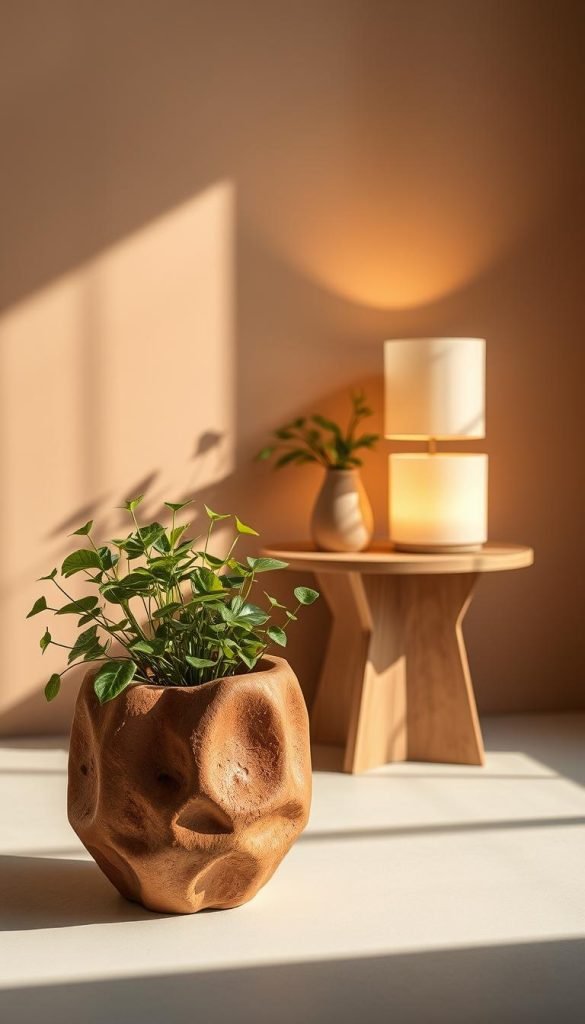
I’m leaning into terracotta, olive, rust, sand, and deep taupe to add warmth and depth. Accent walls with wood slats or stone bring textural contrast without loud patterns. Color and tones now anchor a room instead of competing with furniture.
Curves and organic forms
I prefer arched openings, rounded furniture, and soft-edge counters. Curves calm the eye and create a human flow that feels less formal and more welcoming.
Layered lighting and seamless smart tech
I build layered plans with ambient, task, and accent light. Dimmers and discreet controls let me set mood and function. Smart systems fade into the background so the light, not the tech, leads the experience.
Sustainability and wellness features
Health-forward choices guide my materials: low-VOC paint, locally sourced wood, and efficient systems for air and acoustics. Surfaces that age well cut maintenance and keep rooms feeling authentic.
- I balance wood warmth with stone coolness for texture and contrast.
- Textured walls are used sparingly to create focal points.
- I follow practical design trends that support wellness throughout the home.
“This shift toward human-centered choices feels less like a trend and more like a practical roadmap for how I want to live.”
How biophilic design improve living space 2026
I focus indoor greenery where it changes first impressions—entryways and kitchens—so the room feels alive the moment I step in.
Integrating indoor greenery and living walls into high-impact zones
I prioritize entry, kitchen, and main seating areas so plants add function and mood fast. I begin with modular vertical gardens or simple wall-mounted planters that are easy to service.
I use a kitchen herb wall for fresh flavor and daily use. Moss panels and low-care plant groups give texture with minimal upkeep.
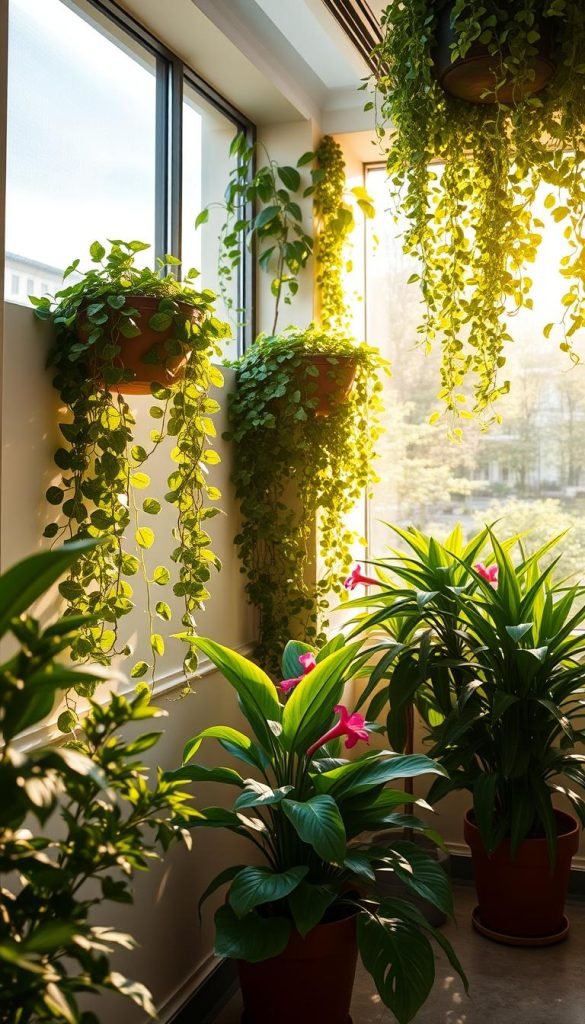
Adding water features and nature-inspired textures for multi-sensory calm
Small water features—tabletop fountains or a spa-adjacent trickle—bring soft sound without heavy maintenance. I pair these with stone-look panels and matte finishes to add tactile calm.
- I plan living walls where light and access match plant needs and add grow lights if needed.
- I balance humidity and airflow to protect walls and finishes while keeping plants healthy.
- I stage upgrades: starter planters now, a full vertical garden later, so the shift fits my budget.
- I combine form and function so each plant, wall, and water element serves the room’s purpose.
“A small, well-placed green wall and a quiet trickle of water turn rooms into calmer, more useful places.”
For more on merging nature with subtle tech, I also review merging nature and technology as I plan additions. These ideas keep my home practical, sensory, and manageable over time.
Creating indoor-outdoor flow in U.S. living spaces
Bridging my indoors and garden starts with materials that perform under sun, rain, and heavy use. I focus on continuity so rooms and terraces feel like parts of one plan.
Sintered surfaces inspired by global stone give me a consistent look from kitchen counters to pool surrounds. These slabs resist UV, heat swings, moisture, scratching, and bacteria so the finish holds up in U.S. climates.
I pair high windows and large sliding doors to extend sightlines and bring daylight deep into my home. Stone-look panels and warm wood accents tie thresholds together and keep the visual flow calm.
Practical features I use:
- I use durable sintered surfaces to bridge the kitchen and patio, keeping color and texture consistent.
- I select weather-ready materials—UV- and heat-resistant slabs, sealed wood, and corrosion-resistant fixtures—to cut upkeep.
- I repeat textures like stone and wood across thresholds so the transition feels intentional and quiet.
- I choose panels and tile sizes that line up from interior floors to decking for an uninterrupted sightline.
I also plan for grip and drainage outdoors, shade orientation, and outdoor-rated lighting. That way the connection lasts and my home design keeps its calm, functional character.
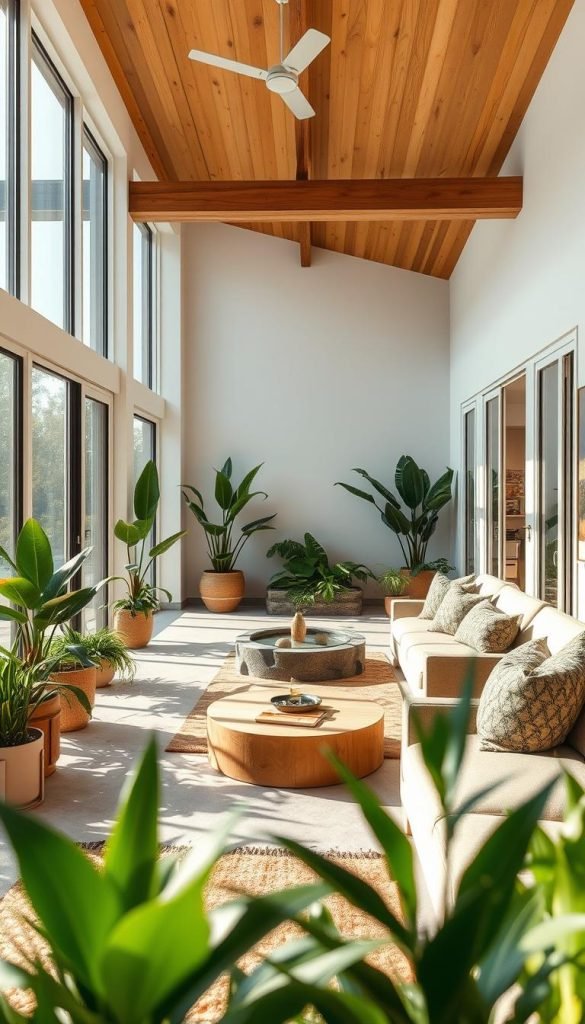
Room-by-room biophilic ideas I can use now
Small, targeted upgrades in each room let me bring nature cues into regular use quickly.
My plan focuses on simple, repeatable moves so each interior feels cohesive and personal. I use materials and light to anchor mood, then layer plants and patterns where they help most.
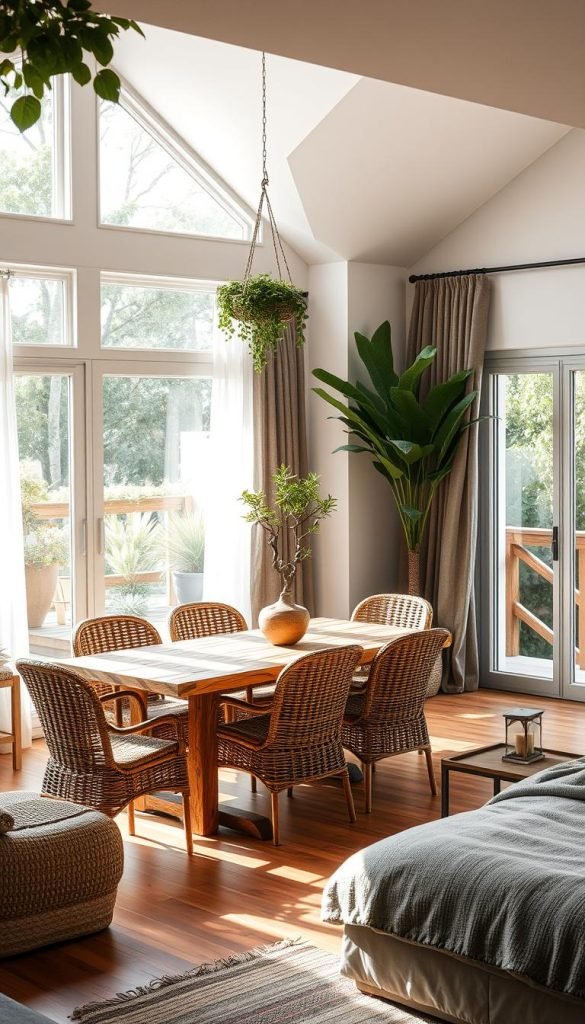
Living room
I group plantings at varied heights and add a stone mantel or wood shelving for texture. I pair dimmable lamps and sconces to create layered light that shifts from task to calm.
Kitchen and dining
I mount an herb wall where natural light is best and repeat wood and stone surfaces on counters or backsplashes. Earthy color tones—terracotta accents and olive textiles—help dining feel grounded and social.
Bedroom and bath
I prioritize acoustics with rugs and upholstered panels, and choose soft textures for a restorative feel. In baths I pick stone-look surfaces and warm lighting layers for a spa-like, easy-care finish.
- I use patterns—botanical or subtle geometrics—only where they complement surfaces.
- I plan storage for plant care tools so greenery stays neat and intentional.
- I optimize natural light by day and switch to warm light at night to support rest.
| Room | High-impact moves | Light & materials |
|---|---|---|
| Living room | Grouped plants, feature wall, stone or wood accents | Layered light, warm tones, textured surfaces |
| Kitchen / Dining | Herb wall, repeat wood and stone, easy-care greenery | Pendants, under-cabinet light, earthy color palettes |
| Bedroom / Bath | Soft acoustic treatments, spa materials, minimal patterns | Warm, dimmable fixtures, matte stone surfaces |
“A few well-placed plants, timed light, and thoughtful surfaces let each room serve its purpose better.”
Wellness outcomes I can measure in 2026
I can track real health gains by measuring light, air, and sound in rooms where nature cues are strong. Research links nature-forward interiors to lower stress, better mood, and clearer thinking.
Lower stress, better mood, improved focus: what studies suggest
Evidence shows time near plants and natural materials can reduce cortisol and sharpen attention. I note how long I focus without fatigue and how fast I unwind after the day.
Air quality, acoustics, and circadian-friendly lighting in everyday routines
I monitor VOCs, particulates, and humidity to keep both my plants and my skin comfortable. I log daylight exposure and shift to warmer bulbs at night to support sleep cycles.
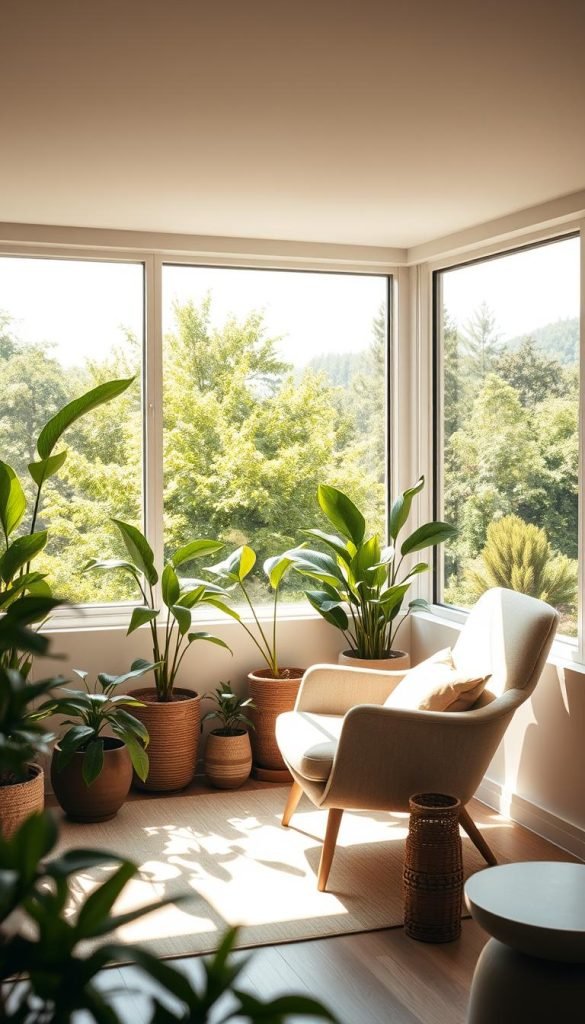
- I use an air monitor to watch VOC and particle trends and adjust ventilation or materials.
- I check sound levels and add soft furnishings or panels where echoes raise stress.
- I treat adjustable light and quiet ventilation as daily tools for steady routines.
| Metric | How I measure | Target |
|---|---|---|
| Daylight exposure | Hours logged by room and device sensor | 2–4 hours near natural light daily |
| Air quality | VOCs and PM2.5 readings from a monitor | VOC low; PM2.5 |
| Acoustics & rest | Decibel readings and sleep quality score | Quiet baseline; improved sleep metrics |
“Simple benchmarks—sleep, focus, and perceived stress—make wellness measurable and personal.”
Designing on my budget: scalable, sustainable steps
I focus on choices that give big returns: hardy plants and durable finishes first. This helps me stretch a modest budget while making my home feel calmer and more useful.
Low-maintenance plant choices and smart material upgrades
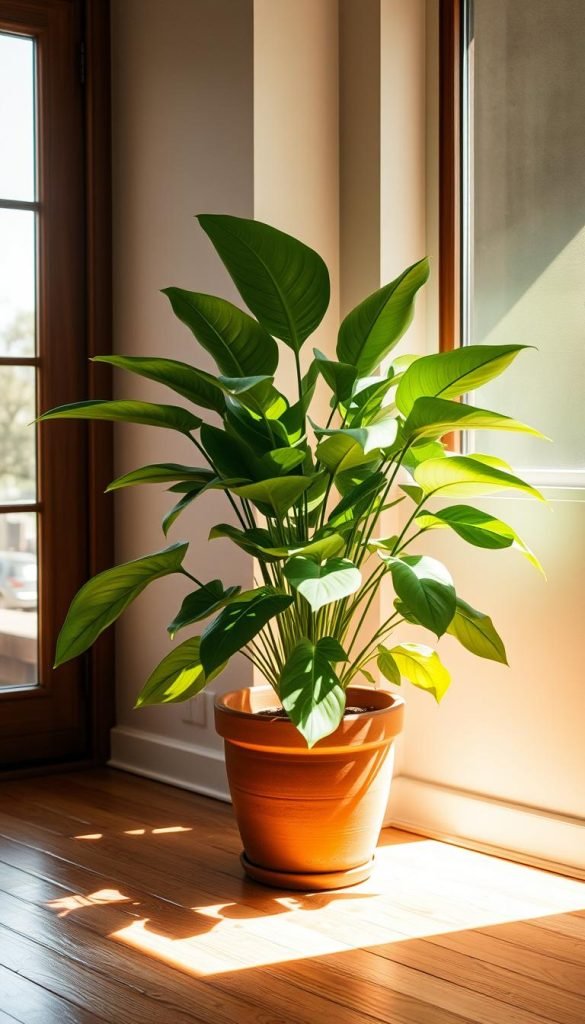
I start with resilient green options—snake plant, pothos, and ZZ—so I get greenery benefits with minimal care.
I stage upgrades. I replace key surfaces in wet or high-traffic zones first, then expand as funds allow.
- I refresh a room affordably with one accent wall using textured panels or wood slats.
- I pick materials that resist scratches, moisture, and UV to cut future repair costs.
- I map my spaces by daily use and cost, tackling the highest-impact areas first.
- I DIY planter groupings and small swaps, saving pros for electrical or structural work.
- I watch sales for stone-look and wood-look surfaces that match my palette.
- I plan plant lighting and simple irrigation so walls and floors stay safe while greenery thrives.
“Small, staged moves let my home evolve without a big upfront bill.”
Final idea: keep a running list of small wins and future upgrades. That way I stay on trend and spread costs across the year.
Conclusion
I’ll finish by focusing on practical moves that add warmth, texture, and measurable wellness to my interior plan. I use biophilic and design principles to make my home calmer and more useful.
My approach focuses on light, plants, tactile surfaces, and durable finishes so changes look good and work hard. I repeat palettes and materials across rooms to keep interiors cohesive and personal.
I’ll follow the shift toward sustainable choices—low-VOC paint, local materials, and efficient lighting—and track outcomes like stress, focus, and sleep. This keeps my home design aligned with real wellness, not short fads.
I’ll scale upgrades by room and budget, start in high-impact zones, and treat each update as an investment in comfort and daily joy. I’m ready to let nature in and let my space support how I want to live now and next.