What Are the Benefits of Maximalist Decor for American Homes?
I’m exploring why I’m drawn to benefits maximalist decor american homes now and how this approach helps me shape a space that feels true to my life. I want a living area that blends color, pattern, and texture so it reads as cozy and intentional rather than chaotic.
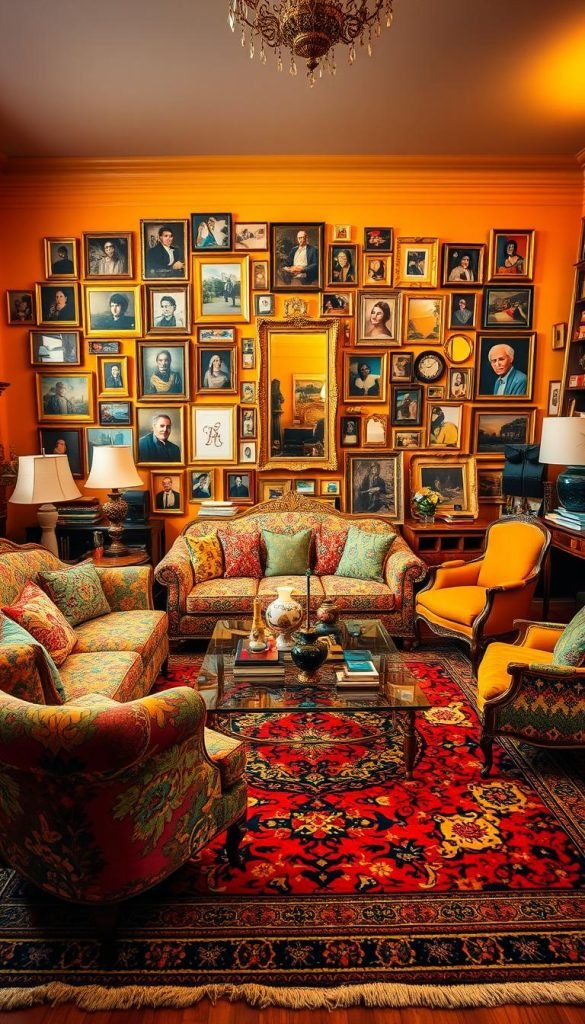
Maximalism lets me display collections and objects that spark conversation and memory. I treat each piece as part of a curated story, using layout and storage to make the room function well for my daily routine.
I focus on comfort and usefulness first, then layer personality with artwork, books, textiles, and found items. This process supports a sustainable approach by reusing and repurposing instead of replacing.
Key Takeaways
- I use bold choices to make my home reflect who I am.
- Curated abundance can be orderly when planned around function.
- Collections and texture create warmth and conversation.
- Repurposing items supports a thoughtful lifestyle and design.
- I move from big ideas to room-level steps that work today.
Why I’m Drawn to Maximalist Living Right Now
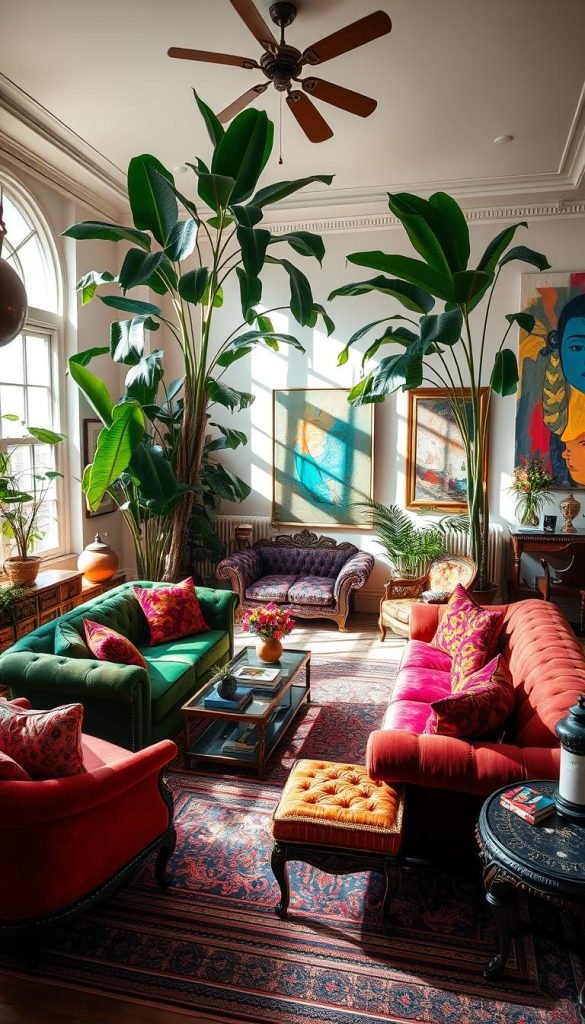
Lately I crave rooms that feel alive — packed with texture, color, and stories. I want a space in my home that wakes me up, not one that feels neutral and empty.
Choosing maximalist living helps me honor my preferences for vivid visuals and layered comfort. This lifestyle boosts my creativity because books, art, and textiles sit where I can touch them and be inspired.
I like the ritual of arranging and editing. Tending displays becomes a calm routine. It also keeps me mindful: I curate, not accumulate, so the room stays intentional.
- I want daily joy from things I love.
- Intentional shelves and layered surfaces energize me.
- Seasonal swaps let me refresh without a full redesign.
- This approach leans into sustainability by featuring what I already own.
Self-Expression on Full Display: Letting My Personality Lead the Design
I let my rooms display the chapters of my life instead of hiding them away. A living room should feel like a reflection of me, not a catalog.

I begin by deciding what I want to see every day: travel finds, family photos, favorite books, or a small grouping of vintage plates.
Collections become conversation starters and daily reminders when arranged with care. I label a few pieces and keep the rest easy to rotate.
Blending artwork, objects, and furniture with intention
I group artwork, objects, and furniture by theme, color, or era so the overall style reads as deliberate.
- I highlight one or two displays that show my tastes interests, like a shelf of ceramics or a wall of framed prints.
- I mix heights and finishes to keep surfaces lively and balanced.
- Every vignette has a purpose: to anchor a seat, lead the eye, or add warmth.
I let my personality dictate which pieces stay front and which rotate. This keeps the room fresh and makes the objects feel like living art rather than clutter.
Vibrant Energy and Everyday Joy in My Rooms
A vibrant mix of hues and prints turns ordinary corners into moments I look forward to. I choose a clear palette that lifts my mood and use it as a thread through the room.
Using color and patterns to lift my mood
Colors set the tone fast. I pick one statement piece—a rug or wallpaper—and let it lead the visual story.
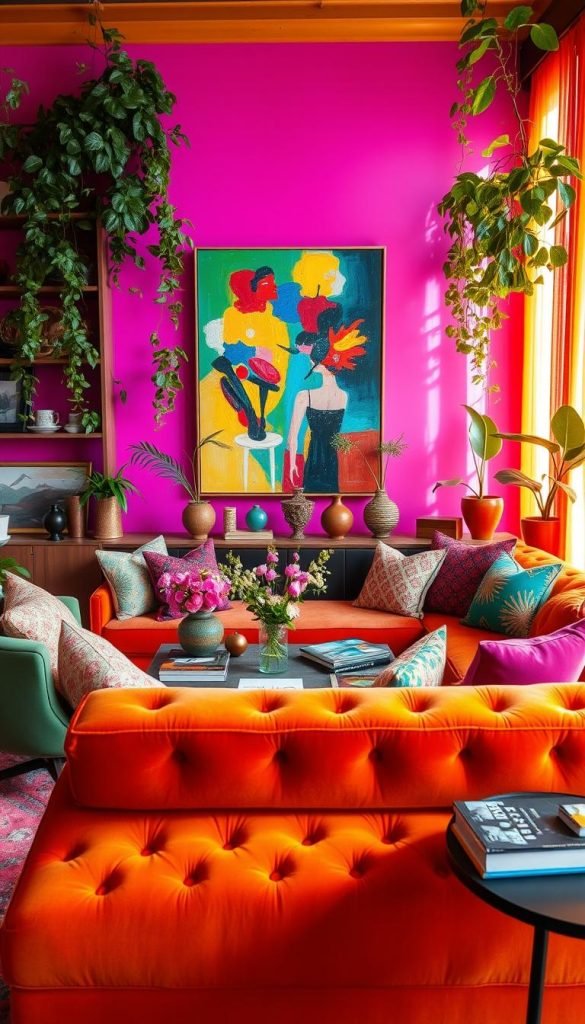
I ground loud patterns with solid fabrics so my eye can rest. Then I add a second, smaller-scale pattern to keep the energy layered, not chaotic.
- I connect zones by repeating a hue in art, a throw, and a planter so the space feels unified.
- I plan how I want the room to make feel at different times—bright and energized in the morning, cozy at night—and I swap lamps, throws, or curtains to match.
- I keep a small swatch kit so I can shop or rearrange with confidence and keep the joy consistent.
Seasonal light changes everything, so I nudge textures and prints each season. This keeps the rooms lively, inspiring, and comfortable every day.
Benefits Maximalist Decor American Homes: More Room for Different Styles and Tastes
Blending old finds with sleek pieces makes my space feel layered and alive. I choose one clear style for structure, then add contrasts so the room has depth without chaos.

Mixing vintage pieces with modern clean lines
I love pairing vintage furniture with pieces that have clean lines. An antique sideboard under a modern mirror gives both character and clarity.
Creating visual interest without strict rules
I repeat a few materials—wood, brass, velvet—to build visual interest across my home. That repetition makes mixed styles feel intentional and linked.
Establishing a dominant style, then layering accents
I pick a dominant approach, like Mid-Century or Contemporary, and then layer accents from other eras. A bold chair or large art piece leads, and supporting items echo its colors.
“Good mixing is about balance: contrast that excites, restraint that clarifies.”
- I choose similar proportions or finishes to harmonize old and new.
- I pair glossy with matte, curved with angular, to add pleasant tension.
- I edit until each room reads layered but clear.
| Anchor Style | Accent Choices | Common Materials |
|---|---|---|
| Mid-Century Modern | Boho textiles, vintage art | Walnut, brass, wool |
| Contemporary | Antique sideboard, ceramic vases | Glass, chrome, linen |
| Eclectic | Mixed eras, travel finds | Mixed wood, velvet, metal |
| Minimal anchor | Statement vintage chair, layered rugs | Oak, leather, woven fibers |
Small Spaces, Big Personality: Making My Home Feel Larger and More Lived-In
When space is limited, I turn storage into style so my home reads as organized and alive.

Smart pieces that hide and highlight
I pick furniture that does double duty. A storage ottoman hides throws and games while topping a seating area.
A tall bookcase can divide a nook and show favorite things at eye level. A low credenza keeps dinnerware behind doors and displays art on top.
Vertical thinking to create space
I favor wall shelves and tall units so the floor breathes. This helps me create space for styling without squeezing walkways.
Editing as a habit, not a chore
I follow a simple order: discard first, then sort by category. I hold each item and ask if it sparks joy.
Seasonal rotation and labeled bins keep order and stop extras from piling up. I measure before I buy and use a one-in, one-out rule.
| Problem | Solution | Result |
|---|---|---|
| Limited floor area | Vertical shelves, tall bookcases | More walking room and layered displays |
| Too many loose items | Storage ottoman, credenza with drawers | Clutter hidden; favorites on show |
| No clear zones | Bookcase divider, designated trays | Rooms feel intentional and lived-in |
I keep these practices so my maximalist living stays lively, not crowded.
From Object to Focal Point: Designing Moments That Make Me Feel Something
My process begins with an anchor: a sculptural lamp, a bold artwork, or a standout chair. I pick that one thing and let the rest support it so the wall or corner reads as a single, intentional moment.

Creating focal points and visual hierarchy
I choose one focal point per wall — a mirror, large artwork, or strong lamp — and let other pieces play backup. That way the eye lands where I want it to and the room gains clear hierarchy.
Grouping and layering items for impact
I group objects in odd numbers and mix heights and textures to form small vignettes. I think in layers: background art, middle shelves or books, and a foreground plant or sculpture.
Leaving breathing room so the space feels intentional
I leave breathing room around my favorite piece so it can shine. Trays, risers, and a little empty space help each element read as curated rather than cluttered.
“If my eye jumps around, I simplify until the focal points are obvious.”
| Anchor | Support Pieces | Technique |
|---|---|---|
| Large artwork | Two ceramic vases, stack of books | Odd grouping, layered heights |
| Standout chair | Side table, sculptural lamp | Negative space, one-wall focus |
| Sculptural lamp | Small plant, framed photo | Foreground object, riser for height |
Textures, Colors, and Patterns That Create Depth and Warmth
I start by feeling my space: where it needs softness, where it needs shine, and where I want the eye to rest.
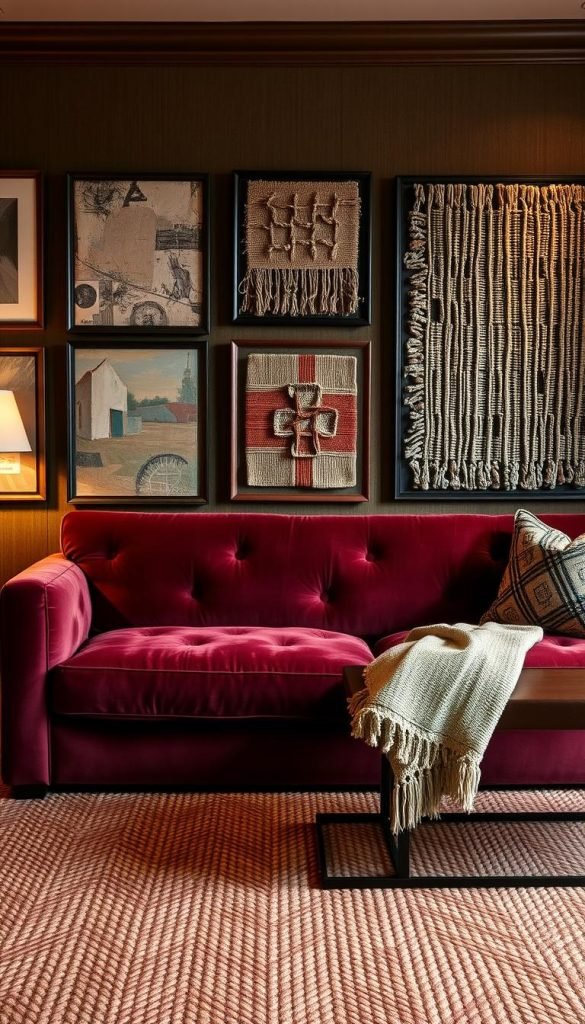
Layering textures for cozy, inviting rooms
I mix smooth and rough surfaces on purpose. Leather next to a knit throw and lacquer beside rattan give each corner tactile contrast.
I layer textures intentionally — plush rugs, nubby throws, smooth leather, and a glossy side table — so my rooms feel cozy and multi-dimensional.
Balancing bold hues with neutrals for cohesion
I repeat key elements like brass or oak in two or three places so the palette reads as one whole. That small echo keeps varied patterns from clashing.
- I balance saturated colors with warm neutrals so the composition is bold but calm enough to live with daily.
- I pair natural materials with sleek finishes — rattan next to glass, stone beside polished metal — for timeless contrast.
- I scale patterns: large on rugs, medium on drapery, small on pillows to prevent visual noise.
Textiles also help the sound and feel of an open layout. I check the palette in morning and evening light to make sure the elements still feel cohesive and welcoming.
A Home That Fits My Lifestyle Better Than Minimalism
Instead of one rule for everything, I set each room to its own rhythm. That lets me balance calm and energy where I need them most.

Choosing rooms for calm vs. rooms for stimulation
I use minimalism in places that need clear focus. My kitchen and home office stay tidy so chores and work stay fast and simple.
In living and creative areas I let maximalism add warmth and story. These spots welcome books, art, and objects that spark connection.
I honor my preferences about upkeep. High-traffic zones get simpler surfaces. Display-heavy zones get more time and care.
- I map each room by function so form follows use.
- I notice how a space feels when I’m tired and pull back patterns if I need visual rest.
- I test one room at a time for a month and adjust based on daily life.
| Zone | Approach | Why it works |
|---|---|---|
| Kitchen / Office | Minimalism | Fast maintenance, clear focus for tasks |
| Living / Reading nook | Maximalism | Encourages creativity and social moments |
| Bedroom | Minimalism with soft accents | Quiet, aids rest while keeping personal touches |
Instant Conversation Starters: Turning My Treasures into Social Glue
I set intentional displays that naturally pull people together and spark lively conversation. A few well-placed items make a room feel inviting and begin stories the moment guests arrive.
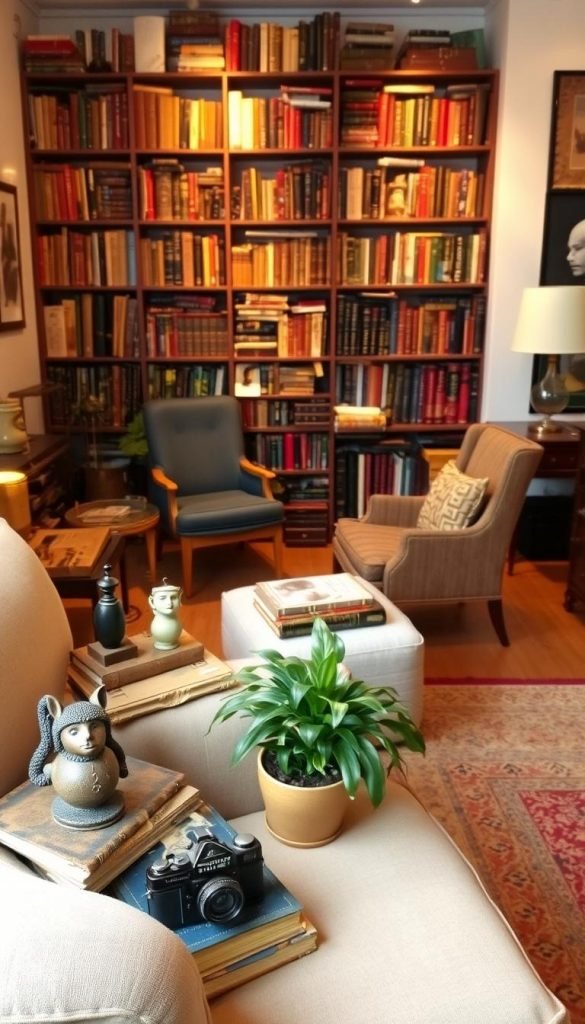
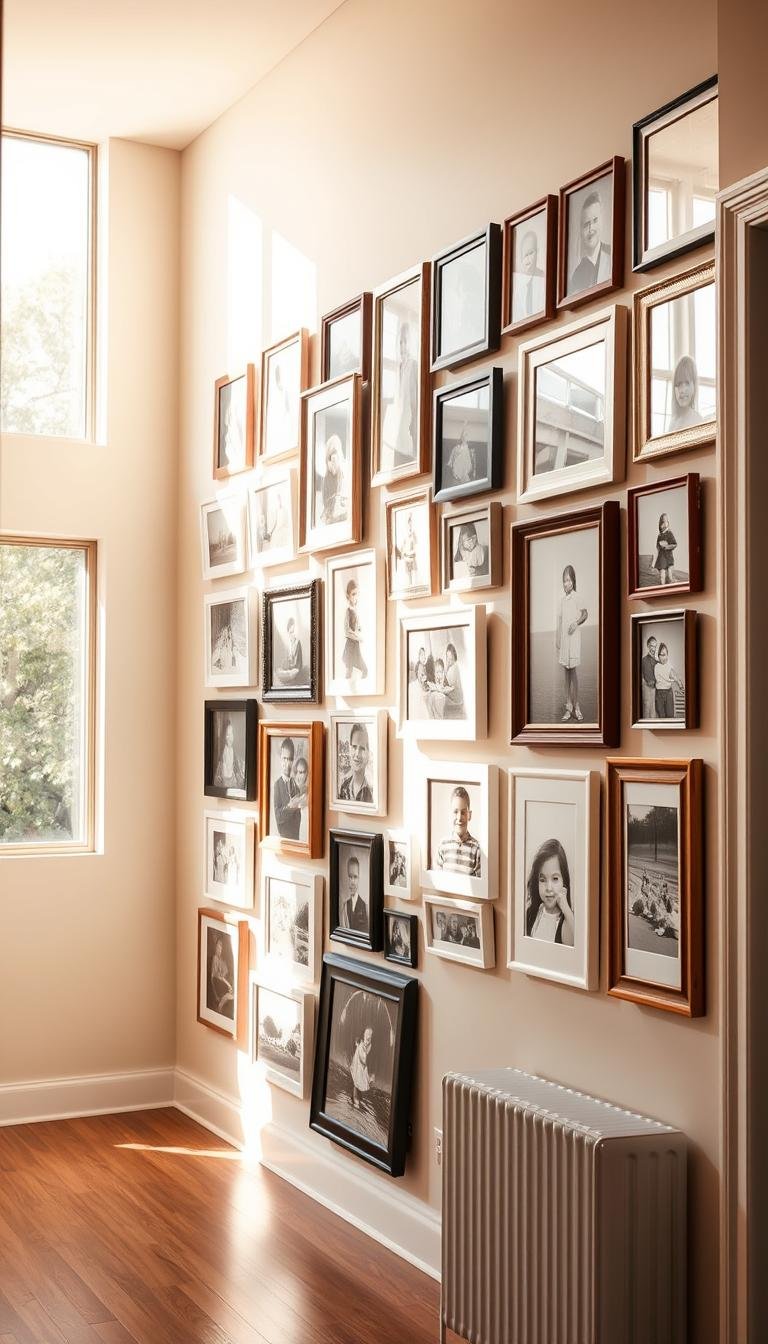
I build gallery walls that mix art, photos, and small objects so my living rooms immediately tell guests what I care about.
Gallery walls, vintage finds, and meaningful pieces that spark connection
I anchor displays with one meaningful piece—a framed concert poster or a vintage map—and arrange a small collection around it. That anchor gives a clear place to start a chat.
- I use picture ledges to rotate work easily, which invites conversation as friends notice new additions.
- I label sources or artists so the story behind my treasures becomes part of the moment.
- I cluster travel finds and family hand-me-downs so their shared history flows naturally during visits.
- I keep a styled landing spot, like a console or bar cart, to draw people in as they enter the room and begin a discussion.
- I refresh a few pieces each season so gatherings feel new without a full overhaul.
“Small edits keep displays fresh and keep conversations starting.”
Sustainable Style: Reuse, Repurpose, and Refresh Instead of Replace
Refreshing what I already own helps me keep my rooms full of story and low on waste. I shop my home first, moving pieces between rooms to create space that feels new without buying more.
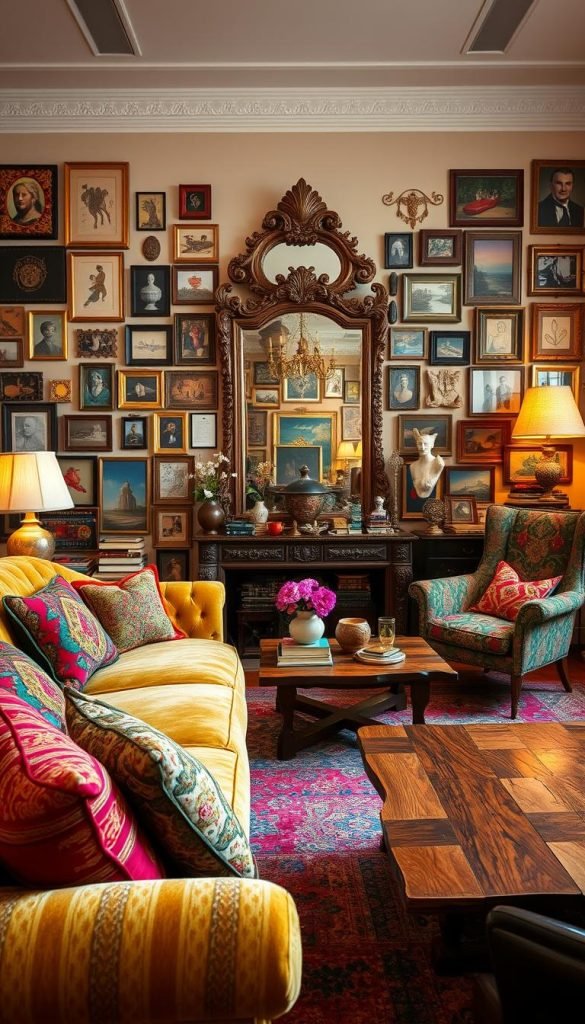
Breathing new life into existing furniture and objects
I refinish or reupholster well-made vintage finds so an old item can become a centerpiece again. An abandoned trunk can be a coffee table; a wooden ladder becomes a blanket rack.
- I keep small supplies—paint, fabric swatches, hardware—so I can act when I spot potential.
- I rotate collections to limit sun damage and even out wear, which extends each item’s life.
- I donate or sell what I won’t use so other people can give those items new purpose.
| Action | Example | Impact |
|---|---|---|
| Shop my home | Move side table to entry | Create space without buying |
| Refresh | Reupholster chair, paint frame | Extend usefulness, add character |
| Repurpose | Trunk to table, ladder to rack | Form meets function, less waste |
| Circulate | Donate or sell unused items | Supports sustainable life cycle |
Maximalism celebrates resourcefulness: curating what I own, honoring each item’s story, and letting my rooms evolve responsibly.
Conclusion
Ultimately, the goal is a home that balances energy and calm so I can live well in every room.
I use selective edits, repeating textures and a few shared elements so the style reads as one story instead of visual noise. I give favorite pieces breathing room, set clear focal points, and let minimalism do the heavy lifting where I need quiet.
I rely on multifunctional furniture and smart storage to keep order, then rotate collections and tweak color and pattern seasonally to create space for creativity. I also choose repair and reuse when possible — small sustainable acts that add character and save money.
For a deeper look at how curated, lived-in spaces support creativity and comfort, see this take on creative chaos.